
Fernandes Atem Arquitetos Wraps an Exposed Concrete House Around Its Own Pool Courtyard in Eusébio
A 376-square-meter residence in northeastern Brazil turns inward, using sun protection and lush planting to tame its west-facing plot.

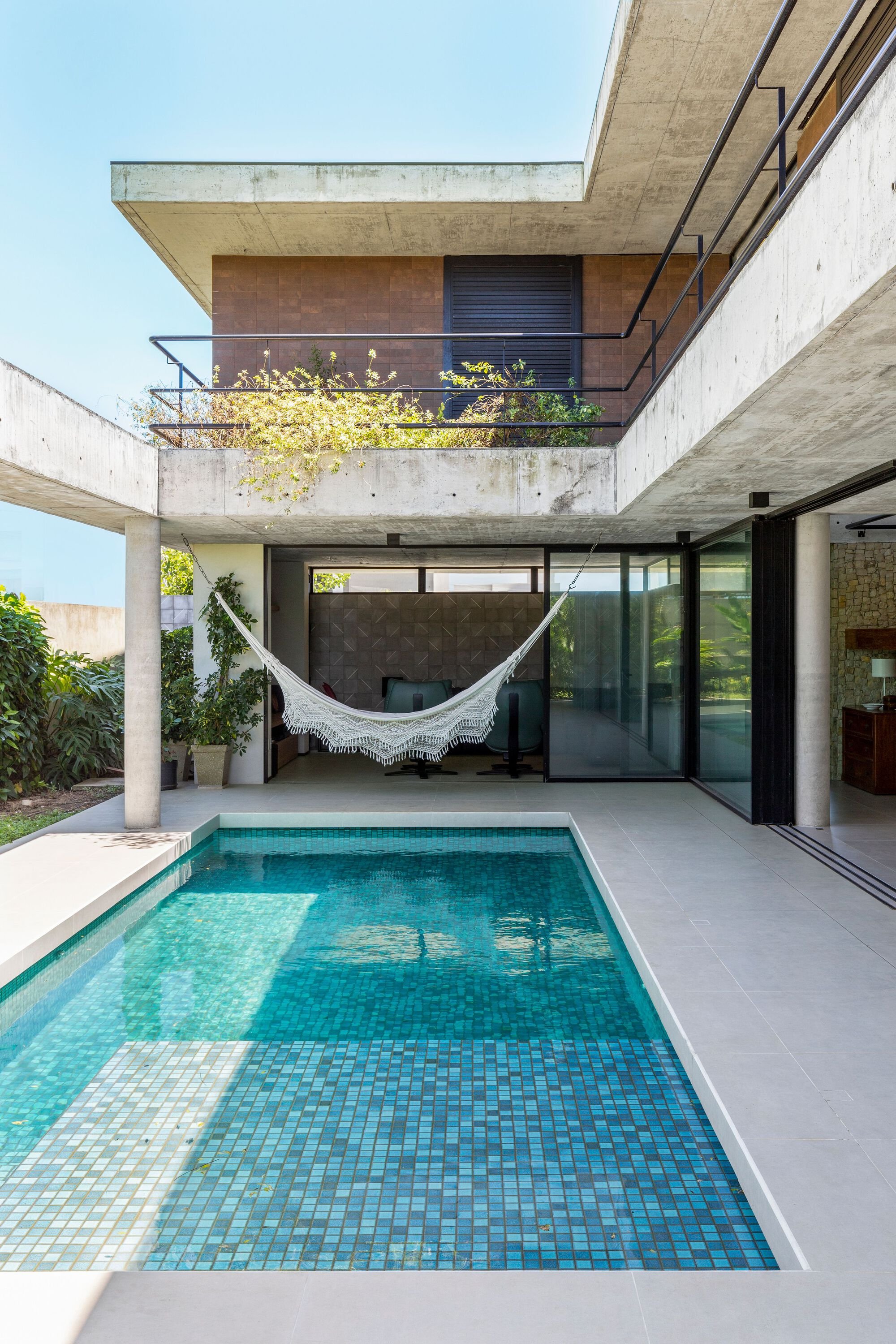
In gated communities across Brazil's northeastern coast, the default residential formula is depressingly consistent: symmetrical facades, ornamental columns, and a pool shoved against the back wall. House AR, designed by Fernandes Atem Arquitetos for a standard plot in Eusébio, near Fortaleza, rejects that playbook entirely. Architects Ricardo Fernandes and Juliana Atem organized the entire 376-square-meter program around a central pool courtyard, turning the house inward so that nearly every room faces vegetation and water rather than the street or neighboring walls.
What makes the project genuinely interesting is the tension it manages between openness and introversion. The house is deeply transparent, with full-height glazing, open-plan living areas, and planted terraces at two levels, yet it barely reveals itself to the street. Its west-facing orientation, a liability in Fortaleza's punishing equatorial sun, becomes the organizing problem the entire design resolves. Every architectural element, from cantilevered slabs and deep eaves to louvered screens and planted boxes, does double duty as sun protection and spatial boundary.
A Fortress That Barely Shows Its Face
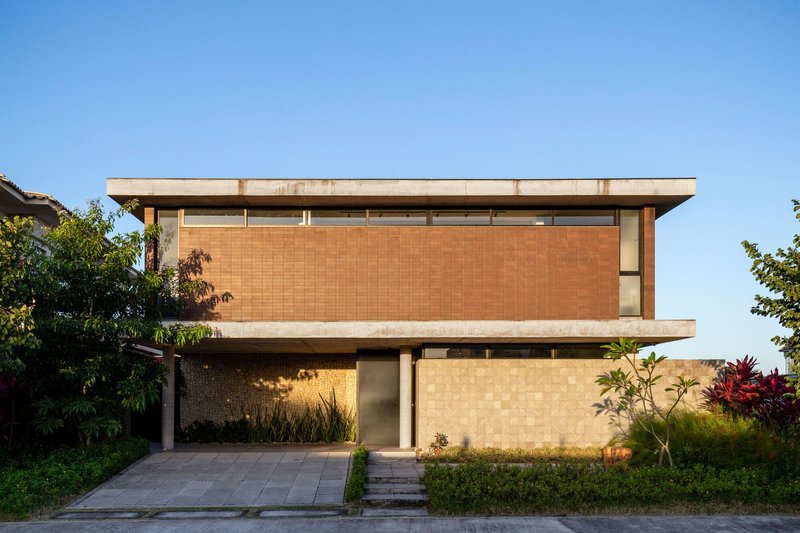
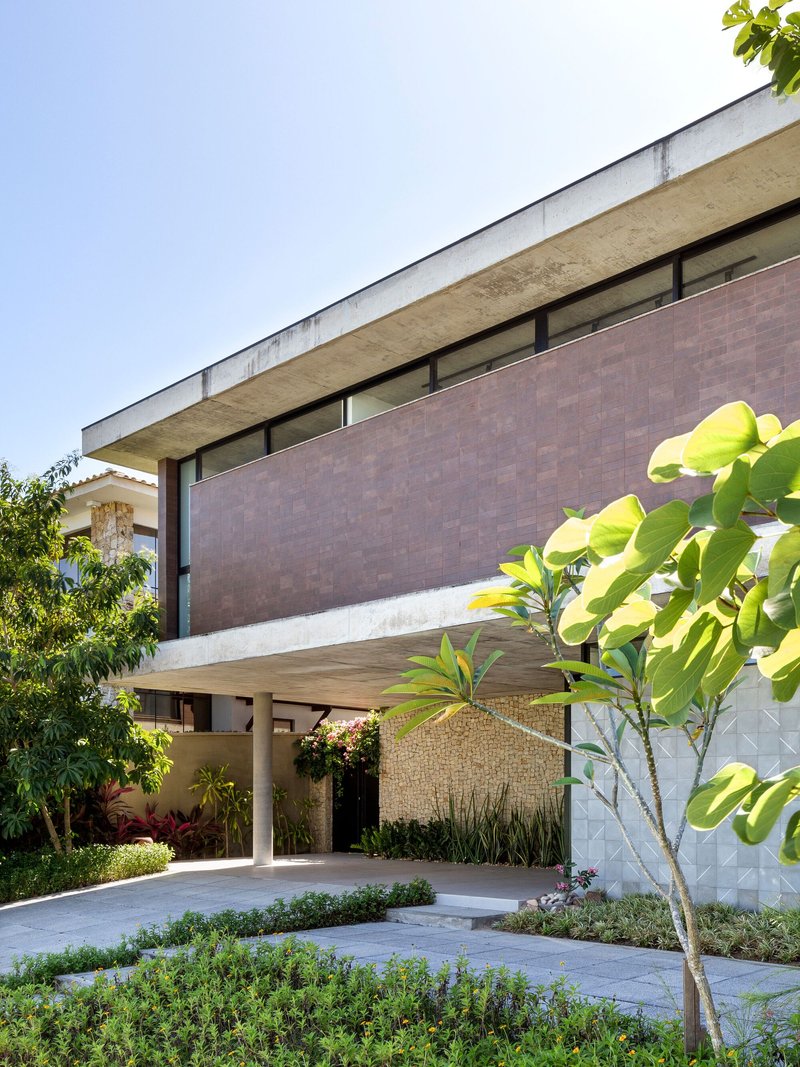
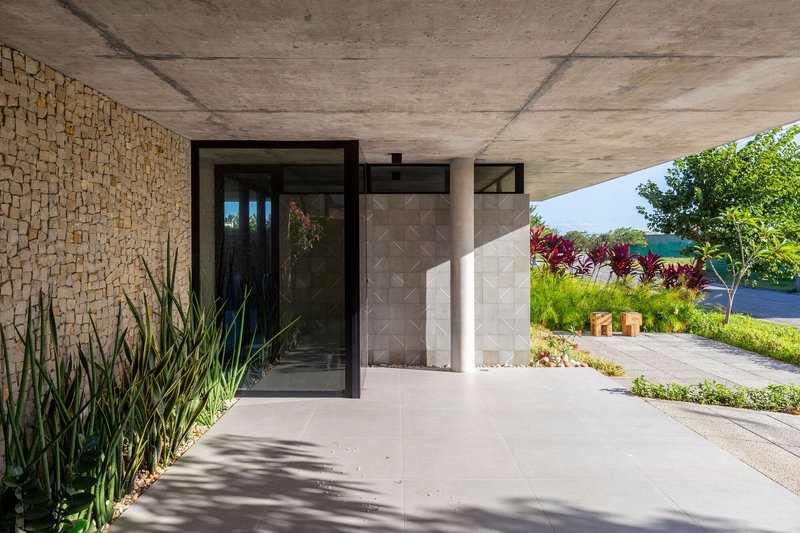
The street facade is intentionally restrained: a terracotta-clad upper volume hovers above a deep, cantilevered concrete slab that shades a recessed carport. There is no grand entrance, no decorative gesture. A patterned concrete wall and a single cylindrical column mark the approach, while ornamental grasses soften the edges without domesticating them. The message is clear: the life of this house happens elsewhere.
This reticence is not standoffish so much as strategic. With the front facing west, opening up toward the street would flood the interior with low-angle afternoon sun and radiant heat. By treating the western wall as a defensive layer, Fernandes Atem freed themselves to be generous on the courtyard side, where orientation and breezes cooperate.
The Pool as Organizing Spine
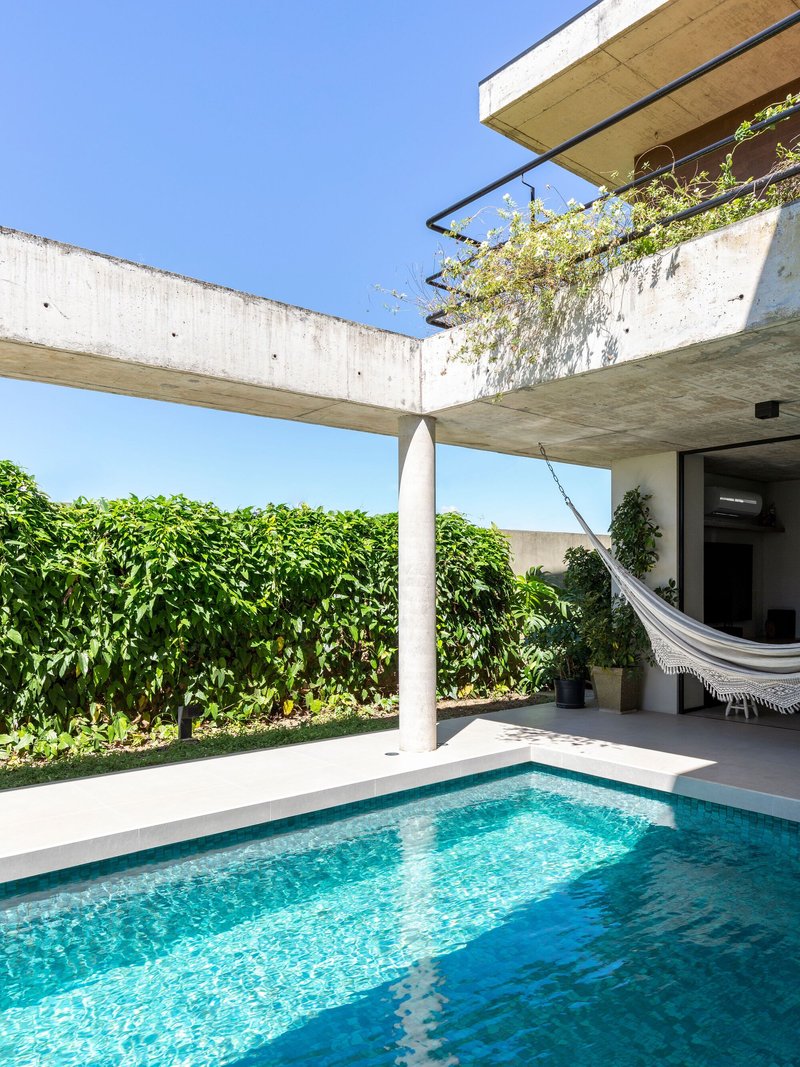
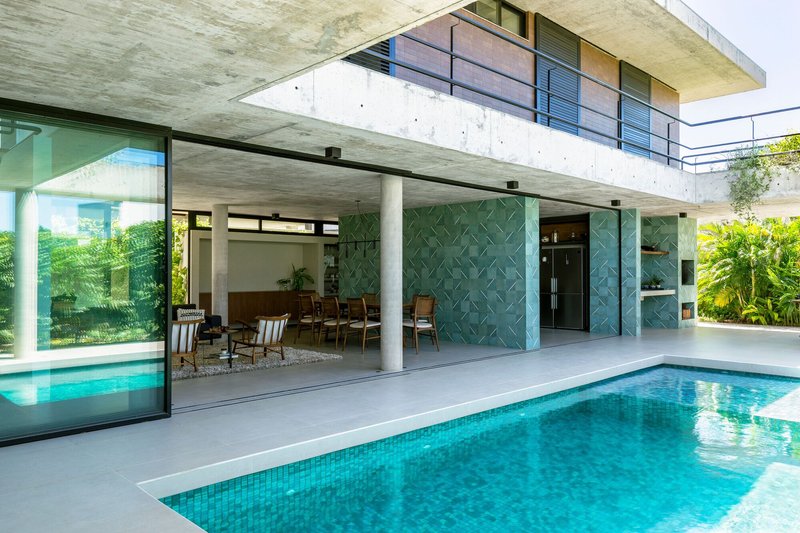
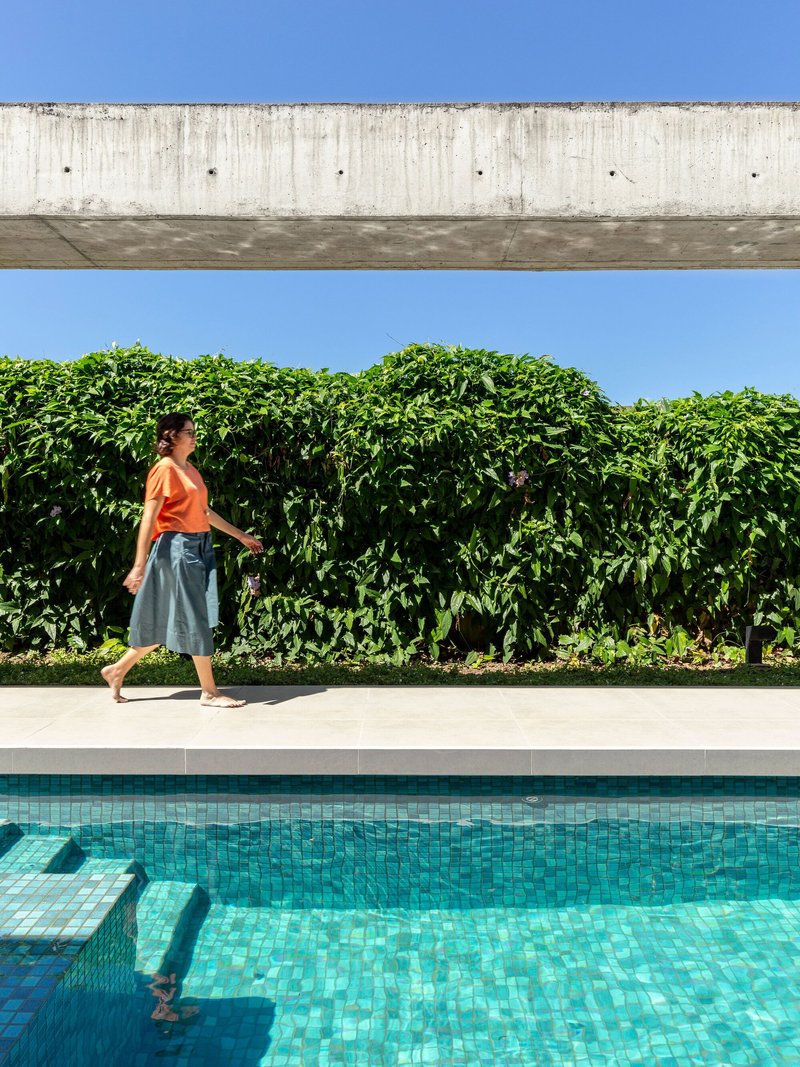
The blue mosaic pool is not an amenity bolted onto the back of the plan. It is the plan. Two wings of the house flank it, connected overhead by concrete beams and planted terraces that create a shaded outdoor room at ground level. Hedges form a green boundary along the pool's edge, screening it without enclosing it. The result is a courtyard that feels simultaneously sheltered and open to the sky.
From the dining area and outdoor kitchen, you look across water and planting toward the opposite wing. From the upper balcony, you look down into it. The pool courtyard acts as the house's central void, pulling light, air, and movement through every adjacent room. It is a spatial strategy borrowed from Latin American modernism, executed here with the specific rigor that a low-latitude climate demands.
Concrete as Structure, Surface, and Climate Device
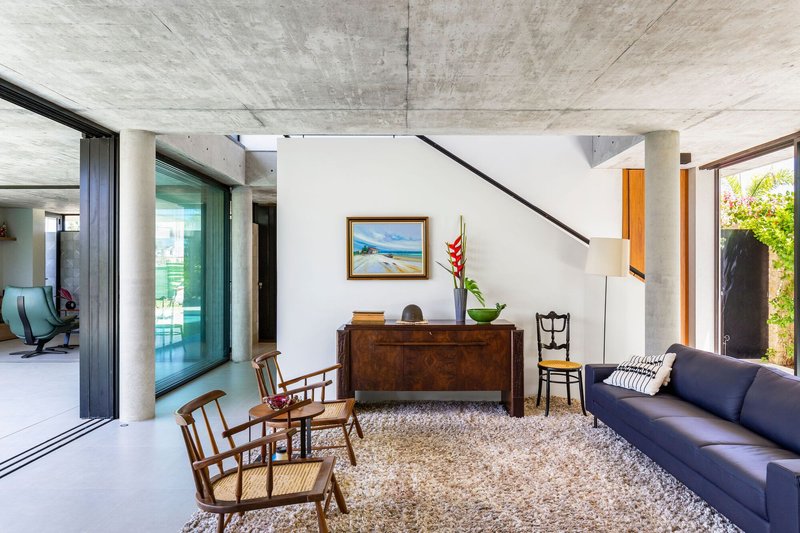
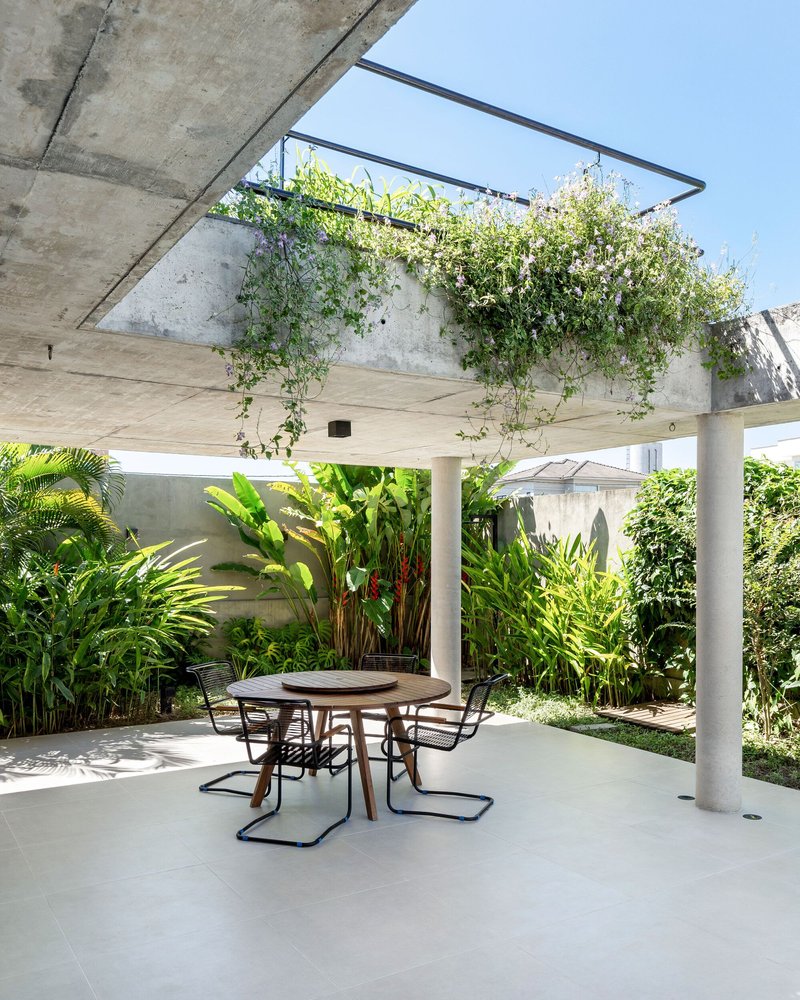
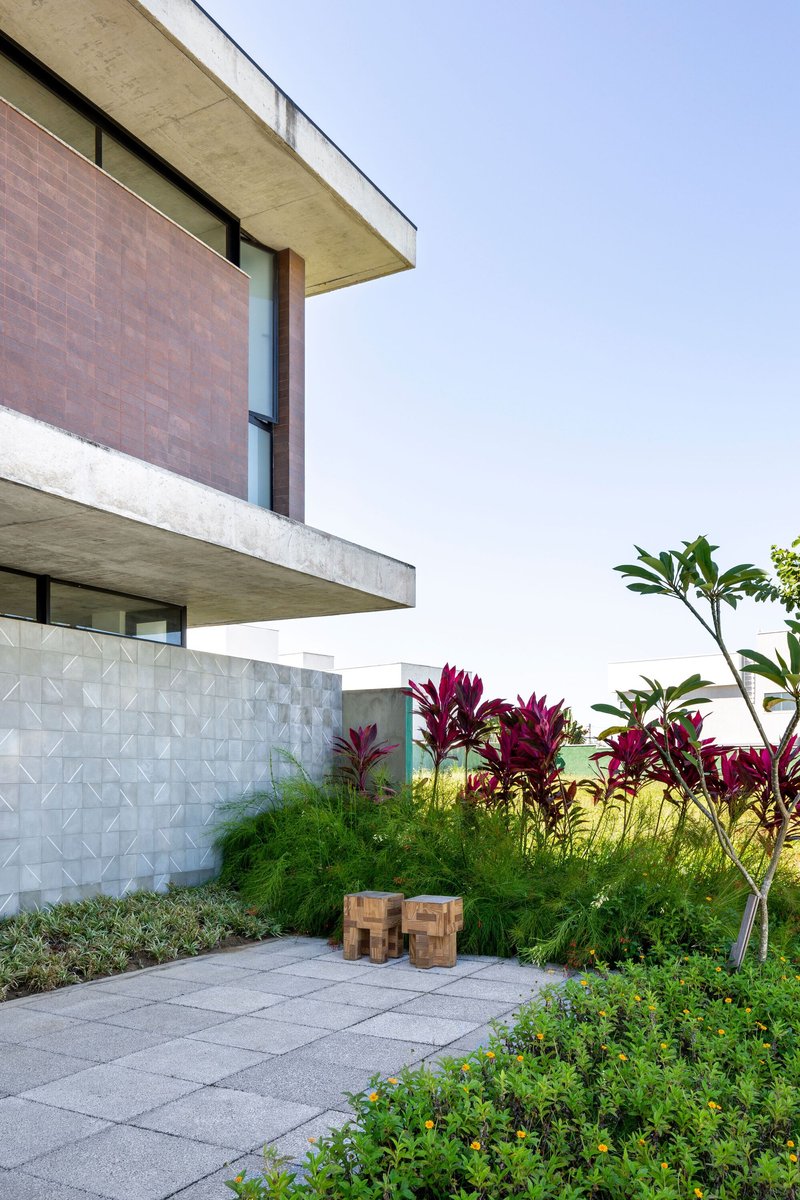
The exposed reinforced concrete frame does everything at once. Board-formed ceilings give the interiors a tactile grain. Cylindrical columns punctuate open-plan spaces without subdividing them. Cantilevered slabs extend far enough to shade the glazing below, acting as passive sun control that requires no moving parts and no maintenance. The structural engineer, Felipe Cavalcante Leite, clearly worked in close coordination with the architects; the geometry of the frame is rationalized so that each beam, column, and slab reads as both structure and architecture.
This constructive rationality matters in a region where exposed concrete can feel gratuitously brutal. Here, every cantilever earns its overhang through shade, and every column earns its position through spatial rhythm. The concrete is honest about its weight and cost, and the house is better for it.
Color and Craft in the Details
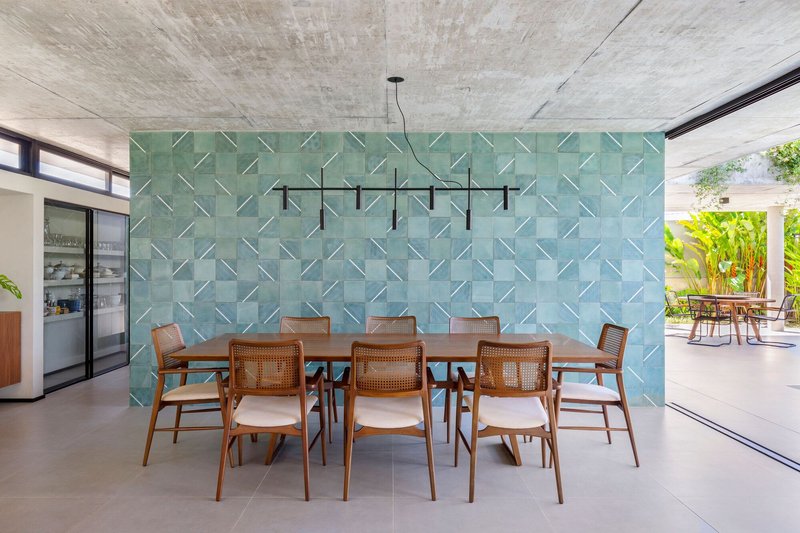
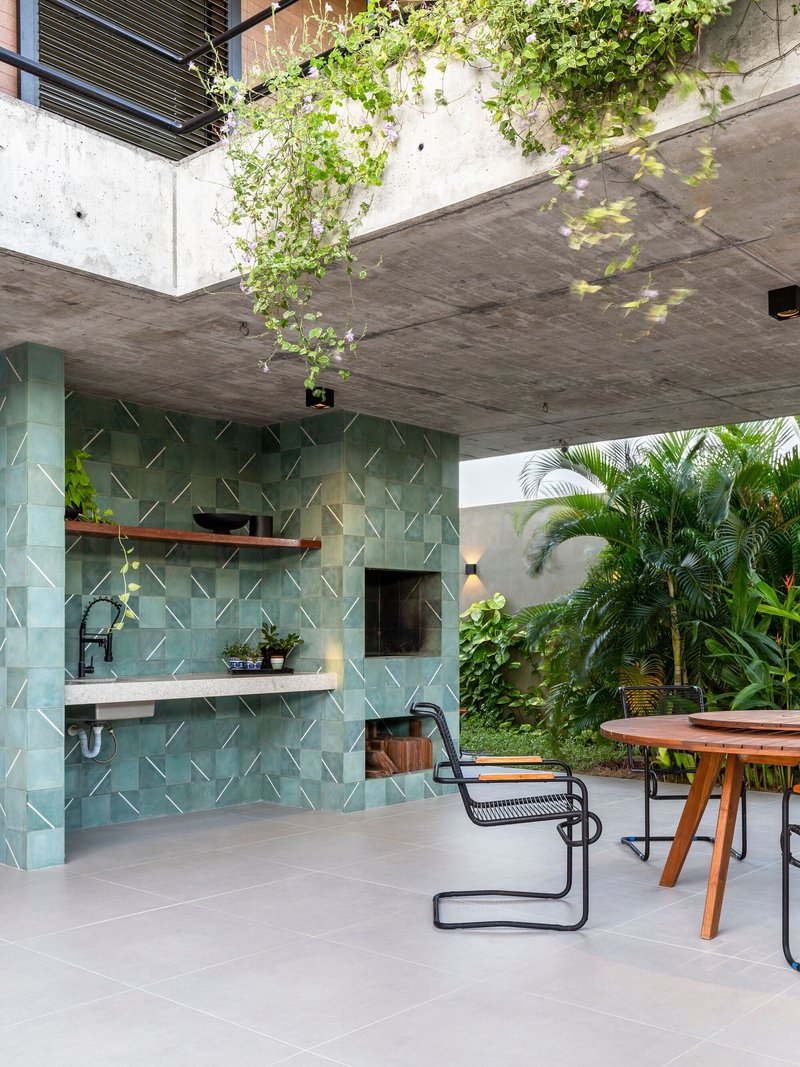
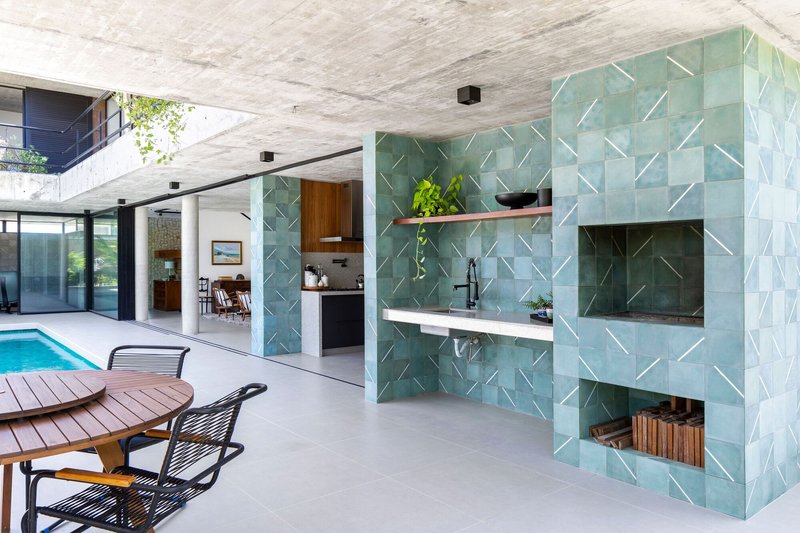
Against the grey austerity of the concrete, the turquoise relief tiles hit with real force. Used as backsplash walls in the outdoor kitchen and as sliding panels around the courtyard, they bring a chromatic warmth that references northeastern Brazilian craft traditions without lapsing into nostalgia. The chevron pattern on the patio kitchen wall is particularly effective: large enough to read architecturally, detailed enough to reward a closer look.
Juliana Atem, who handled the interior design, balances these moments of color with natural materials: timber cabinetry, dark wood flooring, frosted glass blocks. The palette is restrained but not austere. Verônica Barreira's lighting design contributes quietly, with uplighting at the concrete soffits that transforms the terraces at dusk into warm, glowing volumes.
Terraces, Vines, and Vertical Green
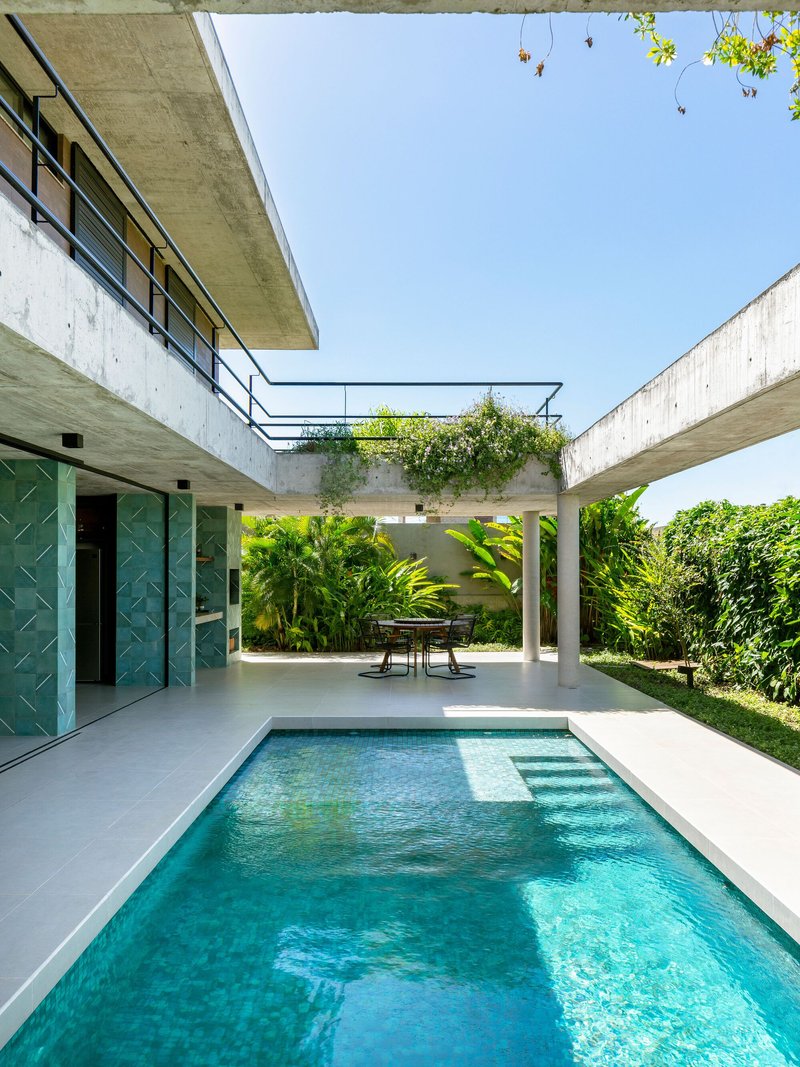
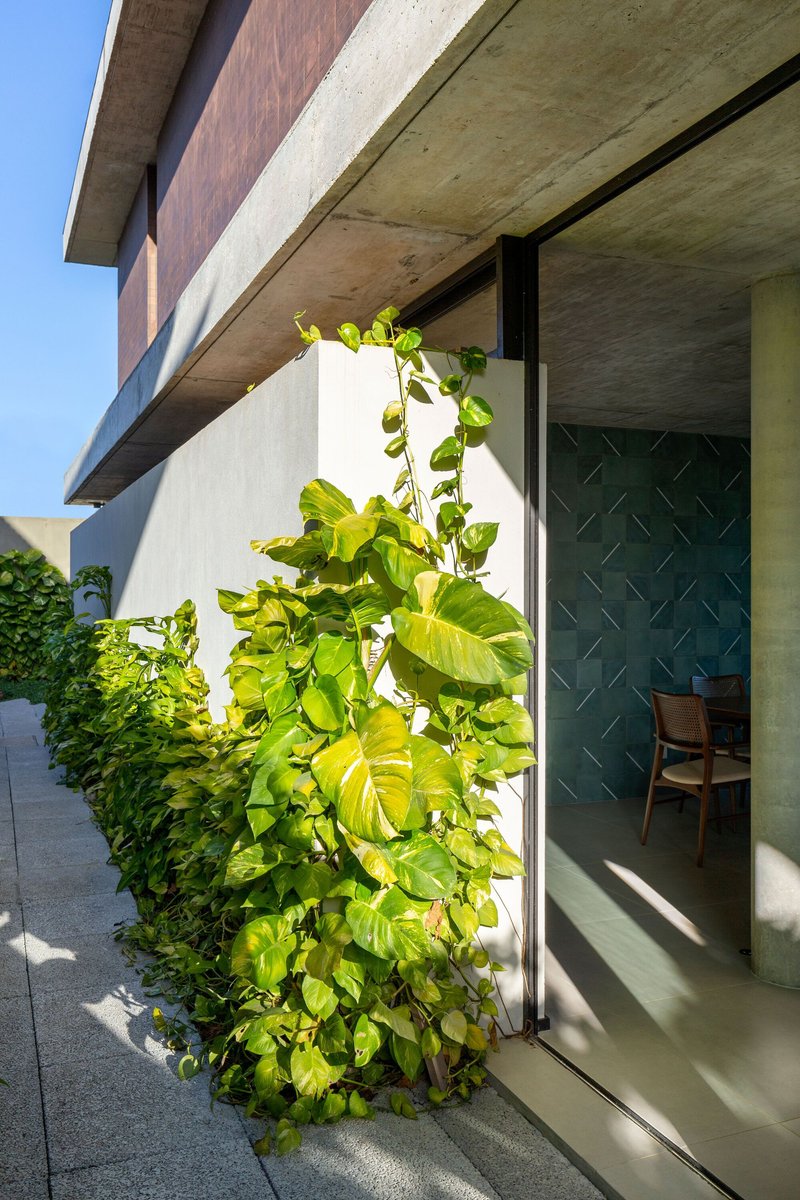
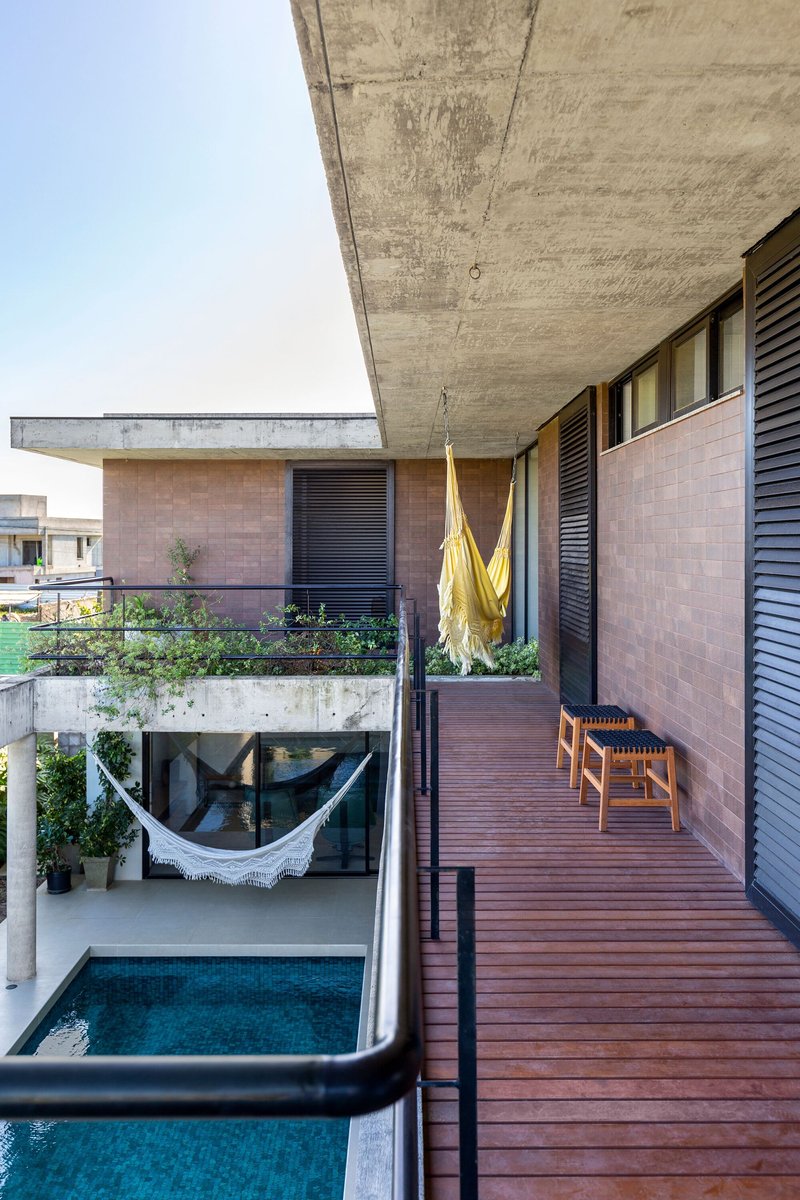
Landscape architect Fernanda Rocha layered vegetation across every available surface. Pothos vines climb white walls beside glazed doors. Planter boxes line the upper terrace, spilling green over the concrete edges. A cascading vine drops from the outdoor kitchen's soffit. The effect is cumulative: the house looks as though it is slowly being absorbed by its own garden, blurring the line between built form and planted surface.
The upper timber-deck terrace, shaded by a deep concrete overhang, is perhaps the most generous outdoor room in the house. With louvered screens filtering light, a hammock slung between columns, and planter boxes at the parapet, it functions as a second living room entirely exposed to the prevailing breezes. In Fortaleza's climate, this kind of space gets used year-round, and it is telling that the architects gave it such priority in section.
Interior Sequences and Double-Height Drama
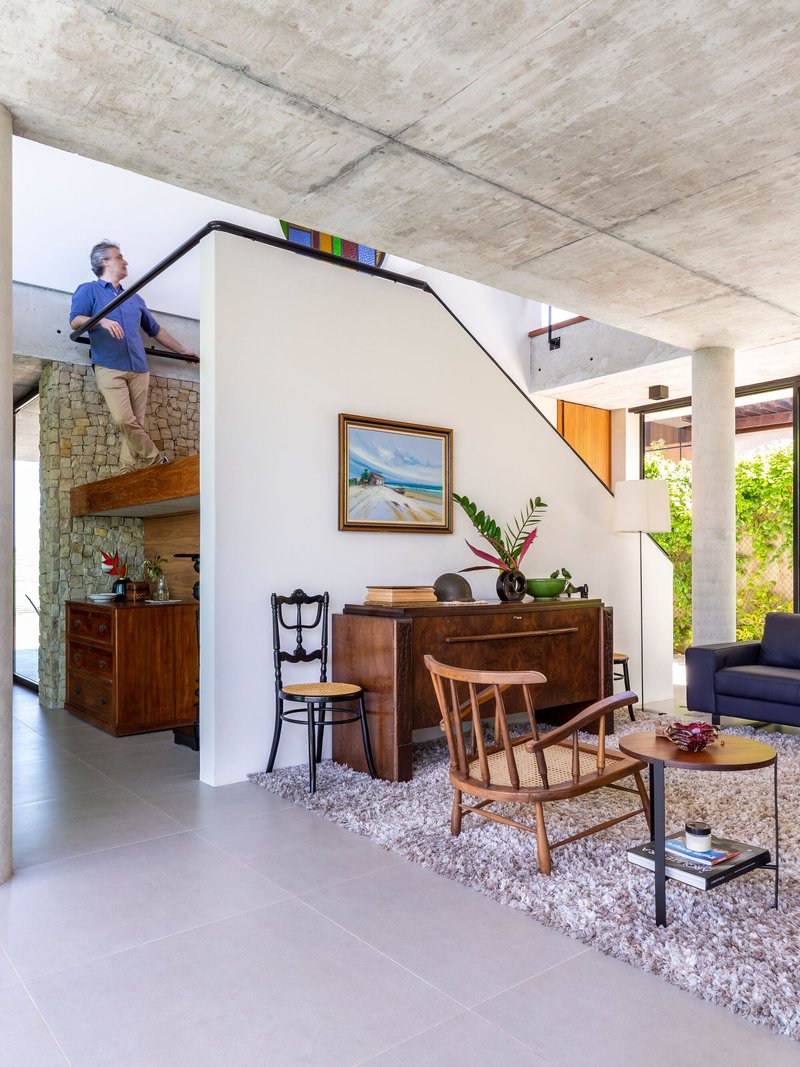
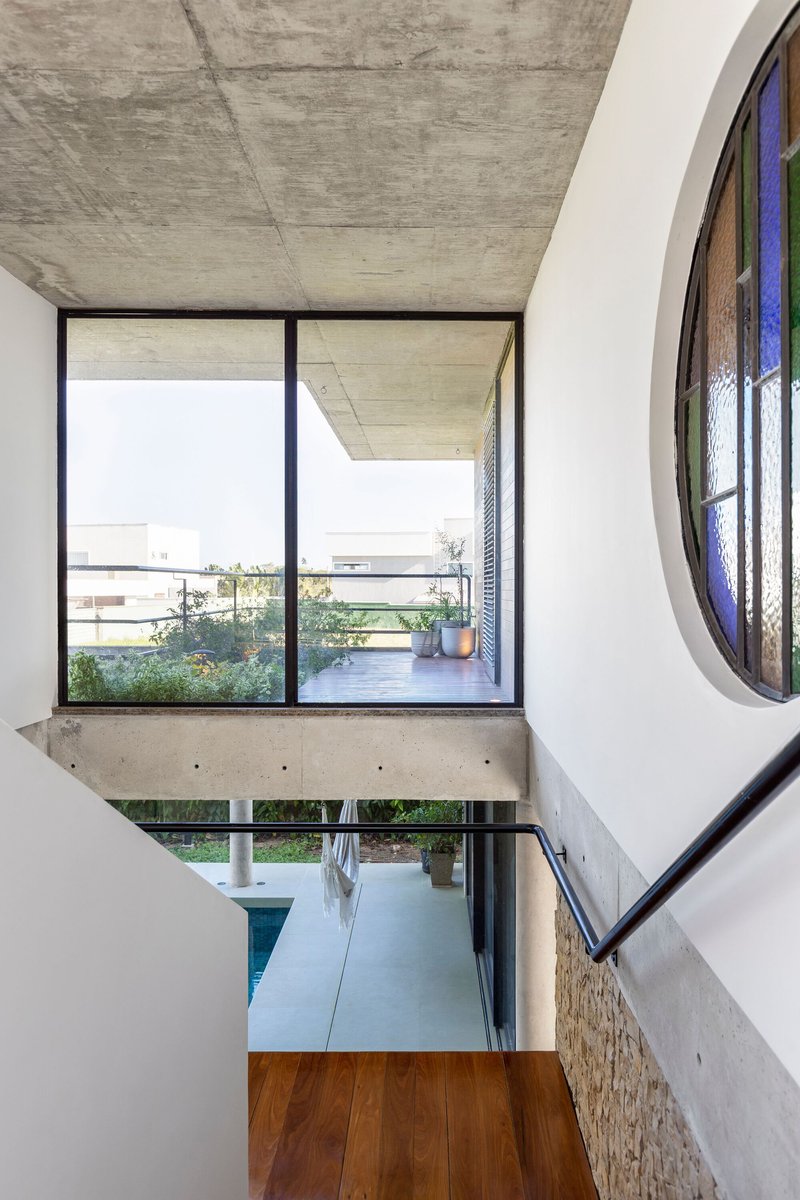
The living area rises through a double-height void that connects the ground floor social spaces with the upper bedroom corridor. A circular stained glass window punctuates the stair wall, an unexpectedly playful gesture in an otherwise sober palette. The angled stair volume creates a sculptural presence in the room, and the board-formed concrete ceiling extends overhead like a shallow barrel, compressing and releasing the space as you move through it.
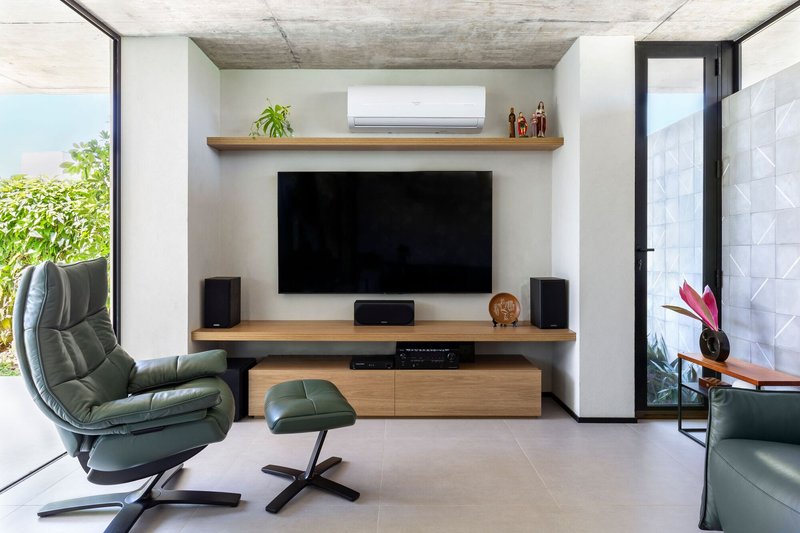
The media niche, tucked beside full-height glazing that opens onto a planted courtyard, demonstrates how the architects handled intimacy within an open plan. Rather than closing off rooms, they used changes in level, ceiling height, and material to signal shifts in atmosphere. A timber-shelved alcove reads as a retreat even though it shares air with the larger living volume.
Dusk and the Quality of Shelter
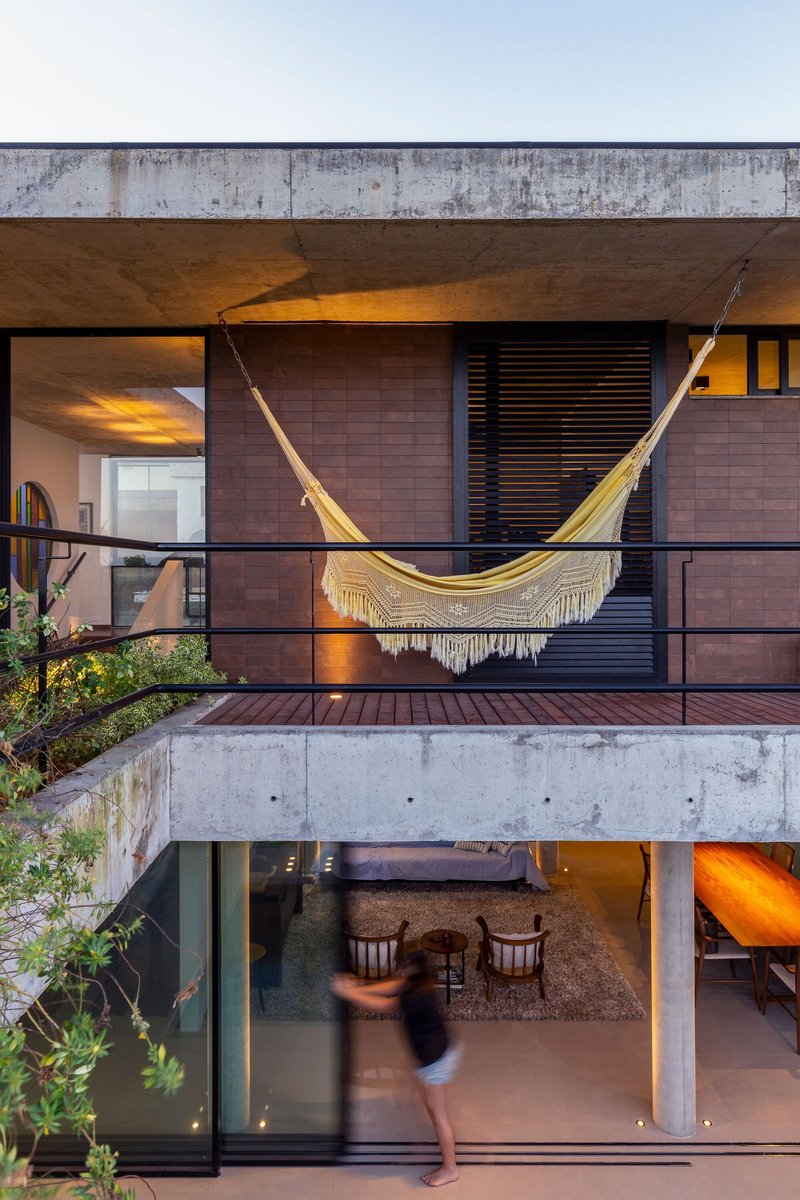
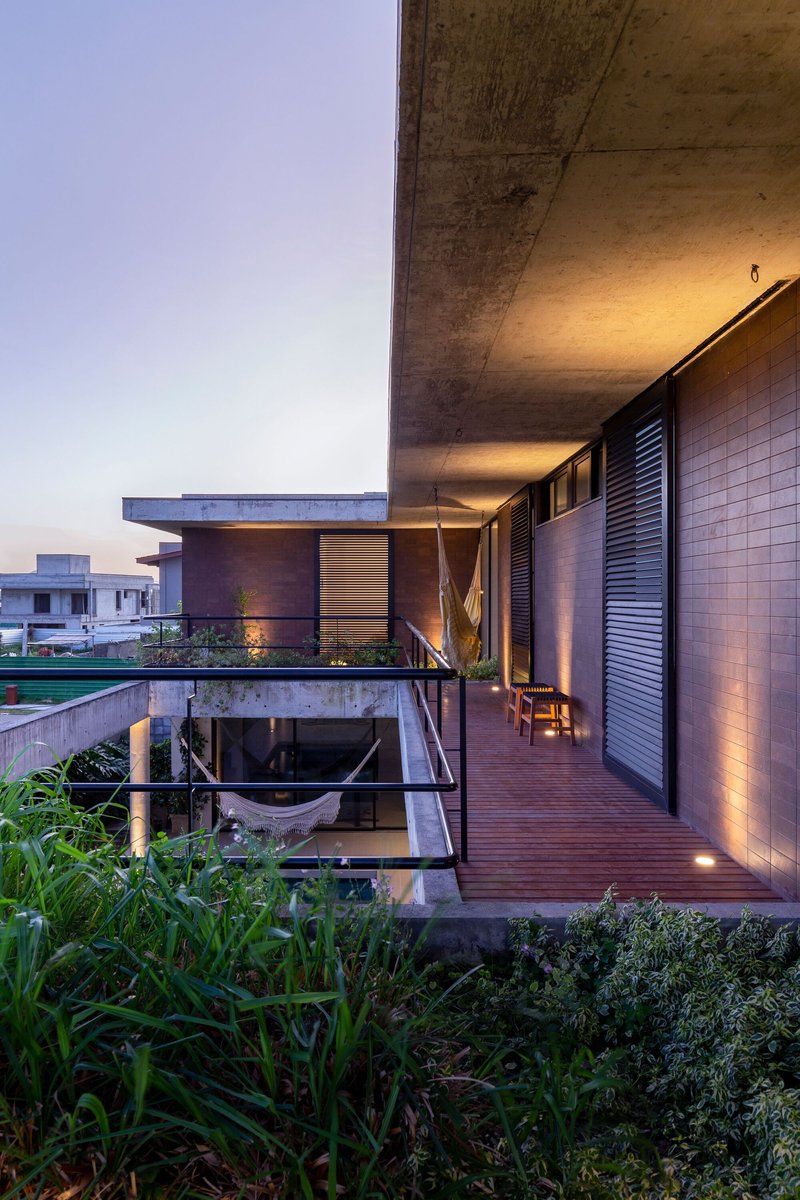
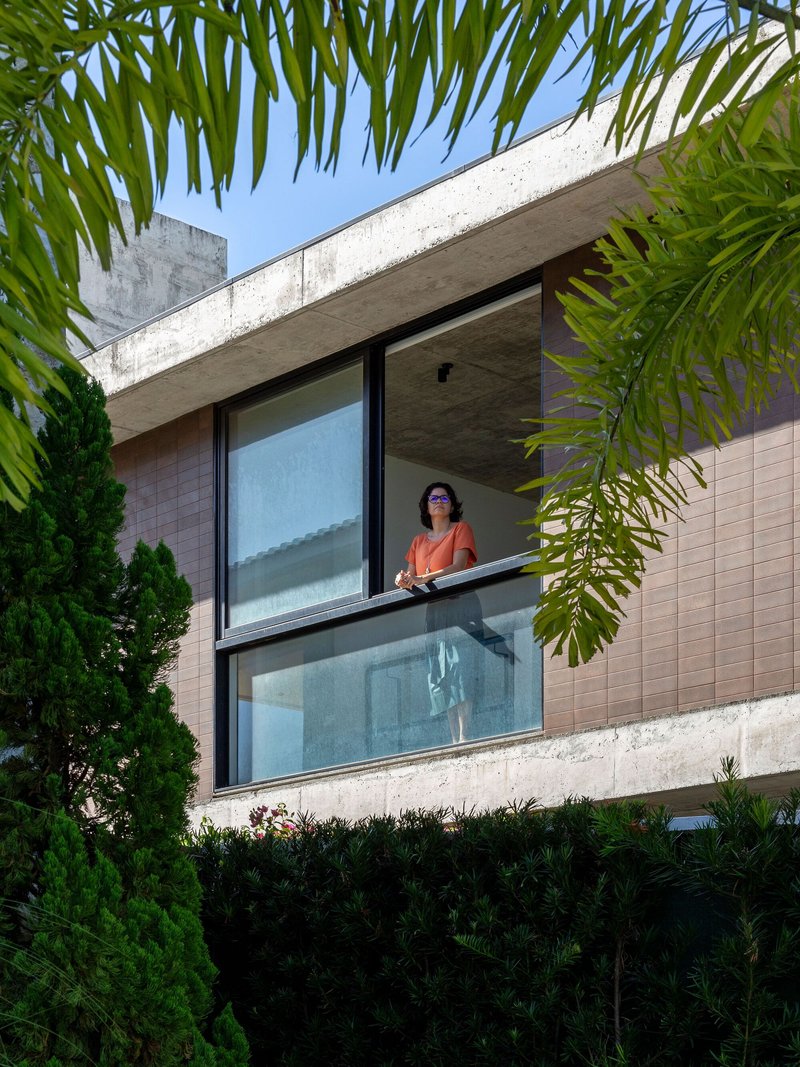
The house changes character at twilight. Stacked terraces glow with warm uplight, the hammock beneath the cantilever catches the last of the sky, and the concrete surfaces lose their daytime severity, becoming soft, amber planes. The two-story glass facade, seen through palm fronds and hedges, reveals the interior without exposing it. The house remains introspective even when it is most visible.
This shift is not accidental. The lighting design, the planting, and the material choices were all calibrated to perform differently at night. In a climate where outdoor living extends well past sunset, the evening condition of a house matters as much as its noon performance. Fernandes Atem understood this, and the result is a residence that peaks, atmospherically, at the exact hour its occupants are most likely to be home.
Plans and Drawings
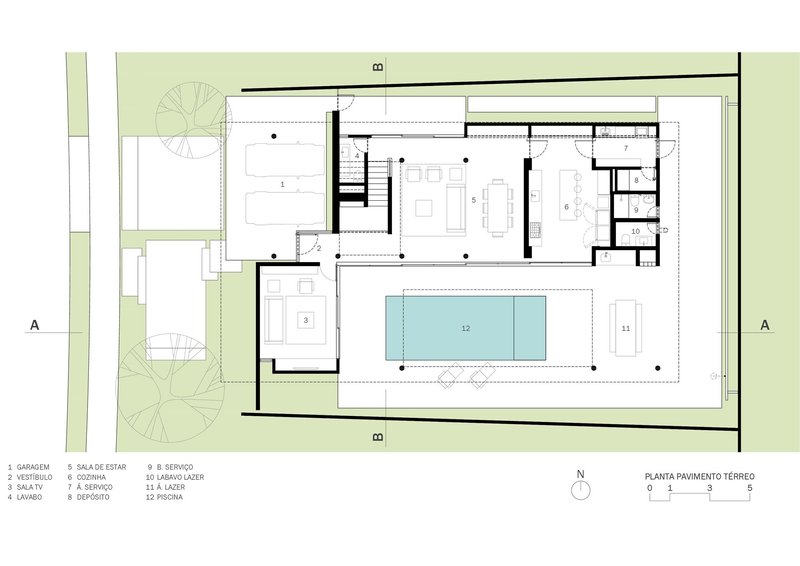
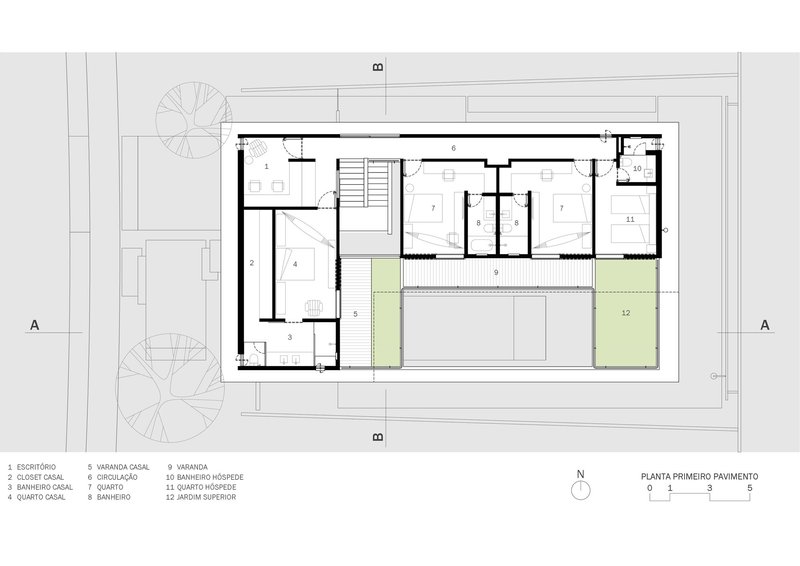
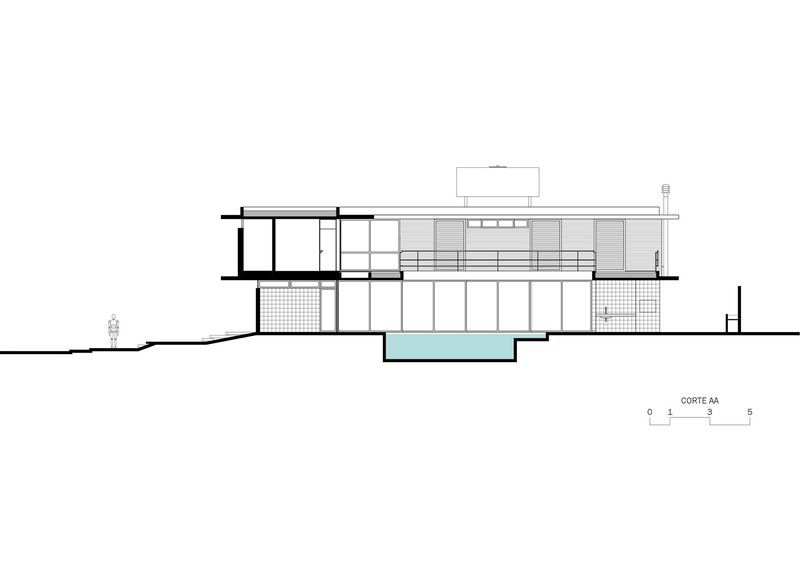
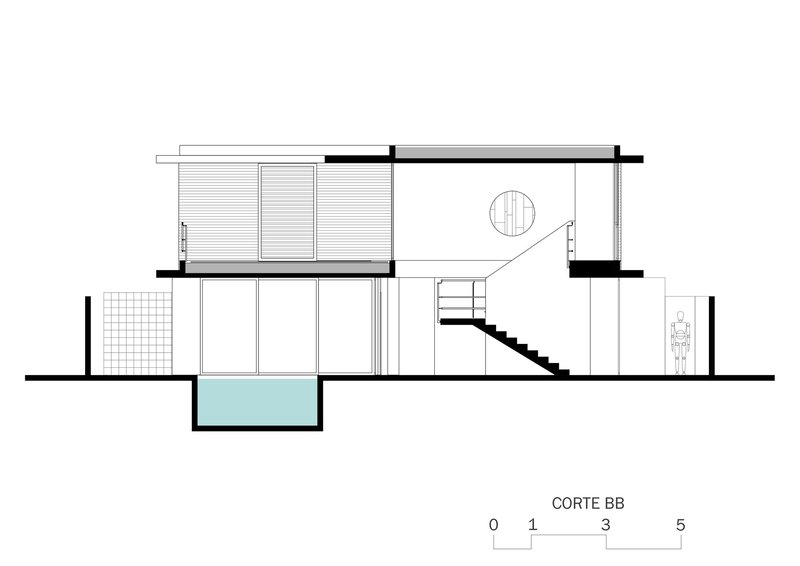
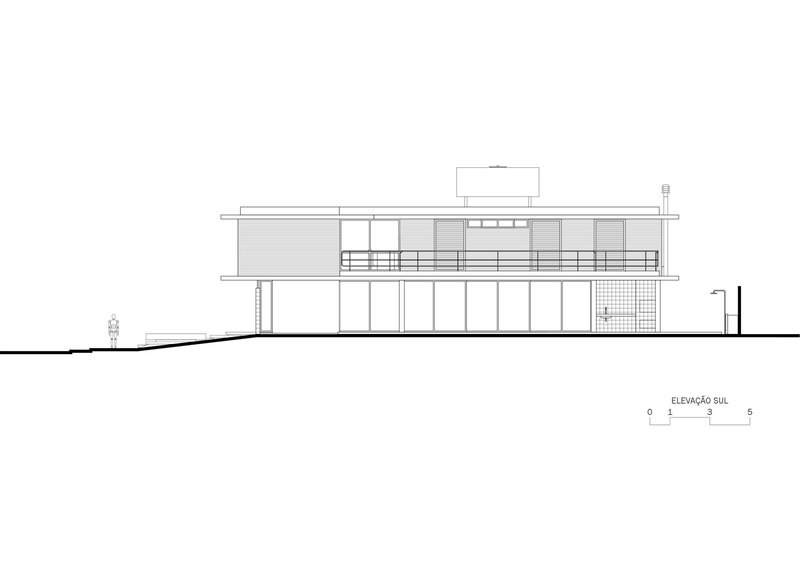
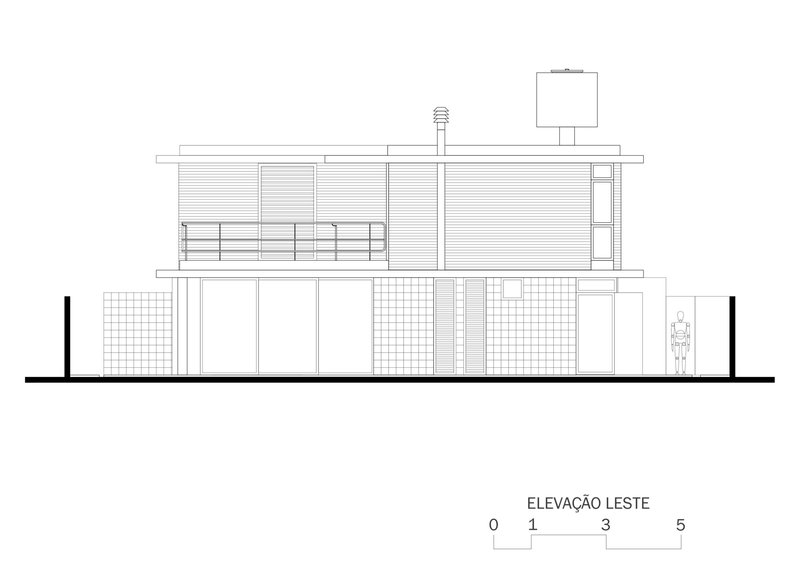
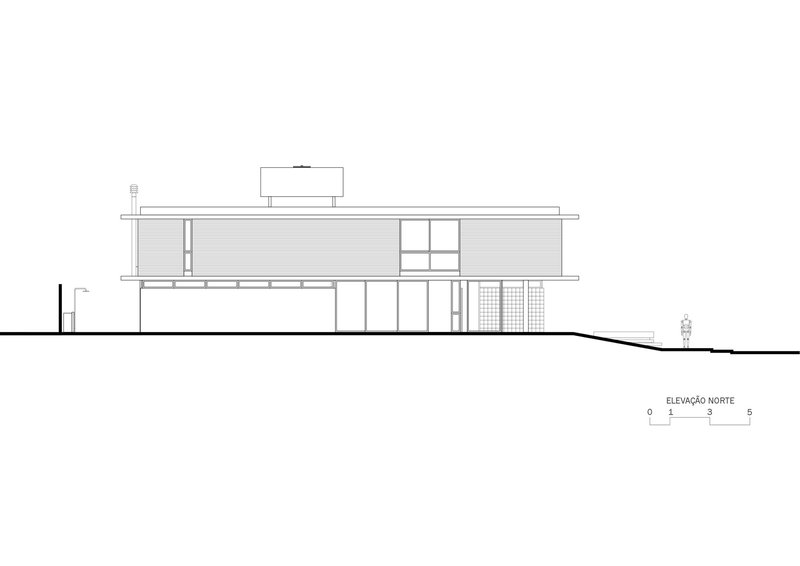
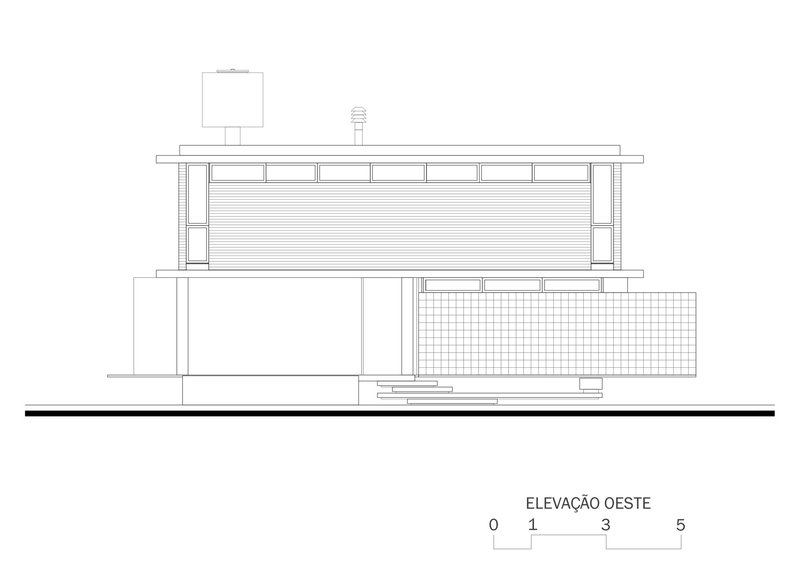
The floor plans confirm what the photographs suggest: the pool courtyard is the organizational center, with social spaces wrapped along its western and southern edges and bedrooms arranged along the upper-level corridor overlooking the void. The sections reveal a subtle split-level arrangement that absorbs the site's gentle slope, keeping the pool terrace at grade while lifting the private wing a half-level above.
The four elevations read as a catalog of climate strategies. The south and east faces are more open, capturing prevailing breezes and indirect light. The west elevation is nearly opaque, defended by the terracotta volume and deep overhangs. The north elevation is screened with louvers. Each face is tuned to its orientation, a discipline that is legible in the drawings and felt in the spaces.
Why This Project Matters
House AR is a reminder that working within constraints, a standard lot, a punishing orientation, a gated community's generic context, does not have to produce generic architecture. By treating the west-facing condition as a design driver rather than a nuisance, Fernandes Atem Arquitetos generated a plan, a section, and a material palette that are all specifically calibrated to this site. The house does not pretend to be somewhere else.
It also demonstrates that exposed concrete residential architecture in tropical climates does not need to rely on brute mass or hermetic enclosure. With careful orientation, deep overhangs, planted surfaces, and well-placed openings, concrete becomes a generous material: protective overhead, cool underfoot, and warm in the evening light. For architects working in similar equatorial conditions and constrained suburban plots, this house is worth studying closely.
House AR by Fernandes Atem Arquitetos (Ricardo Fernandes, Juliana Atem), Eusébio, Brazil. 376 m², completed 2020. Photography by Igor Ribeiro.
About the Studio
Share Your Own Work on uni.xyz
If projects like this are the kind of work you want to make, uni.xyz is a place to publish your own, find collaborators, and enter design competitions.




Popular Articles
Popular articles from the community

LGA Architectural Partners Build Toronto's First Multiplex Condo on a Single-Family Lot
Ulster House packs five zero-carbon units into a Harbord Village lot, proving gentle density can be market-ready and livable.
Healing Façade: Sustainable Architecture for Reforestation, Community, and Sacred Ecology in Ethiopia
Healing Façade reimagines sustainable architecture as a living wall that restores soil, catches water and renews Ethiopia's forest churches.
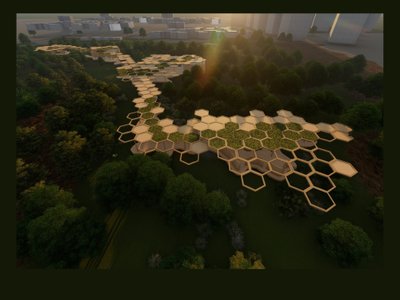
Eco Chapel: A Green Architecture Pavilion Designed in Symbiosis with the Forest
Eco Chapel uses green architecture to weave prayer, learning and reuse into a forest pavilion shaped by modular hexagonal canopies for life.
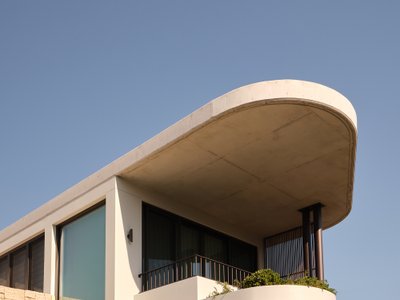
Stanton Architects Sculpts a Curving Family Home into Sydney's Inner West Fabric
Five Dock House uses cantilevers, curved concrete, and layered courtyards to carve out privacy on a tight suburban lot in Sydney.


Similar Reads
You might also enjoy these articles

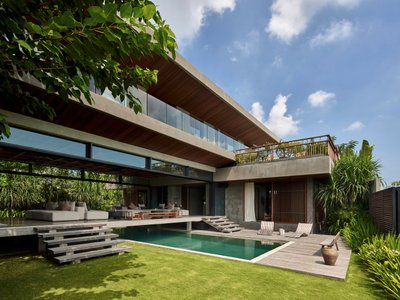
Freebird Residence by Alexis Dornier: A Tropical Modernist Sanctuary in Bali
Floating living pavilion above pool anchors H-shaped tropical villa, blending Japanese minimalism, sustainable strategies, lush landscape, and sculptural interiors.
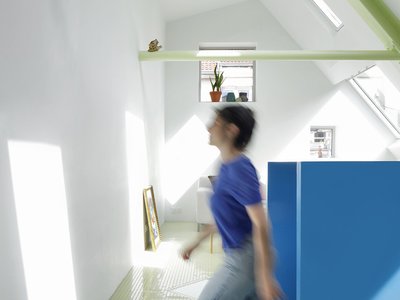
127af Flips a Tiny Bagnolet Rowhouse Upside Down with a Handcrafted Roof Extension
A 55-square-meter terraced house on the edge of Paris gains a luminous upper living floor through lightweight timber and steel.
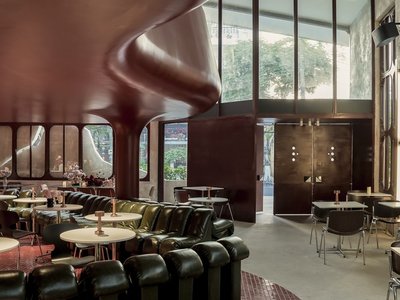
1.61 Design Workshop Wraps a 600-Square-Meter Café in Vietnam in Sculptural Burgundy Drama
Reden Café & Bistro pairs a helical staircase, mosaic floors, and deep red interiors to rethink Vietnamese hospitality space.

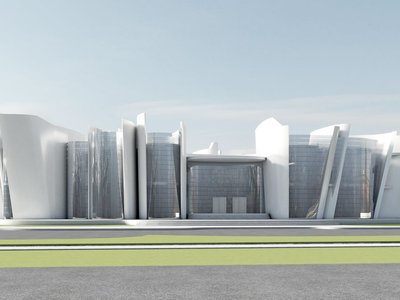
The Unbound Brain: A School Shaped by Cognitive Architecture
Cylindrical learning pods radiate like neurons from a central cortex, turning the floor plan into a spatial model of human thought.

Explore Residential Building Competitions
Discover active competitions in this discipline




The International Standard for Design Portfolios


The Global Benchmark for Architecture Dissertation Awards


The Global Benchmark for Graduation Excellence


Challenge to design mud housing for contemporary communities
Comments (0)
Please login or sign up to add comments
No comments yet. Be the first to comment!