
Fig Tree House by Estúdio Lava – A Timber Arc Shaped by Sun, Forest, and Sea
A curved GLT timber house in Angra dos Reis, embracing forest and sea through sun-oriented geometry, suspended decks, and sustainable craftsmanship.

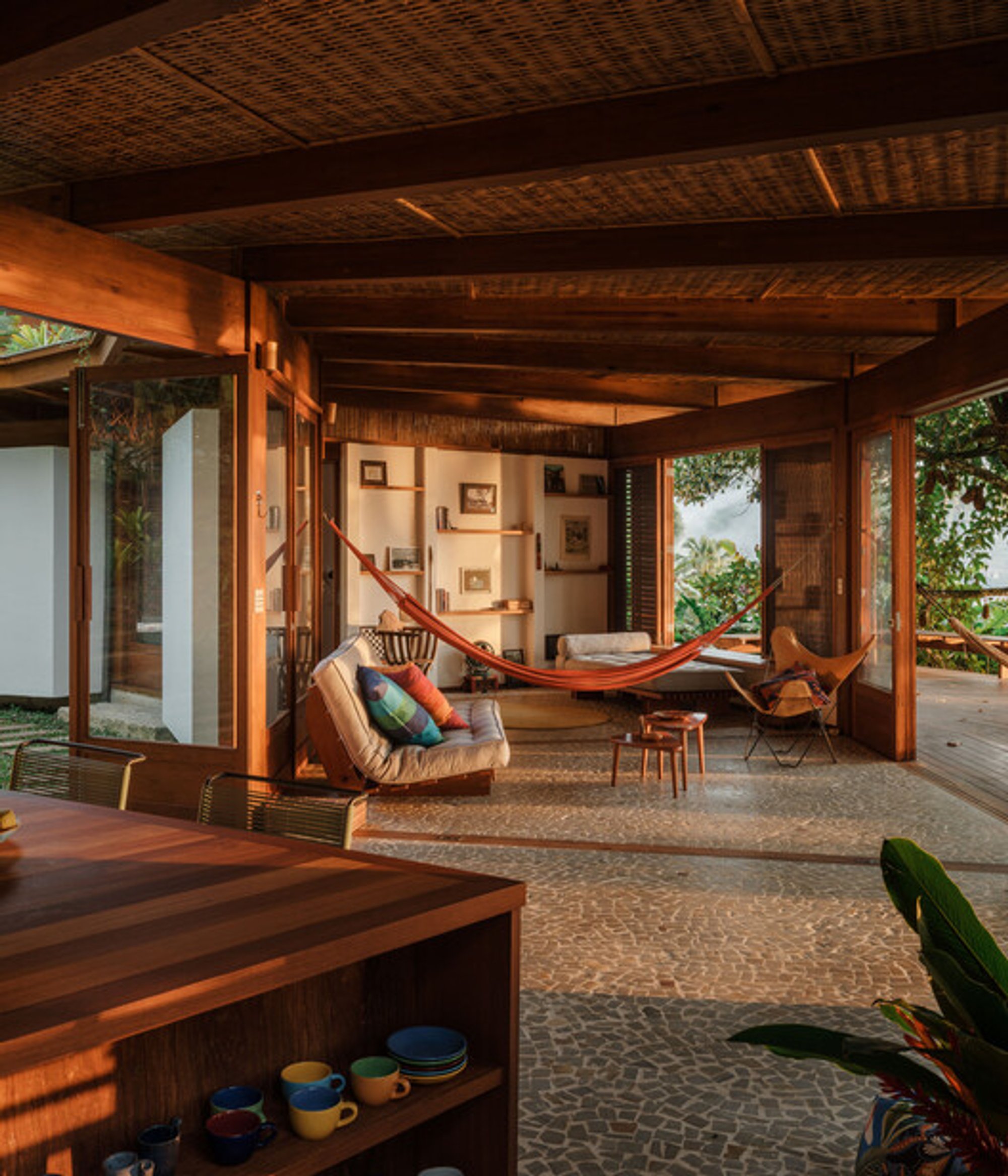
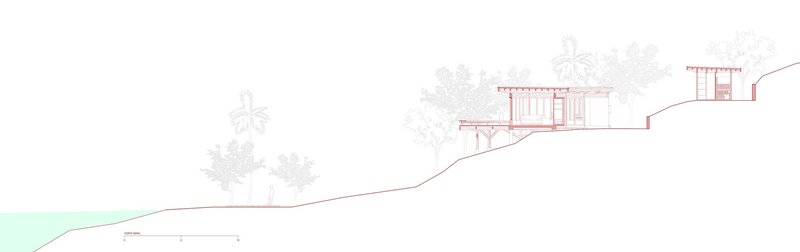
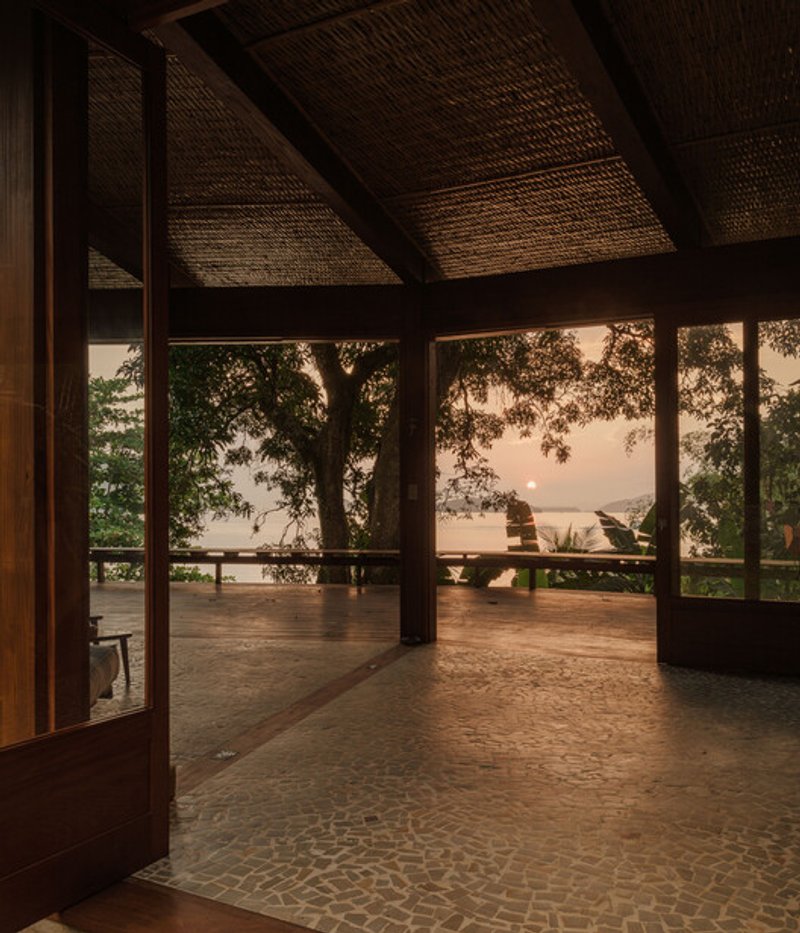
Nestled within the lush Atlantic Forest of Praia da Figueira in Angra dos Reis, the Fig Tree House by Estúdio Lava is an elegant response to a site defined by steep terrain, native vegetation, and sweeping views toward the sunset and the island of Gipóia. The house adopts a distinctive semicircular form, tracing the arc of the sun and orienting living spaces toward the open sea while preserving the mature trees that dominate the site.
Designed by architects Julia Reis and Lucas Bueno, the retreat merges engineered timber technology with organic geometry, resulting in a residence that feels at once grounded, lightweight, and deeply connected to its environment.
A Semicircular Gesture Following the Sun’s Path
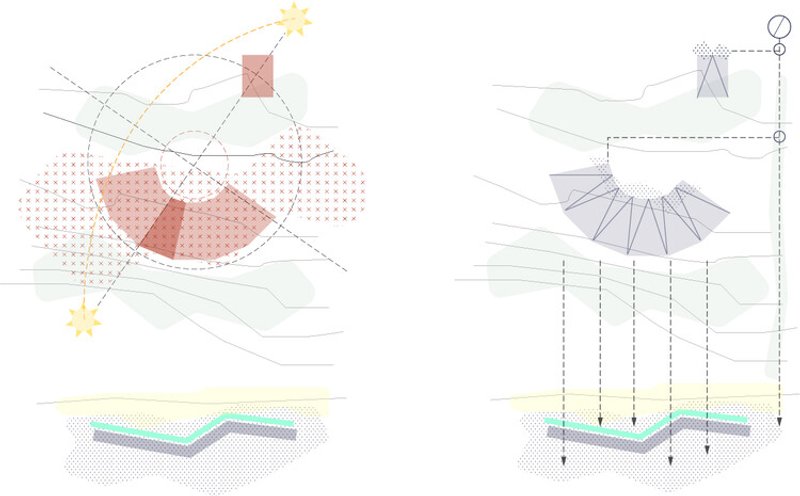
The project began with the site’s most compelling narratives: steep topography, dense forest, and a westward orientation ideal for capturing daily solar movement. The architects translated these forces into an arc-shaped plan, generating a building that opens to a large wooden deck embracing existing trees, while a circular patio completes the geometry on the protected side.
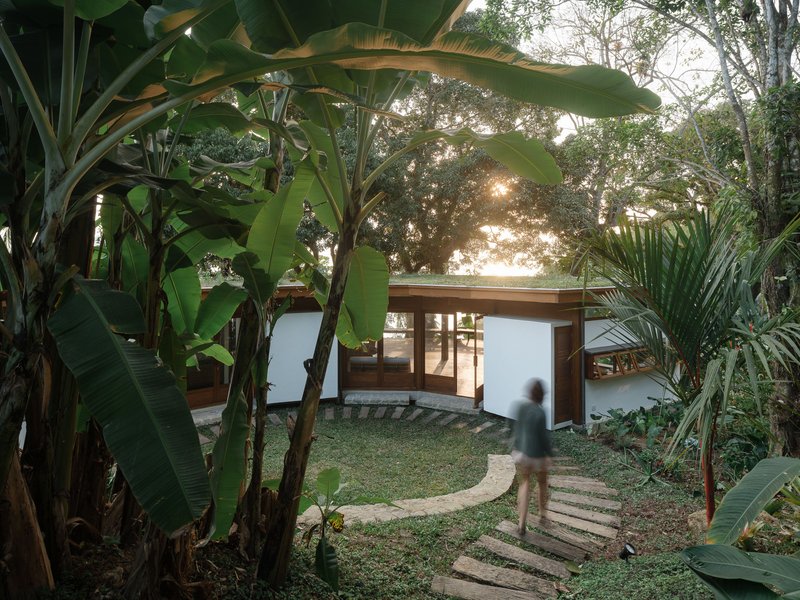
Two major terraces cut into the slope organize the terrain, creating wide platforms for the house while minimizing impact. Wooden walkways, following the architectural curvature, guide residents through the landscape as if moving along the orbit of the sun.
Engineered Timber as Structure, Form, and Identity
The defining material of Fig Tree House is Glued Laminated Timber (GLT)—a high-performance engineered wood chosen for its:
- Lightness and sustainability
- Dimensional precision
- Curvilinear versatility
- High load capacity
- Reduced construction footprint
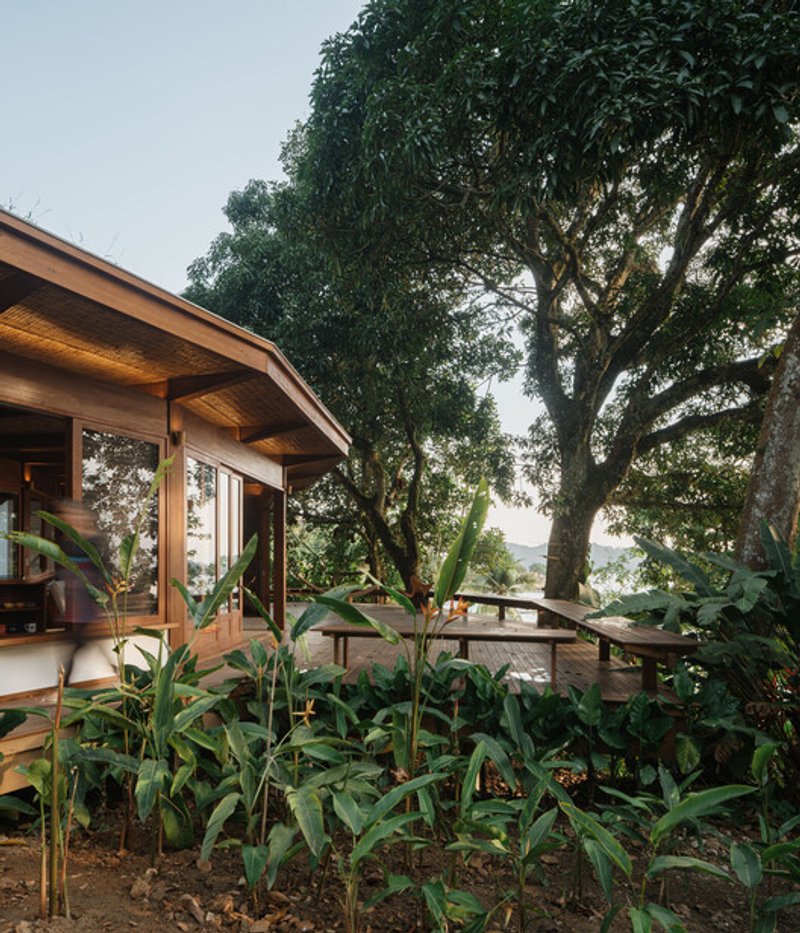
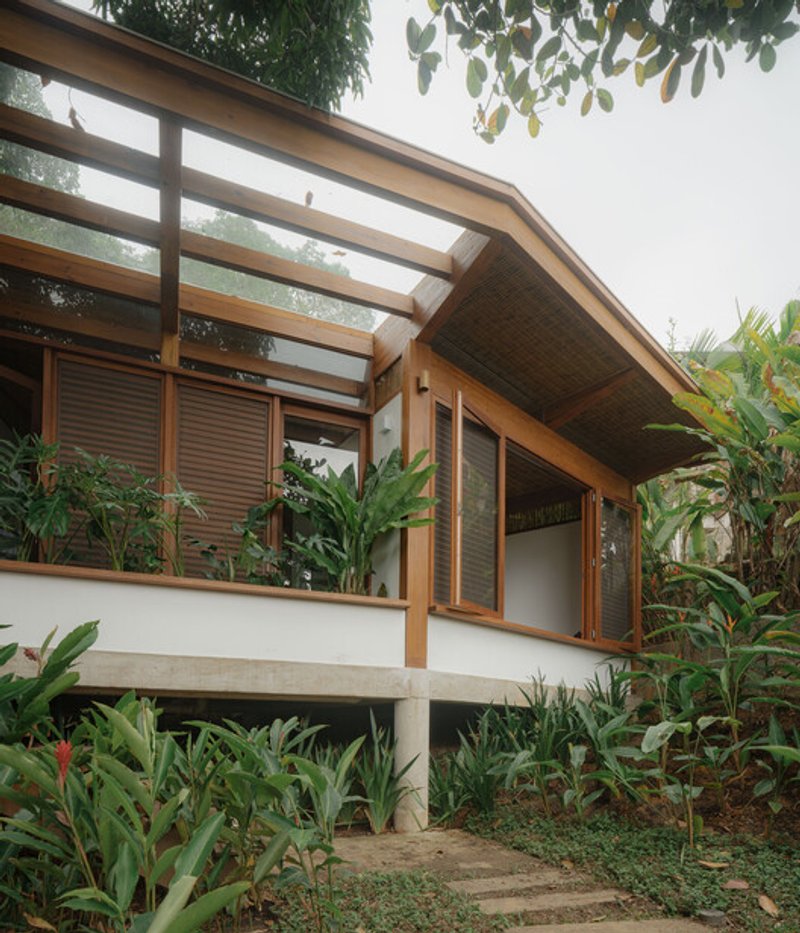
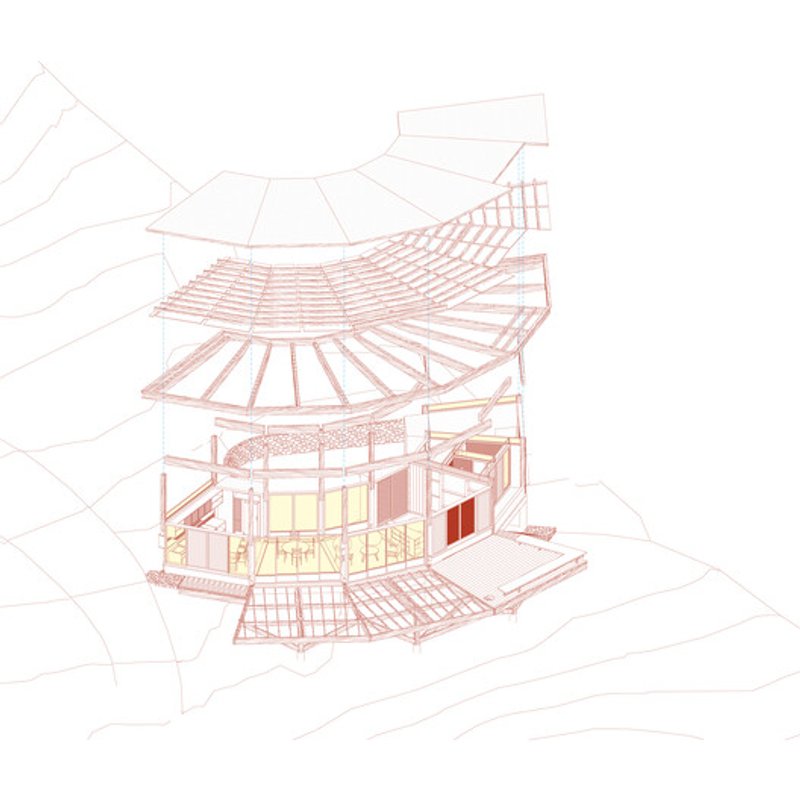
Produced from renewable pine and finished with an Imbuia stain, the GLT structure forms the entire architectural skeleton: columns, beams, curved spans, and roof profiles. An advanced CNC machining process ensured exact fabrication, enabling the fluid geometries to be assembled with clarity and efficiency.
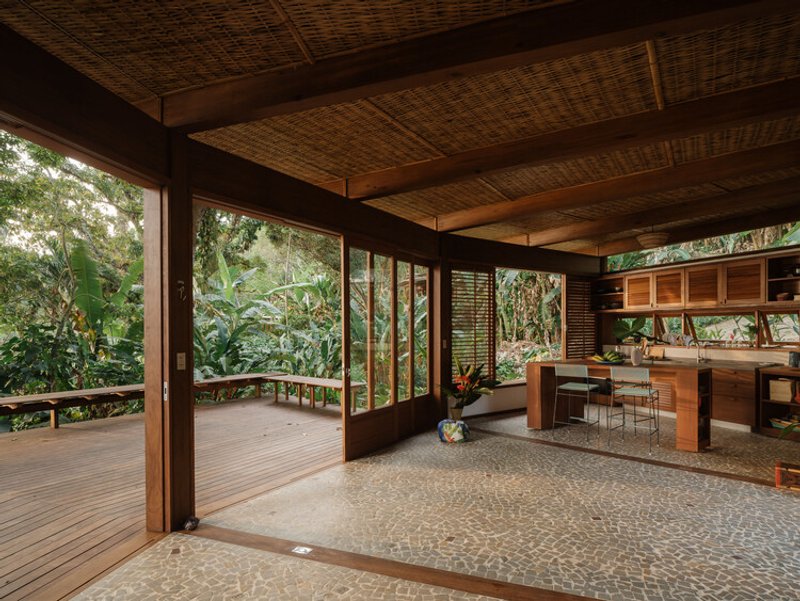
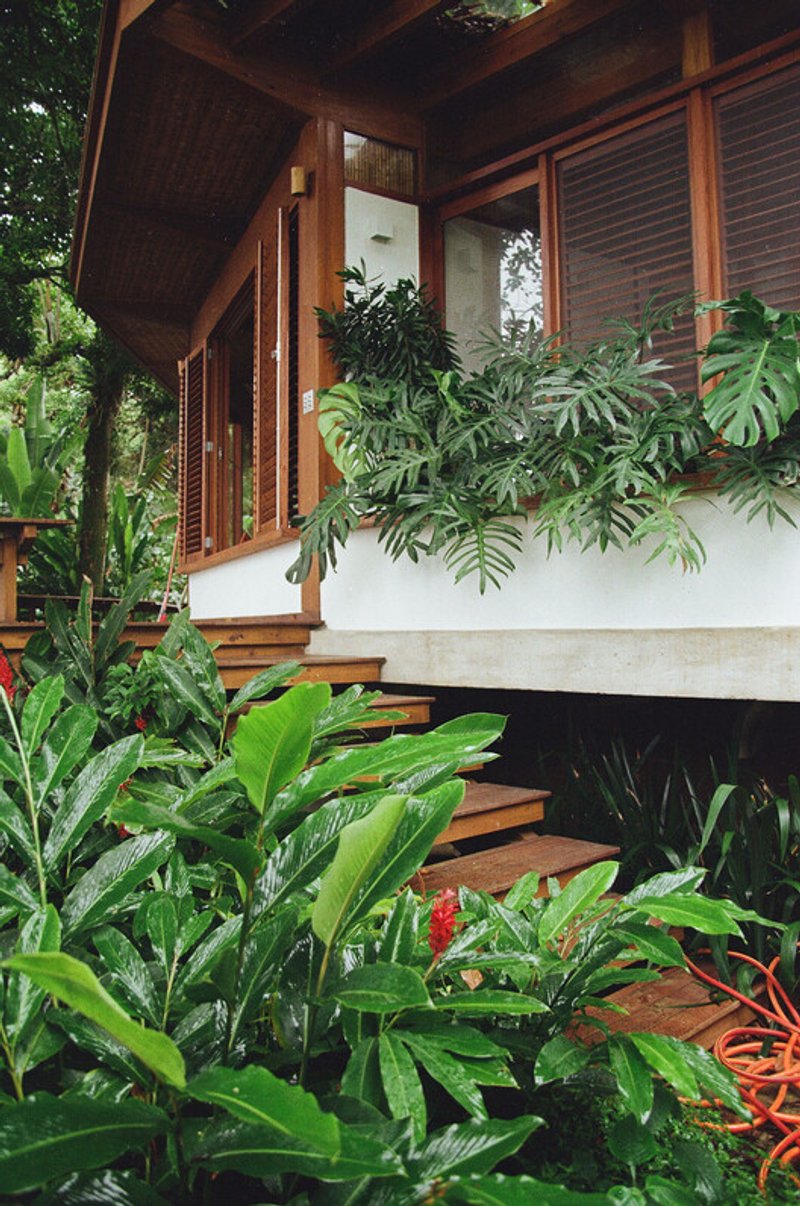
Complementary materials amplify the dialogue between built and natural:
- Granite retaining walls anchoring the house to the slope
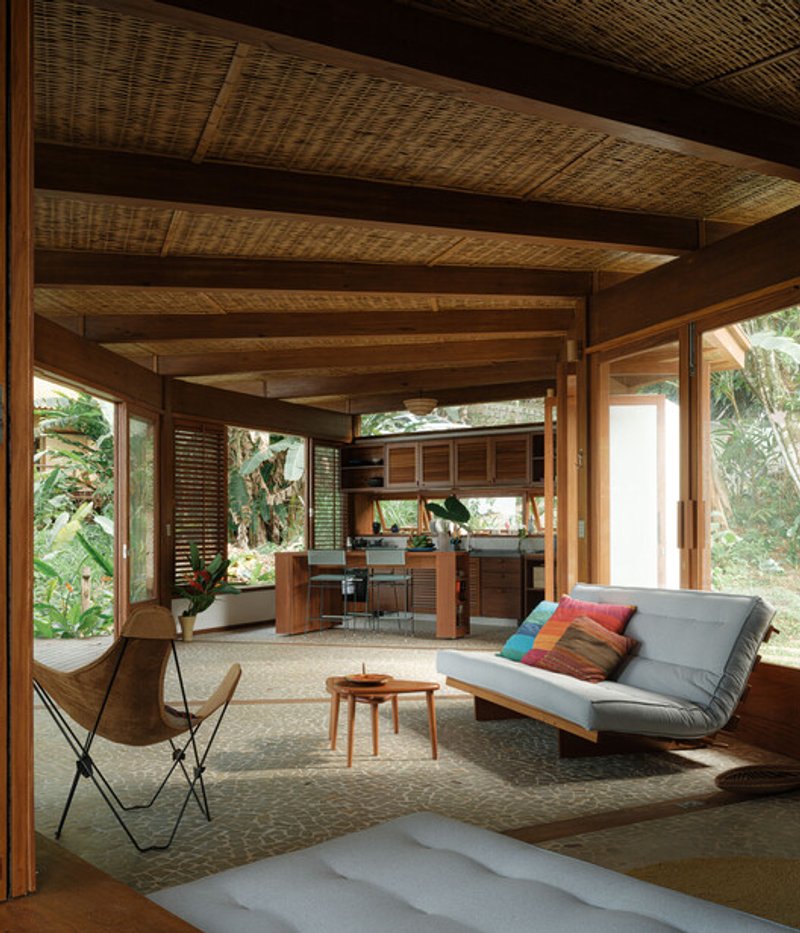
- Portuguese stone floors grounding interior-exterior transitions
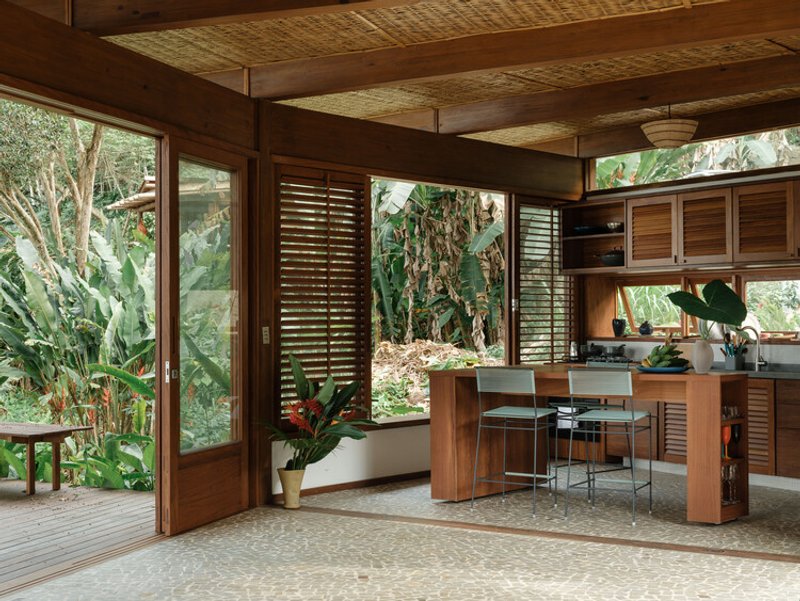
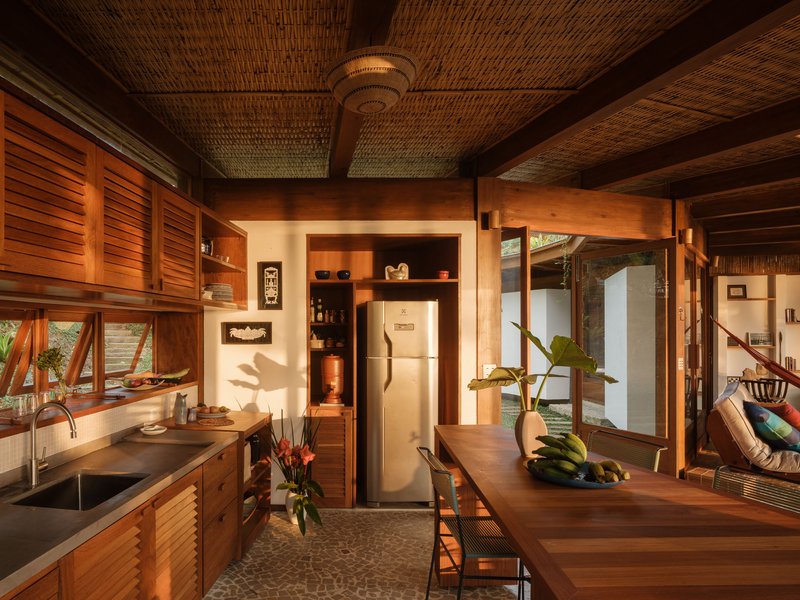
- Woven bamboo ceilings enhancing acoustic warmth and tropical identity
Five Timber Modules Forming a Fluid Spatial System
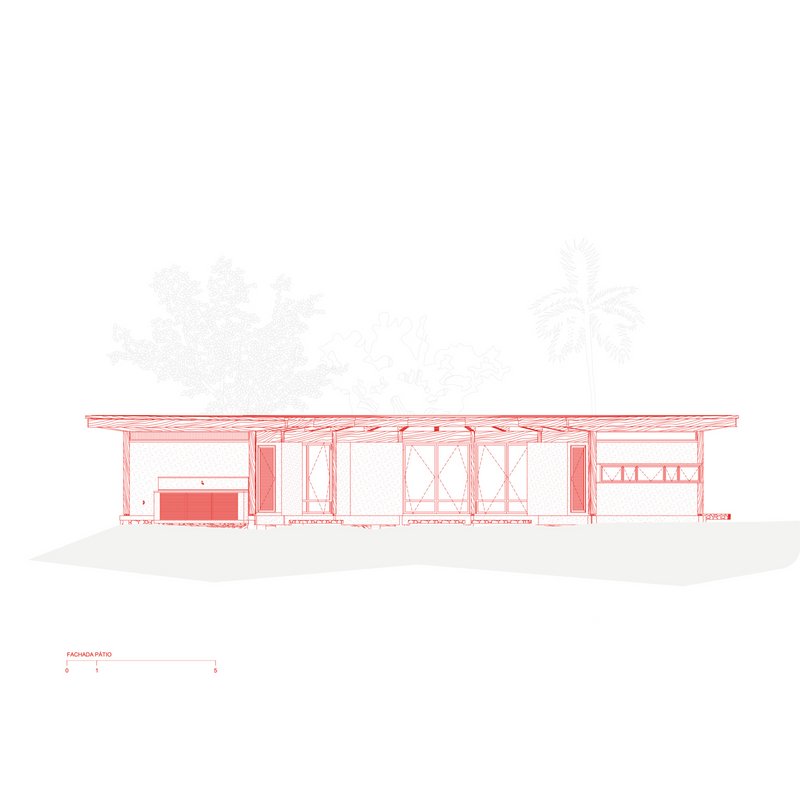
The home is structured into five modules, each defined by trapezoidal GLT columns and beams that follow the building’s graceful curve:
- Module 1 – Kitchen placed closest to the road, opening directly to the sea-facing living area.
- Modules 2 & 3 – Living Room, spanning two full bays and opening widely to the panoramic deck.
- Modules 4 & 5 – Bedroom Cluster, wrapped around a centralized bathroom core with a tripartite layout: separate WC, shower, and outdoor sink for simultaneous use.
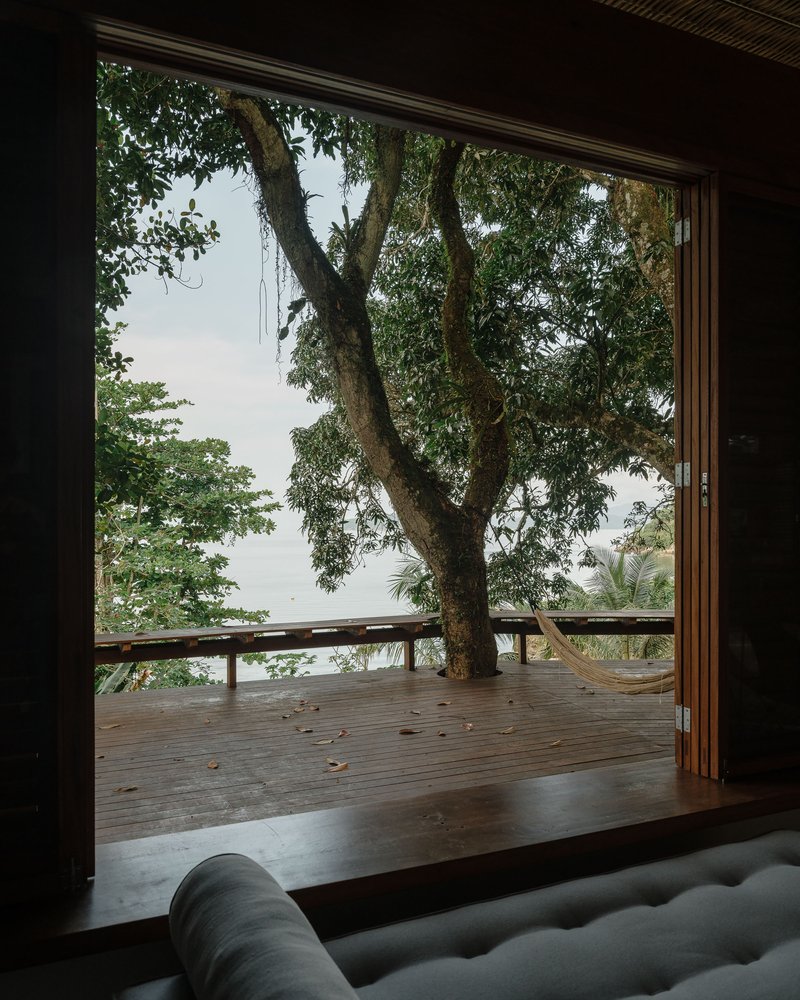
The result is a sequence of spaces that flow naturally along the arc, maintaining constant visual connection with the surrounding forest canopy and coastline.
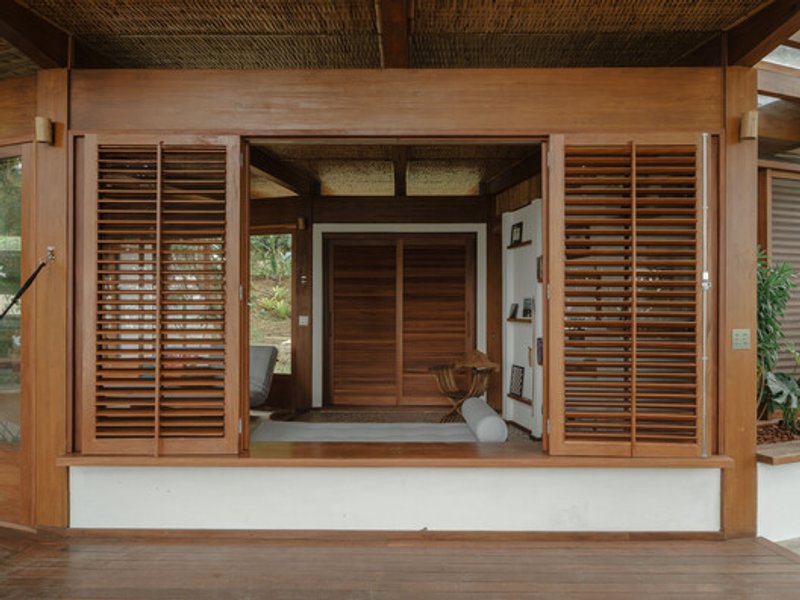
A Deck Suspended Among Trees — The House’s Signature Experience
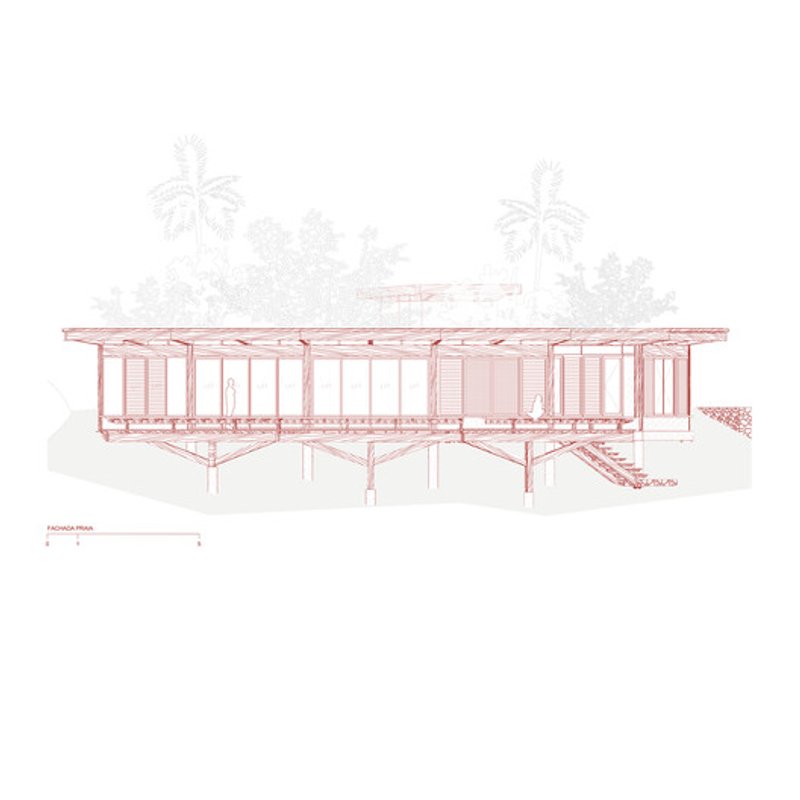
One of the project’s most striking elements is the suspended wooden deck, supported by sculptural “tree-like” pillarsanchored to exposed concrete bases. This elevated platform extends the interiors outward, creating a floating terrace where residents stand among the treetops while overlooking the sea.
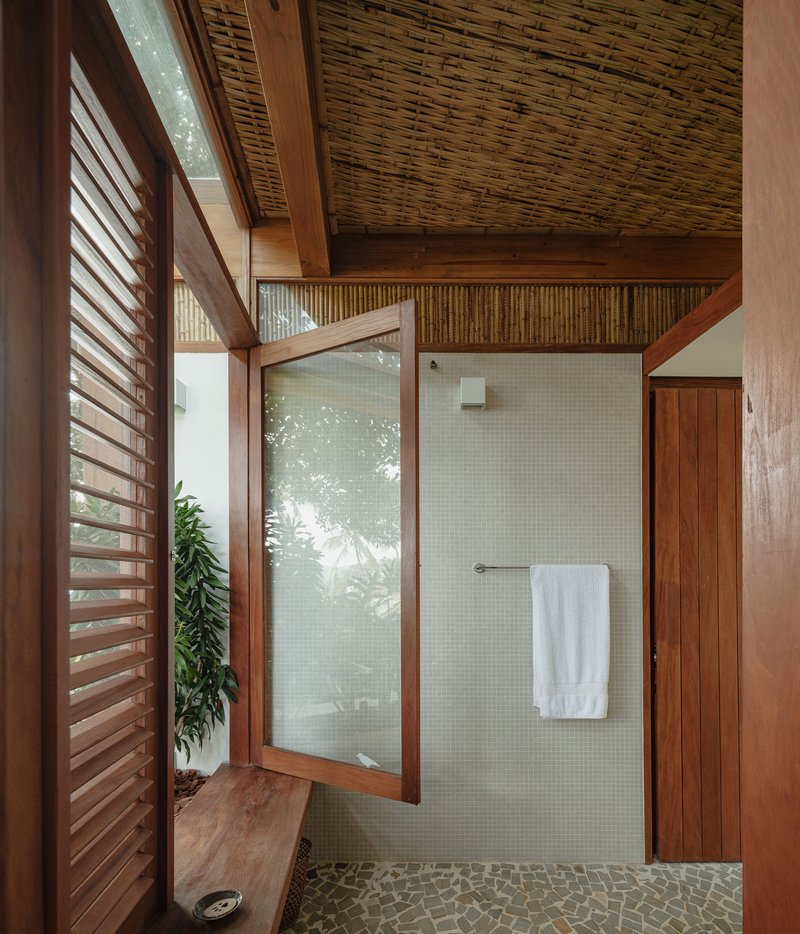
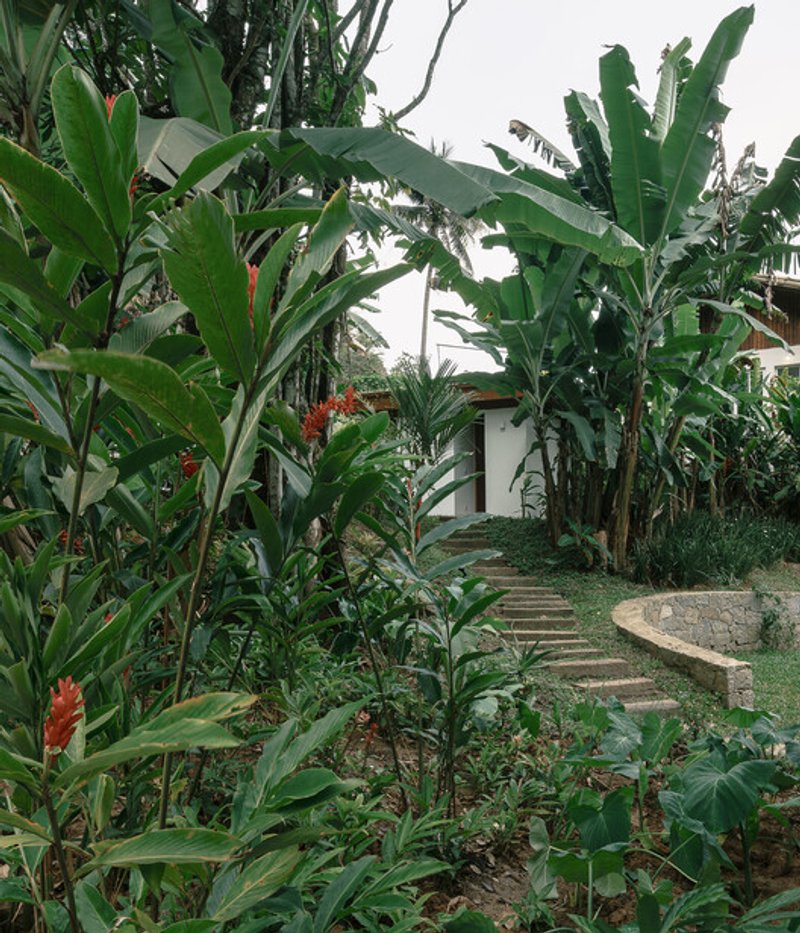
The deck blurs the boundary between architecture and vegetation, embodying the project’s ethos: a home that inhabits the forest without dominating it.
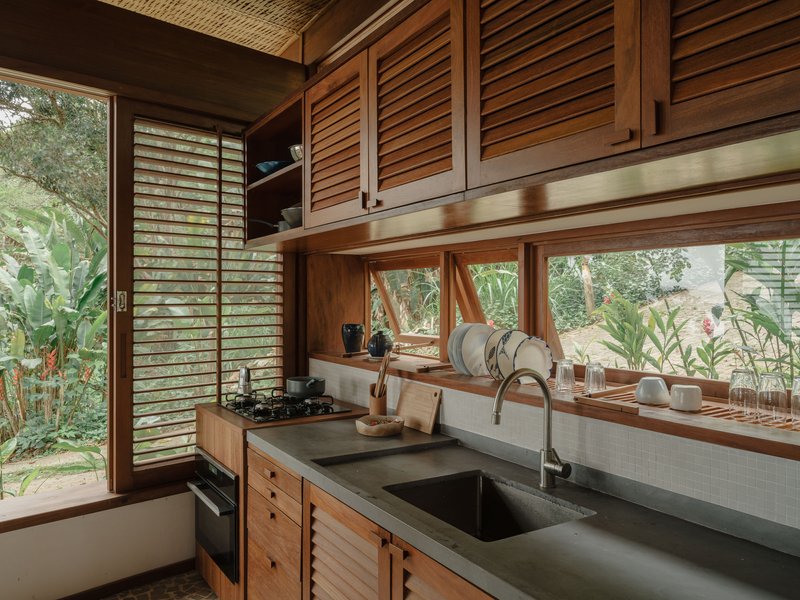
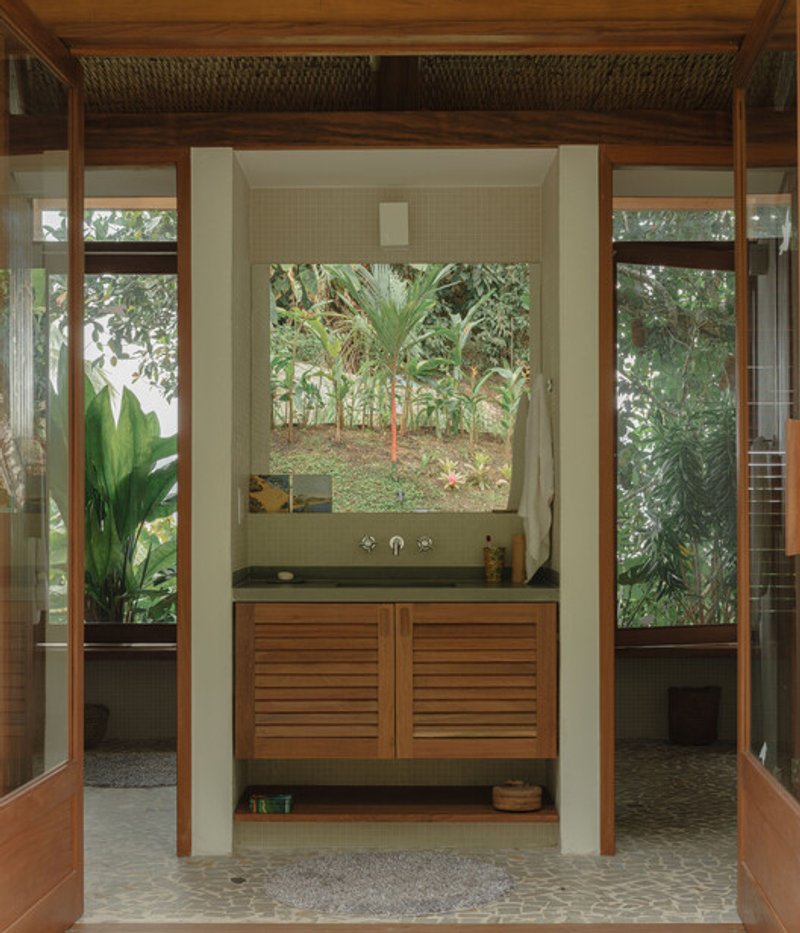
All the Photographs are works of Pedro Kok, Julia Reis




Popular Articles
Popular articles from the community

Inside a Timeless Mumbai Residence by Aether Studio
Aether Studio's 2,250 sq ft apartment in Malad, Mumbai uses marble, brass, boucle, and disciplined restraint to build a quiet retreat from the city.
Stanton Architects Sculpts a Curving Family Home into Sydney's Inner West Fabric
Five Dock House uses cantilevers, curved concrete, and layered courtyards to carve out privacy on a tight suburban lot in Sydney.
Kerry Kounnapis Packs 800 Daily Coffees into a 43-Square-Metre Melbourne Laneway Bar
Palace Coffee channels Pellegrini's and European standing bars through oxide-red steel and spotted gum timber in a Ridgway Place sliver.
Kaffeebühnen: Coffee Shop Architecture Designed as a Civic Stage Between Vienna’s City and Park
Kaffeebühnen turns coffee shop architecture into a civic stage, linking Vienna’s park edge, urban life, warm timber yards, and coffee craft.


Similar Reads
You might also enjoy these articles

Olio Towers: A Mid-Rise for Performers That Fuses Housing, Rehearsal, and Stage
Located blocks from Houston's Theater District, this modular tower stacks living units around a central performance atrium.
Oasis: Modular Green Housing Carved into Dhaka's Urban Fabric
A shortlisted Plugin Housing entry reclaims unauthorized settlements in Dhaka with stepped concrete volumes, green roofs, and ventilation-driven design.

Black Hole: A Floating Megastructure for the Post-Physical Era
Emiliano Mazzarotto envisions a spherical, self-scaling arena where e-sports, digital hotels, and holographic stadiums replace traditional public space.
Compact & Sustainable Living in Piraeus: A Four-Level Family Home Built Around Light and Air
A narrow townhouse in one of Greece's densest port cities uses a central atrium and passive strategies to house three generations under one roof.

Explore Housing Competitions
Discover active competitions in this discipline




The International Standard for Design Portfolios


The Global Benchmark for Architecture Dissertation Awards


The Global Benchmark for Graduation Excellence


Challenge to reimagine the Iron Throne
Comments (0)
Please login or sign up to add comments
No comments yet. Be the first to comment!