
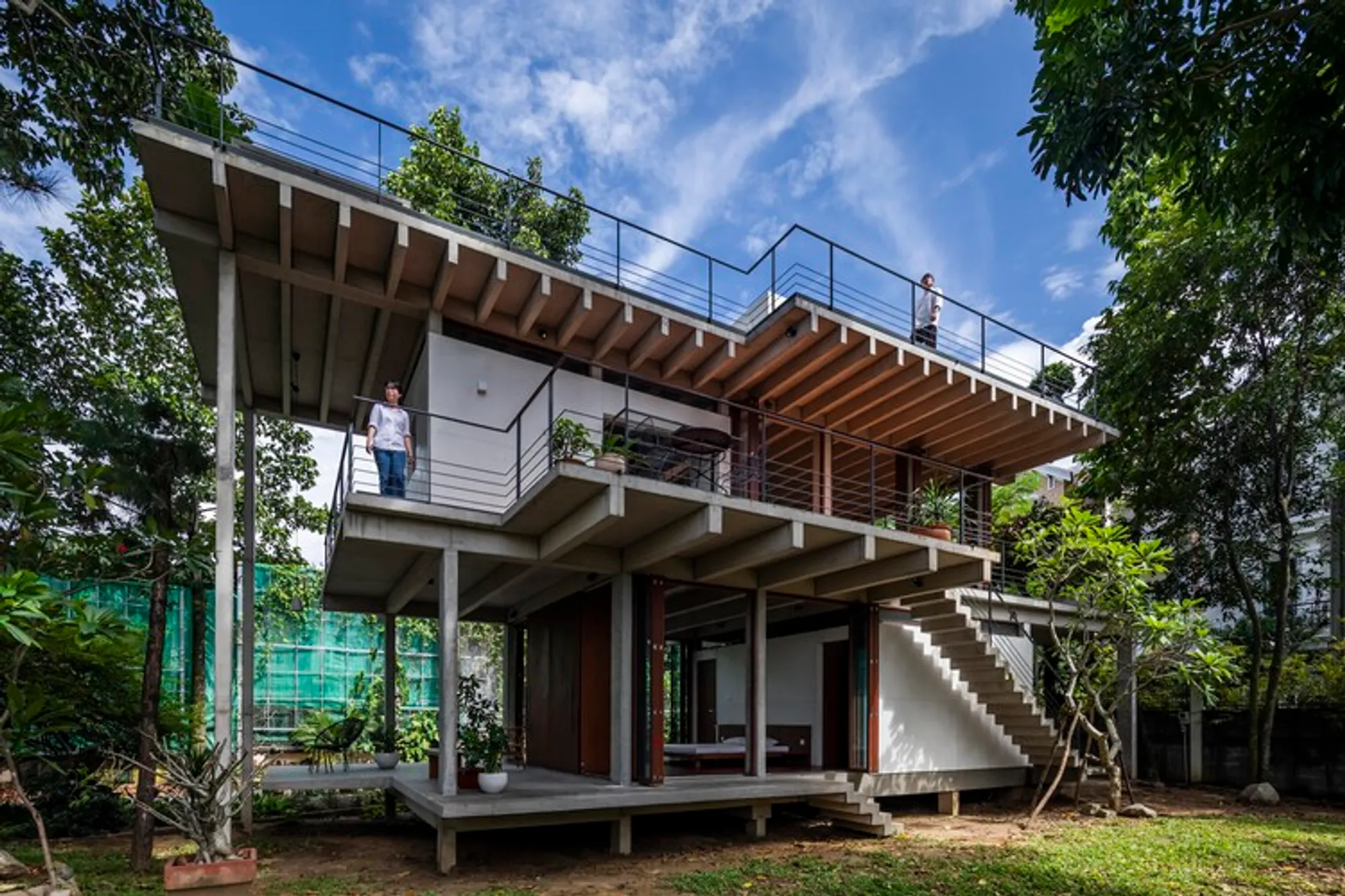
Floating House in Thu Duc by Sanuki Daisuke Architects
Floating House in Thu Duc features cantilevered slabs, seamless indoor-outdoor living, tropical design, and innovative concrete structure by Sanuki Daisuke Architects.


Located in the lush suburban landscape of Thu Duc, Ho Chi Minh City, the Floating House by Sanuki Daisuke Architects is a striking example of modern Vietnamese residential design. This innovative 325 m² home, completed in 2022, is designed for a young couple seeking a strong connection with nature while addressing the unique challenges of a flood-prone site. Surrounded by tropical vegetation and located near a river, the property required careful consideration of local environmental conditions, including seasonal flooding and high humidity.
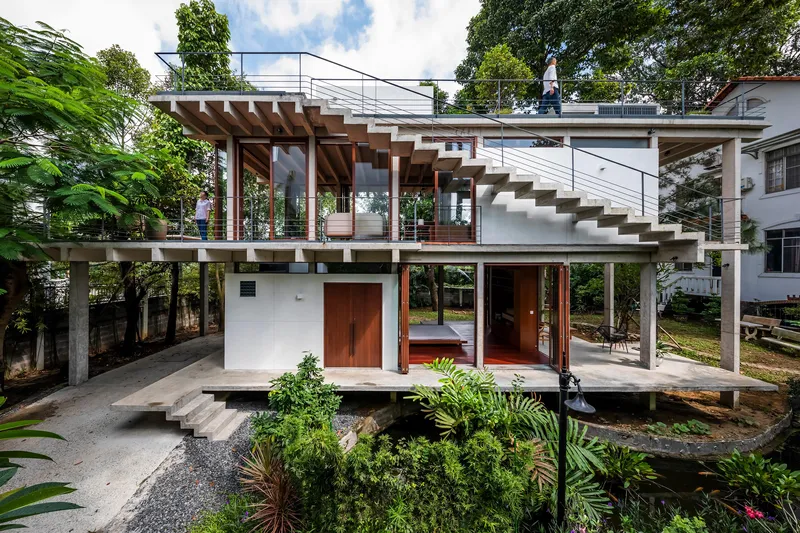
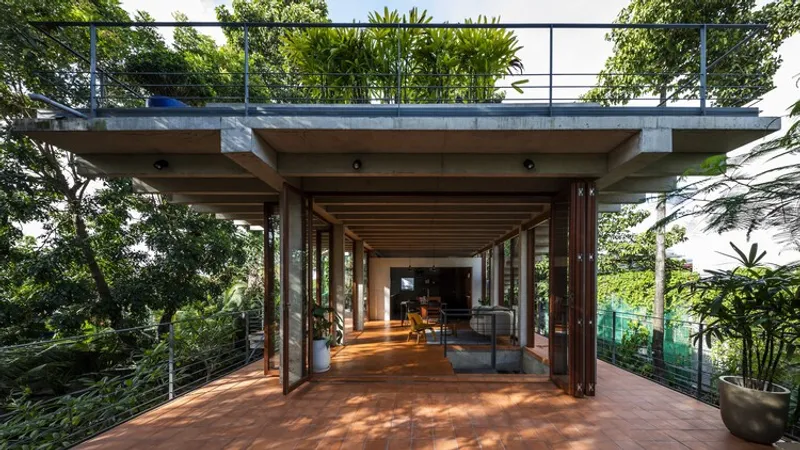
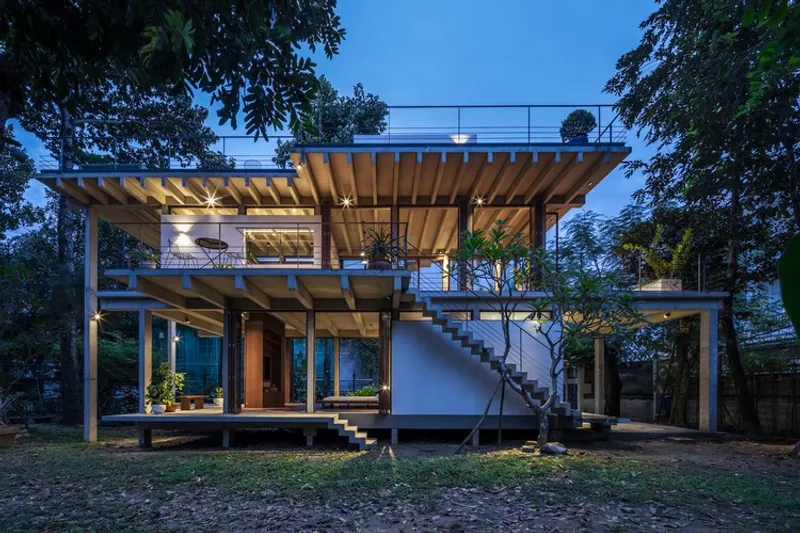
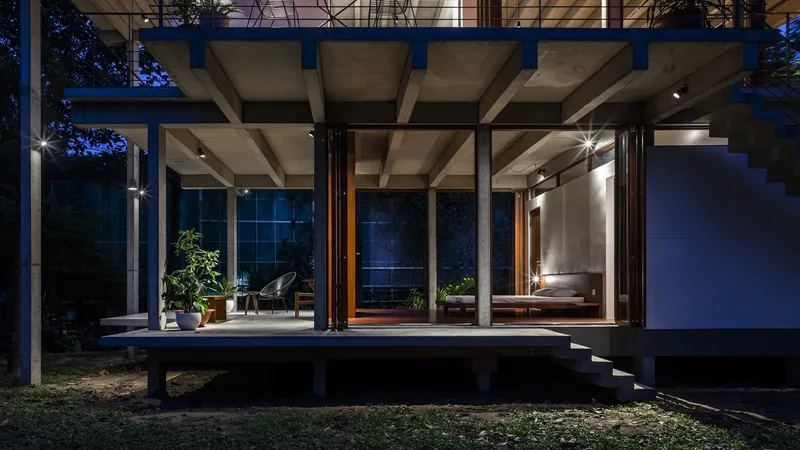
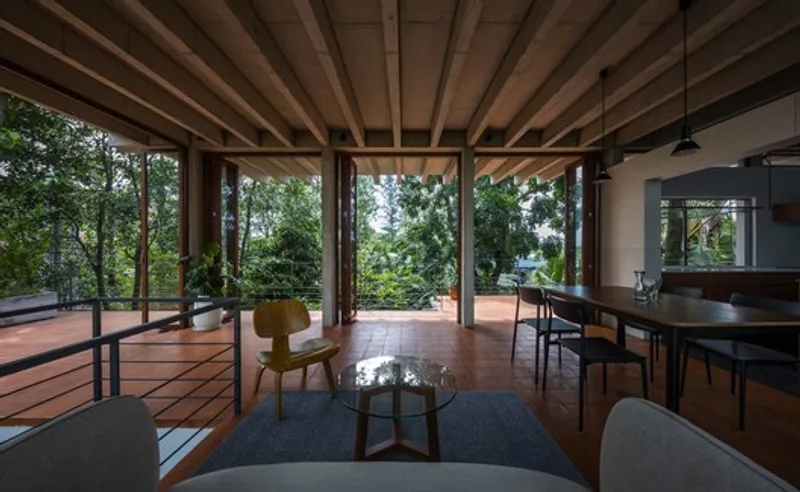
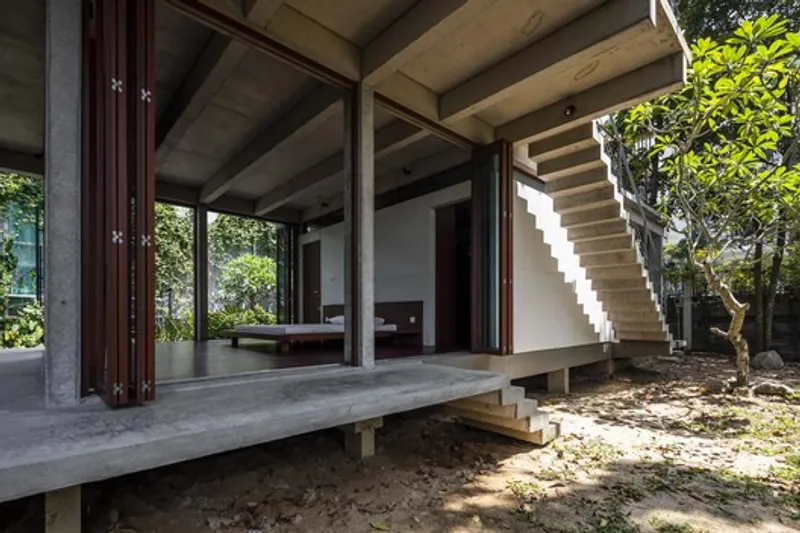
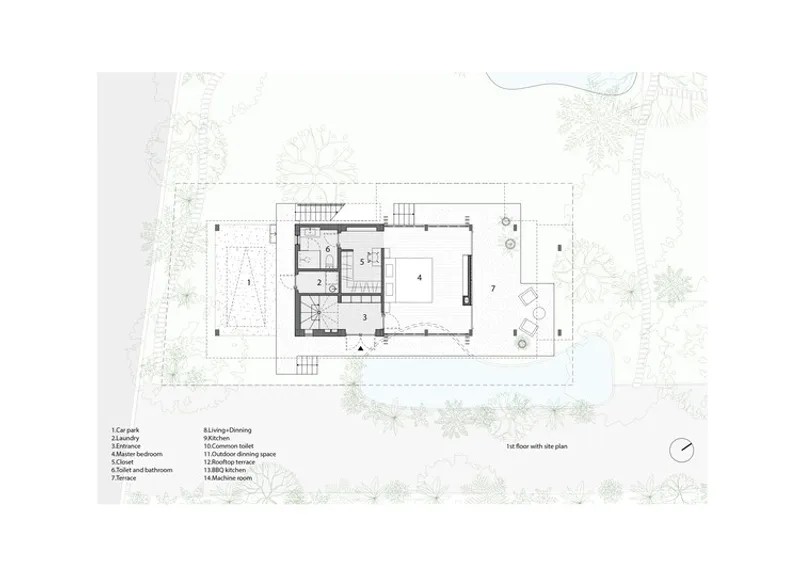
Design Concept – A Mostly Outdoor HouseThe architectural approach emphasizes an almost entirely outdoor lifestyle. The house is composed of three floating slabs, cantilevered above the ground to elevate living spaces one meter above street level, ensuring safety while maximizing views and engagement with the lush garden. Each slab varies in shape, creating diverse indoor-outdoor spatial experiences and seamless connectivity to terraces, outdoor staircases, and a rooftop. This arrangement allows continuous circulation entirely outdoors, reinforcing a strong sense of openness and connection to the surrounding tropical environment.
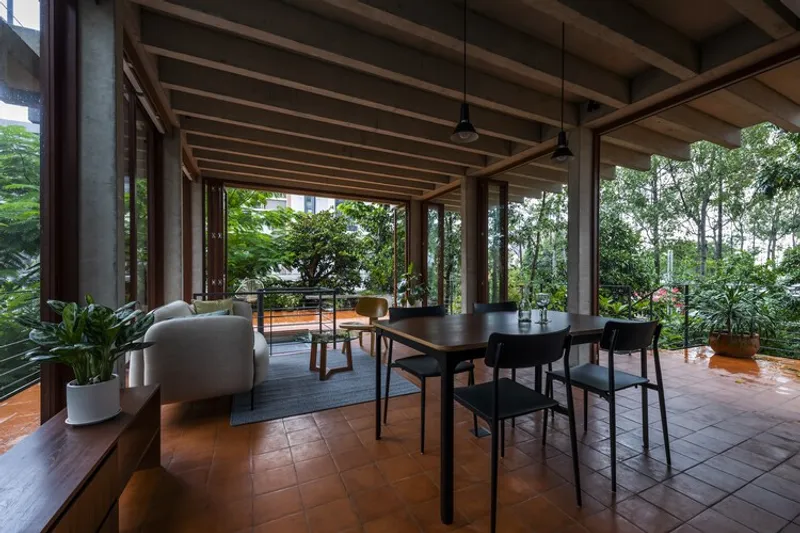
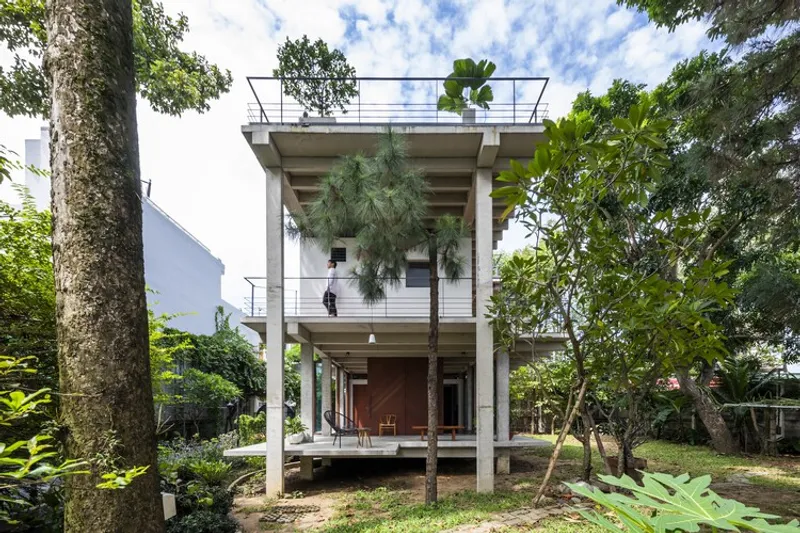
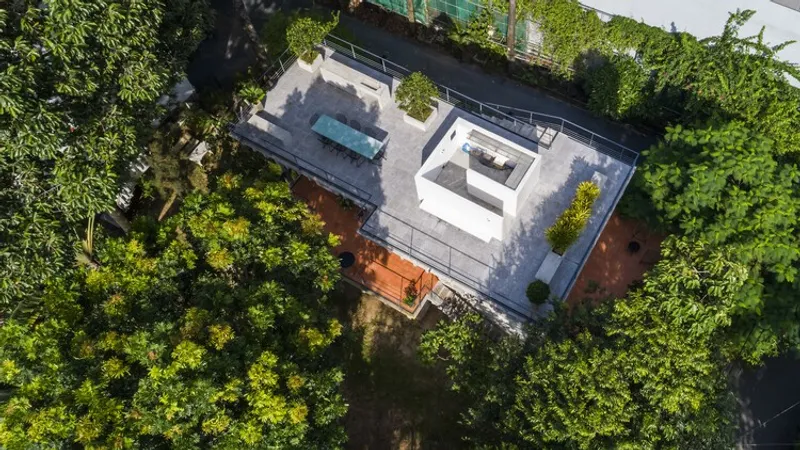
Innovative Structural ApproachSanuki Daisuke Architects reinterpreted conventional Vietnamese concrete frame construction by using ribbed slabs and slender columns to support extended cantilevered floors. With column dimensions minimized to 300 x 150 mm and slab thickness appearing extremely thin, the design achieves a lightweight, floating aesthetic. The structural innovation blends traditional concrete frame techniques with a modern approach, ensuring ease of construction while delivering an elegant, open, and airy architectural form.
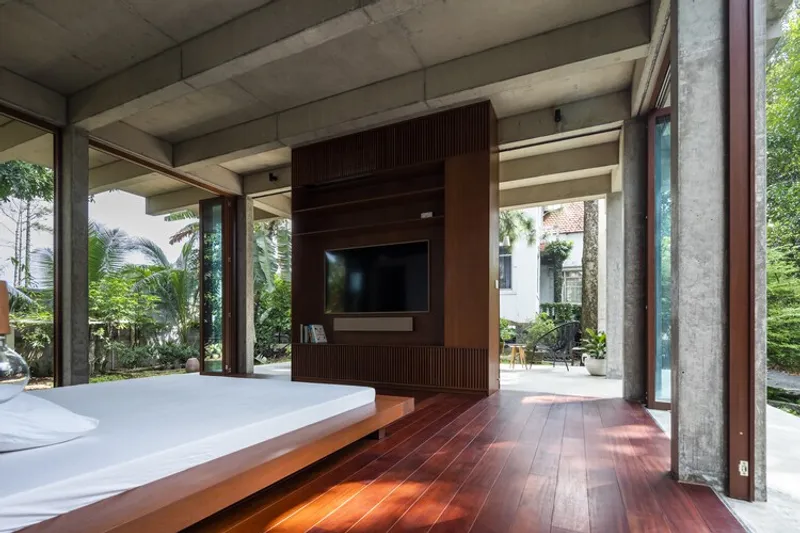
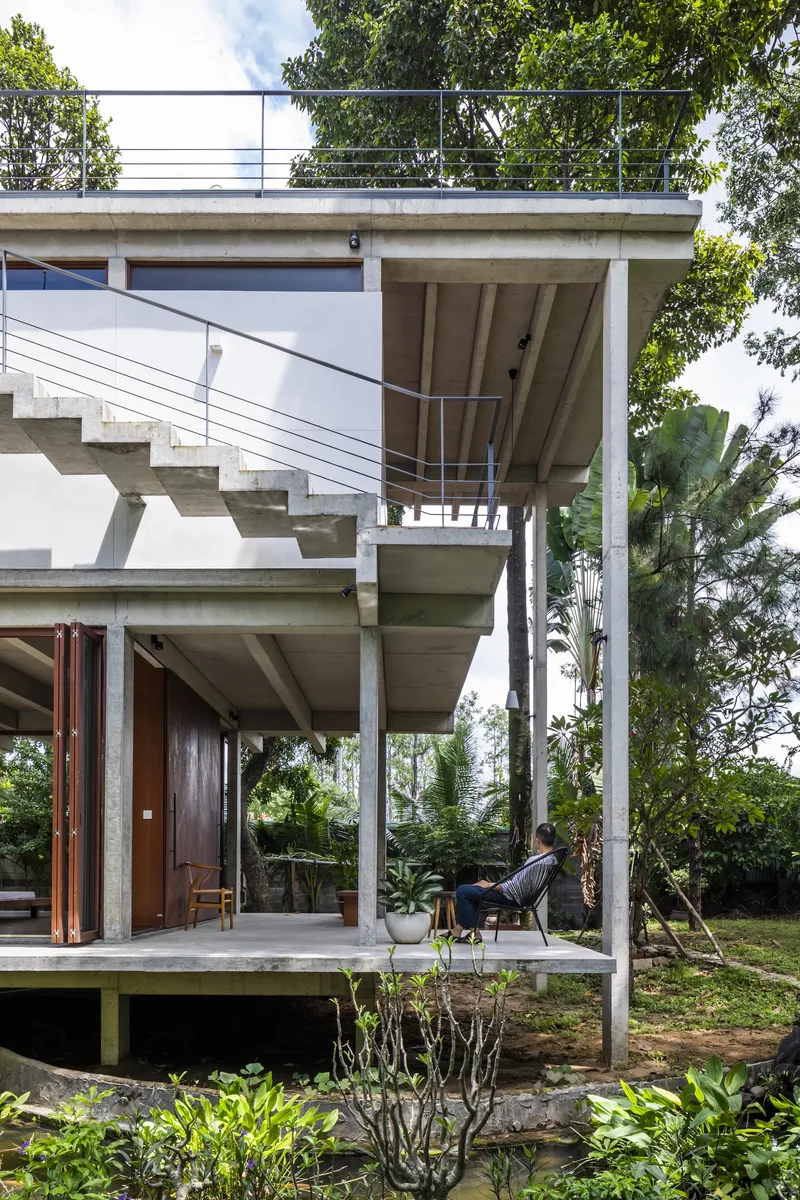
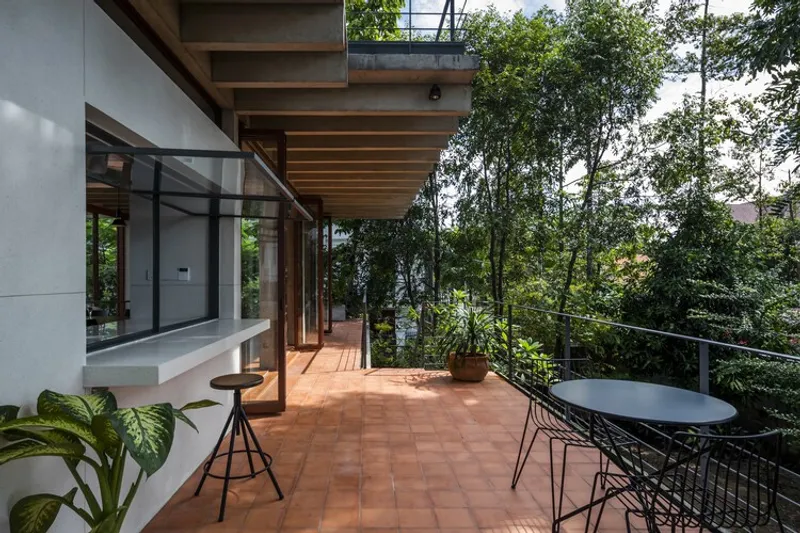
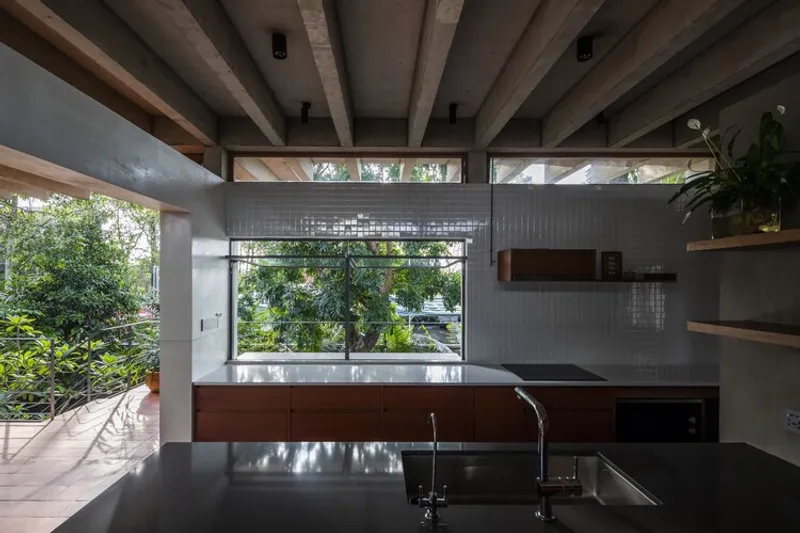
Integration with NatureApproximately 70% of the house’s floor area is outdoors, including the rooftop. Folding doors further dissolve the boundary between interior and exterior spaces, allowing the house to respond naturally to Vietnam’s tropical climate. Cross-ventilation ensures comfort, while rain and breezes naturally cool the spaces. This emphasis on outdoor living transforms the home into a “Blank Space” that embraces Vietnam’s tropical lifestyle and fosters a daily connection with nature.
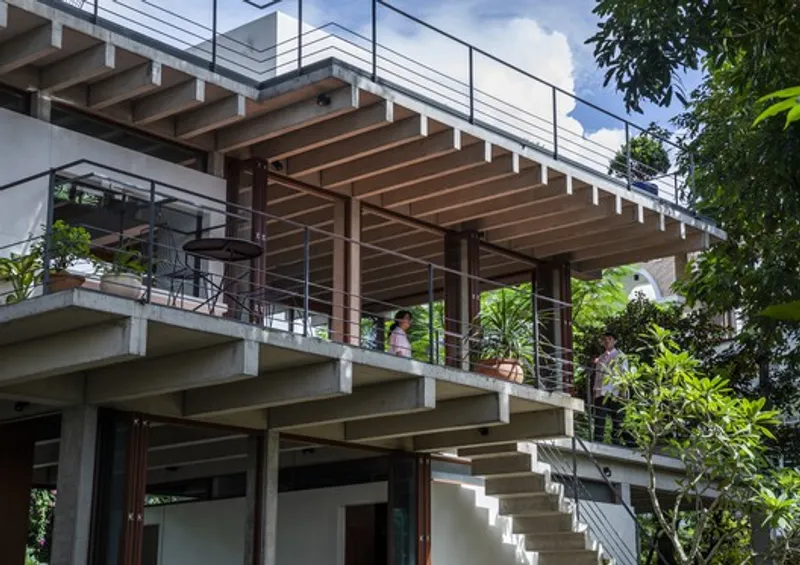
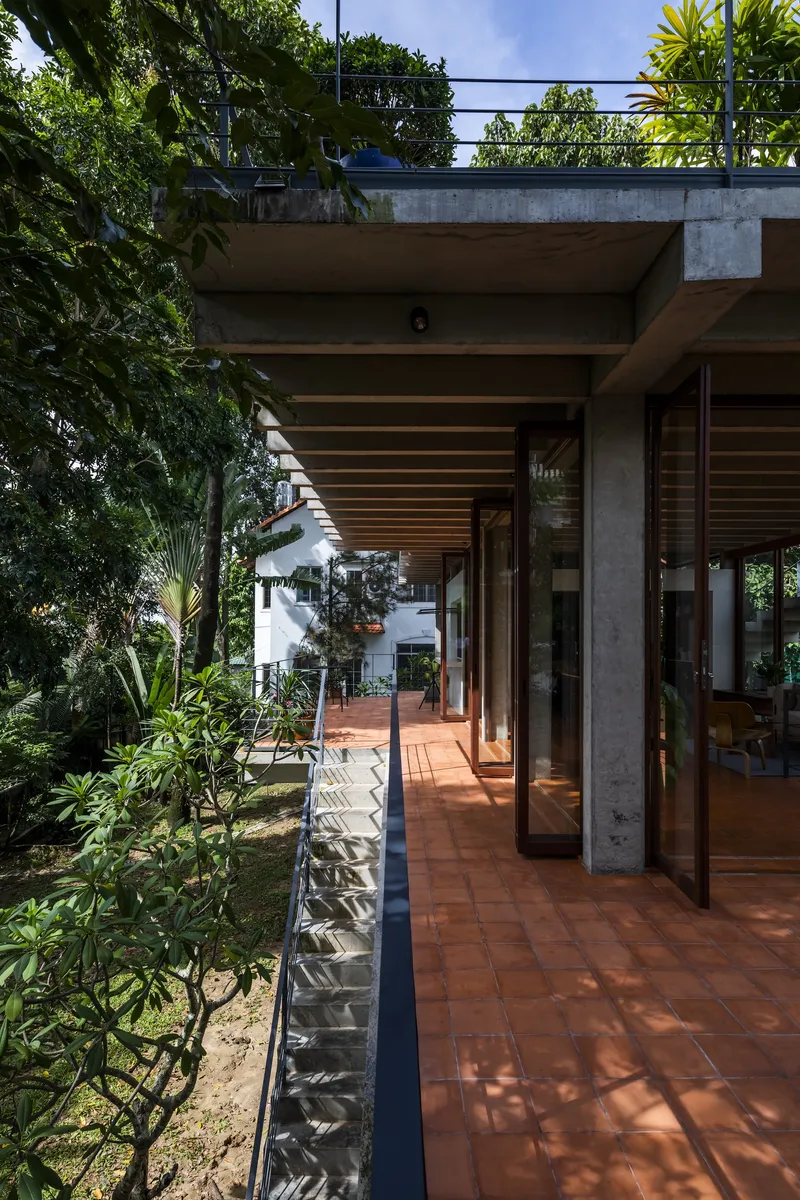
Materials and CraftsmanshipThe Floating House employs locally available materials and construction techniques, aligning with sustainable practices while maintaining structural efficiency. Every element, from the ribbed slabs to the cantilevered terraces, is thoughtfully designed to complement the lush surroundings, creating a home that feels simultaneously light, open, and intimately connected to its site.The Floating House in Thu Duc stands as a bold reinterpretation of Vietnamese residential architecture, blending modern structural innovation with a deeply rooted connection to the outdoors. By prioritizing openness, environmental responsiveness, and natural integration, this project demonstrates how architecture can harmoniously respond to both climate and lifestyle.
All the photographs are works of Hiroyuki Oki


Popular Articles
Popular articles from the community


Hill & Cross Opera: Sculptural Opera House Architecture Shaped by Tallinn’s Landscape and Identity
Hill & Cross Opera reimagines opera house architecture in Tallinn through its sculptural hill, civic plaza, glass wave and a luminous cross.

The Ocean Hive: Sustainable Architecture for a Self-Sufficient Civilization at Sea
The Ocean Hive imagines sustainable architecture at sea, where modular habitats, algae, wave power and ocean waste sustain a growing colony.

Co-Life: Senior Housing Design That Reconnects Older Adults With the City
Co-Life reimagines senior housing design through healing gardens, shared streets, workshops, and a sustainable community across generations.

Lunar Spiral: Space Architecture Shaped by the Mathematics of the Universe
Lunar Spiral reimagines space architecture through Fibonacci geometry, lunar regolith, levitating habitats, and self-sustaining Moon living.

Similar Reads
You might also enjoy these articles


Hodi-Mandai Geram
Project Function: Preservation and revitalization of the Intangible heritage and socio-spatial identity of the Hodi by Housing, Cultural Memory Center, Sacred Grove, landscape, local tourism economy


Olio Towers: A Mid-Rise for Performers That Fuses Housing, Rehearsal, and Stage
Located blocks from Houston's Theater District, this modular tower stacks living units around a central performance atrium.

Oasis: Modular Green Housing Carved into Dhaka's Urban Fabric
A shortlisted Plugin Housing entry reclaims unauthorized settlements in Dhaka with stepped concrete volumes, green roofs, and ventilation-driven design.

Black Hole: A Floating Megastructure for the Post-Physical Era
Emiliano Mazzarotto envisions a spherical, self-scaling arena where e-sports, digital hotels, and holographic stadiums replace traditional public space.

Explore Futuristic Floating Residents Competitions
Discover active competitions in this discipline



Challenge to reimagine the Iron Throne


Photograph architecture without architects


Illustrate the lost glory of Angkor Wat - Render Challenge


Design challenge to reuse E-waste
Comments (0)
Please login or sign up to add comments
No comments yet. Be the first to comment!