
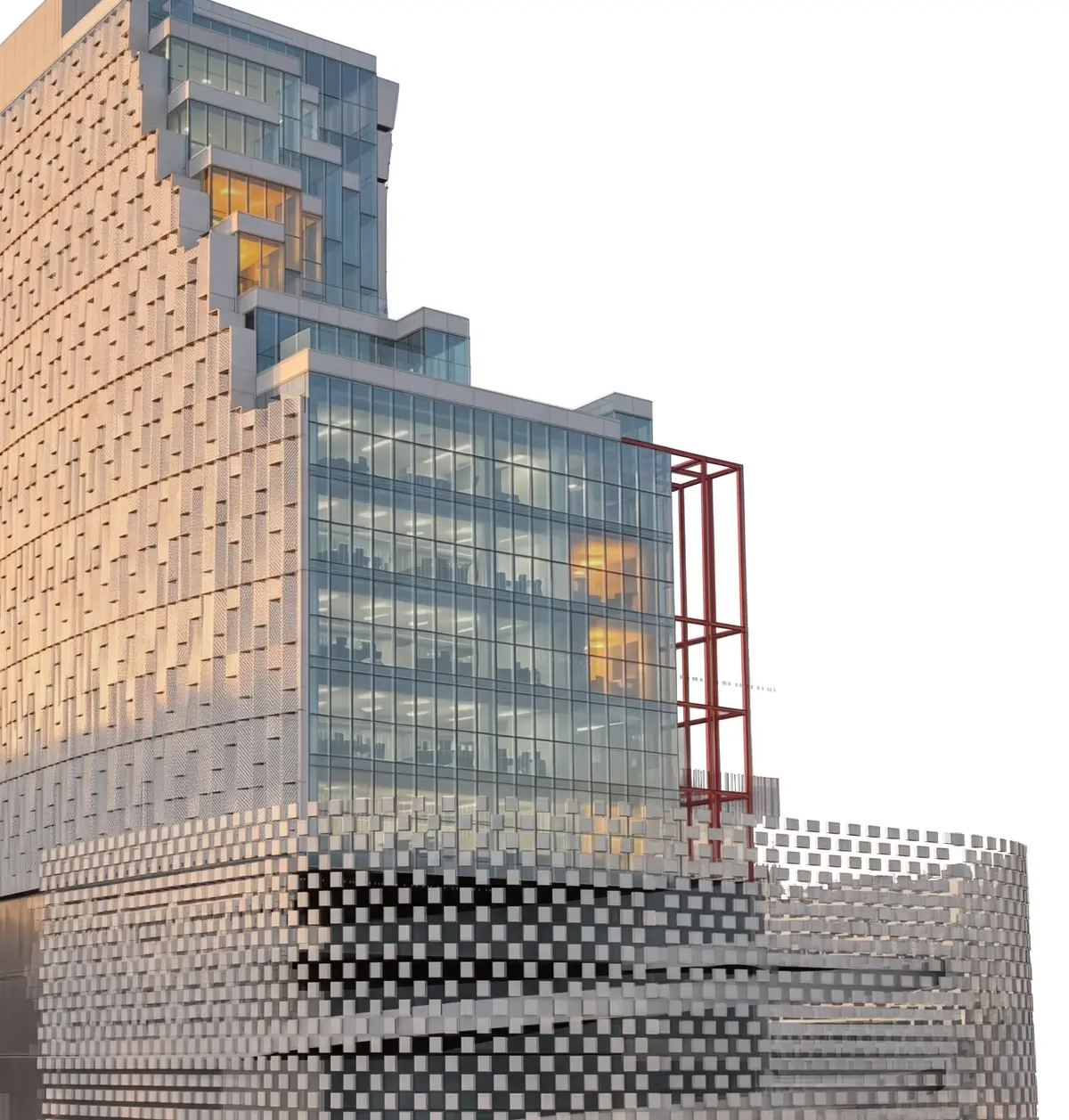
FORM FOLLOWS DATA: Algorithmic Optimization in Architecture
From Intuition to Algorithm: The Future of Form.

The Crisis of Complexity
The discipline of architecture is currently positioned at a critical transition point between subjective intuition and objective synthesis. Every design project requires the synthesis of massive, often conflicting datasets: climatic conditions, structural constraints, financial limitations, and behavioral matrices. Conventionally, architects navigate these variables through intuition and manual trade-offs, but as data complexity increases, subjective synthesis often leads to compromised solutions.
The failure to properly balance these trade-offs results in buildings engineered for visual spectacle rather than environmental performance, heavily relying on massive mechanical systems to remain habitable. If architecture is to effectively respond to modern challenges, the spatial and formal outcomes of a building must be a direct, logical consequence of the complex data that defines its context.
The Hypothesis: Architecture Must Be Grown, Not Drawn
To eliminate subjective bias, the modern architectural methodology must prioritize process over product.
Architecture is not drawn; it is generated, evaluated, and refined through a sequential pipeline of data acquisition, behavioral simulation, and algorithmic optimization.
By establishing this framework, the architect completes the transition from a subjective form-maker to an objective system-designer. Every spatial, formal, and functional decision requires a quantifiable justification, tethering geometric operations to real-world data points.
Simulating the Subjective: Agent-Based Modeling (ABM)
Objective architectural design must synthesize human variables, which are traditionally treated as unpredictable or subjective. Agent-Based Modeling (ABM) shifts this paradigm by treating users as individual data points interacting within a simulated spatial network.
By deploying an ABM simulation, tested initially on a built commercial environment like Tribeca High Street, intricate human patterns can be visualized and translated into actionable, predictive data trails.
- Defining the Agents: Digital agents are programmed with specific domains, including visual radiuses, physical footprints to simulate collision avoidance, and sociability indexes.
- Data-Driven Interventions: Tracking these simulated paths reveals critical architectural inferences. For instance, distinct "dead zones" with zero pedestrian density become the optimal locations for landscaping elements, allowing aesthetic integration without disrupting natural traffic flow.
- Programmatic Densification: The model proves that spatial activation is tied to sociability; introducing high-sociability programs (like cafes) into quiet zones effectively shifts movement vectors and draws footfall outward.
Resolving Conflict: Multi-Objective Optimization (MOO)
Once climatic parameters and behavioral networks are established, a Multi-Objective Optimization (MOO) algorithm acts as the engine for conflict resolution. It is humanly impossible to simultaneously visualize, calculate, and balance thousands of conflicting data points.
The evolutionary solver is given specific, competing targets, such as maximizing leasable floor area while minimizing peak solar heat gain on the envelope. The algorithm tests hundreds of iterations, crossbreeding successful traits until mathematically justified massing emerges. This generates a spectrum of highly performative trade-off solutions known as the Pareto Front.
To evaluate these iterations, custom proxies must be developed. For example, a mutual shading proxy utilizes a voxelated, stacked-cube approach to run ray-casting analysis.
- This specific voxel process acts as a virtual camera, shooting rays from exposed facades toward critical sun positions.
- It generates a definitive "Sun Score" between 0.0 (highly optimized self-shading) and 1.0 (fully exposed), acting as a mathematical baseline for environmental efficiency.
While this voxelated logic serves as an essential evaluative tool within the solver, the final architecture is shaped by navigating the Pareto frontier against constraints like a Solar Rights Envelope (SRE). A selected massing might accept a minor infraction on a strict SRE to achieve a significantly higher built-up area, while maintaining optimized solar strategies on stepped upper levels.
Ultimately, every geometric move, from porous lower levels driven by ABM to tapered profiles shaped by radiation data, is calculated and justified by the intersection of environmental and behavioral data. The resulting architecture is an objective, quantifiable consequence of the data.

Popular Articles
Popular articles from the community


Manzana Morphosis: Stretching Barcelona's Grid into a Living Landscape for 2050
A radical reworking of the Eixample manzana turns density into a tool for generous public space, vertical ecology, and environmental performance.


graciastudio Turns a Viewless Tijuana Lot Inward Around a Courtyard of Concrete, Timber and Trees
In Tijuana, Jorge Gracia's GA2 House stacks a timber-clad private floor over exposed concrete and replaces a missing view with a planted interior patio.

David Ortega Stacks a Two-Story Mexico City Penthouse Around a Steel Stair and a Pergola-Shaded Roof Terrace
In Colonia Roma, a 300 m² penthouse uses oak joinery, a planted steel stair and a slatted roof pergola to make a new-build apartment feel like a house.

Cube Design Draws an Ecological Corridor Between Two Shenzhen Hills with the Nankai Building
Beside Shenzhen's container docks, the Nankai Building pairs stacked balconies with a climbing green screen to connect two hillsides across its height.

Similar Reads
You might also enjoy these articles

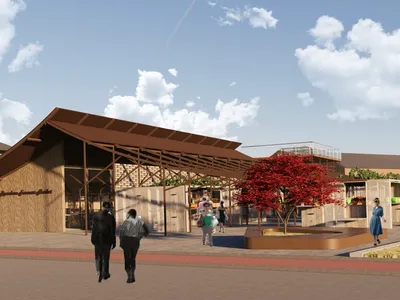
The Rhythm of Seasons
A Farmers' Market Connecting Nature and the City
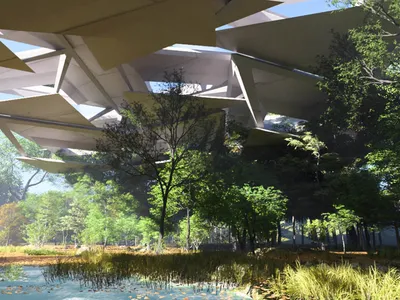


More Than a Building-Designing a Living System
More Than a Building-Designing a Living System
Base Beyond
DESERT COMPOUND ARID: TOURISM OF ABSENCE AND ABUNDANCE

Explore Architecture Competitions
Discover active competitions in this discipline


From Logic to Configurators


Challenge to reimagine the Iron Throne

Photograph architecture without architects

Illustrate the lost glory of Angkor Wat - Render Challenge
Comments (0)
Please login or sign up to add comments
No comments yet. Be the first to comment!