
Frame House II by Jespersen Nødtvedt – A Modern Allotment Retreat Inspired by Japanese Architecture
A compact Japanese-inspired timber house in Denmark, blending sustainable materials, flexible interiors, and floating pavilion aesthetics within a 40m² allotment plot.


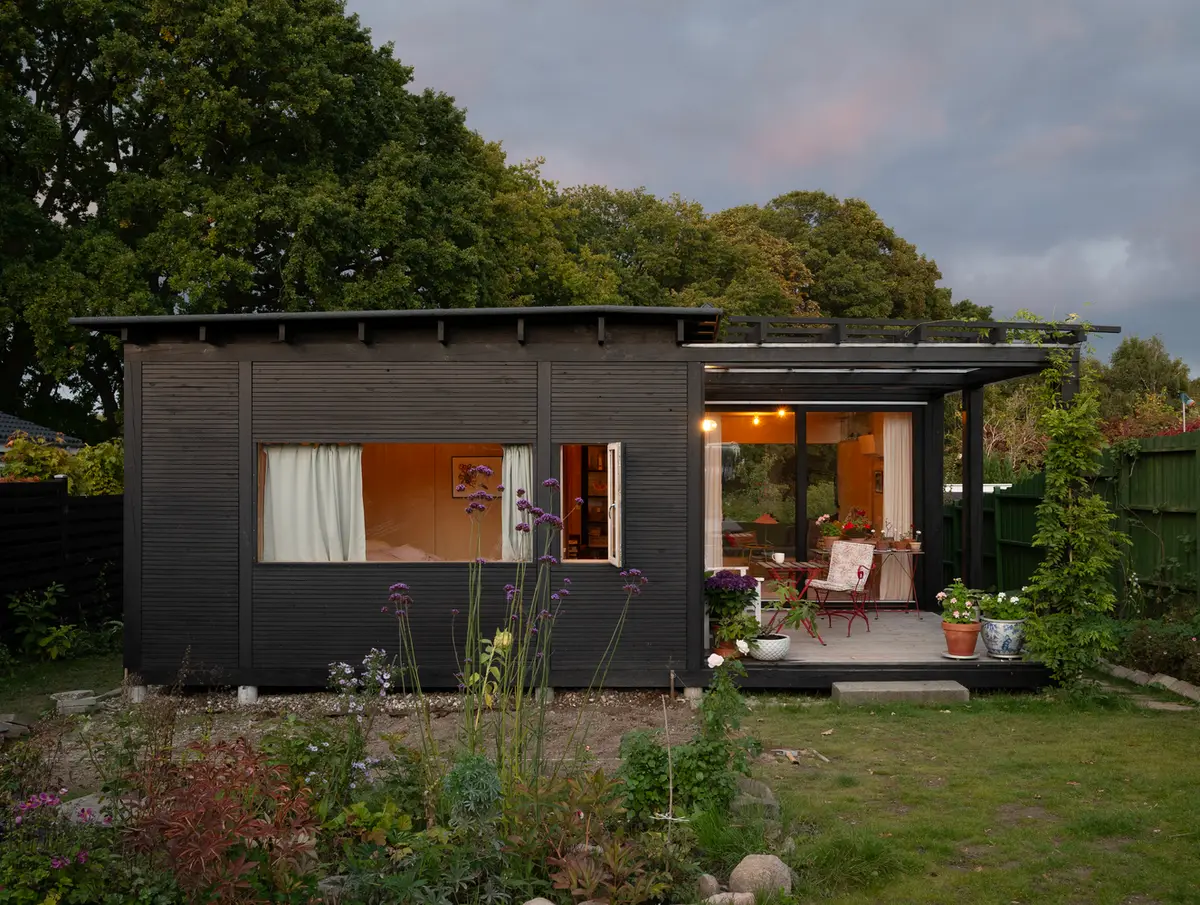
Frame House II in Holte, Denmark, designed by Jespersen Nødtvedt, is a compact 40 m² allotment house that blends traditional Japanese design principles with the heritage of the Danish allotment garden culture. With its black-painted timber facade, elevated structure, and serene spatial flow, the house reinterprets small-scale living through craftsmanship, natural materials, and a focus on simplicity.
A Floating Pavilion on the Landscape
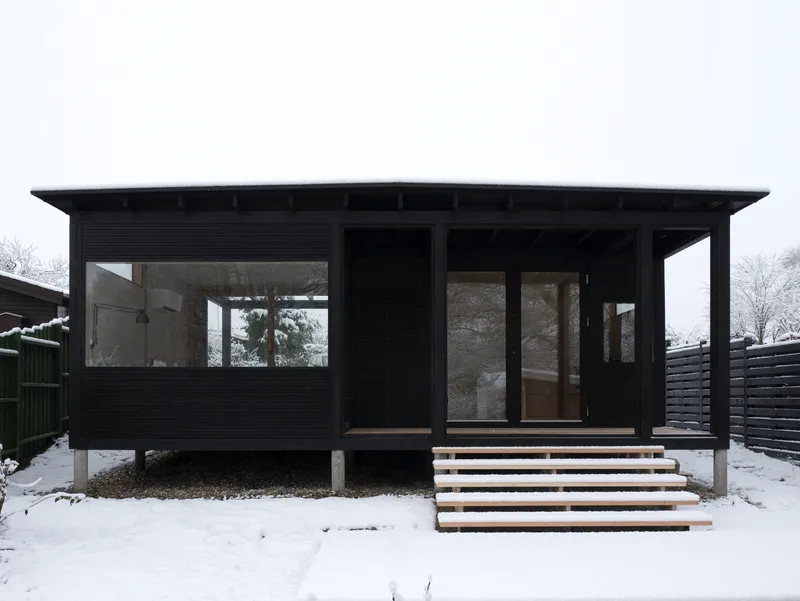
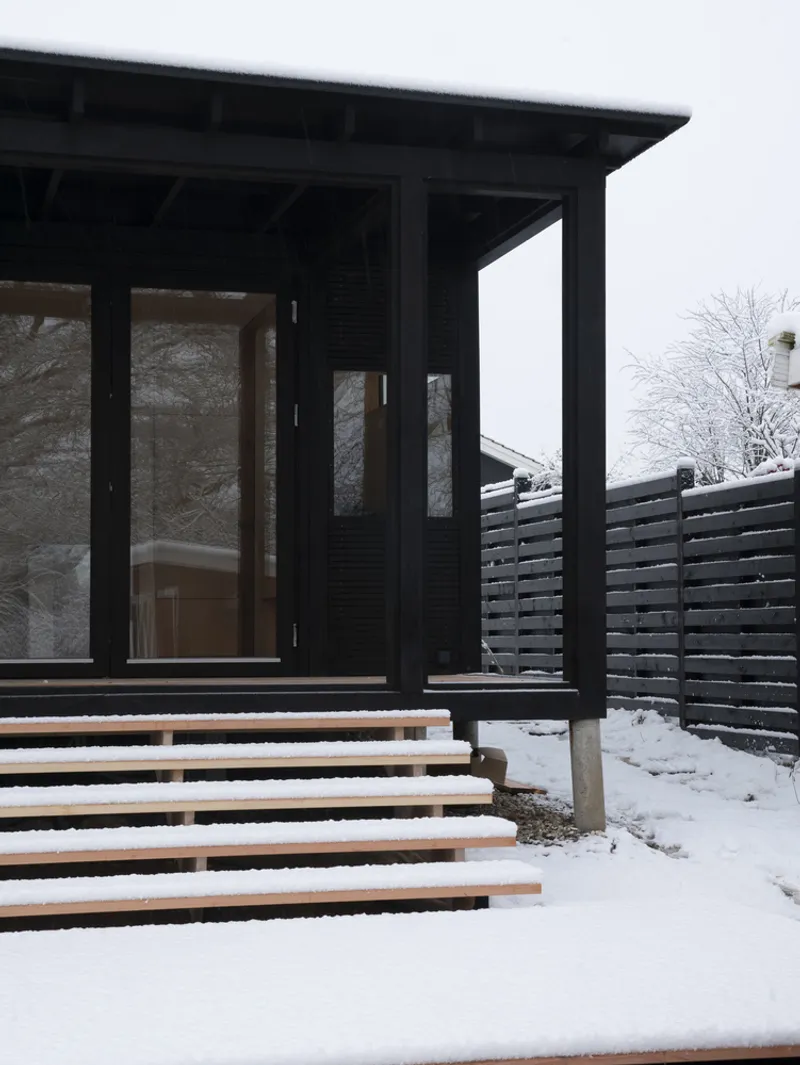
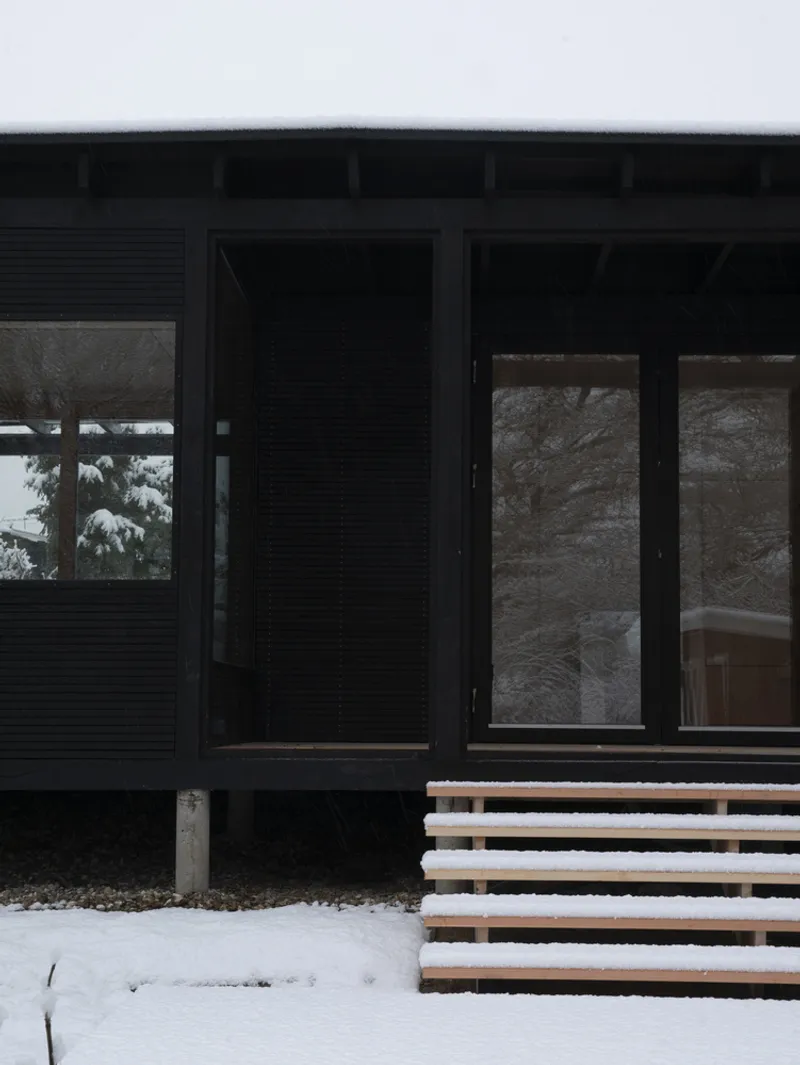
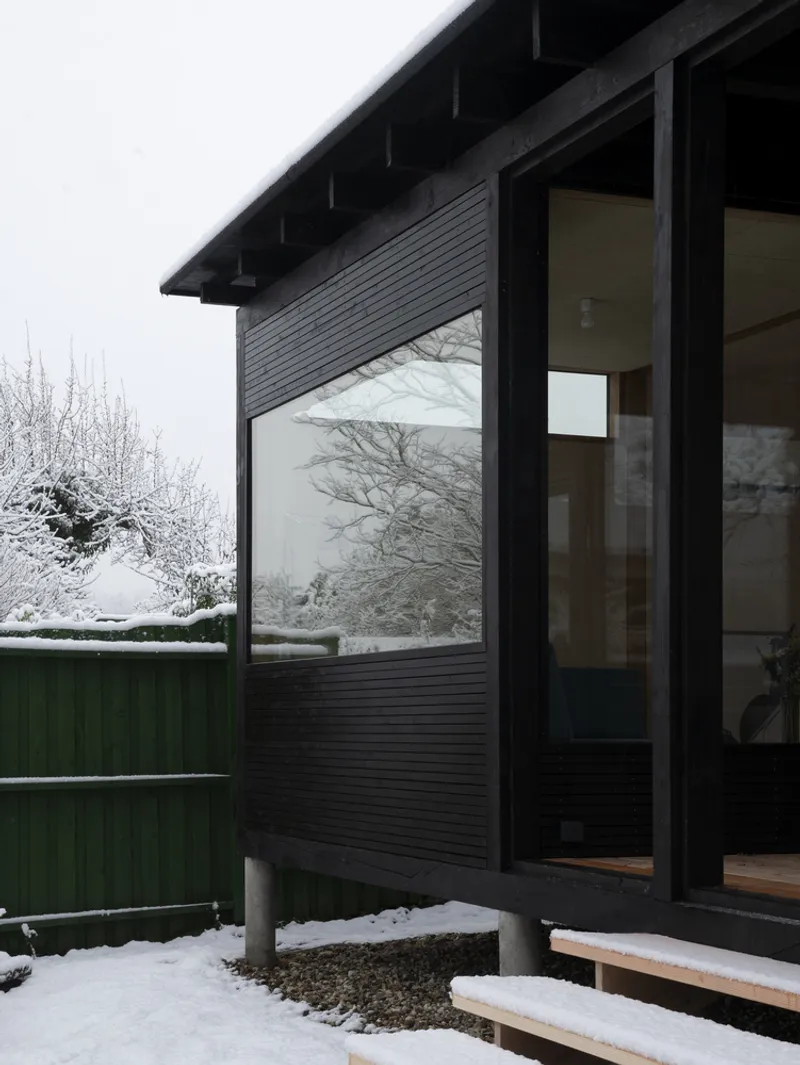
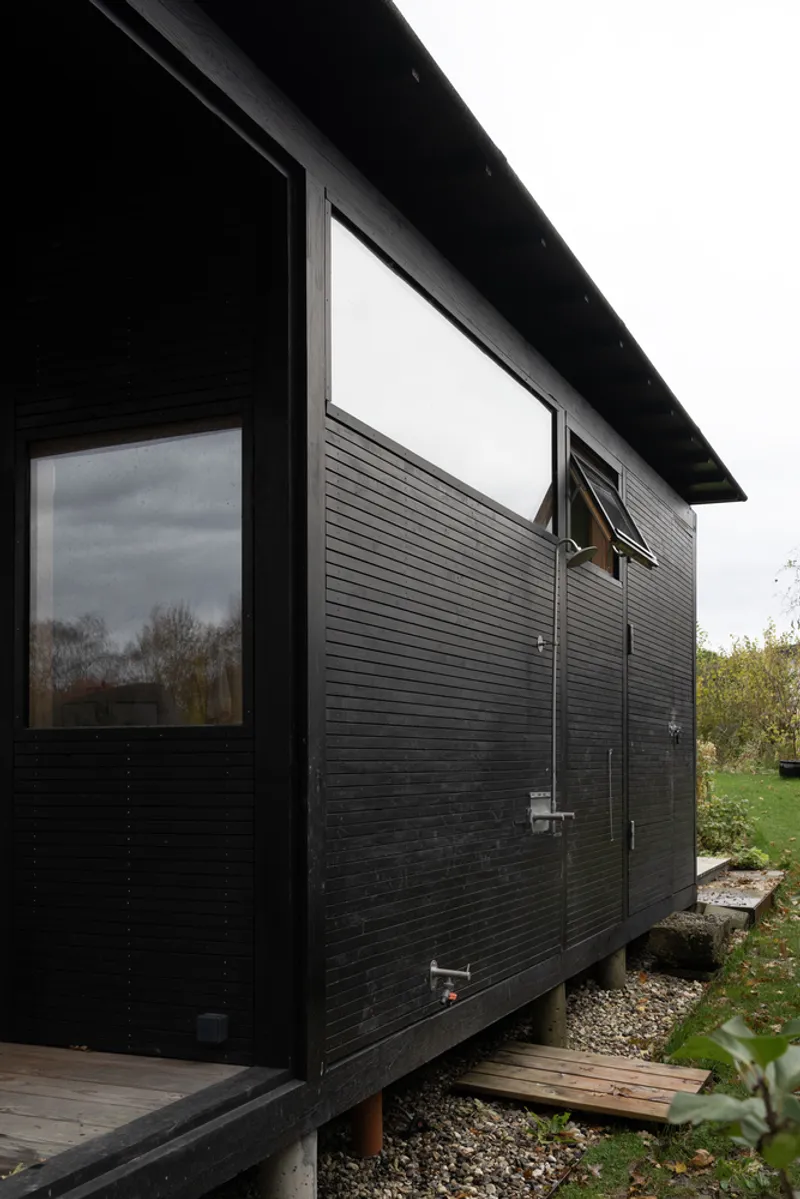
Positioned on a gentle slope, Frame House II appears to float lightly above the ground, much like a Japanese pavilion. This elevated configuration creates a seamless relationship between the built form and the surrounding garden. The terraces and interior rooms interlock through a raised platform system, offering steps, edges, and thresholds that enrich the everyday experience of moving through the house.
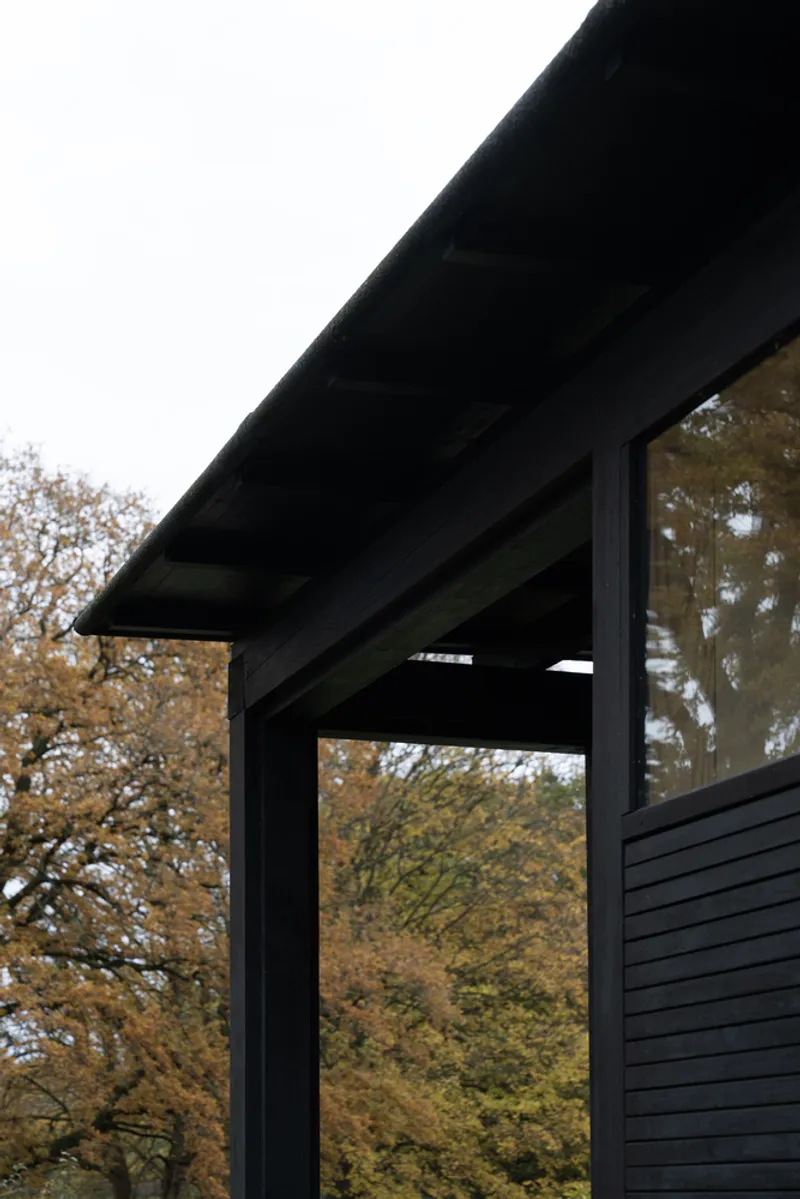
The exterior is defined by horizontal Douglas fir slats painted in black linseed oil, referencing both Japanese architectural restraint and the Danish tradition of dark-stained garden structures.
A Structural Grid Inspired by Half-Timber Construction
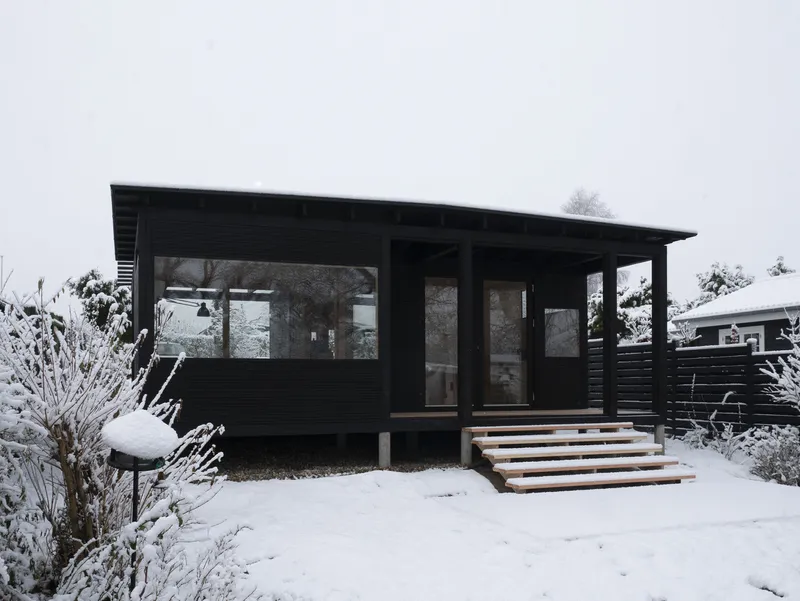
The architectural concept centers on a framed timber grid, echoing traditional half-timber buildings. Twenty-five carefully crafted wooden columns form the load-bearing structure, each carved with rebated edges that accommodate interior and exterior cladding and even frameless glazing.
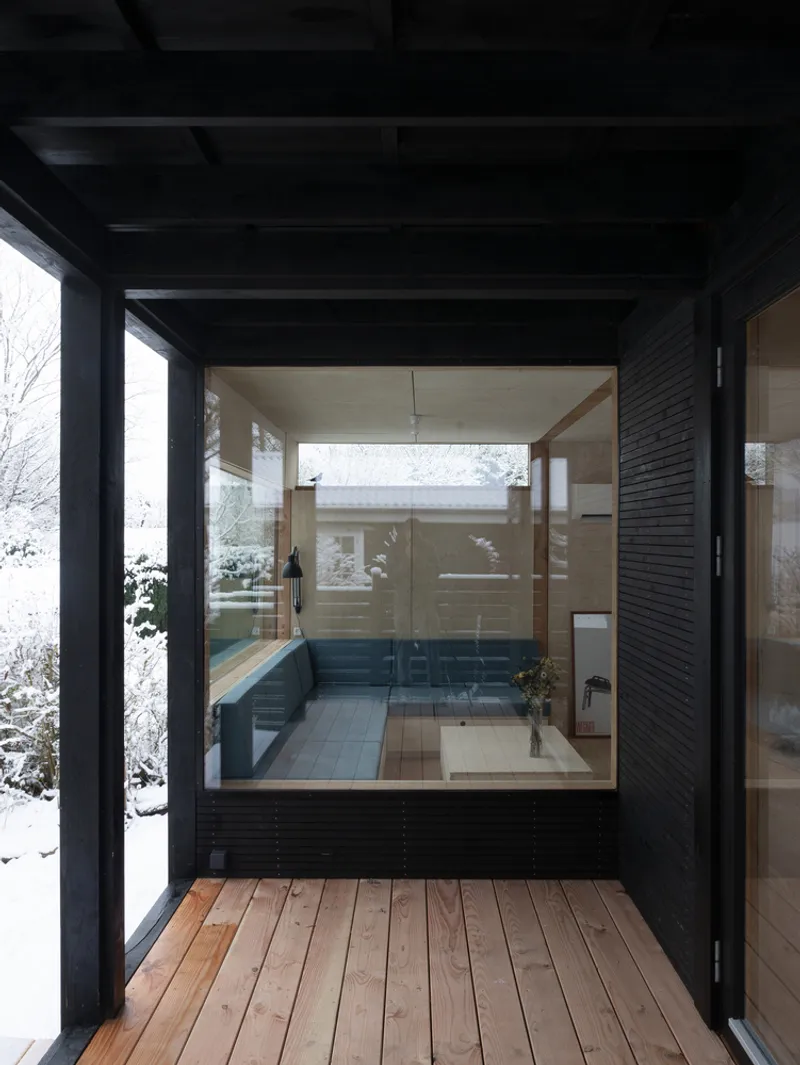
This method allows the walls to be filled with either insulated panels or directly installed glass, creating a refined rhythm of solid and void. The result is a house where light filters between vertical posts, producing moments reminiscent of shoji screens and Japanese paper walls.
Warm, Natural Interiors with Japanese Influence
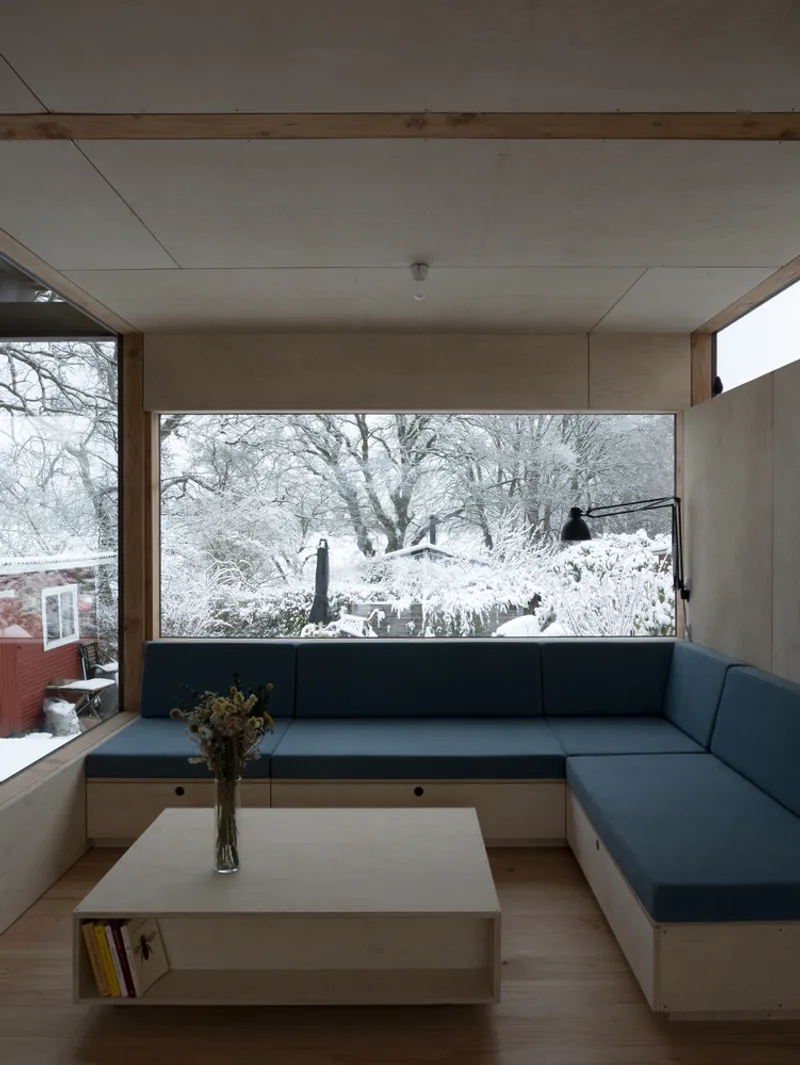
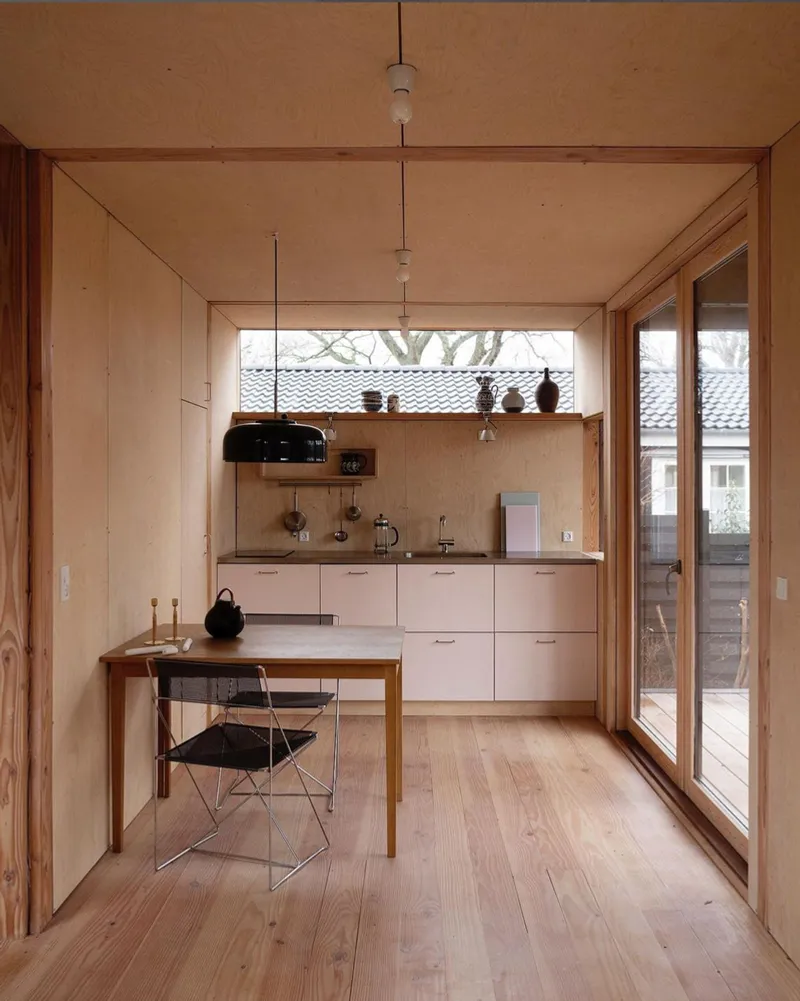
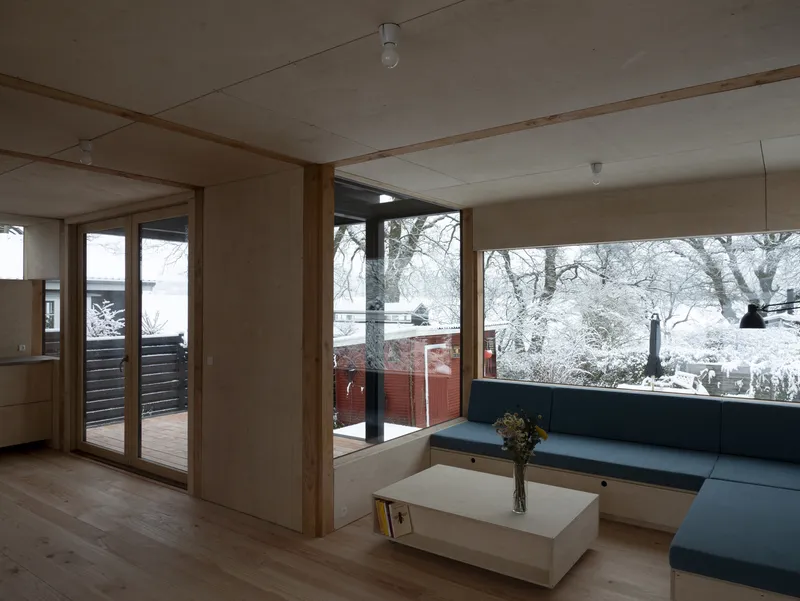
Inside, the house is lined with birch plywood, contrasting beautifully with the reddish Danish Douglas fir structure. The interior atmosphere is warm, minimalist, and calming—perfectly suited to the compact footprint.
The structural grid creates natural niches, pockets, and framed views, ensuring the house feels spacious despite its small size. In summer, the terraces can fully open up, dissolving the boundary between indoor and outdoor living.
Sustainable, Locally Sourced Materials
Frame House II emphasizes sustainability and local craft. The Douglas fir was harvested less than 100 km from the sawmill, minimizing transport emissions. The walls are insulated with wood fiber, and nearly every material in the house is wood-based except for the point foundations and cement boards beneath the structure.
This makes the project a model for low-impact construction, showcasing how small dwellings can achieve environmental responsibility without compromising design quality.
Flexible Living in a 40 m² Footprint
Despite its modest size, the house features a remarkably adaptable interior. Built-in edges and stairs serve as functional elements—places to sit, store, lean, or rest. The custom-designed sofa transforms effortlessly:
- as seating
- as a coffee table (using the rolling module)
- as an extended lounge
- or even as part of a guest bed system
All photographs are works of Emil Jespersen


Popular Articles
Popular articles from the community


U.GA Architects Wraps an Oval Rooftop Pool in Curved Board-Formed Concrete on Busan's Jeollidan-gil
In Busan's Jeonpo-dong, a 454 m² mixed-use block stacks a neighborhood facility, guest rooms and an oval rooftop pool inside spiraling concrete walls.

Juan García Correa, John González and Claudia Rueda Sink a Circular Amphitheater into a Manizales Engineering Building
On the La Nubia campus in Manizales, Colombia, the S1 Building folds labs and offices into a hillside of ramped lawns that double as a campus route.

David Ortega Stacks a Two-Story Mexico City Penthouse Around a Steel Stair and a Pergola-Shaded Roof Terrace
In Colonia Roma, a 300 m² penthouse uses oak joinery, a planted steel stair and a slatted roof pergola to make a new-build apartment feel like a house.

Jaramillo Van Sluys Arquitectura and Urbanismo Turn a Demolished Registry Lot in Quito into an Orchard Plaza
In Quito's Centro Histórico, a 2,800 m² plaza exposes the San Agustín convent wall and redraws its lost Augustinian orchard in volcanic stone.

Similar Reads
You might also enjoy these articles


Hodi-Mandai Geram
Project Function: Preservation and revitalization of the Intangible heritage and socio-spatial identity of the Hodi by Housing, Cultural Memory Center, Sacred Grove, landscape, local tourism economy


Olio Towers: A Mid-Rise for Performers That Fuses Housing, Rehearsal, and Stage
Located blocks from Houston's Theater District, this modular tower stacks living units around a central performance atrium.

Oasis: Modular Green Housing Carved into Dhaka's Urban Fabric
A shortlisted Plugin Housing entry reclaims unauthorized settlements in Dhaka with stepped concrete volumes, green roofs, and ventilation-driven design.

Black Hole: A Floating Megastructure for the Post-Physical Era
Emiliano Mazzarotto envisions a spherical, self-scaling arena where e-sports, digital hotels, and holographic stadiums replace traditional public space.

Explore Tiny House Competitions
Discover active competitions in this discipline

Challenge to reimagine the Iron Throne

Photograph architecture without architects

Illustrate the lost glory of Angkor Wat - Render Challenge

Design challenge to reuse E-waste
Comments (0)
Please login or sign up to add comments
No comments yet. Be the first to comment!