

Fresnos House by delavegacanolasso: A Contemporary Refuge in the Madrid Forest
Fresnos House by delavegacanolasso blends modular prefabrication and handcrafted details, creating a sustainable forest retreat harmoniously integrated with nature.


Nestled in the lush pine and oak forests of Madrid, Fresnos House by delavegacanolasso is a striking example of sustainable contemporary architecture that respects and enhances its natural surroundings. Completed in 2023, the 142 m² residence reinterprets the idea of a modern retreat—balancing industrialized modular construction with the tactile warmth of handcrafted materials.
Architecture in Harmony with Nature
From the outset, the site itself defined the placement and scale of the house. Located on a sloping terrain wrapped in greenery, the architects embraced the natural clearing between pines as the perfect setting. Rather than altering the landscape, the design minimized intervention—building on the natural level, cantilevering the structure above the slope, and even carving openings for tree trunks to pass through.
This approach transforms the house into an open refuge—a porch-like structure that is closed to the street for privacy yet open to the surrounding forest for light, views, and connection to nature. The terrace, cut to accommodate a pine tree, recalls the picnics once enjoyed on the site, embedding memory into design.
A Hybrid Construction System: Industrial and Handmade
Fresnos House employs a mixed construction strategy that merges prefabricated modular systems with traditional craftsmanship. Individual rooms, each with their own bathroom, were built using Tini® prefabricated modules, ensuring precision, speed, and sustainability. These modules are combined with hand-plastered brick walls and locally sourced materials, blending the efficiency of industrial methods with the timelessness of artisanal work.
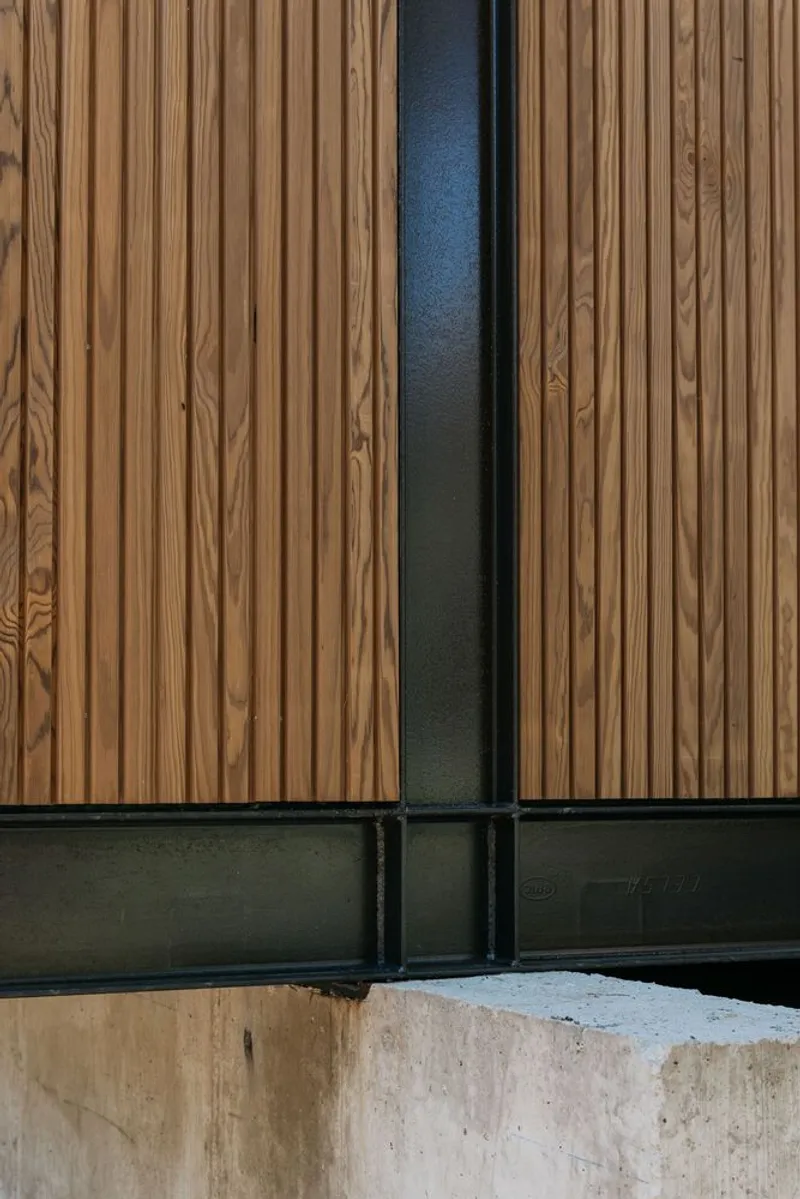
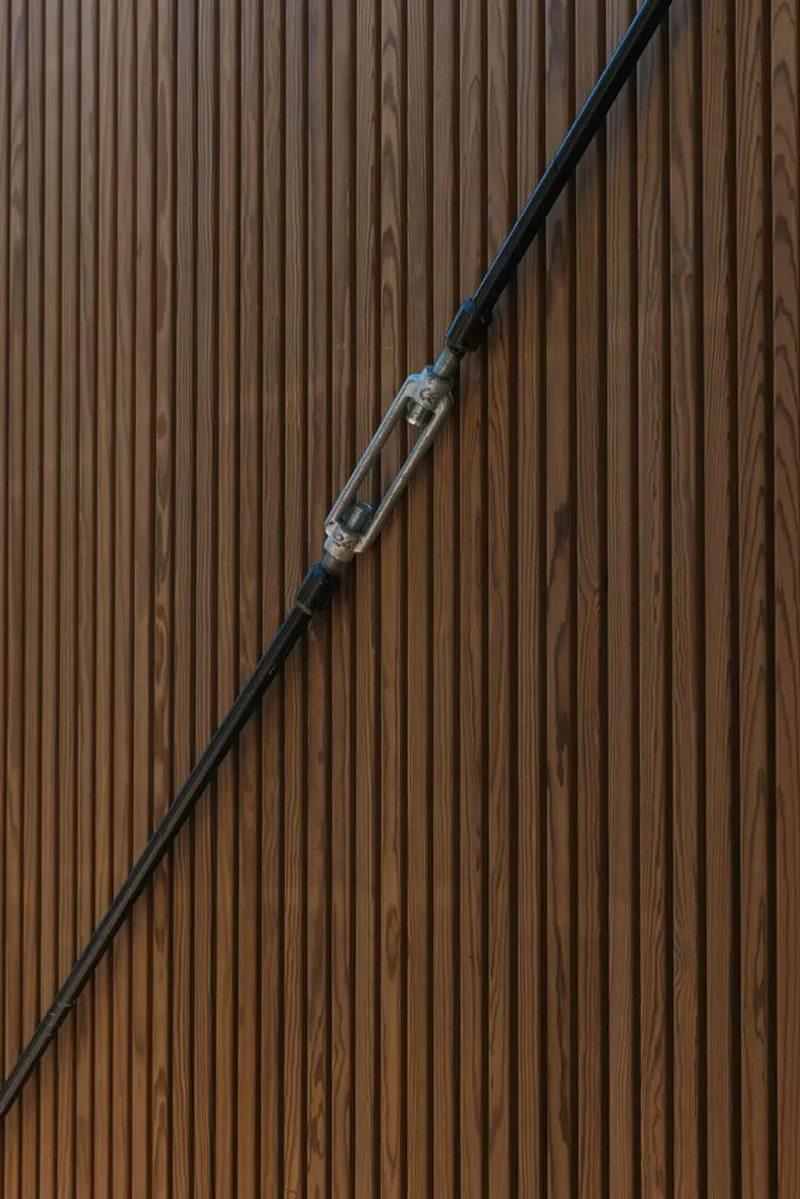
The design also embraces structural honesty—leaving steel frames exposed, celebrating the natural textures of wood and metal, and incorporating recovered and thermotreated pine for the façade. This choice not only emphasizes authenticity but also allows the house to age gracefully with time.
Spatial Layout and Modulation
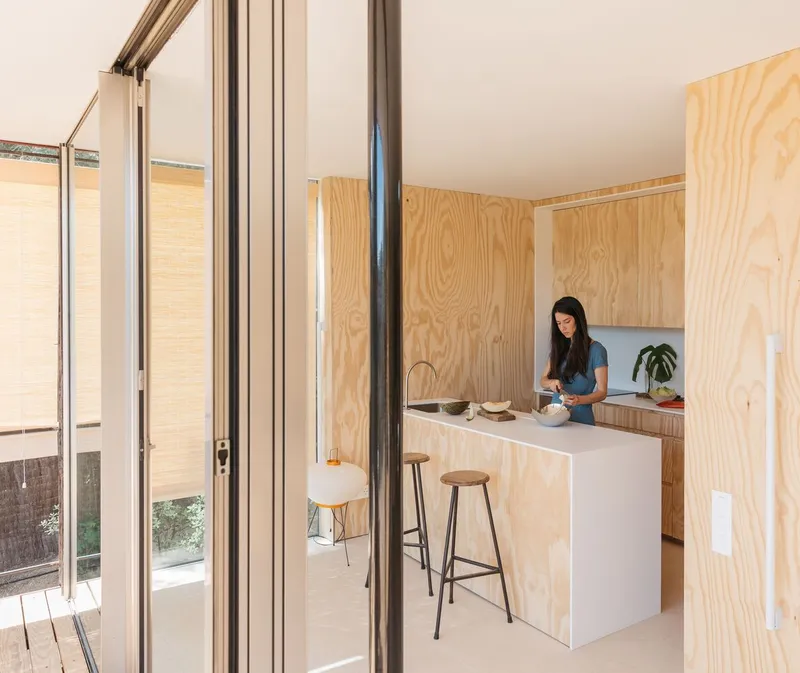
The spatial organization is guided by clear modulation principles. Private areas such as bedrooms and the independent studio are defined as modular units, while social areas—living room, dining space, and kitchen—expand into larger bays with floating roofs supported by slender slit windows.
The studio’s subtle shift in orientation introduces a playful urban reference—evoking the narrowing and widening of village streets that suddenly open into plazas. This gesture enhances the spatial rhythm, creating both intimacy and openness.
Landscape Integration and Seasonal Beauty
The house extends into a carefully curated garden that enhances the existing pine forest with maples, sweetgums, fig, lemon, and orange trees. A pool at the lower garden collects rainwater, supporting aquatic plants such as lilies and calla lilies, while the sound of flowing water reaches the terrace through a delicate copper pipe, reinforcing the sensory connection to nature.
The landscape changes with the seasons, offering fresh greens in spring, vibrant foliage in autumn, and fragrant blossoms in summer. The garden becomes an essential extension of the living space, blurring the boundaries between architecture and environment.
Materials, Interiors, and Timeless Design Influence
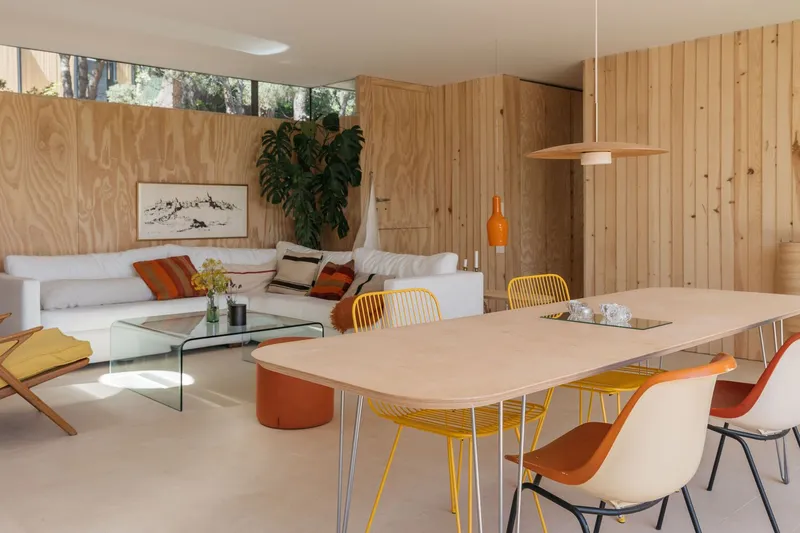
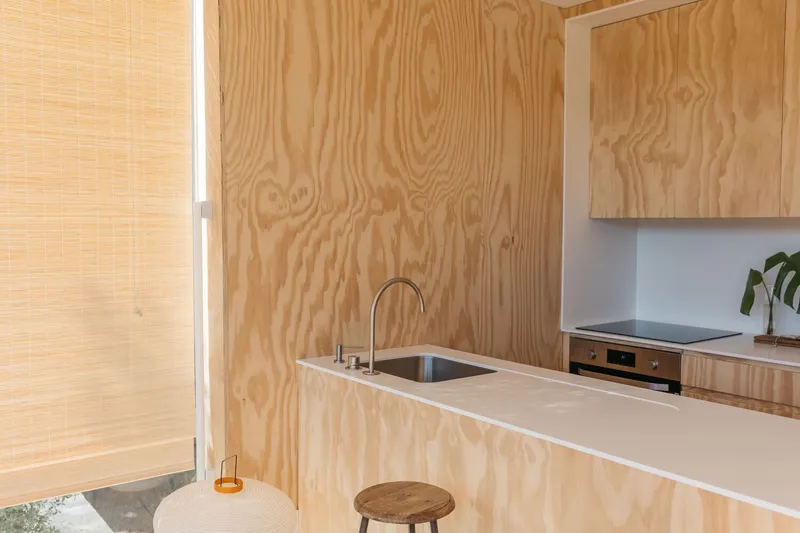
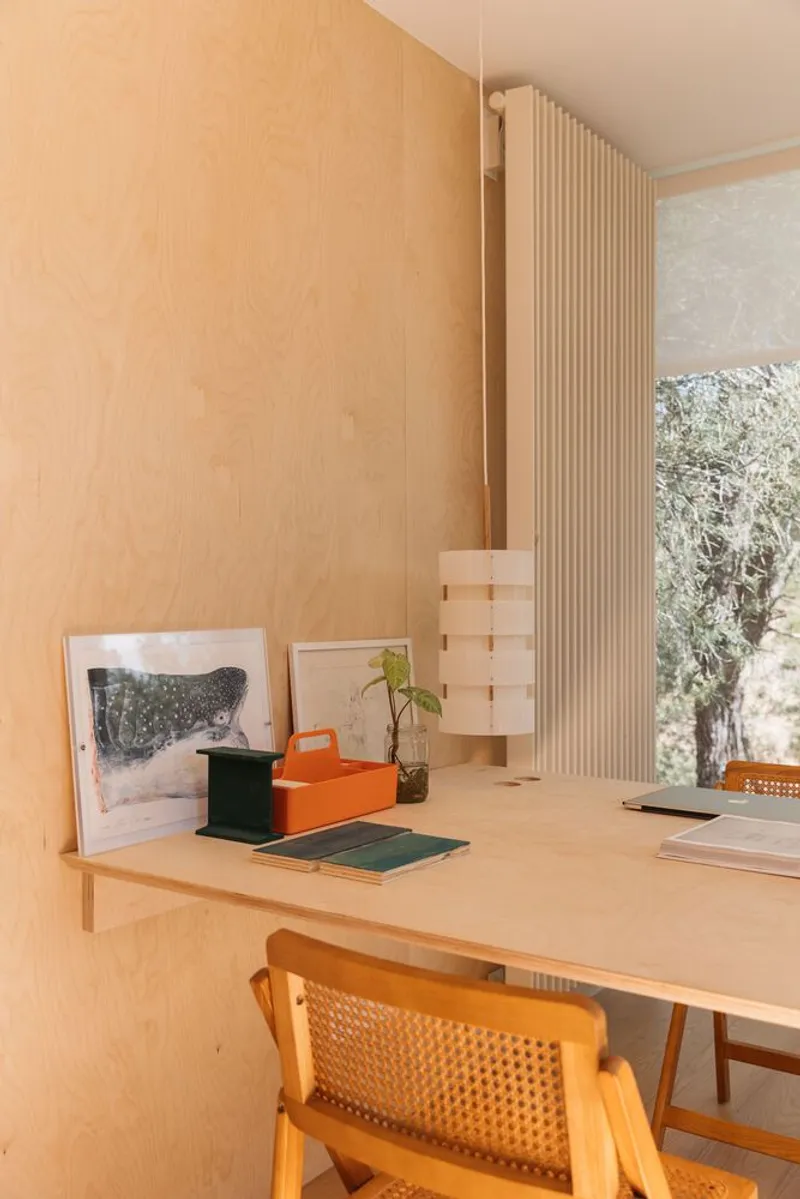
Inside, the architects chose serene and natural tones. Birch wood defines the studio, while pine plywood complements limestone flooring inside the house. The interiors are softened with textiles and furniture sourced from Morocco, introducing subtle touches of color and cultural texture.
The design philosophy resonates with the Case Study Houses movement, which emphasized essential, timeless architecture—"great ideas executed with little." Fresnos House embodies this spirit, focusing on simplicity, clarity, and essential living rather than monumental gestures.
With Fresnos House, delavegacanolasso has created more than a dwelling—it is a sanctuary that balances innovation with tradition, modernity with nature, and architecture with landscape. By allowing the forest to dictate its form and function, the house becomes a living extension of its environment, offering a tranquil refuge deeply rooted in context.
All Photographs are works of Paco Marín


Popular Articles
Popular articles from the community

Opera by the Sea Estonia: Three Shells Dissolving Architecture into Tallinn's Coastline
A winning opera house proposal replaces monumental form with interconnected shells that blur the boundary between building, park and Baltic Sea.
Cloaked Colonization: A Mobile Underwater Habitat That Moves Like a Fish
Micah Abaya's shortlisted EHC Pacific entry reimagines ocean settlement as a dispersed network of self-sustaining architectural organisms.

Manzana Morphosis: Stretching Barcelona's Grid into a Living Landscape for 2050
A radical reworking of the Eixample manzana turns density into a tool for generous public space, vertical ecology, and environmental performance.

Singing Woman: Contemporary Architecture Inspired by Estonia’s Voice and the Sea
Singing Woman turns Estonia’s song culture into flowing opera house architecture, blending public life, landscape, sea, and national memory.

Similar Reads
You might also enjoy these articles


Hodi-Mandai Geram
Project Function: Preservation and revitalization of the Intangible heritage and socio-spatial identity of the Hodi by Housing, Cultural Memory Center, Sacred Grove, landscape, local tourism economy


Olio Towers: A Mid-Rise for Performers That Fuses Housing, Rehearsal, and Stage
Located blocks from Houston's Theater District, this modular tower stacks living units around a central performance atrium.

Oasis: Modular Green Housing Carved into Dhaka's Urban Fabric
A shortlisted Plugin Housing entry reclaims unauthorized settlements in Dhaka with stepped concrete volumes, green roofs, and ventilation-driven design.

Black Hole: A Floating Megastructure for the Post-Physical Era
Emiliano Mazzarotto envisions a spherical, self-scaling arena where e-sports, digital hotels, and holographic stadiums replace traditional public space.

Explore Adobe Fresco Competitions
Discover active competitions in this discipline

Challenge to reimagine the Iron Throne

Photograph architecture without architects

Illustrate the lost glory of Angkor Wat - Render Challenge

Design challenge to reuse E-waste
Comments (0)
Please login or sign up to add comments
No comments yet. Be the first to comment!