
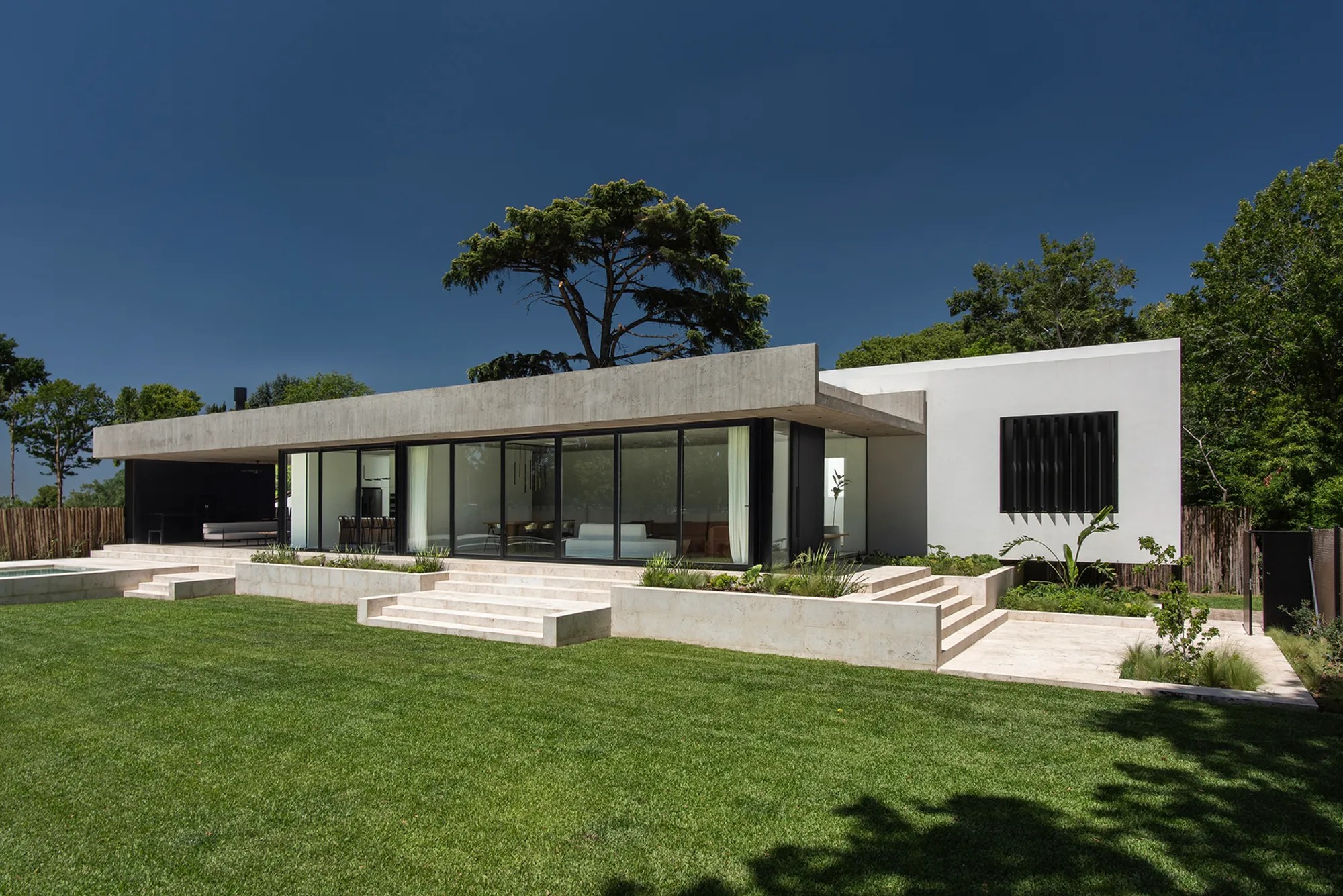
FRN House by NOA: Innovative Family Living in Villa de Mayo, Argentina
FRN House by NOA in Villa de Mayo blends intimate bedrooms and open social spaces, maximizing views, privacy, sustainability, and modern family living.


The FRN House, designed by NOA, Najmias Office for Architecture, is a masterclass in balancing spatial complexity with elegant simplicity. Completed in 2023, this 330 m² family residence in Villa de Mayo, Argentina, demonstrates how meticulous planning and thoughtful design can maximize functionality while preserving privacy and natural light.
Ambitious Design Goals
The clients approached NOA with ambitious requirements: a compact footprint of no more than 350 m², yet accommodating a diverse program of generously sized spaces. The house needed to include a master suite with dressing room, three en-suite children’s bedrooms, a living room, dining area, kitchen, quincho, playroom, laundry, storage, and a maid’s room. Beyond the spaces themselves, the architects had to carefully orchestrate spatial relationships to meet the family’s lifestyle needs.
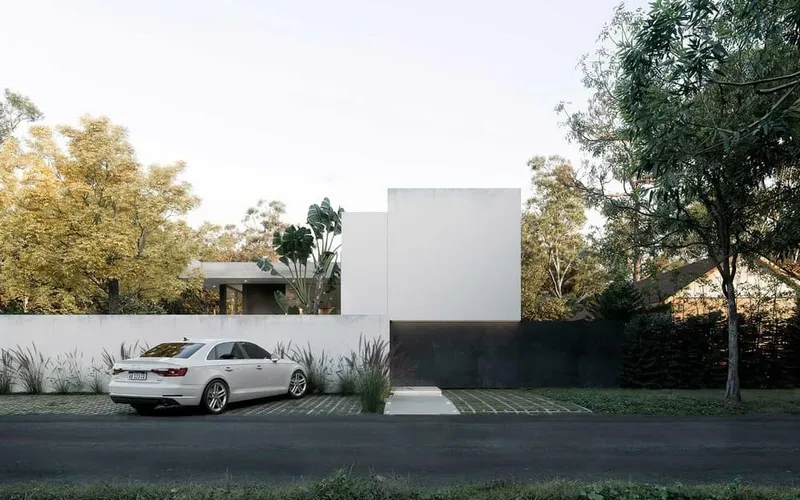
For instance, the master suite had to remain private, ideally on a different floor from the children’s rooms, yet remain conveniently accessible to the main living area. The children’s bedrooms needed proximity to the quincho without exposure to noise, while the quincho itself was designed close to the kitchen and playroom, optimizing circulation and functional adjacency. Social spaces and the master suite were oriented to maximize sweeping golf course views, seamlessly integrating the property with its surrounding landscape.
Architectural Concept
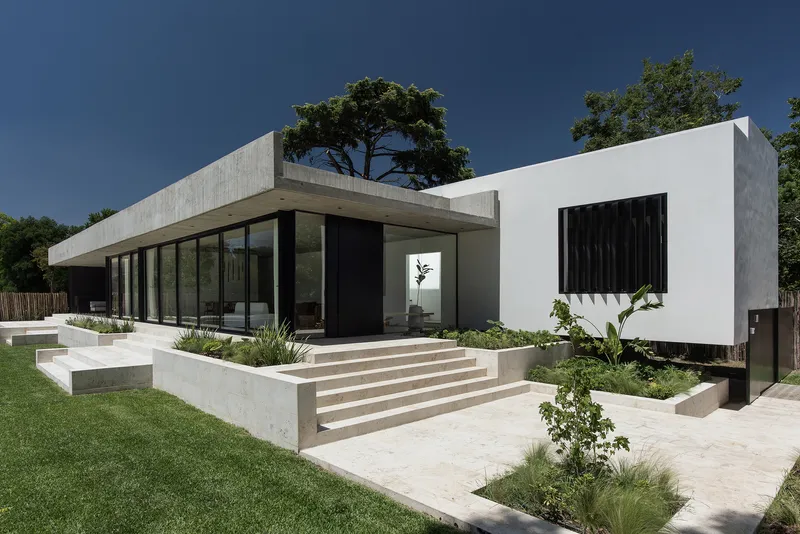
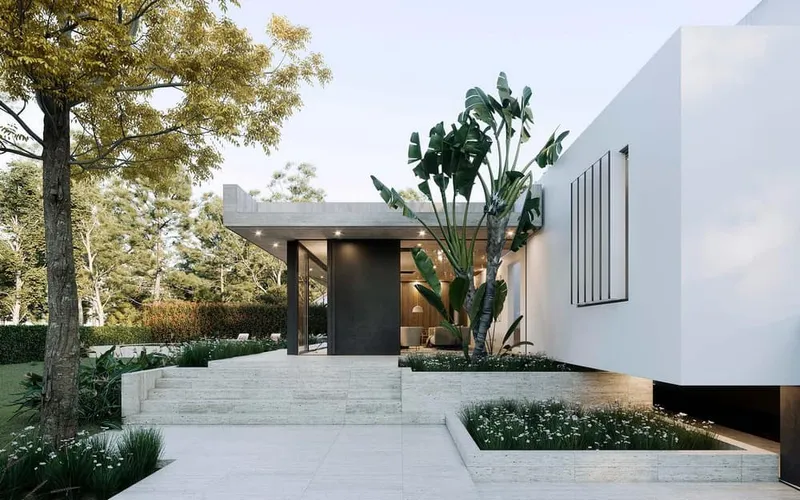
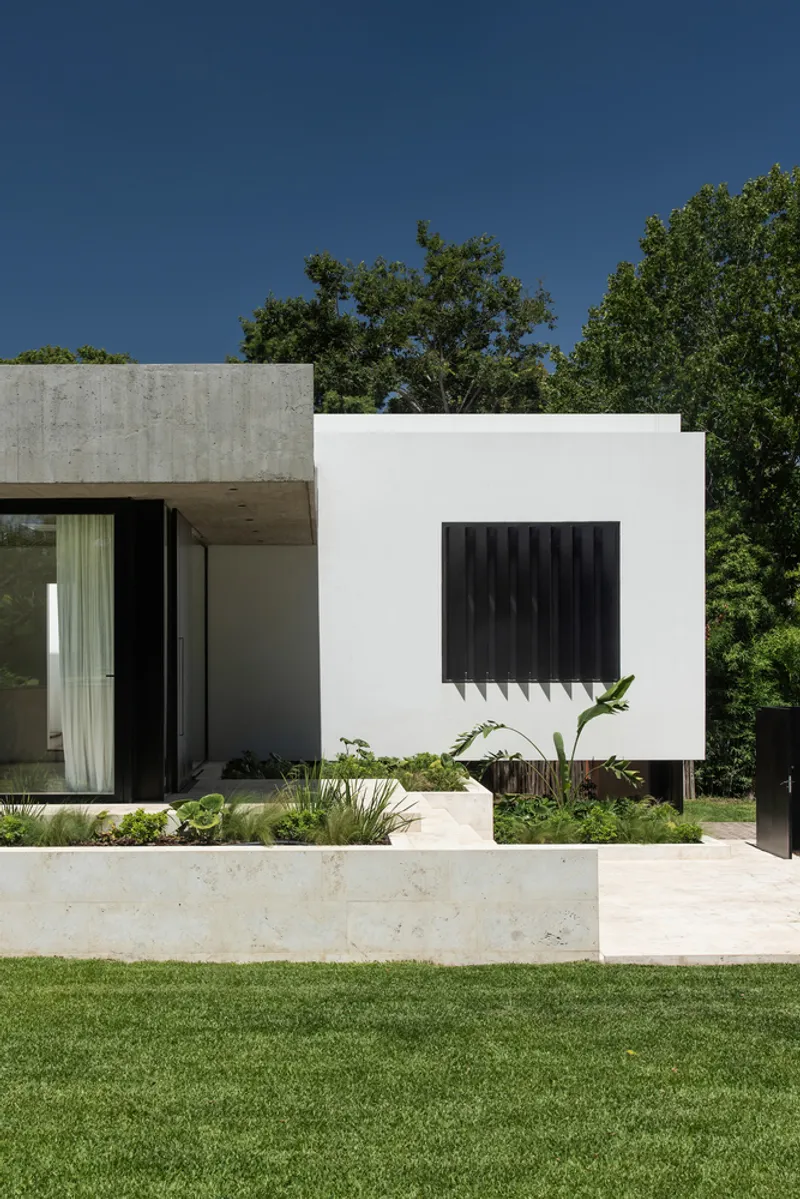
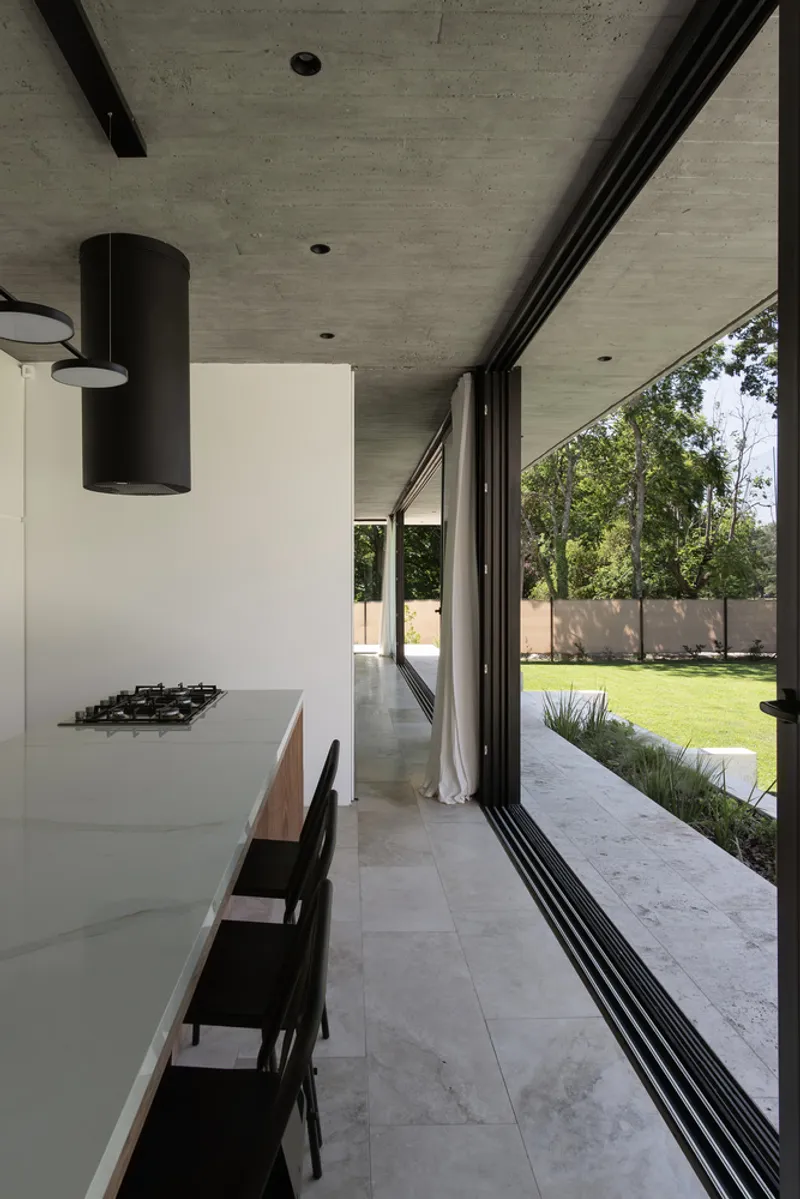
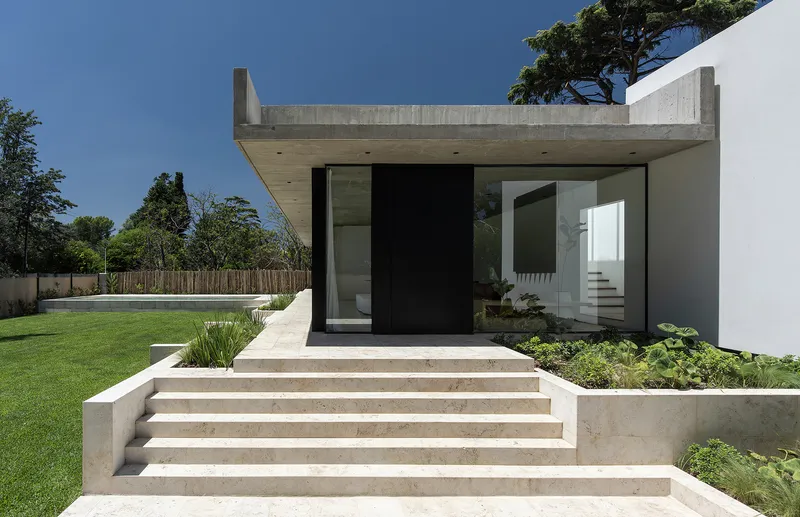
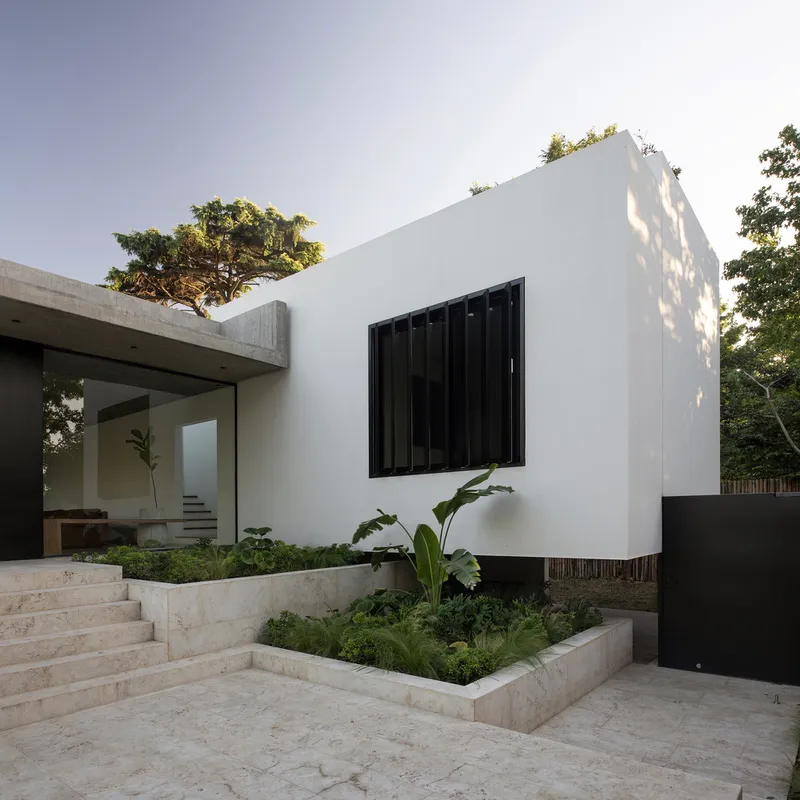
At first glance, the FRN House appears straightforward: two offset rectangular volumes. However, this simplicity belies the sophisticated spatial strategy within. One rectangle forms a closed, intimate volume that houses the bedrooms, while the other is an open, extroverted space containing the social areas. Here, the boundaries between interior and exterior dissolve, with a reinforced concrete tray floating above a travertine base, creating uninterrupted, airy living spaces without visible structural interference.
This design strategy not only enhances spatial continuity but also optimizes natural light, sightlines, and privacy. Large glazed surfaces blur indoor-outdoor transitions, encouraging a dialogue between the home’s interior and the surrounding landscape.
Sustainability and Energy Efficiency
Sustainability was a key consideration in the FRN House. Overhangs and eaves carefully control sunlight penetration, reducing heat gain in summer while allowing winter light to warm interiors. High-performance treated glazing, sunshades in bedrooms, and smart orientation maximize energy efficiency.
The home also incorporates a gray water reuse system, solar collectors for hot water, and photovoltaic panels for electricity generation. These features not only reduce environmental impact but also demonstrate NOA’s commitment to sustainable, forward-thinking architecture.
Materiality and Finish
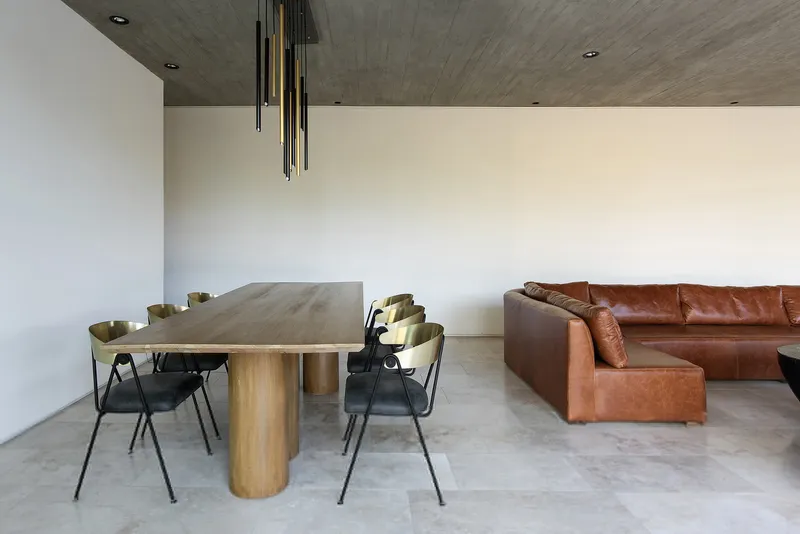
Material choices emphasize durability and elegance. The travertine base grounds the building, while the reinforced concrete tray offers a minimalist, sculptural quality. Interiors are designed with functional elegance, featuring open-plan living areas, natural light, and seamless transitions that enhance both comfort and style.
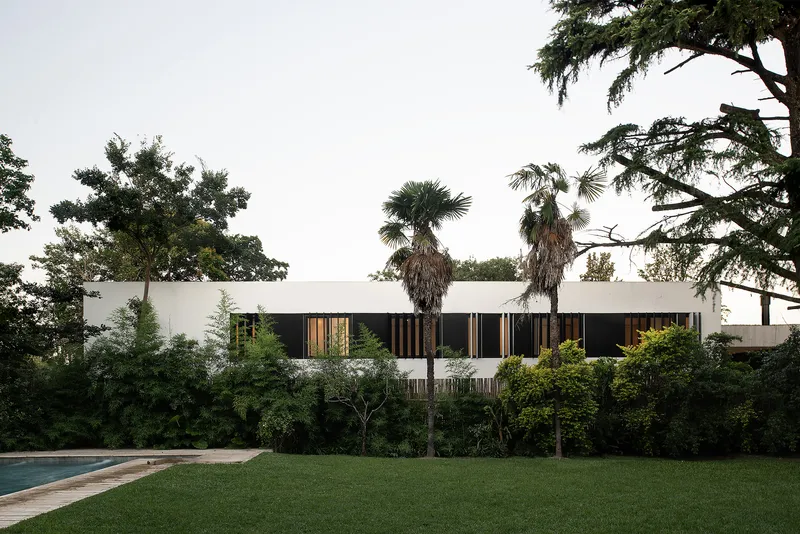
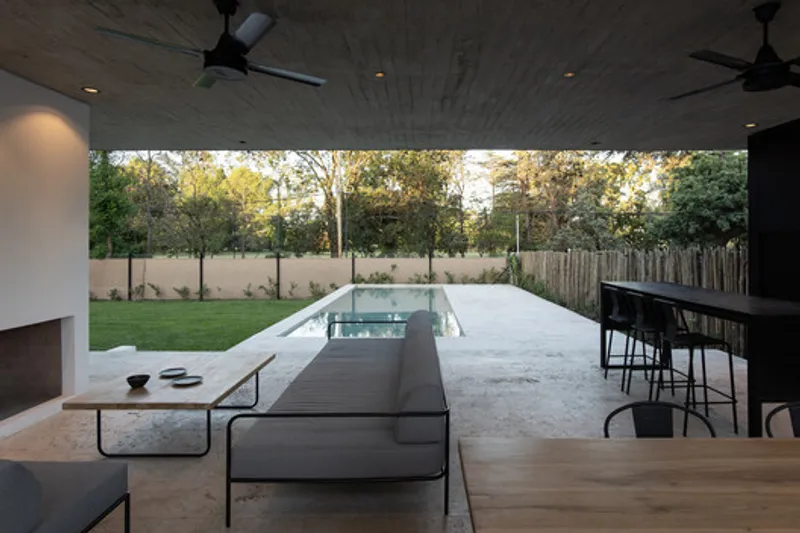
The FRN House exemplifies how careful planning, spatial intelligence, and sustainable strategies can transform a compact plot into a versatile, luxurious family home. Its sophisticated architectural language balances intimacy and openness, functionality and aesthetics, making it a standout project in modern Argentine residential architecture.
All photographs are works of
Daniela Mac Adden




Popular Articles
Popular articles from the community


AL-JANNAH: Sustainable Architecture and Permaculture for Afghan Widows
AL-JANNAH uses sustainable architecture and permaculture to create resilient oasis of housing, learning, work and renewal for Afghan widows.

Co-life: Sustainable Architecture for Age-Friendly Community Living
Co-life reimagines sustainable architecture for seniors through courtyards, rammed earth, shared gardens, and spaces designed for belonging.

The Musturak Paradise: Senior Living Architecture for a Connected Future in Temara, Morocco
The Musturak Paradise reimagines senior living architecture in Temara via private homes, social spaces, culture, community, and shared care.

The Earth Pod: 3D Printed Homes for Resilient Refugee Communities
The Earth Pod reimagines refugee housing through 3D printed homes made from clay, combining resilience, self-sufficiency, and rapid shelter.


Similar Reads
You might also enjoy these articles

FAMM Arquitectura Organizes Ten Villas Around Courtyards and Jungle in Nosara, Costa Rica
El Molino pairs two elongated volumes with deep overhangs and timber louvers to build a compact coastal community five minutes from the beach.
Oscar Niemeyer's Ibirapuera Park Pavilions Define São Paulo's Cultural Identity in Concrete and Curve
A constellation of modernist volumes set within São Paulo's most important urban park, conceived for the city's 400th anniversary in 1954.

How Henri Picq's 1889 Paris Pavilion Traveled 11,000 Kilometers to Become Santiago's Artequín Museum
A prefabricated iron and glass pavilion built for the Paris Universal Exposition found a second life as a children's art museum in Chile.
Sanjay Puri Architects Wraps a Jaipur Office Tower in Capsule-Shaped Green Buffers
A nine-level climate-responsive workplace near Jaipur Airport uses stacked planter terraces and aluminium screens to fight 40°C heat.


Explore Housing Competitions
Discover active competitions in this discipline



Challenge to reimagine the Iron Throne


Photograph architecture without architects


Illustrate the lost glory of Angkor Wat - Render Challenge


Design challenge to reuse E-waste
Comments (0)
Please login or sign up to add comments
No comments yet. Be the first to comment!