
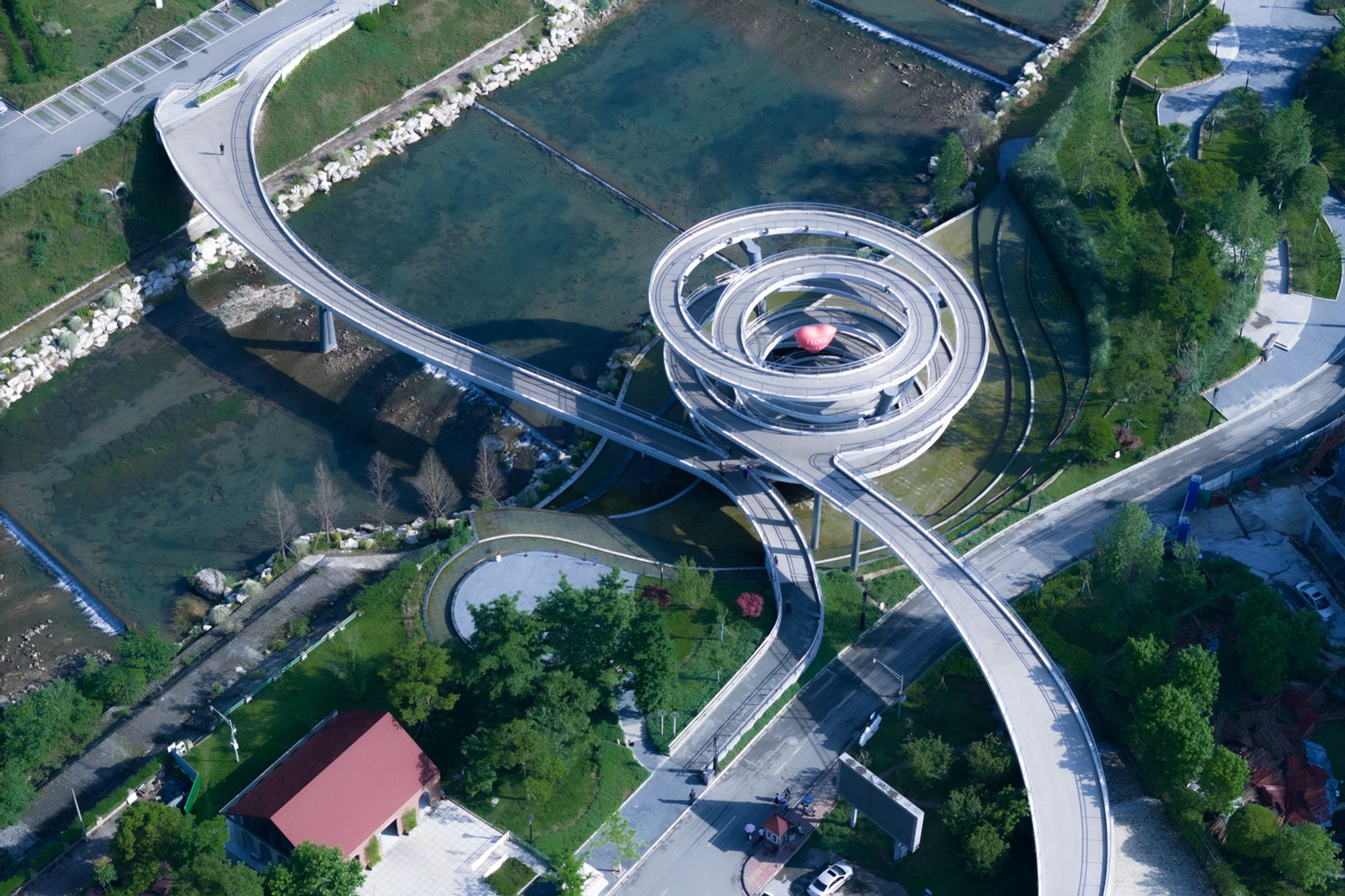
G Clef Bridge by ZZHK Architects: A Musical Landmark in Chengdu’s Bailu Music Tourist Area
Music-inspired pedestrian bridge in Chengdu featuring spiral ramps, viewing platforms, performance spaces, and fluid curves spanning the Bailu River.

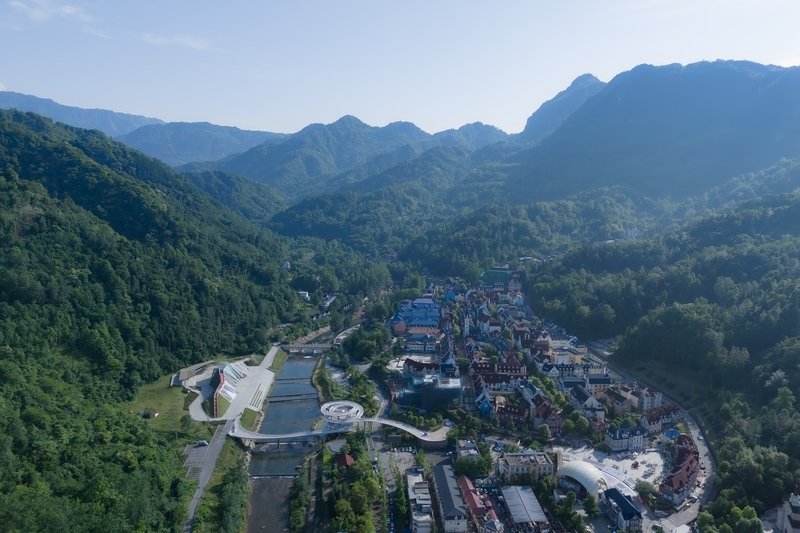
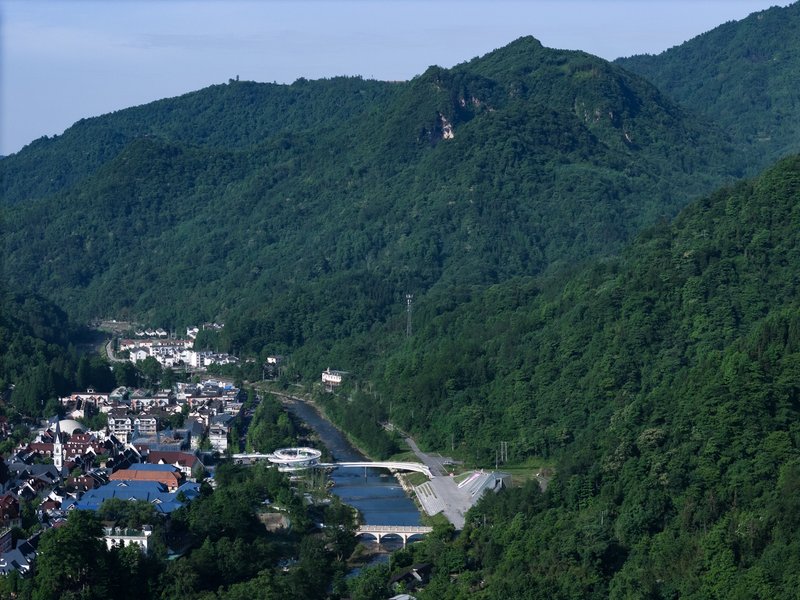
Completed in 2023, the G Clef Bridge is a 2,290-square-meter pedestrian bridge located in Bailu Town, within the Longmen Mountains of Chengdu, Sichuan, China. Designed by ZZHK Architects, the project forms a vital connection across the Bailu River, linking the French-style Bailu Music Town on the east bank with the modern Diamond Music Hall on the west bank.
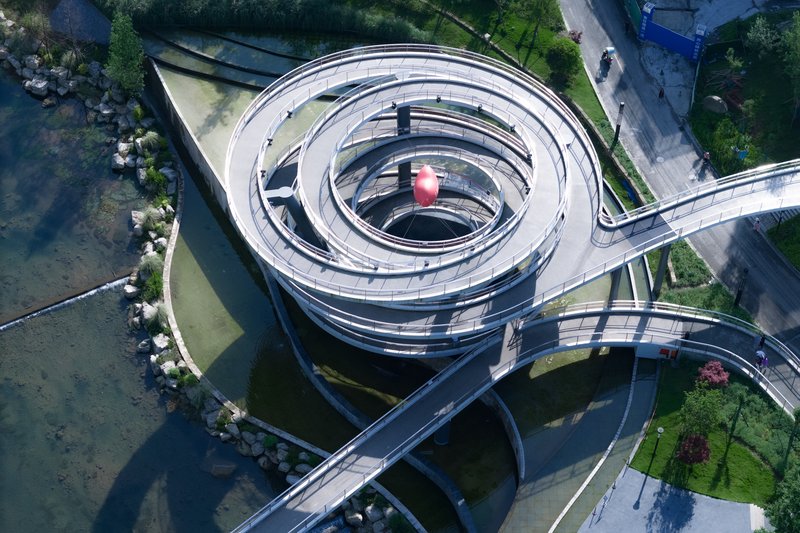
Situated approximately 60 kilometers from downtown Chengdu, the Bailu Music Tourist Area spans 2.9 square kilometers and is recognized as a national 4A-level tourist attraction. Rich in cultural heritage and historical landmarks, the district includes the Annunciation Seminary, the historic Sino-French Friendship Bridge, the Old Street of Bailu Town, and significant 5.12 earthquake memorial sites. Within this layered cultural landscape, the G Clef Bridge emerges as a contemporary architectural icon that blends infrastructure, performance space, and immersive urban experience.
Concept: Translating Music into Architecture
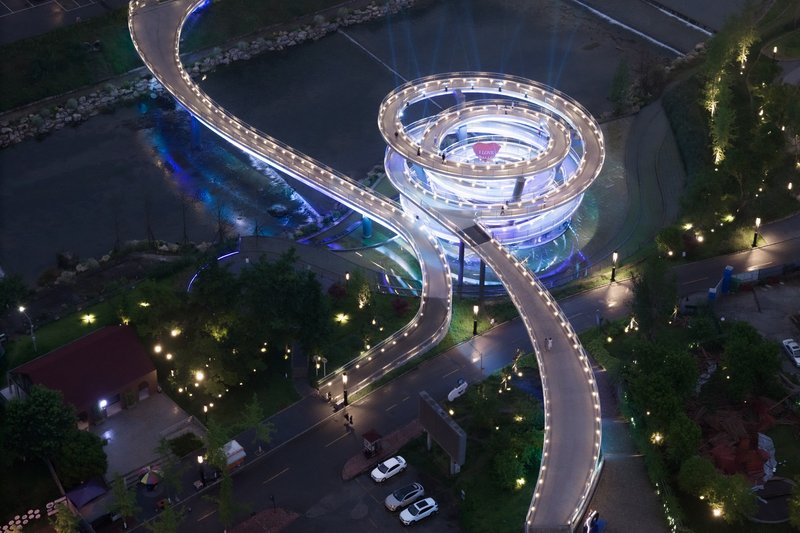
The design concept draws direct inspiration from the elegant curvature of the treble clef symbol and the swirling motion of water. Embracing the theme “Melody of Water,” the bridge transforms musical notation into spatial form, embodying rhythm, flow, and movement in its architectural language.
Fluid, sculptural curves define the structure, establishing a harmonious dialogue between two contrasting architectural contexts:
- The European-influenced façades of Bailu Music Town
- The metallic, contemporary geometry of the Diamond Music Hall
Rather than acting as a simple crossing, the bridge becomes a spatial narrative, an experiential sequence that unfolds like a musical composition.
Spatial Strategy and Structural Design
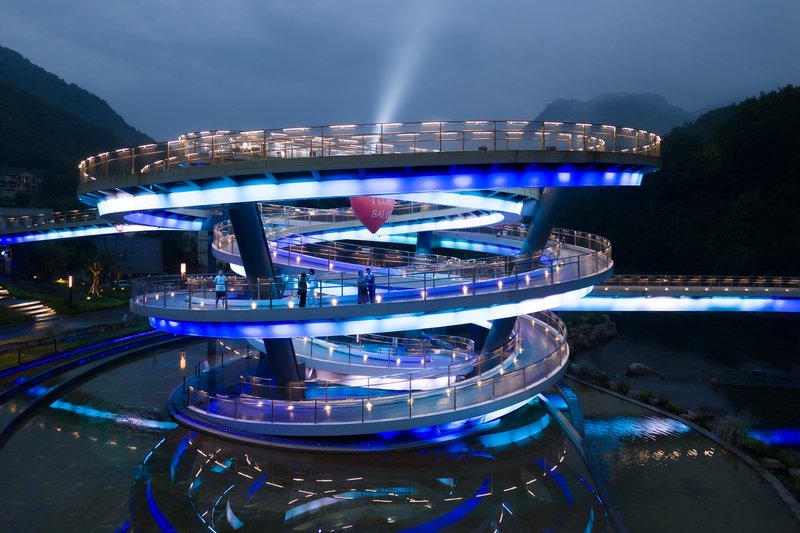
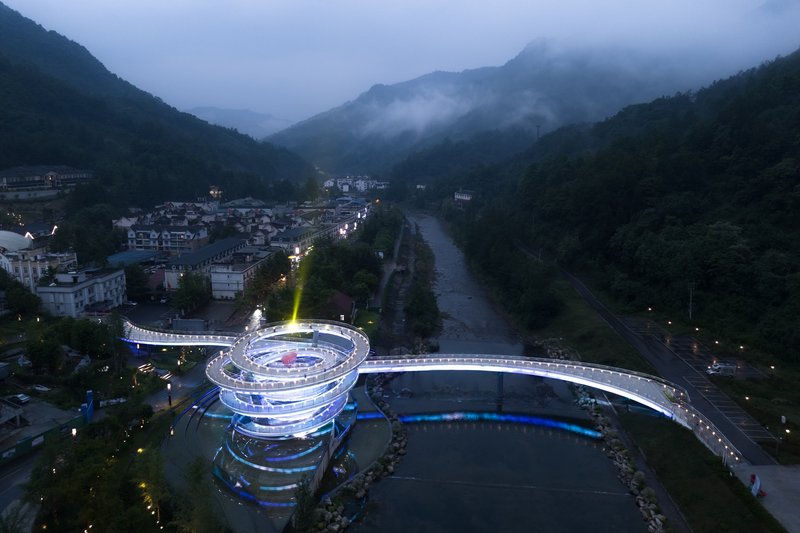
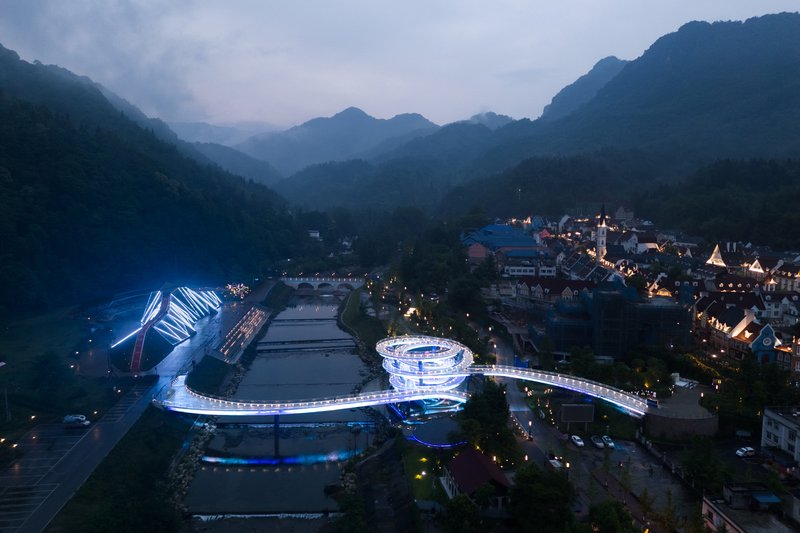
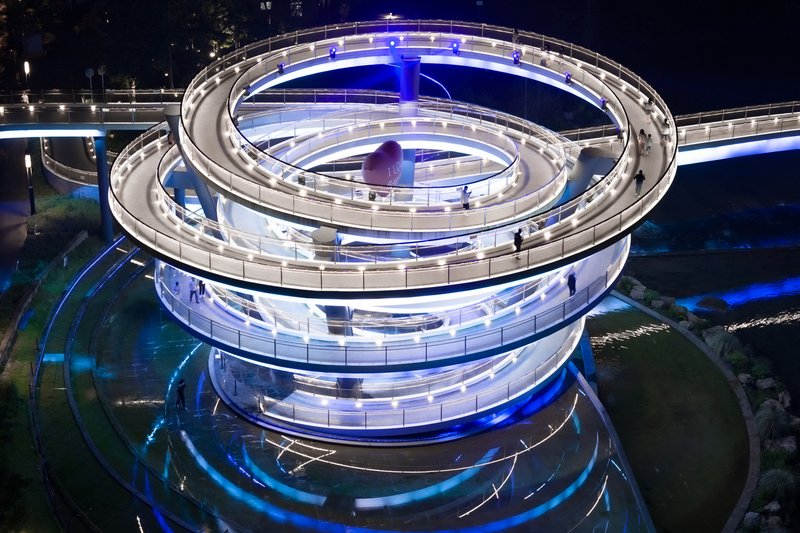
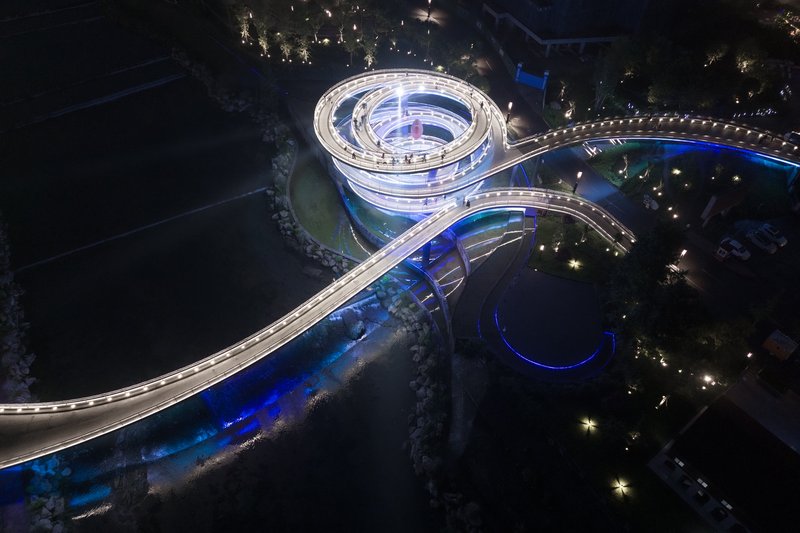
The main bridge deck extends organically from the “ridge path” of the Diamond Music Hall, winding gracefully across the river. Its structural design integrates two sinuous decks and dual spiral viewing platforms that intersect at multiple points, ensuring seamless pedestrian circulation.
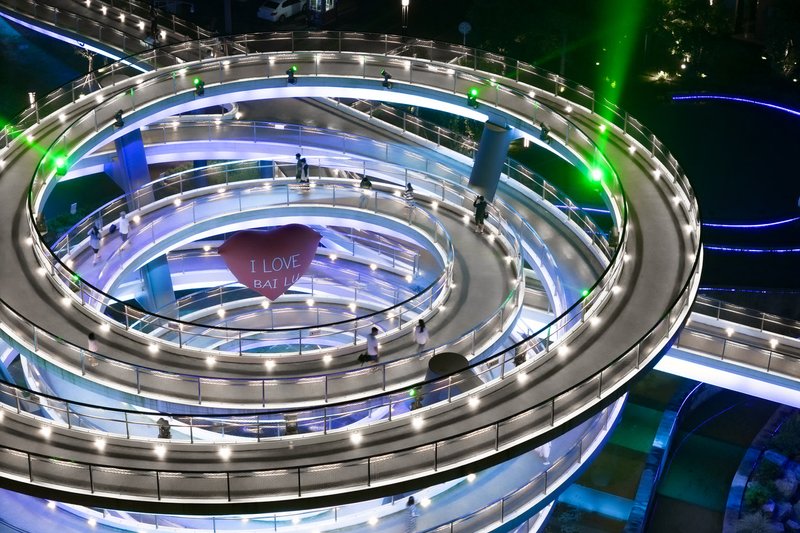
A key feature is the dramatic spiral ramp, which performs several architectural and urban functions:
- Rising above the riverside road to connect directly with the small open-air stage in the music town
- Extending upward to create an elevated viewing platform
- Functioning as a high stand for outdoor performances at the Diamond Music Hall
- Descending to integrate with the riverside landscape, forming a waterfront platform
This multi-layered circulation system provides a continuous walking experience while creating dynamic vantage points overlooking the Bailu River and surrounding mountainous scenery.
Multi-Level Experience and Public Interaction
The G Clef Bridge redefines the traditional pedestrian bridge typology by incorporating cultural programming and landscape integration. Its spatial design enhances visitor engagement through:
- 360-degree panoramic viewing platforms
- A floating performance stage for live music events
- Partial glass bridge decks inspired by the local historical “Broken Bridge”
- An integrated waterfall landscape along the riverbank
These elements generate a stimulating and immersive environment, transforming circulation into performance and leisure space. The bridge encourages lingering rather than mere passage, positioning itself as a public gathering platform and cultural catalyst within the music-themed district.
Night Lighting and Urban Landmark Identity
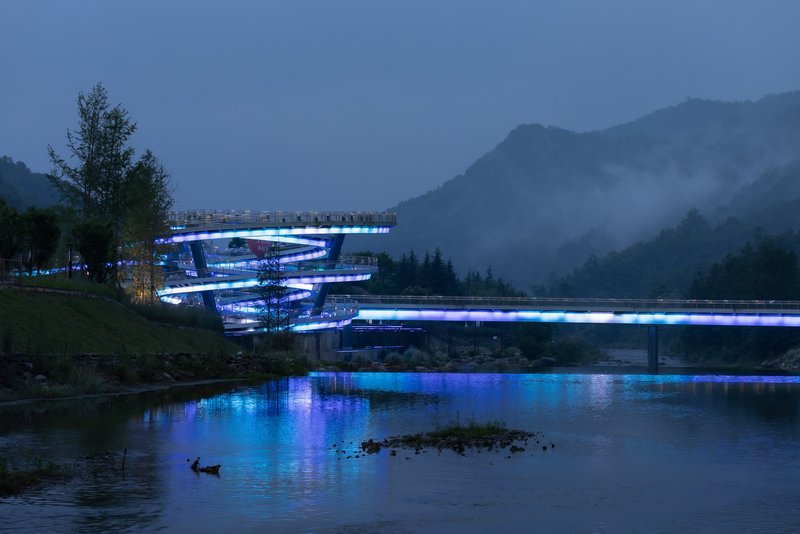
Lighting design plays a crucial role in reinforcing the bridge’s identity. After sunset, integrated lighting enhances the flowing curves, emphasizing rhythm and movement. The illuminated spiral form becomes a glowing treble clef hovering above the river, dramatically enhancing the nightscape of Bailu Town.
The interplay of structure, reflection, and dynamic lighting establishes the bridge as a focal point of the area’s nighttime tourism economy, strengthening Chengdu’s cultural and architectural branding.

Engineering Collaboration and Material Innovation
The project involved multidisciplinary collaboration, including structural design by Sichuan Provincial Architectural Design and Research Institute Co., Ltd., landscape design by Chengdu ZZHK Architects Co., Ltd. and partners, and lighting design by Sichuan Bohe Tiansheng Cultural Technology Co., Ltd.
With contributions from manufacturers such as ANLT, Kaichuan, Kinlong, and Laisi, the bridge combines steel structural systems, glass deck panels, and precision-engineered components to ensure both safety and aesthetic clarity. The result is a structurally expressive yet fluid architectural form that merges engineering performance with symbolic storytelling.

Beyond Infrastructure: A Cultural Icon
From its inception, the G Clef Bridge was envisioned as more than a pedestrian connector. It represents a fusion of architecture, landscape design, urban regeneration, and cultural tourism infrastructure.
By translating music into built form, ZZHK Architects have created a landmark that:
- Strengthens connectivity between key cultural nodes
- Enhances visitor engagement through experiential design
- Activates public space through performance and leisure
- Contributes to sustainable tourism development in Chengdu
Today, the bridge stands as a defining symbol of the Bailu Music Tourist Area, an architectural melody flowing across water.
All photographs are works of
Arch-Exist




Popular Articles
Popular articles from the community

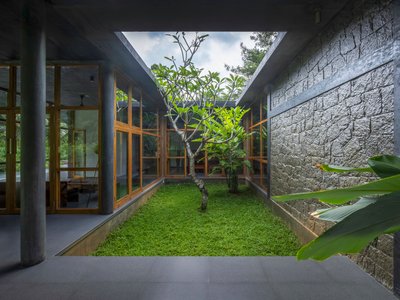
3dor Concepts Wraps a Kerala Home in Mirrored Concrete Arcs Around a Courtyard Tree
In the Western Ghats foothills of Thamarassery, a 270 m² single-story house uses two curved volumes to frame nature as its center.
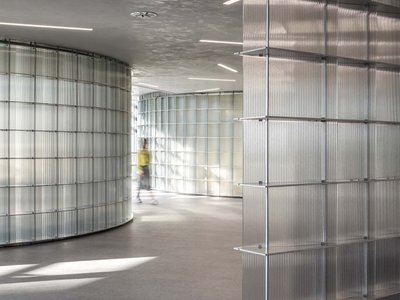
HCCH Studio Wraps a Shanghai High-Rise Office in Curved Walls of Translucent Glass
A 1,000 square meter fit-out in Lujiazui replaces the typical tech-office palette with layered glass, micro-cement, and quiet rigor.

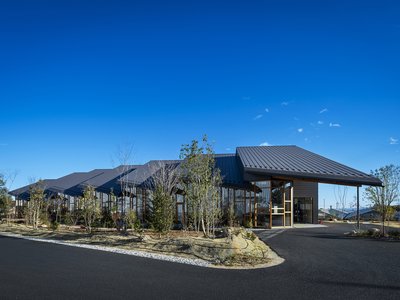
20 Most Popular Office Building Projects of 2025
From biophilic workspaces in India to net-positive energy offices in New Delhi, 20 office building projects that defined architecture in 2025.
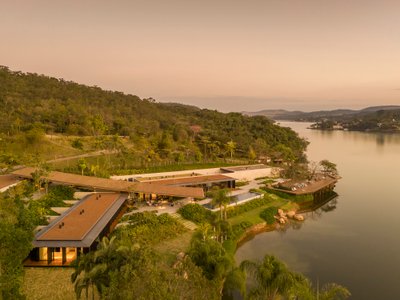
Bernardes Arquitetura Stretches a Timber Roof Along a Reservoir's Edge in Minas Gerais
Dam House in Itaúna lets a sweeping wooden canopy dissolve the boundary between hillside terrain and open water.

Similar Reads
You might also enjoy these articles

Kokaistudios Wraps a Shanghai Retail Podium in Horizontal Louvers That Echo Its Foster + Partners Neighbor
A four-storey glass-roofed gateway links an underground commercial valley to the revitalized north bank of Shanghai's Suzhou River.
Fausto Terán and Toro Fuse Japanese Craft with Mexican Tradition in a Lakeside Retreat
Nakamura House pairs Shou-Sugi-Ban charred pine with handmade clay tile at the foot of Atlangatepec Lagoon in Mexico.
RDTH architekti Rips Out Nearly Every Wall in a Prague Apartment and Replaces Them with Furniture
A 101-square-meter post-war flat in Prague trades rigid partitions for a single rotated furniture block, curtains, and glass concrete.

SWA Group Spirals a Landscape Memorial into the Woods of Sandy Hook
A 1.8-acre clearing in Newtown, Connecticut, honors 26 lives lost with water, stone, and a single sycamore tree.


Explore Architecture Competitions
Discover active competitions in this discipline




The International Standard for Design Portfolios


The Global Benchmark for Architecture Dissertation Awards


The Global Benchmark for Graduation Excellence


Challenge to design an urban locus of culture and heritage
Comments (0)
Please login or sign up to add comments
No comments yet. Be the first to comment!