

Gaislachkogl Cable Car Middle Station Extension – Alpine Architecture Meets Sustainable Tourism
Sustainable timber extension in Austria’s Ötztal Valley, integrating panoramic restaurants with Gaislachkogl Cable Car, offering alpine views, flexible interiors, and year-round tourism appeal.


Architects: obermoser + partner architekten
Nestled deep in the heart of the Ötztal Valley, surrounded by the breathtaking Tyrolean Alps, the Gaislachkogl Cable Car Middle Station Extension by obermoser + partner architekten is a striking example of sustainable alpine architecture that harmoniously integrates modern design with the natural landscape. Commissioned by Bergbahnen Sölden, the extension project reflects the region’s commitment to an all-year-round, eco-conscious tourism model while enhancing the visitor experience for both winter sports enthusiasts and summer hikers.
A Vision for Seamless Connection
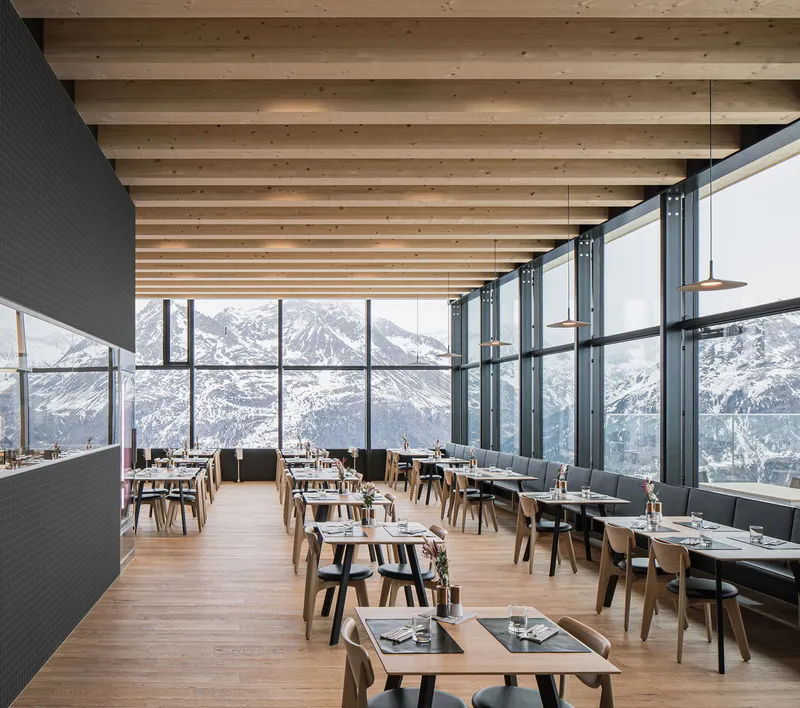
The primary design intent was to create a direct and fluid connection between the existing cable car station (originally designed by the same office in 2010) and two newly built restaurants. To manage large visitor flows efficiently, the architects developed a functional two-level layout. This arrangement not only facilitates smooth circulation but also opens up to expansive panoramic terraces, offering uninterrupted views of the Stubai and Ötztal Alps.
While the form maintains architectural continuity with the original structure, the new extension introduces contrasting materiality to clearly express the evolution of the complex. This thoughtful juxtaposition underscores the fusion of tradition and innovation in alpine building design.
Sustainable Material Choices
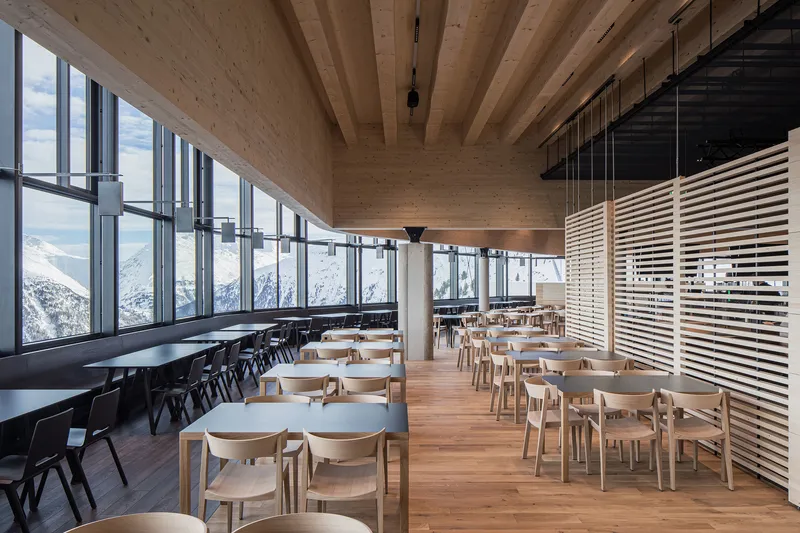
The design team extended and renovated the existing reinforced concrete basement structure, while opting for a massive timber construction in prefabricated elements for the new extension. This approach reduced construction time, minimized environmental impact, and emphasized the use of regional materials—a deliberate move towards environmentally responsible architecture in high-altitude settings.
Warm and Inviting Interiors
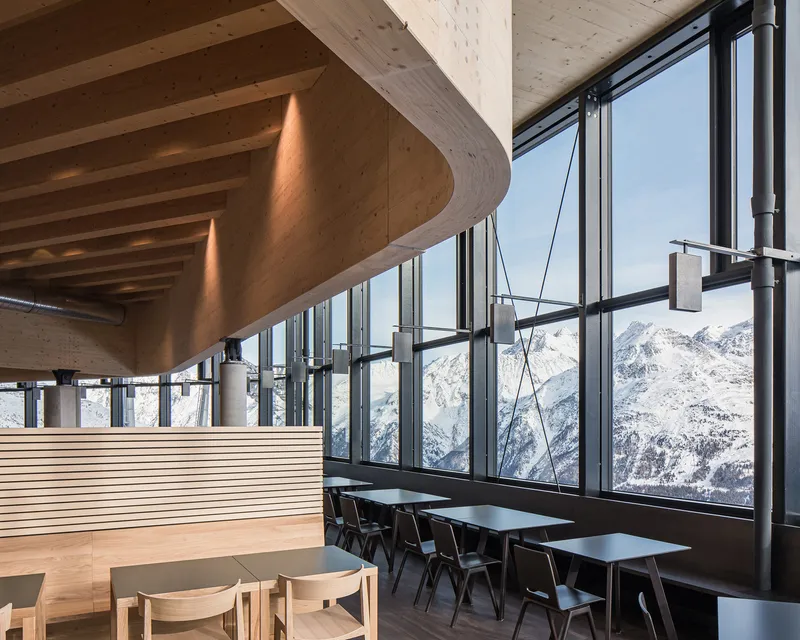
The interior concept embraces wood as the central design element, providing both aesthetic warmth and acoustic comfort.
- Upper Floor Restaurant – Accommodating up to 100 guests, the upper-level restaurant features a show kitchen and a generous rooftop terrace, where diners can enjoy south/east-facing vistas across snow-covered peaks and lush summer meadows.
- Ground Floor Self-Service Area – Designed to host about 300 guests, this level boasts full-height glazed facades that flood the interior with natural light, framing dramatic alpine views. The open-plan dining space incorporates self-service islands in varied thematic and color schemes, promoting a free-flow dining experience.
Adaptive and Flexible Spaces
The interiors were conceived with flexibility in mind—sliding walls allow for rapid spatial reconfiguration, enabling the venue to adapt to seasonal demands and special events. Ribbed wooden ceilings, natural timber tones, and textured finishes create a comfortable, contemporary alpine atmosphere.
In the bistro area, a prominent wooden beam parallel to the window front acts as a visual divider, with darker material tones marking the transition between spaces. The adjacent outdoor panoramic terrace offers guests a front-row seat to the surrounding ski slopes.
Lighting Design for Every Mood
Three distinct lighting strategies enhance the spatial experience:
- Lattice beams with integrated studio lights for the show kitchen, spotlighting culinary performances.
- Custom-designed pendant lamps in the bistro, adding warmth and intimacy.
- Discreet, concealed lighting in the main dining hall, creating a calm and sophisticated ambiance.

A Landmark for Alpine Hospitality
The Gaislachkogl Cable Car Middle Station Extension is more than just an infrastructural upgrade—it is a destination in itself. By combining architectural refinement, sustainable building practices, and spectacular alpine views, the project strengthens Sölden’s position as a leader in high-altitude hospitality.

All photographs are works of Christian Flatscher


Popular Articles
Popular articles from the community


ETEH Reworks the Shared Spaces of São Domingos School in Brazil Around Timber, Color and Hanging Plants
At São Domingos School in Brazil, 436 m² of hall, refectory and library are recast with timber joinery, a yellow and blue code and trailing greenery.


Opera on the Sea: Driftwood Logic Shapes a Timber Opera House on Estonia's Coast
Trevor Orgill's opera house translates the entangled drift of floating timber into a civic building where wood, water, and music converge.

graciastudio Turns a Viewless Tijuana Lot Inward Around a Courtyard of Concrete, Timber and Trees
In Tijuana, Jorge Gracia's GA2 House stacks a timber-clad private floor over exposed concrete and replaces a missing view with a planted interior patio.

FCC Arquitectura Expands a Portuguese Granite House with a Board-Marked Concrete Wing
In Portugal, JV House pairs a cleaned-up whitewashed and granite dwelling with a timber-shuttered concrete extension, courtyards and a garden pool.

Similar Reads
You might also enjoy these articles


Hodi-Mandai Geram
Project Function: Preservation and revitalization of the Intangible heritage and socio-spatial identity of the Hodi by Housing, Cultural Memory Center, Sacred Grove, landscape, local tourism economy


Olio Towers: A Mid-Rise for Performers That Fuses Housing, Rehearsal, and Stage
Located blocks from Houston's Theater District, this modular tower stacks living units around a central performance atrium.

Oasis: Modular Green Housing Carved into Dhaka's Urban Fabric
A shortlisted Plugin Housing entry reclaims unauthorized settlements in Dhaka with stepped concrete volumes, green roofs, and ventilation-driven design.

Black Hole: A Floating Megastructure for the Post-Physical Era
Emiliano Mazzarotto envisions a spherical, self-scaling arena where e-sports, digital hotels, and holographic stadiums replace traditional public space.

Explore Hospitality Building Competitions
Discover active competitions in this discipline

Challenge to reimagine the Iron Throne

Photograph architecture without architects

Illustrate the lost glory of Angkor Wat - Render Challenge

Design challenge to reuse E-waste
Comments (0)
Please login or sign up to add comments
No comments yet. Be the first to comment!