
Gamification on the ground
A game will shape the playground

The interaction phenomenon was used as the main factor in the playground design. In addition to the fact that the playground is only a place for children, two installation schemes, summer, and winter, are like Lady-bug. determined using digital tools. Thanks to the modular design, it is aimed to re-establish the playground twice a year by the residents, resulting in interaction and cooperation between families and children. After the climatic analyses, the idea of covering some surfaces of the playground with mud, which was planned to invite children to the playground during and after the rain, has emerged, based on the excessive rainfall received by the project area. In the formation of this idea, the example of the Great Mosque of Djenne, which is still being repaired by the people from time to time and is in constant renewal, is based on. Children are asked to leave a mark on the playground and develop a sense of belonging. Differentiated surfaces that will increase the friction created on the surface of the modules allow children to cover the surface with mud and provide a child-nature interaction. Some surfaces of the modules are transparent and contain particles to be moved with the help of magnets. It aims to increase the interaction of children with the playground by moving these particles in the modules with the help of magnets. Using Gamification and Ladybug, which work as Rhino Grasshopper plugins, layout plans were created, trees were accepted as living cells, and then a pattern was created for places close to these living cells. With this pattern, the dimensioning of the overlapped playground ü structure is provided at different levels. Modules differ for each level. The first level modules are relatively thick and their surfaces are designed with open surfaces. Since the layer on which the second level modules will be placed rises from the ground level, the lower surfaces of the module are planned as closed for security reasons and are thinner than the first level. In the third level modules, the surfaces are completely closed and the thinnest, except for the upper surface. It has a frame. By differentiating the weaves on the surfaces of the modules, options have been created that will allow different functions, such as monkey bar, surfaces that will allow climbing or trampoline surfaces created with the elastic material used on the bottom surface. In general, with these approaches, it is aimed that children see the play structure itself as a game and interact with it.

Popular Articles
Popular articles from the community


Juan García Correa, John González and Claudia Rueda Sink a Circular Amphitheater into a Manizales Engineering Building
On the La Nubia campus in Manizales, Colombia, the S1 Building folds labs and offices into a hillside of ramped lawns that double as a campus route.

LT2A and OPEN Architectes Thread a Brick and Glass High School Through a Wooded Belgian Campus
In Braine-l'Alleud, a 3,000 m² wing for Collège Cardinal Mercier pairs pale brick with a glazed colonnade, deferring to a small chapel and a dense wood.

Architekt Andreas Gruber Scatters 23 Dark Timber Chalets Across a South Tyrolean Forest Edge
In Molini di Tures, Amonti Chalets breaks a resort into a hamlet of gabled timber houses, with parking, storage and services pushed into the slope.

longwave studio Reorganizes a 112 m² Tainan Apartment Around the Daily Routines of a Family and Two Cats
In Tainan, Taiwan, birch plywood, rust-red furniture and a freestanding plaster wall link arrival, storage, work and family life in one apartment.

Similar Reads
You might also enjoy these articles


Aquadapt: An Underwater Habitat That Rewrites Its Rooms by the Hour
Curved modules ring the seabed while one shell shifts from breakfast room to cinema, farm and football pitch as residents' needs change.

Play: Fragments of Their World: Remembered Architecture Rebuilt as a Modular Playground for Refugee Camps
Tom Gardner abstracts domes, arches and towers from the homelands of displaced families into a kit of child-scaled play parts for camp settlements.
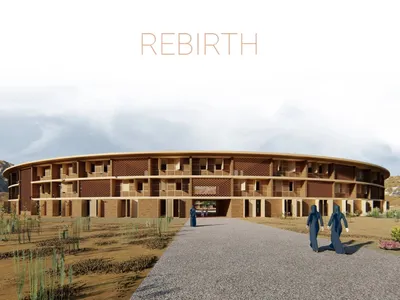
REBIRTH: A Circular Settlement Where Afghan Widows and Their Children Rebuild Life Together
A shortlisted Resile entry turns the circle into a protective ring of timber and brick, gathering homes, classrooms and gardens around a shared landscape.
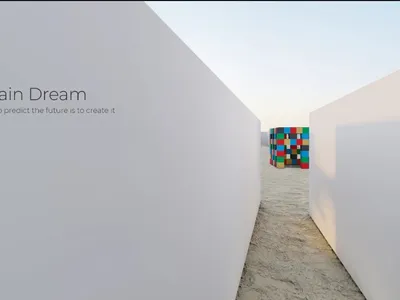
The Main Dream: A Recycled Plastic Kit That Lets Refugee Children Build Their Own Playground
Thirty-centimetre interlocking cubes that connect on three axes turn play into construction, letting children author the spaces they occupy.

Explore Game Design Competitions
Discover active competitions in this discipline


Challenge to reimagine the Iron Throne

Photograph architecture without architects

Illustrate the lost glory of Angkor Wat - Render Challenge

Design challenge to reuse E-waste
Comments (0)
Please login or sign up to add comments
No comments yet. Be the first to comment!