

Of Water & Spirit: Reimagining an Offshore Oil Rig Through Adaptive Reuse Architecture
Transforming an abandoned offshore oil rig into a museum of water, memory, and renewal through adaptive reuse architecture.


Project by Charisse Foo
Honorable Mention Entry | Proximity Island 2019
As cities and industries confront the growing challenge of obsolete infrastructure, adaptive reuse architecture offers new opportunities to transform forgotten structures into meaningful public destinations. Of Water & Spirit, designed by Charisse Foo, explores this possibility by converting a decommissioned offshore oil rig into a cultural and spiritual landmark that celebrates history, nature, and human transformation.
Situated above the open sea, the proposal combines industrial heritage with architectural symbolism. Drawing inspiration from Ravenna's early Christian baptisteries and postwar industrial structures, the project transforms a former site of extraction into a place of reflection, learning, and public engagement. Rather than erasing the rig's industrial identity, the design embraces its history while introducing new cultural and environmental narratives.
The result is an extraordinary example of adaptive reuse architecture where water, architecture, and memory converge.
Architecture Inspired by Heaven and Earth
The conceptual foundation of the project is built upon two distinct architectural precedents.
The first is the Neonian Baptistery in Ravenna, Italy. These centrally planned religious structures are organized around water, symbolizing transformation and renewal. Their octagonal geometry, soaring vertical spaces, domed ceilings, and relationship to ritual water inspired the spiritual character of the proposal.
The second precedent comes from the iconic Nakagin Capsule Tower in Tokyo. A landmark of the Metabolist movement, the tower represented flexibility, modularity, and industrial prefabrication. Its plug-in architecture shares surprising similarities with offshore oil rigs, where independent modules connect through circulation systems and mechanical cores.
By merging these two influences, Of Water & Spirit establishes a dialogue between heaven and earth, spirituality and industry, permanence and transformation.
Transforming Industrial Infrastructure into Cultural Space
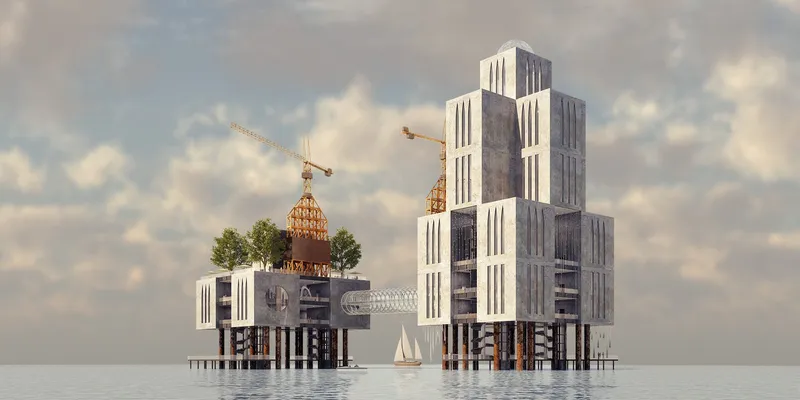
The project preserves the structural framework of the offshore platform while introducing two interconnected architectural volumes above the water.
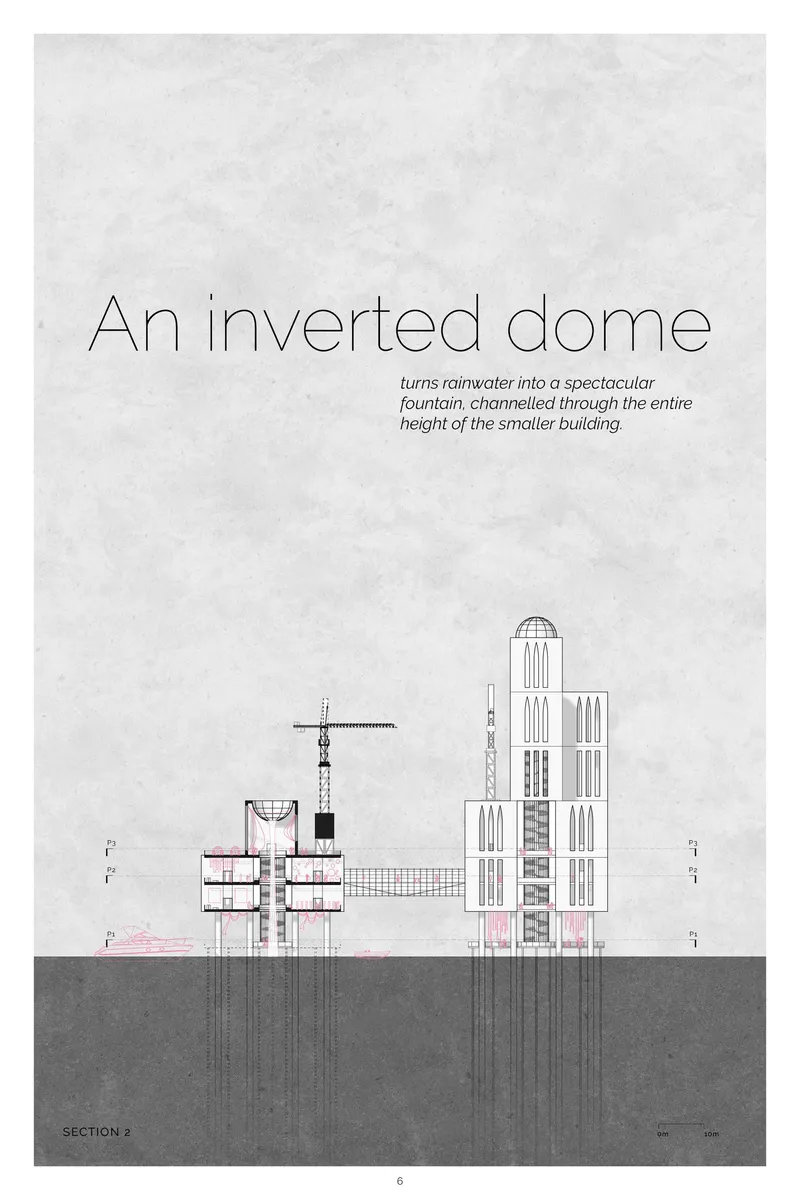
A transparent bridge links the two buildings, creating both physical and symbolic connections. One volume houses exhibition spaces, public galleries, event venues, workshops, and educational facilities. The second contains observation areas, residences, research functions, and communal gathering spaces.
Visitors arrive by boat and enter through a sequence of spaces that gradually reveal the relationship between sea, structure, and sky. The experience encourages movement upward through the architecture, allowing visitors to encounter exhibitions, viewpoints, and moments of contemplation at different elevations.
The museum is designed for flexibility, accommodating temporary exhibitions, public events, festivals, installations, and cultural programming that can evolve over time.
Water as an Architectural Experience
Water serves as the project's most powerful architectural element.
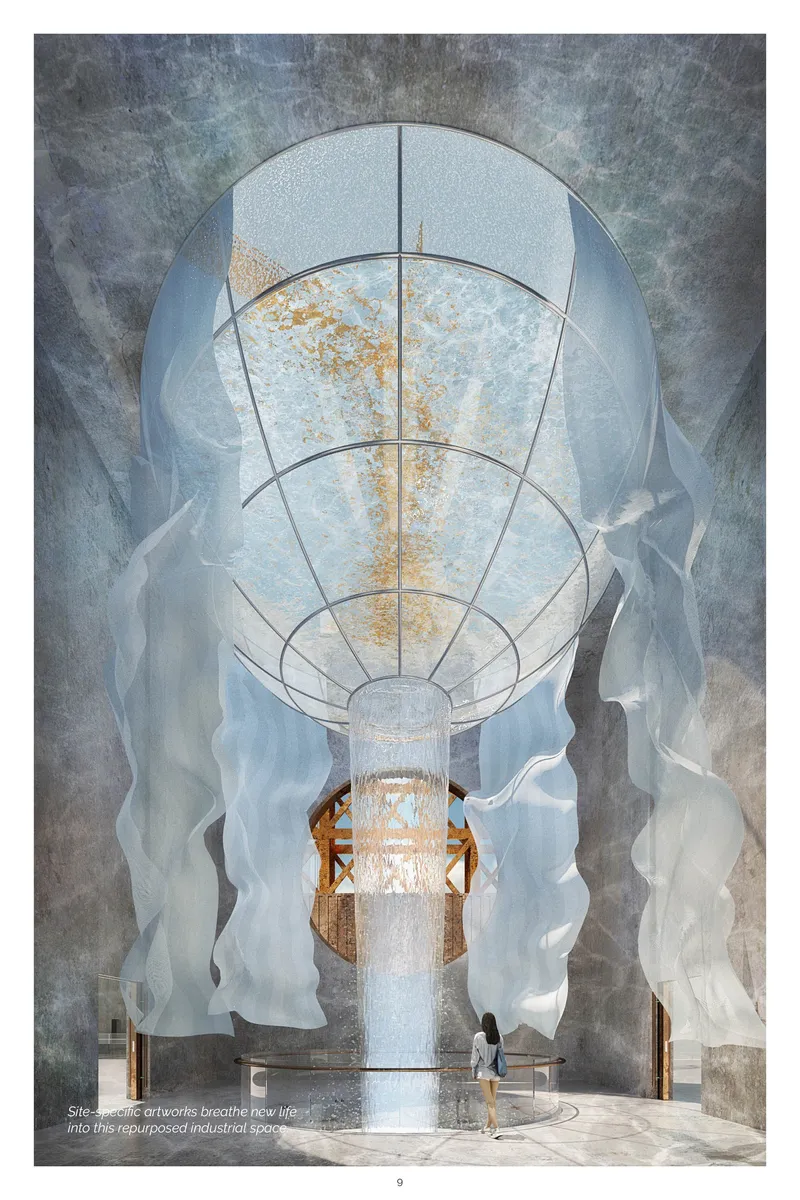
Inspired by the baptistery's relationship with sacred water, the design transforms rainwater collection into a dramatic spatial experience. An inverted glass dome crowns one of the structures, capturing rainfall and channeling it downward through the building's full height.
This cascading water feature becomes a monumental interior fountain that animates the central atrium. Visitors encounter moving water not merely as decoration, but as an active architectural force that connects the building to its marine environment.
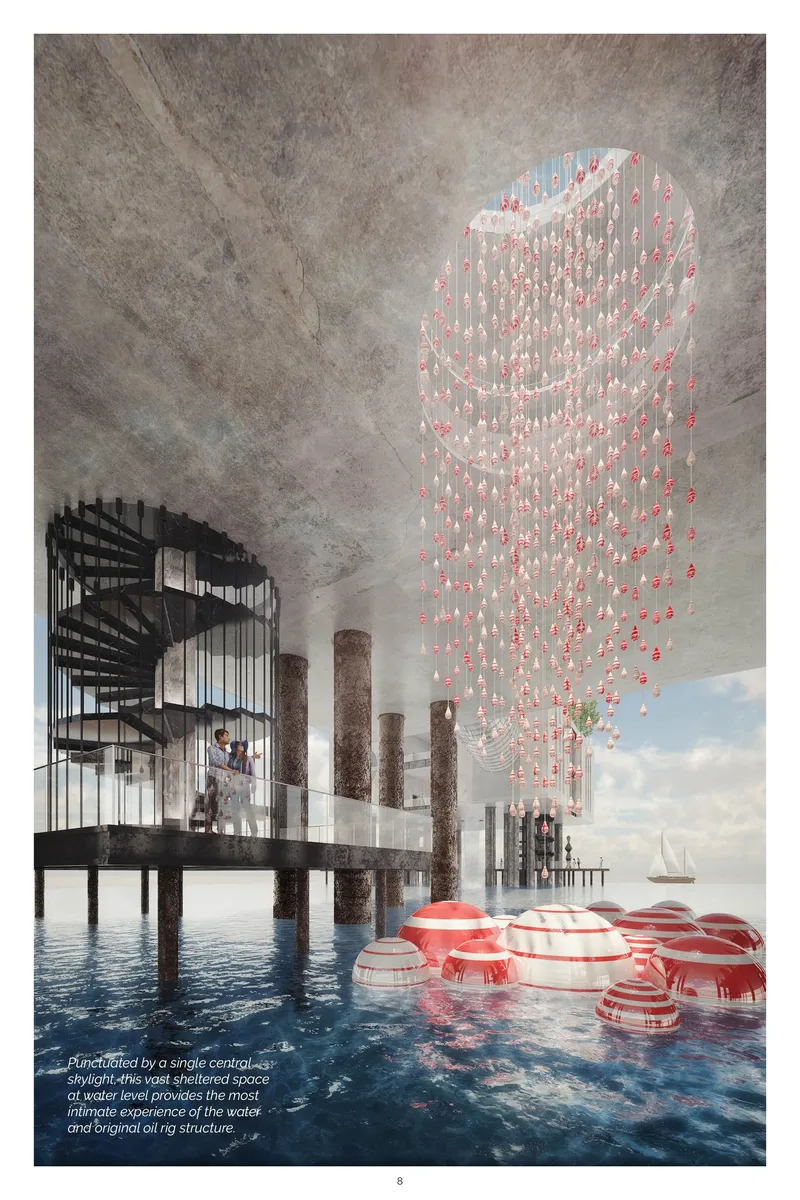
At water level, sheltered spaces beneath the structure bring visitors closer to the sea. Reflections, sounds, and changing weather conditions continually transform the atmosphere, creating a sensory connection to the surrounding landscape.
Preserving the Memory of the Oil Rig
Rather than concealing the platform's industrial origins, the proposal carefully preserves key structural elements from the original rig.
Existing cranes remain in place as monuments to the site's former purpose. Once used for extraction and construction, these machines become artifacts within a new cultural landscape. Their presence creates a visible reminder of the rig's industrial past while suggesting new possibilities for its future.
The preserved infrastructure reinforces the project's broader message: architecture can transform industrial heritage without erasing history.
By allowing traces of the past to remain visible, the project encourages visitors to reflect on changing relationships between industry, environment, and society.
Light, Openings, and Spatial Symbolism
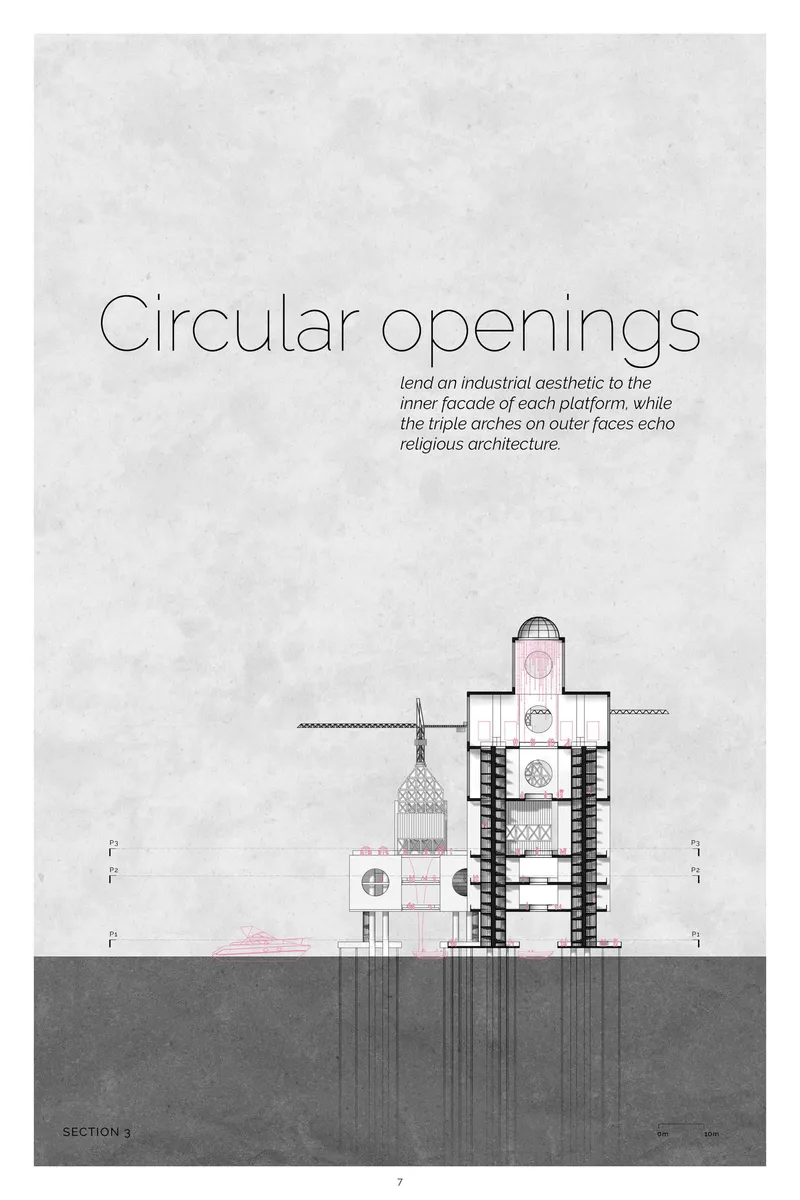
The architecture employs a distinctive language of circular and arched openings.
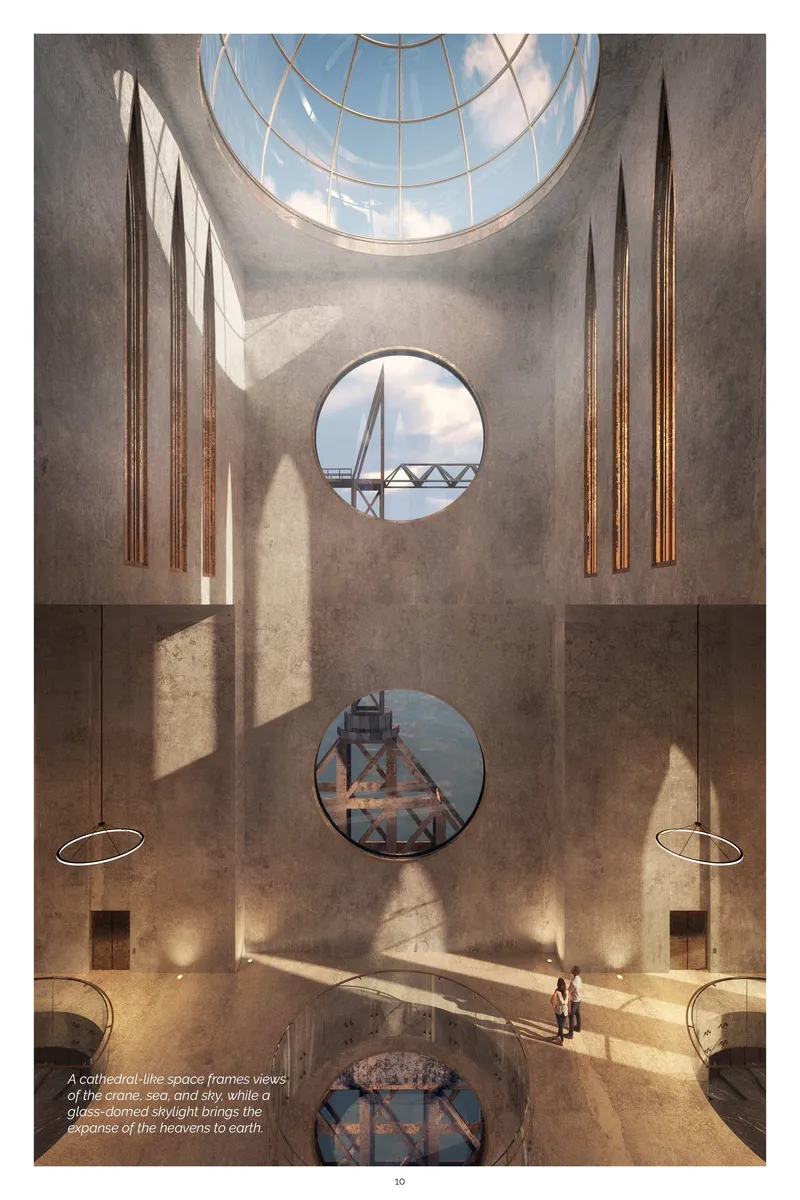
Circular windows reference the portholes commonly found in maritime structures, connecting the building to its offshore context. At the same time, they frame carefully curated views of the ocean, sky, and preserved industrial elements.
On the exterior, tall triple-arched openings evoke the verticality and monumentality of historic religious architecture. These openings draw natural light deep into the building while strengthening its symbolic connection to transformation and transcendence.
Large skylights and domed roofs further enhance the experience, creating cathedral-like interiors where light becomes a central design material.
Throughout the project, visitors are constantly aware of the relationship between sea, sky, and structure.
Adaptive Reuse Architecture for a Sustainable Future
The proposal demonstrates how adaptive reuse architecture can extend the life of obsolete infrastructure while minimizing environmental impact.
Instead of dismantling the offshore platform, the project repurposes its existing structural framework, reducing material waste and preserving embodied energy. This approach aligns with broader sustainability goals while offering an alternative vision for decommissioned industrial sites around the world.
As thousands of offshore structures approach the end of their operational lives, projects like Of Water & Spirit suggest new possibilities for cultural, educational, and environmental reuse.
The design illustrates how architecture can transform infrastructure from a symbol of extraction into a platform for creativity, public engagement, and ecological awareness.
A Monument to Transformation
Of Water & Spirit is ultimately a project about transformation.
By bringing together the sacred symbolism of water, the industrial legacy of offshore infrastructure, and the public role of cultural institutions, the proposal creates a unique architectural destination suspended between earth and sky.
The design demonstrates the power of adaptive reuse architecture to generate new meanings from existing structures. What was once a machine for resource extraction becomes a place for reflection, education, and collective experience.
Through its thoughtful integration of history, nature, and architectural storytelling, Of Water & Spirit offers a compelling vision for the future of offshore architecture and industrial heritage reuse.




Popular Articles
Popular articles from the community


Hill & Cross Opera: Sculptural Opera House Architecture Shaped by Tallinn’s Landscape and Identity
Hill & Cross Opera reimagines opera house architecture in Tallinn through its sculptural hill, civic plaza, glass wave and a luminous cross.
EW PARK: Sustainable Architecture Reimagines the Future of Urban Parking
EW PARK reimagines city parking as a modular wooden tower combining automation, solar energy, electric mobility, and adaptable urban design.
AL-JANNAH: Sustainable Architecture and Permaculture for Afghan Widows
AL-JANNAH uses sustainable architecture and permaculture to create resilient oasis of housing, learning, work and renewal for Afghan widows.

The Musturak Paradise: Senior Living Architecture for a Connected Future in Temara, Morocco
The Musturak Paradise reimagines senior living architecture in Temara via private homes, social spaces, culture, community, and shared care.


Similar Reads
You might also enjoy these articles

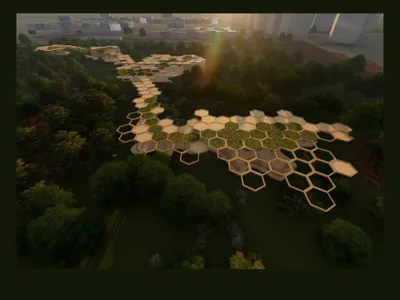
Eco Chapel: A Green Architecture Pavilion Designed in Symbiosis with the Forest
Eco Chapel uses green architecture to weave prayer, learning and reuse into a forest pavilion shaped by modular hexagonal canopies for life.
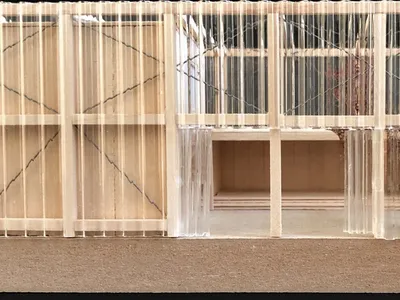
Kaffeebühnen: Coffee Shop Architecture Designed as a Civic Stage Between Vienna’s City and Park
Kaffeebühnen turns coffee shop architecture into a civic stage, linking Vienna’s park edge, urban life, warm timber yards, and coffee craft.
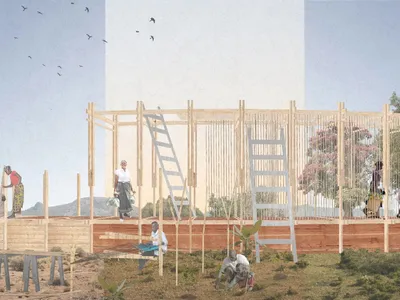
Healing Façade: Sustainable Architecture for Reforestation, Community, and Sacred Ecology in Ethiopia
Healing Façade reimagines sustainable architecture as a living wall that restores soil, catches water and renews Ethiopia's forest churches.


Urban Forest: A Vertical Ecosystem for 5,000 Workers in Singapore's Changi Business Park
Radially stacked pods and layered green decks turn a 7-acre plot into 47 acres of ecological workspace projected for 2040.


Explore Architecture Competitions
Discover active competitions in this discipline



Challenge to reimagine the Iron Throne


Photograph architecture without architects


Illustrate the lost glory of Angkor Wat - Render Challenge


Design challenge to reuse E-waste
Comments (0)
Please login or sign up to add comments
No comments yet. Be the first to comment!