

Goodbye Horses Pub by Leopold Banchini Architects: A Contemporary Homage to Craft and Heritage
Goodbye Horses Pub blends Japanese and English craft traditions, featuring bespoke oak furniture, natural materials, hand-painted textiles, and eclectic, heritage-inspired interiors.


Located in the heart of De Beauvoir Town, United Kingdom, Goodbye Horses Pub by Leopold Banchini Architects offers a striking reinterpretation of traditional craft within a contemporary urban setting. This residential neighborhood pub merges local cultural identity with global design sensibilities, creating a warm, eclectic interior that celebrates natural materials, bespoke craftsmanship, and cross-cultural influences.
Bridging Craft Movements Across Cultures
The design reflects an insightful dialogue between the Japanese Mingei Folk Art movement and the English Arts and Crafts movement, both of which emerged during periods of rapid industrialization. While William Morris’s philosophy criticized wage labor and mass production, the Japanese movement emphasized preserving a unique local identity. Over time, these traditions influenced modernist designers like Charlotte Perriand, creating a legacy of thoughtful, human-centered design that transcends borders.
Goodbye Horses Pub translates this historical and cultural resonance into a modern context, considering contemporary global capitalism and the way our digital, stateless visuals—think Instagram feeds—now define cultural identity. The pub’s interiors respond to this context with a sensitive mix of heritage references, material honesty, and playful modernity.
Craftsmanship at the Core
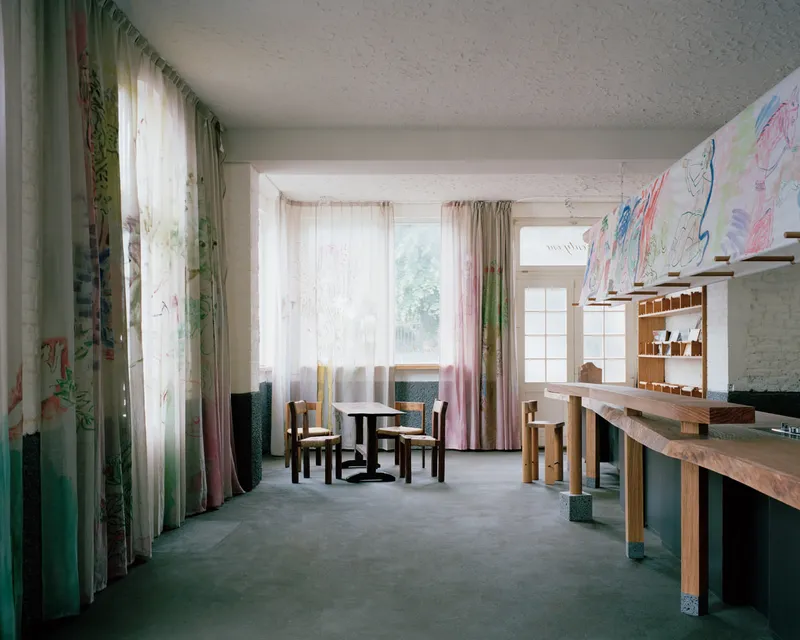
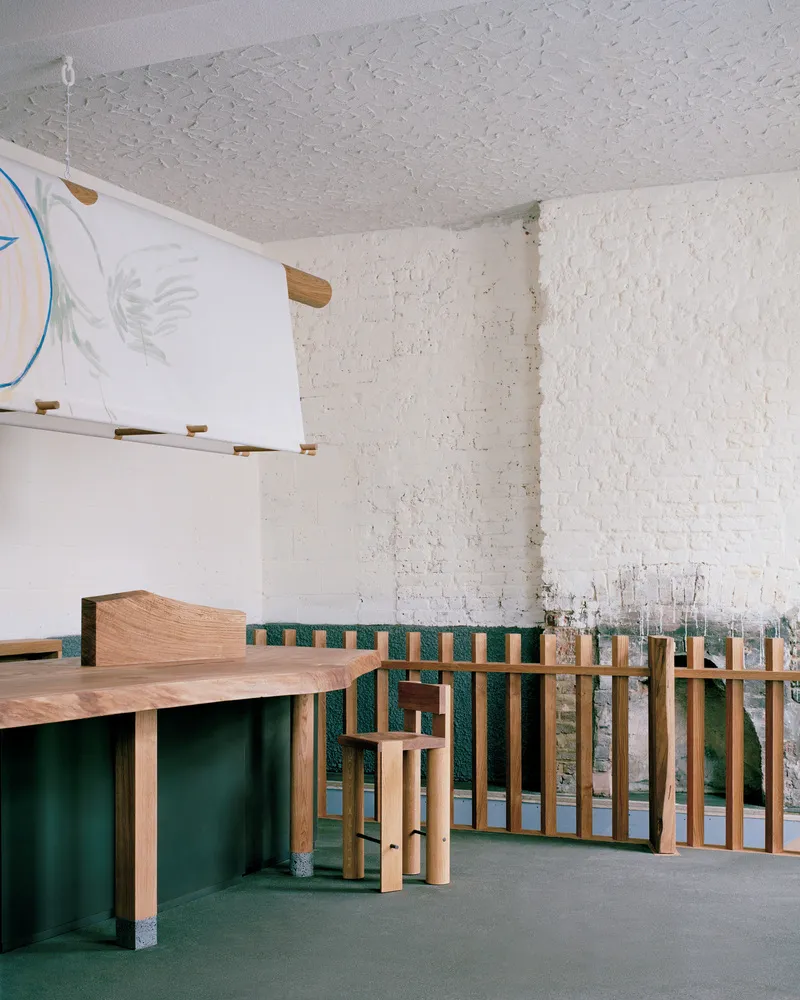
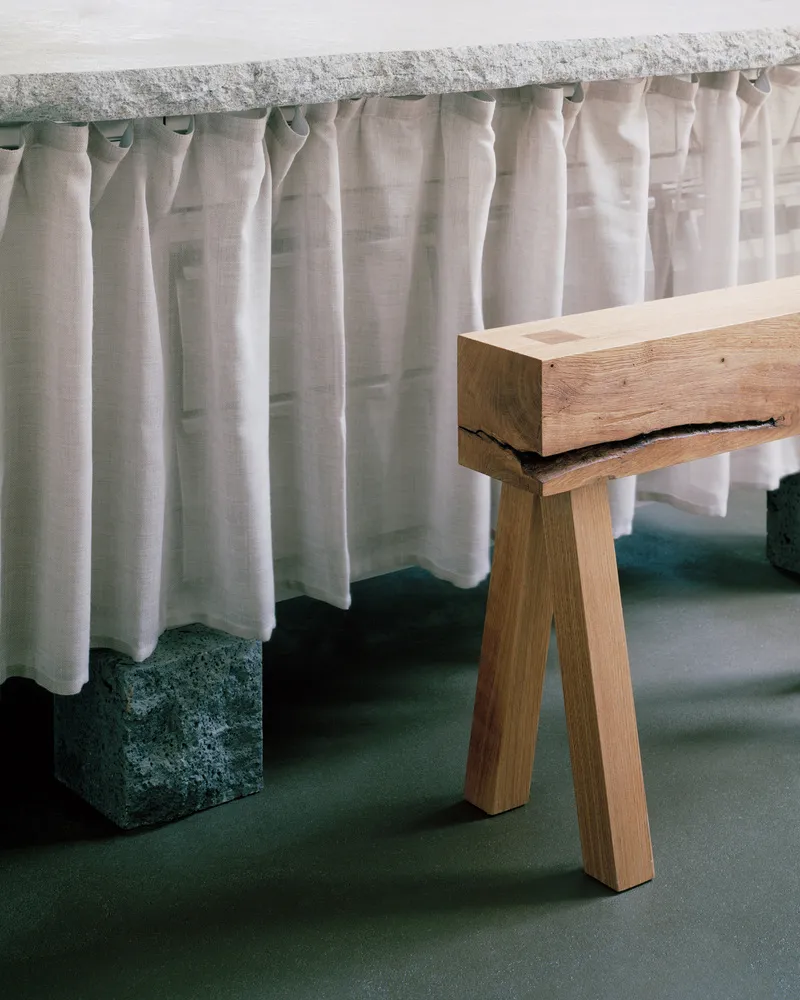
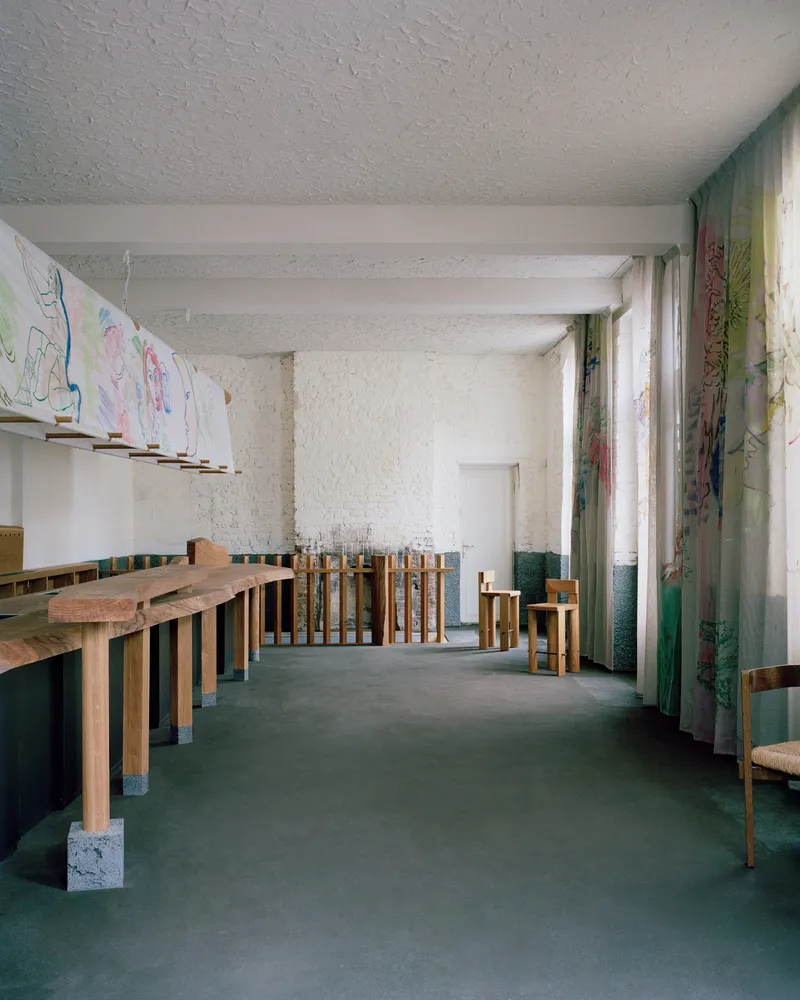
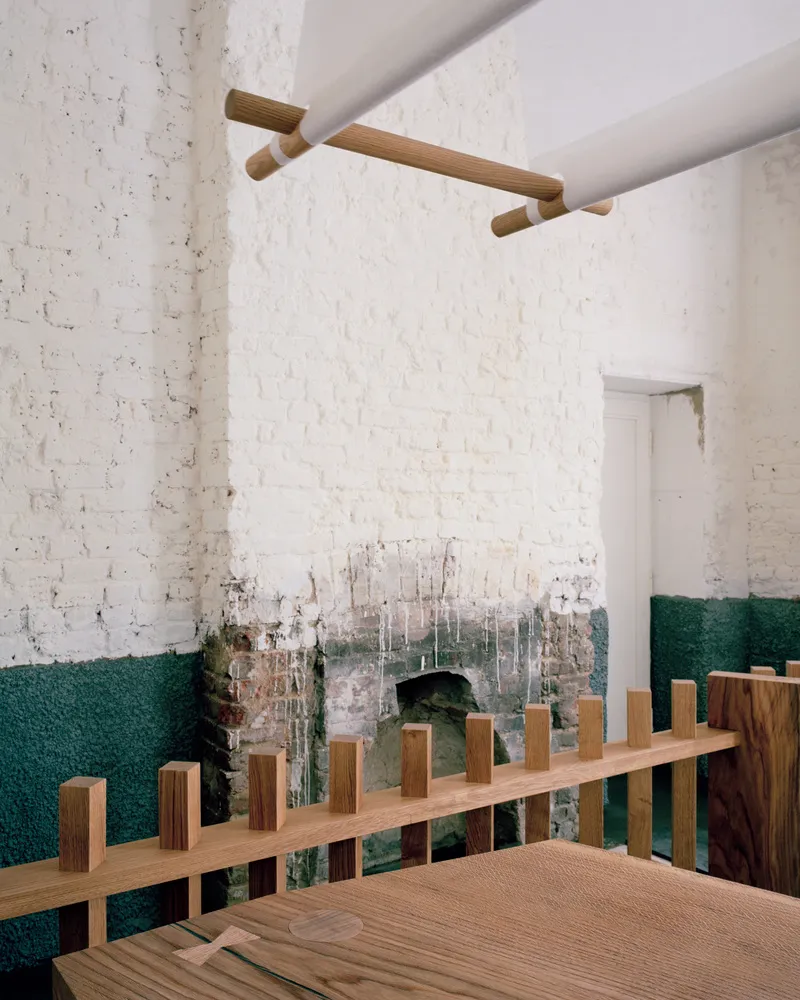
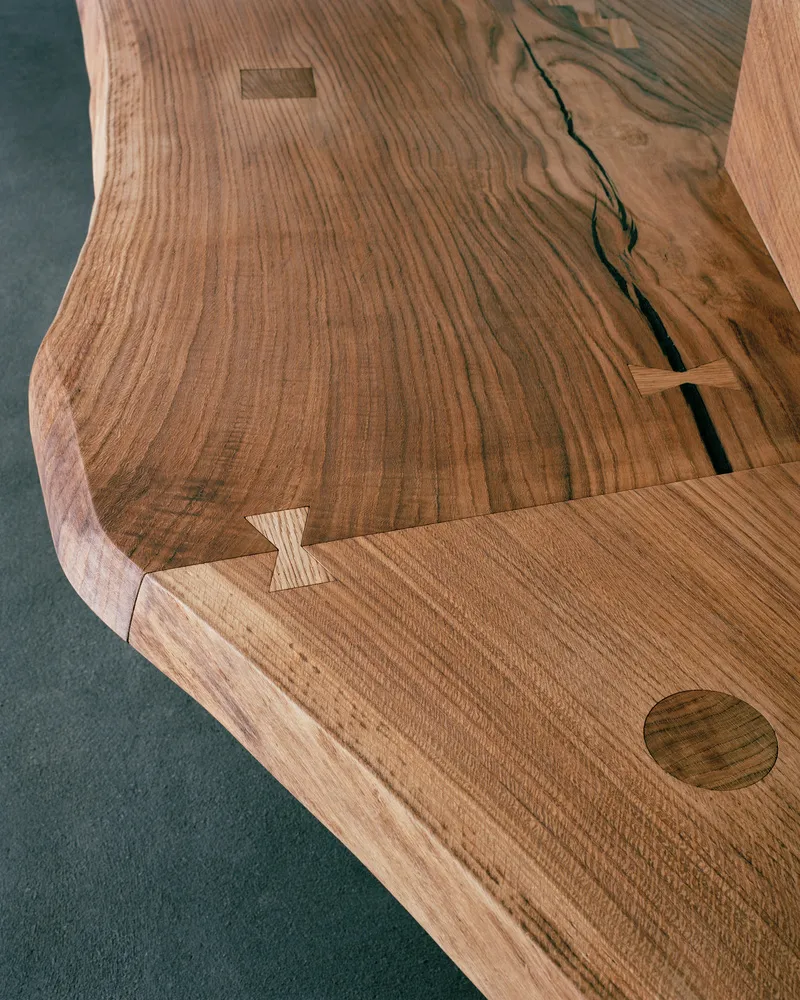
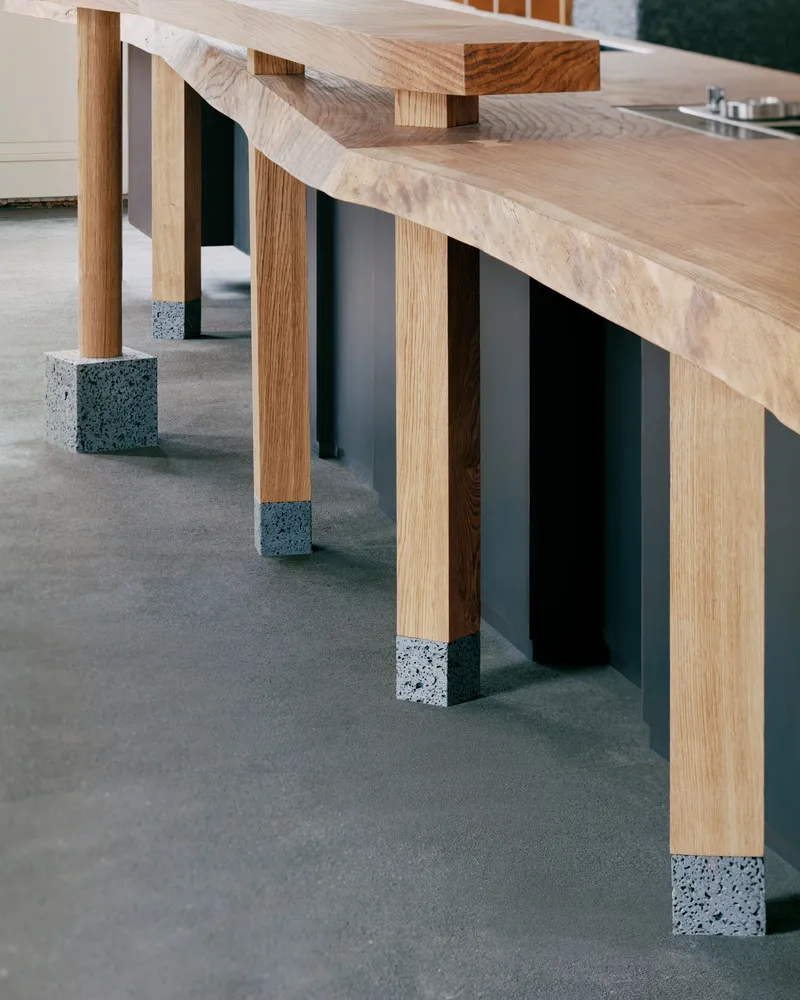
At the heart of the pub is a 10-meter-long timber bar, designed unusually low to serve multiple functions as a counter, kitchen bench, and dining table. Crafted entirely from a single century-old oak tree, the bar showcases the wood’s natural veins, cracks, and bark. Surrounding bespoke furniture—including stools and lighting—combines solid oak, Japanese hemp fiber paper, hand-cast Italian glass, volcanic stone, and oxidized brass, blending rustic vernacular traditions with refined international craft. The result is an eclectic aesthetic where Japanese wabi-sabi, Italian grotesque, and English medieval revival converge effortlessly.
Materiality and Local Know-How
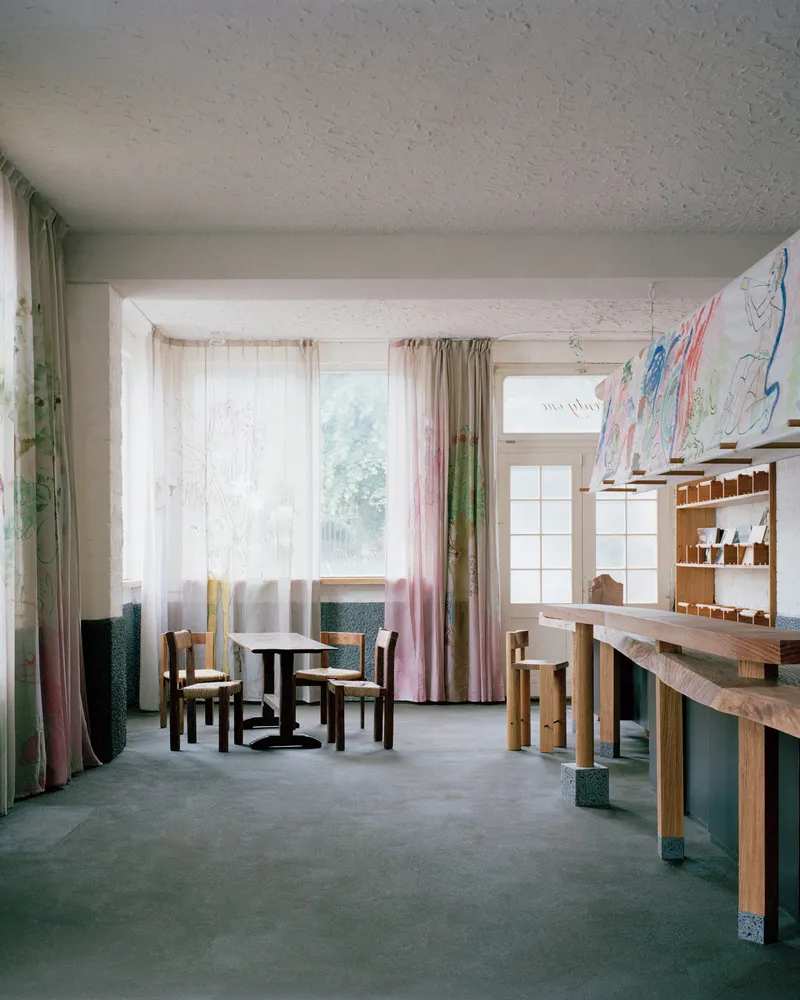
The pub’s interior highlights traditional building techniques and materials. Limewashed walls, hand-textured lime plaster ceilings, and beaten earth floors—made from a blend of soil, straw, and clay coated with natural linseed oil—evoke the warmth of early countryside pubs. Reclaimed Yorkstone slabs provide durability for high-traffic areas and garden spaces, while large hessian curtains, hand-painted by artist Lucy Stein, filter light through evocative, folklore-inspired motifs. These installations echo historic stained glass while creating a distinctly contemporary atmosphere.
All photographs are works of
Rory Gardiner


Popular Articles
Popular articles from the community


Opera on the Sea: Driftwood Logic Shapes a Timber Opera House on Estonia's Coast
Trevor Orgill's opera house translates the entangled drift of floating timber into a civic building where wood, water, and music converge.

Cloaked Colonization: A Mobile Underwater Habitat That Moves Like a Fish
Micah Abaya's shortlisted EHC Pacific entry reimagines ocean settlement as a dispersed network of self-sustaining architectural organisms.

Manzana Morphosis: Stretching Barcelona's Grid into a Living Landscape for 2050
A radical reworking of the Eixample manzana turns density into a tool for generous public space, vertical ecology, and environmental performance.

Singing Woman: An Opera House That Performs Before the Curtain Rises
Ovidiu Cristian Pavel's conceptual opera house translates Estonia's choral identity into a sculpted waterfront landmark facing the Baltic Sea.

Similar Reads
You might also enjoy these articles


Hodi-Mandai Geram
Project Function: Preservation and revitalization of the Intangible heritage and socio-spatial identity of the Hodi by Housing, Cultural Memory Center, Sacred Grove, landscape, local tourism economy


Olio Towers: A Mid-Rise for Performers That Fuses Housing, Rehearsal, and Stage
Located blocks from Houston's Theater District, this modular tower stacks living units around a central performance atrium.

Oasis: Modular Green Housing Carved into Dhaka's Urban Fabric
A shortlisted Plugin Housing entry reclaims unauthorized settlements in Dhaka with stepped concrete volumes, green roofs, and ventilation-driven design.

Black Hole: A Floating Megastructure for the Post-Physical Era
Emiliano Mazzarotto envisions a spherical, self-scaling arena where e-sports, digital hotels, and holographic stadiums replace traditional public space.

Explore Architecture Competitions
Discover active competitions in this discipline

Challenge to reimagine the Iron Throne

Photograph architecture without architects

Illustrate the lost glory of Angkor Wat - Render Challenge

Design challenge to reuse E-waste
Comments (0)
Please login or sign up to add comments
No comments yet. Be the first to comment!