
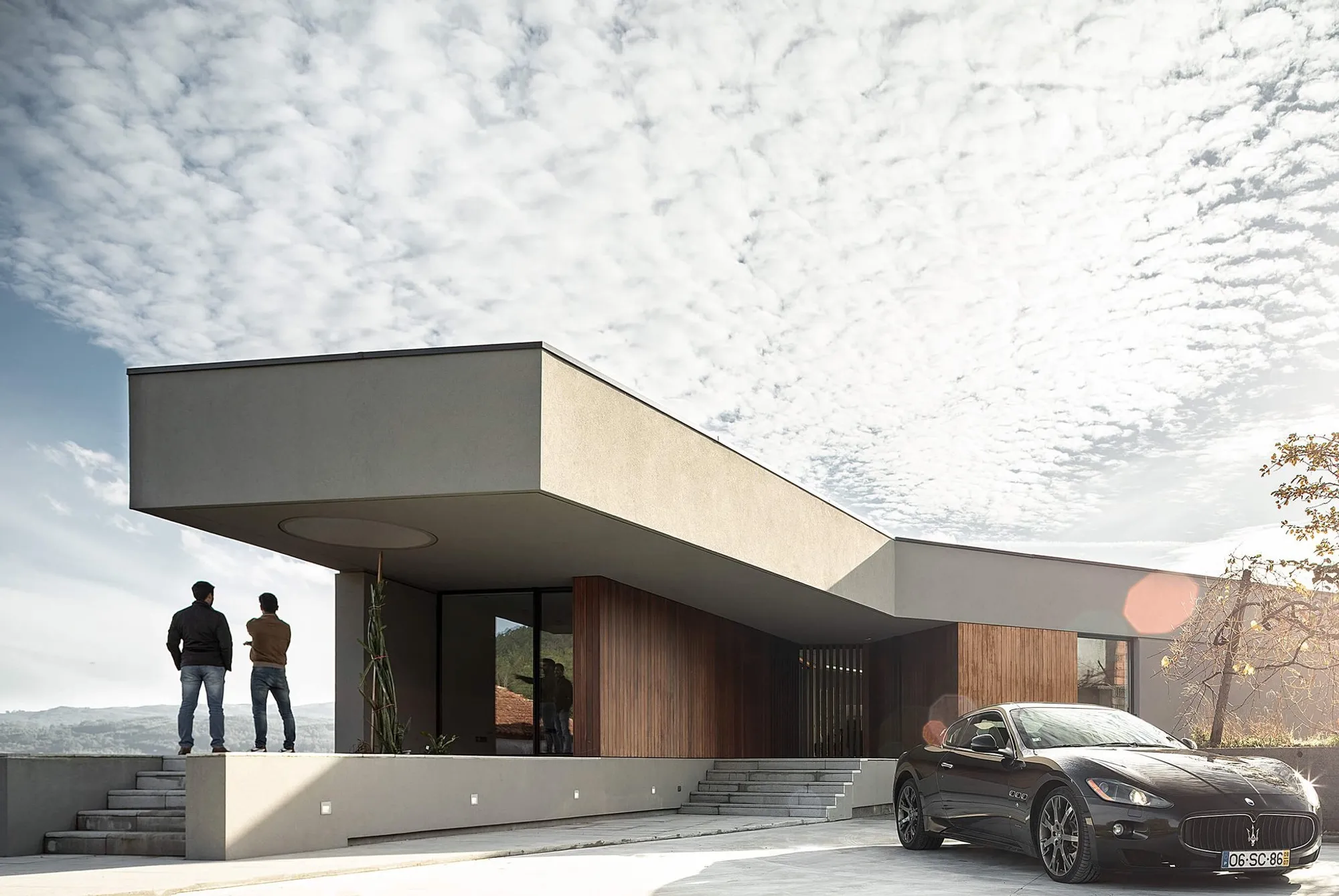
Gr House – Contemporary Minimalist House
A contemporary minimalist house that balances introversion and openness, framing landscape views through light, form, and spatial precision.


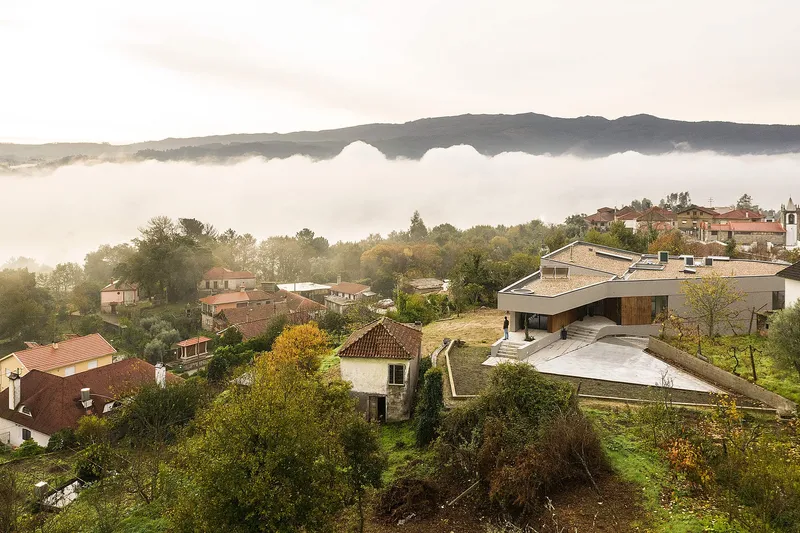
GR House by Paulo Martins emerges as a compelling example of contemporary minimalist house architecture, where form is not imposed but derived from context, constraints, and orientation. Located on a plot defined by irregular geometry and surrounded by constructions of limited architectural value, the project responds with a controlled, introspective massing that selectively opens toward the landscape.
Shortlisted as part of Habitats '20, this residence demonstrates how contemporary house design can transform limitations into spatial clarity and architectural identity.
Architecture Shaped by Constraints
The defining strategy of this contemporary minimalist house architecture lies in its response to site conditions. The irregular geometry of the plot, combined with an unfavorable orientation and visually unappealing surroundings, required a deliberate architectural stance.
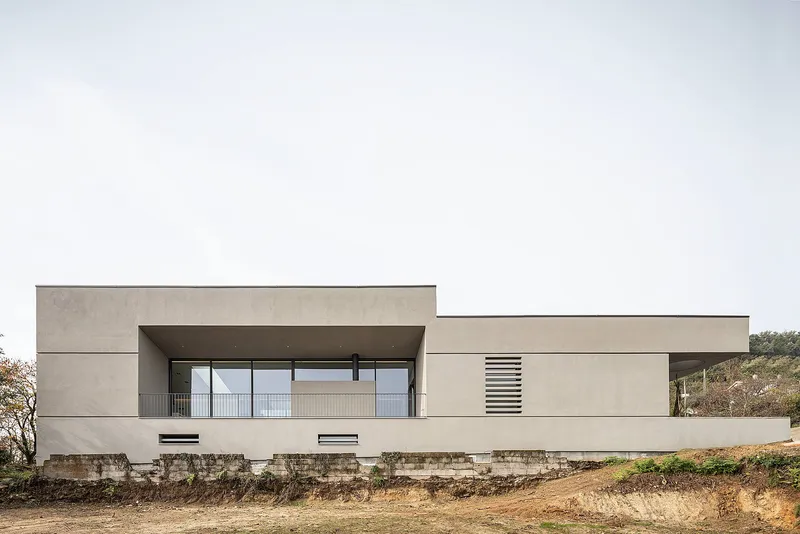
Rather than engaging directly with its immediate context, the house adopts a position of controlled introversion. The built volume appears inert and monolithic from the outside, minimizing openings and visual permeability. This restraint allows the architecture to disengage from its surroundings while preserving internal spatial quality.
At the same time, the house strategically turns toward the east, where expansive valley views offer a powerful visual anchor. This duality between closure and openness defines the conceptual framework of the project.
A Dialogue Between Exterior and Interior
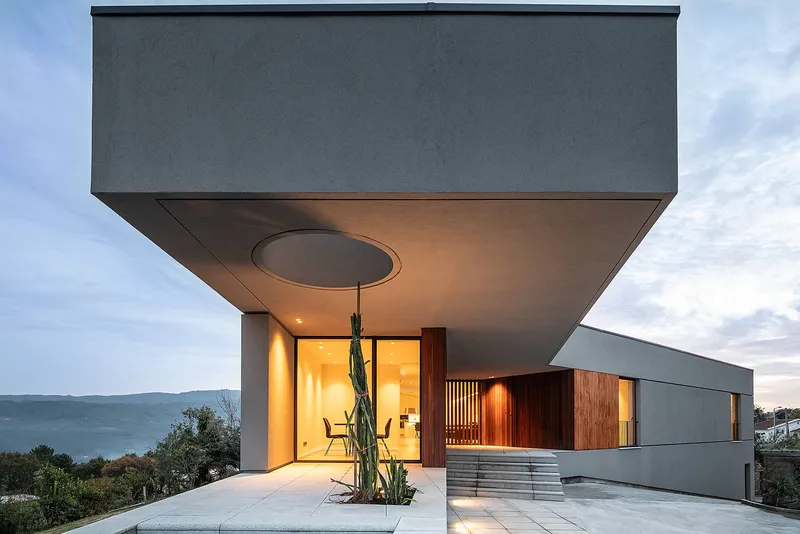
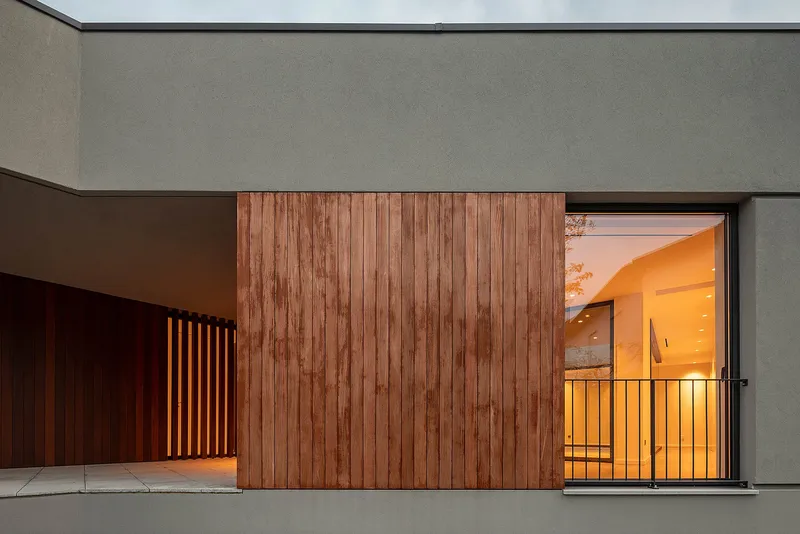
The architectural language of GR House is rooted in contrast. Externally, the house presents a composed and almost hermetic facade, characterized by muted tones, clean lines, and minimal articulation. Openings are reduced and often concealed, appearing primarily as patios and skylights visible from above rather than from street level.
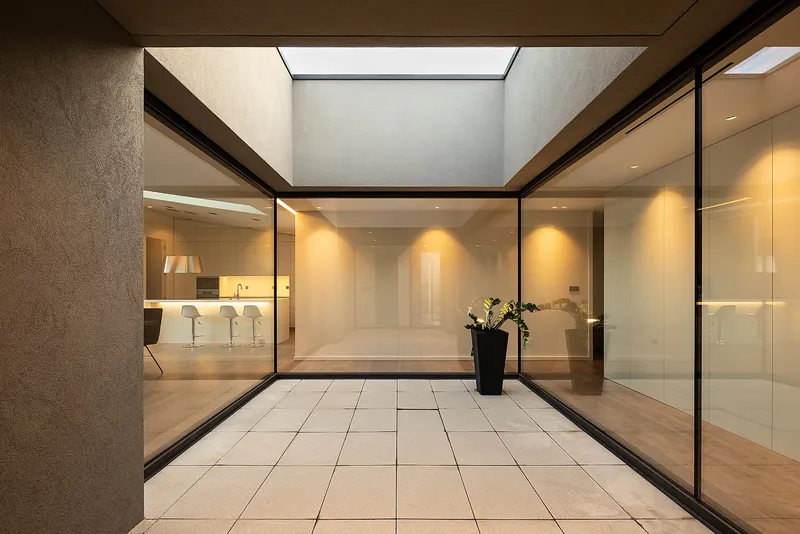
Internally, however, the spatial experience shifts dramatically. The interior unfolds as a luminous and open environment, where natural light becomes the primary architectural material. Skylights, courtyards, and carefully framed apertures introduce zenithal light, dissolving the sense of enclosure and connecting the house to the sky rather than its immediate surroundings.
This deliberate contrast reinforces the idea of a contemporary house that prioritizes internal experience over external expression.
Spatial Organization and Programmatic Logic
The programmatic layout follows a clear and rational zoning strategy. Social spaces are oriented toward the east, capturing panoramic views of the valley, while private areas face west, addressing the street and ensuring privacy.
At the core of the house lies a central interior patio, which functions as both a spatial and environmental mediator. This courtyard organizes circulation, allowing movement around its perimeter while maintaining visual continuity across different zones of the house.
The result is a dynamic spatial sequence where interior and exterior boundaries blur, yet remain carefully controlled.
Materiality and Atmosphere
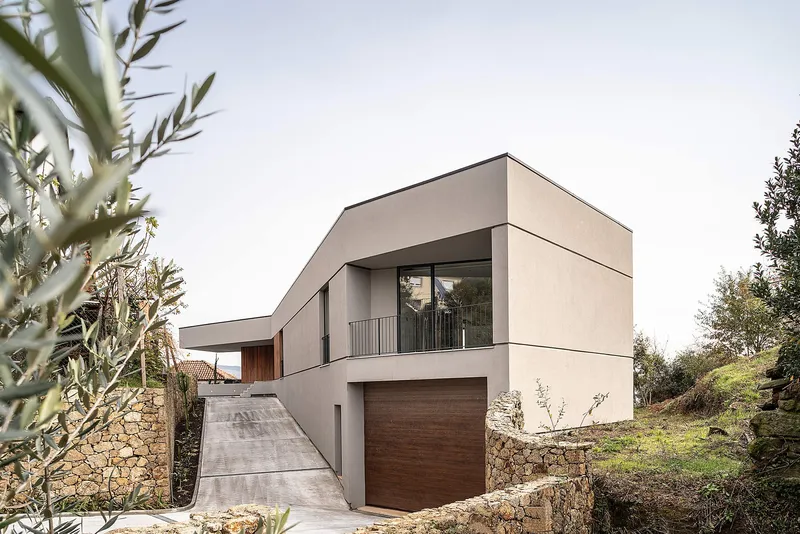
Material selection plays a critical role in reinforcing the architectural narrative. The exterior is defined by earthy tones and textured surfaces that allow the building to blend subtly with the natural landscape.
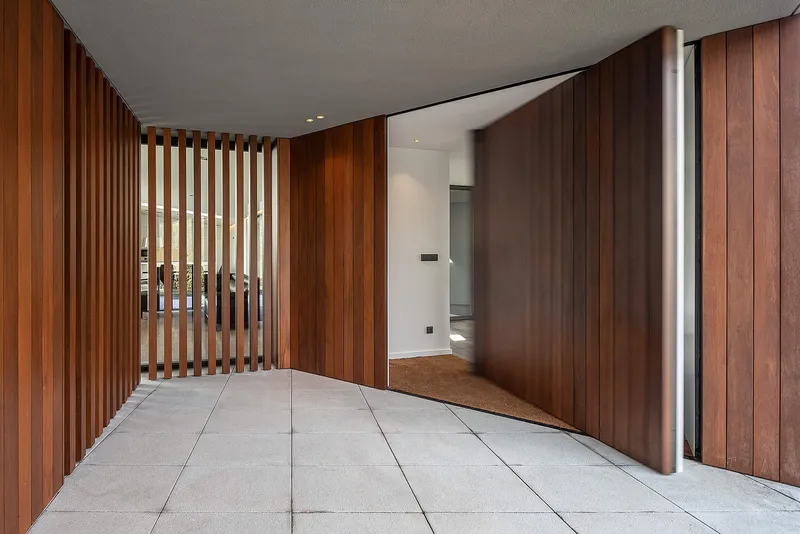
Wood is introduced as a contrasting element, adding warmth and tactility to transitional spaces such as entrances and semi-open areas. This juxtaposition between mineral and organic materials enhances the sensory experience of the house.
Inside, the palette remains restrained and neutral, allowing light and shadow to define the atmosphere. Large glazed openings establish visual continuity with the landscape, while maintaining a sense of privacy through careful positioning.
Movement and Thresholds
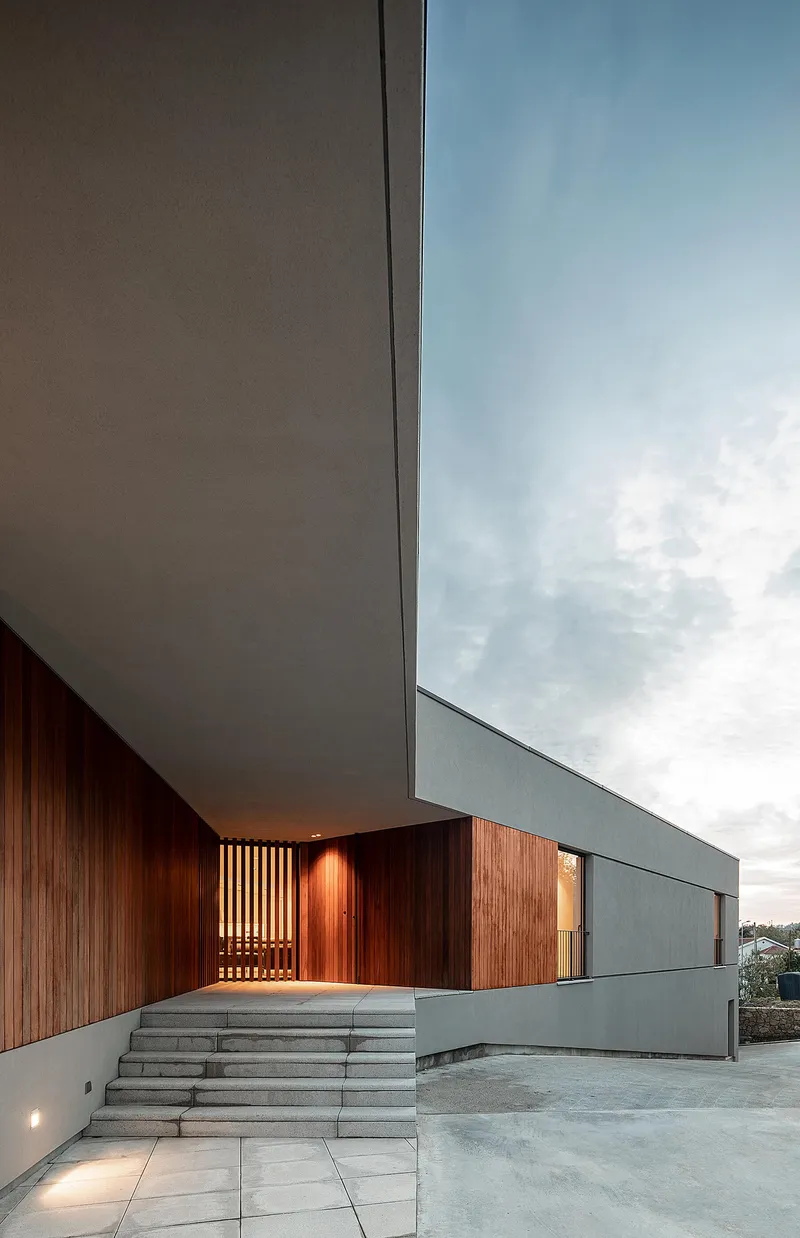
The approach to the house is designed as a gradual spatial transition. A sequence of ramps leads visitors from the site entrance toward the main access point, emphasizing the journey rather than the destination.
This progression culminates in an oversized entrance door, which acts as a threshold between two contrasting worlds: the closed, protective exterior and the open, light-filled interior. The moment of entry becomes a key architectural gesture, reinforcing the conceptual duality of the project.
Contemporary Minimalist House as an Experiential Framework
GR House exemplifies how contemporary minimalist house architecture can go beyond aesthetics to create a deeply experiential environment. By prioritizing orientation, light, and spatial relationships, the project transforms constraints into opportunities for architectural clarity.
The house does not seek to dominate its context but rather to redefine it through selective engagement. Its introverted exterior protects and filters, while its interior opens, expands, and connects to the landscape in a controlled and meaningful way.
Project Credits
- Project: GR House
- Architect: Paulo Martins
- Category: Shortlisted Entry, Habitats '20
- Area: 696 m²
- Engineer: R5 Engineers
- Construction: Fecha Coutinho Construções
- Photography: Ivo Tavares Studio
GR House stands as a precise exploration of contemporary house design, where architecture becomes a tool to negotiate between privacy, light, and landscape.




Popular Articles
Popular articles from the community


Play: Fragments of Their World
Familiar architecture becomes modular playground design, creating safe spaces where displaced children can learn, connect, imagine and play.

The Earth Pod: 3D Printed Homes for Resilient Refugee Communities
The Earth Pod reimagines refugee housing through 3D printed homes made from clay, combining resilience, self-sufficiency, and rapid shelter.

Co-Life: Senior Housing Design That Reconnects Older Adults With the City
Co-Life reimagines senior housing design through healing gardens, shared streets, workshops, and a sustainable community across generations.

Lunar Spiral: Space Architecture Shaped by the Mathematics of the Universe
Lunar Spiral reimagines space architecture through Fibonacci geometry, lunar regolith, levitating habitats, and self-sustaining Moon living.

Similar Reads
You might also enjoy these articles

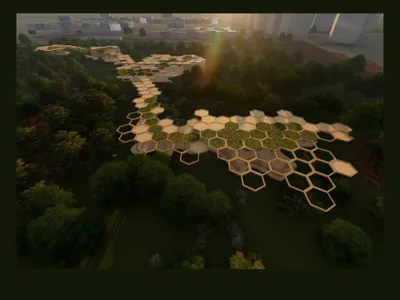
Eco Chapel: A Green Architecture Pavilion Designed in Symbiosis with the Forest
Eco Chapel uses green architecture to weave prayer, learning and reuse into a forest pavilion shaped by modular hexagonal canopies for life.
Kaffeebühnen: Coffee Shop Architecture Designed as a Civic Stage Between Vienna’s City and Park
Kaffeebühnen turns coffee shop architecture into a civic stage, linking Vienna’s park edge, urban life, warm timber yards, and coffee craft.
Healing Façade: Sustainable Architecture for Reforestation, Community, and Sacred Ecology in Ethiopia
Healing Façade reimagines sustainable architecture as a living wall that restores soil, catches water and renews Ethiopia's forest churches.


Urban Forest: A Vertical Ecosystem for 5,000 Workers in Singapore's Changi Business Park
Radially stacked pods and layered green decks turn a 7-acre plot into 47 acres of ecological workspace projected for 2040.


Explore Residential Building Competitions
Discover active competitions in this discipline


Challenge to design mud housing for contemporary communities


Challenge to reimagine the Iron Throne


Photograph architecture without architects


Illustrate the lost glory of Angkor Wat - Render Challenge
Comments (0)
Please login or sign up to add comments
No comments yet. Be the first to comment!