
Gralhas House by OSPA Arquitetura e Urbanismo
Brazilian brick weekend house featuring double-height living space, open-plan kitchen, metal staircase, and seamless garden integration throughout.


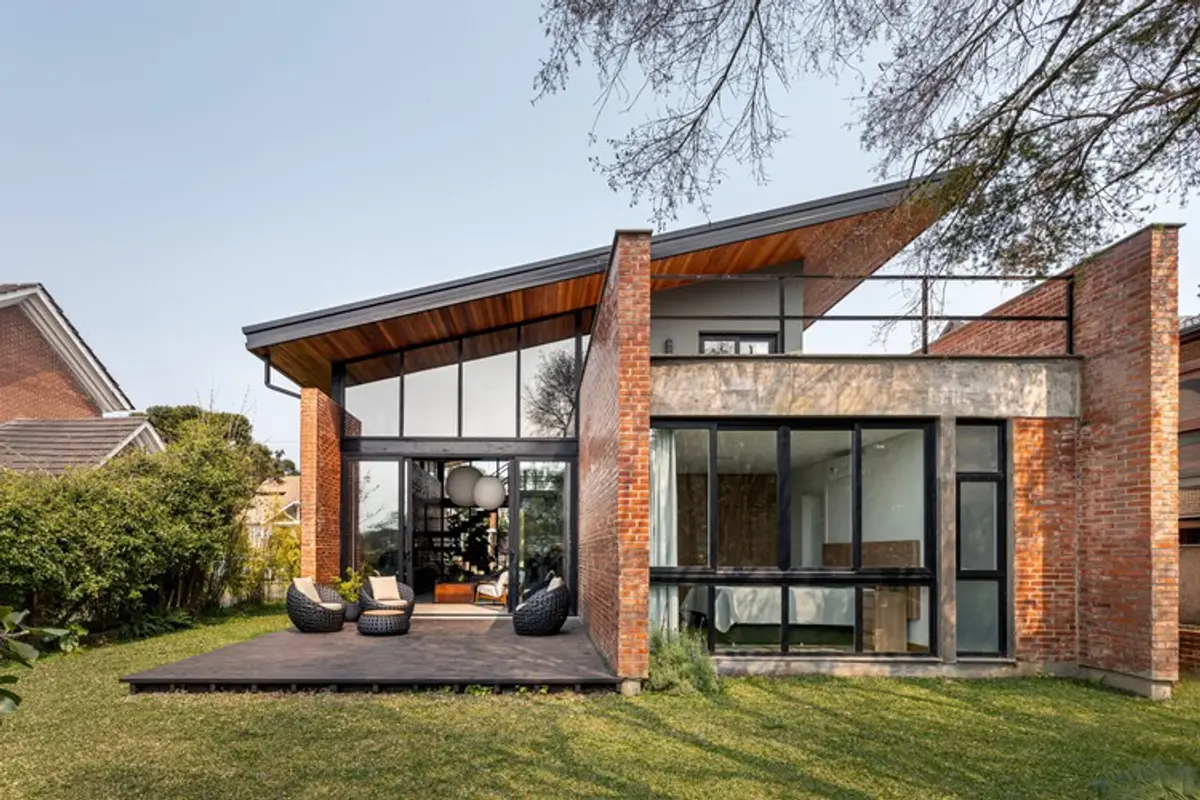
Completed in 2024 in the serene neighborhood of Santa Terezinha, Canela (Rio Grande do Sul), Gralhas House is a 300 m² contemporary residence designed as a weekend retreat for a couple and their children. Conceived by OSPA Arquitetura e Urbanismo, the project balances rustic materiality, spatial fluidity, and a deep connection to nature, offering a refined example of Brazilian residential architecture integrated with landscape.
A Contemporary Weekend House in Southern Brazil
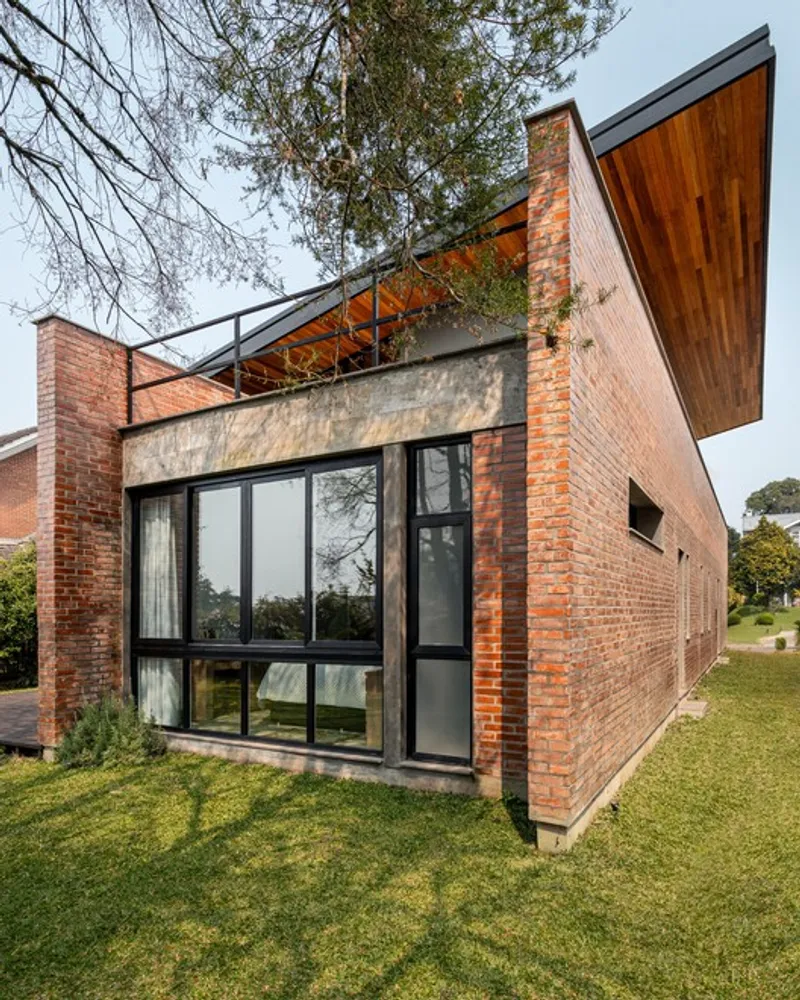
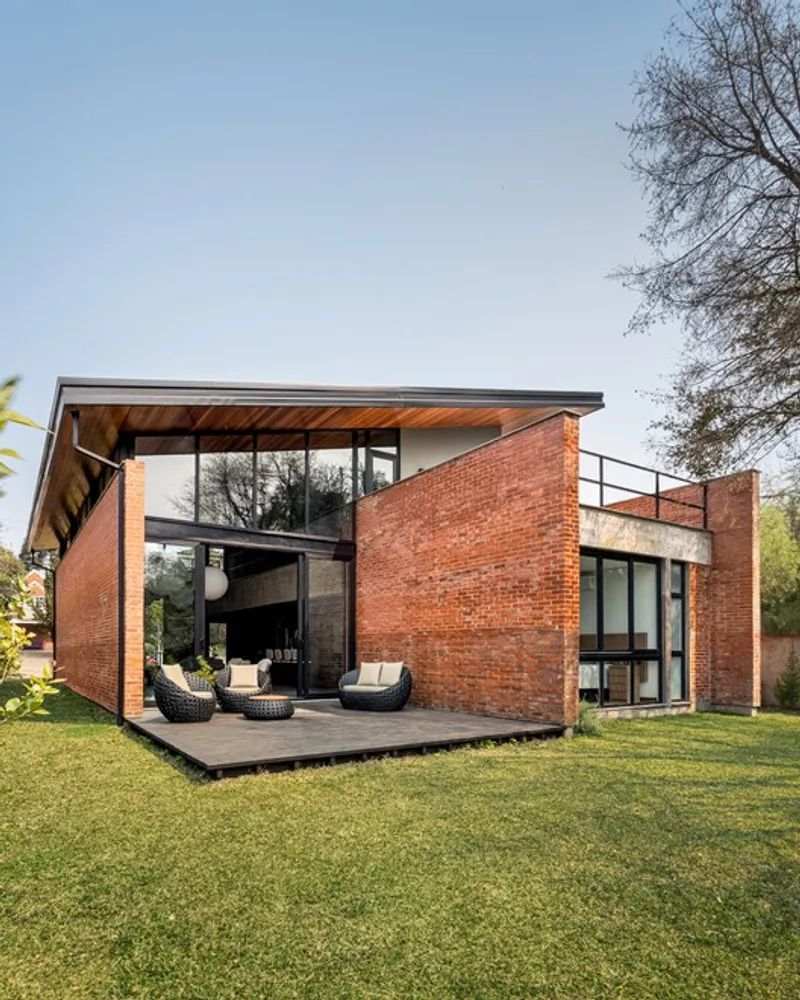
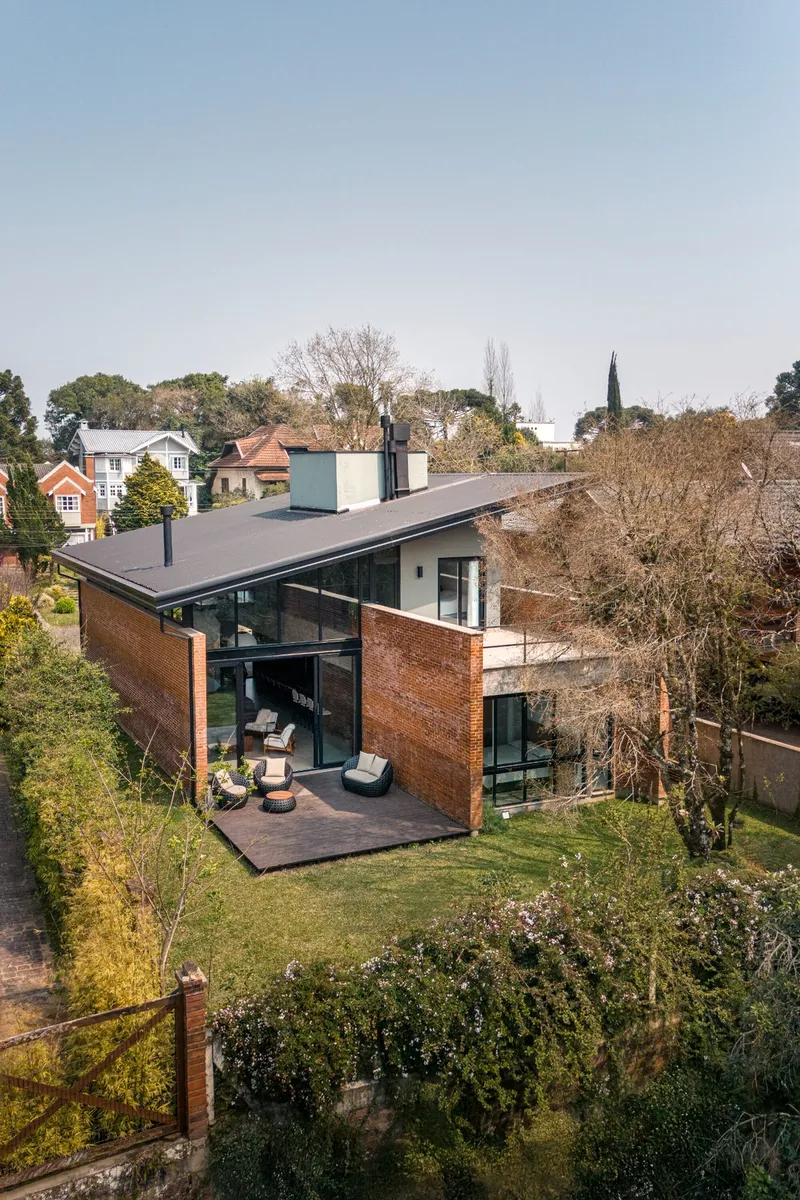
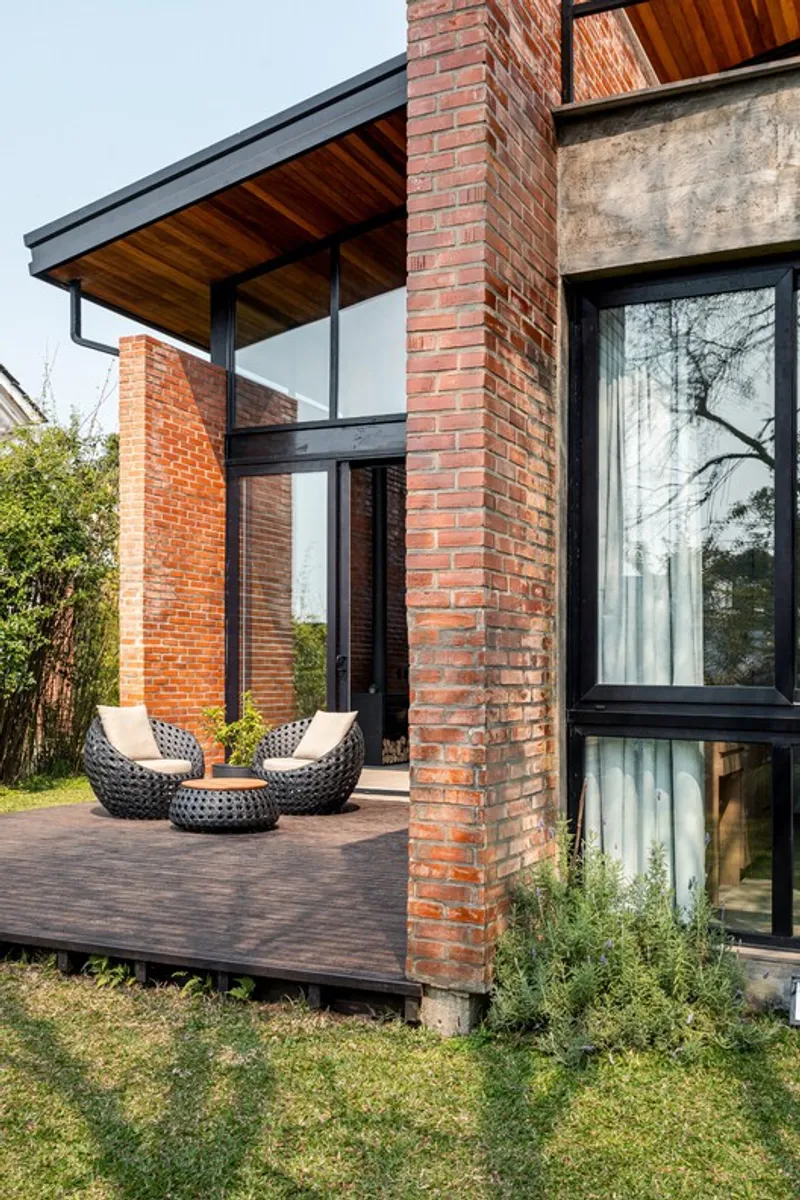
Set within a gently sloping site surrounded by lush vegetation, Gralhas House was designed to foster family gatherings while maintaining privacy and visual continuity with the outdoors. The architectural concept is defined by three longitudinal exposed brick planes that organize the house into two distinct zones:
- A more enclosed service and support area
- A transparent living zone oriented toward the gardens
This linear composition establishes strong spatial clarity while framing longitudinal views across the property. Transparent façades at both ends of the living spaces dissolve boundaries between interior and exterior, enhancing cross-ventilation and natural light.
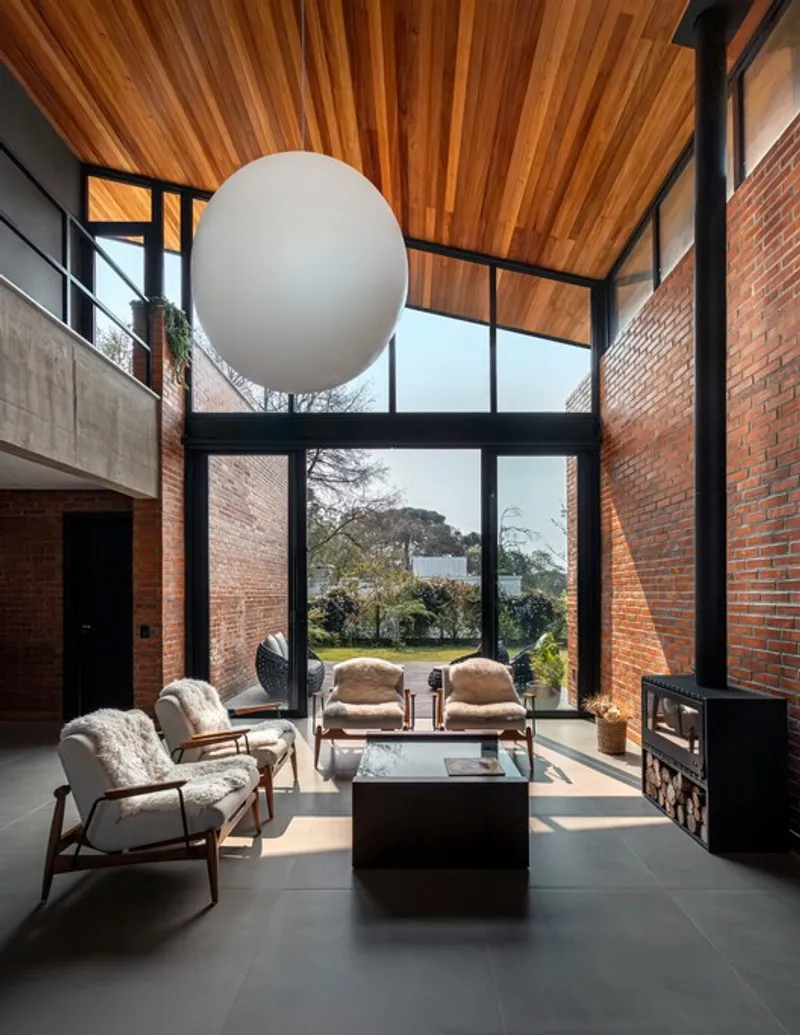
Double-Height Living Space as Social Core
At the heart of the house lies a double-height living room, the project’s primary social nucleus. The vertical volume accentuates the sloped roof geometry, creating a dynamic interior silhouette that feels both expansive and intimate.
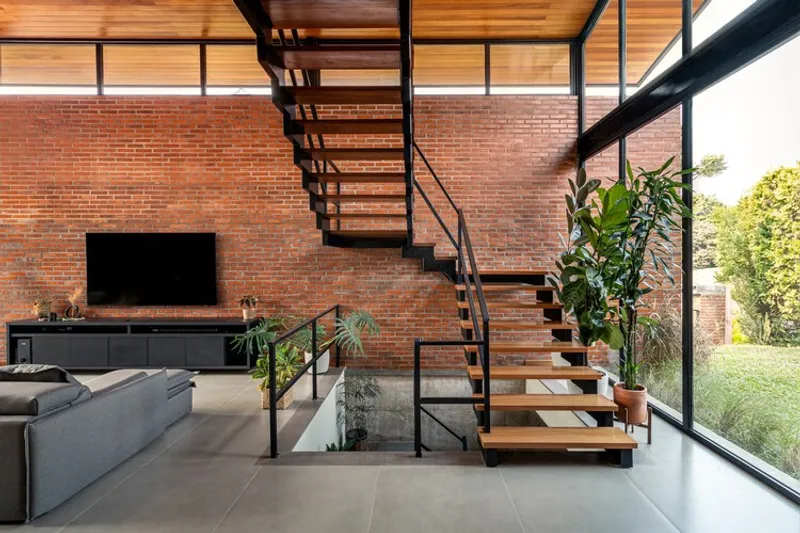
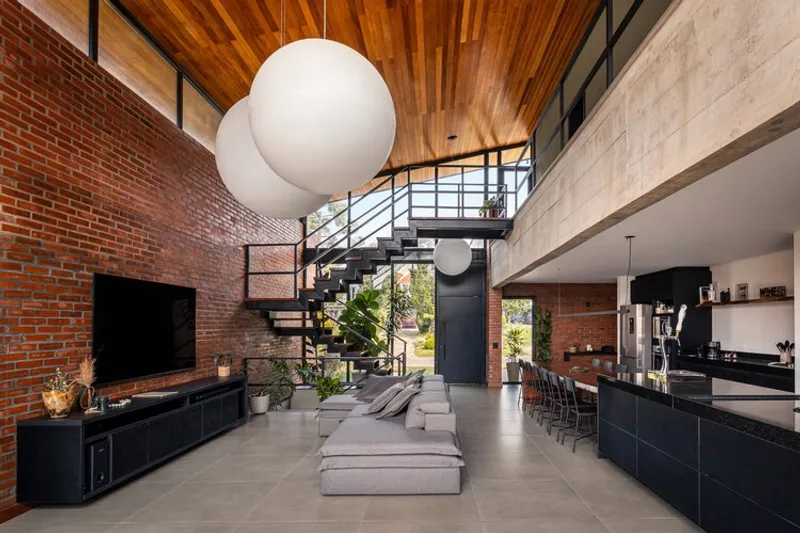
Spherical pendant lights emphasize verticality, while a lightweight metal staircase connects the ground and upper floors without obstructing sightlines. The open-plan kitchen seamlessly integrates with the living area and includes a barbecue, pizza oven, and draft beer system, reflecting Brazilian traditions of hospitality and communal dining.
This configuration reinforces the house’s identity as a gathering place where architecture supports shared experiences.
Private Retreats with Garden Views
On the ground floor, a private suite for the couple ensures convenience, accessibility, and direct views of the patio. Positioned toward the rear of the house, it maintains privacy while remaining connected to outdoor areas.
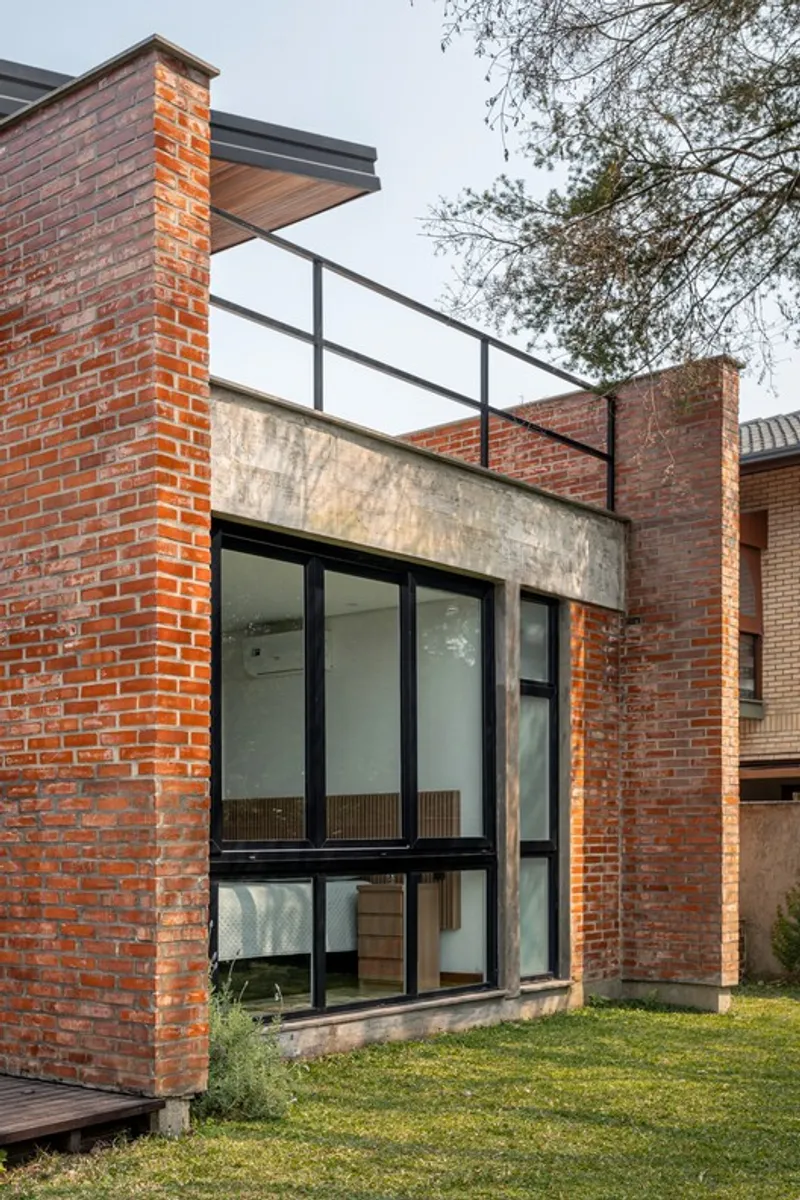
The upper level accommodates two additional suites, each with its own balcony, one facing the front landscape and the other overlooking the backyard garden. This arrangement strengthens the visual dialogue with nature on both levels, creating a continuous relationship between bedrooms and surrounding greenery.
Throughout the residence, long sightlines extend toward open spaces, reinforcing spatial permeability and environmental integration.
Material Contrast: Rustic Brick and Industrial Steel
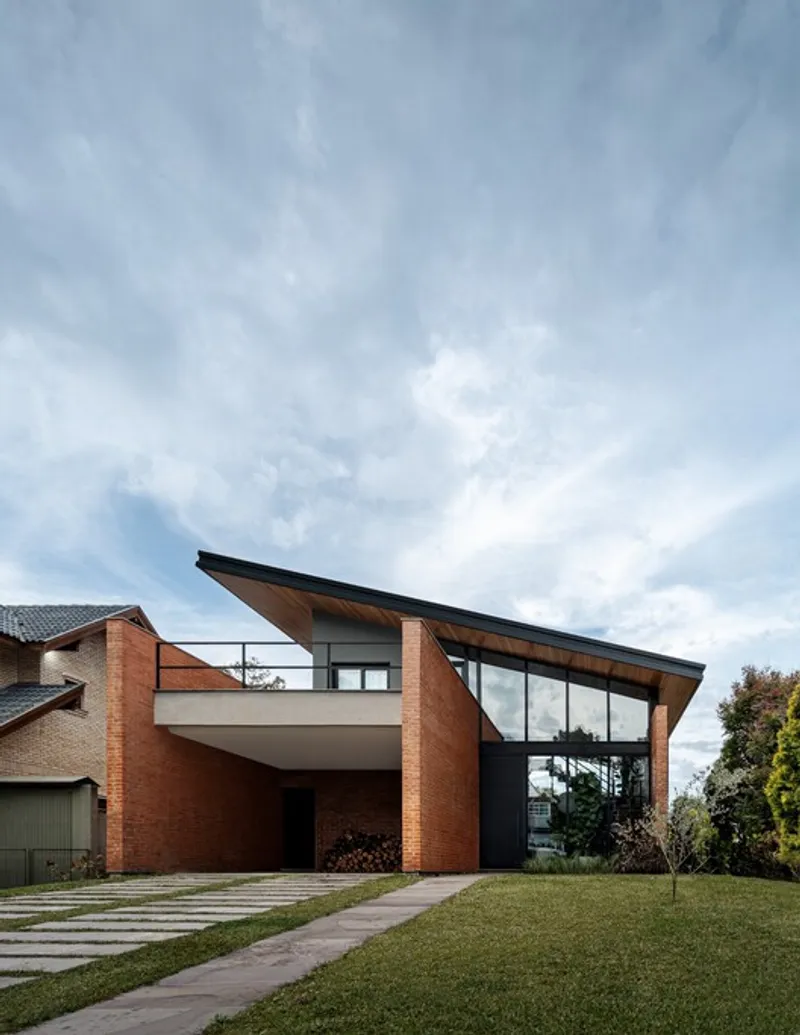
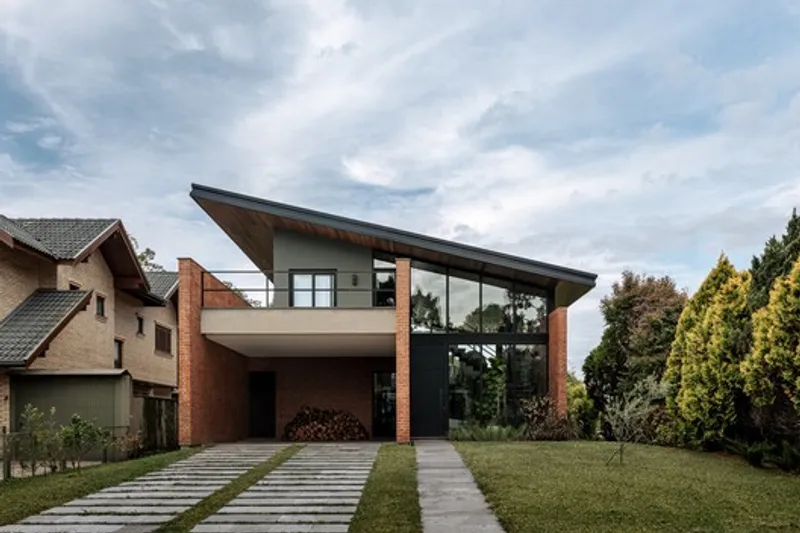
Materiality plays a defining role in Gralhas House. Exposed brick walls anchor the building in regional architectural tradition, evoking warmth and permanence. In contrast, industrial metal window frames and structural elements introduce a contemporary language.
This interplay between rustic and industrial creates a timeless aesthetic, avoiding fleeting design trends while remaining grounded in the present. Large glass panels maximize daylight penetration and invite the landscape indoors, blurring the threshold between architecture and garden.
Landscape Integration and Site Sensitivity
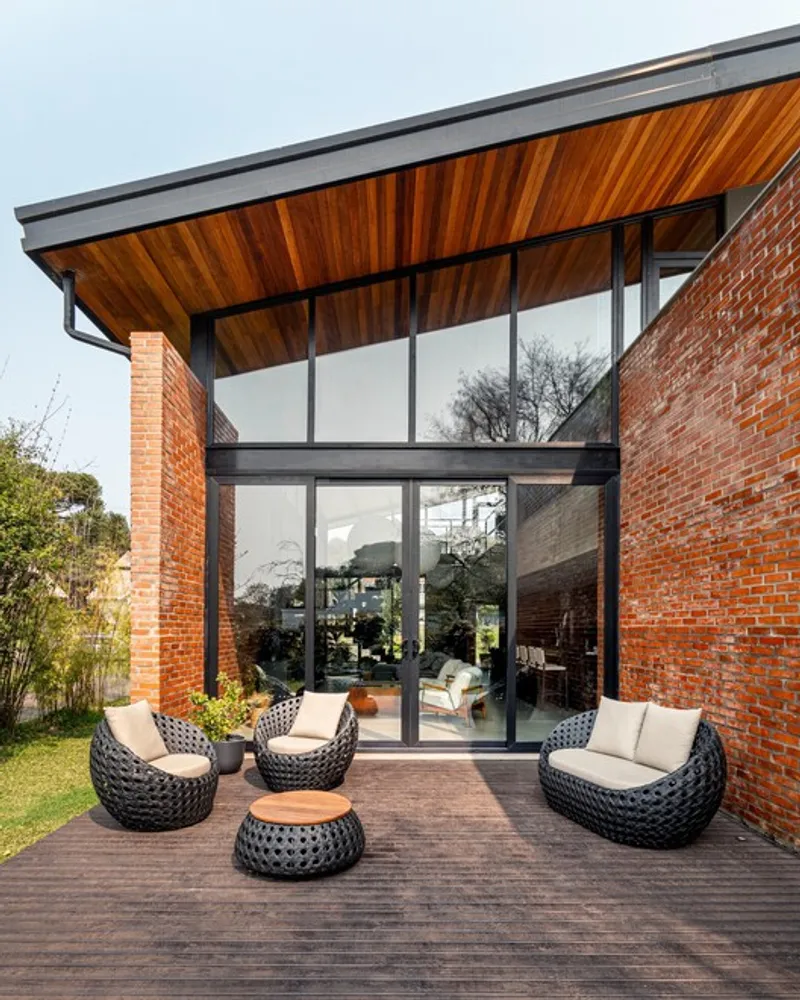
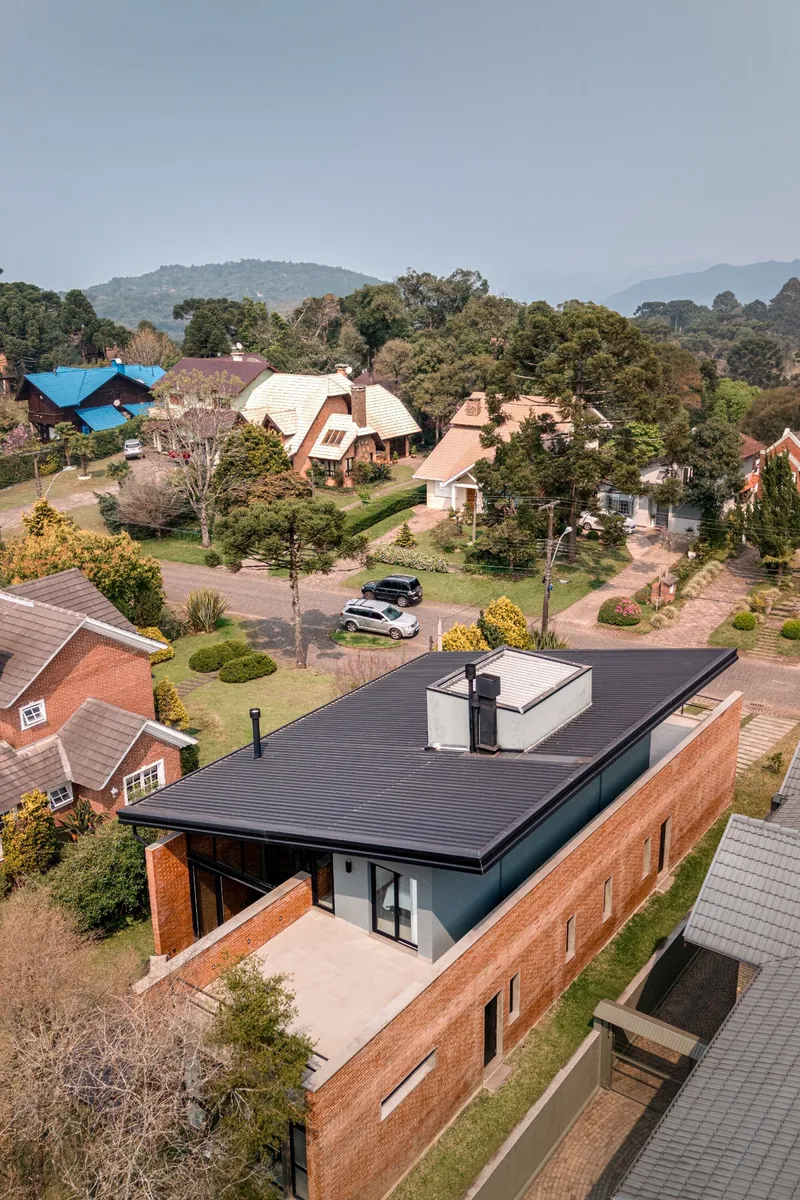
The site plan carefully respects the natural slope of the terrain. Existing trees were preserved, and the house was positioned to create a harmonious transition between built form and landscape. Decks, patios, and garden edges mediate this relationship, enhancing outdoor living and strengthening the home’s connection to its bucolic setting.
By integrating architecture with topography and vegetation, OSPA Arquitetura e Urbanismo demonstrates a sensitive approach to residential design in Brazil’s southern climate.
A Model for Contemporary Brazilian Residential Architecture
Gralhas House embodies a balanced architectural approach: combining exposed brick façades, open-plan interiors, sustainable site planning, and strong indoor-outdoor connections. The project exemplifies how contemporary houses in Brazil can merge functionality, material authenticity, and landscape integration.
As a weekend retreat rooted in family life and natural surroundings, Gralhas House offers a compelling vision of modern Brazilian home design: where comfort, memory, and spatial openness coexist in harmony.
All the photographs are works of
Gabriel Konrath


Popular Articles
Popular articles from the community


Wave 'Coral': Four Perforated Canopies Bring Human Scale to a Monumental Plaza
A wavy lattice shell repeated four times around an obelisk, turning a vast paved square into pockets of shade, planting and places to sit.


S-AR Builds a Five-Square-Meter Concrete Chapel in a Mexican Garden from Thin Walls and Old Bricks
In Santiago, Nuevo León, a tunnel of 8 cm concrete walls tilts down to a steel cross, floored with crushed brick from the chapel it replaced.

Madras Spaces Turns a Tight Rural Plot near Tiruchirappalli into an Inward-Looking Courtyard House
A 92 m² farmhouse in V. Thuraiyur, Tamil Nadu, built from load-bearing brick and reclaimed tile, that hides its openness behind a perforated wall.

Dominique Coulon & associés Backs a Media Library and Music School Against an Ochre Cliff in Sarlat
In Sarlat-la-Canéda, a fragmented earth-toned media library carves a reading lounge into rock and turns old factory offices into a music school.

Similar Reads
You might also enjoy these articles

BLT Arquitectos Wraps a Shared Innovation Hub at Córdoba's Catholic University in a Glowing Polycarbonate Shed
On the Universidad Católica de Córdoba campus in Argentina, a 650 m² workshop hall in polycarbonate and concrete serves every faculty as one shared room.

Charlene Koetz Arquitetura Lifts a Glass House on Piers Above a Mossy Forest Slope in Gramado
In Vila Prinstrop, Brazil, a 455 m² house pairs black-framed glazing with board-formed concrete, rough stone and a forest it barely disturbs.

Paul Bernier Architecte Turns a Curved-Eaved 1970s Cottage in Magog into a Year-Round Family Home
In Quebec's Eastern Townships, a 1970s vacation house becomes a primary residence through restraint, a glazed entry and sunlit timber rooms.

Peris and Toral.arquitectes Wrap 54 Social Rental Homes in Besòs Around a Brick-Screened Atrium
In Barcelona's Besòs district, a perforated brick block turns its shared walkways into a light-filtering atrium for 54 social rental homes.

Explore Architecture Competitions
Discover active competitions in this discipline

Submit a world, not a render

Studio work deserves a jury

The International Standard for Design Portfolios

The Global Benchmark for Architecture Dissertation Awards
Comments (0)
Please login or sign up to add comments
No comments yet. Be the first to comment!