
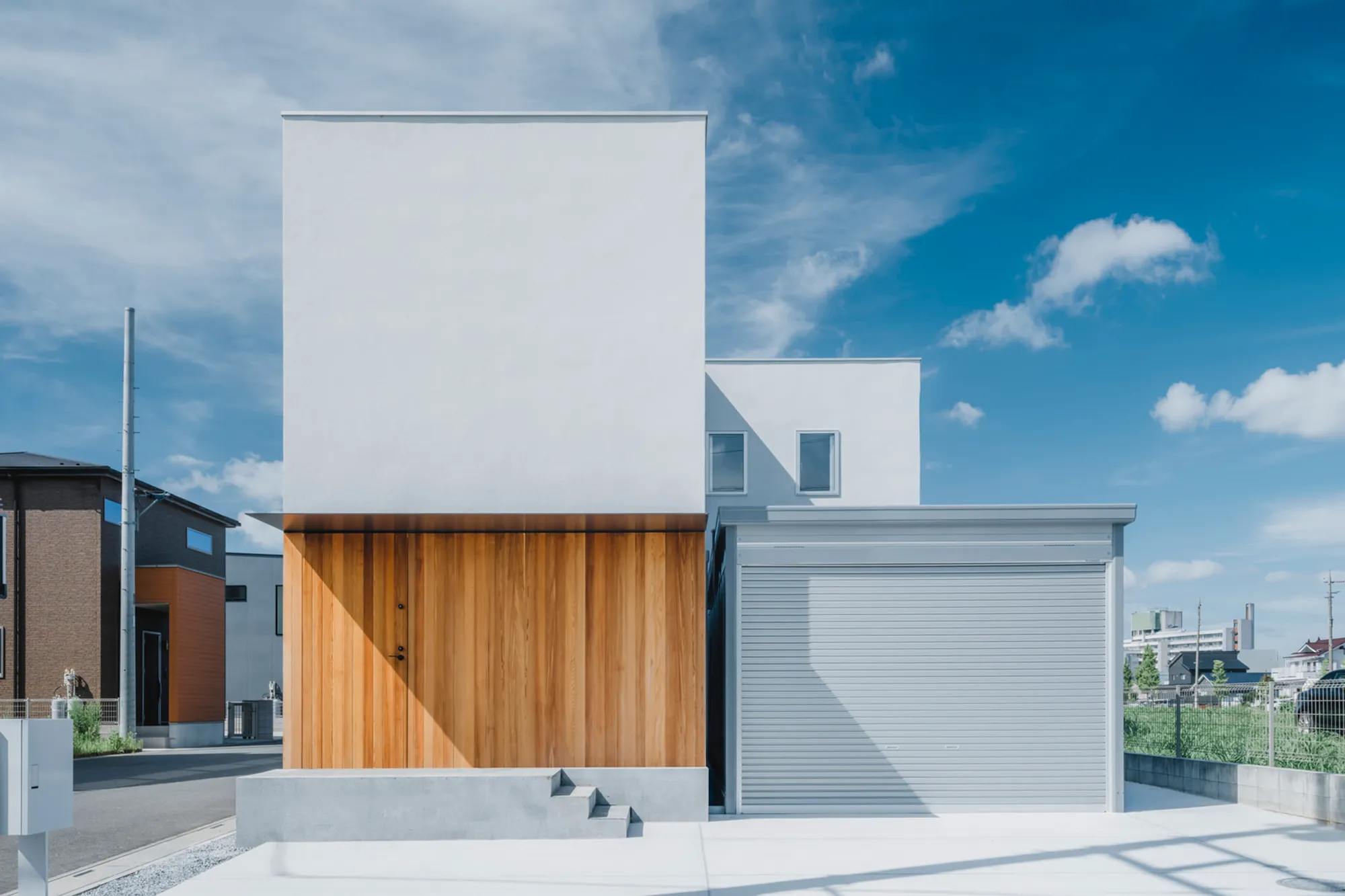
Grand Room House by IGArchitects: A Flexible Living Space Redefining Domestic Boundaries
Grand Room House by IGArchitects features a flexible, open-plan living space with innovative zigzag beams, blending structure, light, and adaptability.


Nestled on the edge of a residential development in Saitama, Grand Room House by IGArchitects reimagines the modern family home as a single, generous space where structure and flexibility coexist. Surrounded by a rural landscape and facing both a busy street and a quiet private lane, the site’s dual character inspired a design that bridges the openness of nature with the intimacy of domestic life.
A Dynamic Space for a Growing Family
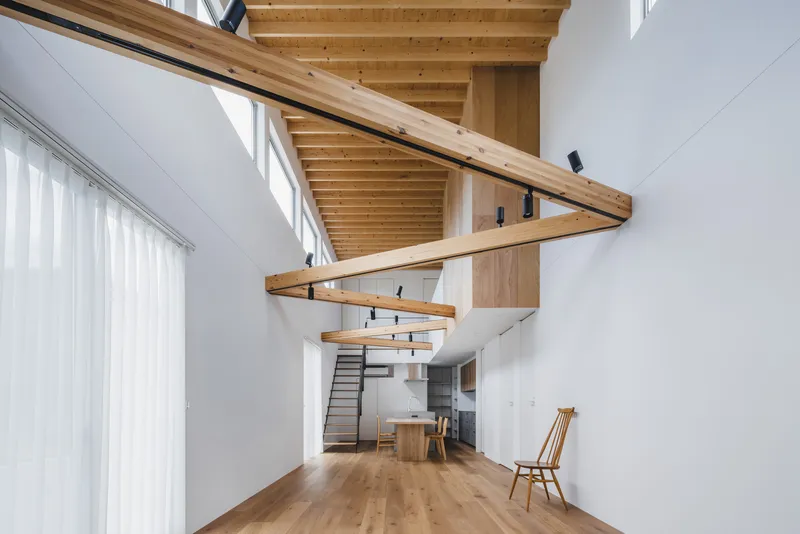
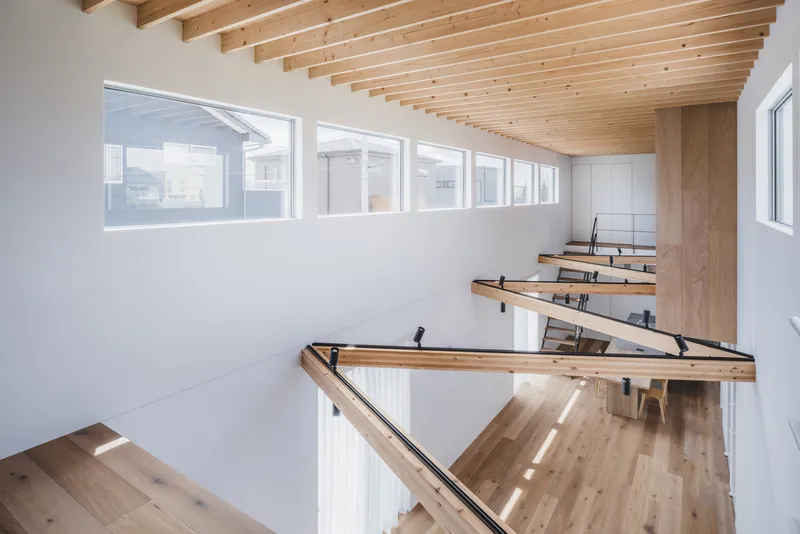
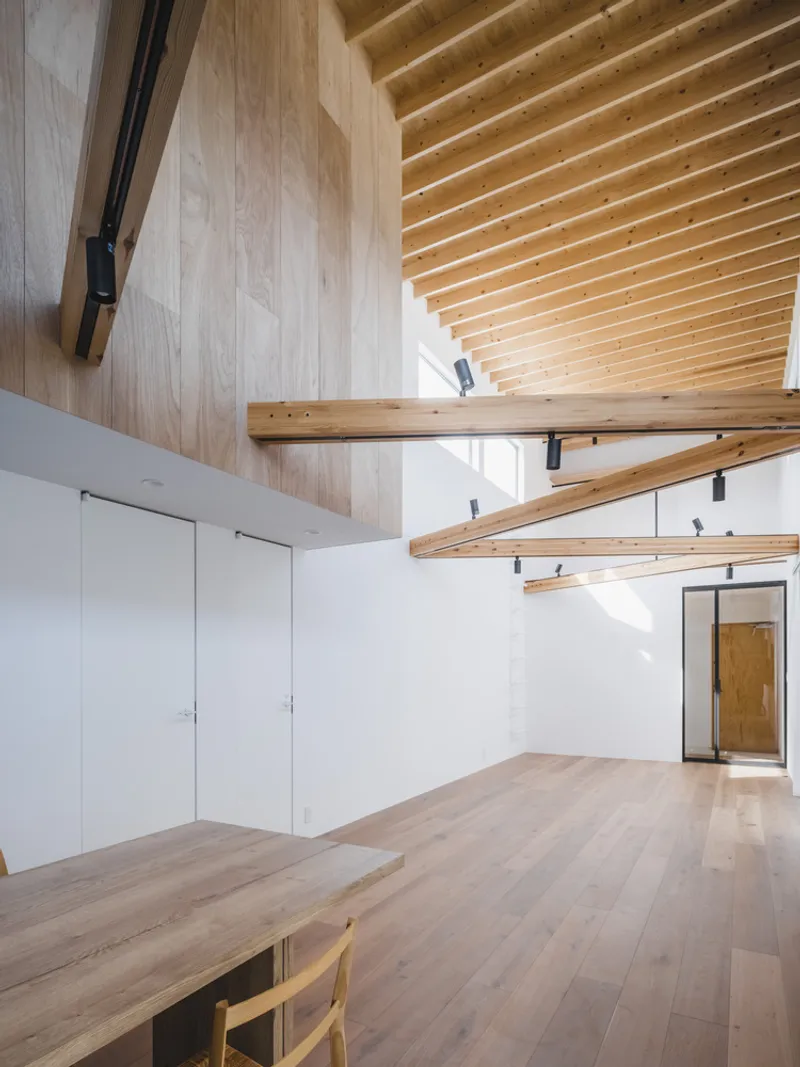
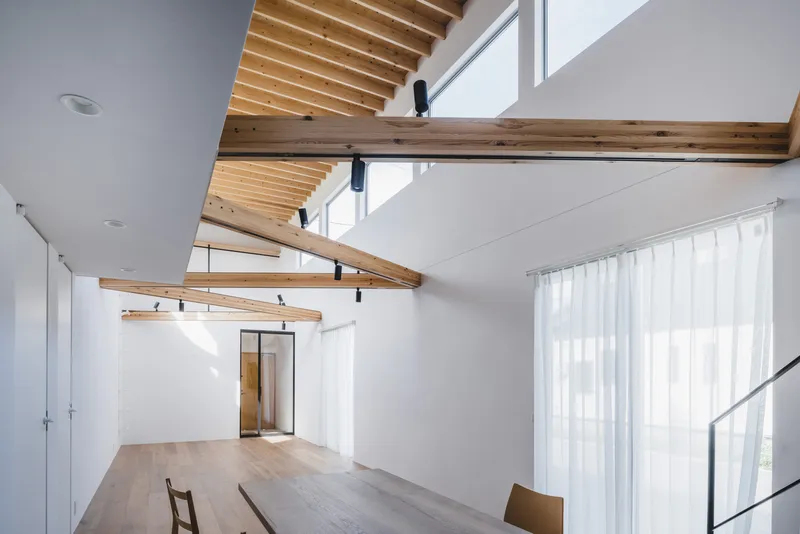
Designed for a family of four, the home responds to the clients’ desire for a bright, expansive, and adaptable living environment that evolves with their lifestyle. At the heart of the project lies the “Grand Room”—a vast, five-meter-tall volume that occupies half the total area of the building. This multifunctional space integrates the living room, dining area, play zone, and even a garden, dissolving the boundaries between traditional domestic functions.
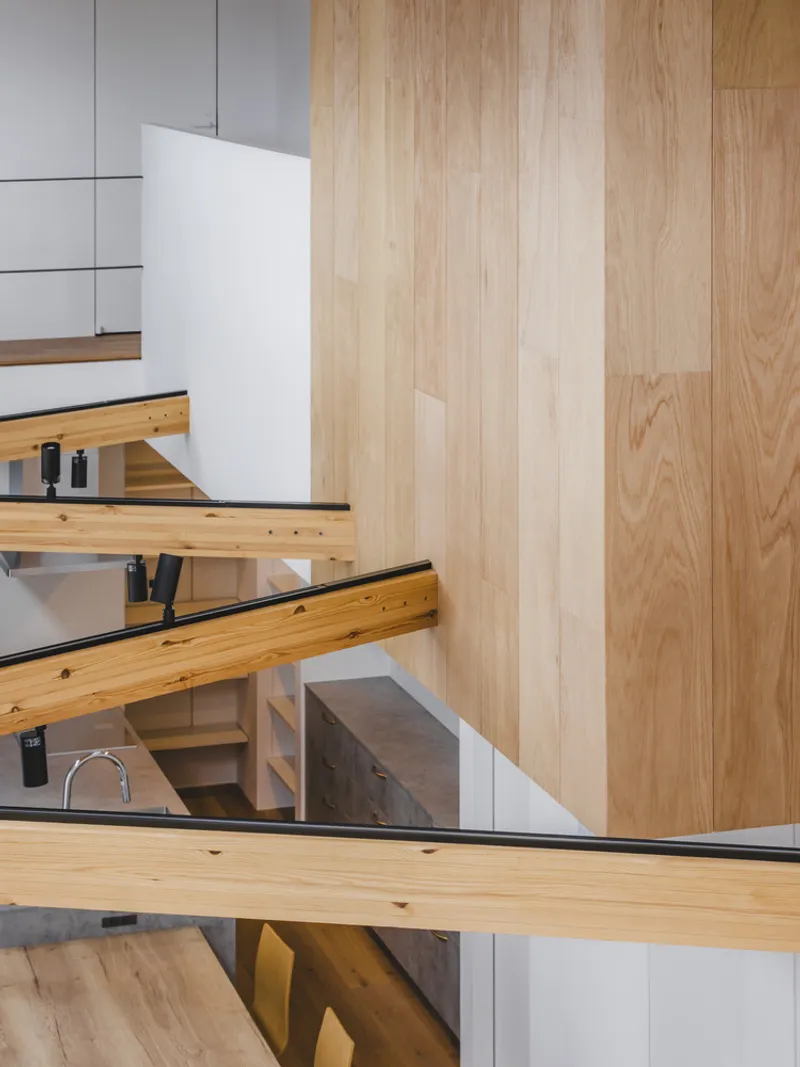
The Grand Room acts as a flexible core where daily activities unfold freely. Overhead zigzag beams—both structural and spatial elements—organize the space while guiding light, circulation, and visual rhythm. These beams not only provide structural stability but also serve as lighting rails, emphasizing the house’s open, modular character.
The Architecture of Continuity and Openness
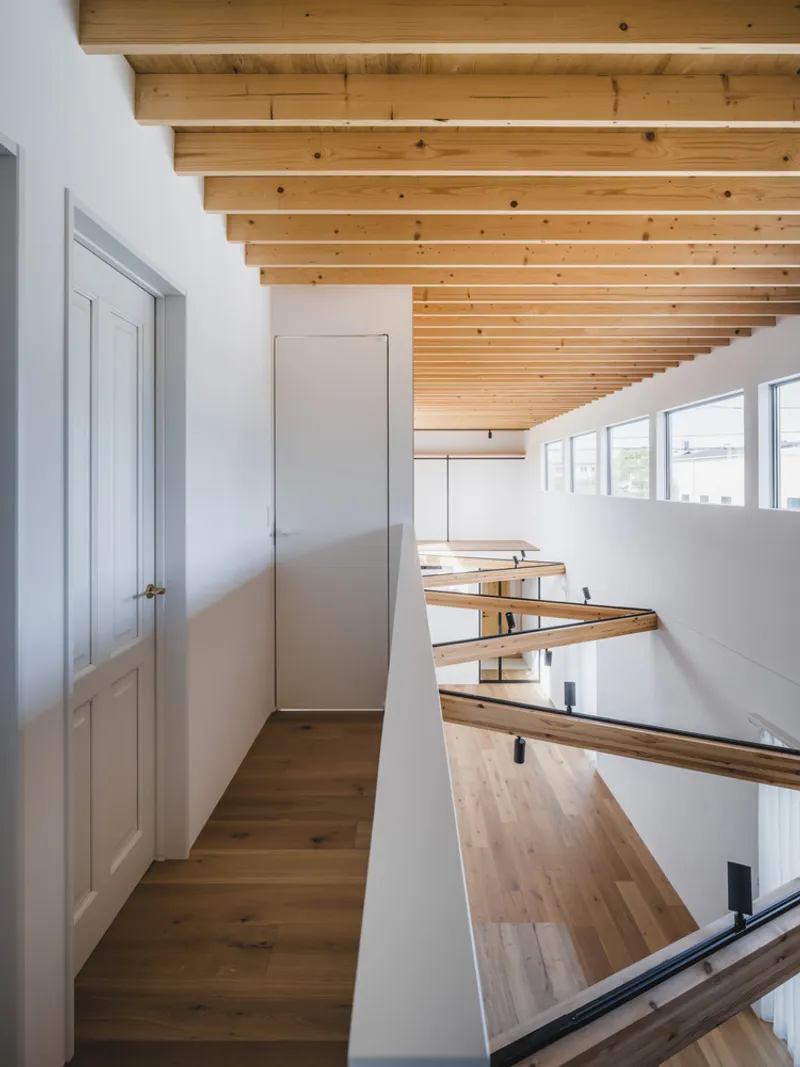
The Grand Room forms a transitional zone between the public “town” and the cluster of private rooms, mediating between external and internal worlds. This fluid relationship allows the space to adapt seamlessly—whether for family gatherings, children’s play, or quiet reflection. The continuity of materials, particularly the warm expression of wood, enhances the tactile quality and invites natural light to animate the interior.
Instead of dividing the house into rooms defined by fixed purposes, IGArchitects designed a non-prescriptive space that supports multiple forms of living. This architectural openness allows the family to define their own rhythms—an evolving dialogue between structure and daily life.
Innovative Structural Strategy
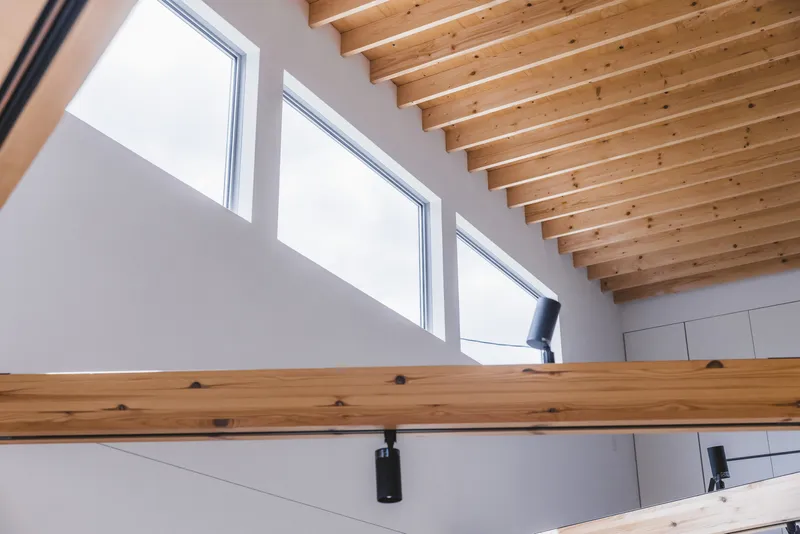
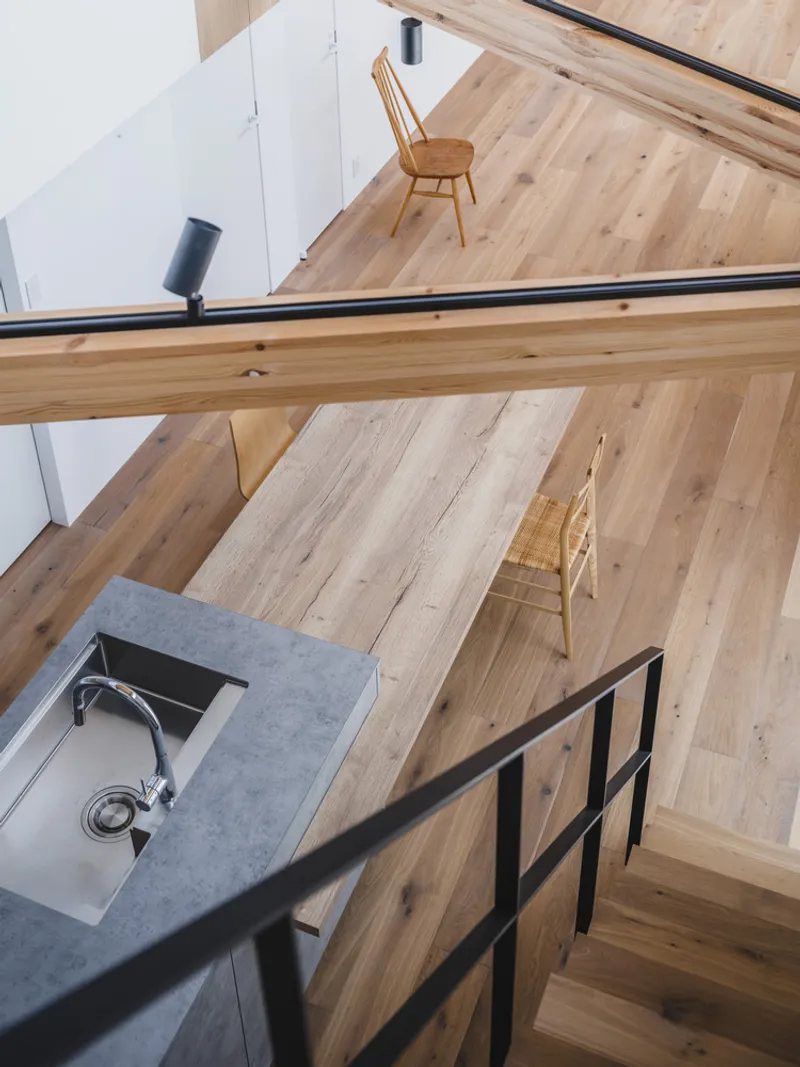
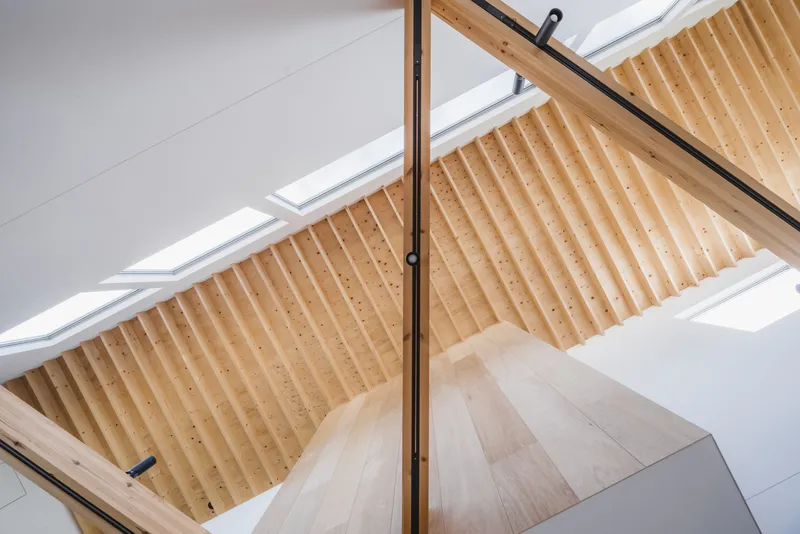
To achieve the five-meter-high open volume, IGArchitects devised an inventive zigzag beam system that combines the roles of beam and brace using a single linear element. This configuration provides surface rigidity and wind resistance without relying on typical catwalks, dropped beams, or diagonal bracing. The result is a unified, expressive structure that enhances both spatial depth and visual perspective.
The zigzag framework creates a sculptural ceiling rhythm that reinforces the architectural identity of the Grand Room—at once robust and transparent, ordered yet fluid.
A Vision of Generosity and Adaptability
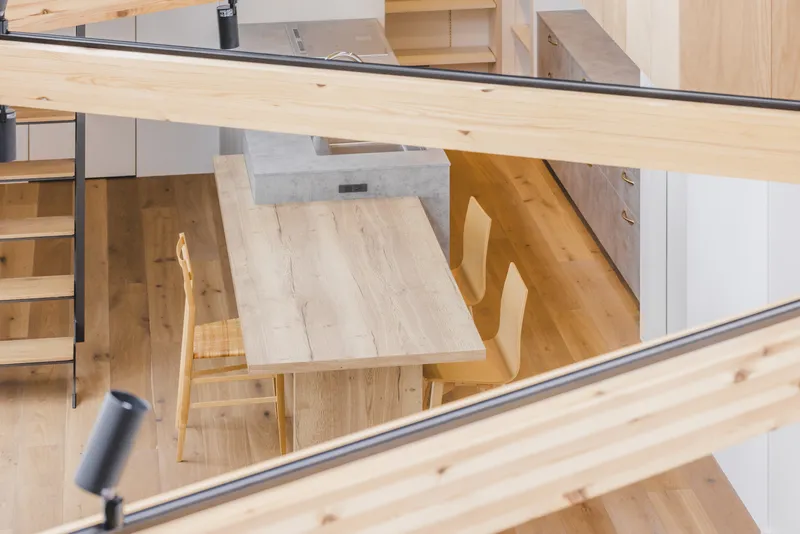
Grand Room House embodies the idea of flexible architecture—a space not constrained by conventional programs but open to reinterpretation over time. By centering the design around a single, expansive void rather than a series of closed rooms, IGArchitects redefines domestic comfort through spatial generosity, simplicity, and adaptability.
This residence stands as a thoughtful exploration of how architecture can support evolving family life, creating a home that is both structurally innovative and emotionally responsive.
All Photographs are works of Ooki Jingu




Popular Articles
Popular articles from the community


Lunar Spiral: Space Architecture Shaped by the Mathematics of the Universe
Lunar Spiral reimagines space architecture through Fibonacci geometry, lunar regolith, levitating habitats, and self-sustaining Moon living.

The Musturak Paradise: Senior Living Architecture for a Connected Future in Temara, Morocco
The Musturak Paradise reimagines senior living architecture in Temara via private homes, social spaces, culture, community, and shared care.

Play: Fragments of Their World
Familiar architecture becomes modular playground design, creating safe spaces where displaced children can learn, connect, imagine and play.

The Earth Pod: 3D Printed Homes for Resilient Refugee Communities
The Earth Pod reimagines refugee housing through 3D printed homes made from clay, combining resilience, self-sufficiency, and rapid shelter.

Similar Reads
You might also enjoy these articles


Hodi-Mandai Geram
Project Function: Preservation and revitalization of the Intangible heritage and socio-spatial identity of the Hodi by Housing, Cultural Memory Center, Sacred Grove, landscape, local tourism economy


Olio Towers: A Mid-Rise for Performers That Fuses Housing, Rehearsal, and Stage
Located blocks from Houston's Theater District, this modular tower stacks living units around a central performance atrium.

Oasis: Modular Green Housing Carved into Dhaka's Urban Fabric
A shortlisted Plugin Housing entry reclaims unauthorized settlements in Dhaka with stepped concrete volumes, green roofs, and ventilation-driven design.

Black Hole: A Floating Megastructure for the Post-Physical Era
Emiliano Mazzarotto envisions a spherical, self-scaling arena where e-sports, digital hotels, and holographic stadiums replace traditional public space.

Explore Housing Competitions
Discover active competitions in this discipline



Challenge to reimagine the Iron Throne


Photograph architecture without architects


Illustrate the lost glory of Angkor Wat - Render Challenge


Design challenge to reuse E-waste
Comments (0)
Please login or sign up to add comments
No comments yet. Be the first to comment!