

Grid of Agreement
Tea Pavilion with cultivations of plants on the Waterfront and the Arno River in Florence,Italy.

The project is about the revival of the ecosystem on the Terzo Giardino waterfront and the Arno River in Florence, Italy. Grid of Agreement is a metaphore of the project - a place, where human connect with the nature by using the grid system. All was inspired by environment of the place and was created in the rhythm of renaissance.

THE CONCEPT
The goal was to create a green space, „oasis” in a crowded city.
These days Terzo Giardino is a dilapidated wetland area without favorable conditions for plants. The potential of this spot gives us the oportunity to create a good space to do a lot of different activities. The space is organised and closed in rectangles. The order is slowly emerges from the natural green and similarly disappears in the river on the other end of the land. There are open and semi-open spaces. The concept proposes the new activity like piers with boats for cruises or independent expeditions.
 Florence - top view
Florence looking from the top has a tight urban development, light elevations and rooftops in ocher color. The river Arno is like a border that shows, that on the other side of the city is more green, closer to nature. The concept was to create a green landmark for the city.
THE GRID
 Italian elevations - inspiration for the Grid
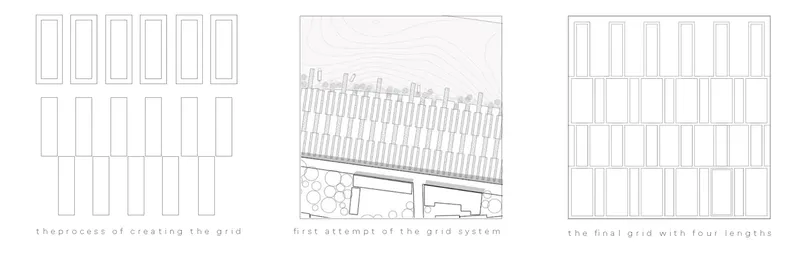
Grid of Agreement is a metaphore of the project, where human connect with the nature. Inspiration for the grid were italian renaissance elevations, where the rectangular shapes are arranged in rows. In the conception each shape has its own function. Around each of them there are 1,5 meters wide paths, to easily get around each of them.
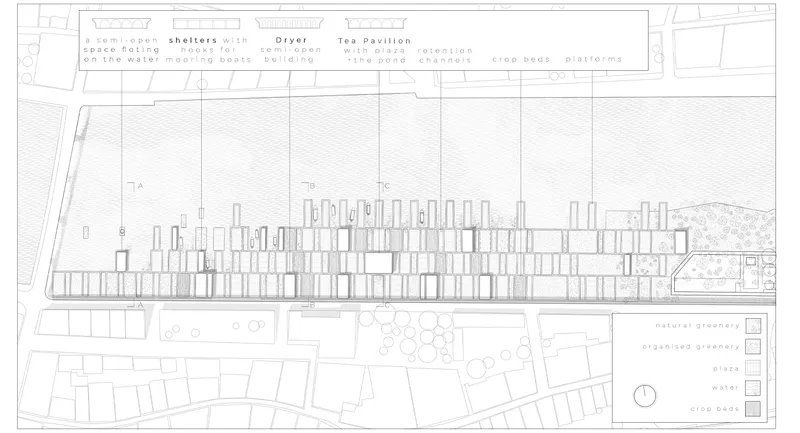 site plan

The difficulties of the area are the constant flooding and high temperature which results in a devastated land and hard cultivation of plants. By creating retential channels the water may flood the ground less frequently. Terzo Giardino is naturally green. The concept was to help the nature and rebuild the lack of river's ecosystem. Channels have the vegetation resulting from the analysis of the Arno River bottom f.ex.: Zannichellia palustris, Persicaria amphibia, Bidens tripartita, Sparganietum erecti, Bolboschoenus maritimus, Callitriche and more.The land is full of the field plants that grow on the natural green side and on the crops beds. They also can be irrigated by conecting them to created retential channels. To make the place more characteristic the idea was, to use the vegetation as the main idea of the project and use it as a products to sell.Many of them have healing properties or are perfect for drinking, rubbing or aromatherapy. The new function and eco-thinking style of the place can be a good landmark for the city Florence and its future apperance.
 plants that grown and can grow in this area
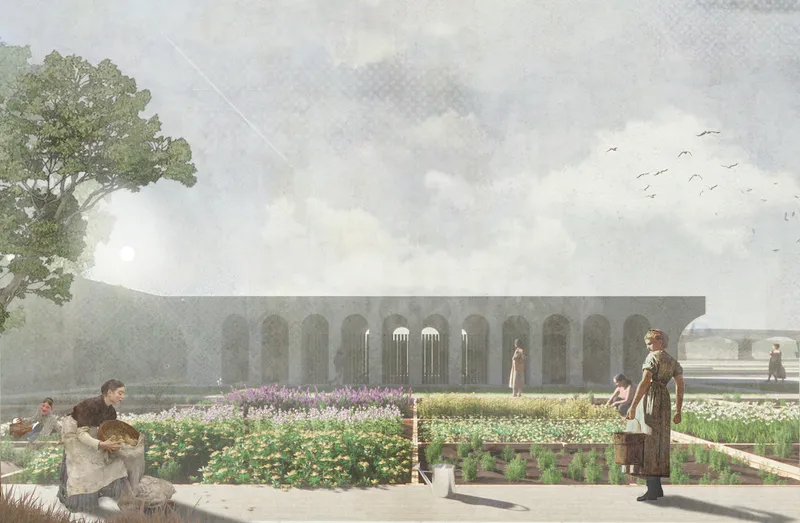 view of one of the Dryers
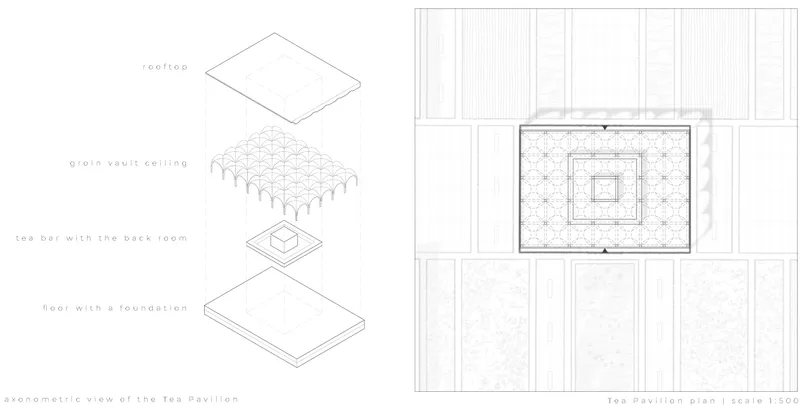
The Tea Pavilion is a stone building on the horizontal plan. It has the groin vaulted ceiling, inspired by Florence Renaissance. The plan is symmetrical and minimalistic. The conception includes the bar and the backroom in the middle of the building. The dryed flowers and herbs are brought to the Tea Pavilion from the Dryer buildings and then the napars are created directly on this spot. It can be also a selling space of tea, napars, syrops, essential oils and more.
The building has two entrances and many windows with the view of the painting landscapes full of fauna and flora.The pavilion is surrounded by the plaza with benches and recreation spaces. Before the building there is a big pond with the recreated water ecosystem. It can also be a space for the birds and smaller animals, that people can watch and learn about from the information cards placed around. Back, there is the main plaza with the retention channels that can be used by visitors to cool down on hot days. Near by, there are wooden platforms with boats.
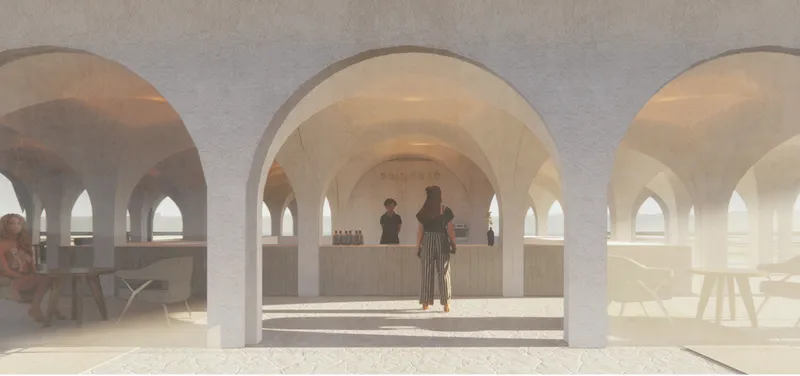 Tea Pavilion entrance and bar
THE ENDING SPOT
At the end of the waterfront, the moment where the pieces are running out of order and come to the water, there is a semi-open space overlooking the sculpture.
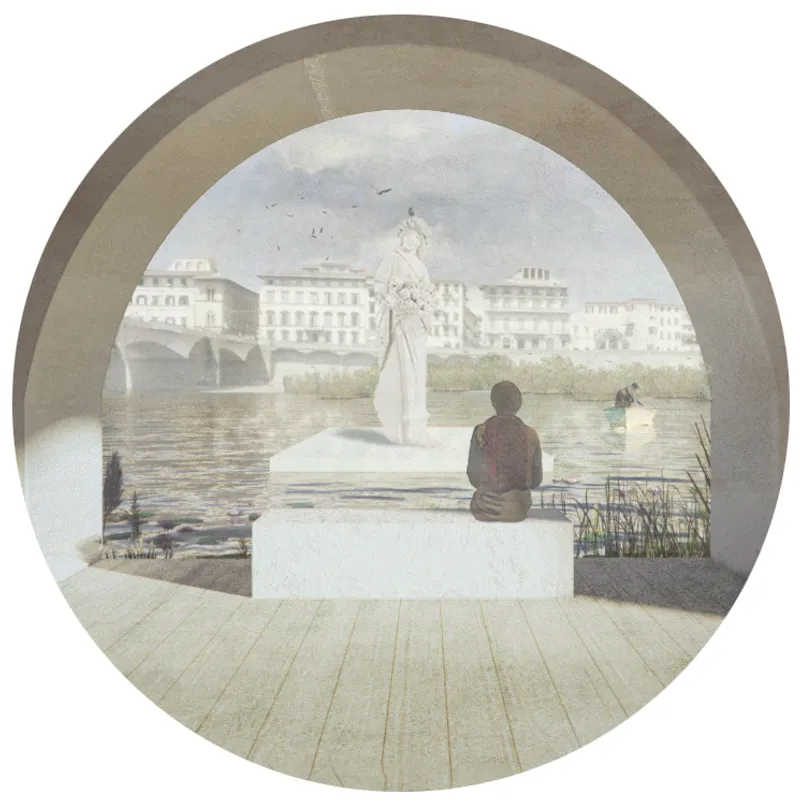
In the concept the chosen artpiece is the Spring in the guise of Flora (1616-17) by a sculptor Pietro Bernini, Giovanni Lorenzo Bernini’s father. The sculpture becomes a symbol of a place, that shows the relationship between human and flora. There is also a view for the Ponte alle Grazie and the boats that pass under it. It all ends here...
GRID OF AGREEMENT WITH THE PASSING TIME
The project is a long-term, varied effect of nature itself. The concept involves the reconstruction of the ecosystem, the creation of a home for plants and zones of various activities for waterfront users. Due to the changing water level, some of the platforms will hide and reveal again. The surrounding nature will surprise its changeability as the seasons change. the goal is to slowly create a lively place, uncontrolled nature, so that the people of the city have the opportunity to appreciate how important it is in their lives.
The Tearoom and selling products may become something that the city of Florence will be associated with.
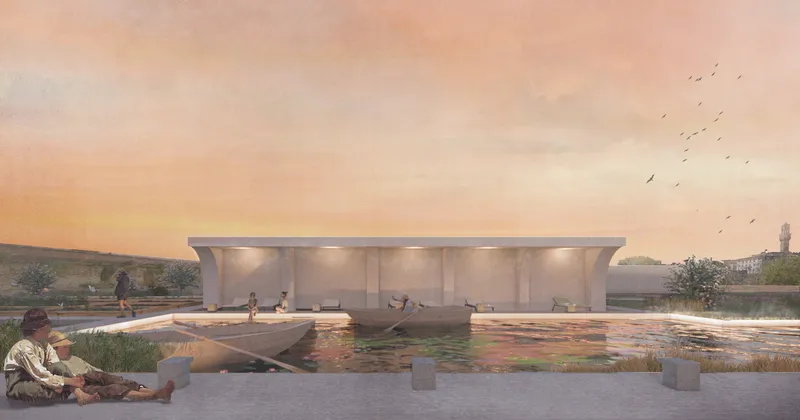 shelter and hangers for boats

Popular Articles
Popular articles from the community


Juan García Correa, John González and Claudia Rueda Sink a Circular Amphitheater into a Manizales Engineering Building
On the La Nubia campus in Manizales, Colombia, the S1 Building folds labs and offices into a hillside of ramped lawns that double as a campus route.

graciastudio Turns a Viewless Tijuana Lot Inward Around a Courtyard of Concrete, Timber and Trees
In Tijuana, Jorge Gracia's GA2 House stacks a timber-clad private floor over exposed concrete and replaces a missing view with a planted interior patio.


Singing Woman: An Opera House That Performs Before the Curtain Rises
Ovidiu Cristian Pavel's conceptual opera house translates Estonia's choral identity into a sculpted waterfront landmark facing the Baltic Sea.

LT2A and OPEN Architectes Thread a Brick and Glass High School Through a Wooded Belgian Campus
In Braine-l'Alleud, a 3,000 m² wing for Collège Cardinal Mercier pairs pale brick with a glazed colonnade, deferring to a small chapel and a dense wood.

Similar Reads
You might also enjoy these articles

The Rhythm of Seasons
A Farmers' Market Connecting Nature and the City


More Than a Building-Designing a Living System
More Than a Building-Designing a Living System
Base Beyond
DESERT COMPOUND ARID: TOURISM OF ABSENCE AND ABUNDANCE
Explore Waterscape Competitions
Discover active competitions in this discipline


Challenge to visualize a collision of the future and past

Challenge to visualize future spaces of waste

Challenge to visualize slums of 2080

Challenge to illustrate the ruins of Petra
Comments (0)
Please login or sign up to add comments
No comments yet. Be the first to comment!