

Gua Gua Villa by Jena Architect: Mediterranean-Inspired Cave Living in Tabanan, Bali
Mediterranean-inspired Bali villas with arched forms, cave-like plastered interiors, dynamic circulation, indoor gardens, and immersive indoor-outdoor tropical living experiences.


Located in Tabanan, Bali, Indonesia, Gua Gua Villa is a compact residential villa complex designed by Jena Architect in 2023. Covering a total built area of 89 square meters, the project comprises one one-bedroom villa and two two-bedroom villas, carefully arranged on narrow plots that demand efficient spatial planning and thoughtful circulation strategies. Led by architect Jery Yasa, with interiors designed by murphy. design house, the project explores how architectural atmosphere, materiality, and spatial sequencing can transform constrained sites into immersive living environments.

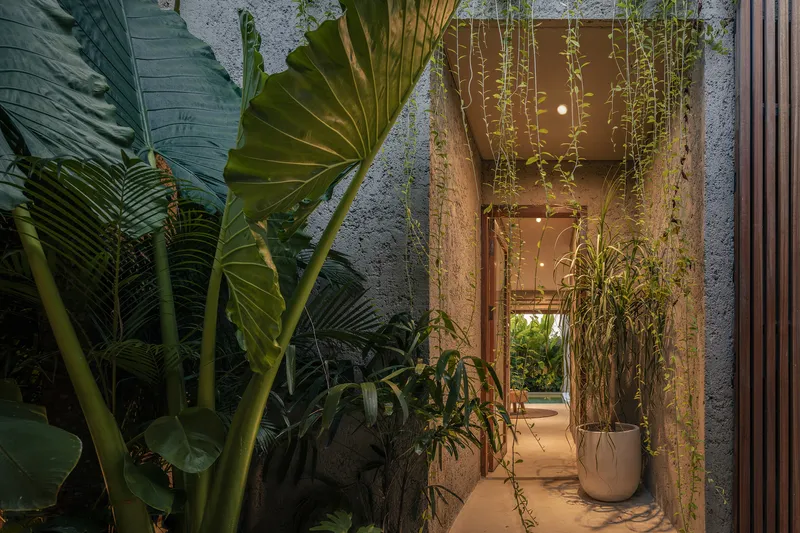

Linear Planning and Dynamic Circulation
The villas are organized in a linear configuration, with frontage widths limited to just six meters for the one-bedroom unit and four meters for each two-bedroom unit. Rather than treating the elongated layout as a limitation, the design introduces dynamic circulation paths and subtle level changes to break the monotony of linear movement. Narrow transitional spaces lead to sudden volumetric expansions, creating moments of surprise and spatial contrast throughout the villas.
This deliberate orchestration of compression and release enhances the experiential quality of the interiors, guiding occupants through a sequence of intimate corridors, open living areas, and visually connected outdoor spaces.

Mediterranean Influences and Cave-Like Architecture
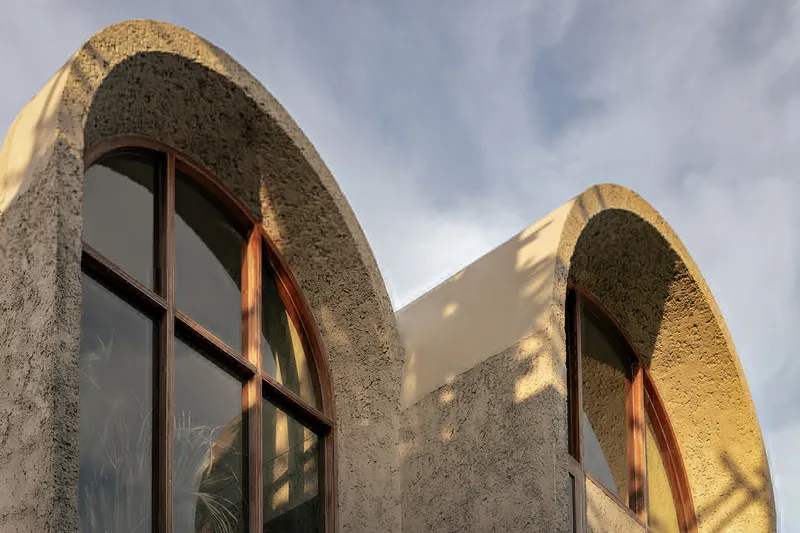
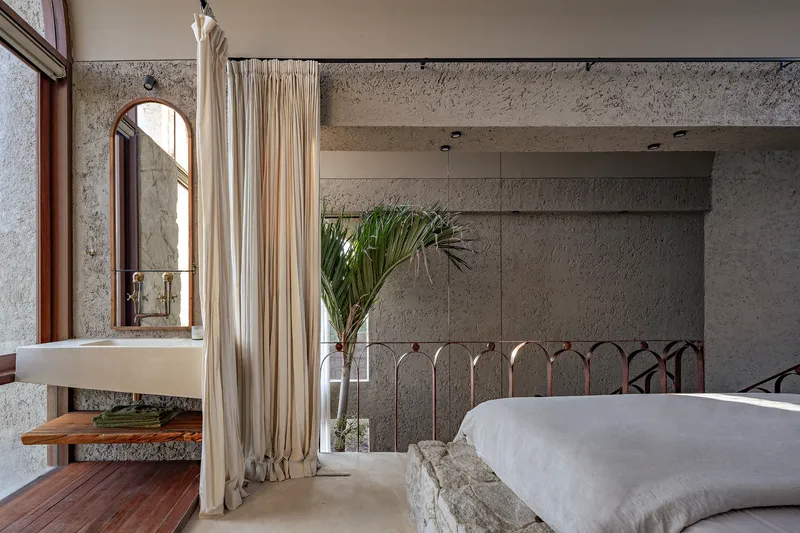
The architectural language of Gua Gua Villa draws inspiration from Mediterranean architecture, reinterpreted through a tropical Balinese context. This influence is expressed through arched geometries, curved openings, and soft roof forms that appear across windows, doors, and interior transitions. Rough-textured walls finished with natural plaster contrast with smooth white-painted ceilings, emphasizing the purity and precision of the arch forms.
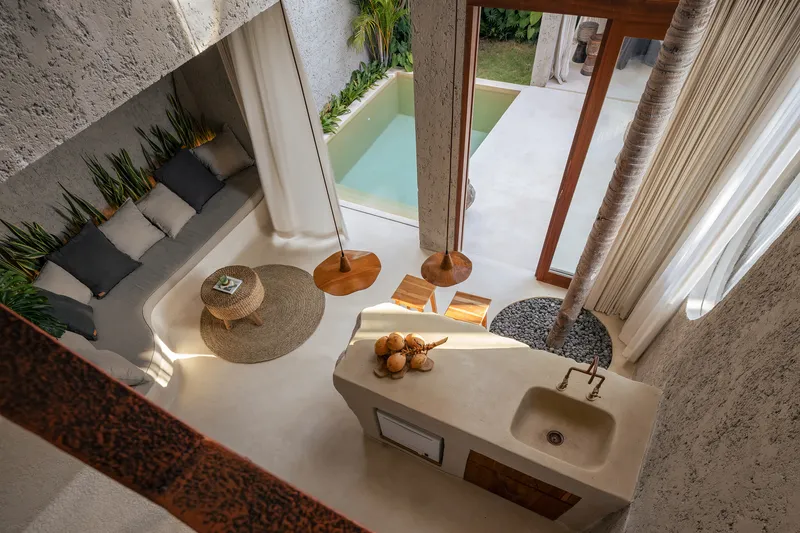
The design intentionally evokes the sensation of being inside a cave. This concept is reinforced by heavy, fixed furniture elements crafted from concrete and stone, shaped organically to feel carved rather than assembled. Floors and walls share similar plastered textures, blurring boundaries between architectural surfaces and built-in furnishings.
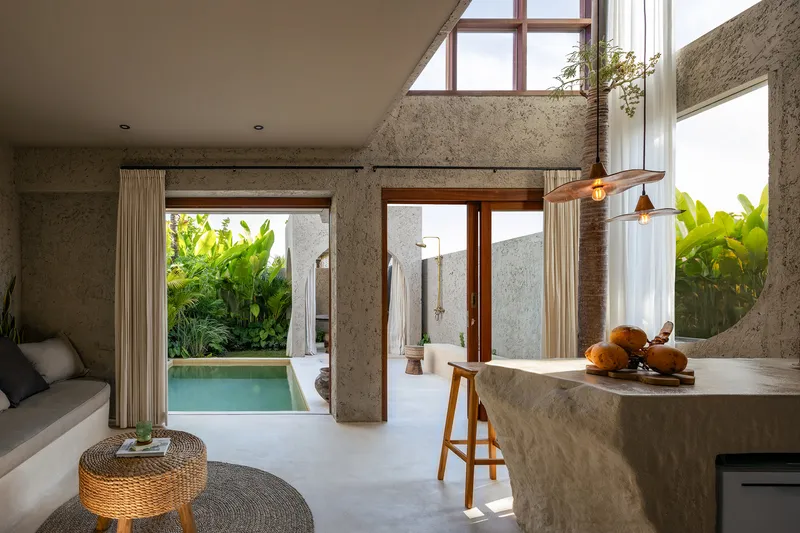

One-Bedroom Villa: Vertical Volume and Intimate Living
The one-bedroom villa begins with a private parking space that leads directly to a covered entrance. A clear glass door subtly frames the swimming pool beyond while preserving privacy within the living and dining areas. Upon entry, residents move through a narrow corridor that conceals functional spaces such as storage, a toilet, and the staircase to the mezzanine level.
This compressed entry sequence opens dramatically into a double-height dining area, where a tall palm tree grows from a cut-out floor filled with pebbles, bringing nature directly into the heart of the interior. The mezzanine bedroom overlooks this space, while a built-in banquet seat beneath it creates an intimate seating nook. Large glass doors connect the interior to a plunge pool and romantic patio, reinforcing the indoor-outdoor relationship essential to tropical living.
Upstairs, the bedroom features openings on two sides to maximize ventilation and daylight. The shower area is partially enclosed by a continuous curtain that wraps three sides of the space, functioning as a soft, flexible wall. Window placement balances functionality, privacy, and façade composition, ensuring cohesive interior and exterior expressions.


Two-Bedroom Villas: Layered Living on Narrow Plots
The two-bedroom villas occupy particularly narrow sites, prompting a more playful approach to floor levels and spatial sequencing. Storage and MEP spaces are positioned at the front for easy access, while the main living areas unfold gradually toward the rear. An open kitchen with an island connects seamlessly to the living room, with clusters of indoor plants forming a lush interior garden that softens transitions between functions.
The swimming pool runs linearly along one side of the villa, buffered by a terrace and culminating in a sauna. A zigzag spatial arrangement creates layered, picturesque views from multiple vantage points, enhancing visual depth despite the limited width of the plot.
On the upper level, the two bedrooms face opposite ends of the site to ensure privacy and optimal cross-ventilation. Bathrooms and bedrooms are carefully aligned with voids and openings, maximizing airflow and daylight while maintaining a strong visual connection to the surrounding environment.
Materiality, Privacy, and Tropical Living
Throughout the project, material honesty and tactile surfaces define the spatial character. Natural plaster, concrete, stone, and glass are used strategically to balance solidity and lightness. Privacy is carefully controlled through layered openings, curtains, and setbacks, allowing openness without exposure.

All photographs are works of Indra Wiras


Popular Articles
Popular articles from the community


GROUP A Strips a 1969 Rotterdam Harbor Headquarters to Its Frame and Wraps It in Timber Louvers
In Rotterdam's M4H harbor district, Ferro Offices reuses a 1969 frame, adds one timber storey and reaches BREEAM-NL Outstanding.

David Macias Steps a Doorless Stone and Plaster House Down a Tropical Colombian Hillside
In the humid hills of Colombia, Threshold House replaces the front door with an open void and terraces its 850 m² down the slope instead of fighting it.

Jaramillo Van Sluys Arquitectura and Urbanismo Turn a Demolished Registry Lot in Quito into an Orchard Plaza
In Quito's Centro Histórico, a 2,800 m² plaza exposes the San Agustín convent wall and redraws its lost Augustinian orchard in volcanic stone.

longwave studio Reorganizes a 112 m² Tainan Apartment Around the Daily Routines of a Family and Two Cats
In Tainan, Taiwan, birch plywood, rust-red furniture and a freestanding plaster wall link arrival, storage, work and family life in one apartment.

Similar Reads
You might also enjoy these articles


Hodi-Mandai Geram
Project Function: Preservation and revitalization of the Intangible heritage and socio-spatial identity of the Hodi by Housing, Cultural Memory Center, Sacred Grove, landscape, local tourism economy


Olio Towers: A Mid-Rise for Performers That Fuses Housing, Rehearsal, and Stage
Located blocks from Houston's Theater District, this modular tower stacks living units around a central performance atrium.

Oasis: Modular Green Housing Carved into Dhaka's Urban Fabric
A shortlisted Plugin Housing entry reclaims unauthorized settlements in Dhaka with stepped concrete volumes, green roofs, and ventilation-driven design.

Black Hole: A Floating Megastructure for the Post-Physical Era
Emiliano Mazzarotto envisions a spherical, self-scaling arena where e-sports, digital hotels, and holographic stadiums replace traditional public space.

Explore Architecture Competitions
Discover active competitions in this discipline

Challenge to reimagine the Iron Throne

Photograph architecture without architects

Illustrate the lost glory of Angkor Wat - Render Challenge

Design challenge to reuse E-waste
Comments (0)
Please login or sign up to add comments
No comments yet. Be the first to comment!