

Guabo House: A Courtyard-Centered Social Housing Expansion in Yaruquí
Courtyard-centered house expansion in Ecuador, preserving a guabo tree through adaptive reuse, timber structure, earthen walls, and garden-oriented living.


Located in Yaruquí, east of Quito, Ecuador, Guabo House by Ese Colectivo is a sensitive rehabilitation and expansion of a former social housing unit, redefining compact living through material intelligence, spatial clarity, and a deep relationship with landscape. Designed as a home for a family of three, the project transforms a modest 25-square-meter dwelling into an 87-square-meter residence, balancing preservation, expansion, and environmental respect.
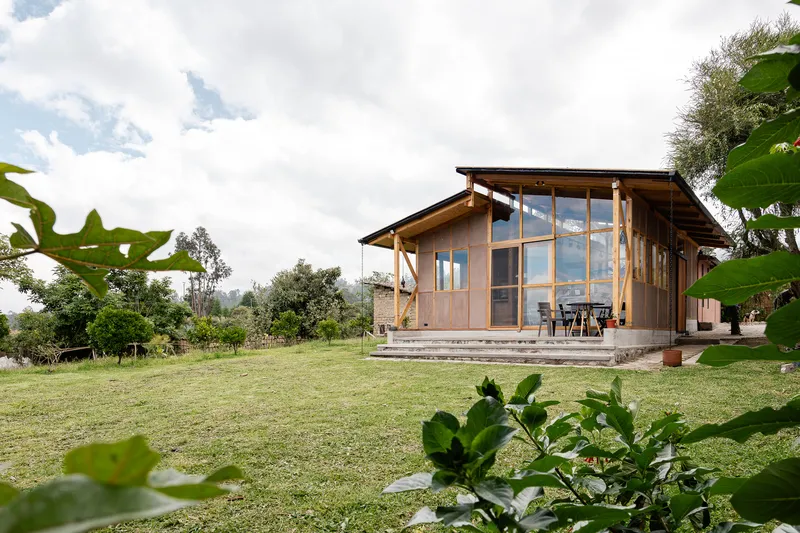
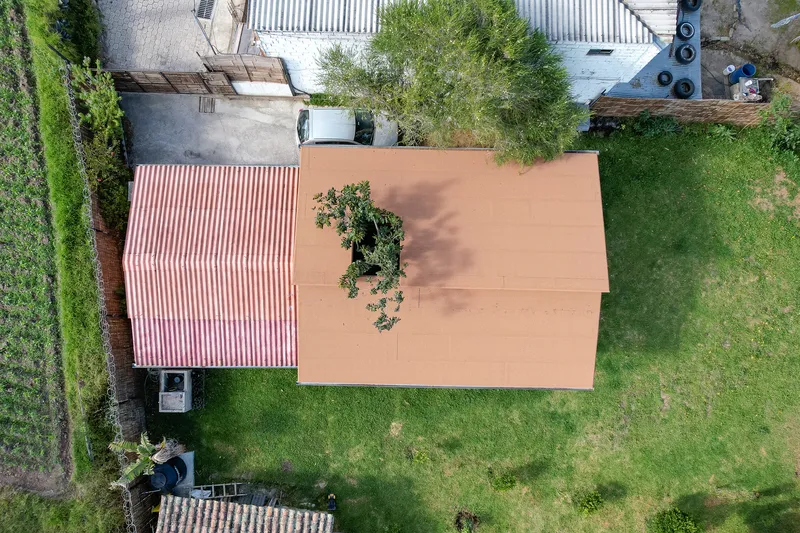
The original house comprised two bedrooms, a bathroom, a kitchen, and a small social area condensed into a highly constrained footprint. Rather than demolishing and rebuilding, the architects chose an adaptive reuse strategy, retaining most of the existing perimeter walls, roof, and subfloor. This approach not only reduced construction waste but also reinforced the continuity between the original structure and the new intervention.

The expansion extends along the same width as the original dwelling, projecting toward the garden while maintaining the existing roof slope. Special care was taken to preserve the site’s vegetation, particularly a mature guabo tree that becomes the project’s spatial and symbolic centerpiece. To accommodate this, the architects introduced a minimal internal courtyard, which functions as a climatic regulator, visual pause, and organizational hinge between the private zone, housed within the original structure, and the new social areas.
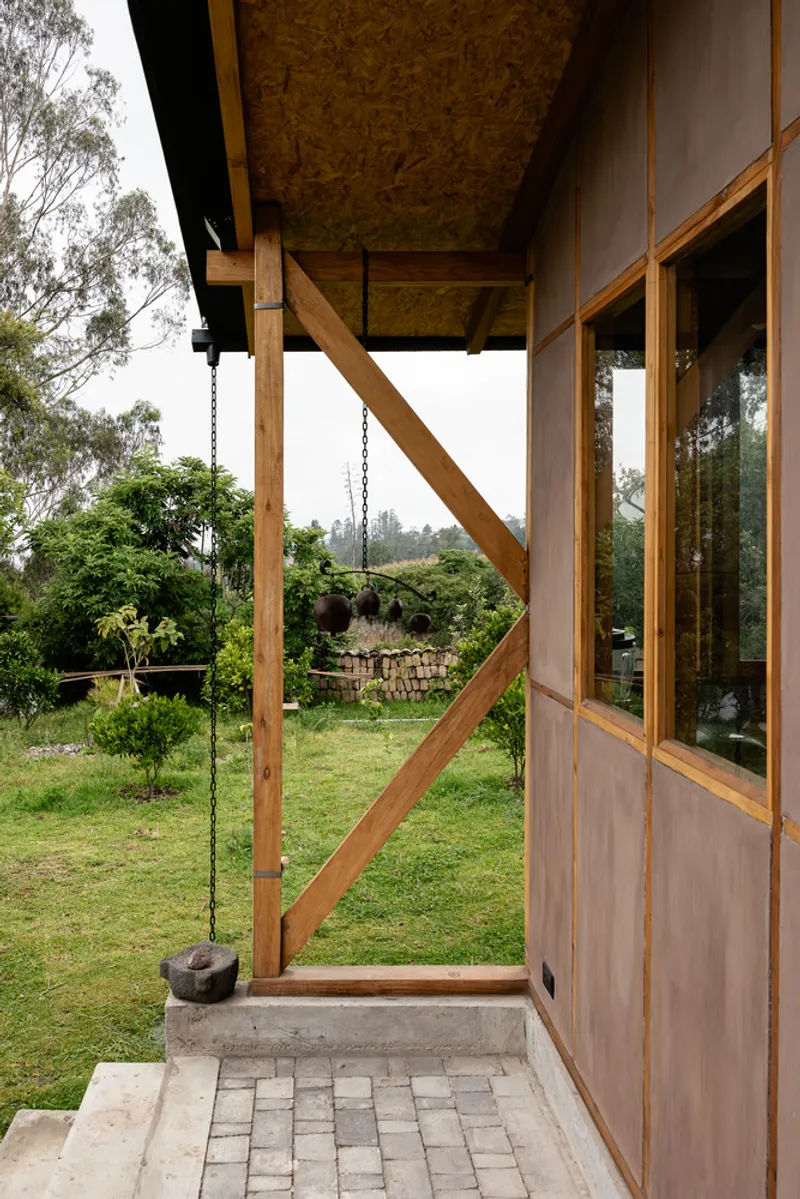
Structurally, the expansion is defined by a eucalyptus wood framework, enclosed with bahareque walls, a traditional construction system that enhances thermal comfort while grounding the project in local building culture. The structural grid clearly defines openings, windows, and entrances, allowing the architecture to remain legible and honest in its expression.
A subtle roof offset introduces natural light into the heart of the house while establishing a new structural axis that organizes the kitchen and separates the internal courtyard from a study area. The roof itself is resolved using a lightweight sandwich system, minimizing stress on the eucalyptus structure and extending outward to form a generous front porch facing the garden. This transitional space is laterally framed by exposed bracing elements and enclosed at the front by a wide permeable screen, opening long views toward Quito and the slopes of Pichincha.
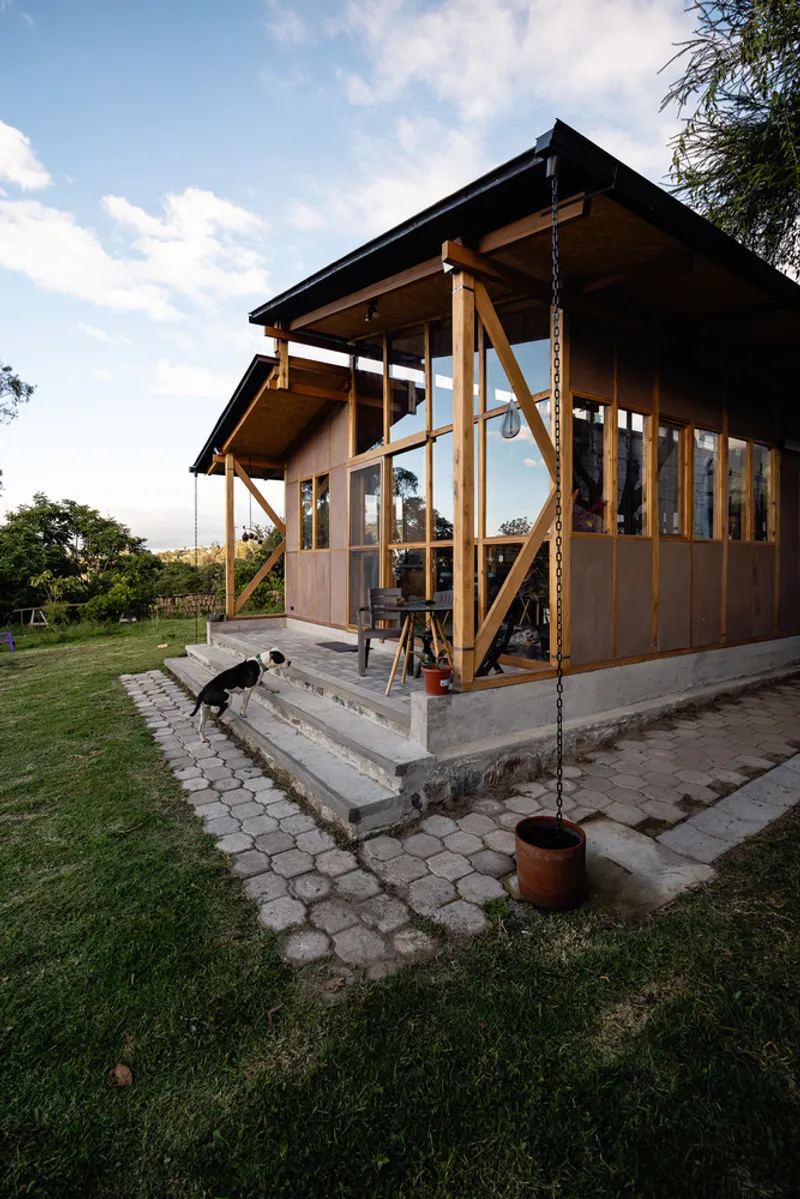
Inside the original volume, the spatial layout was carefully reconfigured to enhance comfort and functionality. The single existing bathroom was transformed into two complete bathrooms, significantly improving daily living conditions without increasing the building footprint. The final composition reads as an elongated volume, where the distinction between old and new remains deliberately visible.
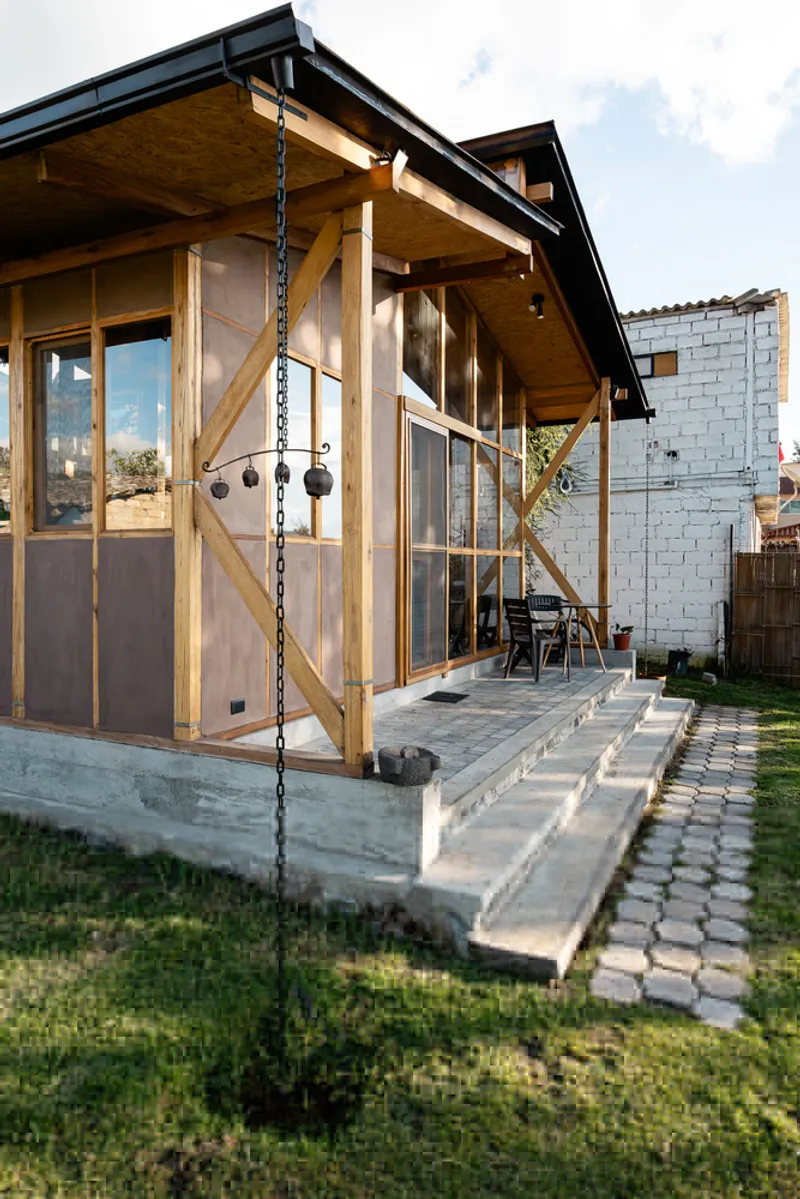
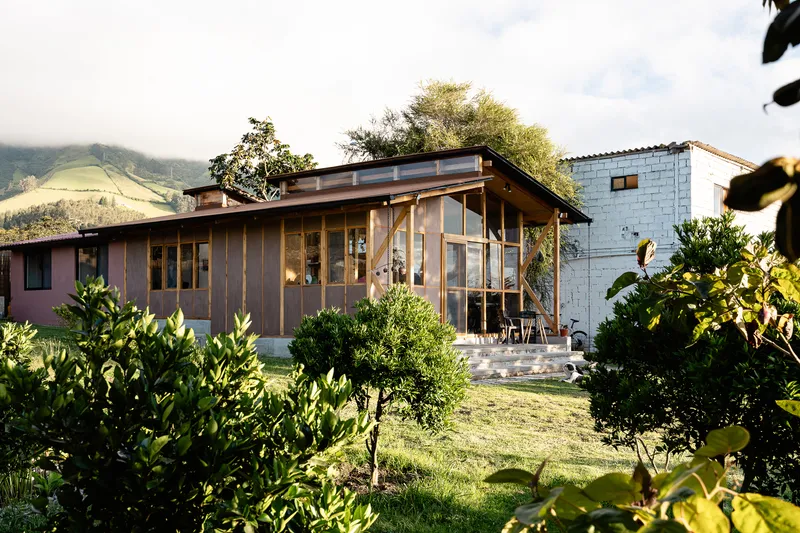
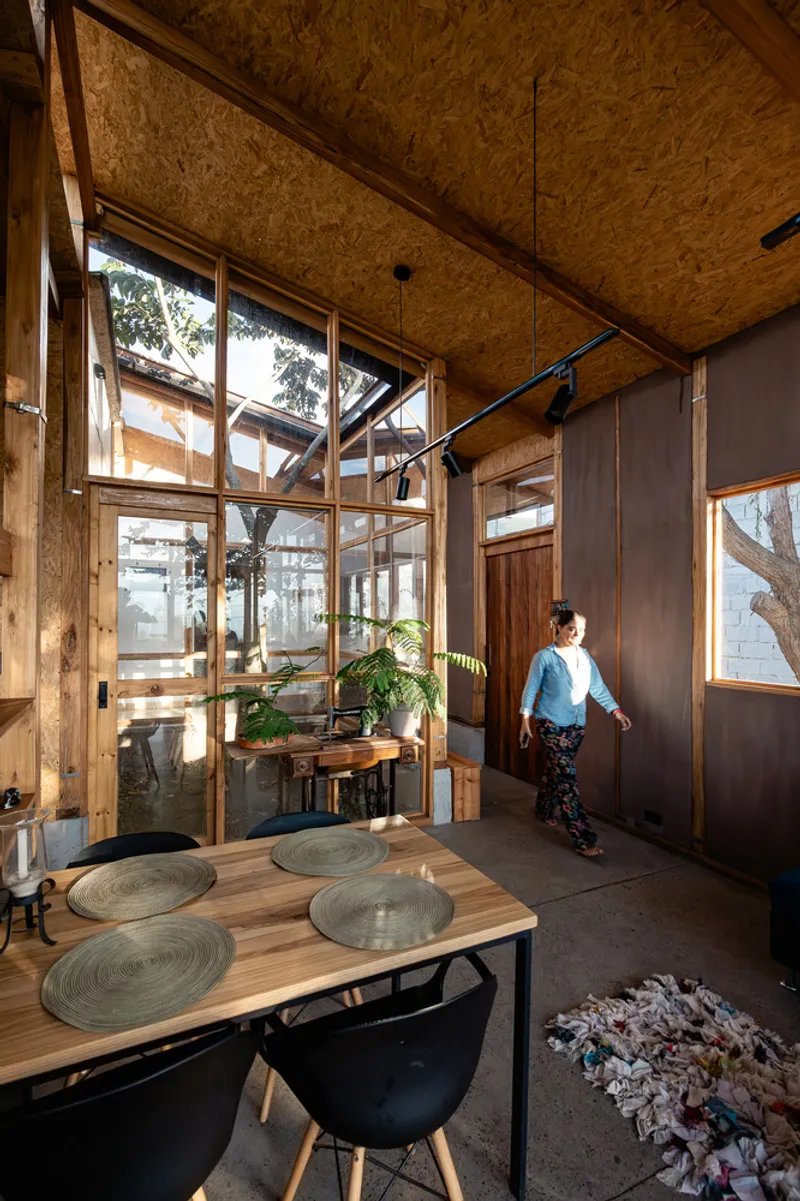
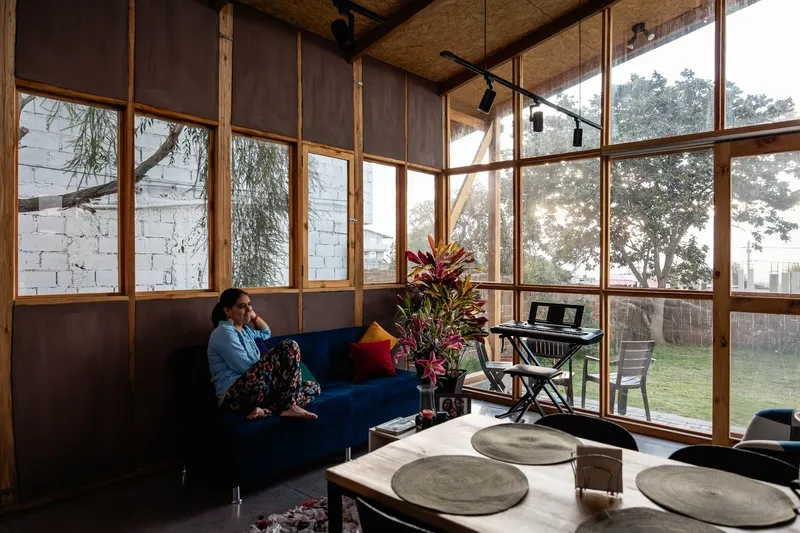
Material contrast plays a central role in shaping the interior atmosphere. The original areas, once dominated by white, enclosed surfaces, now dialogue with the expansion’s reddish-brown tones, earth walls, exposed eucalyptus structure, and warm wooden finishes. Together, these elements create a space that feels lofty, tactile, and grounded, despite its compact scale.
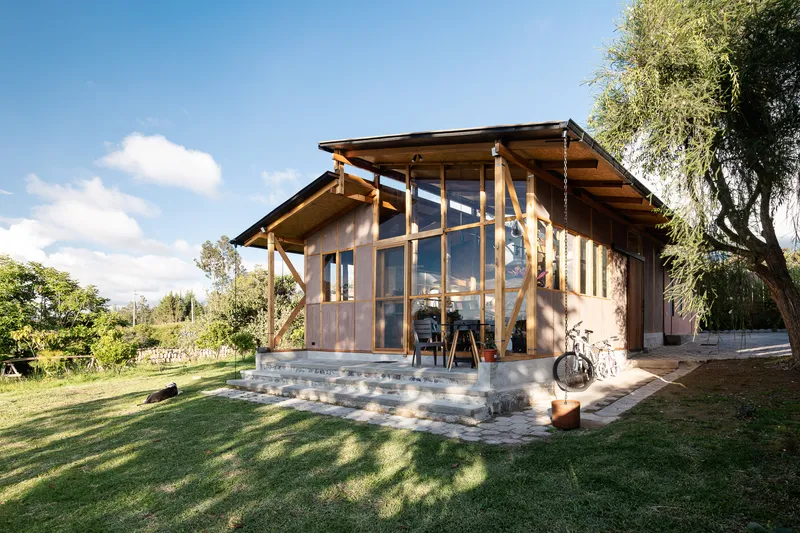
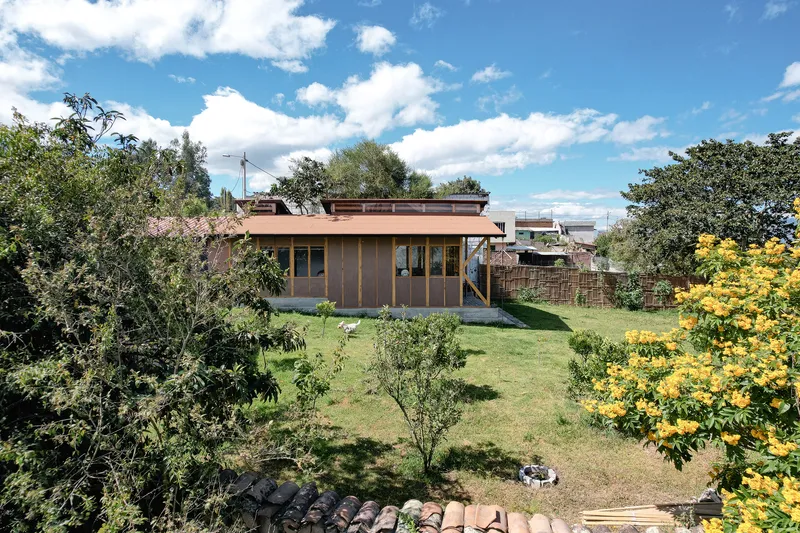
Orientation further enriches the spatial experience. During sunset, sunlight enters almost horizontally through the large screen, illuminating the internal courtyard and casting the guabo tree’s shadows across the earthen surfaces. This daily ritual reinforces the project’s connection to time, climate, and nature, key themes in Guabo House’s architectural identity.
All photographs are works of Punto Dos




Popular Articles
Popular articles from the community


Riyadh For All: Intergenerational Urban Design for Active Aging in Rabat
Riyadh For All reimagines urban design in Rabat with intergenerational co-living, adaptive courtyards, and Moroccan cultural exchange today.

Conexión: Biophilic Design Reimagines High-Rise Living in Hong Kong
Conexión reimagines high-rise living in Hong Kong through biophilic design, green facades, shared spaces, daylight, water and nature within.
EW PARK: Sustainable Architecture Reimagines the Future of Urban Parking
EW PARK reimagines city parking as a modular wooden tower combining automation, solar energy, electric mobility, and adaptable urban design.

Co-Life: Senior Housing Design That Reconnects Older Adults With the City
Co-Life reimagines senior housing design through healing gardens, shared streets, workshops, and a sustainable community across generations.


Similar Reads
You might also enjoy these articles


Hodi-Mandai Geram
Project Function: Preservation and revitalization of the Intangible heritage and socio-spatial identity of the Hodi by Housing, Cultural Memory Center, Sacred Grove, landscape, local tourism economy


Olio Towers: A Mid-Rise for Performers That Fuses Housing, Rehearsal, and Stage
Located blocks from Houston's Theater District, this modular tower stacks living units around a central performance atrium.

Oasis: Modular Green Housing Carved into Dhaka's Urban Fabric
A shortlisted Plugin Housing entry reclaims unauthorized settlements in Dhaka with stepped concrete volumes, green roofs, and ventilation-driven design.

Black Hole: A Floating Megastructure for the Post-Physical Era
Emiliano Mazzarotto envisions a spherical, self-scaling arena where e-sports, digital hotels, and holographic stadiums replace traditional public space.


Explore Housing Competitions
Discover active competitions in this discipline



Challenge to reimagine the Iron Throne


Photograph architecture without architects


Illustrate the lost glory of Angkor Wat - Render Challenge


Design challenge to reuse E-waste
Comments (0)
Please login or sign up to add comments
No comments yet. Be the first to comment!