
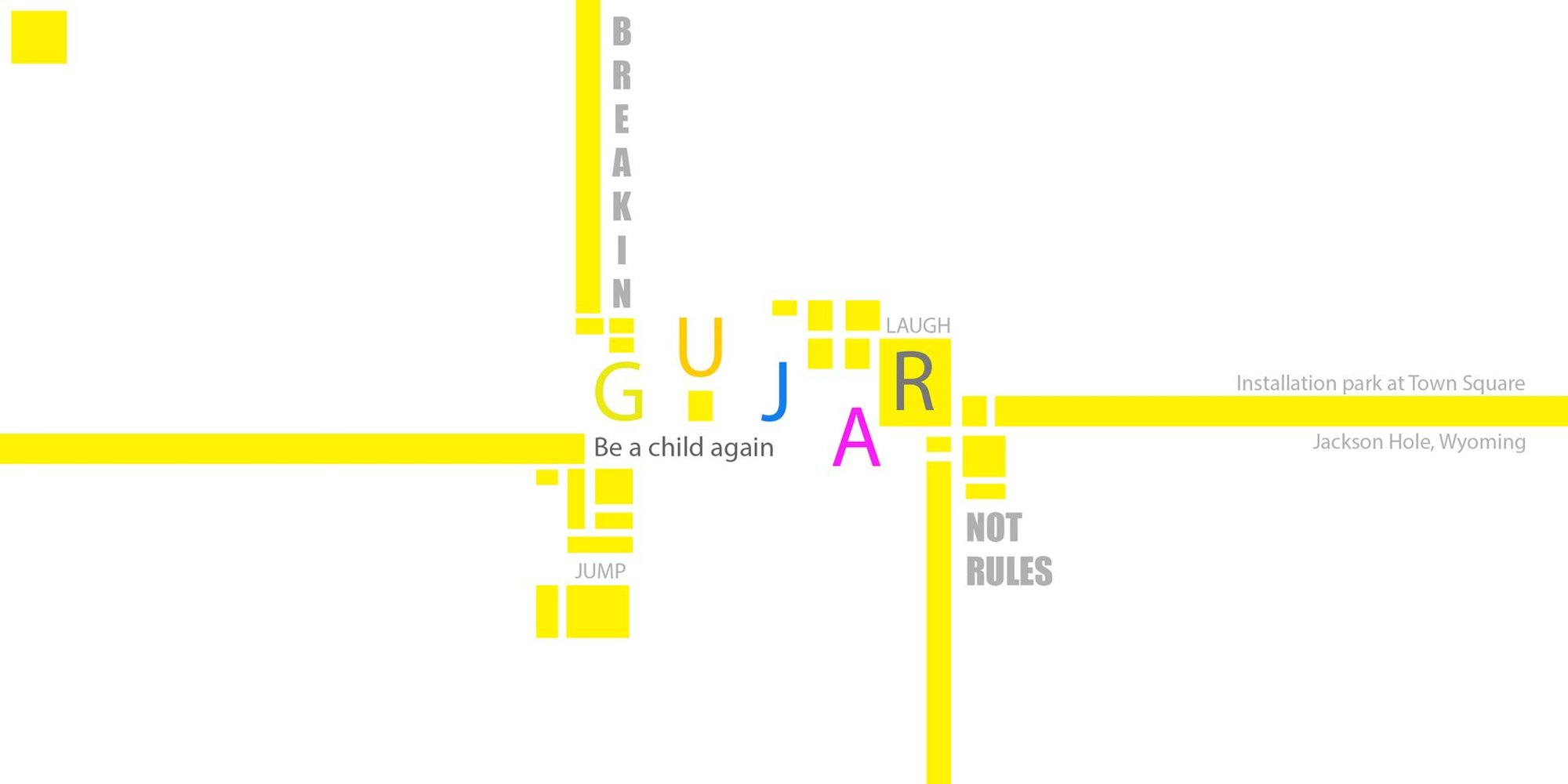
GUJAR: Turning Jackson Hole's Town Square into a Year-Round Playground
A modular timber installation with woven antler arches transforms a small-town park into a four-season stage for community life.

Jackson Hole's Town Square is one of those rare civic spaces that punches well above its size. Framed by storefronts and anchored by its iconic elk antler arches, the park in downtown Wyoming functions as living room, concert venue, and tourist landmark all at once. But the square is small, and its infrastructure hasn't kept pace with the demands placed on it. GUJAR proposes a fix that is both structurally modest and spatially generous: a series of terraced timber platforms and a woven antler gateway that extend the park's usable surface, turning flat ground into layered, inhabitable terrain.
Designed by Fernando Jáuregui and shortlisted in the Urbanscape: Symbiosis competition, GUJAR takes its cues from the park's existing character rather than overwriting it. The material palette stays close to what Jackson Hole already knows: wood decking, natural stone, and the distinctive lattice of antler forms that define the town's visual identity. What the project adds is a topographic strategy, lifting the ground plane into stepped terraces that create seating, stages, and gathering zones without consuming additional footprint.
An Antler Arch as Threshold
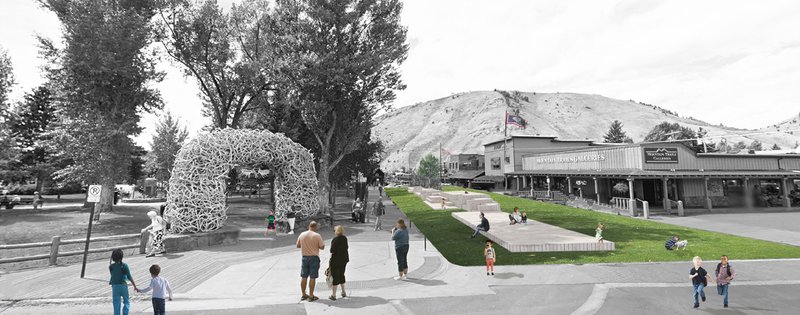
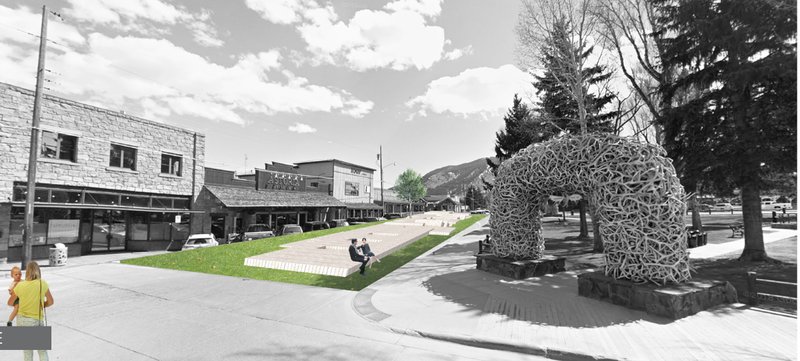
The most immediately legible move in GUJAR is the woven antler arch that marks the entry to the raised lawn plaza. It reads as both sculpture and gateway, drawing on the existing antler arches at the square's corners but scaling the motif into something more architectural. The lattice screen filters light and frames views of the storefronts beyond, creating a moment of transition between sidewalk and park. Visitors on the elevated green promenade sit beneath and beside this structure, using its edges as informal backrests.
The rendering shows the arch anchoring one end of the raised platform, with a continuous grass surface stretching out behind it. Pedestrians move through and around it naturally, which is a good sign for any public installation: it doesn't demand reverence, it invites occupation.
Terraced Ground: Seating, Stage, and Lawn in One Surface
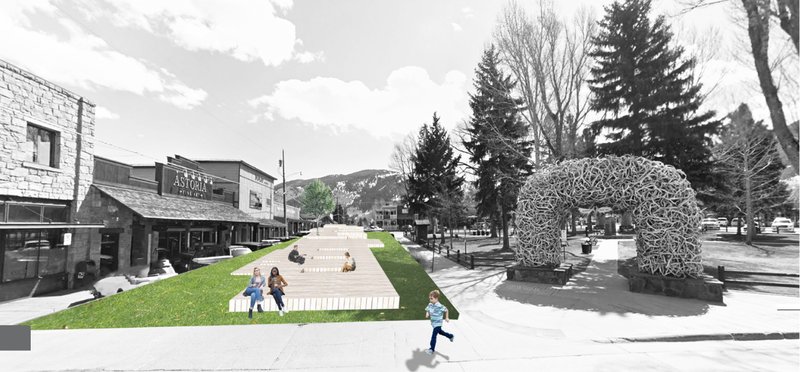

Pulled back to a longer view, the terraced lawn platform reveals its logic. The installation lifts a section of the park into a gentle topography of steps, creating seating edges where people can rest beneath the bare winter trees. The timber decking meets the grass surface cleanly, and the stepped profile provides the kind of casual amphitheater seating that small-town squares rarely have but desperately need. A vertical collage of details, including a bronze statue, the woven antler screen, and triangular pennants strung across the wood decking, hints at how GUJAR layers existing park artifacts with new interventions.
A Stage for Every Season
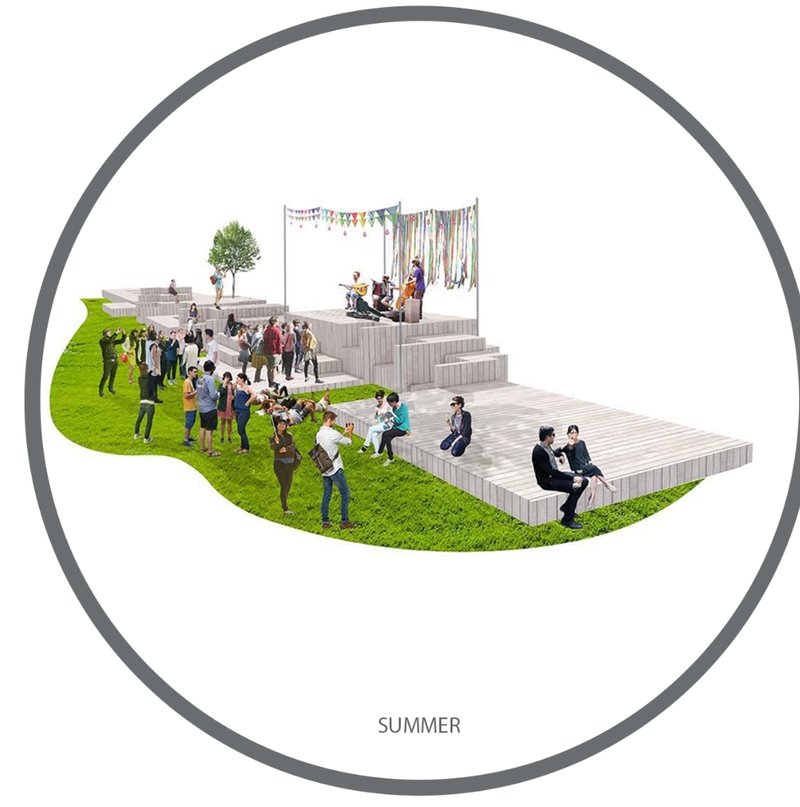
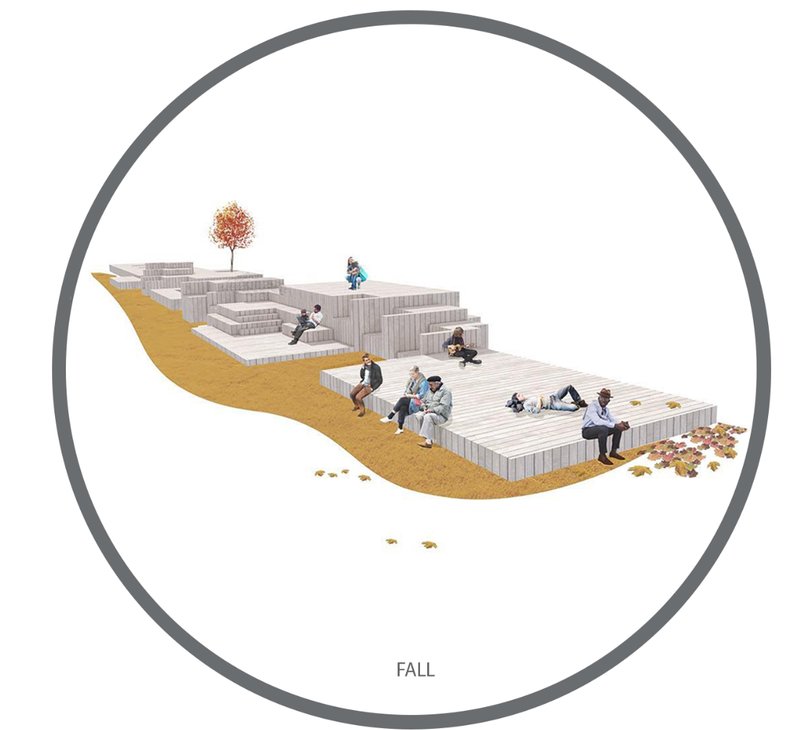
The strongest argument GUJAR makes is seasonal. Two renderings show the same tiered seating and stage area in summer and autumn. In the summer scene, people gather around a performance on the stepped platform, the space functioning as a compact outdoor theater. In autumn, the mood shifts: leaves scatter across the timber, visitors sit in smaller clusters, and the structure absorbs a quieter mode of public life. The same geometry serves both conditions without modification, which is the hallmark of good civic infrastructure.
Seasonal versatility is often claimed but rarely demonstrated this directly. By placing the same viewpoint in two seasons side by side, Jáuregui makes the case that GUJAR isn't a summer amenity with off-season dead zones; it's a year-round surface that accepts whatever activity the community brings to it.
Winter Snow and Spring Bloom on the Timber Steps
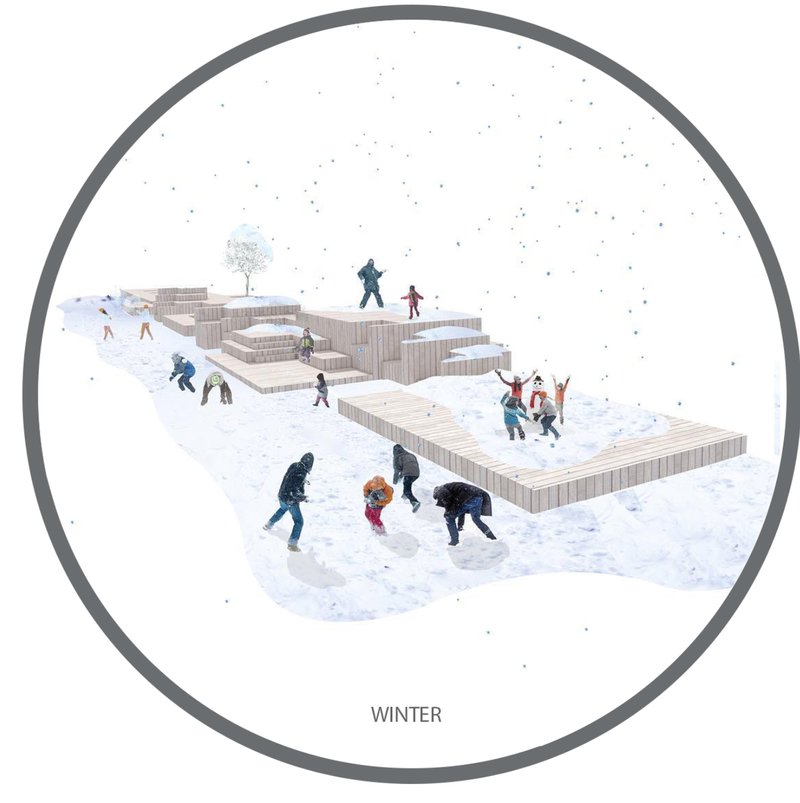
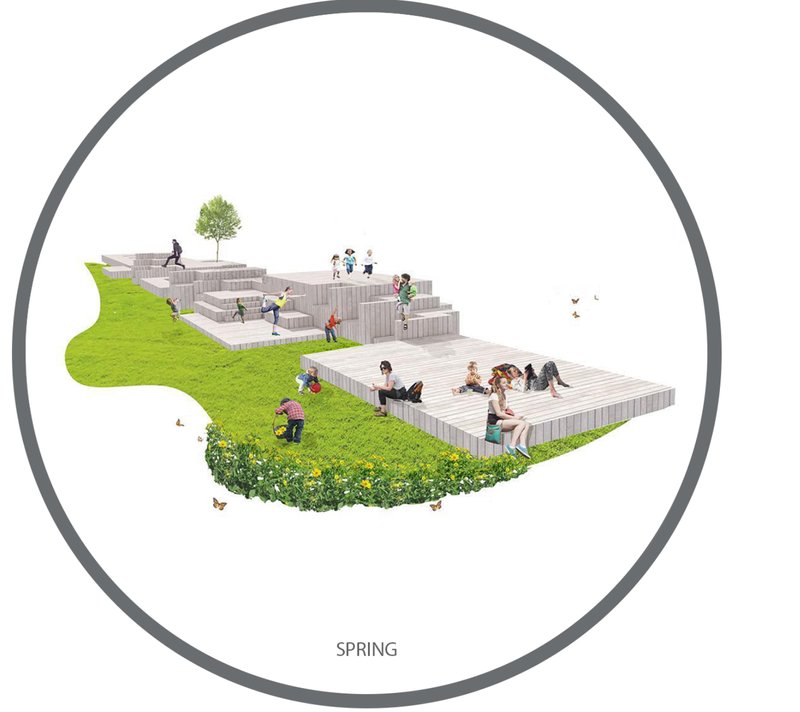
Two axonometric renderings complete the seasonal cycle. In winter, the timber stepped terraces sit within a snowy landscape, their warm wood tones contrasting sharply with the white ground. People still use the steps, bundled up but present. In spring, the same terraces are bordered by flowering plants and green lawn, with visitors spread across the surfaces in a looser, more relaxed pattern. The axonometric view is useful here because it exposes the full geometry of the installation: the interlocking platforms, the relationship between raised decking and ground-level paths, and the way the terraces create micro-spaces within the larger park.
The use of eco-friendly materials and the deliberate integration with the park's existing landscape reinforce a sustainability agenda without turning it into the project's headline. The wood is the primary structural and surface material, and the planting strategy works with seasonal change rather than against it. GUJAR treats the park not as a blank canvas but as a living system that needs a few well-placed prosthetics to reach its potential.
Why This Project Matters
Small-town squares face a particular design challenge: they must serve an outsized number of functions within a constrained footprint, often without the budgets or political appetite for permanent construction. GUJAR responds to this condition with a modular, material-honest strategy that adds capacity without overwhelming the existing park. The terraced timber platforms give Jackson Hole a stage, a seating area, and a lawn extension in a single move, while the woven antler arch provides a landmark scaled to the town rather than to a skyline.
What sets Jáuregui's proposal apart within the Urbanscape: Symbiosis brief is its insistence on play as a legitimate program for public space. The design philosophy of encouraging visitors to "play like a kid" could easily tip into sentimentality, but the architectural execution keeps it grounded. The steps are real steps, the stage is a real stage, and the seasonal adaptability is demonstrated rather than asserted. GUJAR makes the case that extending a park's physical boundaries can also extend its social ones.
View the Full Project
About the Designers
Designer: Fernando Jáuregui
Enter a Design Competition on uni.xyz
uni.xyz runs architecture and design competitions year-round that reward proposals with spatial conviction and real site intelligence.
Project credits: GUJAR, by Fernando Jáuregui Urbanscape: Symbiosis (uni.xyz).




Popular Articles
Popular articles from the community

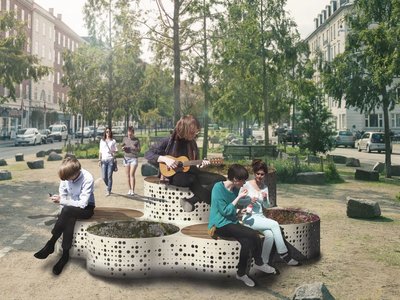
20 Most Popular Furniture Design Projects of 2025
Modular street systems, parametric benches, and insect hotels: the furniture design projects that captivated architects on uni.xyz in 2025.

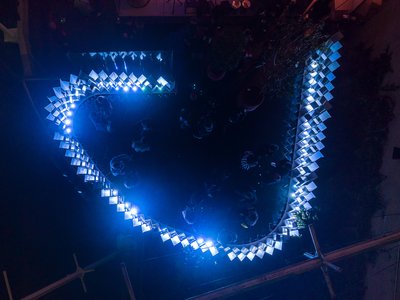
Rojkind Arquitectos and Think Parametric Build a Glueless Pavilion from 67 Interlocking Panels
A serpentine fiber-cement installation in Chapultepec Park celebrates a decade of architectural media in Mexico City.
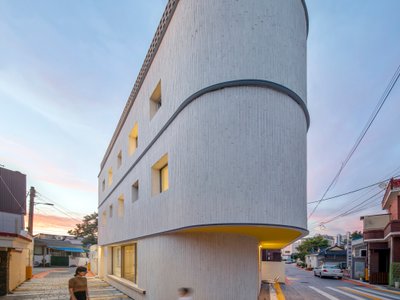
YOAP Architects Round a Corner in Yeongcheon with a Cylindrical Community Hub
A 197-square-meter brick and ribbed-clad tower turns a forgotten alley corner in South Korea into a public garden with a low threshold.
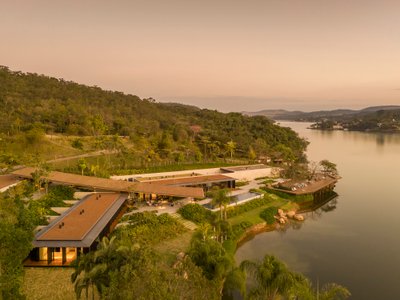
Bernardes Arquitetura Stretches a Timber Roof Along a Reservoir's Edge in Minas Gerais
Dam House in Itaúna lets a sweeping wooden canopy dissolve the boundary between hillside terrain and open water.


Similar Reads
You might also enjoy these articles

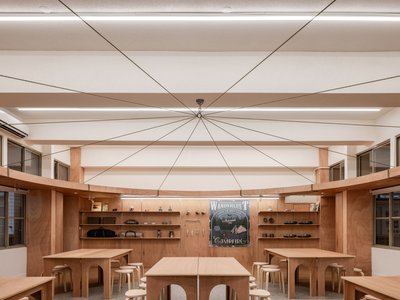
317studio Turns an 87 m² Classroom into a Forest Clearing for Scouts in New Taipei City
A rope canopy, student-made specimens, and campfire geometry replace rows of desks in this Scouting classroom in Xizhi District.
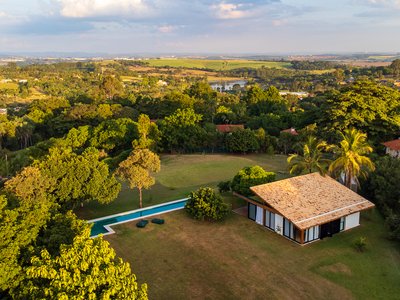
24 7 Arquitetura Builds a Timber Pavilion as a Family's First Act on a 5,000 m² Brazilian Plot
In Jaguariúna, a prefabricated glulam house nestles among mature trees as the opening move of a larger residential masterplan.
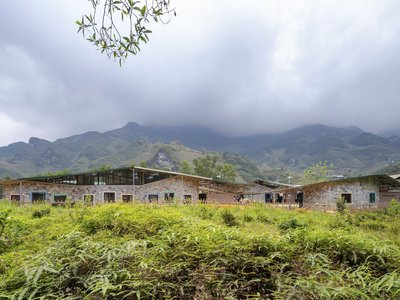
1+1>2 Architects Build a School from 900 Blocks of Hmong Stone on Vietnam's Rocky Plateau
On a barren valley in Ha Giang province, a community quarried its own stone to raise a kindergarten and primary school rooted in Hmong identity.
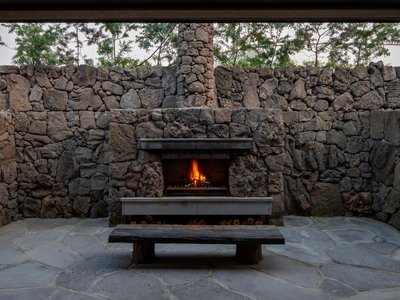
100A Associates Builds a Volcanic Stone Retreat on Jeju Island Rooted in Ritual and Restraint
Watarstay [Wa:Tar] in Bongseong-ri channels Jeju's basalt, reed, and hemp into a 150 m² hospitality space shaped by contemplation.


Explore Furniture Design Competitions
Discover active competitions in this discipline




The Global Benchmark for Architecture Dissertation Awards


Challenge to merge furniture with learning


Competition to design a workstation for architects
Comments (0)
Please login or sign up to add comments
No comments yet. Be the first to comment!