
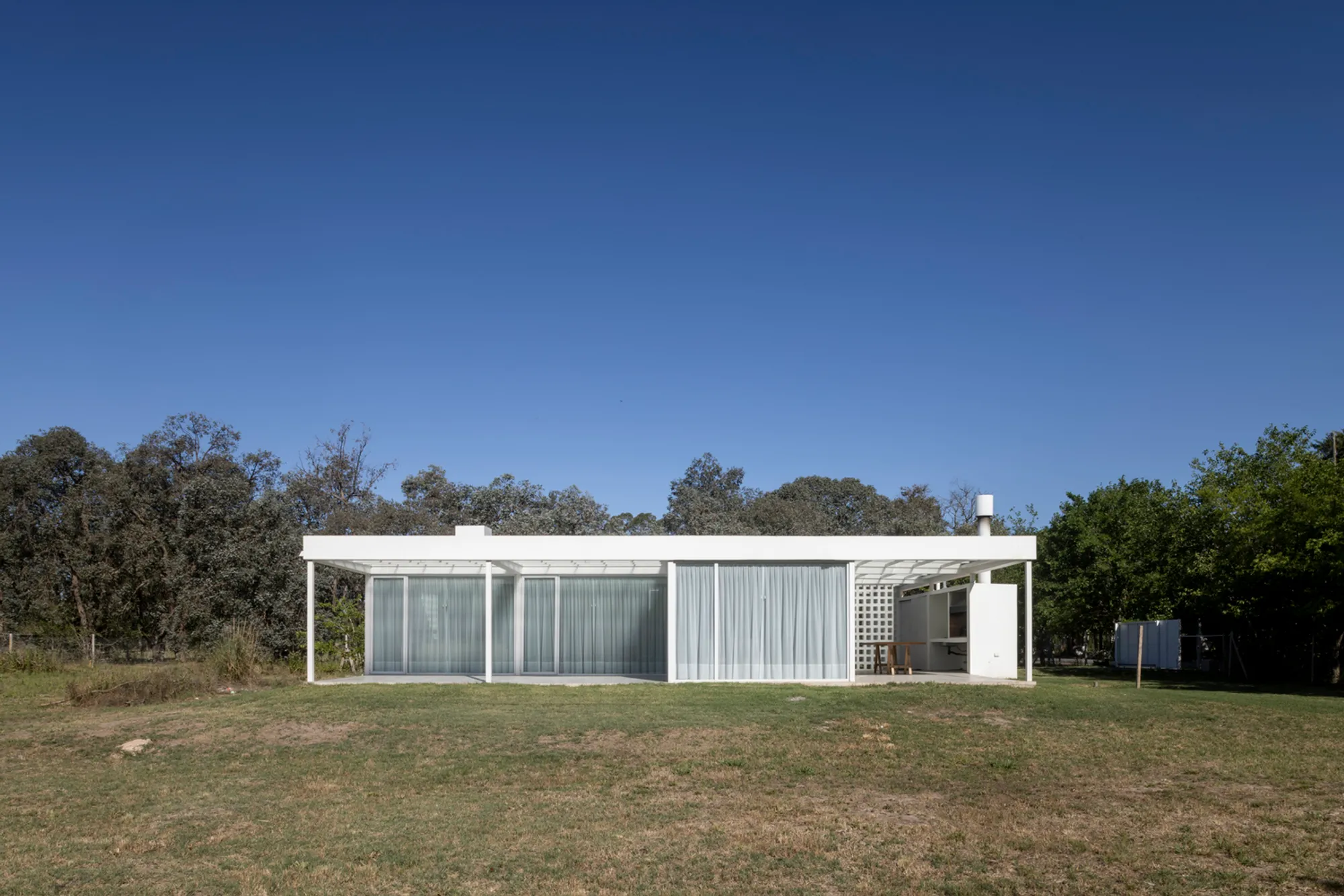
H-446 House by Parada Cantilo Estudio: A Contemporary Grid-Based Residence in City Bell, Argentina
A modular concrete home in Argentina blending grid geometry, natural materials, and flexible design for future adaptability and seamless landscape integration.


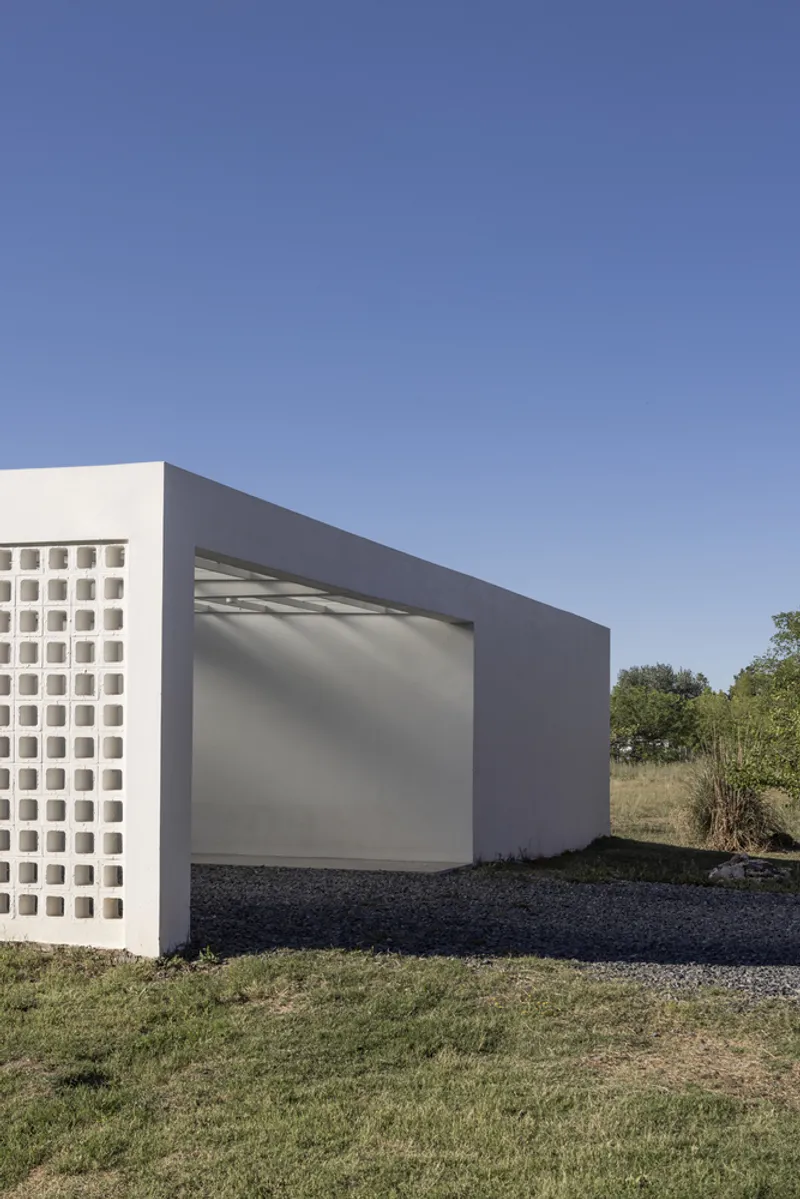
The H-446 House by Parada Cantilo Estudio is a refined example of contemporary residential architecture that balances geometric precision, spatial flexibility, and material clarity. Located in City Bell within the quiet neighborhood of Las Banderitas, this single-family home is thoughtfully designed to respond to both present living needs and future land subdivision possibilities.
Architectural Concept and Site Strategy
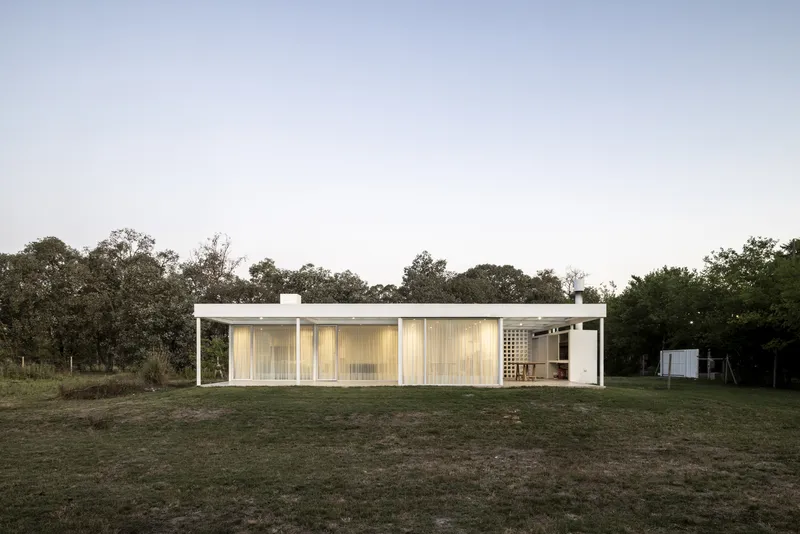
Set on a generous family-owned plot, the project embraces long-term adaptability as a key design driver. The architects envisioned a compact, square-proportioned structure that could function independently even if the land were subdivided in the future. This forward-thinking approach highlights sustainable urban planning principles and reinforces the value of flexible residential design.
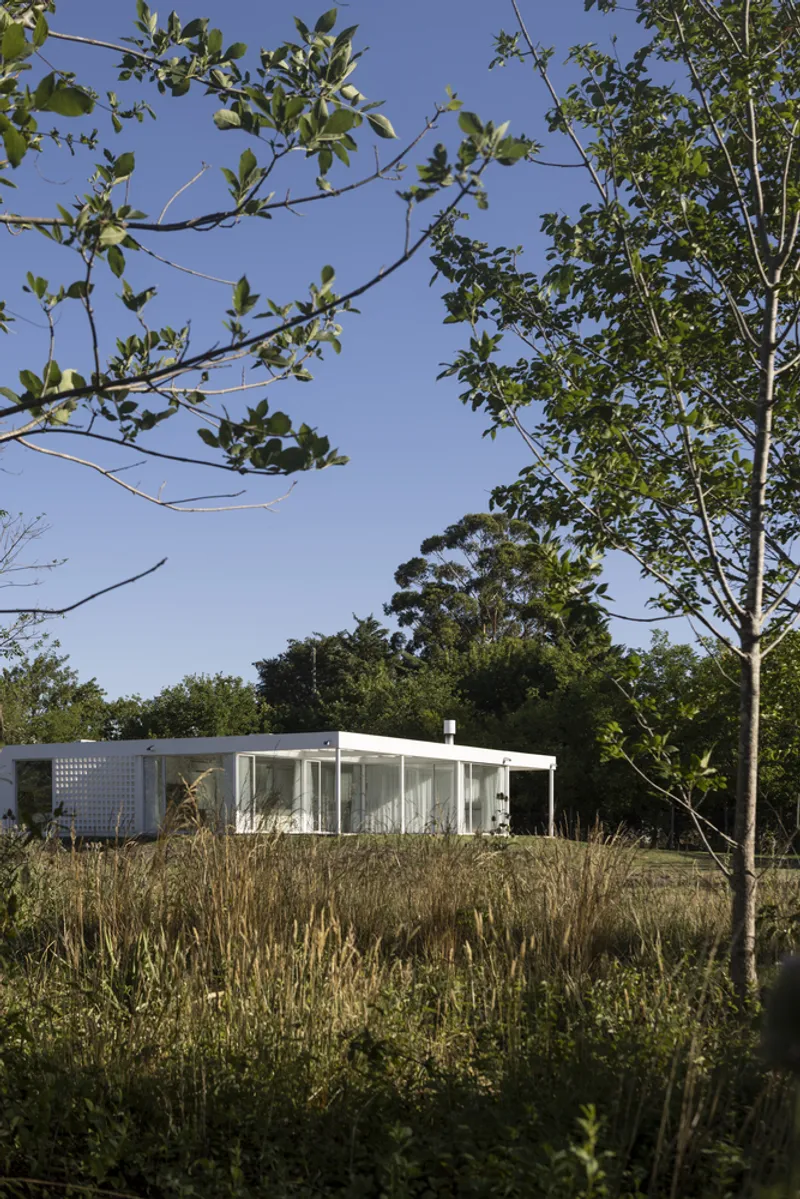
The house’s geometry responds directly to the depth of the site, ensuring optimal land use while maintaining architectural coherence. Its centralized footprint allows the surrounding landscape to remain open, creating a seamless connection between built form and nature.
Modular Grid System and Structural Innovation
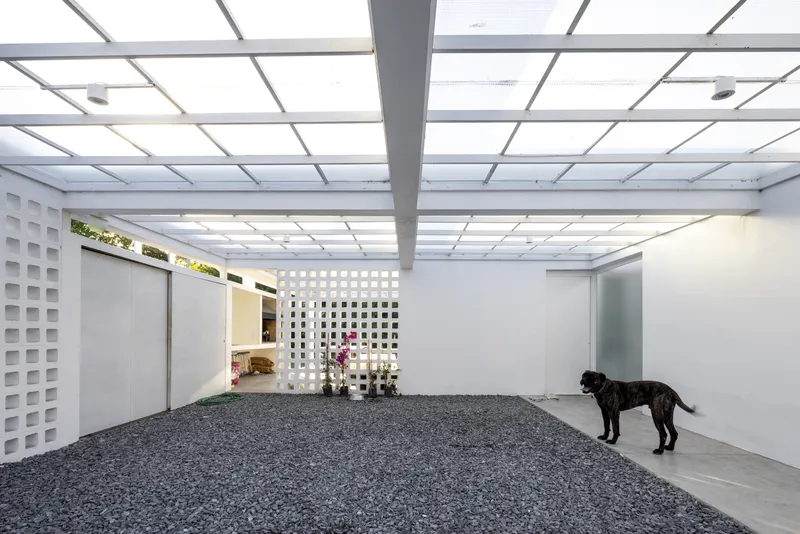
At the core of the H-446 House lies a rigorous modular grid system composed of sixteen equal units, each measuring 3.60 x 3.60 meters. This grid defines the entire architectural language of the house, creating a sense of order, rhythm, and structural clarity.
The use of inverted beams is a distinctive structural feature, forming a unified overhead framework that consolidates the house into a single architectural volume. This system not only enhances spatial continuity but also allows for flexible interior configurations, making the home adaptable to evolving user needs.
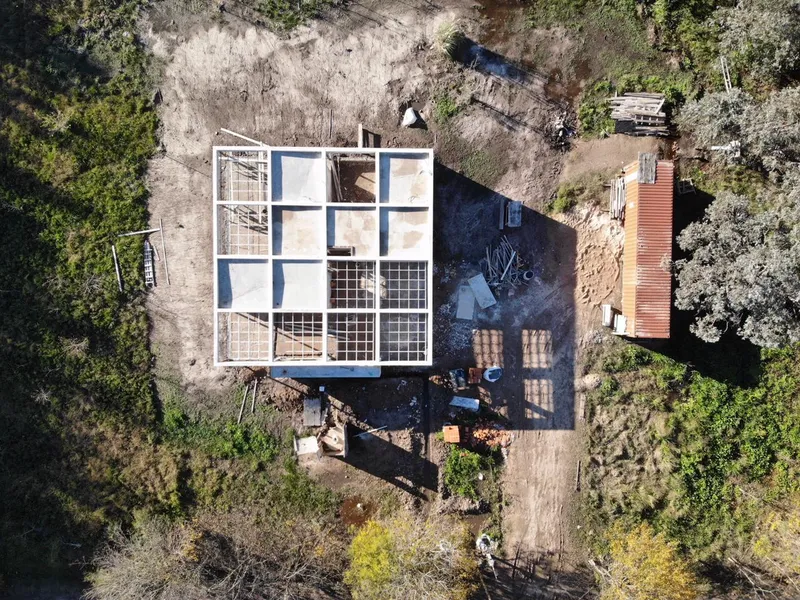
Spatial Organization and Functional Layout
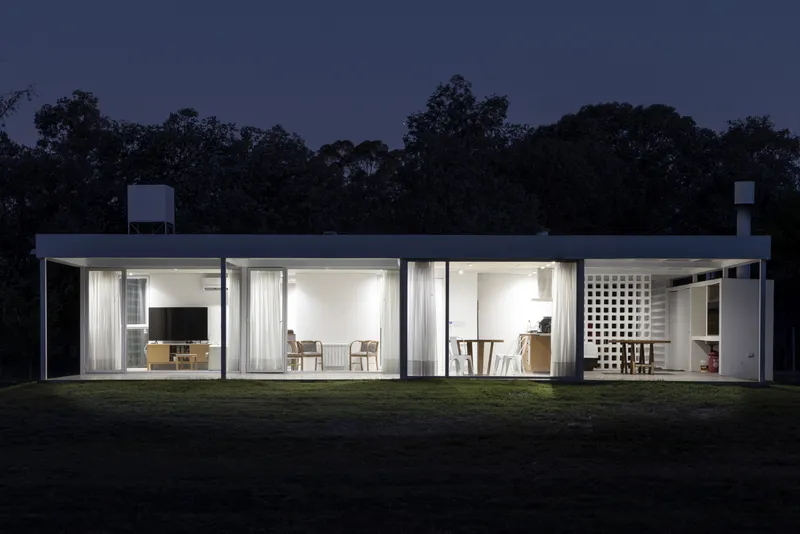
The internal layout is carefully organized according to orientation, ensuring optimal natural light, ventilation, and thermal comfort. Each functional zone: living, dining, and private areas, is positioned based on environmental conditions, reinforcing passive design strategies.
The modular approach enables a fluid distribution of spaces, where boundaries are subtle and transitions are seamless. This openness enhances spatial perception, making the home feel expansive despite its relatively compact built area of 1120 ft².
Material Palette and Interior Expression
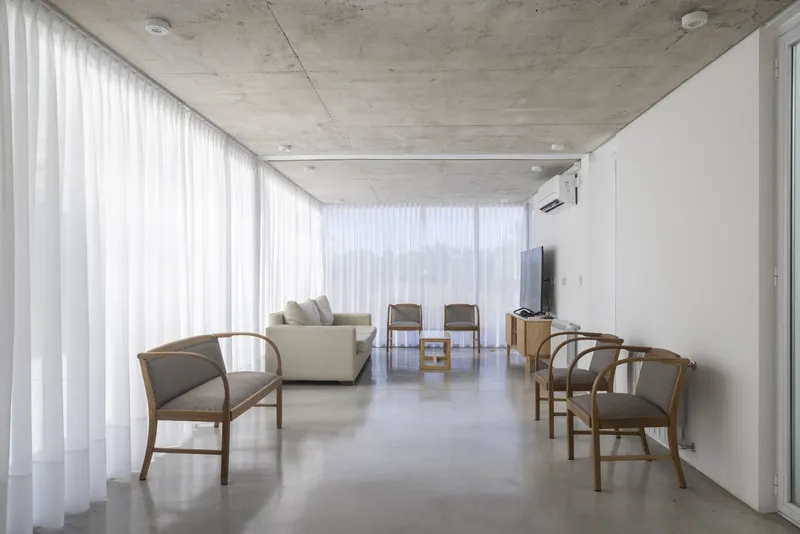
The materiality of the H-446 House plays a crucial role in shaping its identity. Four primary elements define the interior atmosphere:
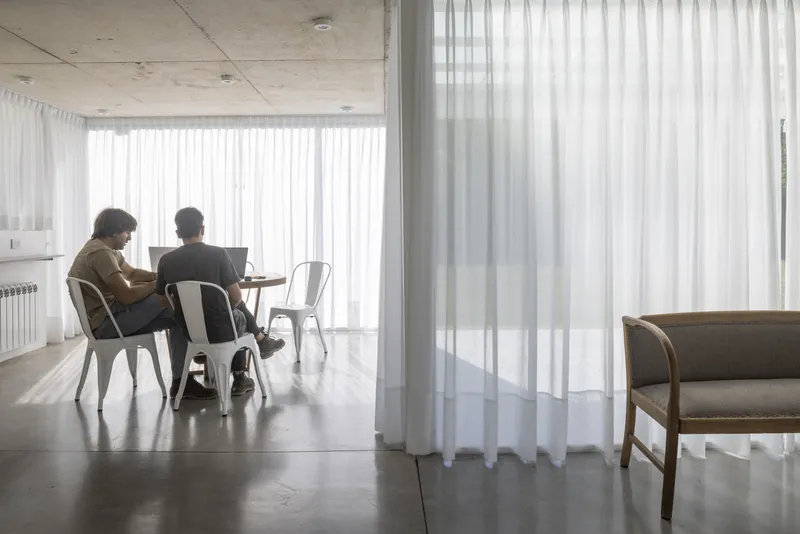
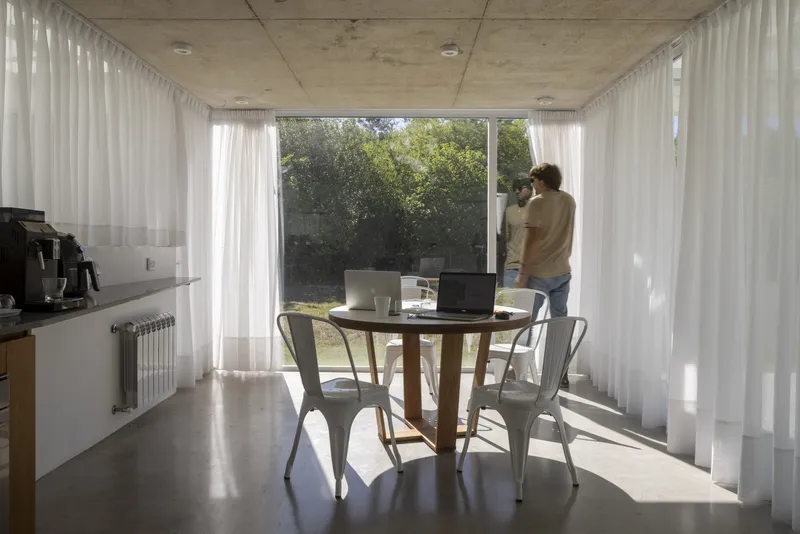
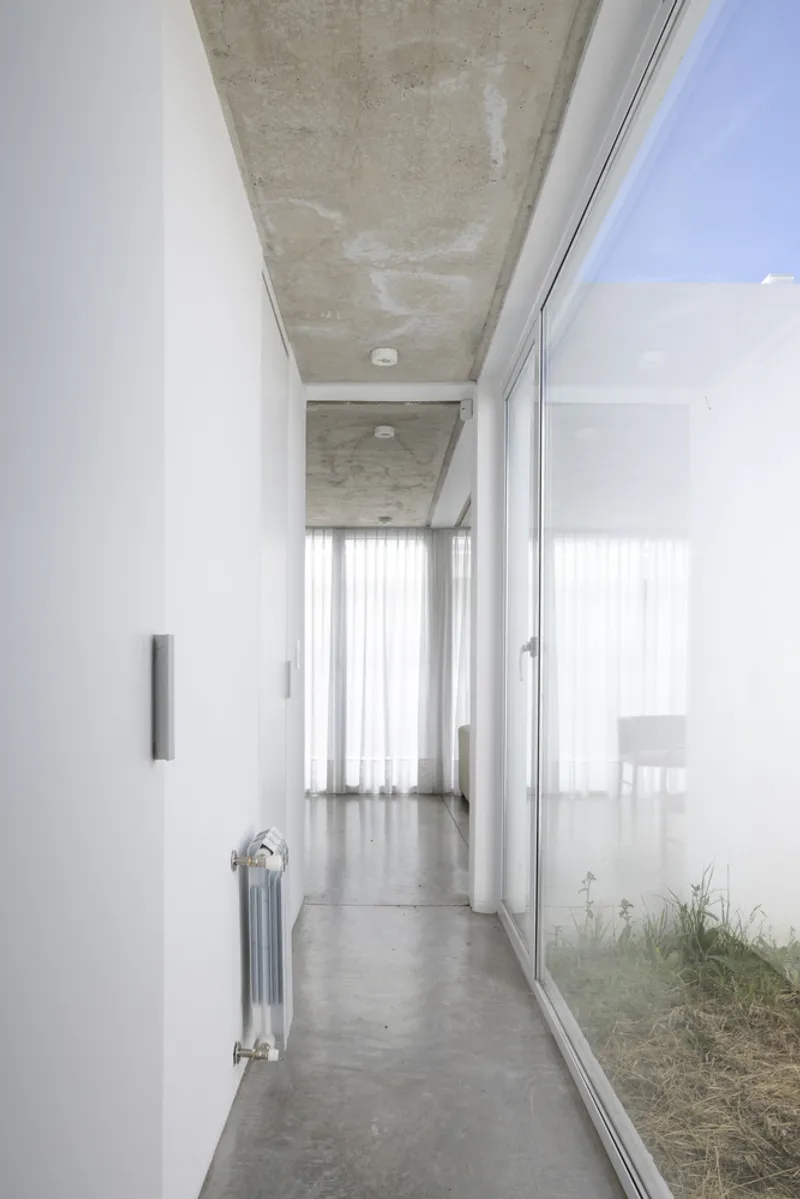
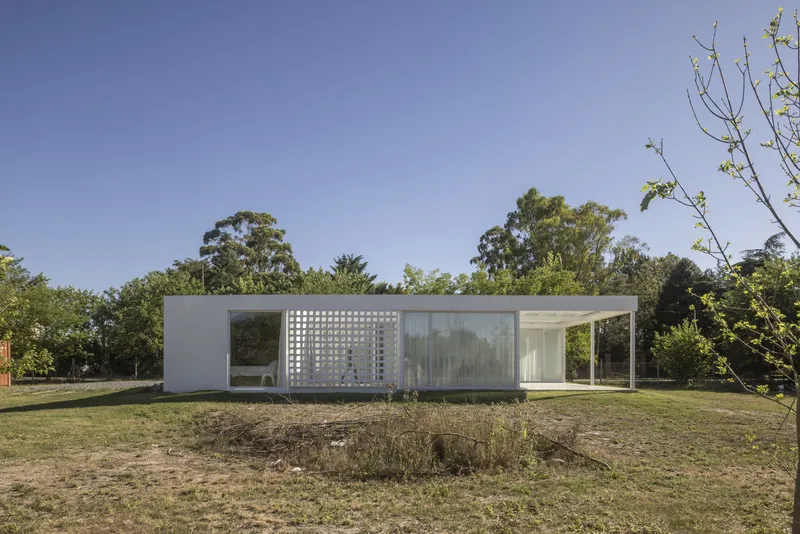
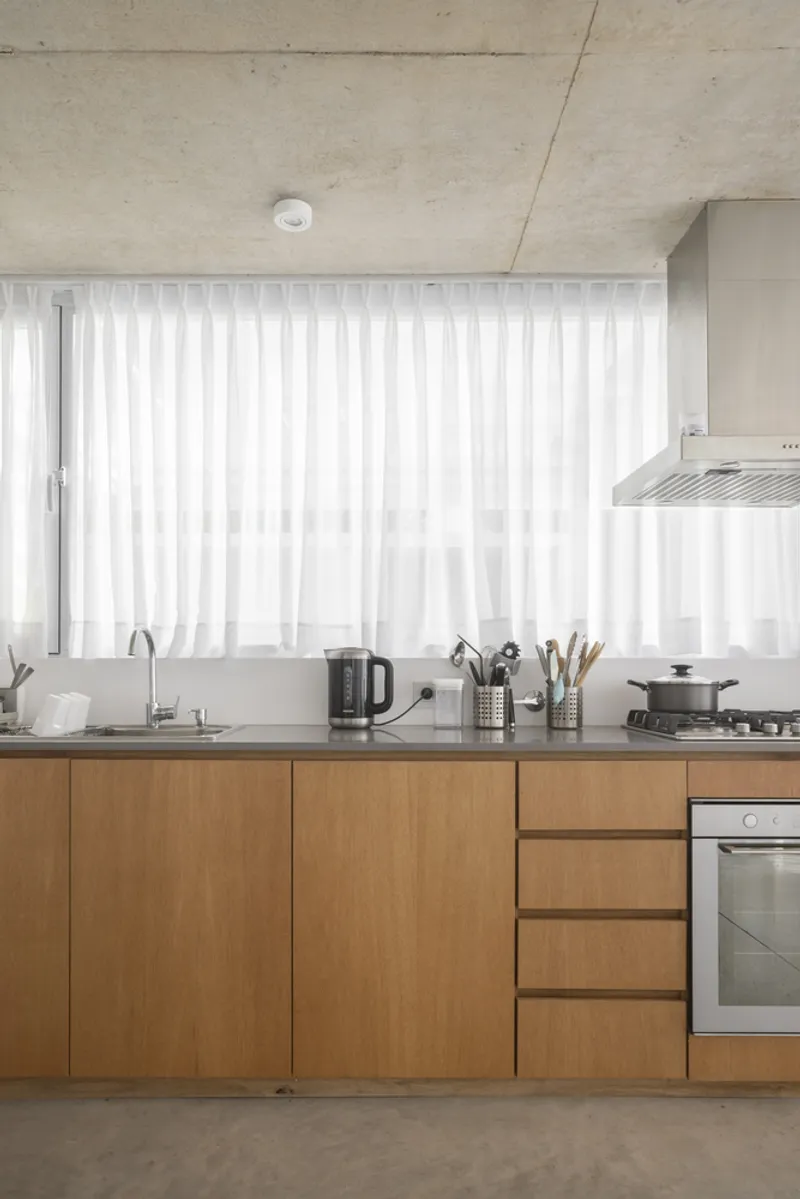
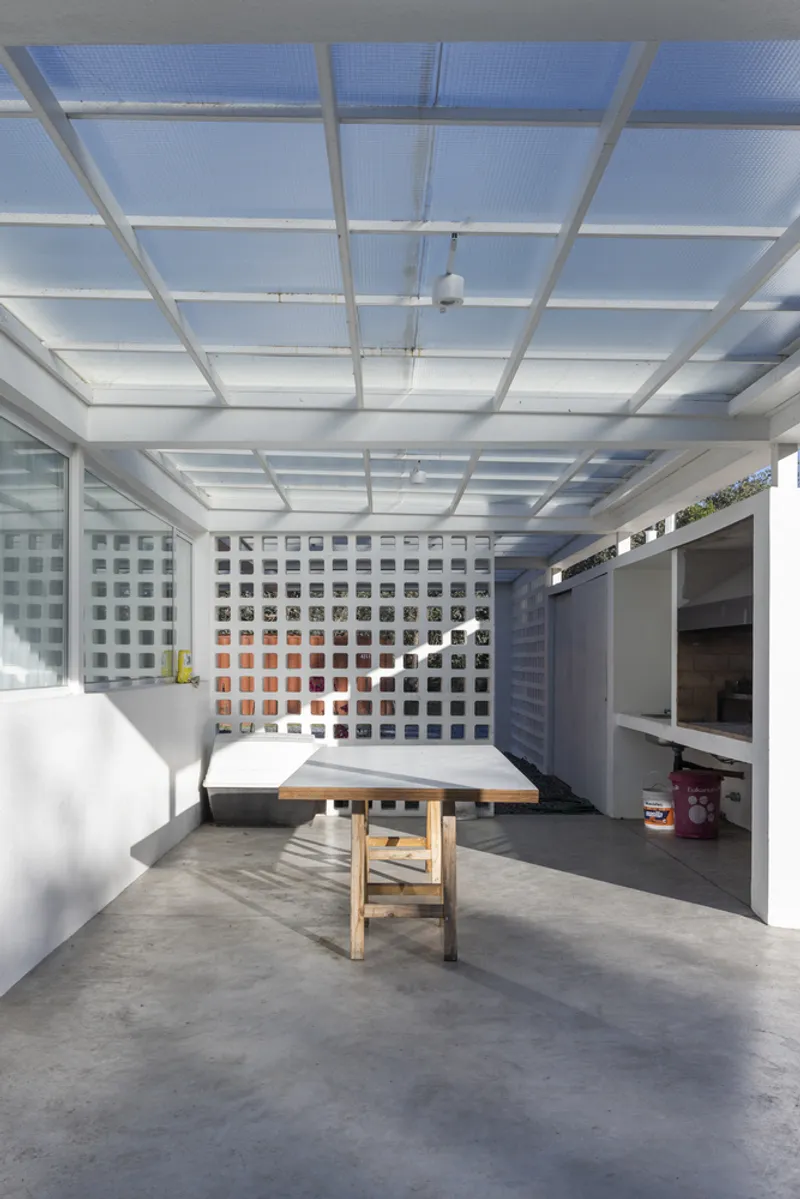
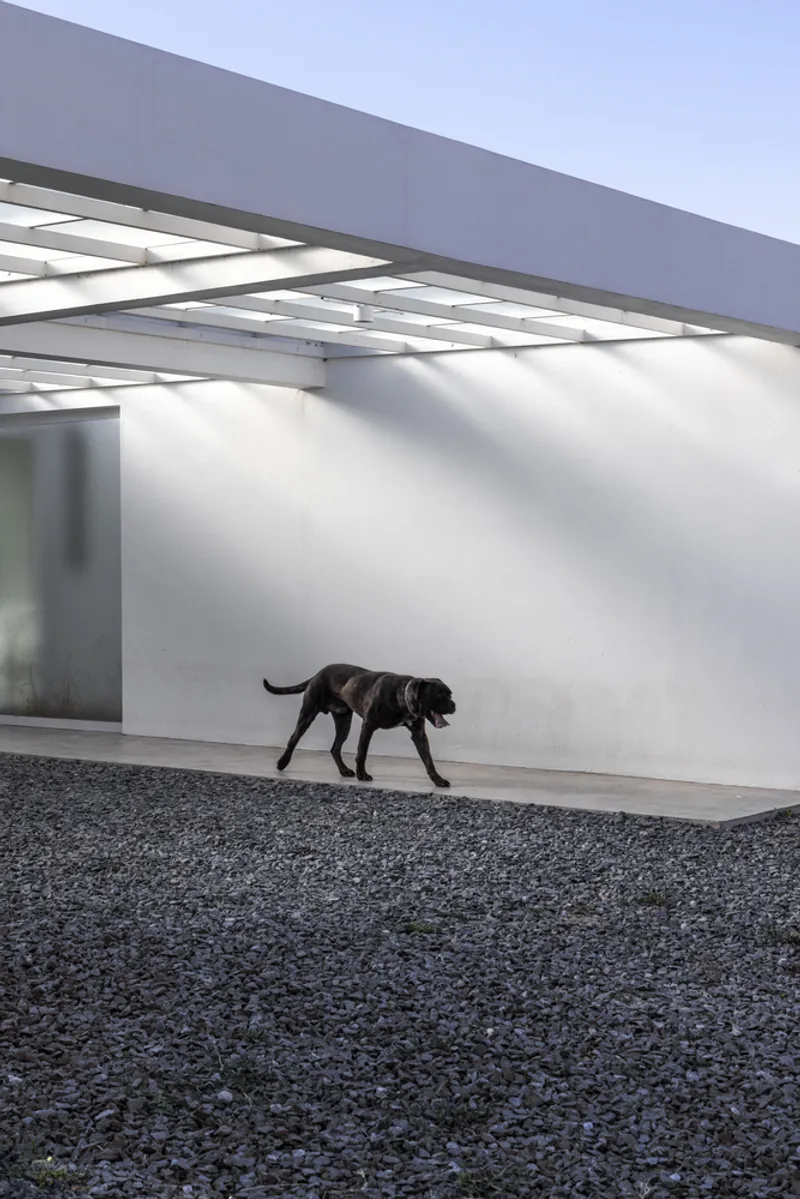
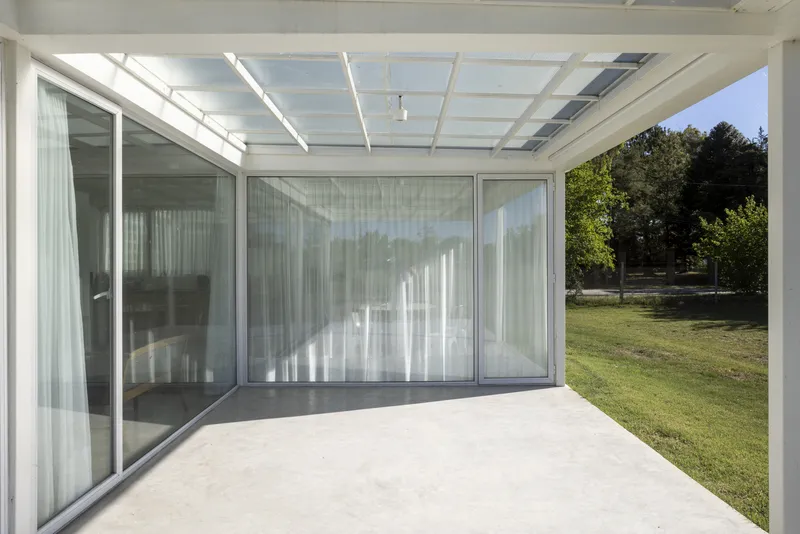
Concrete forms the horizontal planes, establishing a strong and durable foundation while emphasizing structural honesty. White surfaces articulate vertical boundaries and structural elements, creating a clean and minimalist aesthetic that contrasts with the surrounding greenery. Wood introduces warmth and tactile richness, particularly through custom furniture pieces that soften the overall composition. Glass dissolves the boundary between interior and exterior, allowing natural light to flood the spaces and visually extending the house into the landscape.
This restrained yet expressive palette reflects a contemporary architectural ethos rooted in simplicity, functionality, and sensory balance.
Indoor-Outdoor Integration
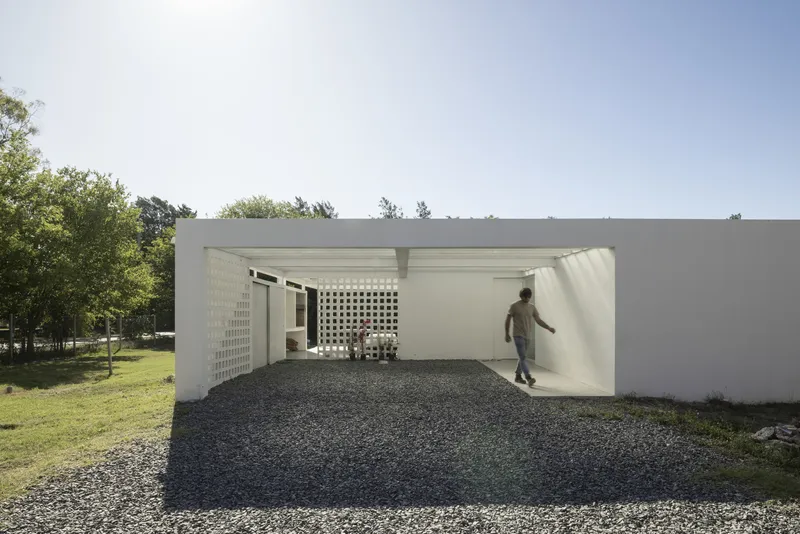
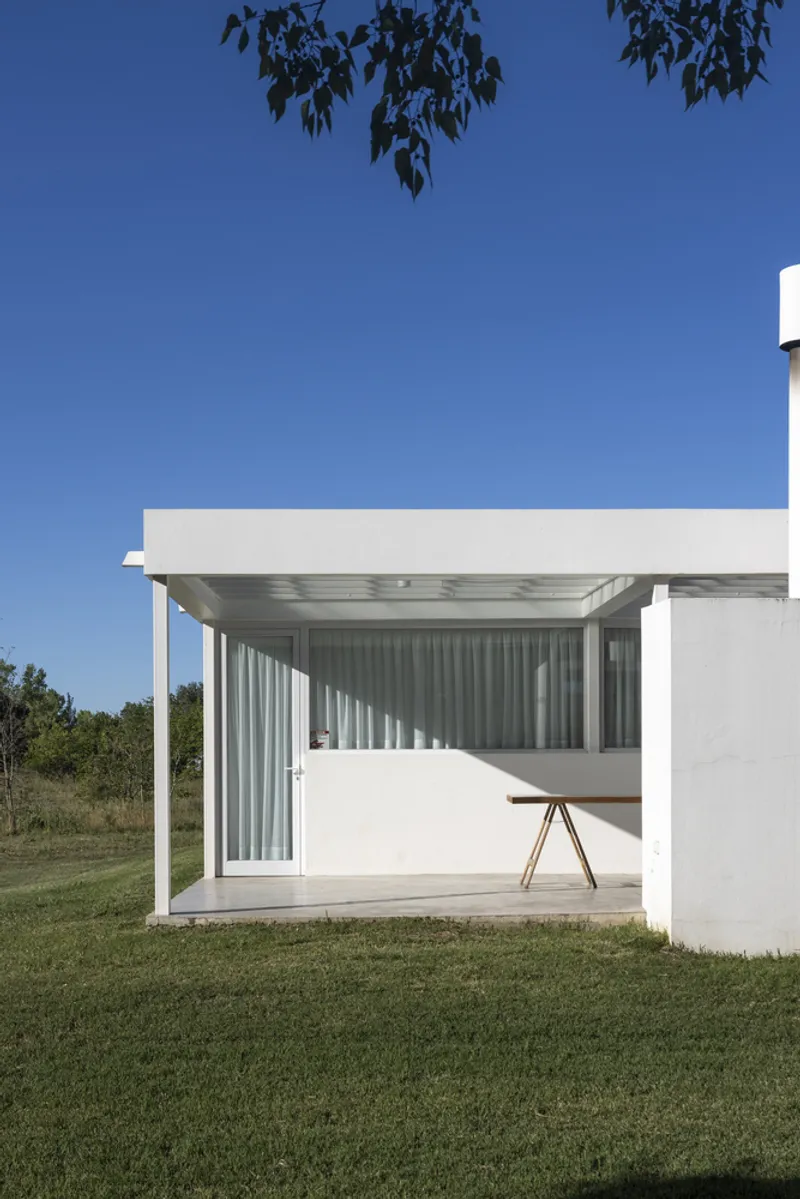
A key feature of the design is its seamless integration with the outdoors. Large glass openings eliminate visual barriers, fostering a continuous dialogue between interior spaces and the surrounding environment. This strategy enhances natural illumination and creates a living experience deeply connected to nature.
The elevated relationship between the house and its exterior further reinforces spatial fluidity, allowing outdoor areas to become an extension of daily life.
Contemporary Residential Architecture with Future Vision
The H-446 House stands as a compelling example of modern housing design that prioritizes adaptability, sustainability, and spatial efficiency. Through its modular grid, strategic orientation, and carefully curated material palette, the project achieves a harmonious balance between form, function, and environment.
This residence not only addresses current lifestyle requirements but also anticipates future transformations, making it a forward-looking model for contemporary residential architecture.
All photographs are works of
Luis Barandiarán



Popular Articles
Popular articles from the community


Play: Fragments of Their World
Familiar architecture becomes modular playground design, creating safe spaces where displaced children can learn, connect, imagine and play.

Hill & Cross Opera: Sculptural Opera House Architecture Shaped by Tallinn’s Landscape and Identity
Hill & Cross Opera reimagines opera house architecture in Tallinn through its sculptural hill, civic plaza, glass wave and a luminous cross.

Riyadh For All: Intergenerational Urban Design for Active Aging in Rabat
Riyadh For All reimagines urban design in Rabat with intergenerational co-living, adaptive courtyards, and Moroccan cultural exchange today.

Co-Life: Senior Housing Design That Reconnects Older Adults With the City
Co-Life reimagines senior housing design through healing gardens, shared streets, workshops, and a sustainable community across generations.

Similar Reads
You might also enjoy these articles

FAMM Arquitectura Organizes Ten Villas Around Courtyards and Jungle in Nosara, Costa Rica
El Molino pairs two elongated volumes with deep overhangs and timber louvers to build a compact coastal community five minutes from the beach.
Oscar Niemeyer's Ibirapuera Park Pavilions Define São Paulo's Cultural Identity in Concrete and Curve
A constellation of modernist volumes set within São Paulo's most important urban park, conceived for the city's 400th anniversary in 1954.
How Henri Picq's 1889 Paris Pavilion Traveled 11,000 Kilometers to Become Santiago's Artequín Museum
A prefabricated iron and glass pavilion built for the Paris Universal Exposition found a second life as a children's art museum in Chile.
Sanjay Puri Architects Wraps a Jaipur Office Tower in Capsule-Shaped Green Buffers
A nine-level climate-responsive workplace near Jaipur Airport uses stacked planter terraces and aluminium screens to fight 40°C heat.


Explore Architecture Competitions
Discover active competitions in this discipline



Challenge to reimagine the Iron Throne


Photograph architecture without architects


Illustrate the lost glory of Angkor Wat - Render Challenge


Design challenge to reuse E-waste
Comments (0)
Please login or sign up to add comments
No comments yet. Be the first to comment!