

Hannam 381 Mixed-Use by YKH Associates: A Sculptural Urban Landmark Overlooking the Han River
A sculptural mixed-use building with rhythmic triangular façades, crescent form, and integrated green spaces, maximizing views of the Han River and Namsan.


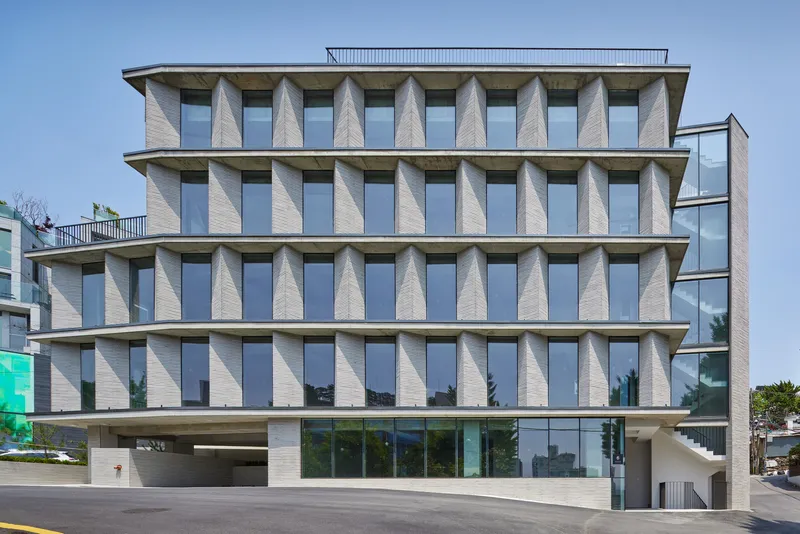
Hannam 381 Mixed-Use, designed by YKH Associates, redefines compact urban architecture at the northern entrance of Seoul’s Hannam Bridge. Completed in 2023 and spanning 218 m², this mixed-use building leverages its strategic location between the Han River and Namsan Mountain, offering expansive visual connections while embracing sustainability, spatial efficiency, and an expressive sculptural form. Through its distinctive façade system, layered massing, and integrated green spaces, the project demonstrates a sophisticated dialogue between architecture, movement, and the city’s dynamic landscape.
A Strategic Urban Placement with Panoramic Connectivity
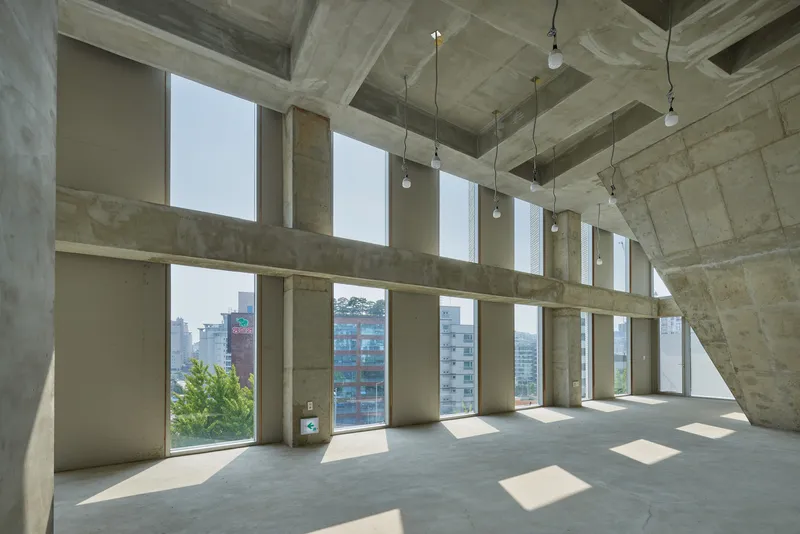
Situated in one of Seoul’s most visible and highly trafficked zones, the building responds to a narrow, elongated site with a design that maximizes urban visibility and natural views. Its southern façade frames the flowing Han River, while the northern elevation opens toward Namsan Mountain, creating a continuous visual corridor through the building's horizontal layers.
The project not only complies with rigorous Korean building codes but exceeds them, showcasing a thoughtful approach to safe and sustainable urban development. The resulting structure stands as an architectural marker, highly visible from passing traffic yet refined in its spatial organization.
Musical Inspiration: “Me & Variation” as Architectural Form
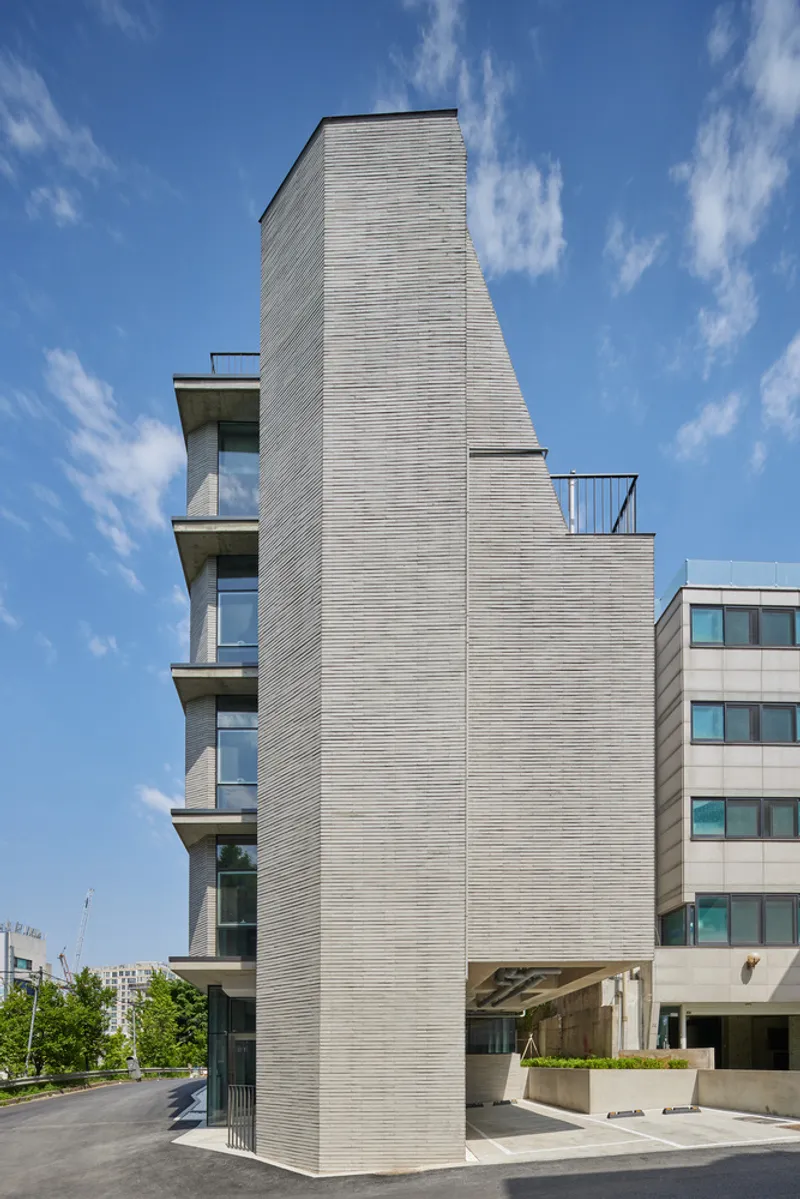
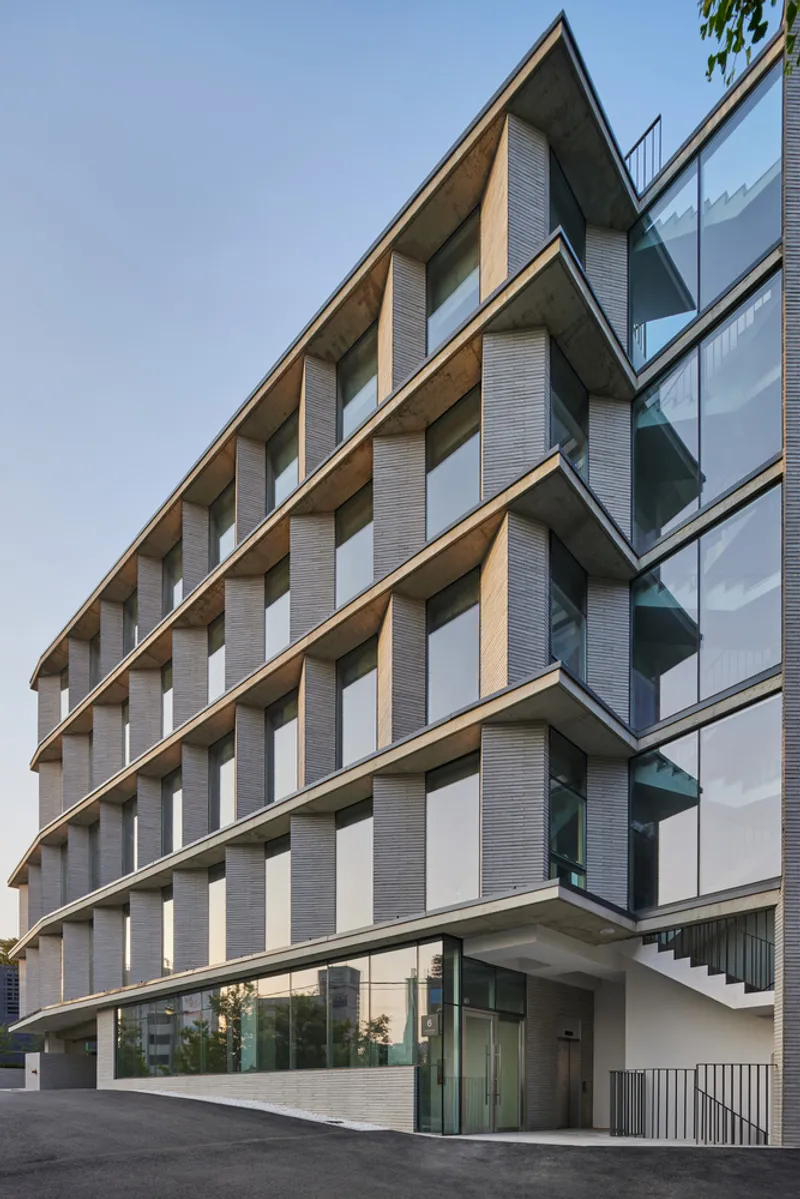
A central design intention stems from the musical concept of “me & variation,” translated architecturally as rhythmic repetitions and mirrored triangular volumes. These triangular solid masses appear at regular intervals across multiple floors, creating a visually dynamic façade that changes with each viewpoint.
- Triangular modules mirror across levels
- Solid and void interplay generates depth
- Landscape lighting accentuates the rhythmic pattern at night
- The façade evokes a “staccato” visual effect—crisp, bright, and expressive
This rhythmic repetition not only animates the exterior but also strengthens the building’s identity amid Seoul’s fast-paced urban flow.
A Crescent-Shaped Linear Form for Layered Transparency
Departing from conventional box-like mixed-use structures, Hannam 381 adopts a curved, crescent-shaped linear geometry, enabling a series of horizontal layers that enhance light and views. Instead of relying on a fully glazed façade, the architects developed a modular system of solid and transparent triangular elements that provide:
- Controlled transparency
- Reduced glare
- Enhanced thermal performance
- A cohesive but ever-changing visual rhythm
This composition reinforces the building’s sculptural presence while optimizing environmental performance.
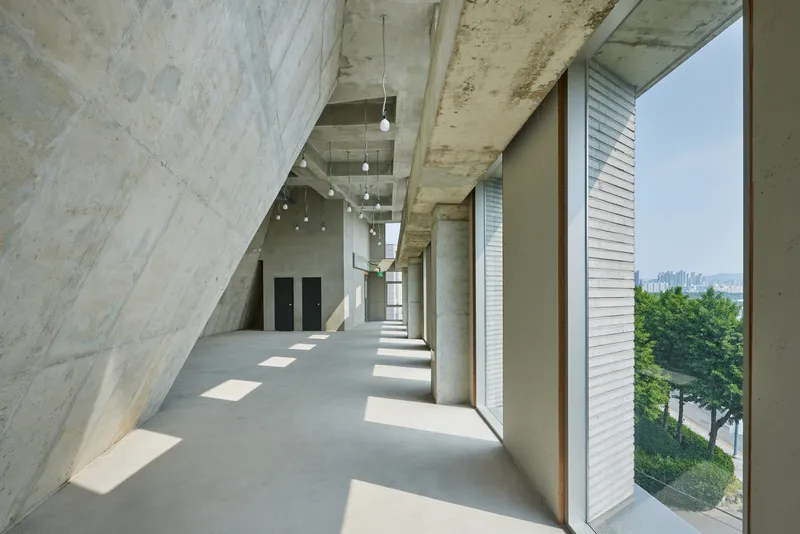
Green Spaces Integrated into Urban Density
Despite its compact footprint, the building introduces meaningful greenery as part of its architectural identity:
Rooftop Garden
A panoramic rooftop terrace provides residents or tenants with a calm refuge overlooking the Han River. It functions as both a communal space and an environmental buffer, mitigating heat gain and supporting passive cooling.
Sunken Garden
Below ground level, a sunken garden introduces filtered daylight, improved natural ventilation, and a secluded outdoor area for relaxation. This green void softens the concrete surroundings, enriching the spatial experience inside and out.
Together, these gardens demonstrate an intentional commitment to biophilic design within a dense urban setting.
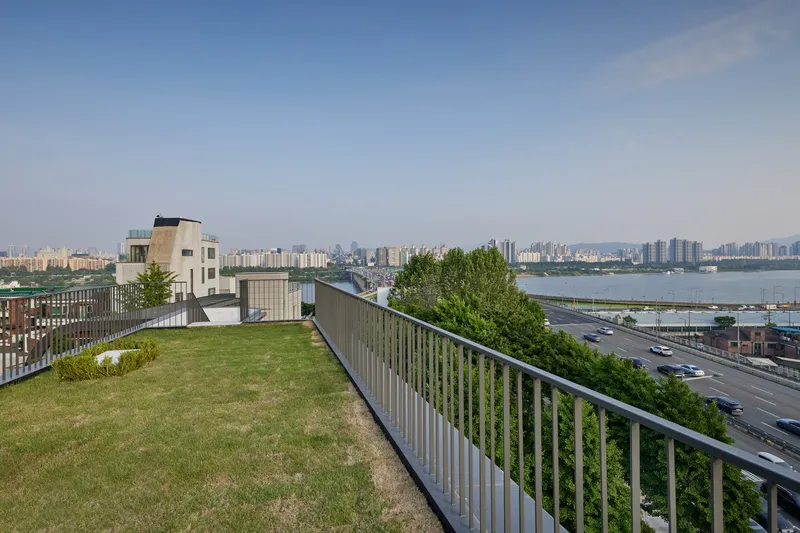
Sustainable Strategies Embedded in Design
Hannam 381 incorporates sustainability not as an afterthought but as a structural principle:
- Modular façade components balance daylight and shading
- Green roofs and sunken planting areas reduce the urban heat island effect
- Orientation-specific glazing and solids optimize daylighting
- Natural ventilation improves indoor comfort
Through these strategies, the building enhances long-term energy efficiency while fostering a healthier living and working environment.
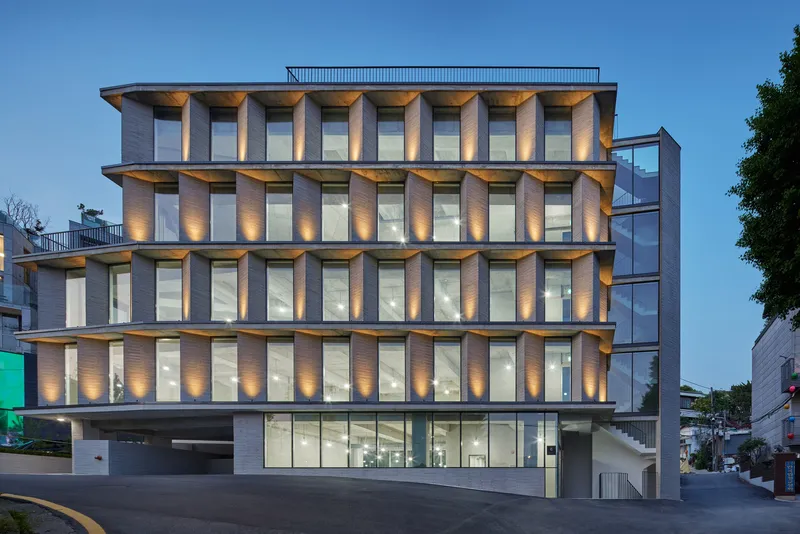
A Harmonious Convergence of Form, Light, and Nature
The project demonstrates how compact mixed-use architecture can achieve expressive form and high environmental performance. By combining rhythmic geometry, layered landscapes, and meticulous detailing, YKH Associates delivers a building that is both visually iconic and deeply connected to its context.
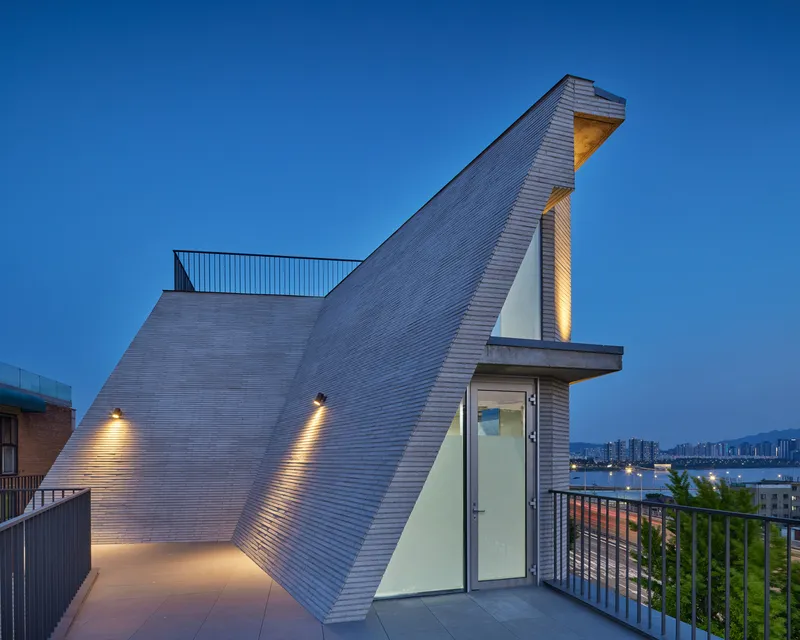
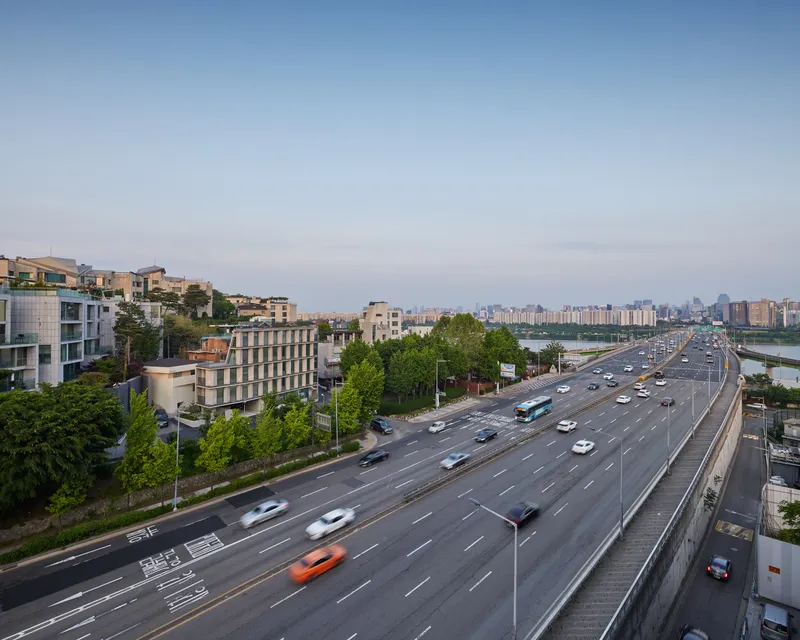
All photographs are works of Kyung Noh


Popular Articles
Popular articles from the community


Juan García Correa, John González and Claudia Rueda Sink a Circular Amphitheater into a Manizales Engineering Building
On the La Nubia campus in Manizales, Colombia, the S1 Building folds labs and offices into a hillside of ramped lawns that double as a campus route.

GROUP A Strips a 1969 Rotterdam Harbor Headquarters to Its Frame and Wraps It in Timber Louvers
In Rotterdam's M4H harbor district, Ferro Offices reuses a 1969 frame, adds one timber storey and reaches BREEAM-NL Outstanding.

David Macias Steps a Doorless Stone and Plaster House Down a Tropical Colombian Hillside
In the humid hills of Colombia, Threshold House replaces the front door with an open void and terraces its 850 m² down the slope instead of fighting it.

David Ortega Stacks a Two-Story Mexico City Penthouse Around a Steel Stair and a Pergola-Shaded Roof Terrace
In Colonia Roma, a 300 m² penthouse uses oak joinery, a planted steel stair and a slatted roof pergola to make a new-build apartment feel like a house.

Similar Reads
You might also enjoy these articles


Hodi-Mandai Geram
Project Function: Preservation and revitalization of the Intangible heritage and socio-spatial identity of the Hodi by Housing, Cultural Memory Center, Sacred Grove, landscape, local tourism economy


Olio Towers: A Mid-Rise for Performers That Fuses Housing, Rehearsal, and Stage
Located blocks from Houston's Theater District, this modular tower stacks living units around a central performance atrium.

Oasis: Modular Green Housing Carved into Dhaka's Urban Fabric
A shortlisted Plugin Housing entry reclaims unauthorized settlements in Dhaka with stepped concrete volumes, green roofs, and ventilation-driven design.

Black Hole: A Floating Megastructure for the Post-Physical Era
Emiliano Mazzarotto envisions a spherical, self-scaling arena where e-sports, digital hotels, and holographic stadiums replace traditional public space.

Explore Architecture Competitions
Discover active competitions in this discipline

Challenge to reimagine the Iron Throne

Photograph architecture without architects

Illustrate the lost glory of Angkor Wat - Render Challenge

Design challenge to reuse E-waste
Comments (0)
Please login or sign up to add comments
No comments yet. Be the first to comment!