

Haras HCN by Per Cavalli Arquitetura: A Modern Equestrian Retreat in Porto Feliz, Brazil
Haras HCN by Per Cavalli Arquitetura is a modern 1,650 m² equestrian facility in Porto Feliz, Brazil, blending functionality, comfort, and aesthetics.


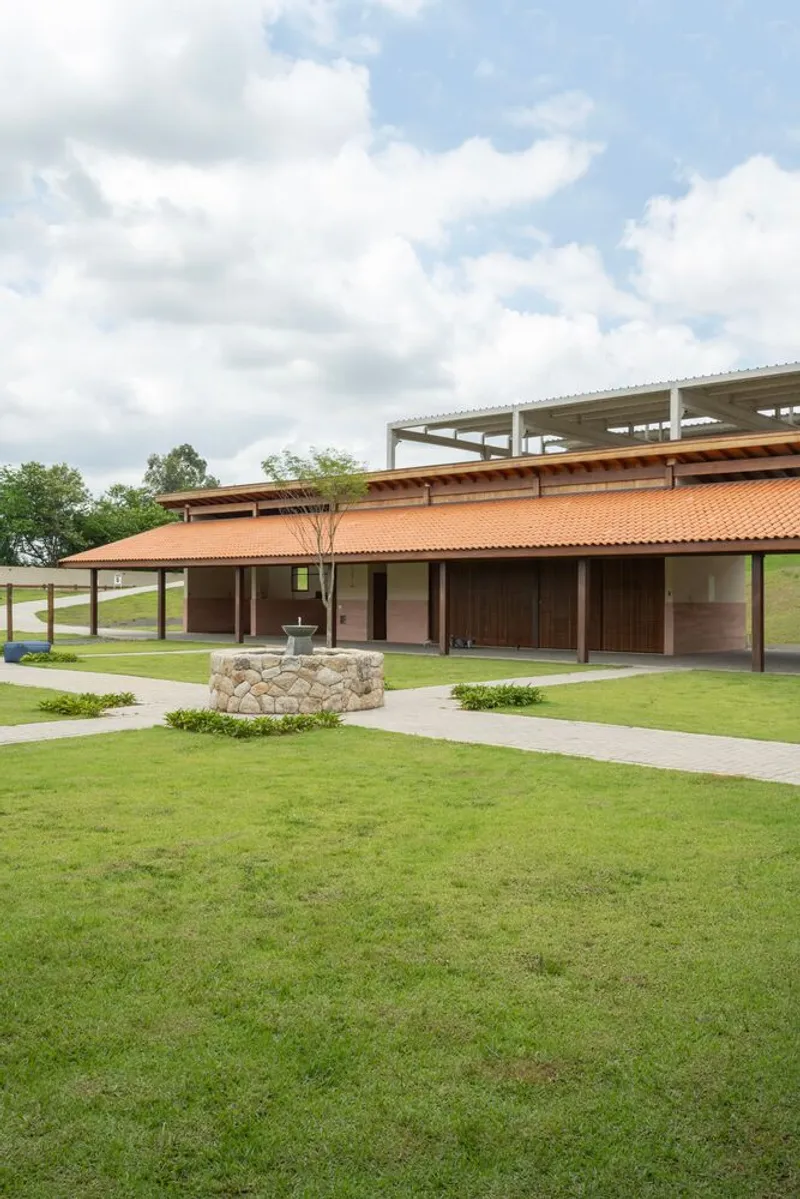
Nestled in the serene landscapes of Porto Feliz, Brazil, Haras HCN by Per Cavalli Arquitetura is a 1,650 m² equestrian facility designed to blend functionality, comfort, and modern aesthetics. Completed in 2023, this equestrian complex caters to both professional show jumping and dressage riders, as well as the care of retired horses and foals bred on-site. With its thoughtful spatial organization, materiality, and integration with the surrounding landscape, Haras HCN exemplifies contemporary equestrian architecture.
Design Concept and Spatial Organization
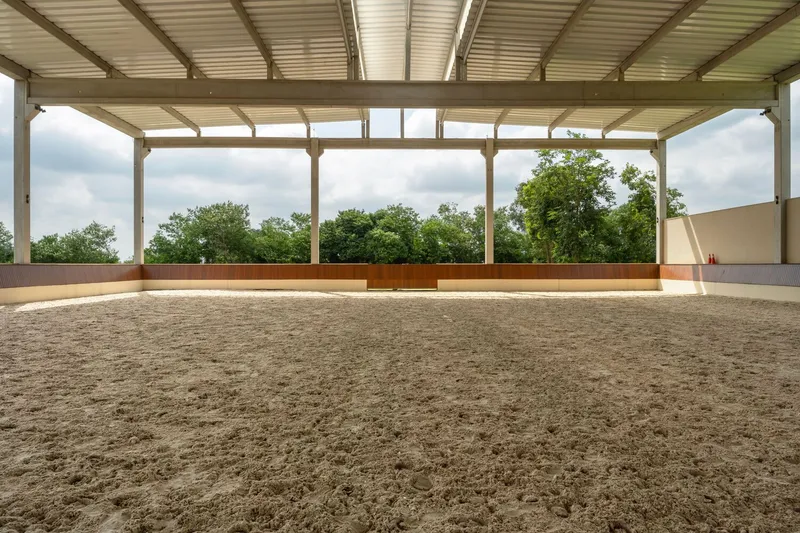
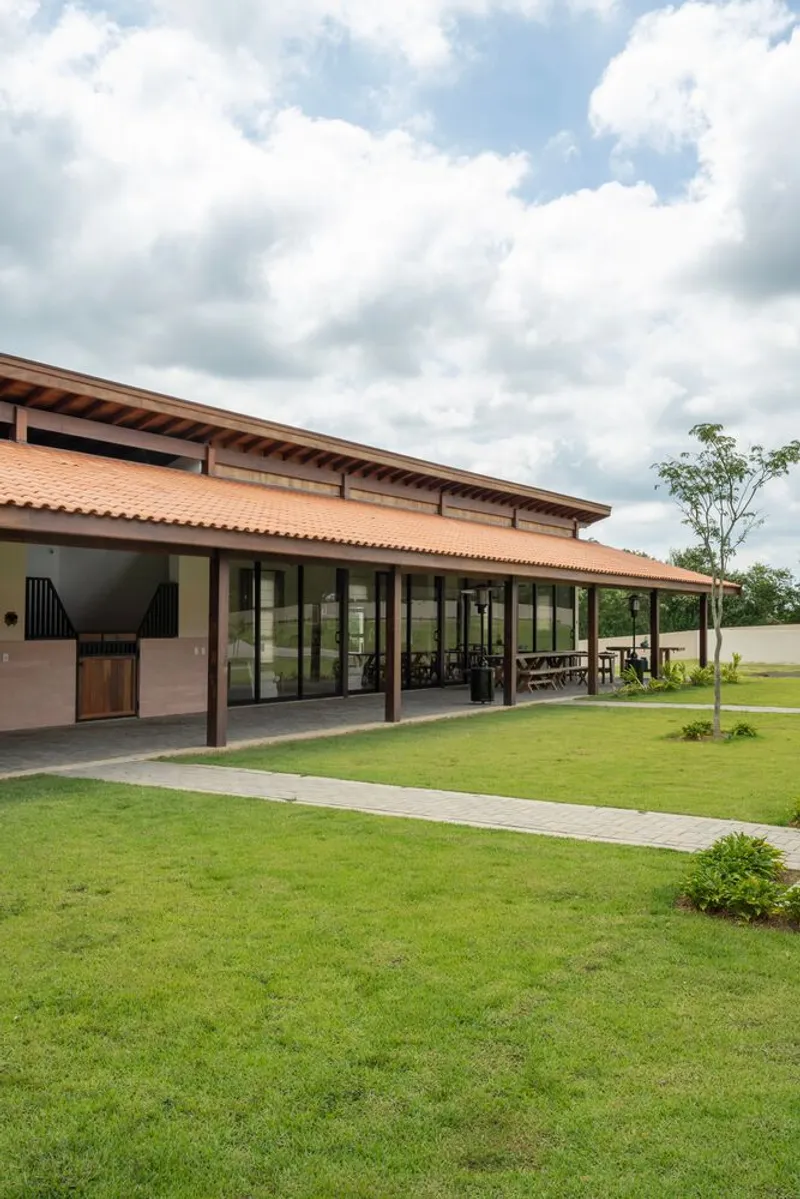
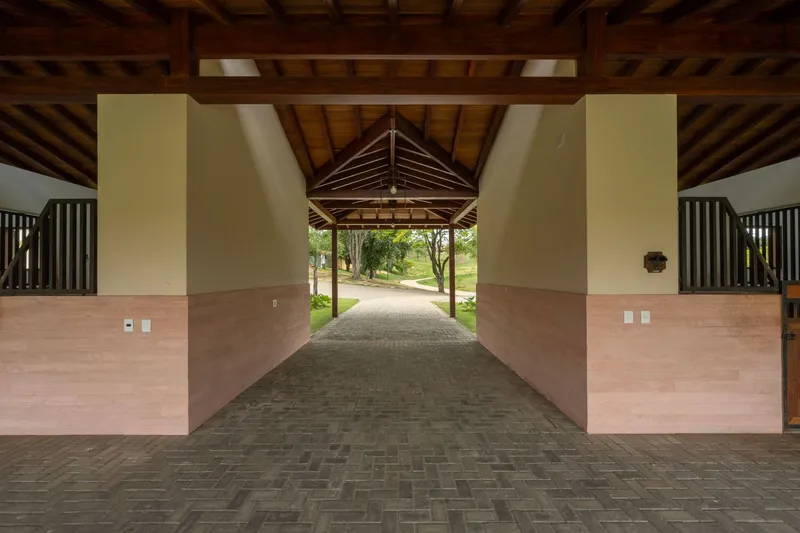
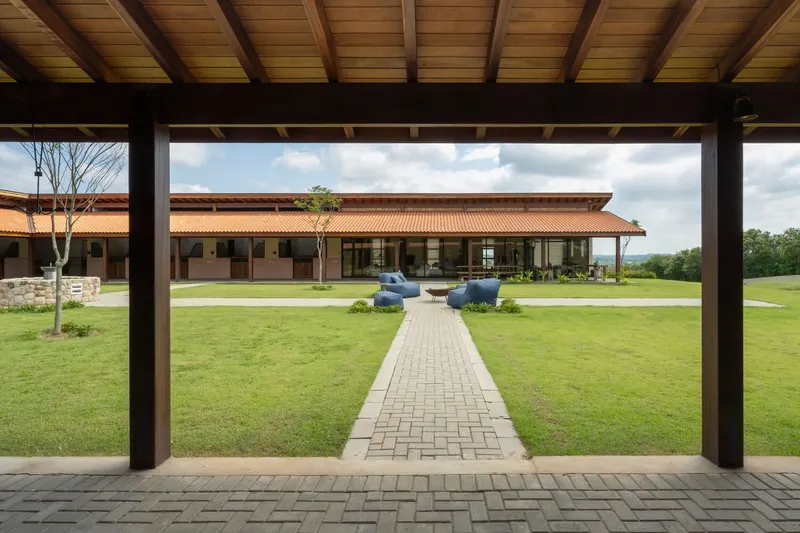
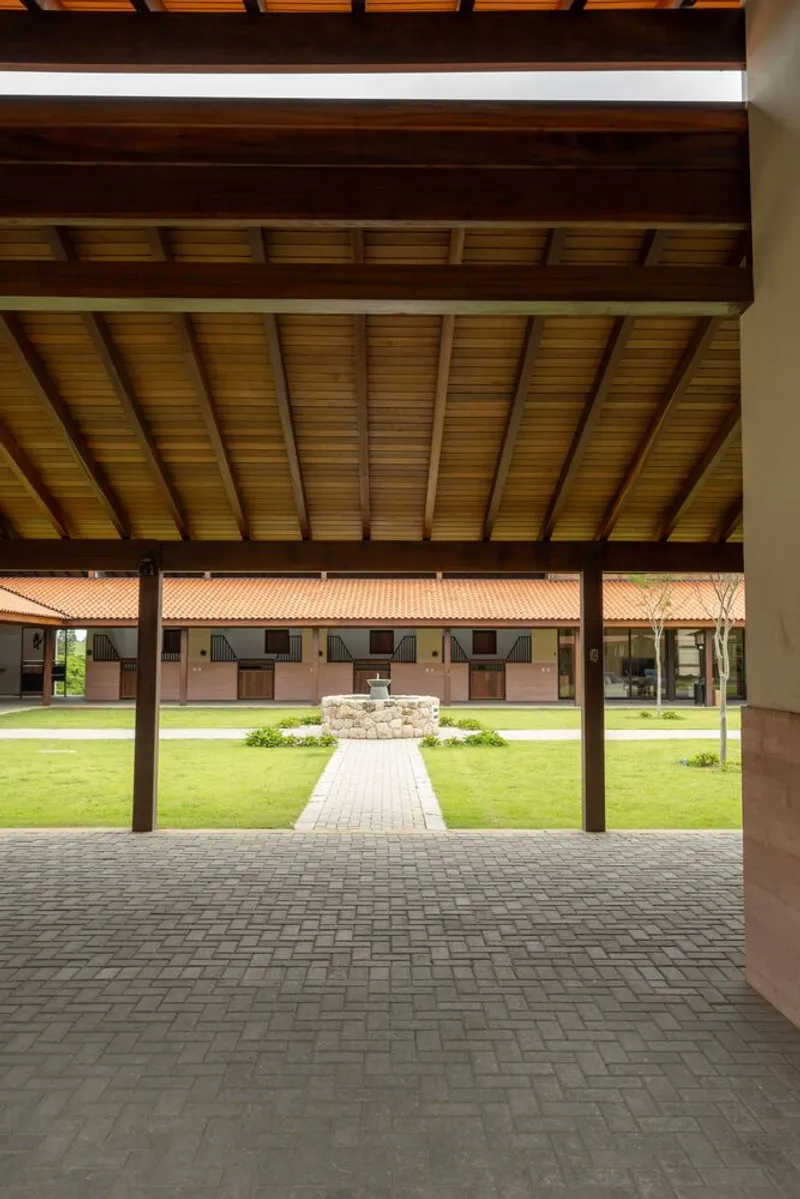
The clients’ vision was driven by the desire to relocate their horses from urban life to the countryside during the pandemic, creating a dedicated space that accommodates active training, animal care, and leisure. To meet these requirements, the pavilion adopts a U-shaped layout, with the front façade closed to ensure privacy. Passing through a central portico, visitors are welcomed into a courtyard featuring a fountain and fire pit, around which the horse stalls are arranged. At the rear, the round pen, open training arena, and large covered arena provide optimal training and exercise spaces for active horses.
Functional Zoning and Horse Care
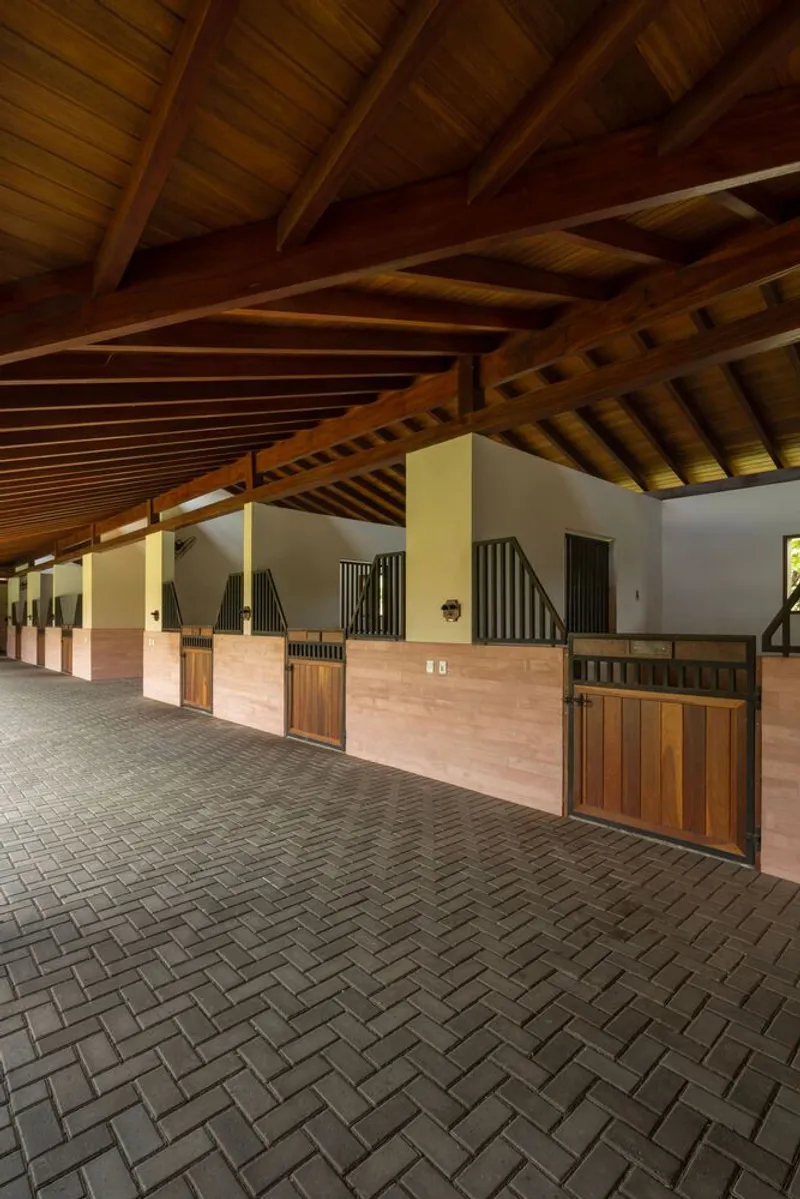
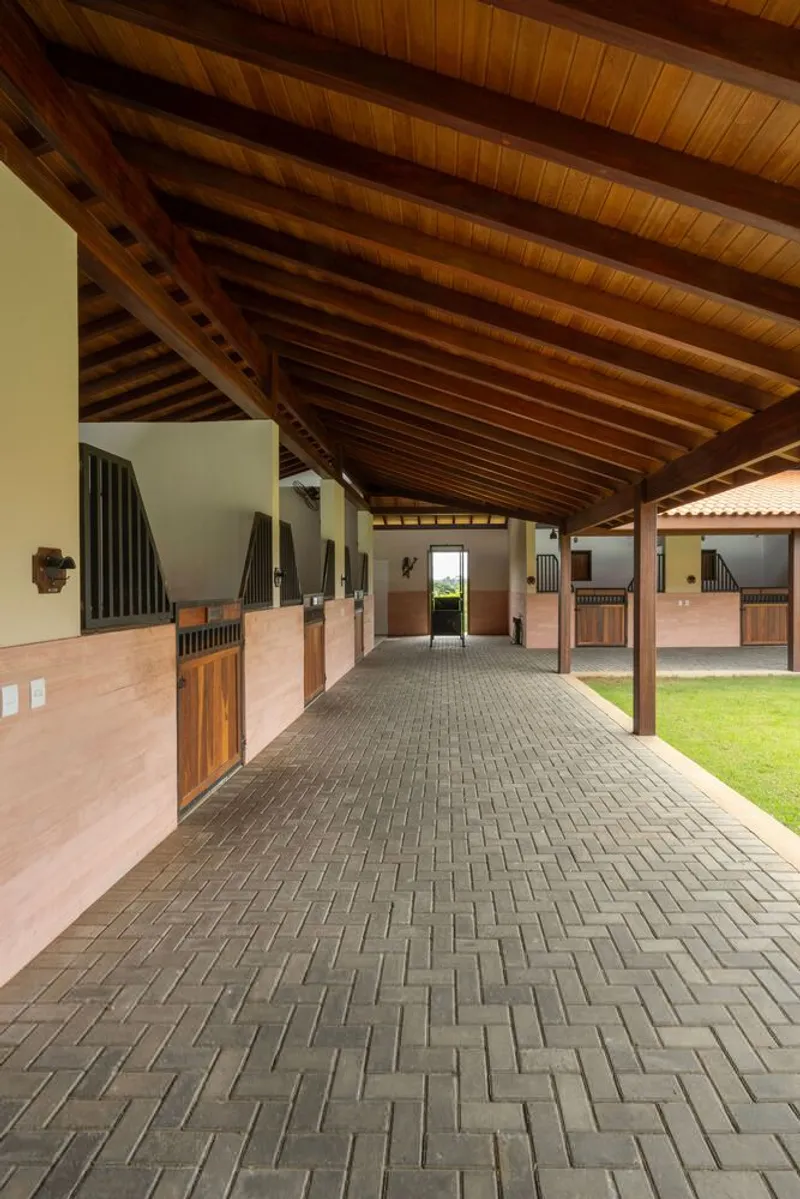
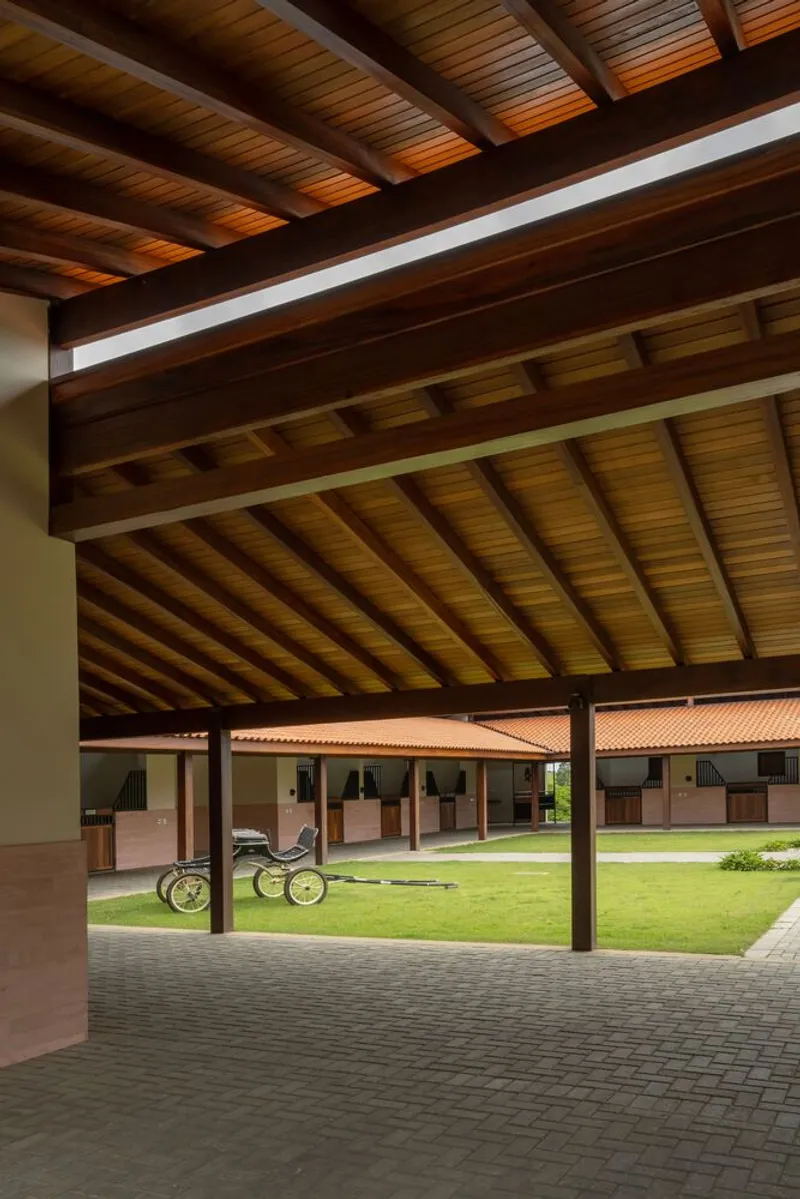
Haras HCN integrates carefully planned zones for horses at different life stages. Retired horses and foals are housed in stalls with individual paddocks situated closer to the main house, ensuring convenient access to training equipment while maintaining separation from active sports horses. Each stall features side rails, allowing herd-contact interaction, and individual windows that blur the boundary between the interior and surrounding landscape.
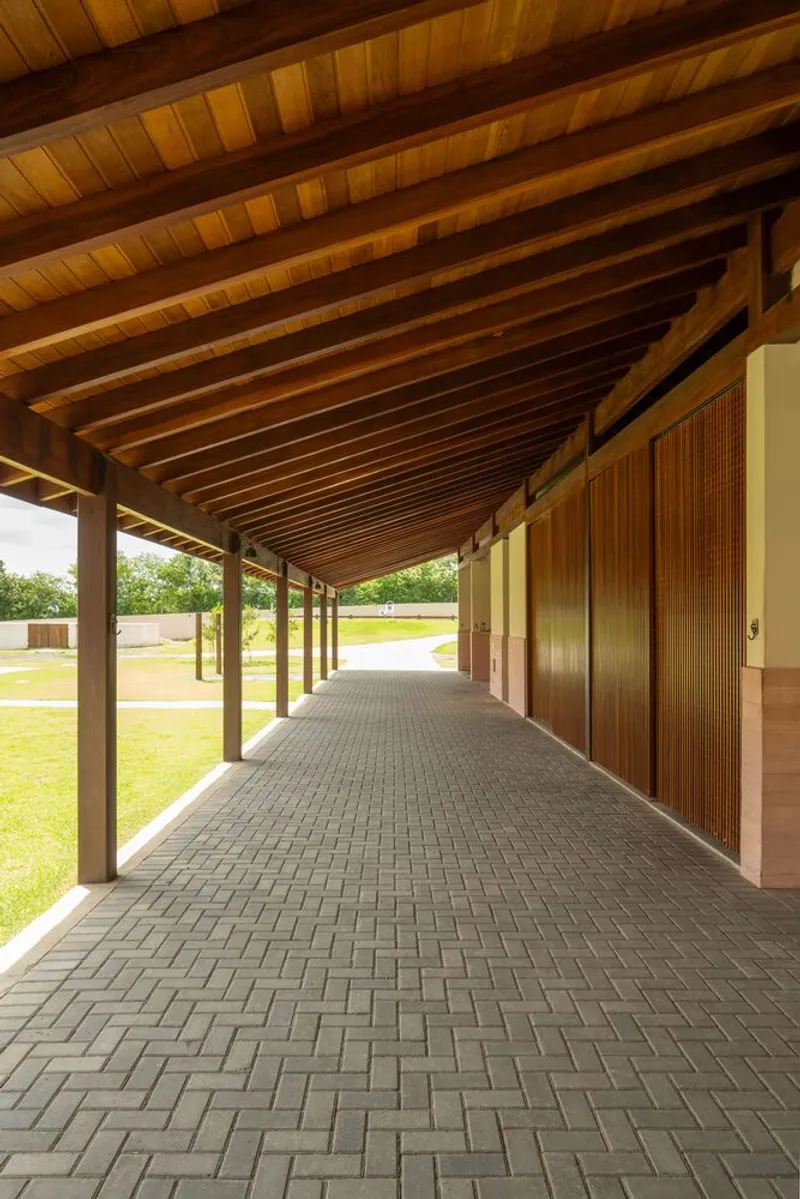
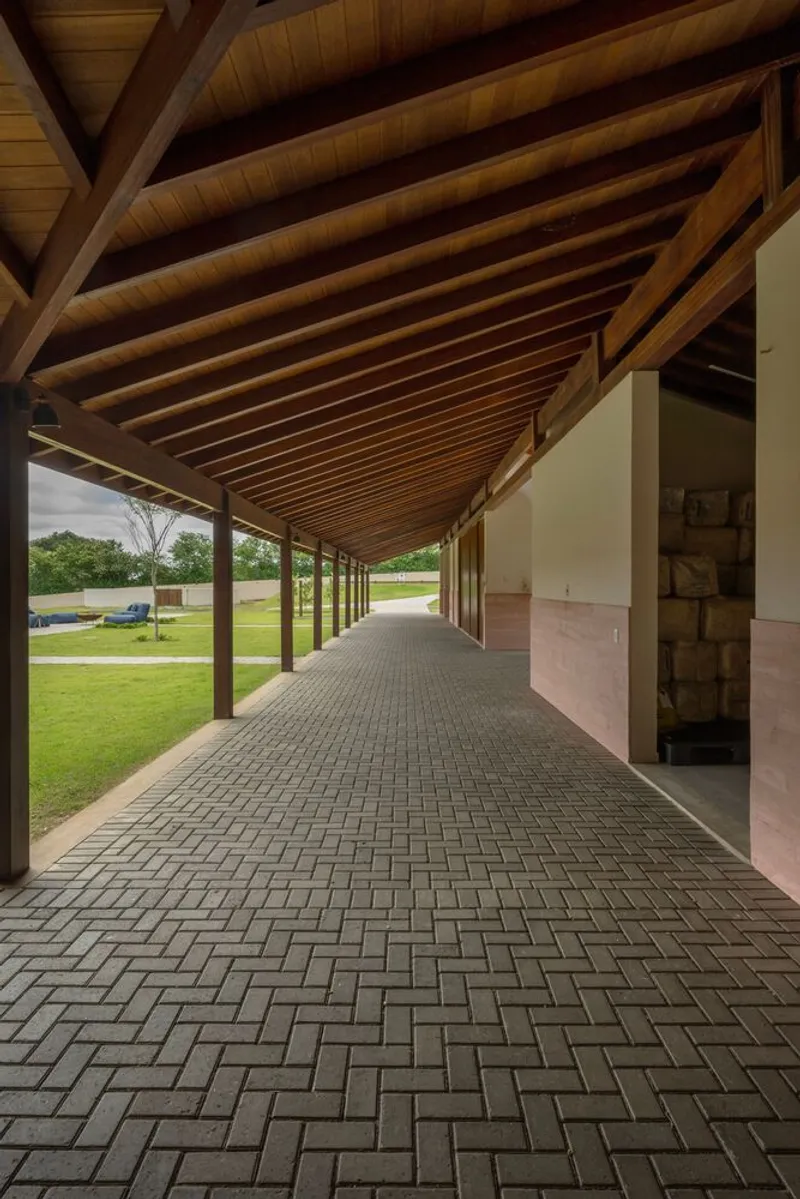
A broad covered corridor links the stalls to essential facilities, including a veterinary space at one corner of the “U” and a living area positioned at the pavilion’s end. The living area is designed with large glass doors, providing a controlled environment free from horse movement.
Support Facilities
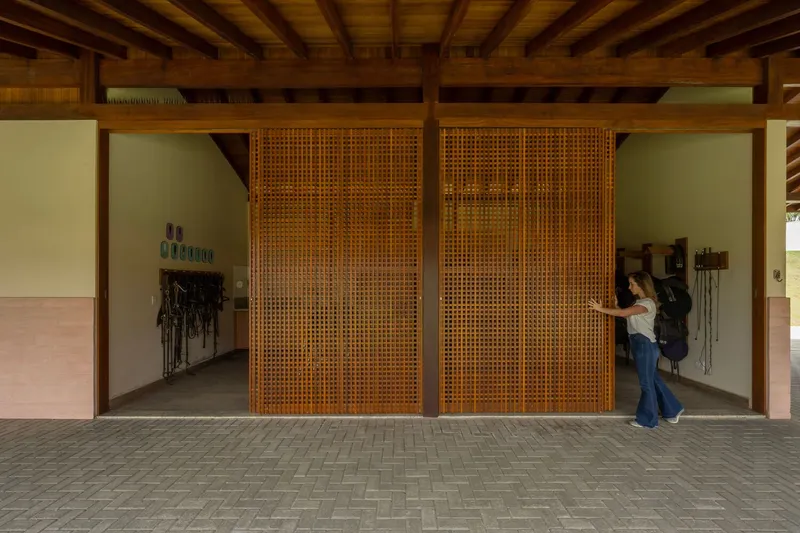
The pavilion also houses comprehensive equestrian support spaces. At the opposite end, changing rooms, two covered horse showers, a sawdust storage area, hay and feed deposits, and a saddle room are seamlessly integrated into the facility. Wide wooden muxarabis enclose these spaces, offering safety, ventilation, and functional storage.
Materiality and Architectural Expression
The material palette reflects the local context and natural environment. Pigmented cement slats in earthy tones cover mid-height sections of the main and internal façades, evoking the color of the site’s soil. These modern materials harmoniously coexist with traditional ceramic tiles, natural wood, and black metalwork, resulting in an architectural language that respects the local pre-existing structures while emphasizing contemporary elegance.
Haras HCN is more than an equestrian facility: it is a harmonious blend of architecture, landscape, and animal care, designed to foster both performance and well-being for horses and humans alike.
All photographs are works of
Cacá Bratke


Popular Articles
Popular articles from the community


LT2A and OPEN Architectes Thread a Brick and Glass High School Through a Wooded Belgian Campus
In Braine-l'Alleud, a 3,000 m² wing for Collège Cardinal Mercier pairs pale brick with a glazed colonnade, deferring to a small chapel and a dense wood.

David Ortega Stacks a Two-Story Mexico City Penthouse Around a Steel Stair and a Pergola-Shaded Roof Terrace
In Colonia Roma, a 300 m² penthouse uses oak joinery, a planted steel stair and a slatted roof pergola to make a new-build apartment feel like a house.

David Macias Steps a Doorless Stone and Plaster House Down a Tropical Colombian Hillside
In the humid hills of Colombia, Threshold House replaces the front door with an open void and terraces its 850 m² down the slope instead of fighting it.

Cube Design Draws an Ecological Corridor Between Two Shenzhen Hills with the Nankai Building
Beside Shenzhen's container docks, the Nankai Building pairs stacked balconies with a climbing green screen to connect two hillsides across its height.

Similar Reads
You might also enjoy these articles

Gil Mello Arquitetura Tilts a Single Roof Toward the Waterfalls on a Plateau Above Aiuruoca, Brazil
In Aiuruoca, Minas Gerais, a 200 m² house of local labor and reclaimed poles pairs a low valley veranda with a tall mountain one.

U.GA Architects Wraps an Oval Rooftop Pool in Curved Board-Formed Concrete on Busan's Jeollidan-gil
In Busan's Jeonpo-dong, a 454 m² mixed-use block stacks a neighborhood facility, guest rooms and an oval rooftop pool inside spiraling concrete walls.

Felipe Hess Arquitetos Turns a Blind Stone Wall to the Street and Opens a Brazilian House onto a Courtyard and Canal
A canal-front house in Brazil hides behind painted stone and planting, then opens to an olive-tree courtyard, a reed-ceilinged porch and a curving pool.
David Macias Steps a Doorless Stone and Plaster House Down a Tropical Colombian Hillside
In the humid hills of Colombia, Threshold House replaces the front door with an open void and terraces its 850 m² down the slope instead of fighting it.

Explore Architecture Competitions
Discover active competitions in this discipline

Challenge to reimagine the Iron Throne

Photograph architecture without architects

Illustrate the lost glory of Angkor Wat - Render Challenge

Design challenge to reuse E-waste
Comments (0)
Please login or sign up to add comments
No comments yet. Be the first to comment!