
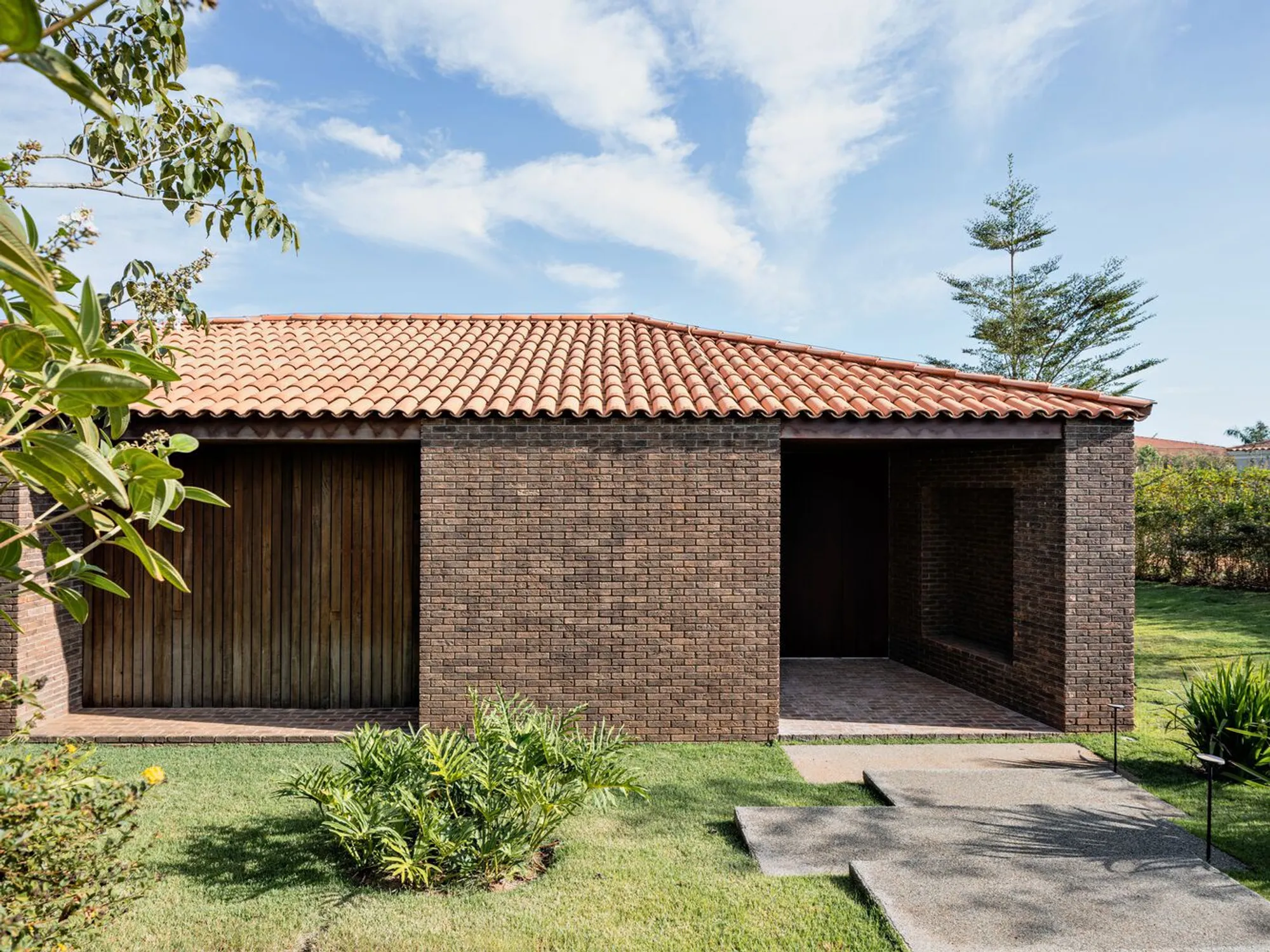
Haras House by Felipe Hess Arquitetos: Modern Brazilian Residence Integrating Nature and Privacy
Haras House in São Paulo features a C-shaped layout, blending indoor-outdoor living, privacy, wood, brick, courtyard, pool, and modern design.


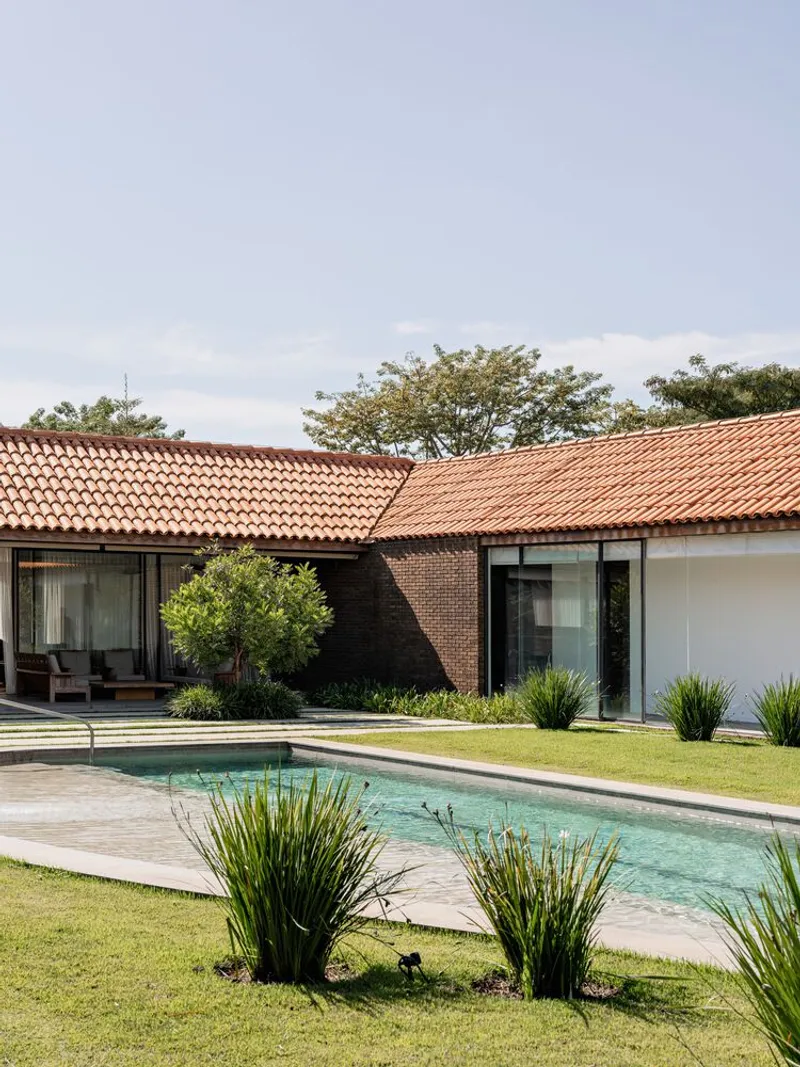
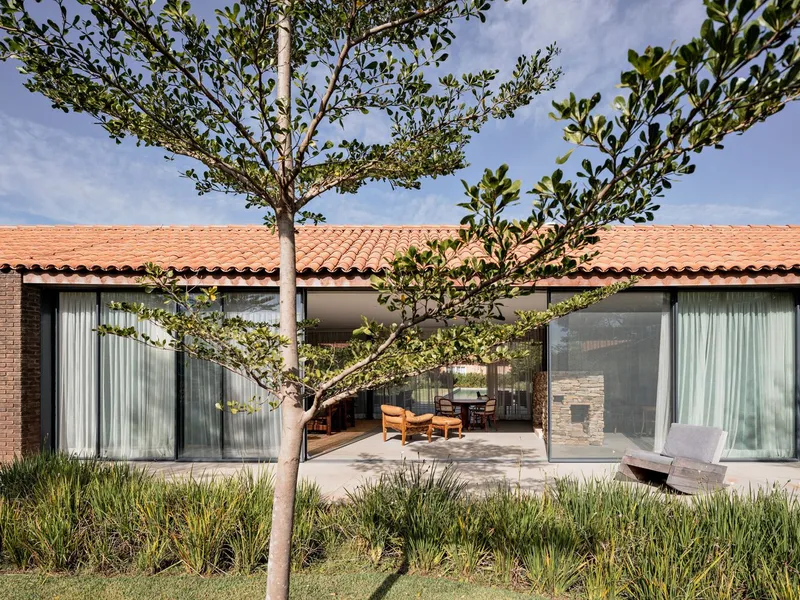
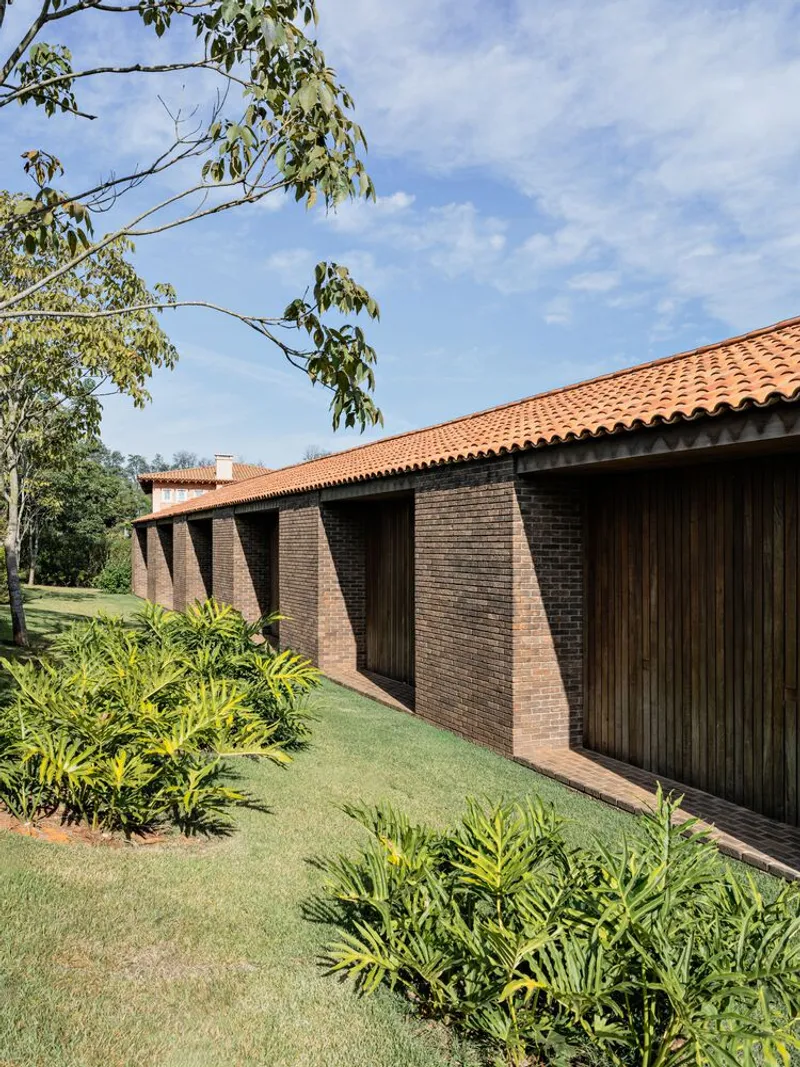
Haras House, designed by Felipe Hess Arquitetos, is a stunning single-story residence located on a trapezoidal lot in São Paulo. The house’s C-shaped layout carefully organizes spaces around a central courtyard, blending indoor and outdoor living while prioritizing privacy and a seamless connection with nature. Featuring a garden, a spacious porch, and a 25-meter lane, the courtyard becomes the heart of daily life, allowing residents to enjoy both relaxation and recreation in a private sanctuary.
Thoughtful Spatial Planning
The home is divided into three distinct wings, each serving a specific function:
- Private Wing: This wing houses five luxurious suites, including the main suite, which enjoys dual orientations for optimal views of the courtyard and side setbacks.
- Service Wing: Situated on the opposite side, this wing includes a garage, a support apartment, a laundry room, and a fully equipped kitchen.
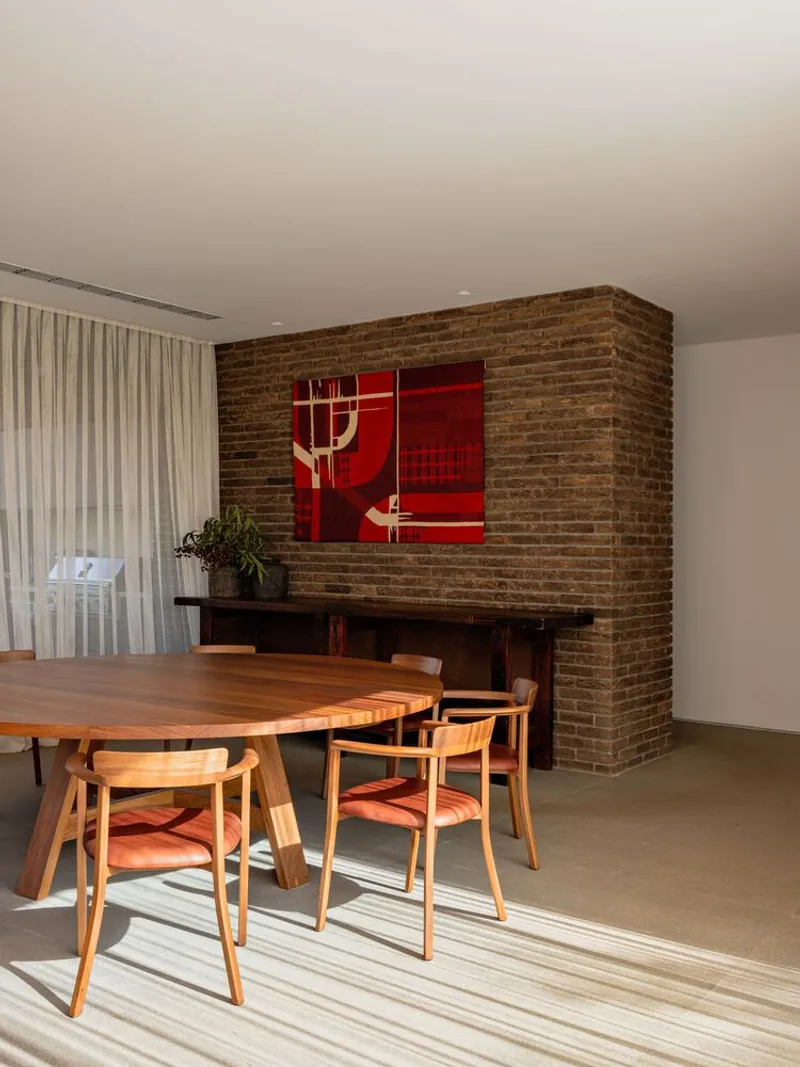
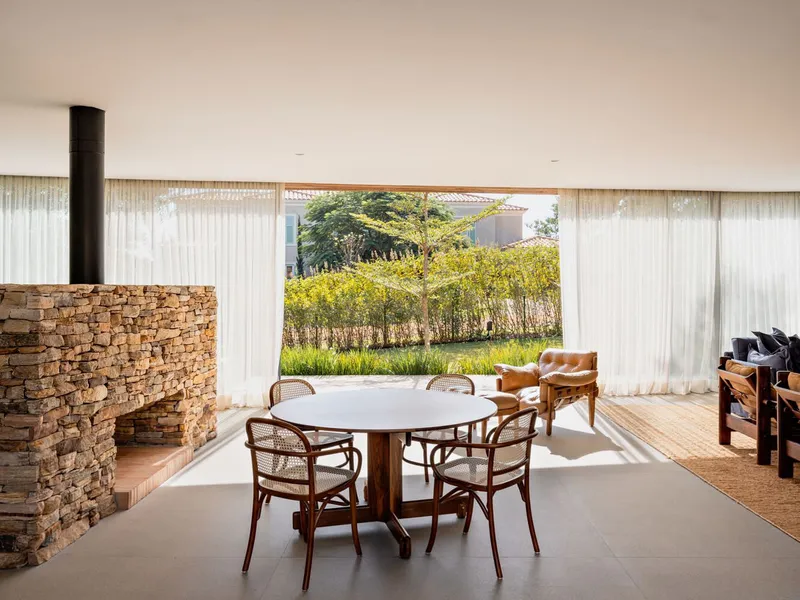
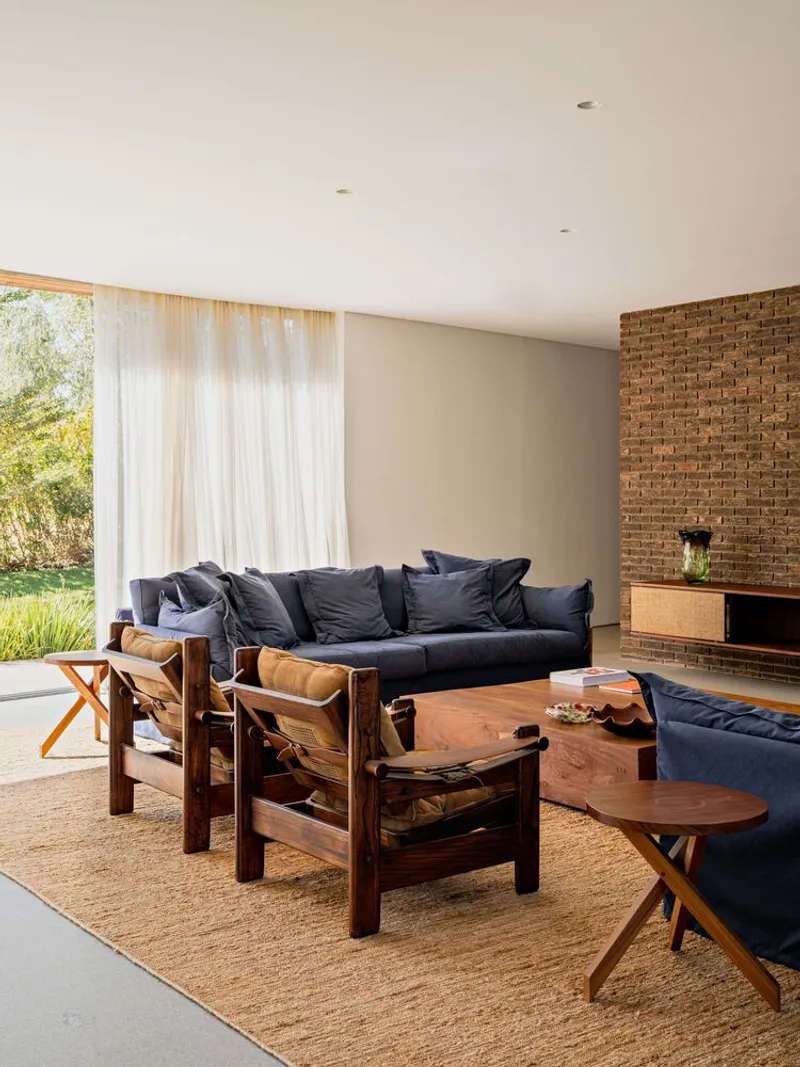
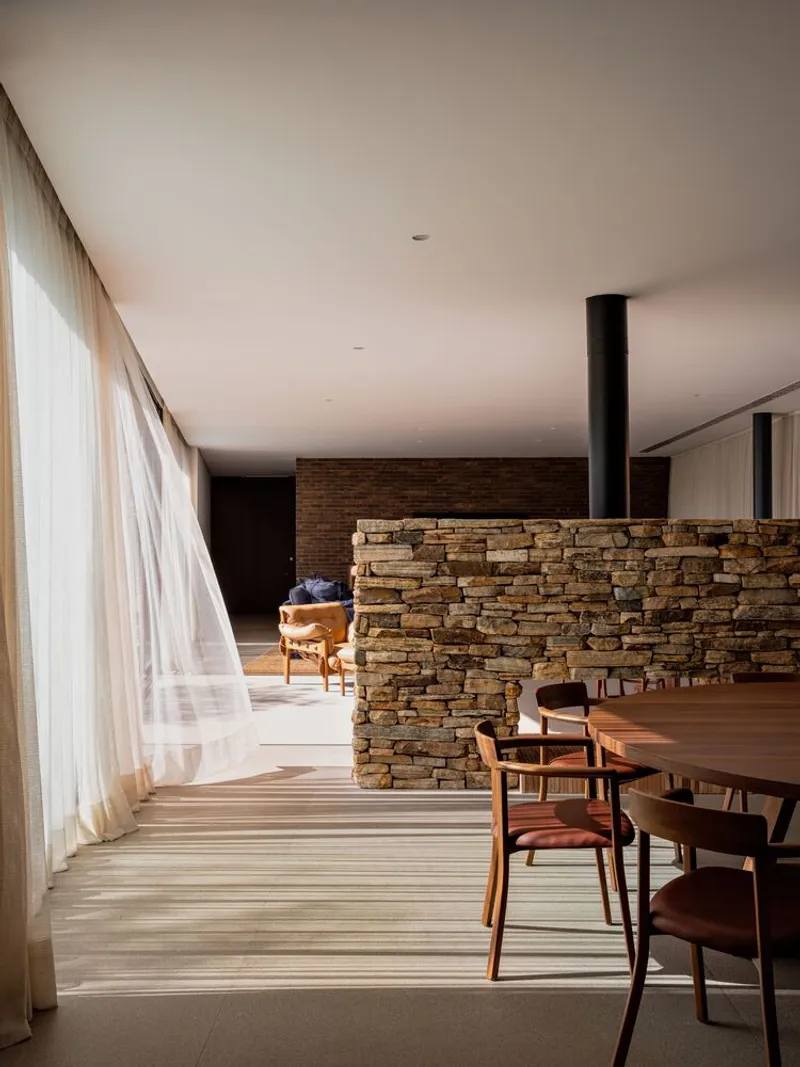
- Social Area: Acting as the connective tissue between the two wings, the social area features an open living room, a dining space, a central fireplace, and a spacious porch that opens directly to the pool area, seamlessly merging indoor and outdoor experiences.
The floor plan smartly follows the trapezoidal shape of the lot, narrowing at the rear to accommodate a discreet technical area. This clever design maximizes privacy and functional efficiency while maintaining aesthetic harmony.
Materials and Aesthetic
Haras House employs a concise and elegant material palette:
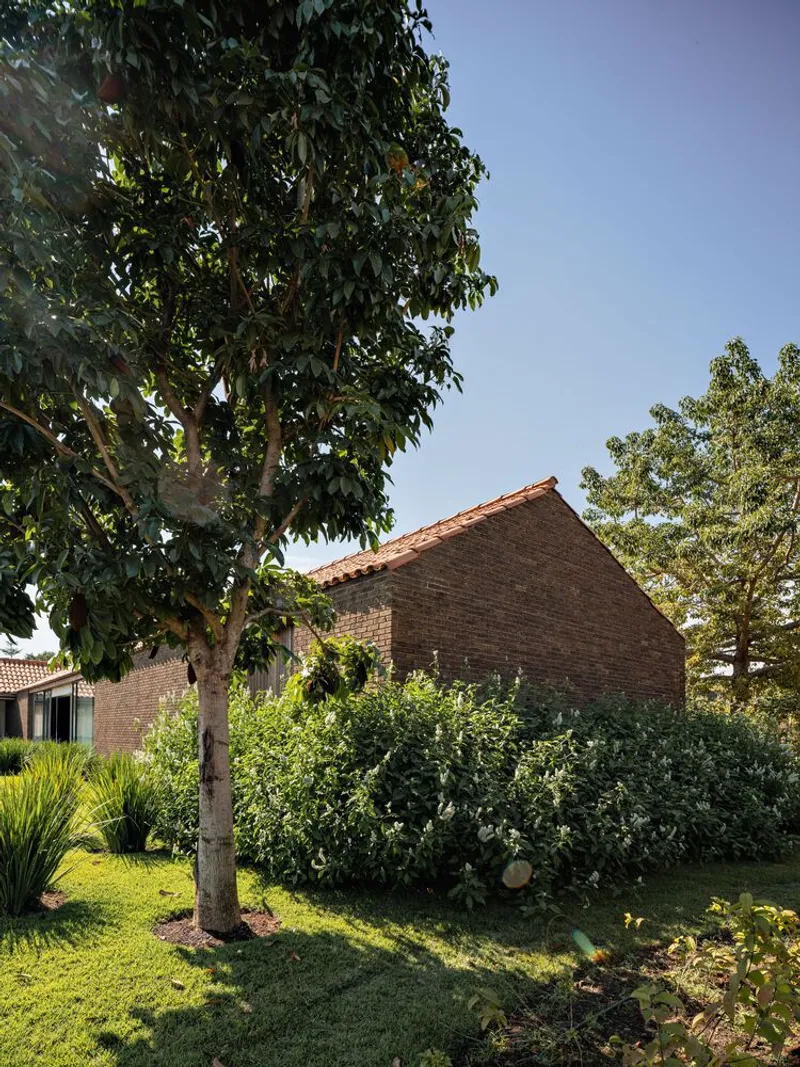
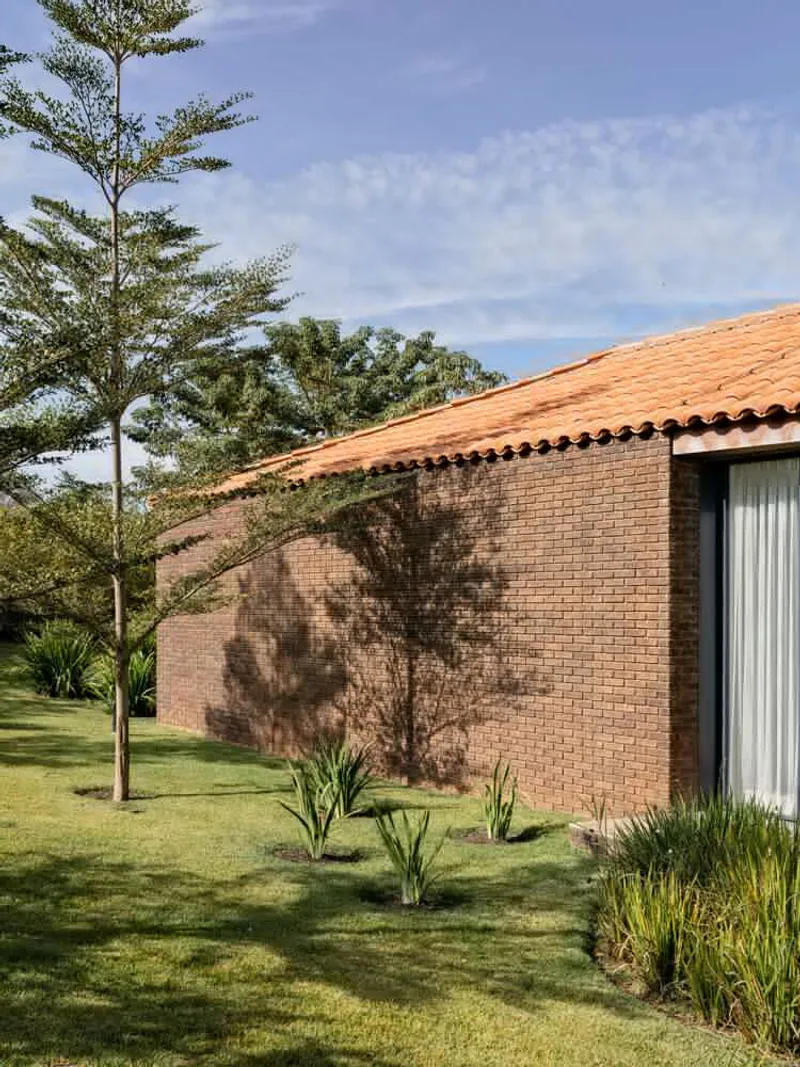
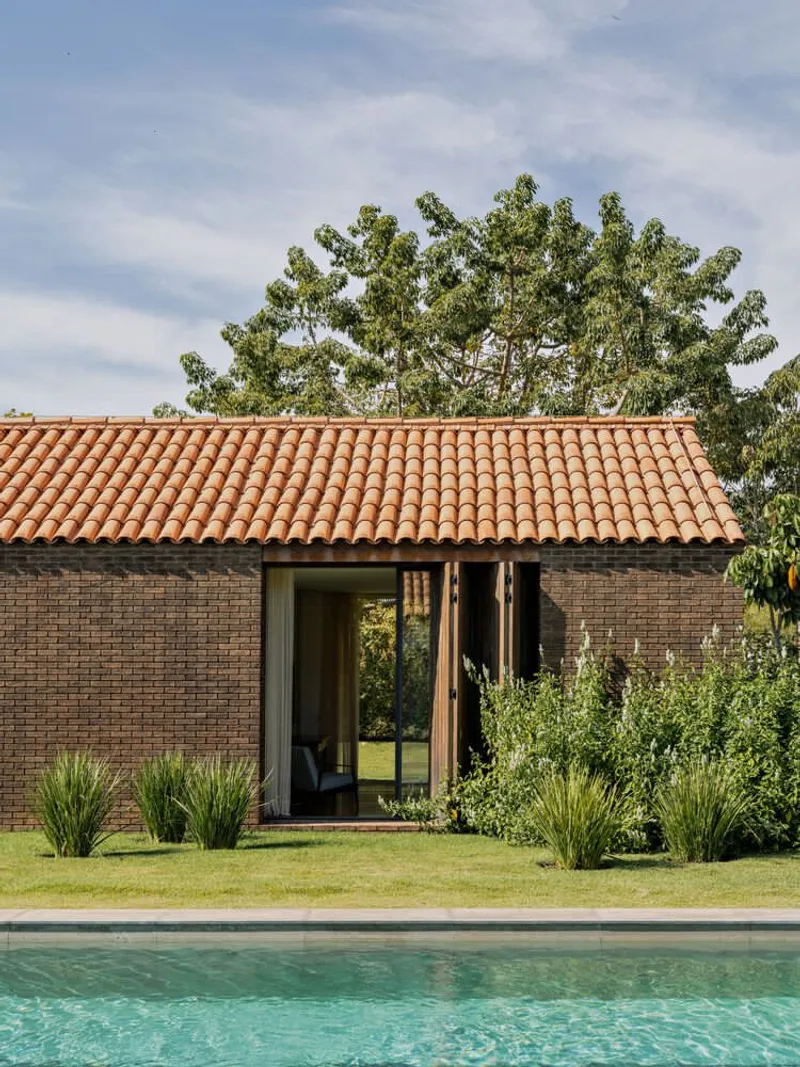
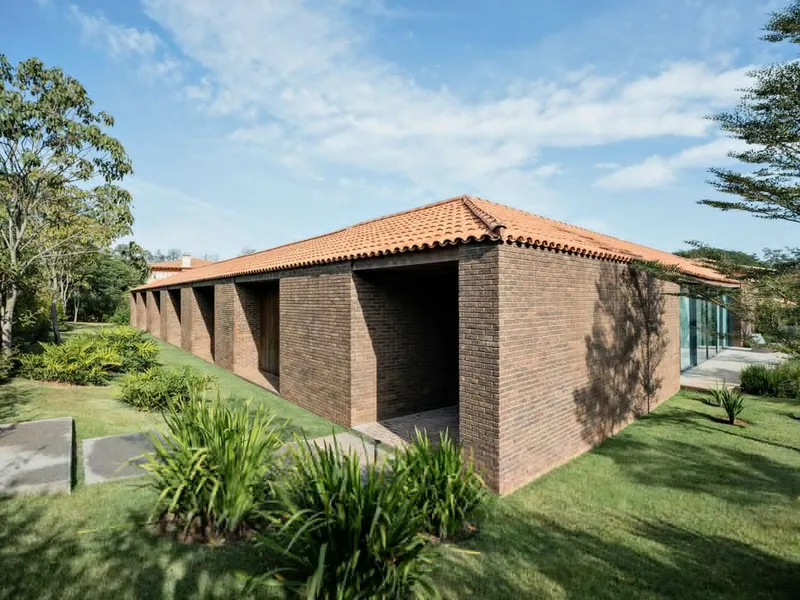
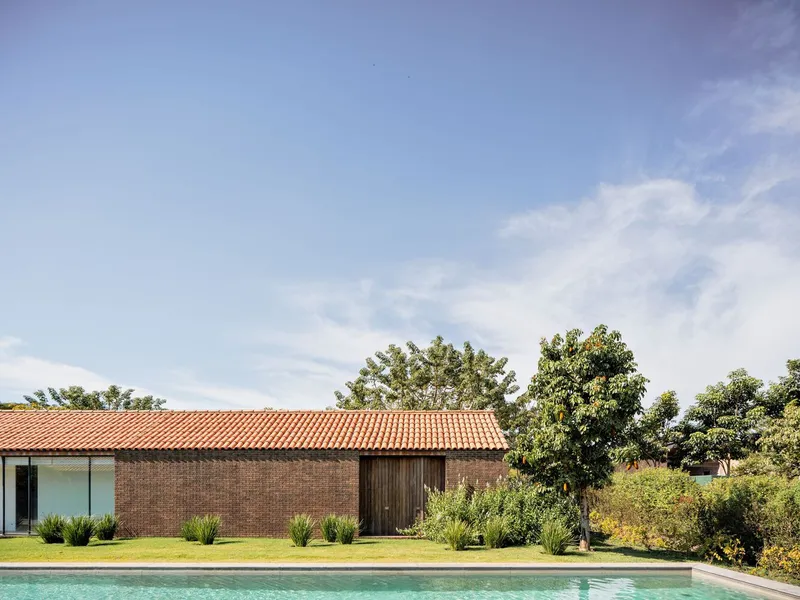
- Dark brick façades for a modern, cohesive exterior
- Continuous granite flooring in social spaces
- Warm wood finishes in intimate areas
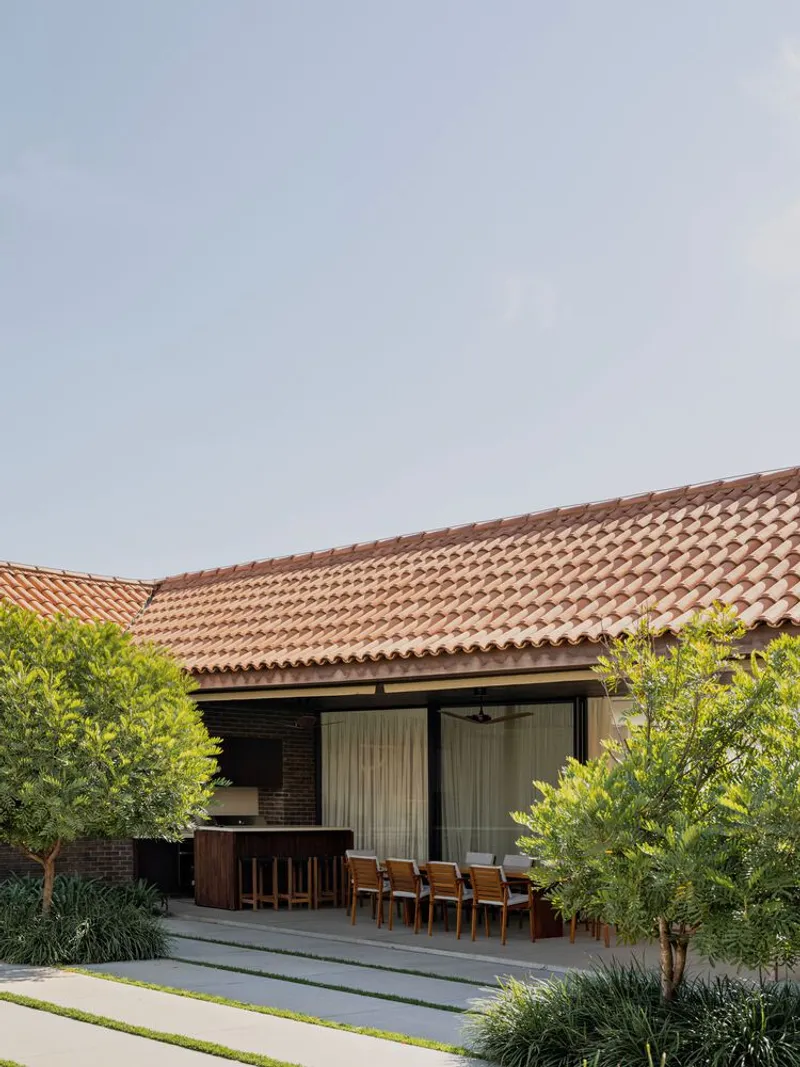
- Sloped roof with a darkened finish to satisfy condominium regulations and unify the overall visual composition
These material choices enhance the sense of continuity between the architectural elements while reinforcing the residence’s contemporary aesthetic.
Landscaping and Outdoor Living
The landscaping, designed by Renata Tilli, complements the architectural concept with shaded garden areas, vegetated setbacks adjacent to bedrooms, and communal spaces surrounding the pool. This integration ensures natural light permeates all bathrooms and living areas, while a gym incorporated within the main body of the house promotes a healthy, active lifestyle.
Haras House: A Harmonious Blend of Comfort and Design
With its careful spatial planning, material coherence, and connection to nature, Haras House stands as a prime example of modern Brazilian residential architecture. Every element, from the central courtyard to the meticulously designed wings, reflects a commitment to privacy, functionality, and aesthetic beauty.




Popular Articles
Popular articles from the community


Lunar Spiral: Space Architecture Shaped by the Mathematics of the Universe
Lunar Spiral reimagines space architecture through Fibonacci geometry, lunar regolith, levitating habitats, and self-sustaining Moon living.

The Ocean Hive: Sustainable Architecture for a Self-Sufficient Civilization at Sea
The Ocean Hive imagines sustainable architecture at sea, where modular habitats, algae, wave power and ocean waste sustain a growing colony.

Hill & Cross Opera: Sculptural Opera House Architecture Shaped by Tallinn’s Landscape and Identity
Hill & Cross Opera reimagines opera house architecture in Tallinn through its sculptural hill, civic plaza, glass wave and a luminous cross.

Co-Life: Senior Housing Design That Reconnects Older Adults With the City
Co-Life reimagines senior housing design through healing gardens, shared streets, workshops, and a sustainable community across generations.


Similar Reads
You might also enjoy these articles


Hodi-Mandai Geram
Project Function: Preservation and revitalization of the Intangible heritage and socio-spatial identity of the Hodi by Housing, Cultural Memory Center, Sacred Grove, landscape, local tourism economy


Olio Towers: A Mid-Rise for Performers That Fuses Housing, Rehearsal, and Stage
Located blocks from Houston's Theater District, this modular tower stacks living units around a central performance atrium.

Oasis: Modular Green Housing Carved into Dhaka's Urban Fabric
A shortlisted Plugin Housing entry reclaims unauthorized settlements in Dhaka with stepped concrete volumes, green roofs, and ventilation-driven design.

Black Hole: A Floating Megastructure for the Post-Physical Era
Emiliano Mazzarotto envisions a spherical, self-scaling arena where e-sports, digital hotels, and holographic stadiums replace traditional public space.


Explore Housing Competitions
Discover active competitions in this discipline



Challenge to reimagine the Iron Throne


Photograph architecture without architects


Illustrate the lost glory of Angkor Wat - Render Challenge


Design challenge to reuse E-waste
Comments (0)
Please login or sign up to add comments
No comments yet. Be the first to comment!