
Hécourt House: A Masterpiece of Farmhouse Transformation into a Modern Country House
Hécourt House by Studio Guma blends rustic charm with modern elegance, transforming a historical farmhouse into a serene country retreat.


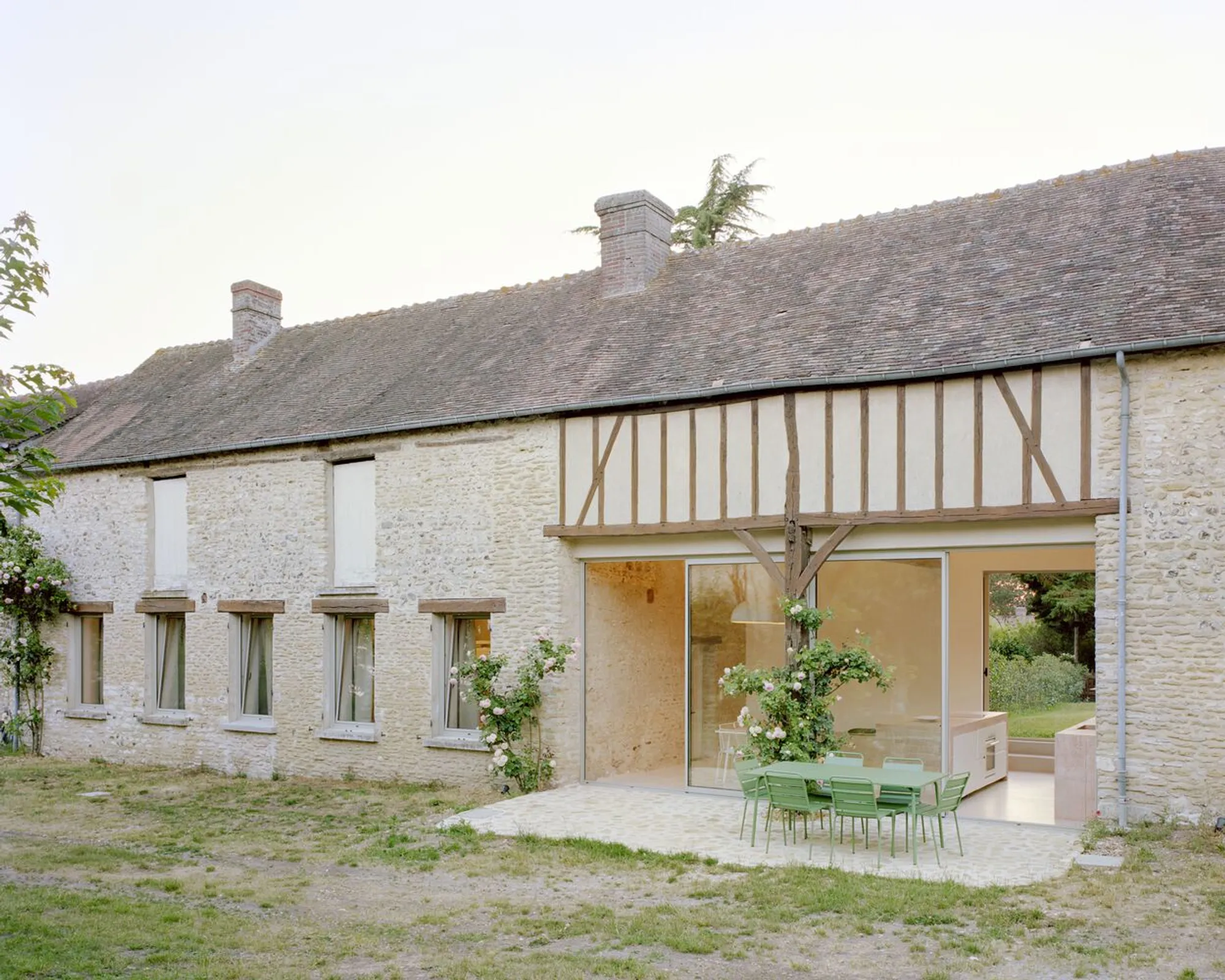
Hécourt House, designed by Studio Guma, stands as a testament to the seamless blend of rustic charm and contemporary elegance. Located in the picturesque village of Hécourt in the Eure Valley of Normandy, France, this architectural gem is just an hour away from Paris. The project, led by architect Emmanuel Guilloux, transforms a former farmhouse into a serene country house that serves as a family sanctuary and a retreat from the bustling city life.
Preservation of Rural Heritage
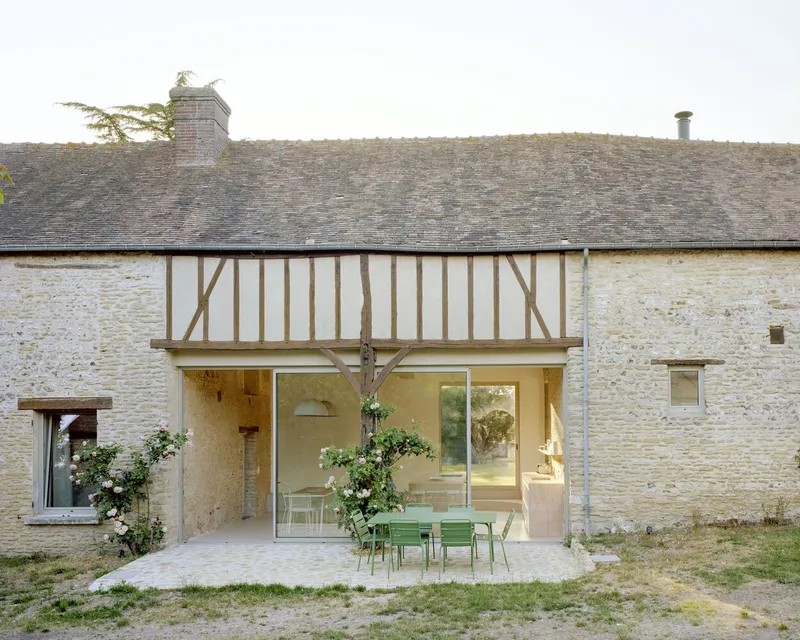
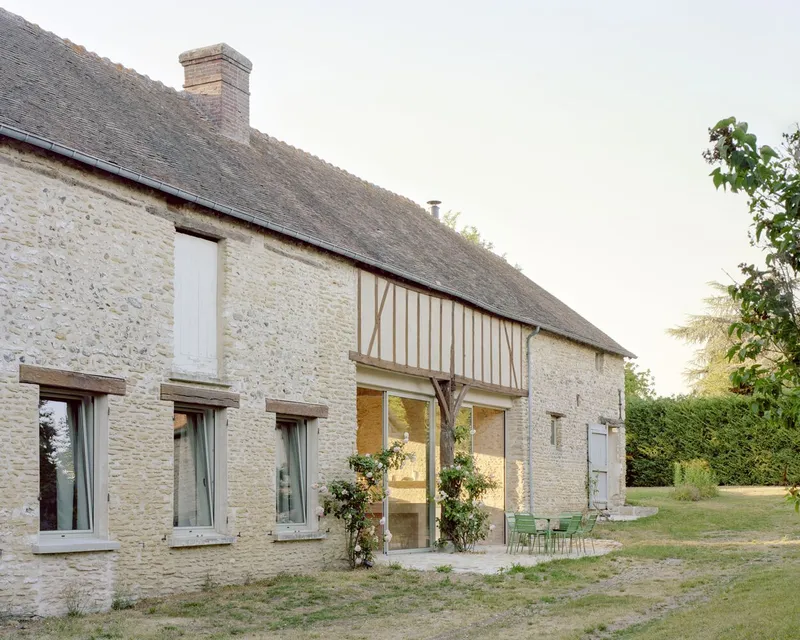
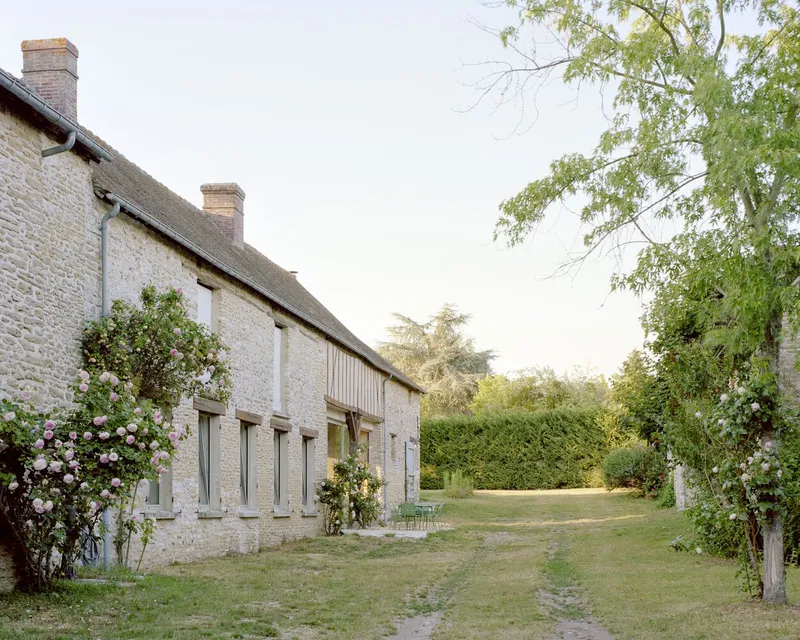
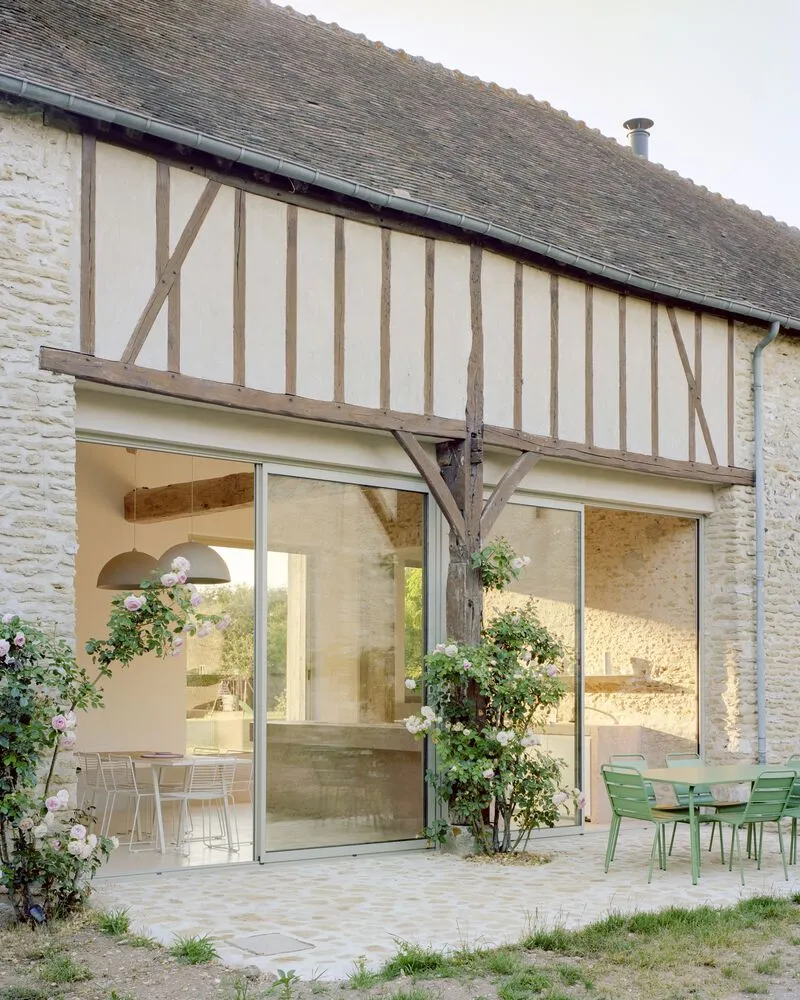
The Hécourt House project respects the historical essence of the original structures. The long farmhouse and two small outbuildings retain their millstone facades, red flat tile roofs, and zinc gutters. These elements evoke the rural history of the location, while the wooden lintels above the openings add to the warm and authentic atmosphere. The buildings are strategically positioned along a gentle slope, blending harmoniously with the surrounding vegetation, including beech trees, walnut trees, shrubs, hedges, fruit trees, and a sprawling lawn.
Modern Enhancements
Integrating Modern Elements
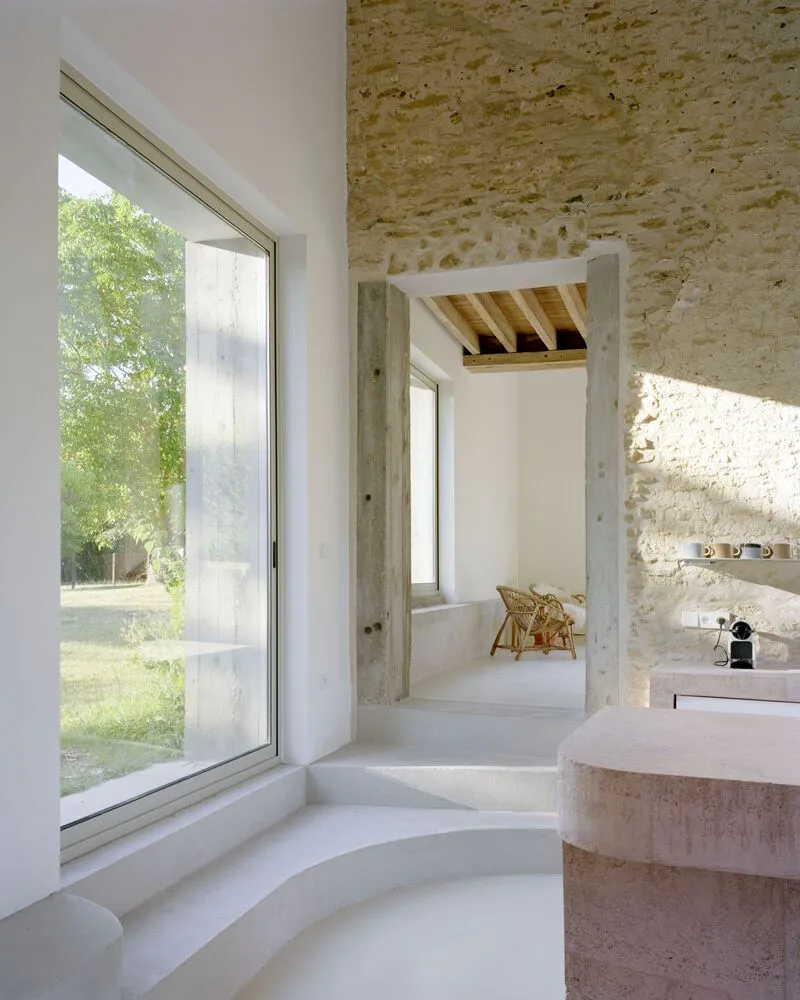
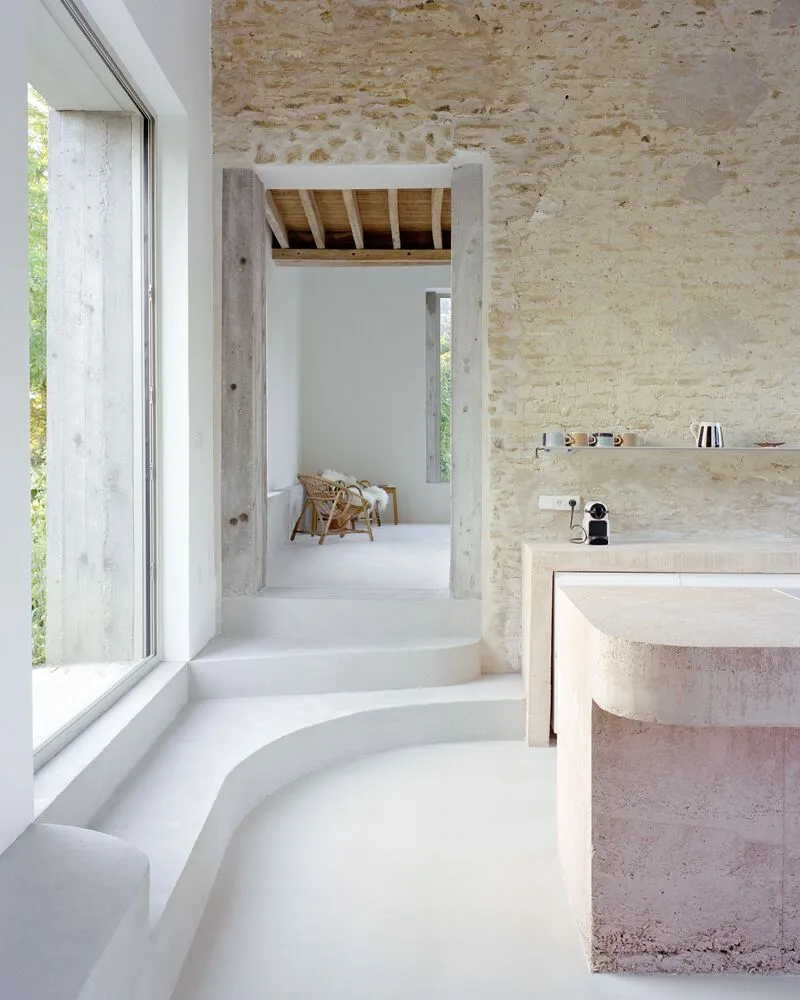
Studio Guma's approach to the transformation is characterized by the subtle integration of modern materials such as concrete, steel, and lacquered aluminum. These materials contrast with the mineral essence of the original structure, introducing a touch of modernity without compromising the building's heritage. The tones of the new materials harmonize with the existing color palette, maintaining the bucolic character of the farmhouse.
Spatial Organization and Design
Seamless Transition Between Spaces
The design of Hécourt House is dictated by the existing elements, with spaces unfolding sequentially, providing a seamless transition between shared and private areas. The bedrooms, located in the lower part of the terrain, offer a sense of privacy while being open to the garden. Traditional vertical windows enhance the sense of seclusion.
Central Living Spaces
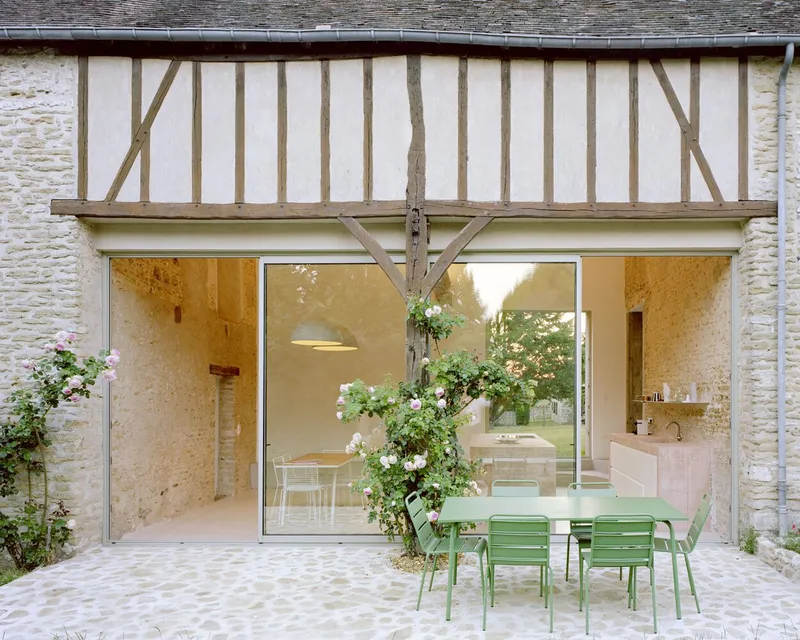
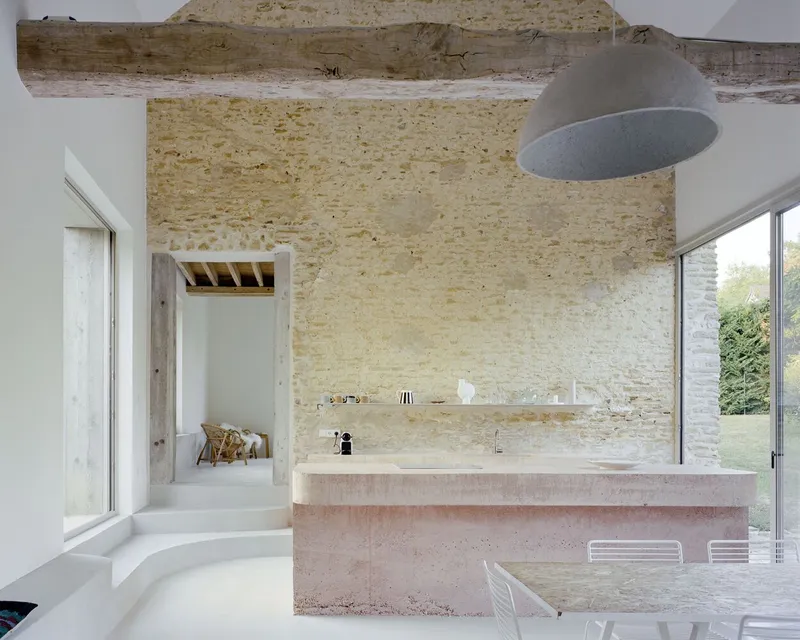
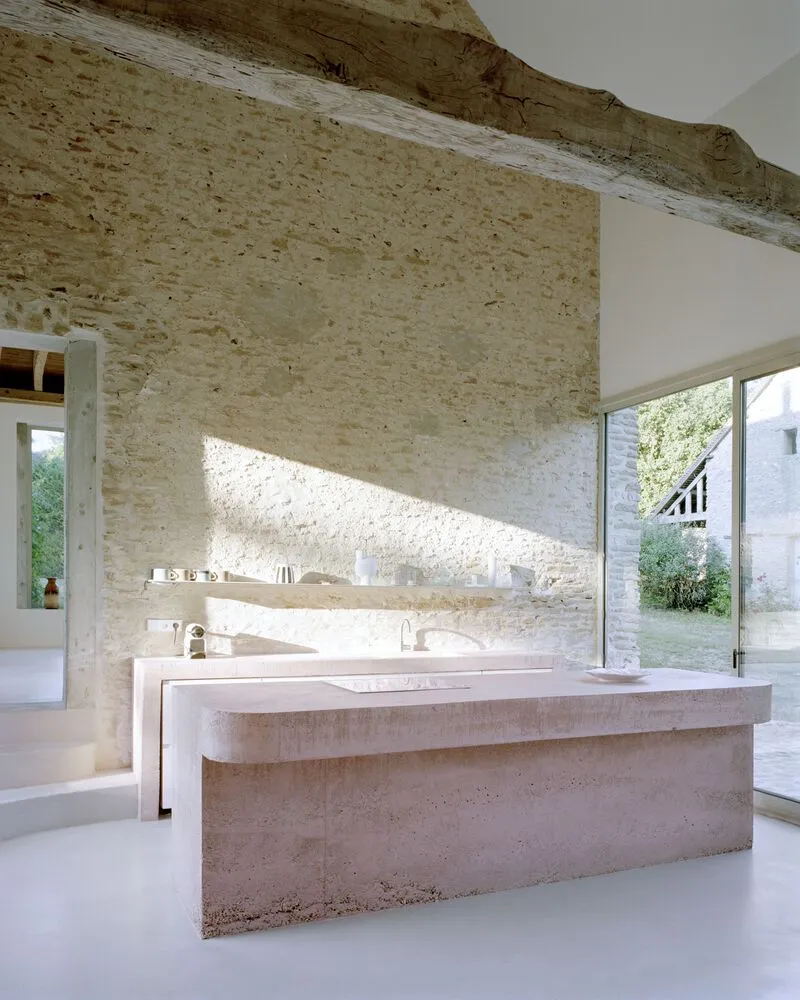
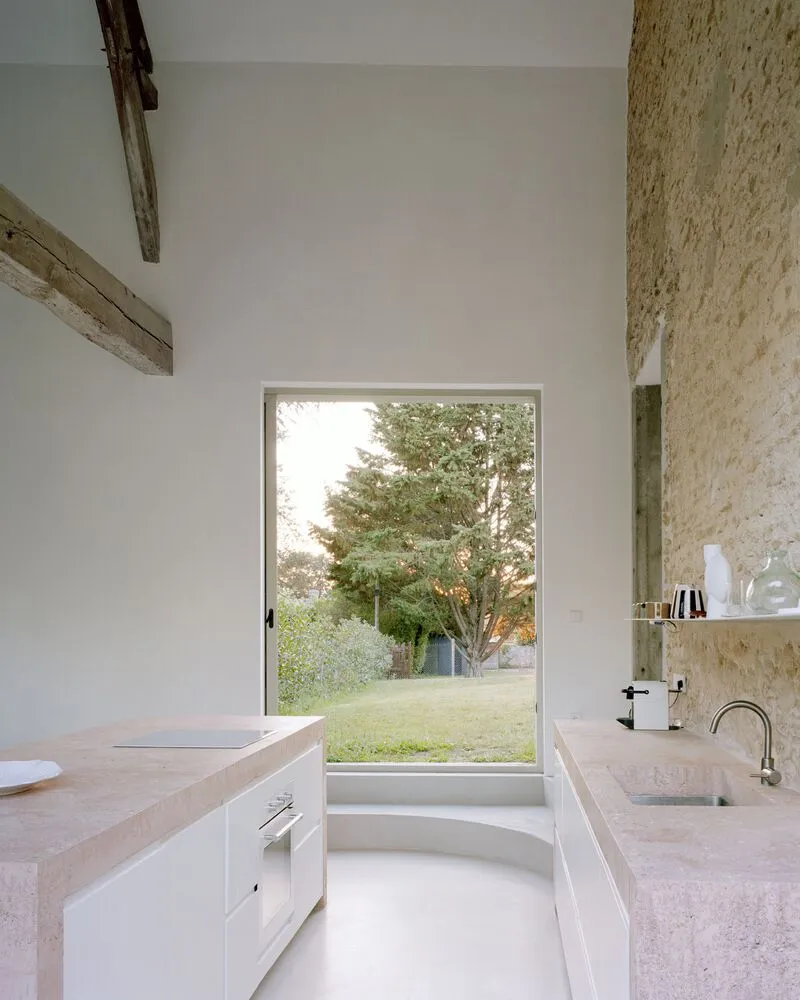
The kitchen-dining area, located in the former cart shed, serves as the central living space. This high-ceiling area opens onto a stone terrace on the southeast side and a garden on the northwest side, creating a continuous flow between the indoor and outdoor spaces. In summer, this area merges with the outdoors, becoming a hub of activity, while in winter, it is heated by the morning sun, providing a cozy nest open to nature.
The Living Room: A Space for Intimacy
From Stable to Living Room
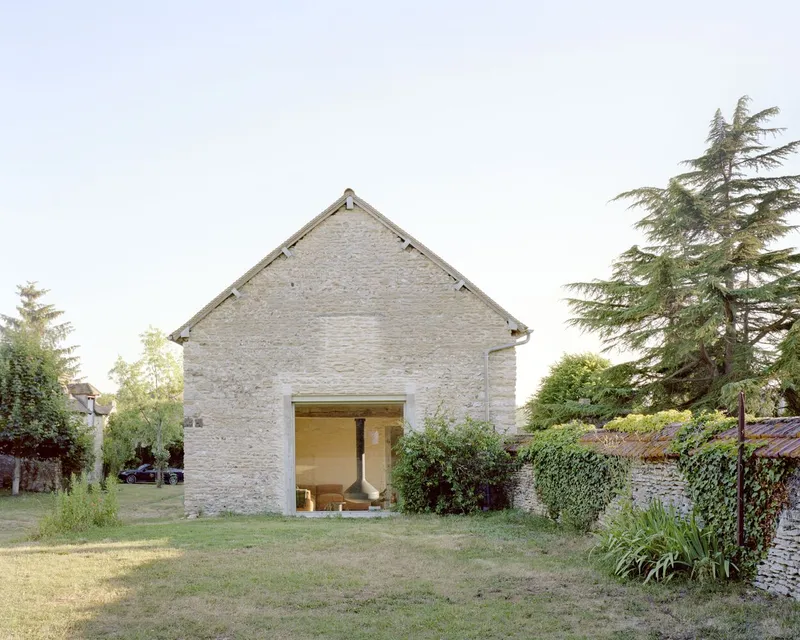
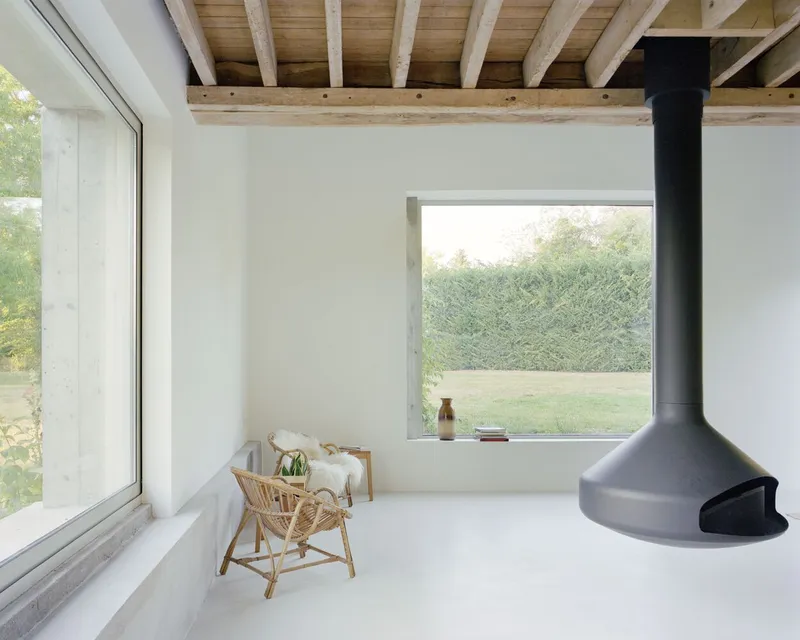
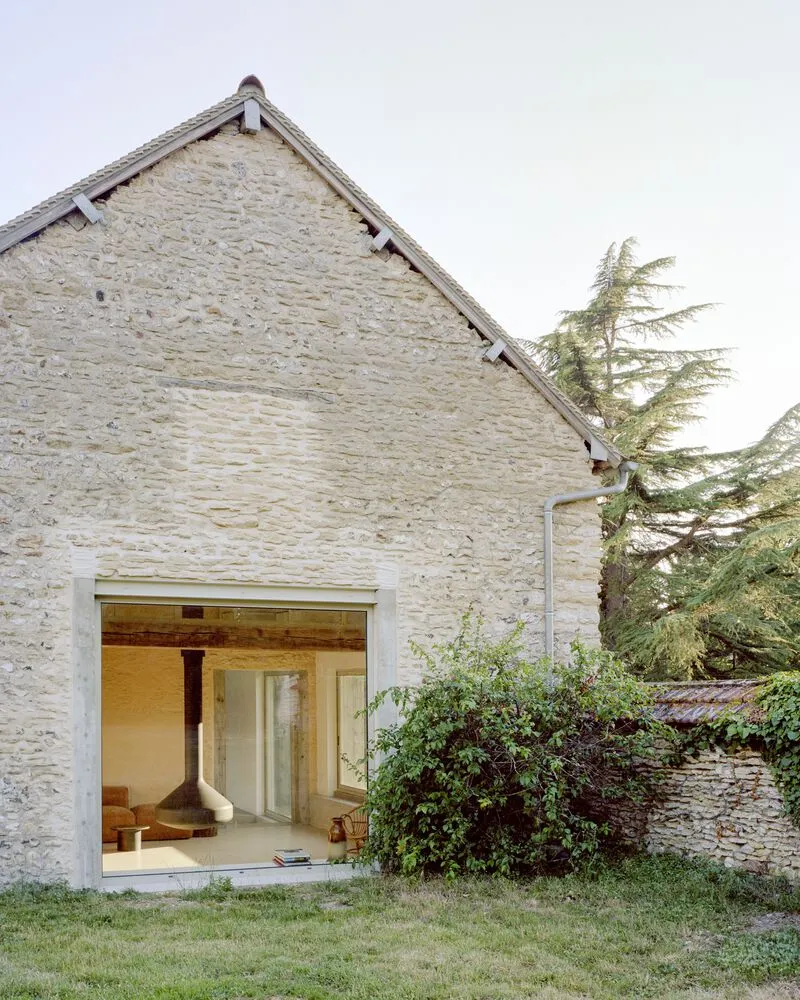
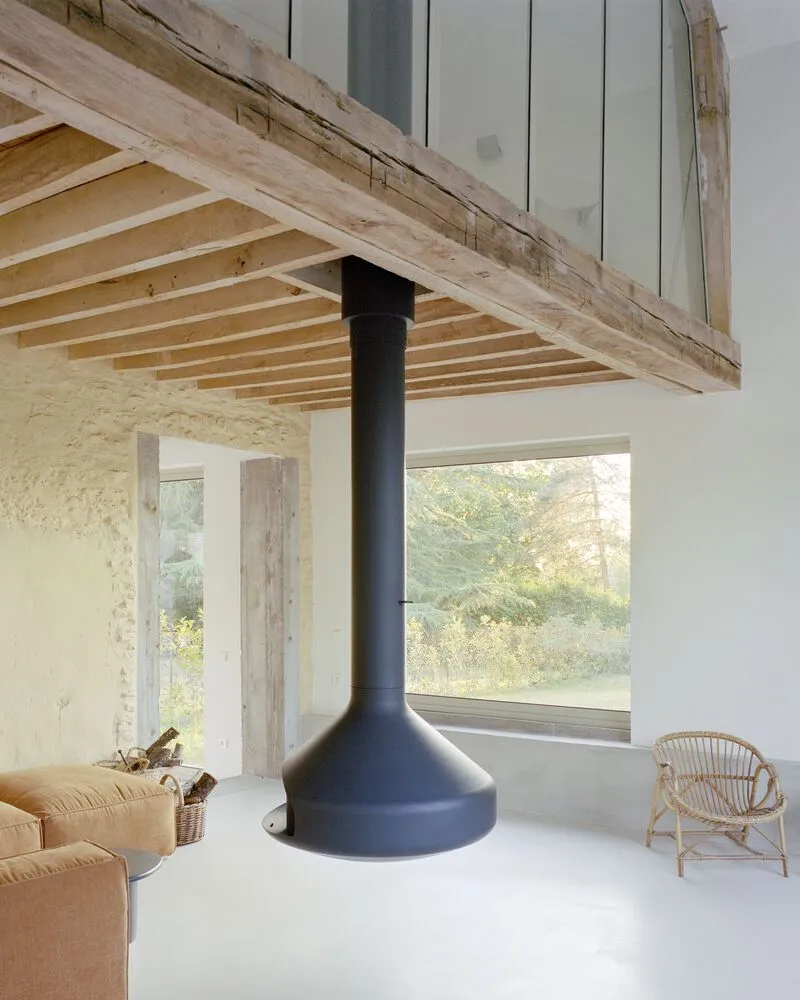
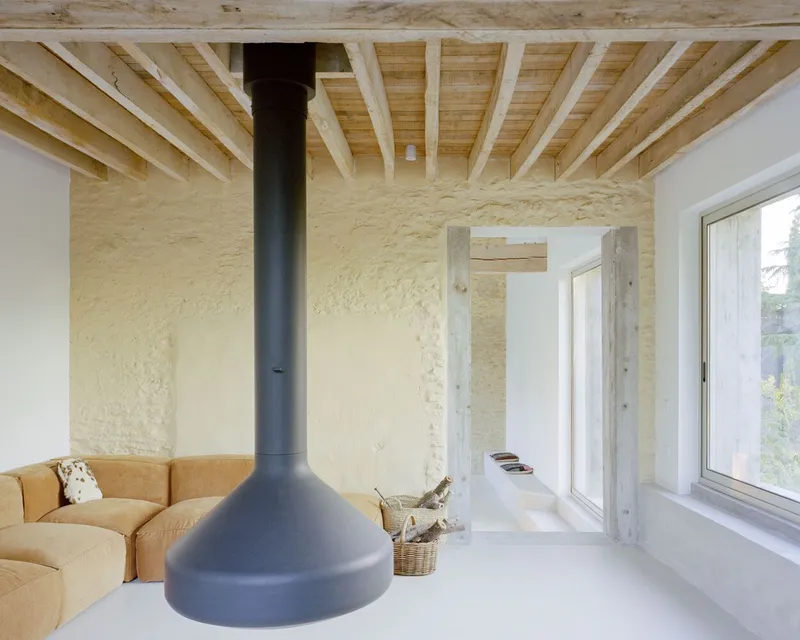
The living room, housed in a former stable, offers a more intimate experience. The ground floor, centered around a central fireplace, features two large windows that frame picturesque views of the landscape, capturing the soft light of dawn and dusk. The partial demolition of the wooden floor on the first level creates a mezzanine, ideal for quiet activities like reading or watching movies.
Materials and Aesthetics
Harmonizing Modernity with Tradition
The choice of materials plays a crucial role in the transformation of Hécourt House. The use of concrete, steel, and lacquered aluminum introduces a modern touch, while their textures and tones harmonize with the existing structure. This approach ensures that the modern elements do not overshadow the farmhouse's historical essence, preserving its authentic character.
Hécourt House by Studio Guma is a remarkable example of how architectural design can transform a historical farmhouse into a modern country house. By preserving the original structures and integrating contemporary materials and design elements, the project creates a serene retreat that reconnects individuals with nature while offering all the comforts of modern living. This transformation serves as an inspiration for those looking to blend rustic charm with modern elegance in architectural design.
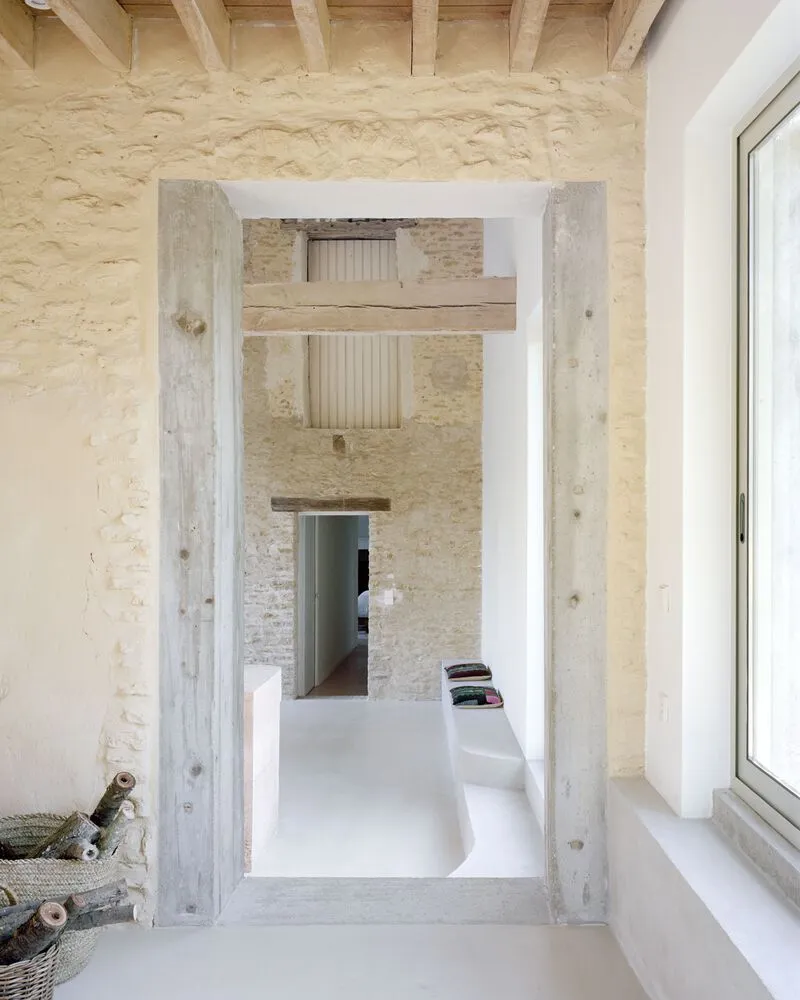
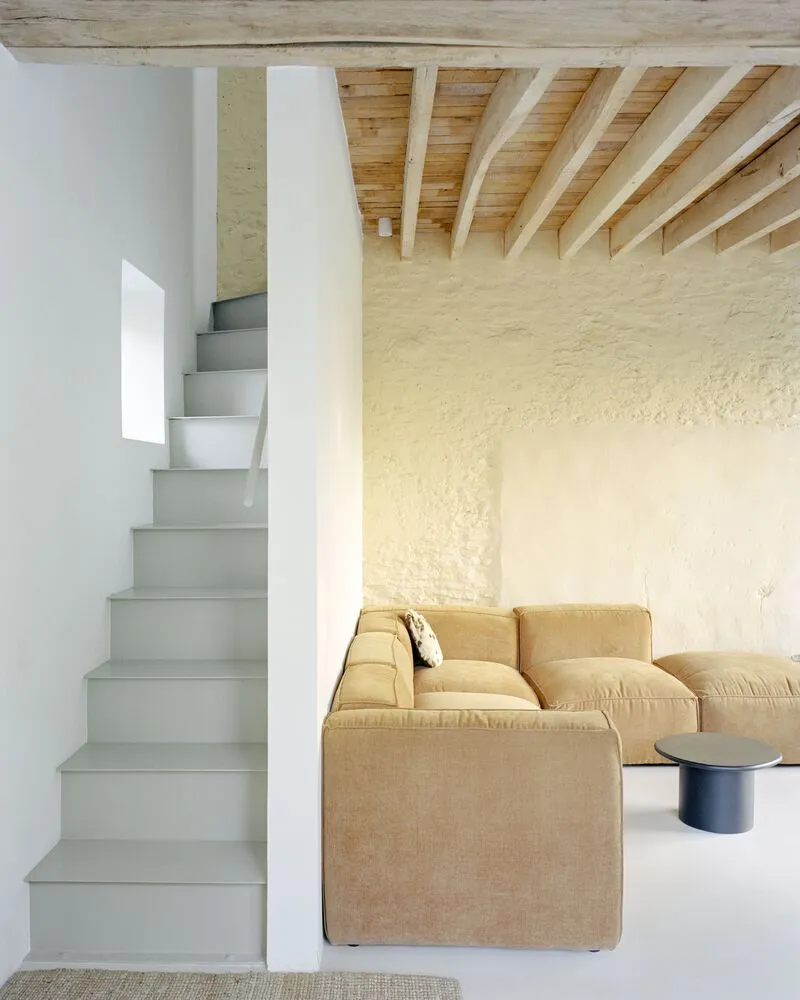
All photographs are work of Maxime Delvaux



Popular Articles
Popular articles from the community


Co-life: Sustainable Architecture for Age-Friendly Community Living
Co-life reimagines sustainable architecture for seniors through courtyards, rammed earth, shared gardens, and spaces designed for belonging.

Play: Fragments of Their World
Familiar architecture becomes modular playground design, creating safe spaces where displaced children can learn, connect, imagine and play.

Riyadh For All: Intergenerational Urban Design for Active Aging in Rabat
Riyadh For All reimagines urban design in Rabat with intergenerational co-living, adaptive courtyards, and Moroccan cultural exchange today.

Conexión: Biophilic Design Reimagines High-Rise Living in Hong Kong
Conexión reimagines high-rise living in Hong Kong through biophilic design, green facades, shared spaces, daylight, water and nature within.


Similar Reads
You might also enjoy these articles

Maya Harvest: A Cacao Resort Village Rooted in Mayan Tradition and Local Craft
Situated within a Tabasco cacao plantation, this shortlisted resort proposal merges vernacular materials with hands-on cultural immersion.
Harmonia: A River-Shaped Community That Grows Over Decades in Boa Vista
Curved pathways and modular grid structures along the Branco River create a phased settlement designed to evolve from 2030 to 2050.
The Architecture of Bathing: A Mughal Hammam Reimagined Across the Yamuna
Charlotte May's honorable mention entry for The Black Taj reinterprets Agra's bathing rituals through red sandstone, water, and framed views of the Taj Mah
Om-1: A Wall-Hung System That Moves Your Workspace Off the Desk
Modular plywood boards, magnetic pegs, and utility elements migrate clutter from the horizontal surface to the vertical plane.
Explore Architecture Competitions
Discover active competitions in this discipline



Challenge to reimagine the Iron Throne


Photograph architecture without architects


Illustrate the lost glory of Angkor Wat - Render Challenge


Design challenge to reuse E-waste
Comments (0)
Please login or sign up to add comments
No comments yet. Be the first to comment!