
Helvetia Campus Basel by Herzog & de Meuron: A Landmark of Architecture, Sustainability, and Public Engagement
Helvetia Campus Basel by Herzog & de Meuron blends renovated towers, sustainable design, public art, and green spaces, fostering collaboration and urban engagement.


Redefining Corporate Architecture in Basel
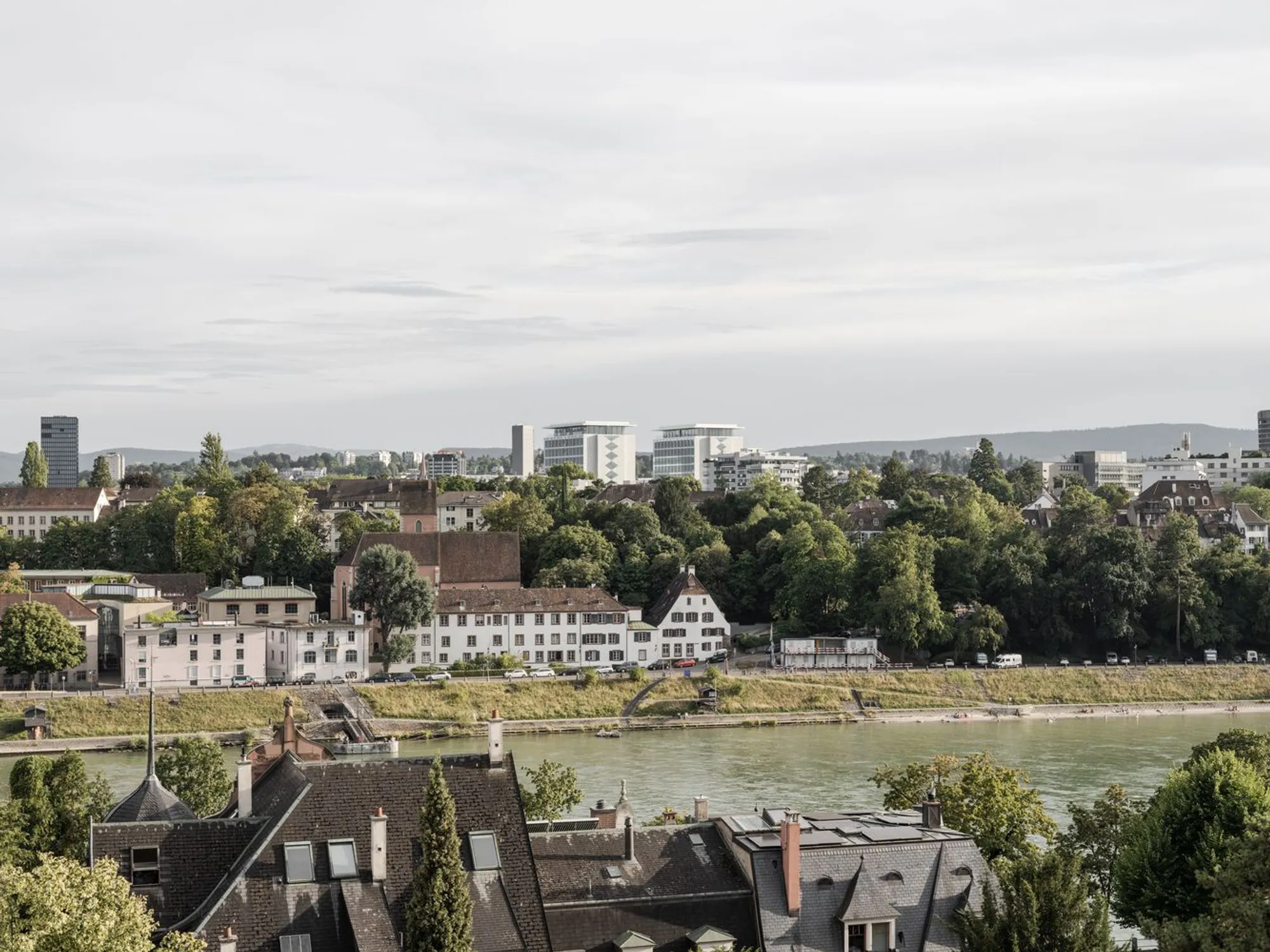
The Helvetia Campus Basel by Herzog & de Meuron represents a new chapter in urban corporate architecture — one that merges sustainability, openness, and public engagement. Strategically positioned between Aeschenplatz and the historic St. Alban quarter, the project establishes a distinctive identity for Helvetia Insurance through architecture that is both understated and monumental.
The development includes three new buildings and three renovated structures, unified through a cohesive material palette and a city-block scale organization. Together, they form a contemporary urban campus that reflects the company’s modern values and connection to the city of Basel.

A New Urban Identity for Helvetia
The Helvetia Campus in Basel, designed by internationally renowned architects Herzog & de Meuron, establishes a striking new identity for Helvetia at the intersection of Aeschenplatz and the historic St. Alban quarter. Conceived as a comprehensive urban campus, the project blends renovated heritage buildings with contemporary architecture to form a cohesive, recognizable expression of the Helvetia brand.
Completed in four phases, the campus combines three newly constructed buildings with three renovated structures, offering flexible workspaces, public amenities, and vibrant social areas for employees and visitors alike. A spacious public park at the heart of the campus connects seamlessly with the St. Alban green boulevard, opening the campus to the city and creating a new urban oasis in Basel.


Masterplan and Design Strategy
The site of the Helvetia headquarters has evolved since the 1950s, featuring heterogeneous building densities and irregular boundaries. Herzog & de Meuron’s masterplan sought to renovate and integrate existing structures while introducing a generous public park designed by Vogt Landscape Architects.
Key strategies include:
- Removal of recent inner-courtyard additions to create open space.
- Concentration of office functions in the southern block and relocation of residential areas to the northern site.
- Reuse of existing buildings to minimize environmental impact and gray energy consumption.
The project’s four-phase restructuring process includes:
- Renovation and vertical expansion of the 1950s office tower alongside a newly constructed twin tower.
- Construction of a central auditorium creating a prominent campus entrance.
- Renovation of the 1960s and 1970s administrative buildings with modern extensions.
- Development of residential apartments overlooking the new park.

Twin Towers and Flexible Workspaces
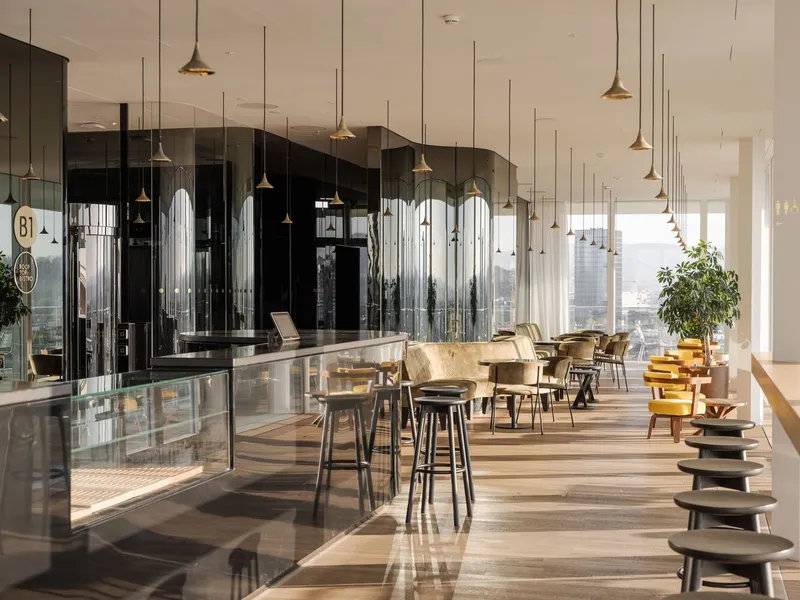
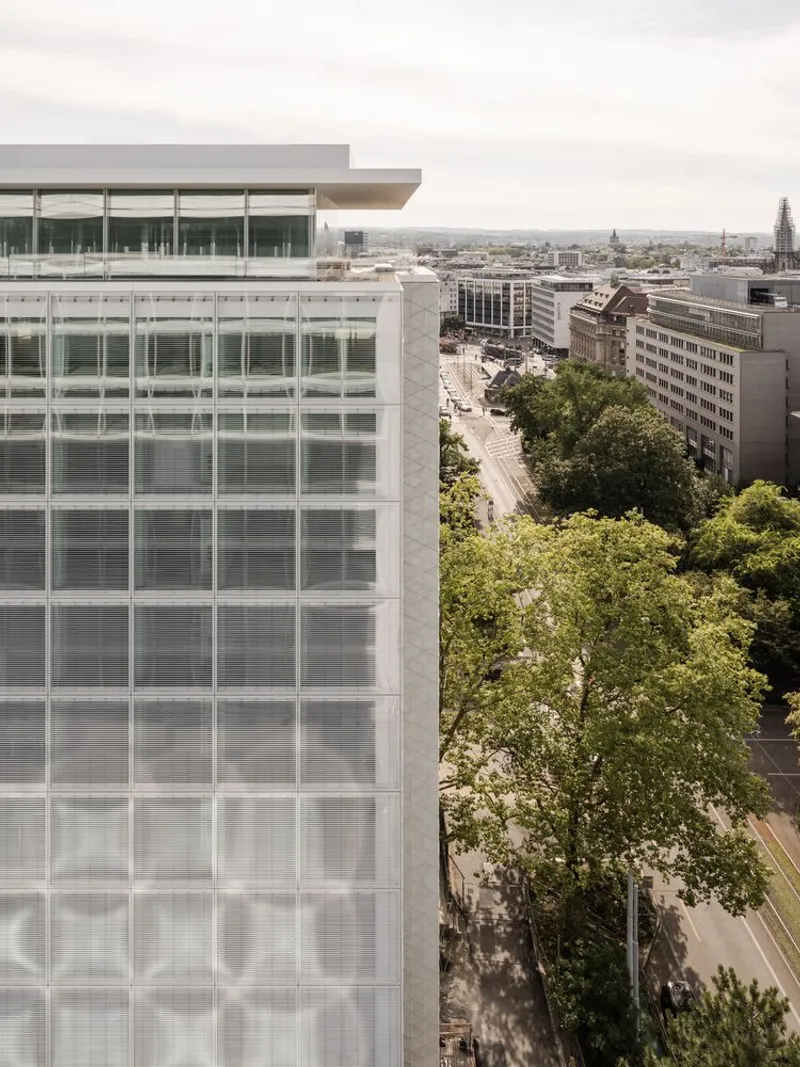
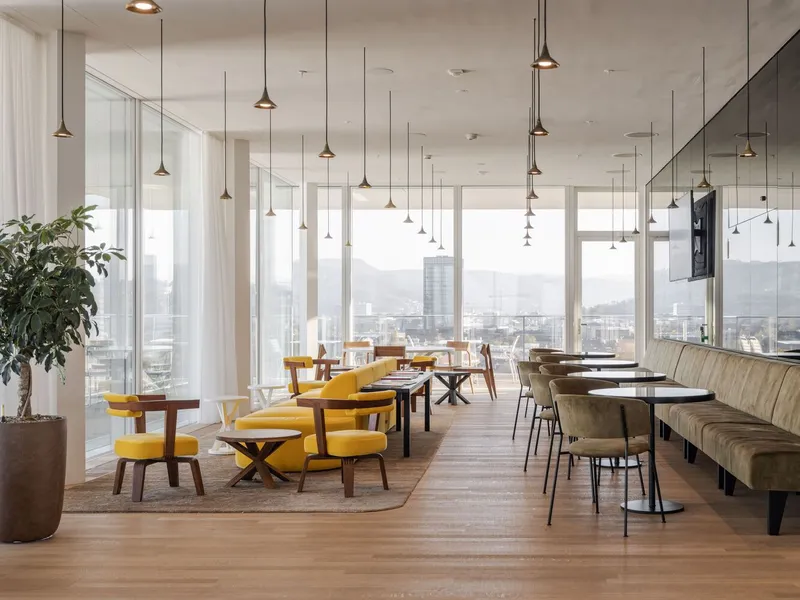
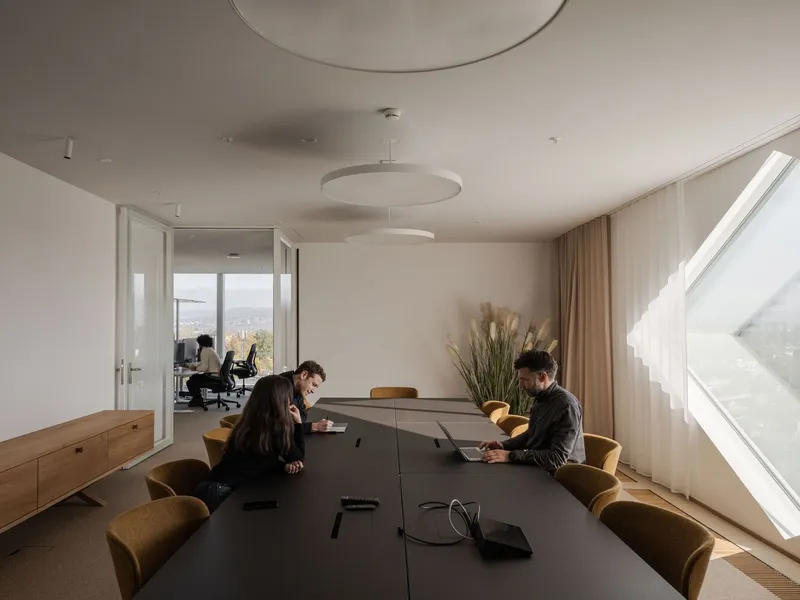
The two signature towers anchor the campus and provide a clear architectural identity amidst Basel’s low-rise surroundings. The original 1950s office tower, built for Patria Insurance Company, is complemented by a new tower matching its height and footprint. Flexible workspaces, collaborative zones, and gathering areas support modern office needs while maintaining historical continuity. Overhanging eaves and setback facades on the upper floors recall the architectural language of mid-20th-century Basel.
Auditorium and Public Spaces
The central auditorium acts as the campus’s connective core, featuring a curved roof and diamond-shaped columns. Natural stone flooring extends from the outdoor park into the interior, guiding visitors through an open, public-facing environment. The auditorium accommodates up to 300 people, accessible via a grand staircase linking the building to the green St. Alban-Anlage. An additional outdoor spiral staircase provides a direct connection between park and auditorium, fostering public engagement.

Innovative Facade Design
The campus showcases an intricate interplay of industrial flat glass and cast glass tiles, with 24,000 triangular tiles forming dynamic, sun-responsive facades. The design reflects the diagonal flight of staircases behind the towers and maximizes natural light while enhancing bird safety. East and west elevations feature prefabricated cavity facades for energy efficiency, while adjustable sunshades allow independent control, optimizing thermal performance and reducing maintenance.

Sustainability and Environmental Innovation
Sustainability is central to the Helvetia Campus design:
- Reuse of the existing office tower saves over 80% of gray energy.
- New buildings comply with DGNB and SGNI Platinum certification standards.
- Photovoltaic systems cover nearly 900 m², supplying a significant portion of campus electricity.
- The 3,500 m² central park promotes biodiversity and microclimate improvement.
The campus is fully integrated with public transport and open to the public via transparent, inviting architecture, including a rooftop café and accessible public spaces.


Art and Cultural Engagement
The Helvetia Art Foyer transforms the campus into a cultural hub. Public exhibitions, rotating artworks across 21 office floors, and a large video wall in the auditorium entrance highlight both Helvetia’s art collection and new acquisitions. Site-specific light installations by James Turrell – Diamond Glass (2023) and Night Raiment (2024) – interact with the facade and evening skyline, creating a dynamic dialogue between architecture and urban life.
The Helvetia Campus Basel is a model of urban integration, sustainable design, and cultural engagement. By combining renovation, modern architecture, and public accessibility, Herzog & de Meuron have created a landmark institutional campus that serves both the company and the city of Basel.

All photographs are works of Maris Mezulis



Popular Articles
Popular articles from the community


AL-JANNAH: Sustainable Architecture and Permaculture for Afghan Widows
AL-JANNAH uses sustainable architecture and permaculture to create resilient oasis of housing, learning, work and renewal for Afghan widows.

Riyadh For All: Intergenerational Urban Design for Active Aging in Rabat
Riyadh For All reimagines urban design in Rabat with intergenerational co-living, adaptive courtyards, and Moroccan cultural exchange today.

Co-Life: Senior Housing Design That Reconnects Older Adults With the City
Co-Life reimagines senior housing design through healing gardens, shared streets, workshops, and a sustainable community across generations.

The Ocean Hive: Sustainable Architecture for a Self-Sufficient Civilization at Sea
The Ocean Hive imagines sustainable architecture at sea, where modular habitats, algae, wave power and ocean waste sustain a growing colony.

Similar Reads
You might also enjoy these articles


Hodi-Mandai Geram
Project Function: Preservation and revitalization of the Intangible heritage and socio-spatial identity of the Hodi by Housing, Cultural Memory Center, Sacred Grove, landscape, local tourism economy


Olio Towers: A Mid-Rise for Performers That Fuses Housing, Rehearsal, and Stage
Located blocks from Houston's Theater District, this modular tower stacks living units around a central performance atrium.

Oasis: Modular Green Housing Carved into Dhaka's Urban Fabric
A shortlisted Plugin Housing entry reclaims unauthorized settlements in Dhaka with stepped concrete volumes, green roofs, and ventilation-driven design.

Black Hole: A Floating Megastructure for the Post-Physical Era
Emiliano Mazzarotto envisions a spherical, self-scaling arena where e-sports, digital hotels, and holographic stadiums replace traditional public space.

Explore Sustainable Design Competitions
Discover active competitions in this discipline



Challenge to reimagine the Iron Throne


Photograph architecture without architects


Illustrate the lost glory of Angkor Wat - Render Challenge


Design challenge to reuse E-waste
Comments (0)
Please login or sign up to add comments
No comments yet. Be the first to comment!