
Higashi Tamagawa Apartment Complex by Tomoyuki Kurokawa Architects: Innovative Suburban Living in Tokyo
Higashi Tamagawa Apartment Complex blends private and communal living in Tokyo, using open spaces, glass walls, and central staircases for vibrant urban interaction.


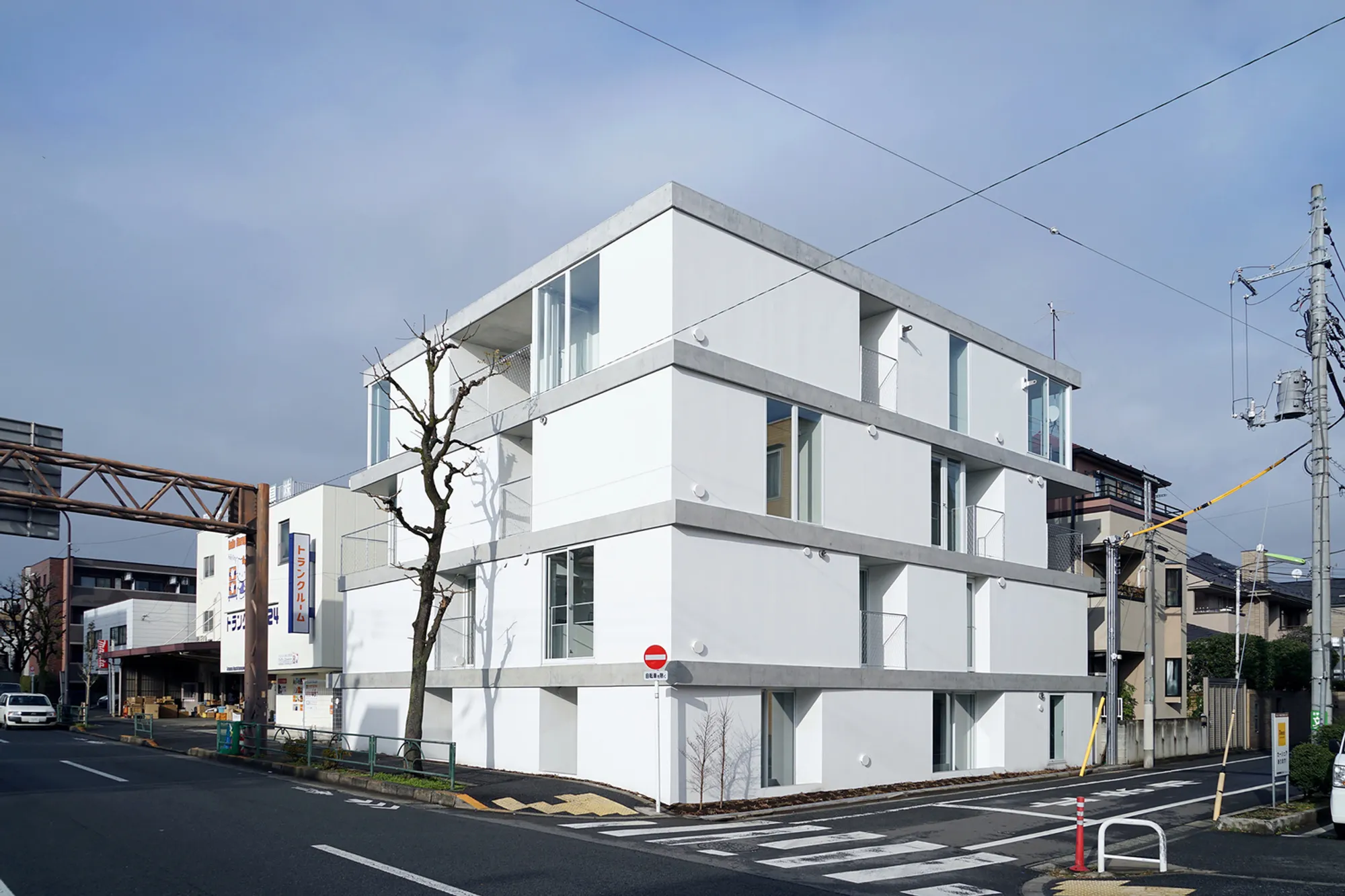
The Higashi Tamagawa Apartment Complex, designed by Tomoyuki Kurokawa Architects, is a pioneering residential project located in Setagaya City, Tokyo, Japan. Completed in 2019, this 567 m² housing complex reimagines suburban living by blending private and communal spaces within a contemporary urban framework. Featuring 19 compact 25m² apartments, the complex challenges conventional notions of privacy, ownership, and urban density while fostering community interaction.
Redefining Ownership and Residential Experience
Recent global trends show a shift from ownership to subscription and rental models, changing how people perceive and interact with possessions. This paradigm inspired the project’s approach: creating a living environment that emphasizes shared experiences while respecting individual privacy. The architecture reflects this new lifestyle philosophy, offering a balance between personal space and collective engagement.
Gradual Transition Between Public and Private Spaces
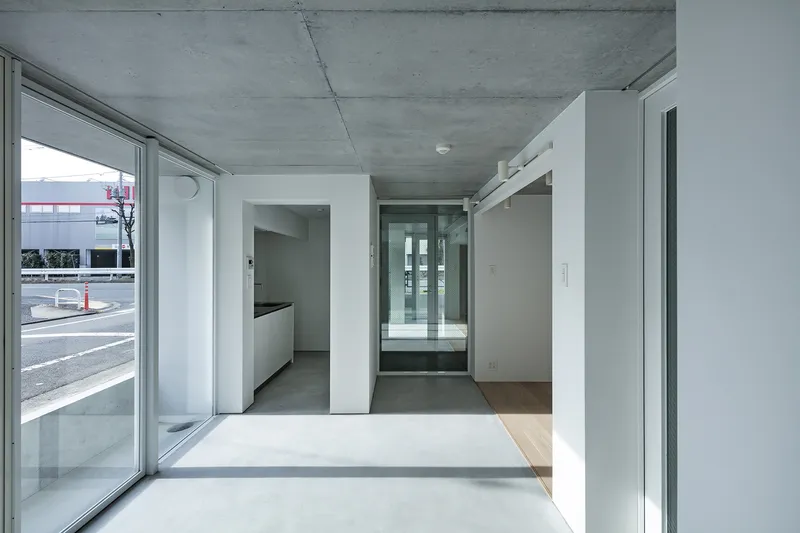
The complex treats the suburban environment as an integral part of daily life, dissolving the traditional boundaries between city and residence. By carving openings and voids into the building’s mass, the architects foster a gradual transition from public urban space to private apartment interiors. The ground floor is intentionally open, connecting external urban surroundings with internal communal areas, creating a dynamic interplay between private and shared life.
This design strategy generates gradations in spatial perception, where residents’ daily activities blend seamlessly with the urban context, fostering a sense of community within a dense suburban setting. By living together in this environment, residents contribute to a new urban landscape, redefining the relationship between individual life and the city.
Central Staircase as a Social Hub
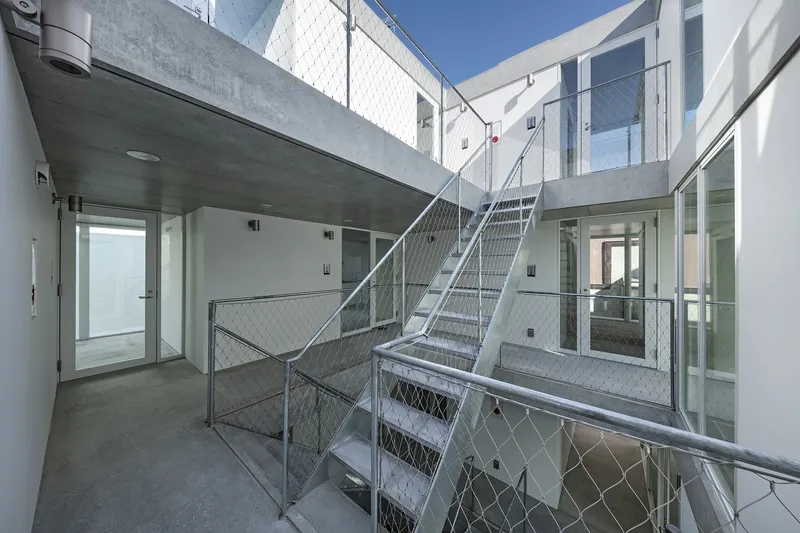
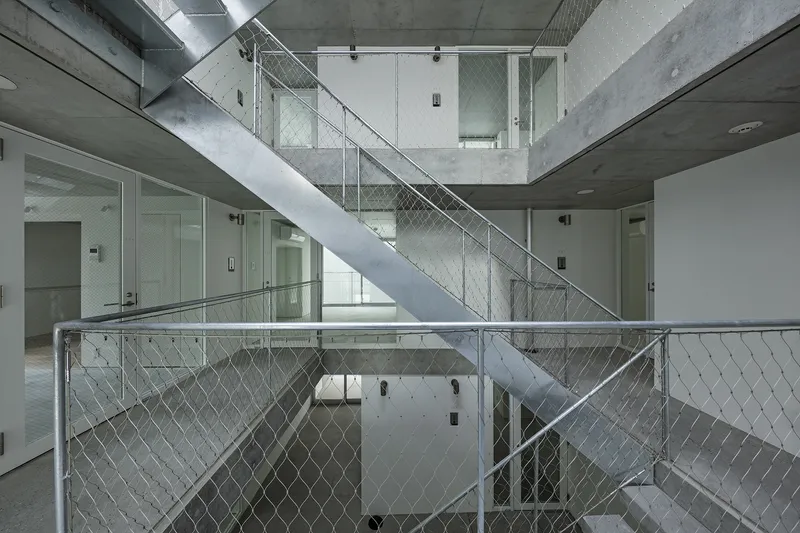
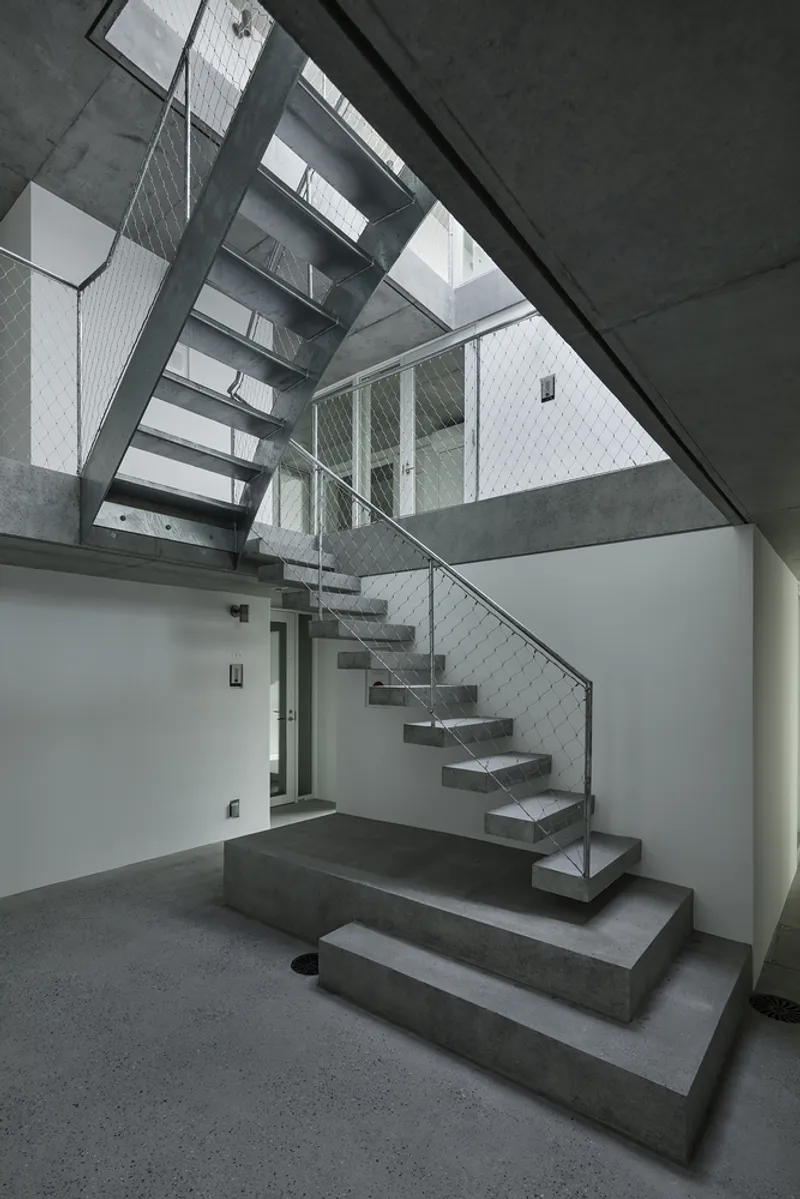
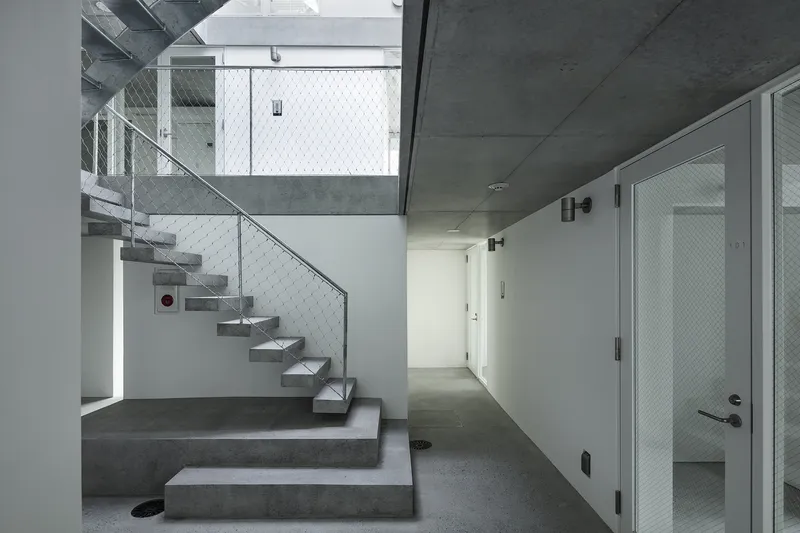
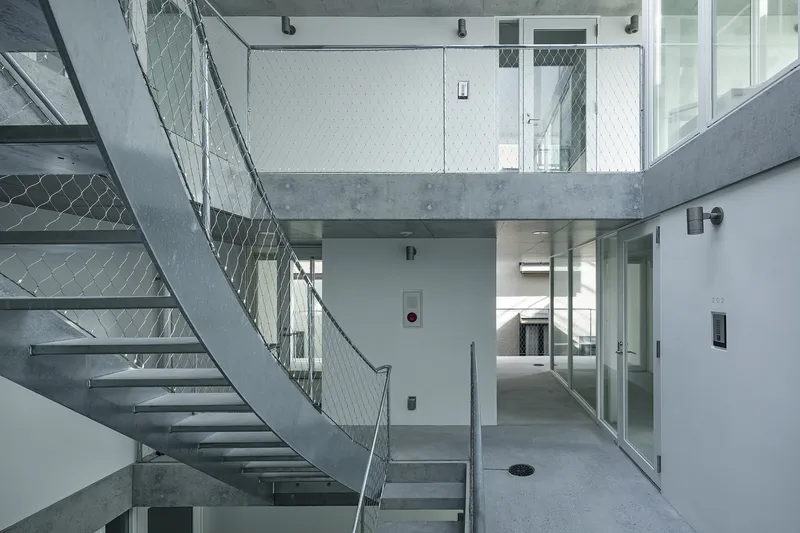
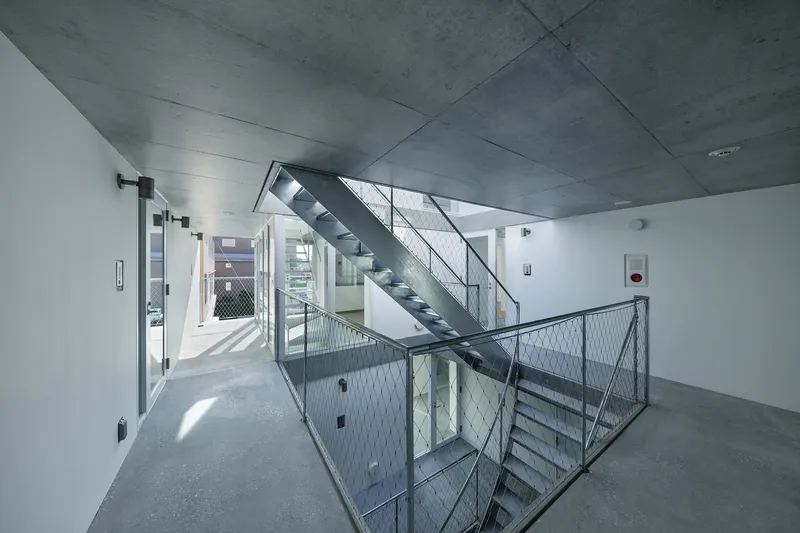
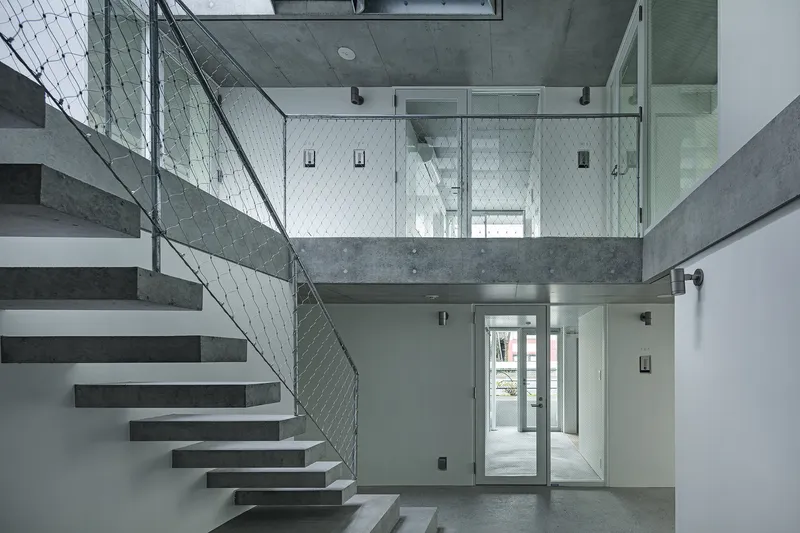
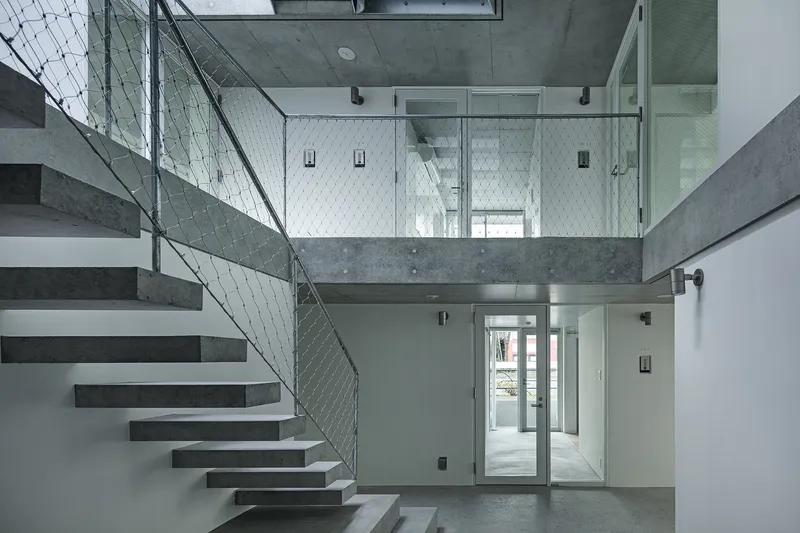
At the heart of the complex is a central staircase designed to evoke a public square-like atmosphere. A concrete podium ramps up as a bench for residents to sit, interact, and share the space, while the staircase remains open to the sky, inviting natural light, ambient sounds, and seasonal weather into the interior. This thoughtful intervention enhances the feeling of openness while encouraging social interaction in everyday life.
Interior Design and Material Continuity
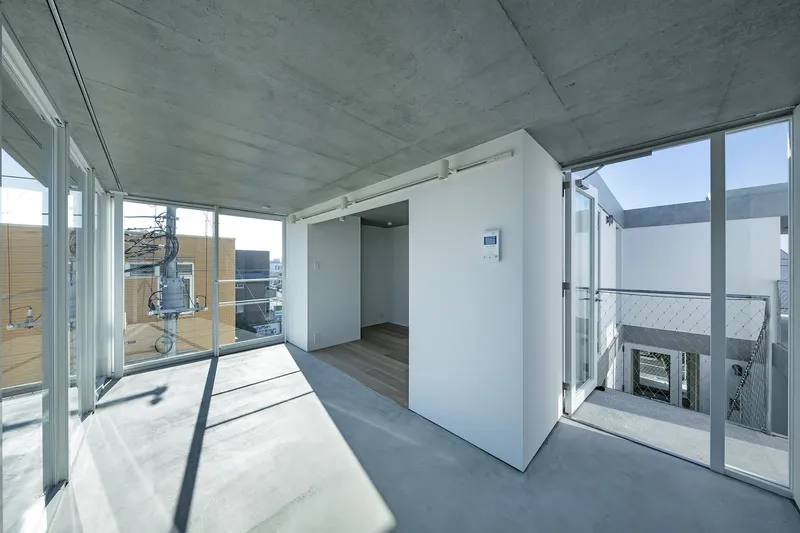
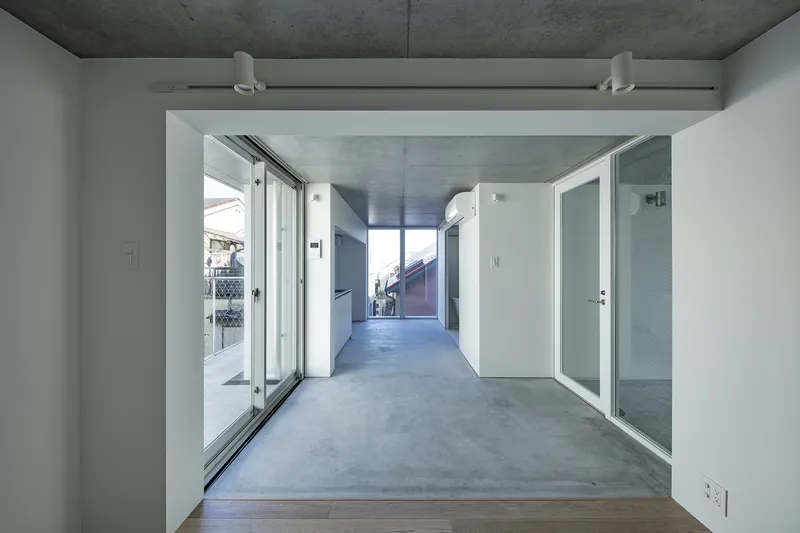
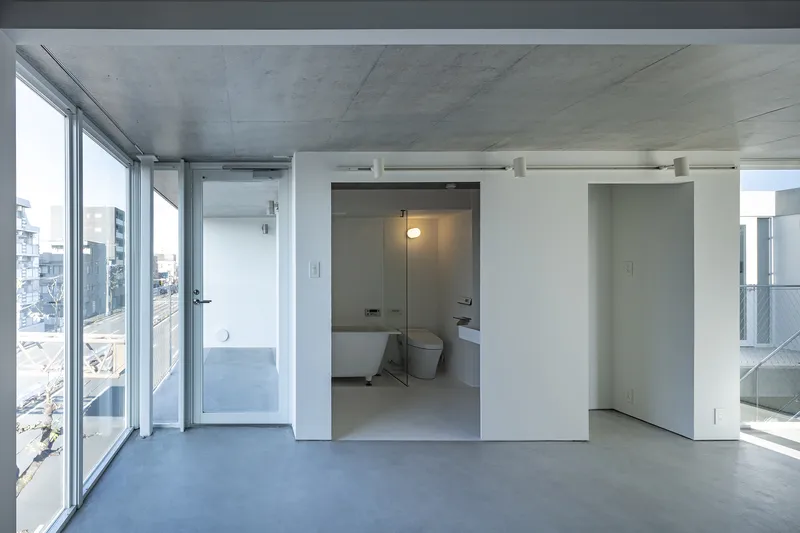
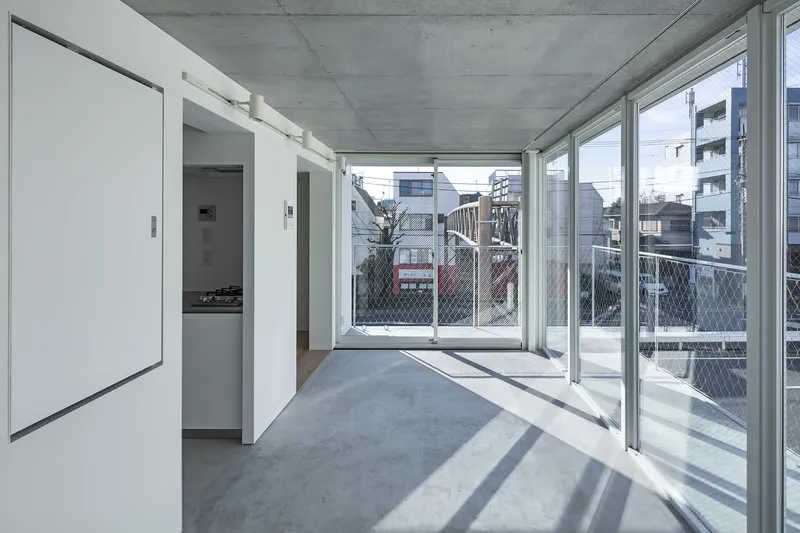
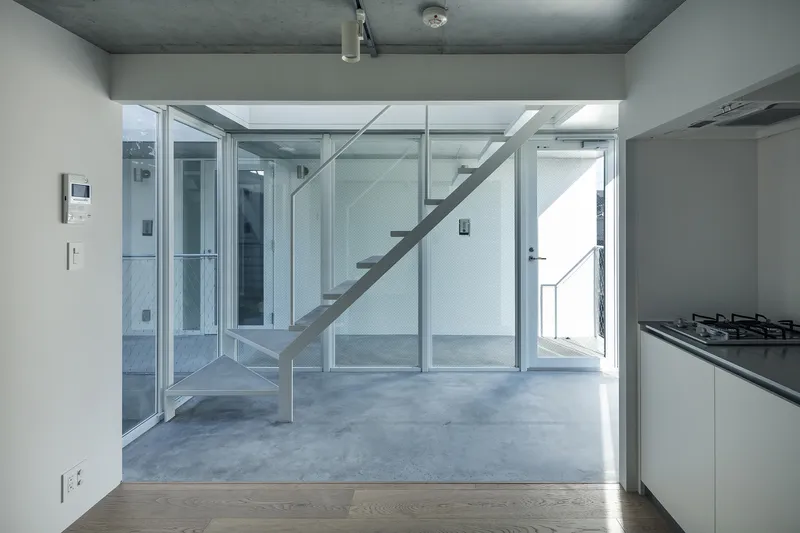
The interiors follow the same philosophy of gradual transition. Walls and entrances to each unit are primarily glass, allowing abundant natural light to flood the apartments and mitigating the isolation often found in compact living spaces. Concrete flooring runs continuously through public corridors and apartment interiors, reinforcing the seamless connection between private and shared areas.
Individual privacy is maintained with walled wooden-floor rooms within each apartment, creating an intimate retreat while maintaining continuity with communal spaces. This subtle layering of spaces transforms the apartment complex into a living continuum, where private and public life coexist naturally.
Distinctive Façade and Structural Expression
The façade of the Higashi Tamagawa Apartment Complex highlights the contrast between concrete slabs and white-painted walls. Exposed beams form both structural and aesthetic elements, defining unit separations while contributing to a clean, modernist appearance. The architecture celebrates material honesty and functional clarity, enhancing both durability and visual impact in the urban fabric of Setagaya.
A Vision for Modern Suburban Housing
The Higashi Tamagawa Apartment Complex represents a forward-thinking approach to urban residential design, integrating community-oriented living, sustainable material use, and innovative spatial gradation. It challenges traditional housing typologies by merging private, semi-private, and public zones, offering residents a living experience that is both flexible and socially engaging.
Key Features:
- 19 compact 25m² apartments
- Central staircase as communal social hub
- Gradual transition from public to private spaces
- Continuous concrete flooring connecting interior and corridors
- Glass walls for natural light and visual openness
- Exposed structural beams defining façade rhythm
- Integration with suburban urban context
Manufacturers & Contractors: DAINICHI GIKEN KOGYO, Ikeda Corporation, Kikusui Chemical Industry, Sanwa Livacon, Woody World Structural Design: LOW FAT Structure Construction: FORM GIVING Photographers: Ryogo Utatsu, Kenta Hasegawa
All photographs are works of
Ryogo Utatsu, Kenta Hasegawa




Popular Articles
Popular articles from the community


Lunar Spiral: Space Architecture Shaped by the Mathematics of the Universe
Lunar Spiral reimagines space architecture through Fibonacci geometry, lunar regolith, levitating habitats, and self-sustaining Moon living.

Hill & Cross Opera: Sculptural Opera House Architecture Shaped by Tallinn’s Landscape and Identity
Hill & Cross Opera reimagines opera house architecture in Tallinn through its sculptural hill, civic plaza, glass wave and a luminous cross.

The Ocean Hive: Sustainable Architecture for a Self-Sufficient Civilization at Sea
The Ocean Hive imagines sustainable architecture at sea, where modular habitats, algae, wave power and ocean waste sustain a growing colony.

Riyadh For All: Intergenerational Urban Design for Active Aging in Rabat
Riyadh For All reimagines urban design in Rabat with intergenerational co-living, adaptive courtyards, and Moroccan cultural exchange today.

Similar Reads
You might also enjoy these articles

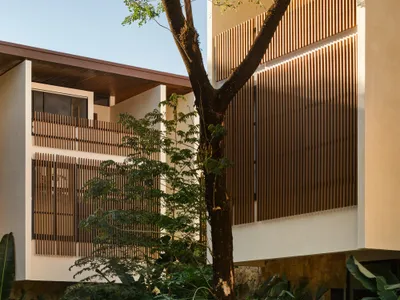
FAMM Arquitectura Organizes Ten Villas Around Courtyards and Jungle in Nosara, Costa Rica
El Molino pairs two elongated volumes with deep overhangs and timber louvers to build a compact coastal community five minutes from the beach.
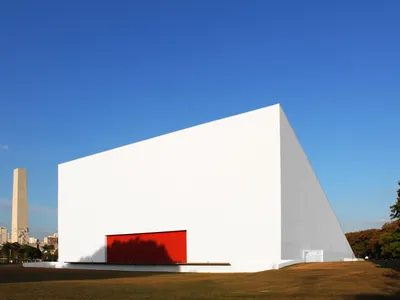
Oscar Niemeyer's Ibirapuera Park Pavilions Define São Paulo's Cultural Identity in Concrete and Curve
A constellation of modernist volumes set within São Paulo's most important urban park, conceived for the city's 400th anniversary in 1954.
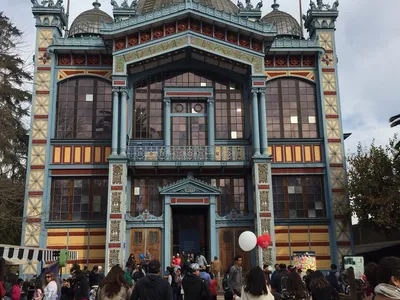
How Henri Picq's 1889 Paris Pavilion Traveled 11,000 Kilometers to Become Santiago's Artequín Museum
A prefabricated iron and glass pavilion built for the Paris Universal Exposition found a second life as a children's art museum in Chile.
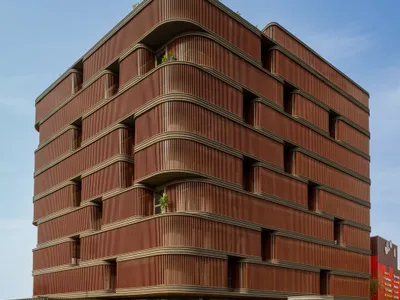
Sanjay Puri Architects Wraps a Jaipur Office Tower in Capsule-Shaped Green Buffers
A nine-level climate-responsive workplace near Jaipur Airport uses stacked planter terraces and aluminium screens to fight 40°C heat.

Explore Residential Building Competitions
Discover active competitions in this discipline


Challenge to design mud housing for contemporary communities


Challenge to reimagine the Iron Throne


Photograph architecture without architects


Illustrate the lost glory of Angkor Wat - Render Challenge
Comments (0)
Please login or sign up to add comments
No comments yet. Be the first to comment!