
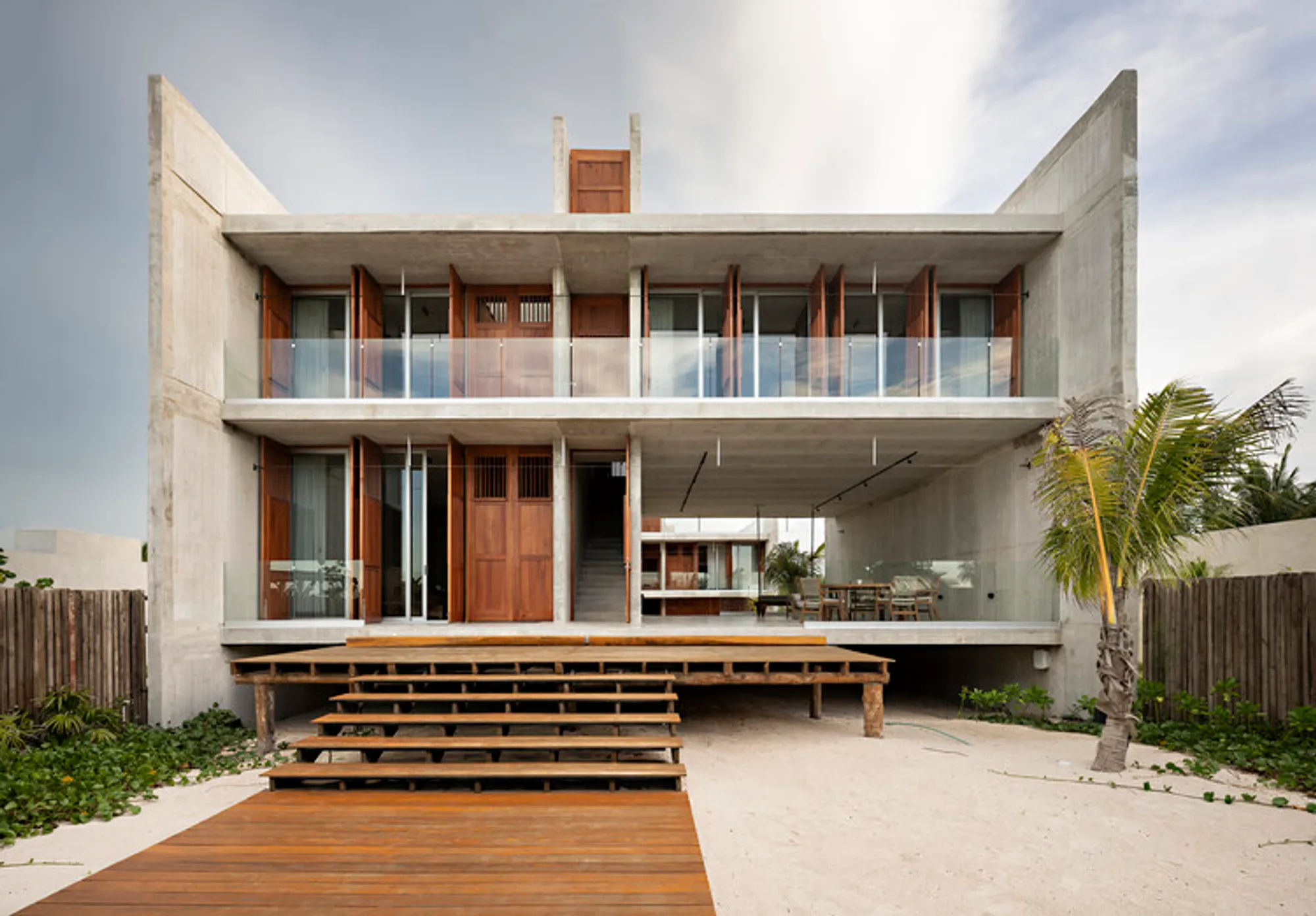
Hollow Volumes Facing the Sea: Hollow House, Mexico by Boyancé Arquitectura + Edificación, Muñoz Arquitectos, Augusto Quijano Arquitecto
A coastal residence formed by elevated blocks and courtyards, using modular concrete and terraces to frame views, ventilation, and landscape integration.


Hollow House is conceived as a coastal dwelling where architecture responds directly to climate, landscape, and construction logic. Designed collaboratively by Boyancé Arquitectura + Edificación, Muñoz Arquitectos, and Augusto Quijano Arquitectos, the house is structured as a system of voids and solids that frame views, regulate climate, and minimize environmental impact.
Architecture Shaped by Climate, Structure, and Landscape
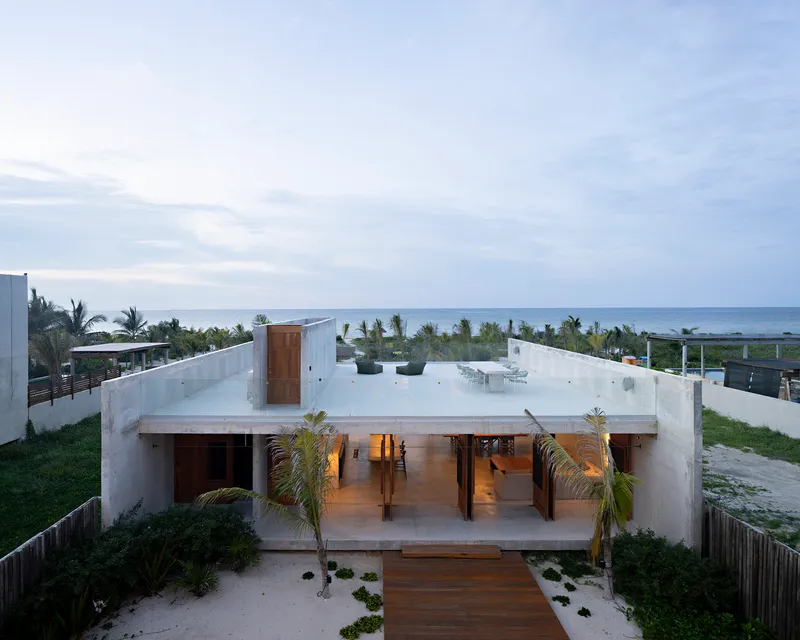
Set within a tropical coastal context, the project prioritizes openness, ventilation, and material honesty. Rather than a single compact volume, the house is articulated into three independent yet interconnected blocks, allowing the architecture to dissolve into the surrounding landscape while maintaining functional clarity.
Three Blocks, Three Lives
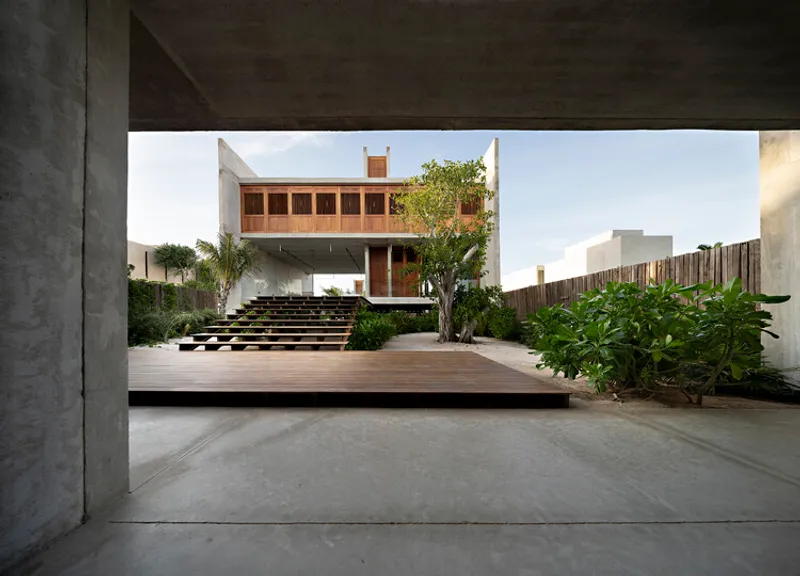
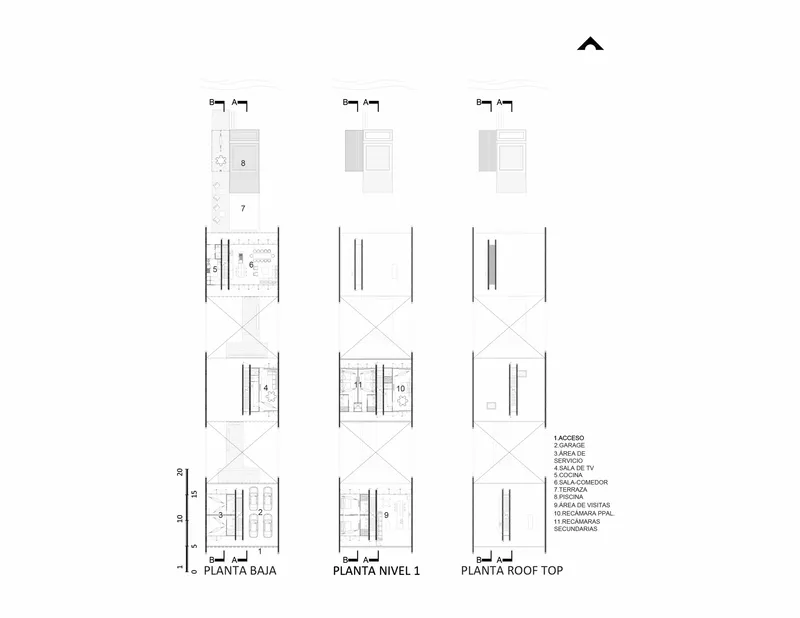
The house is organized into three distinct volumes, each assigned a specific function: social spaces, private areas, and service zones. These blocks are separated by two intermediate courtyards, which act as spatial buffers while enhancing environmental performance. The courtyards promote cross ventilation, introduce controlled daylight, and create moments of pause between the different living zones.
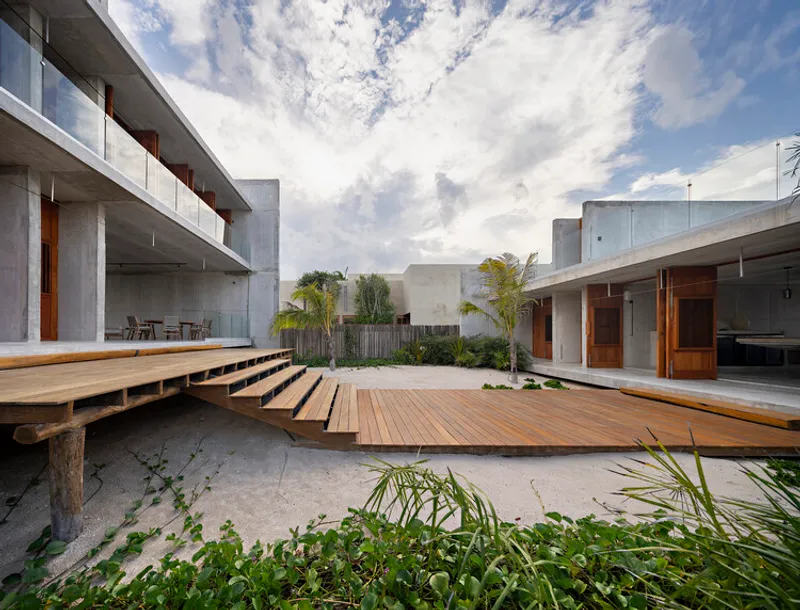
This fragmented composition generates spatial fluidity, ensuring that movement through the house is gradual and experiential rather than abrupt. The voids between the blocks become as important as the built volumes themselves, reinforcing the idea of the house as a porous, breathable structure.
Orientation and Views as Design Drivers
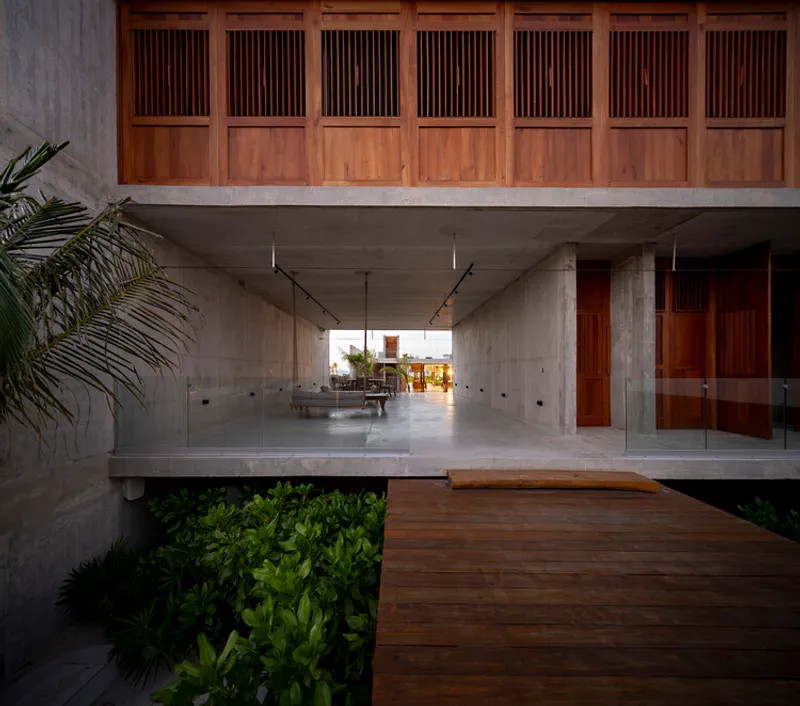
One of the project’s defining intentions is its relationship with the sea. Each block is positioned at a different level, carefully staggered to maximize uninterrupted coastal views while preventing visual overlap between spaces. This stepped configuration not only enhances privacy but also optimizes natural ventilation by capturing prevailing sea breezes.
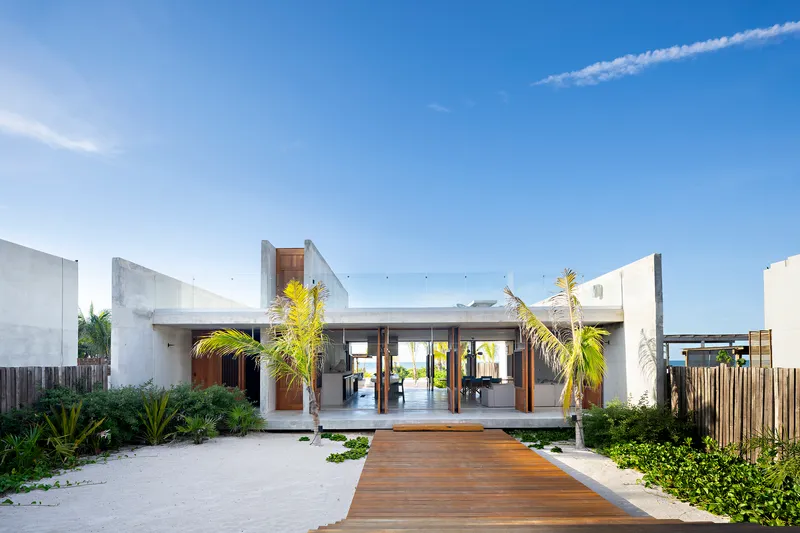
Orientation plays a critical role in thermal comfort. The blocks are aligned to allow wind to pass freely through the courtyards and interior spaces, while shaded areas remain cool throughout the day. The courtyards function as bioclimatic regulators, creating temperate microclimates that reduce dependence on mechanical systems.
Terraces and the Dissolution of Boundaries
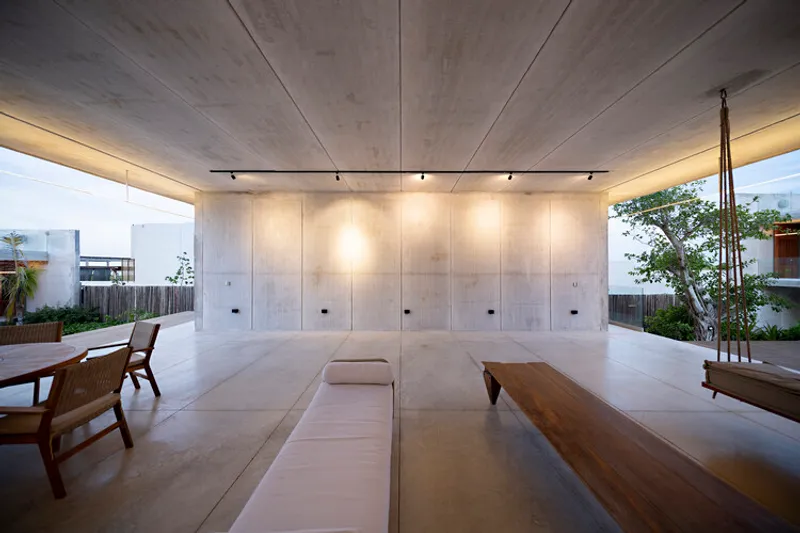
Horizontal planes extend outward from each block to form terraces that mediate between interior spaces and the tropical environment. These outdoor platforms blur the boundary between inside and outside, allowing daily life to unfold in direct contact with the landscape.
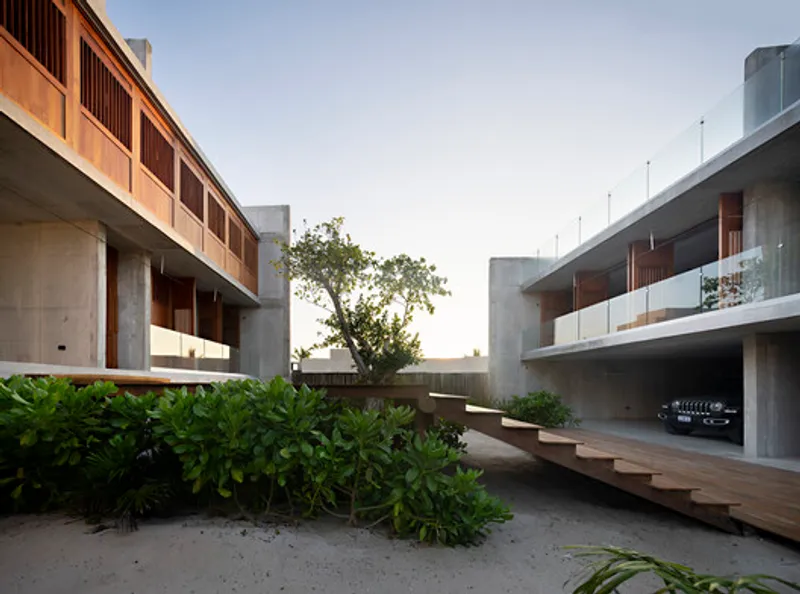
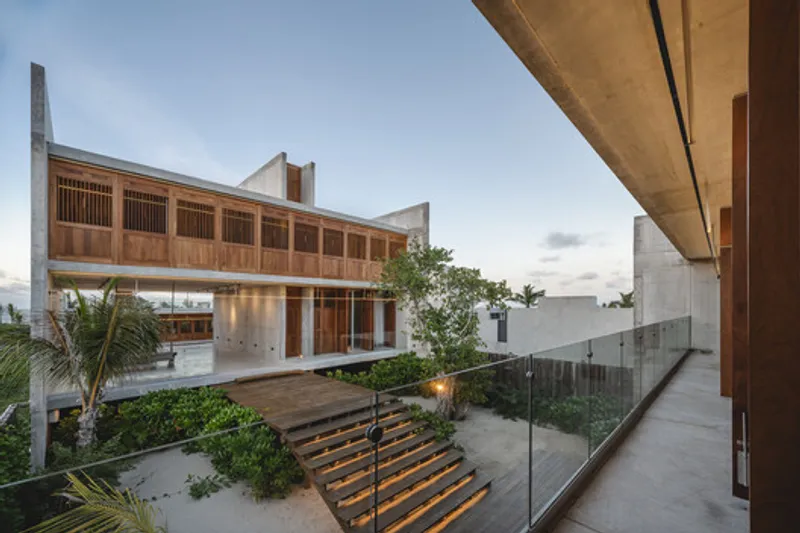
The terraces frame views of the sea, vegetation, and sky, reinforcing the project’s emphasis on horizontality and openness. Living spaces expand naturally outward, turning the house into a continuous sequence of shaded interiors and open-air rooms.
Elevated Architecture and Ecological Sensitivity
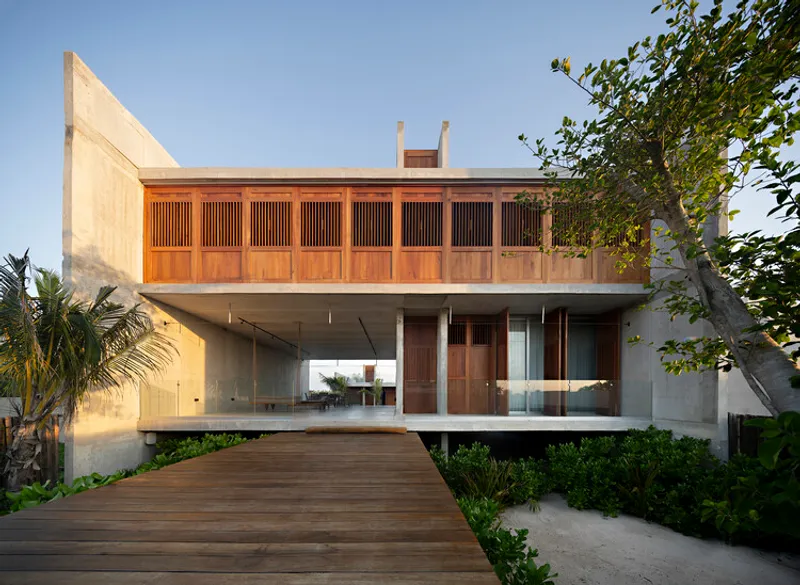
The entire structure is lifted above the ground, a strategic decision that allows the free passage of flora, fauna, and even wave action during extreme environmental events. This elevation reduces the project’s ecological footprint while enhancing resilience in a coastal setting.
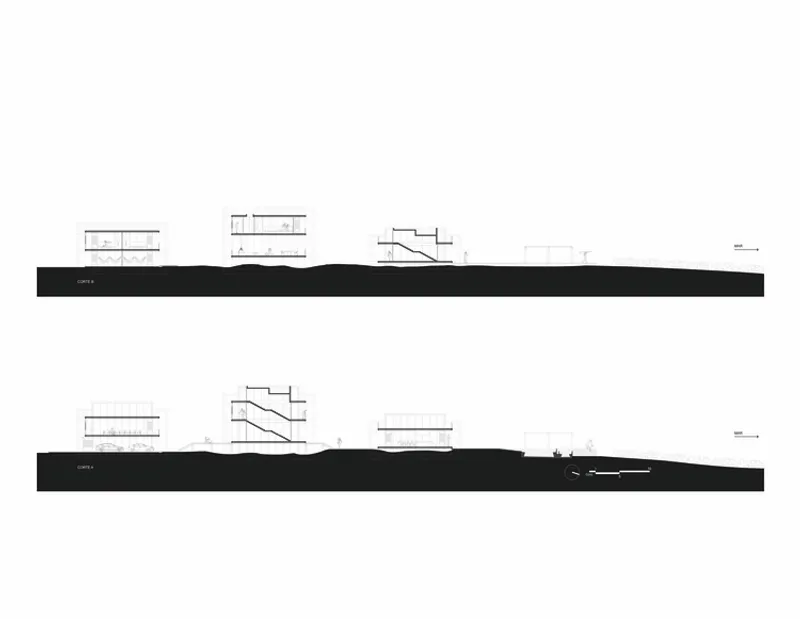
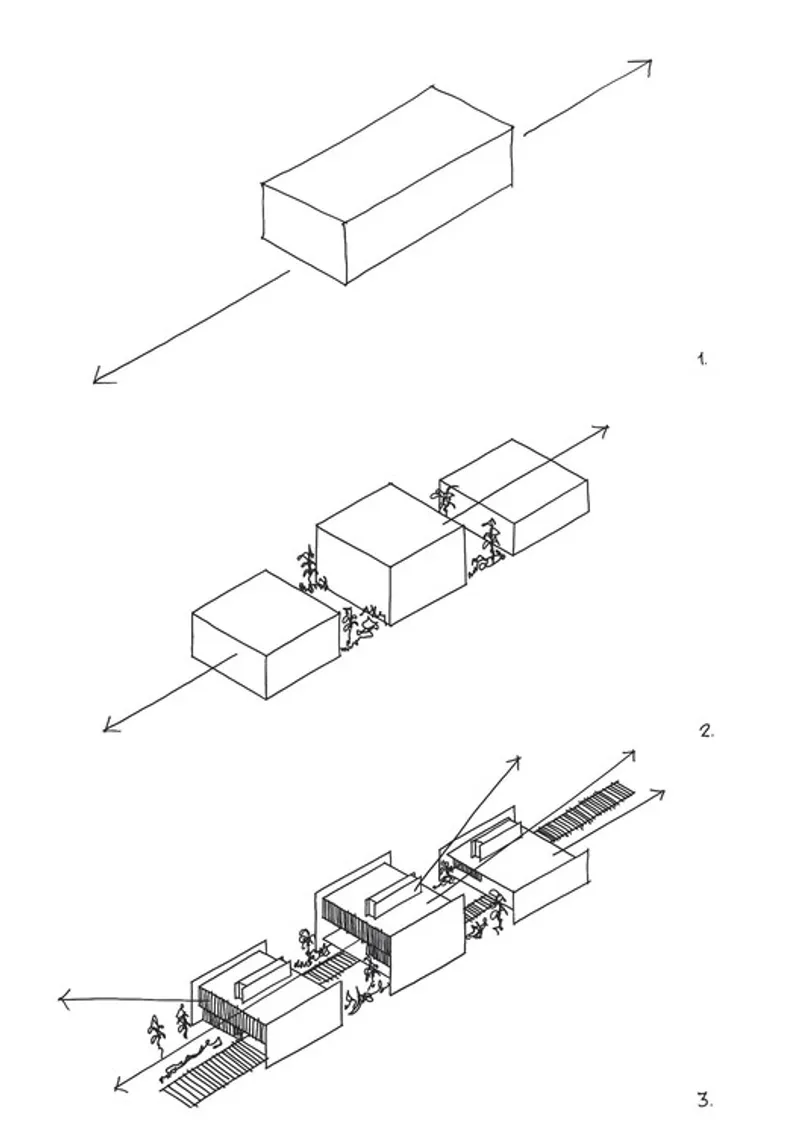
Visually, the raised volumes appear to float above the terrain, giving the house a sense of lightness despite its robust concrete construction. Wooden walkways connect the blocks, guiding movement from the main access through the house and toward the beach, reinforcing a slow, deliberate relationship with the site.
Structural Innovation Through Modularity
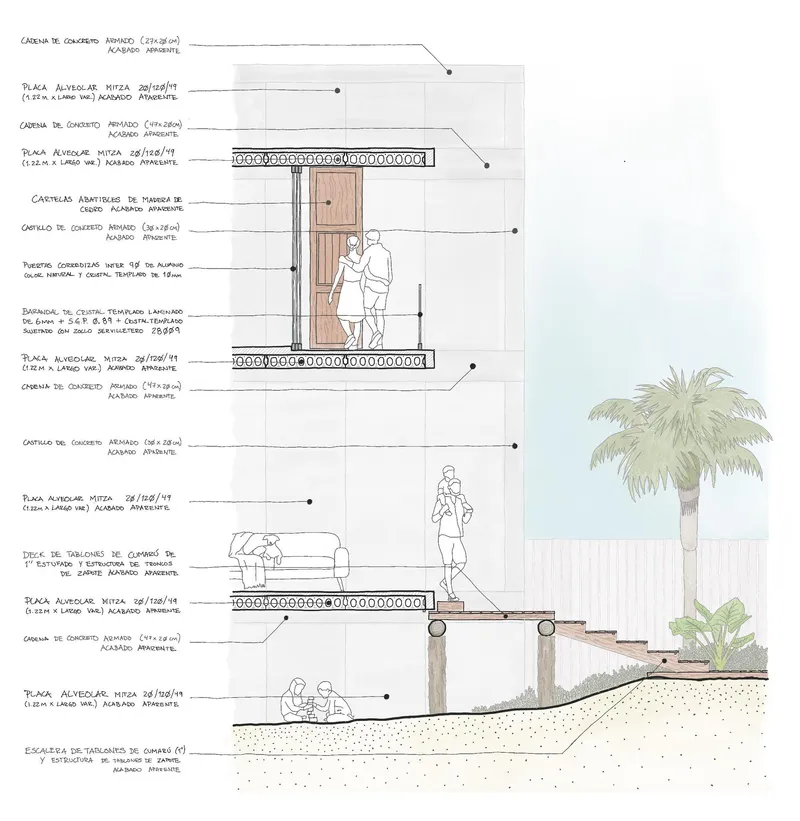
A defining innovation of Hollow House lies in its structural system. Hollow core slabs, typically used for roofing, are employed both horizontally and vertically, forming floors and load-bearing walls. With a consistent section measuring 1.21 meters wide and 0.20 meters thick, these elements resolve the entire structure through a single modular system.
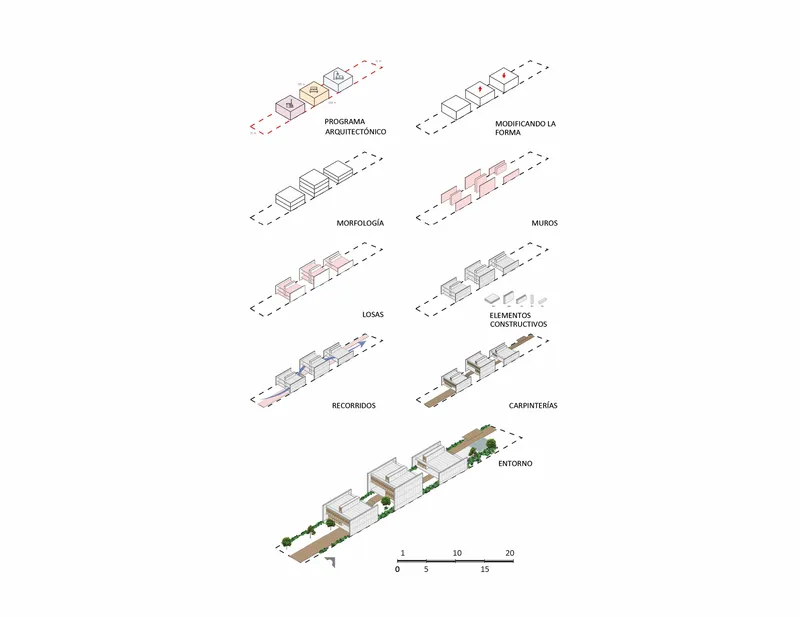
Each block is structurally reduced to four load-bearing walls: two peripheral walls and two central ones. The central walls house circulation and services, adapting their configuration according to the function of each block. This structural simplicity allows for clarity in form, efficiency in construction, and flexibility in spatial organization.
Material Honesty and Tectonic Expression
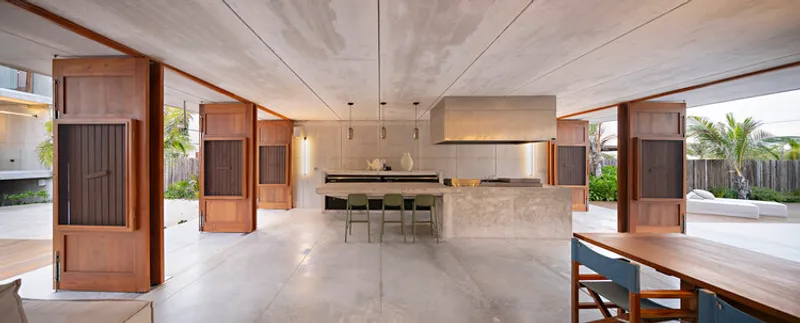
Material expression is direct and uncompromising. All structural elements remain exposed, eliminating the need for cladding or decorative finishes. Concrete walls, columns, and chains reveal their construction logic, expressing the building’s tectonic clarity.
Wooden elements are introduced as a counterpoint, referencing vernacular building traditions and softening the concrete’s rigidity. Together, concrete and wood establish a language of material purity, reinforcing the project’s commitment to constructive honesty and architectural restraint.
A House Defined by Voids
Hollow House is ultimately an exploration of absence as much as presence. Through courtyards, terraces, and elevated volumes, the project demonstrates how voids can shape experience, regulate climate, and connect architecture to its environment.
Rather than dominating the landscape, the house adapts to it: floating above the ground, opening toward the sea, and allowing nature to pass through. It stands as a refined example of coastal architecture where structure, climate, and spatial clarity converge into a coherent and sustainable whole.
All the Photographs are works of Javier Callejas, Manolo R. Solis



Popular Articles
Popular articles from the community


Play: Fragments of Their World
Familiar architecture becomes modular playground design, creating safe spaces where displaced children can learn, connect, imagine and play.

Co-life: Sustainable Architecture for Age-Friendly Community Living
Co-life reimagines sustainable architecture for seniors through courtyards, rammed earth, shared gardens, and spaces designed for belonging.

Hill & Cross Opera: Sculptural Opera House Architecture Shaped by Tallinn’s Landscape and Identity
Hill & Cross Opera reimagines opera house architecture in Tallinn through its sculptural hill, civic plaza, glass wave and a luminous cross.

The Earth Pod: 3D Printed Homes for Resilient Refugee Communities
The Earth Pod reimagines refugee housing through 3D printed homes made from clay, combining resilience, self-sufficiency, and rapid shelter.

Similar Reads
You might also enjoy these articles


Hodi-Mandai Geram
Project Function: Preservation and revitalization of the Intangible heritage and socio-spatial identity of the Hodi by Housing, Cultural Memory Center, Sacred Grove, landscape, local tourism economy


Olio Towers: A Mid-Rise for Performers That Fuses Housing, Rehearsal, and Stage
Located blocks from Houston's Theater District, this modular tower stacks living units around a central performance atrium.

Oasis: Modular Green Housing Carved into Dhaka's Urban Fabric
A shortlisted Plugin Housing entry reclaims unauthorized settlements in Dhaka with stepped concrete volumes, green roofs, and ventilation-driven design.

Black Hole: A Floating Megastructure for the Post-Physical Era
Emiliano Mazzarotto envisions a spherical, self-scaling arena where e-sports, digital hotels, and holographic stadiums replace traditional public space.


Explore Architecture Competitions
Discover active competitions in this discipline



Challenge to reimagine the Iron Throne


Photograph architecture without architects


Illustrate the lost glory of Angkor Wat - Render Challenge


Design challenge to reuse E-waste
Comments (0)
Please login or sign up to add comments
No comments yet. Be the first to comment!