
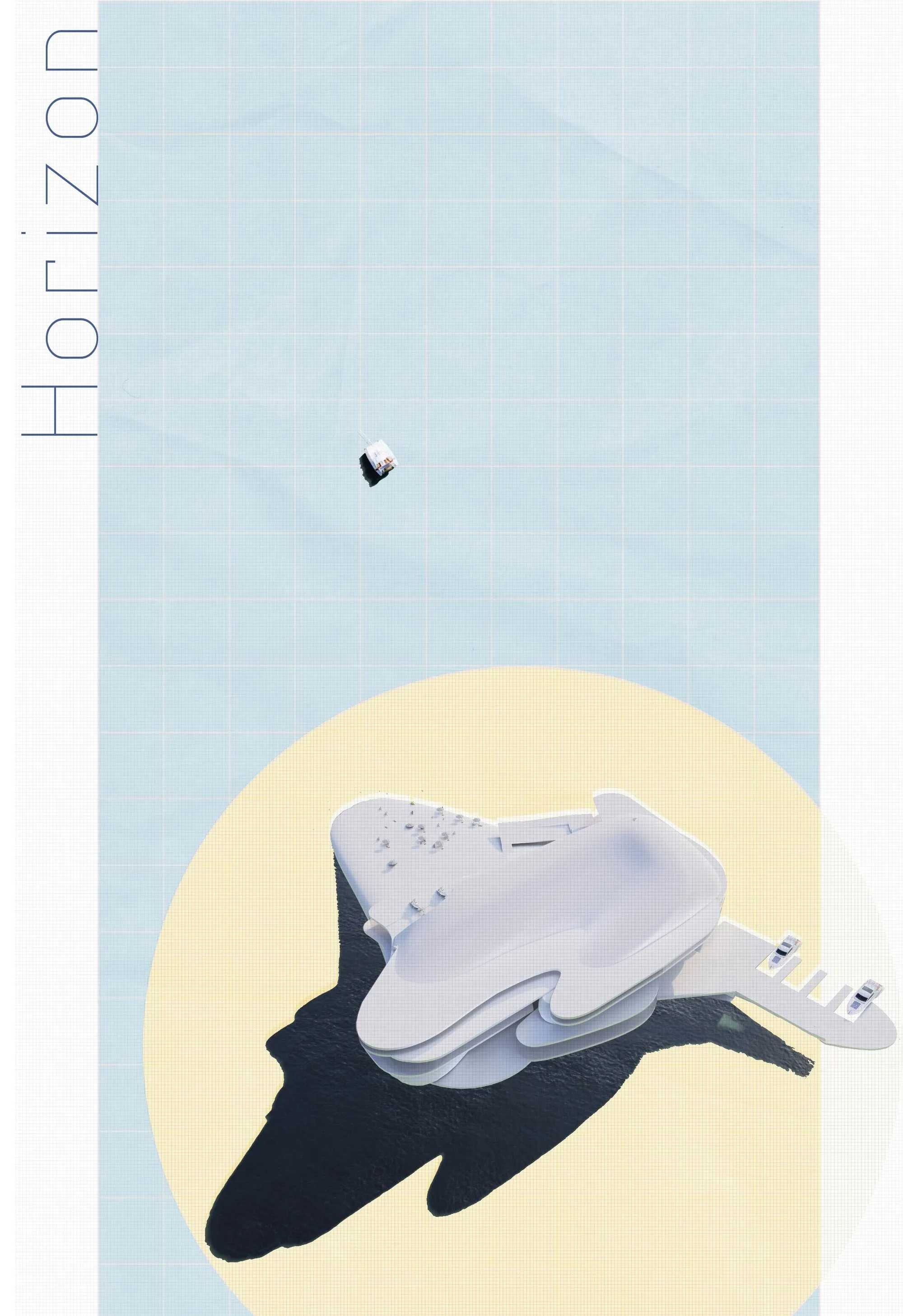
Horizon: A Vision of Sustainable Architecture Inspired by Coral Reef Ecosystems
Transforming an offshore oil rig into a thriving marine sanctuary, Horizon redefines sustainable architecture through coral-inspired design.


As environmental challenges continue to reshape our relationship with the natural world, architects are increasingly exploring innovative ways to merge ecological restoration with the built environment. Horizon, a visionary project by ABEER ABDULLAH ABDULAZIZ A, demonstrates how sustainable architecture can become a catalyst for environmental recovery while creating meaningful spaces for human interaction and learning.
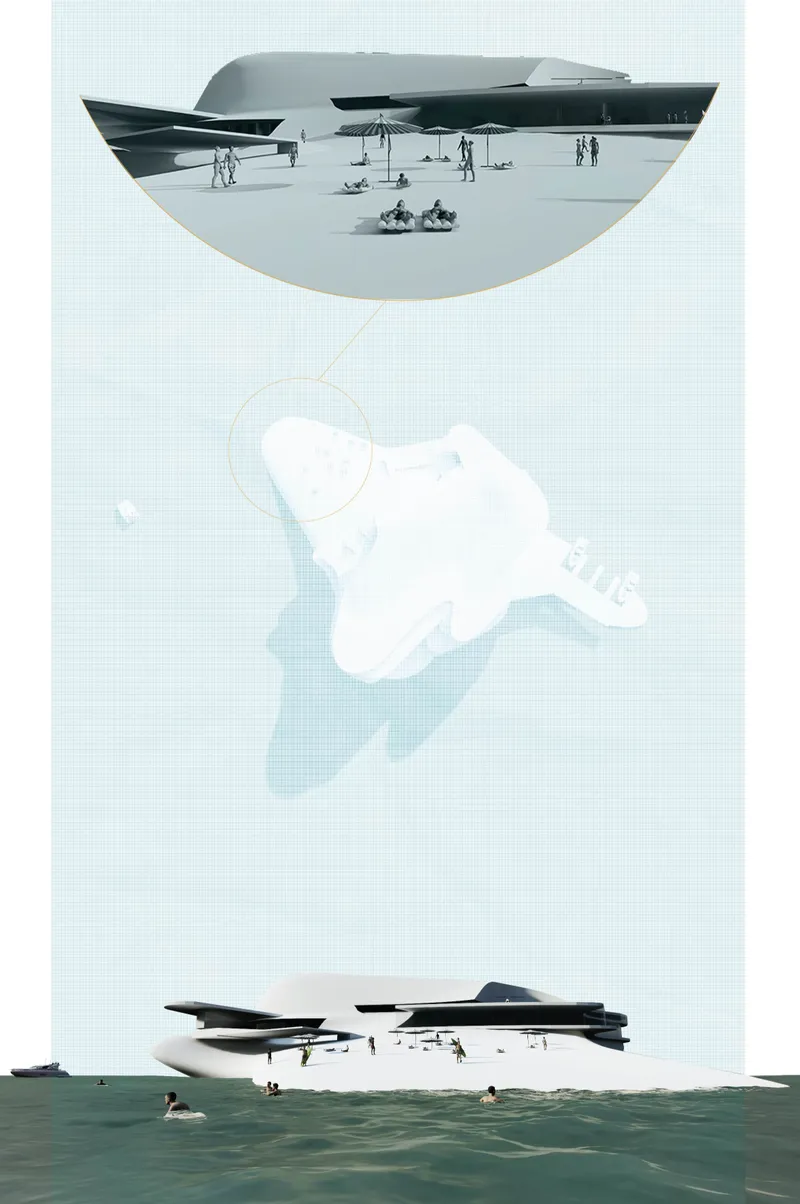
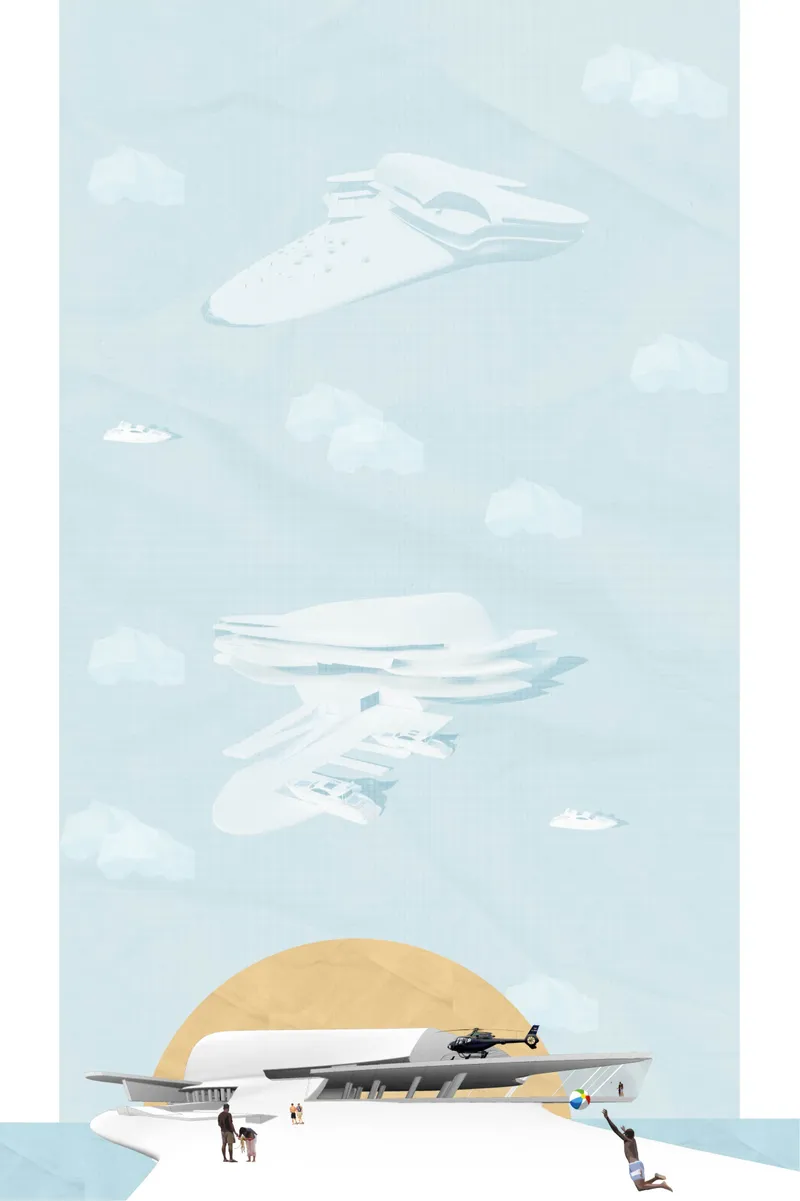
Inspired by the remarkable life cycle of coral reefs, Horizon transforms an existing offshore oil rig into a thriving marine destination that mirrors the growth, adaptability, and ecological significance of coral ecosystems. Rather than demolishing obsolete industrial infrastructure, the project embraces adaptive reuse, converting an oil platform into a living architectural organism that evolves according to the needs of its inhabitants.
Shortlisted entry of Proximity Island 2019
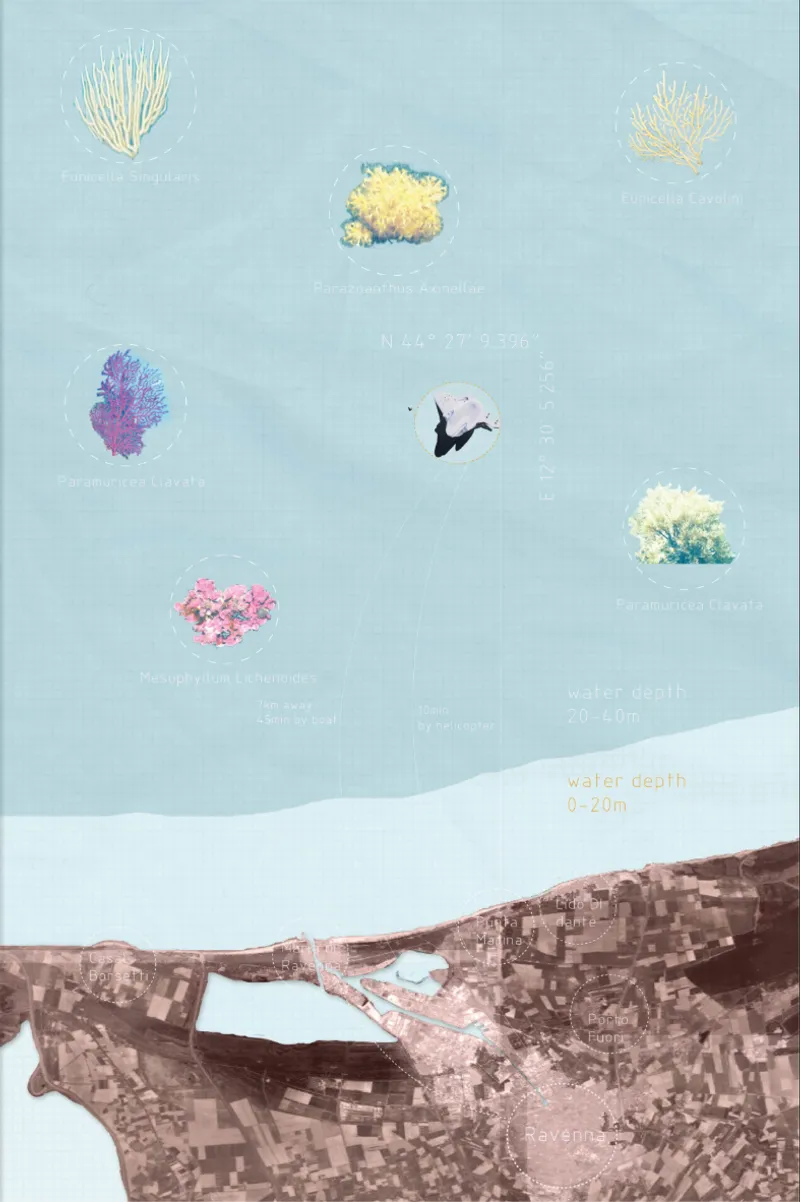
Learning from Nature's Most Complex Ecosystems
Coral reefs begin their lives as tiny polyps attached to rocky surfaces. Over time, these small organisms grow, expand, and create intricate underwater environments that support thousands of species. Horizon adopts this natural process as its central architectural concept.
The existing oil rig serves as the project's foundational "rock," much like the substrate upon which coral colonies develop. From this industrial framework, new architectural layers emerge organically, responding to environmental conditions, human activities, and marine ecosystems.
This biomimetic approach allows the building to evolve as a dynamic structure rather than a static object. The architecture reflects the adaptability and resilience found in coral reefs, creating spaces that support both ecological and social functions.
The Urgency of Coral Reef Conservation
The project draws attention to a critical environmental crisis. Coral reefs support approximately a quarter of all marine species and provide essential ecological services worldwide. They contribute to food security, coastal protection, biodiversity preservation, tourism economies, and even medical research.
Over recent decades, coral reefs have experienced dramatic decline due to climate change, ocean acidification, pollution, and habitat destruction. The loss of these ecosystems affects millions of people who depend on them for livelihoods, protection, and sustenance.
Horizon responds to this challenge by using architecture as a tool for awareness, education, and restoration. Through its coral-inspired design, visitors gain a deeper understanding of the ecological importance of marine environments and the urgent need for conservation efforts.
Adaptive Reuse of Offshore Infrastructure
One of Horizon's most compelling aspects is its transformation of industrial infrastructure into a regenerative public destination.
Across the world, aging offshore oil platforms face uncertain futures. Many become environmental liabilities once their industrial purpose has ended. Horizon proposes an alternative vision by converting these structures into centers of environmental education, marine research, tourism, and conservation.
This adaptive reuse strategy reduces waste, minimizes demolition impacts, and extends the lifespan of existing infrastructure. It demonstrates how sustainable architecture can create value from obsolete industrial assets while contributing positively to environmental restoration.
A Program Inspired by Coral Communities
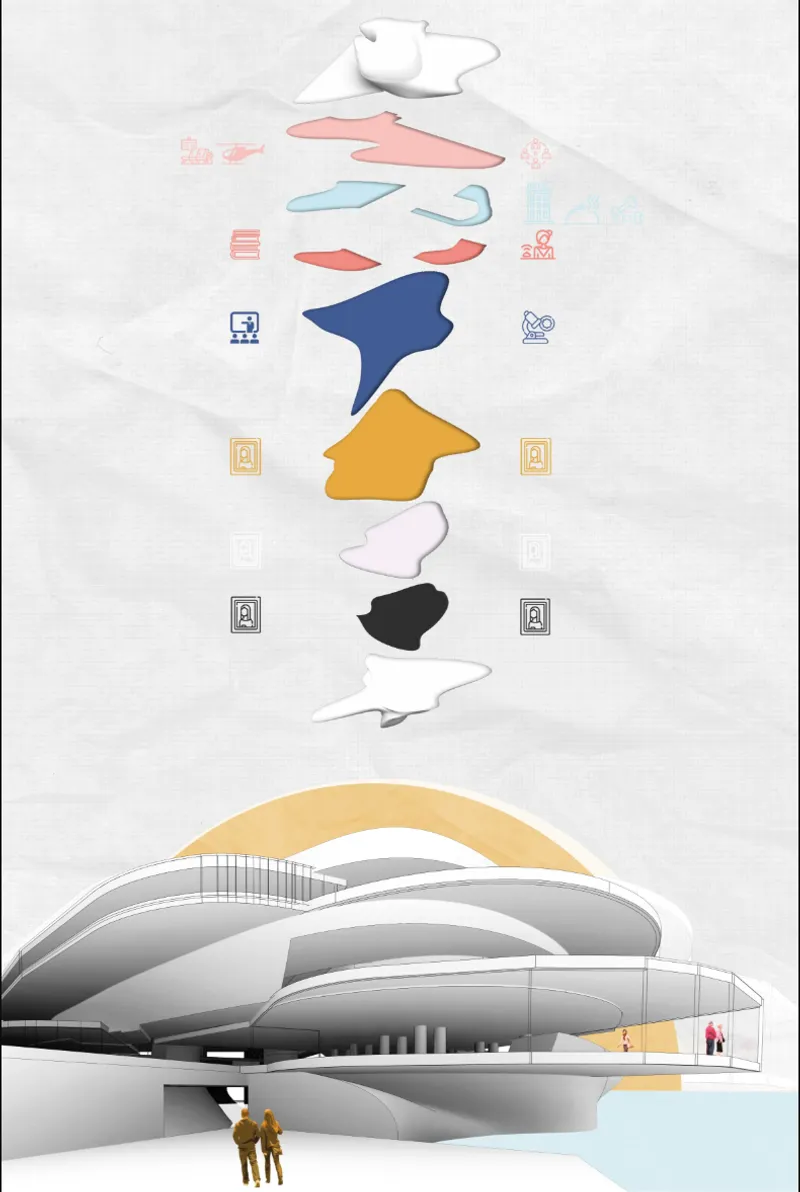
Like coral reefs that support diverse species and activities, Horizon accommodates multiple functions within a unified ecosystem.
The project integrates:
Marine Research Facilities
Dedicated spaces support scientific investigation into coral restoration, marine biodiversity, and ocean conservation. Researchers can monitor ecosystems, conduct experiments, and collaborate on innovative environmental solutions.
Educational Spaces
Interactive learning environments allow visitors to understand marine ecology, coral reef systems, and environmental stewardship. Educational programs transform the building into a living classroom.
Hospitality and Tourism
Accommodation, visitor amenities, and recreational facilities create opportunities for immersive experiences within a unique ocean environment. Tourism activities contribute to economic sustainability while fostering environmental awareness.
Cultural and Exhibition Areas
Exhibition spaces communicate stories about marine ecosystems, climate change, and the future of sustainable design. These areas encourage dialogue between science, architecture, and society.
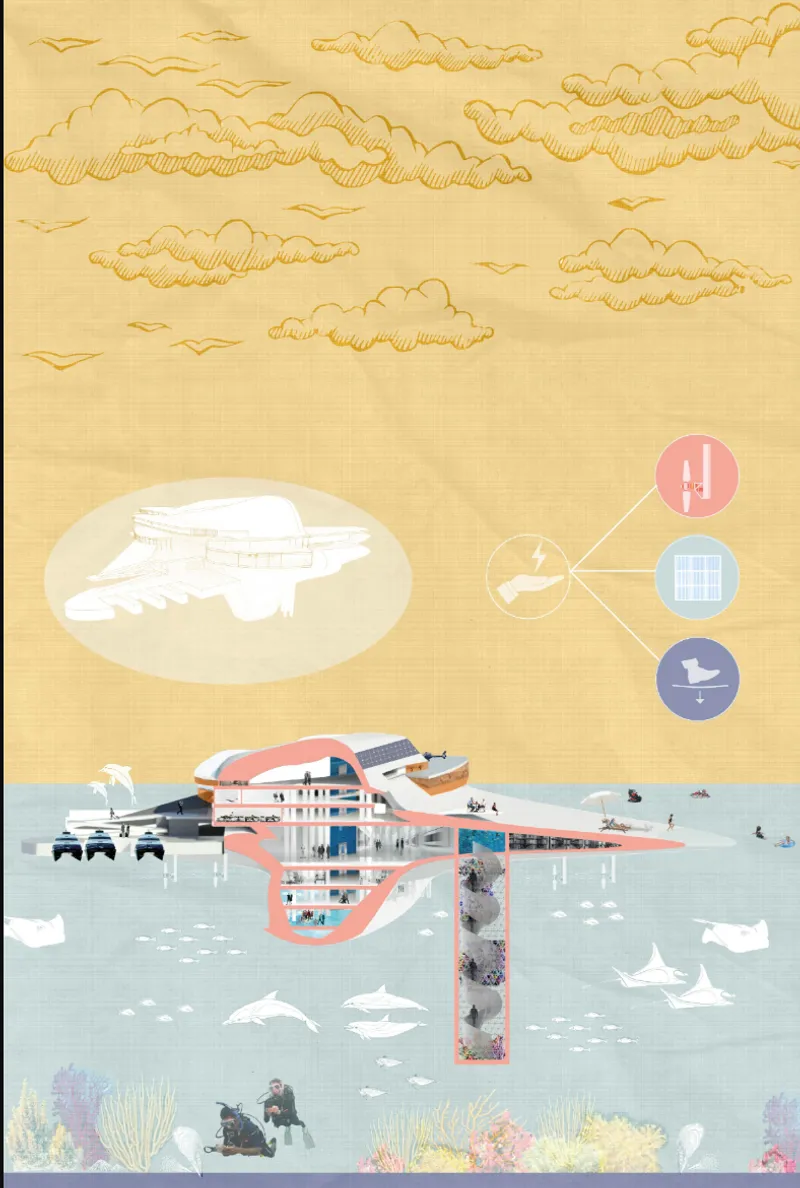
Underwater Observation Experiences
Visitors can experience marine ecosystems firsthand through carefully designed observation areas that create meaningful connections between people and nature.
Biomorphic Design Language
The architectural form of Horizon directly reflects coral morphology. Soft, flowing geometries replace rigid industrial aesthetics, allowing the building to appear as though it has naturally grown from the existing platform.
Layered volumes resemble coral formations expanding over time, while fluid circulation pathways mimic the organic networks found within reef ecosystems. The resulting architecture feels alive, adaptive, and deeply connected to its marine context.
This biomorphic language also enhances environmental performance by responding to natural light, wind patterns, and ocean views, creating spaces that are both visually striking and environmentally responsive.
Connecting Humans and Marine Environments
Horizon challenges traditional boundaries between architecture and nature. Rather than separating people from ecological systems, the project creates opportunities for direct engagement with marine environments.
Visitors can observe underwater habitats, participate in educational programs, and experience the beauty of coral ecosystems in ways that encourage long-term environmental responsibility. The building becomes a bridge between human communities and the ocean, fostering appreciation for ecosystems that often remain hidden beneath the water's surface.
Sustainable Architecture for a Regenerative Future
Beyond its aesthetic qualities, Horizon represents a broader shift in architectural thinking. The project moves beyond sustainability as mere environmental mitigation and embraces regeneration as a design objective.
Instead of minimizing harm, Horizon actively contributes to ecological awareness, habitat restoration, and environmental education. It demonstrates how architecture can function as a participant within natural systems rather than an isolated intervention.
By transforming an offshore oil rig into a thriving marine sanctuary inspired by coral reefs, Horizon offers a powerful vision for the future of sustainable architecture. It illustrates how adaptive reuse, biomimicry, and ecological design can work together to create environments that benefit both people and the planet.
In a world facing increasing environmental challenges, Horizon stands as an inspiring example of architecture's potential to restore, educate, and regenerate. Through its coral-inspired evolution, the project reimagines industrial infrastructure as a catalyst for marine conservation and sustainable development.


Popular Articles
Popular articles from the community


The Ocean Hive: Sustainable Architecture for a Self-Sufficient Civilization at Sea
The Ocean Hive imagines sustainable architecture at sea, where modular habitats, algae, wave power and ocean waste sustain a growing colony.

Riyadh For All: Intergenerational Urban Design for Active Aging in Rabat
Riyadh For All reimagines urban design in Rabat with intergenerational co-living, adaptive courtyards, and Moroccan cultural exchange today.

Co-Life: Senior Housing Design That Reconnects Older Adults With the City
Co-Life reimagines senior housing design through healing gardens, shared streets, workshops, and a sustainable community across generations.

The Musturak Paradise: Senior Living Architecture for a Connected Future in Temara, Morocco
The Musturak Paradise reimagines senior living architecture in Temara via private homes, social spaces, culture, community, and shared care.

Similar Reads
You might also enjoy these articles

Eco Chapel: A Green Architecture Pavilion Designed in Symbiosis with the Forest
Eco Chapel uses green architecture to weave prayer, learning and reuse into a forest pavilion shaped by modular hexagonal canopies for life.
Kaffeebühnen: Coffee Shop Architecture Designed as a Civic Stage Between Vienna’s City and Park
Kaffeebühnen turns coffee shop architecture into a civic stage, linking Vienna’s park edge, urban life, warm timber yards, and coffee craft.
Healing Façade: Sustainable Architecture for Reforestation, Community, and Sacred Ecology in Ethiopia
Healing Façade reimagines sustainable architecture as a living wall that restores soil, catches water and renews Ethiopia's forest churches.


Urban Forest: A Vertical Ecosystem for 5,000 Workers in Singapore's Changi Business Park
Radially stacked pods and layered green decks turn a 7-acre plot into 47 acres of ecological workspace projected for 2040.

Explore Architecture Competitions
Discover active competitions in this discipline



Challenge to reimagine the Iron Throne


Photograph architecture without architects


Illustrate the lost glory of Angkor Wat - Render Challenge


Design challenge to reuse E-waste
Comments (0)
Please login or sign up to add comments
No comments yet. Be the first to comment!