![Horta House by [ ] MATÉRIAS arquitetura + interiores](https://img.uni.xyz/eyJidWNrZXQiOiJ1bmktYmxvZyIsImtleSI6IjM0L2U1YWZhYzFlLWQ1Y2MtNDkzZS1iM2MyLTQzMjIwZmM4YmExMy91bmllZGl0b3JpYWwyMDI1LTA5LTA5VDE4LTAyLTAzLTQ0OTQ5My5qcGciLCJlZGl0cyI6eyJyZXNpemUiOnsid2lkdGgiOjUwfSwianBlZyI6eyJxdWFsaXR5IjoxMH0sIndlYnAiOnsicXVhbGl0eSI6MTB9LCJmbGF0dGVuIjpmYWxzZSwibm9ybWFsaXNlIjpmYWxzZX19)
![Horta House by [ ] MATÉRIAS arquitetura + interiores](https://img.uni.xyz/eyJidWNrZXQiOiJ1bmktYmxvZyIsImtleSI6IjM0L2U1YWZhYzFlLWQ1Y2MtNDkzZS1iM2MyLTQzMjIwZmM4YmExMy91bmllZGl0b3JpYWwyMDI1LTA5LTA5VDE4LTAyLTAzLTQ0OTQ5My5qcGciLCJlZGl0cyI6eyJyZXNpemUiOnsid2lkdGgiOjIwMDAsImZpdCI6Imluc2lkZSJ9LCJqcGVnIjp7InF1YWxpdHkiOjgwfSwid2VicCI6eyJxdWFsaXR5Ijo4MH0sImZsYXR0ZW4iOmZhbHNlLCJub3JtYWxpc2UiOmZhbHNlfX0=)
Horta House by [ ] MATÉRIAS arquitetura + interiores
Horta House blends brick façades, open-plan interiors, and bioclimatic design, harmonizing with Portugal’s rural landscape through sustainable, contemporary architecture.


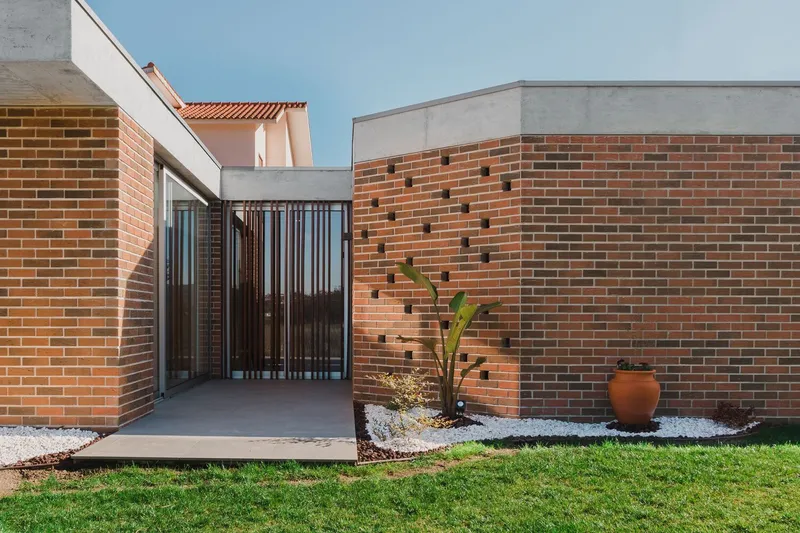
Located in Tregosa, Portugal, the Horta House by [ ] MATÉRIAS arquitetura + interiores is a contemporary residence that draws inspiration from the traditional Minho agricultural landscape. With a total area of 323 m², the project reinterprets the geometry of cultivation plots and their annexes, translating them into a modern, sustainable dwelling deeply rooted in its rural context.
Concept & Design Inspiration
The architectural concept stems from the region’s containment plots and agricultural structures, reflecting a design philosophy that balances heritage and innovation. Sustainability plays a central role—spaces are carefully distributed based on functional criteria, integrating renewable energy systems and bioclimatic strategies to minimize environmental impact.
Integration with Topography
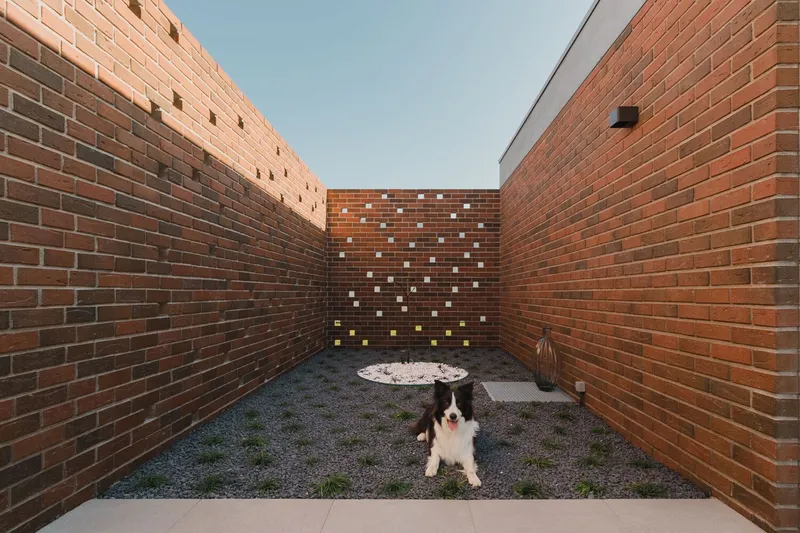
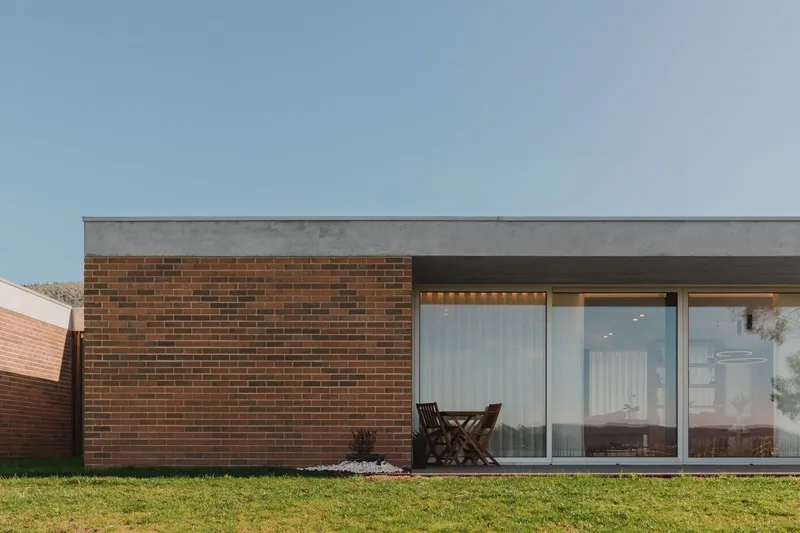
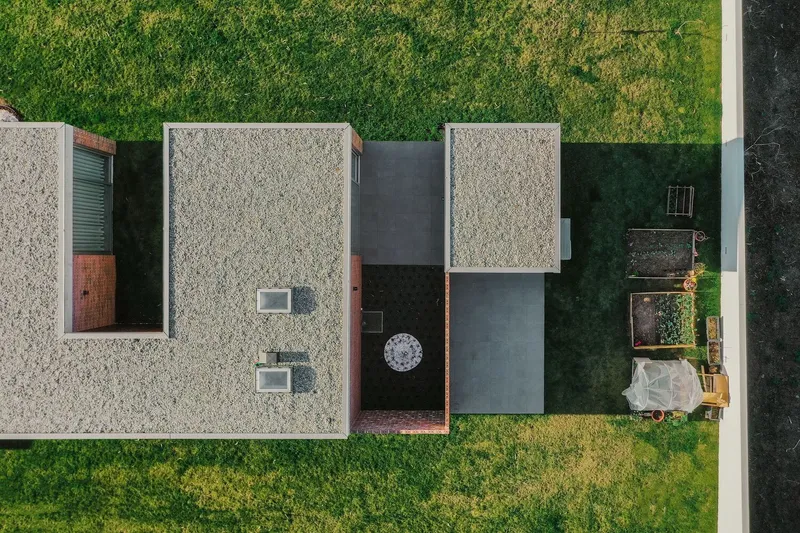
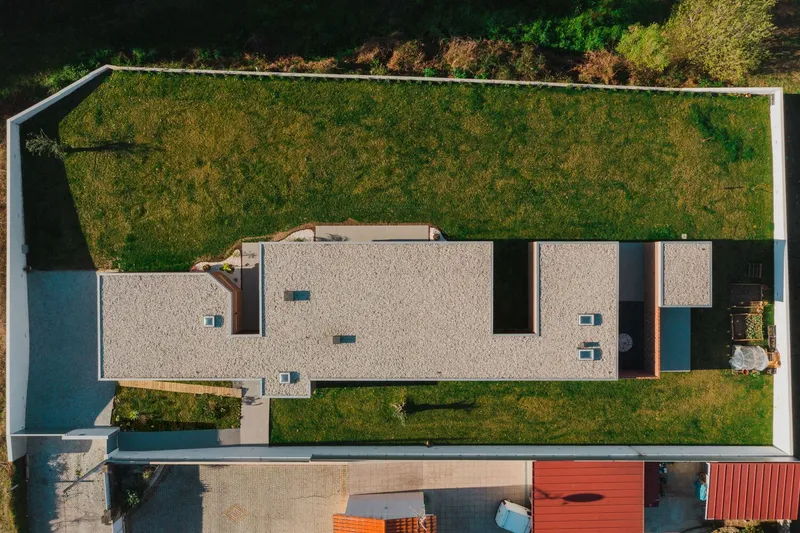
Set into a naturally sloping site, the house takes advantage of the northwest-southeast orientation to optimize sunlight exposure throughout the day. Its design unfolds across separate yet unified volumes, all aligned at the same height, ensuring harmony in form and proportion. The interstitial patios created between volumes establish both private retreats and communal outdoor areas, while the building’s semi-subterranean positioning creates a seamless connection with the landscape and surrounding garden.
Spatial Organization
At ground level, access is divided into two routes:
- A pedestrian ramp leading to the main entrance.
- A vehicular path connecting to the garage.
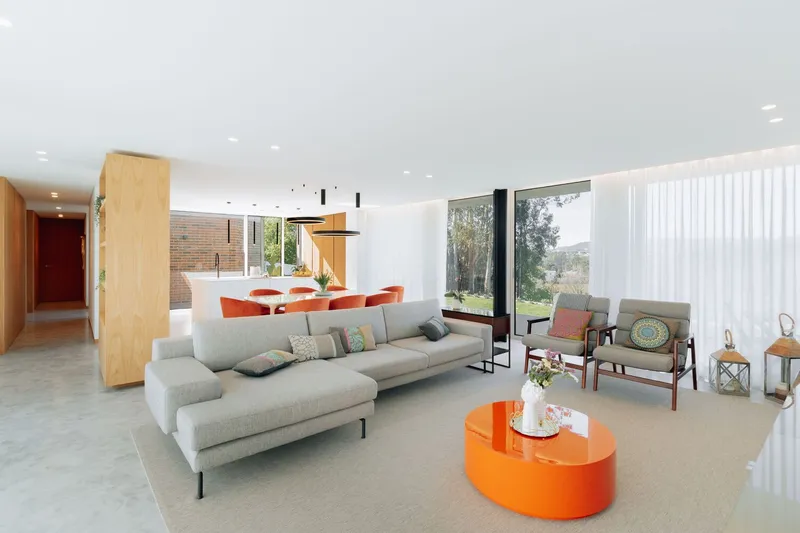
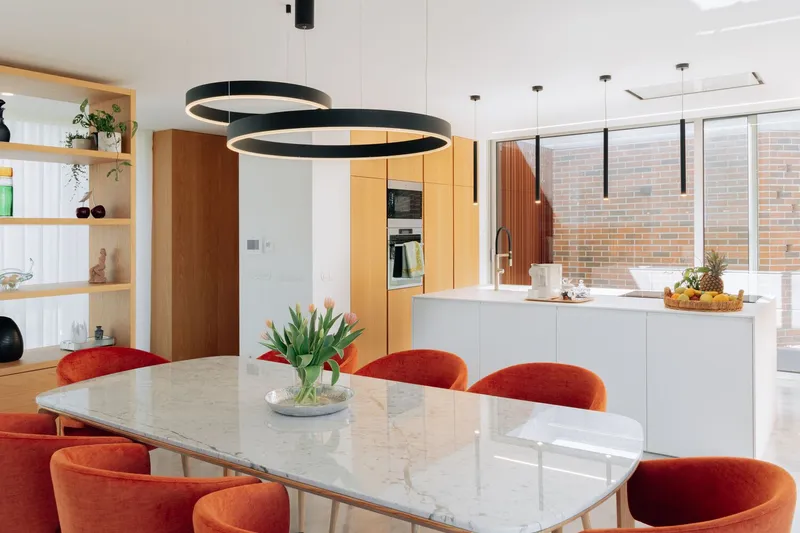
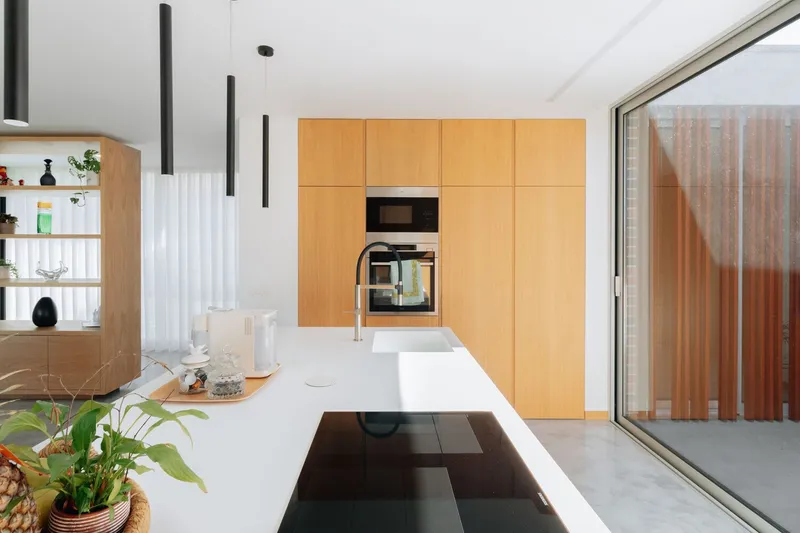
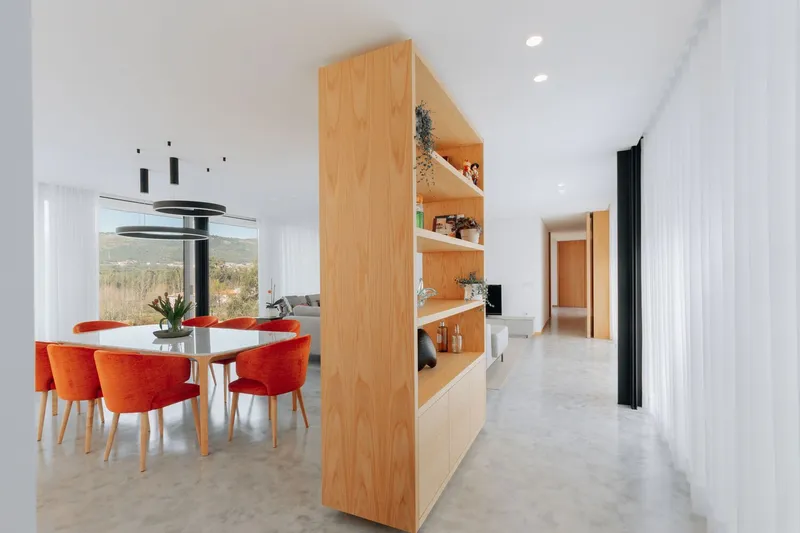
Once inside, the entrance hall organizes circulation, guiding movement toward the garage, outdoor garden views, and the social areas. The open-plan living room, dining room, and kitchen foster interaction and family connection while maintaining a fluid relationship with the garden. Floor-to-ceiling windows frame views of the surrounding hills, reinforcing a constant dialogue between interior and exterior.
Private & Social Zones
The layout follows a clear separation:
- Social Areas: Open-plan spaces encouraging family interaction, social gatherings, and direct garden access.
- Private Areas: Two bedrooms with ensuite bathrooms, each connected to its own intimate patio, ensuring privacy and comfort.
The master suite patio, nestled between volumes, creates a sheltered and serene atmosphere. A central corridor functions as the spatial backbone, allowing clear orientation while preserving the individuality of each room.
Materiality & Atmosphere
The exterior brick façades anchor the house to its site, echoing vernacular construction while enhancing thermal performance. Inside, a material palette of white surfaces, polished concrete floors, and warm wood finishes creates a balance of minimalism and coziness. The wooden cabinetry subtly integrates functional elements, such as a concealed service bathroom, maintaining visual purity.
Sustainability & Bioclimatic Design
The house is conceived with a strong sustainability agenda:
- Renewable energy systems for efficiency.
- Bioclimatic design for natural ventilation and optimized solar gain.
- A design that respects the natural slope and minimizes land disruption.
The Horta House is more than a residence—it is a sustainable reinterpretation of rural Portuguese traditions, blending architecture, landscape, and ecology into a harmonious whole. Through its simple yet thoughtful design, it reflects a modern lifestyle while staying deeply connected to its cultural and environmental roots.



Popular Articles
Popular articles from the community


The Musturak Paradise: Senior Living Architecture for a Connected Future in Temara, Morocco
The Musturak Paradise reimagines senior living architecture in Temara via private homes, social spaces, culture, community, and shared care.

Hill & Cross Opera: Sculptural Opera House Architecture Shaped by Tallinn’s Landscape and Identity
Hill & Cross Opera reimagines opera house architecture in Tallinn through its sculptural hill, civic plaza, glass wave and a luminous cross.

Lunar Spiral: Space Architecture Shaped by the Mathematics of the Universe
Lunar Spiral reimagines space architecture through Fibonacci geometry, lunar regolith, levitating habitats, and self-sustaining Moon living.

Co-Life: Senior Housing Design That Reconnects Older Adults With the City
Co-Life reimagines senior housing design through healing gardens, shared streets, workshops, and a sustainable community across generations.


Similar Reads
You might also enjoy these articles


Hodi-Mandai Geram
Project Function: Preservation and revitalization of the Intangible heritage and socio-spatial identity of the Hodi by Housing, Cultural Memory Center, Sacred Grove, landscape, local tourism economy


Olio Towers: A Mid-Rise for Performers That Fuses Housing, Rehearsal, and Stage
Located blocks from Houston's Theater District, this modular tower stacks living units around a central performance atrium.

Oasis: Modular Green Housing Carved into Dhaka's Urban Fabric
A shortlisted Plugin Housing entry reclaims unauthorized settlements in Dhaka with stepped concrete volumes, green roofs, and ventilation-driven design.

Black Hole: A Floating Megastructure for the Post-Physical Era
Emiliano Mazzarotto envisions a spherical, self-scaling arena where e-sports, digital hotels, and holographic stadiums replace traditional public space.

Explore Architecture Competitions
Discover active competitions in this discipline



Challenge to reimagine the Iron Throne


Photograph architecture without architects


Illustrate the lost glory of Angkor Wat - Render Challenge


Design challenge to reuse E-waste
Comments (0)
Please login or sign up to add comments
No comments yet. Be the first to comment!