

House 10 x 10 by Titus Bernhard Architekten: A Sculptural Timber Home Wrapped in Stainless Steel
Compact sculptural house with timber frame and stainless steel facade, reflecting landscape, maximizing light, sustainable low-energy living in Germany, Bavaria.


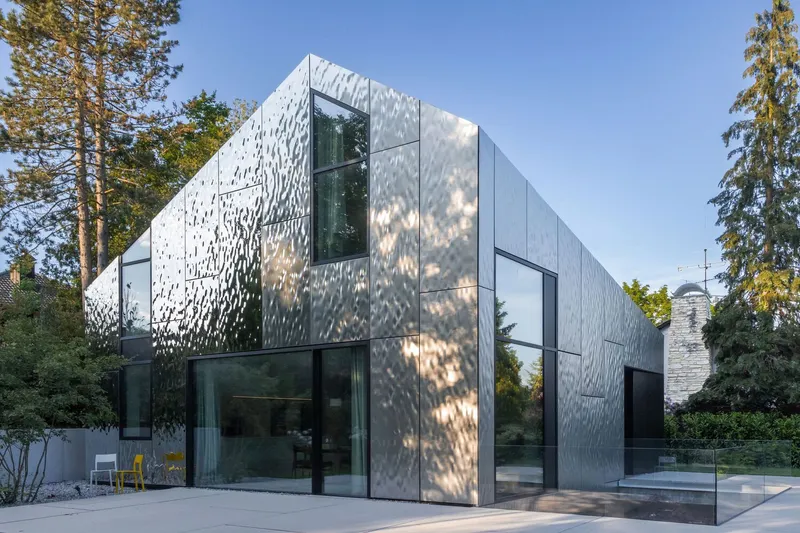
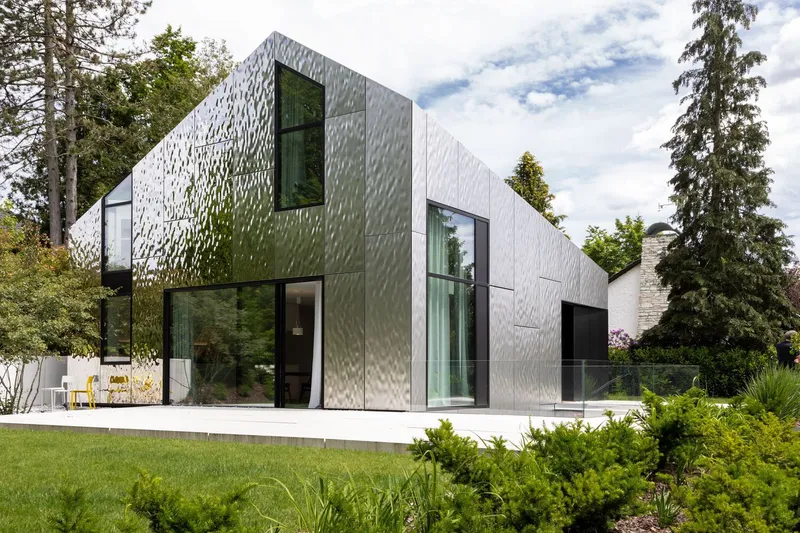
House 10 x 10, completed in 2023 near Augsburg in Neusäß, Germany, is the latest addition to a long-standing architectural exploration by Titus Bernhard Architekten. Conceived as a habitable sculpture, the project continues a lineage of compact, iconic dwellings that includes House 9 x 9 (2003) and House 11 x 11 (2011). While those earlier houses explored stone and timber respectively, House 10 x 10 introduces a new material narrative, pairing a timber-frame structure with ultra-thin, three-dimensionally formed stainless-steel cladding.
Compact yet expressive, the residence demonstrates how architectural minimalism, sustainability, and sculptural form can converge into a singular residential statement.
A Contemporary Interpretation of the Archetypal Gabled House
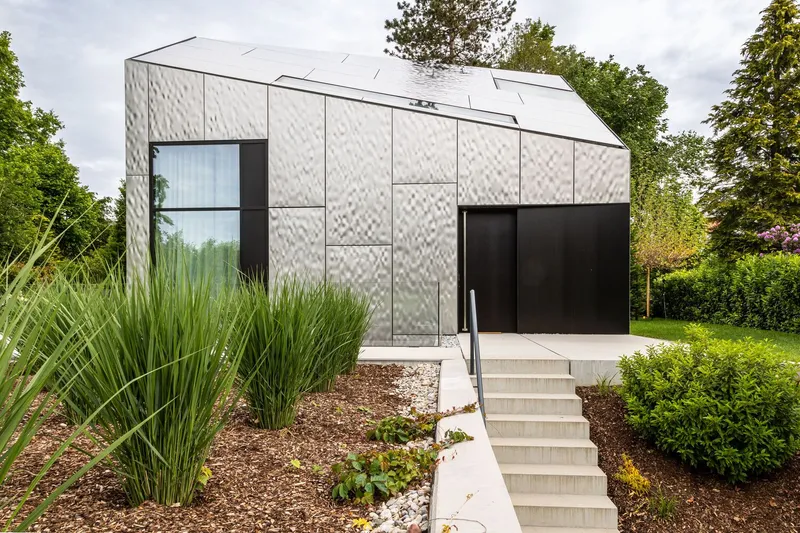
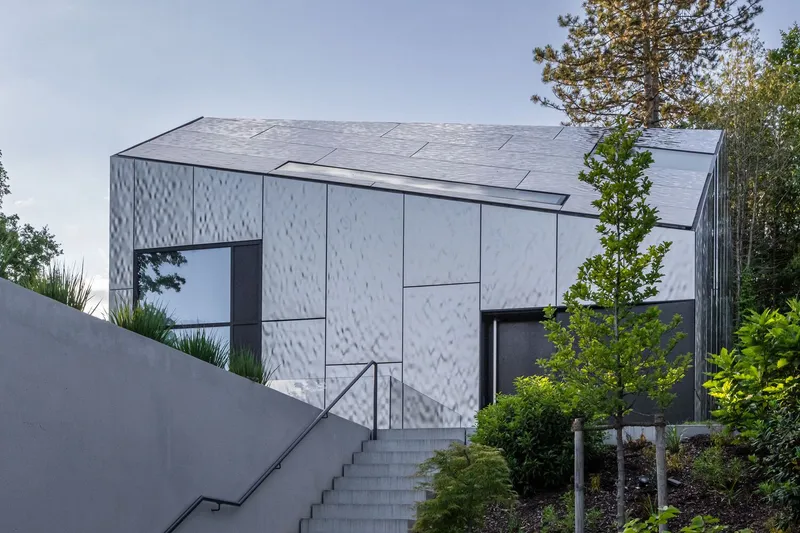
Set on a green, southwest-facing slope at the end of a quiet residential street, House 10 x 10 reinterprets the traditional gabled roof typology through a contemporary lens. The building is positioned slightly above street level and set back from the road, drawing the eye upward and reinforcing its sculptural presence within the landscape.
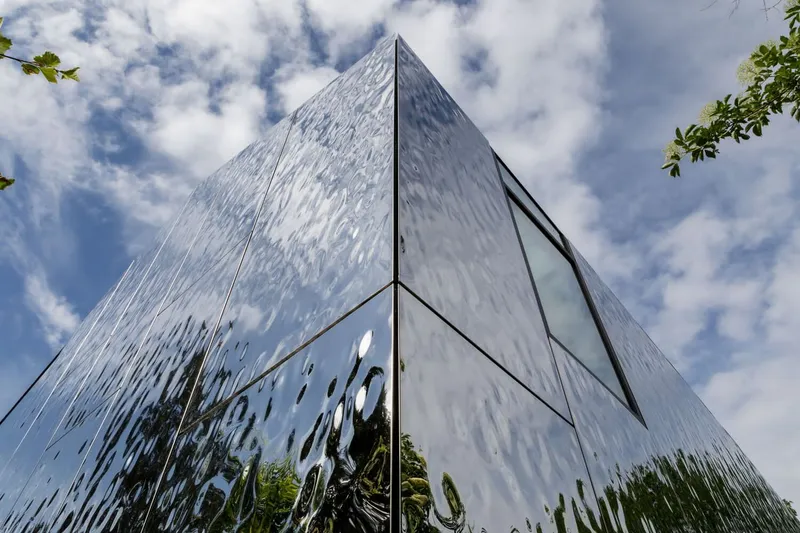
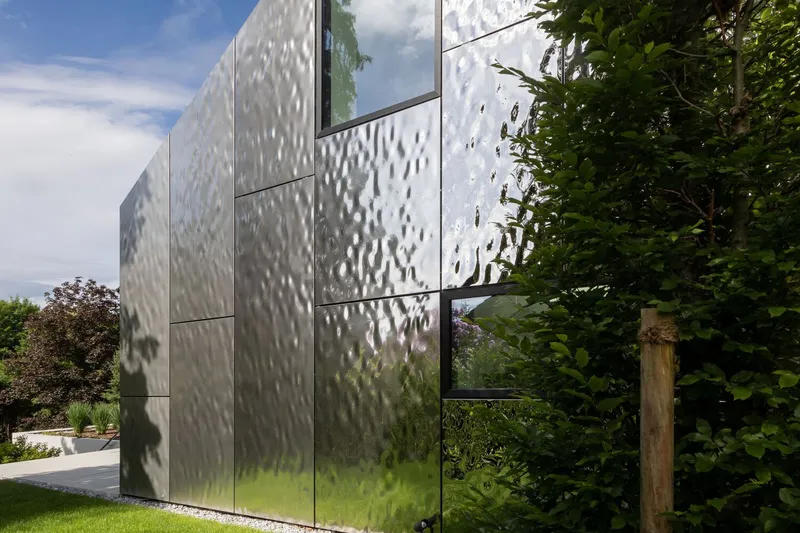
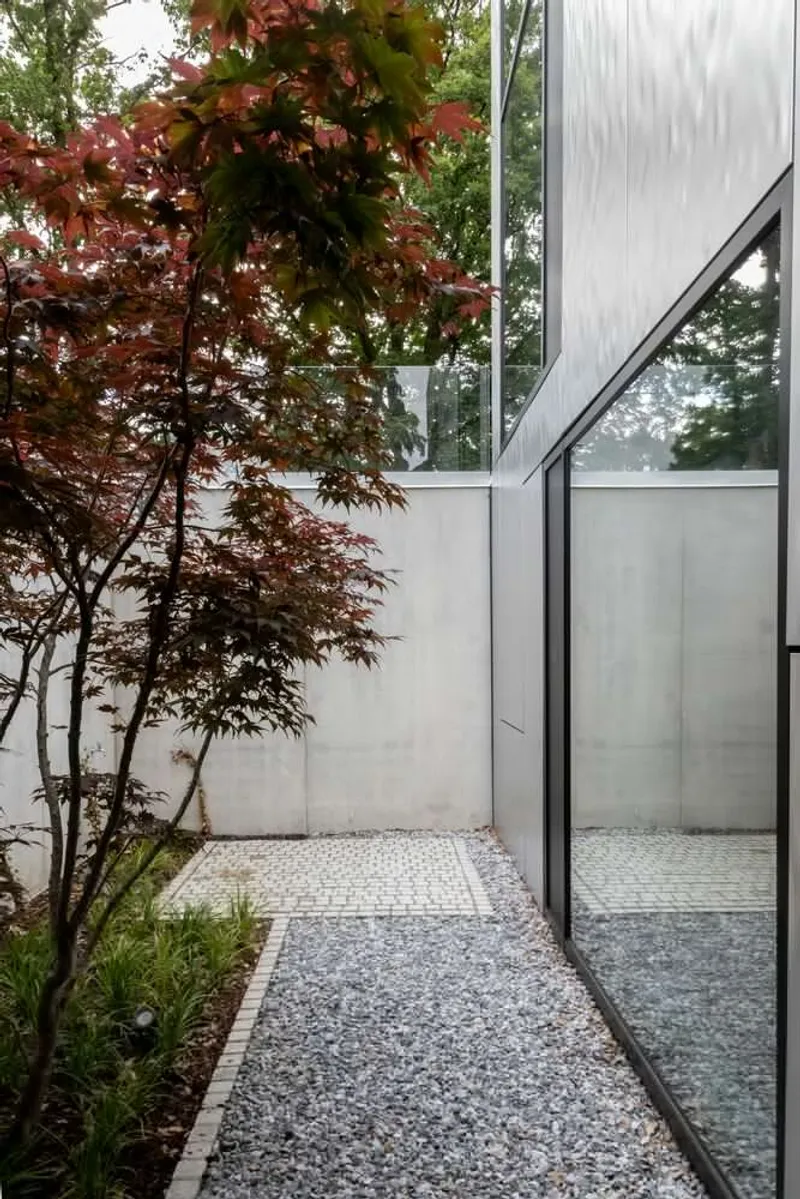
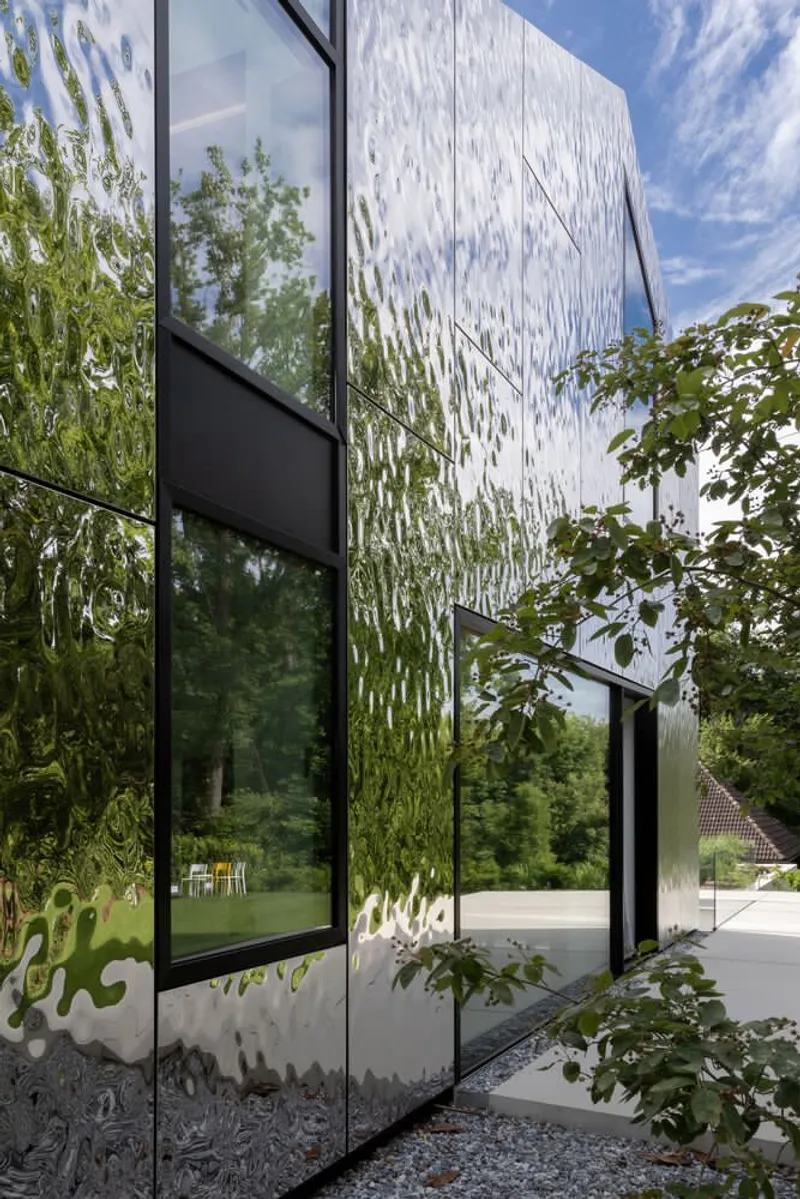
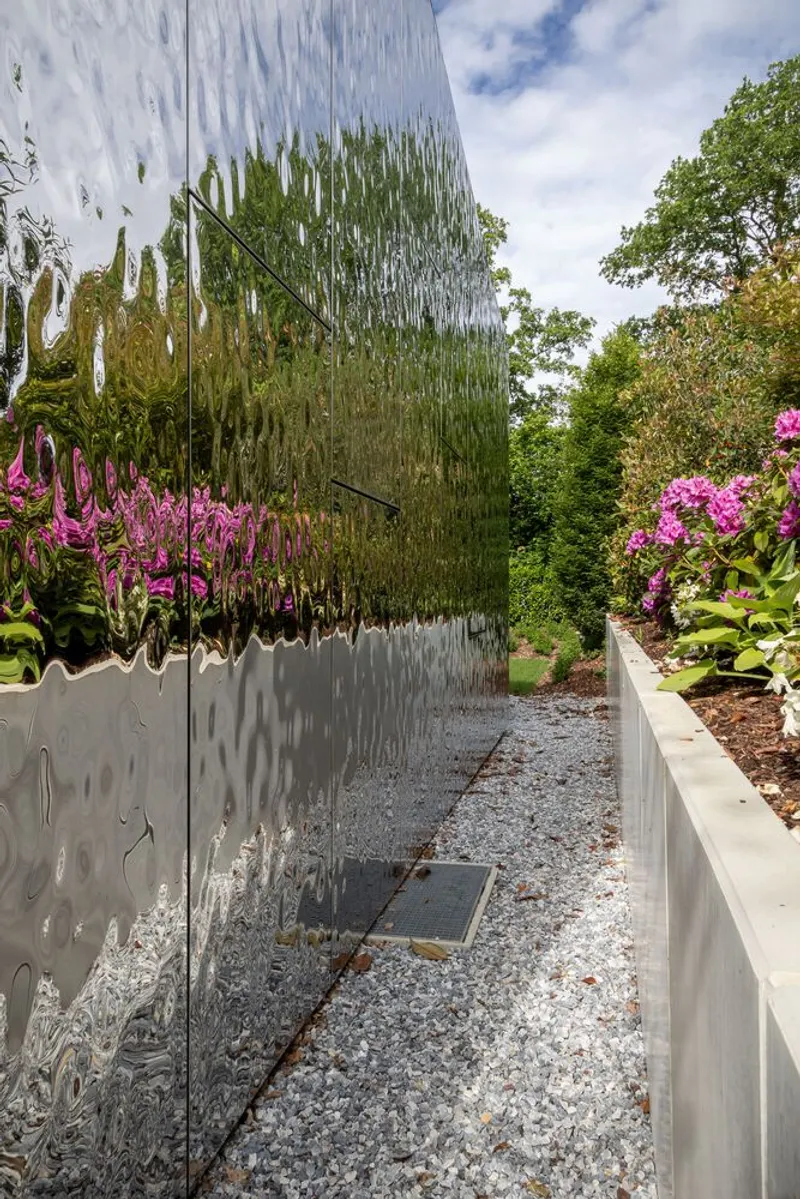
The stainless-steel façade plays a central role in this dialogue with its surroundings. Its reflective surface captures shifting daylight, seasonal changes, and the lush greenery of the site, allowing the house to visually dissolve into its natural context. Rather than asserting dominance, the architecture responds subtly to its environment, changing character throughout the day and across the year.
Spatial Experience and Interior Organization
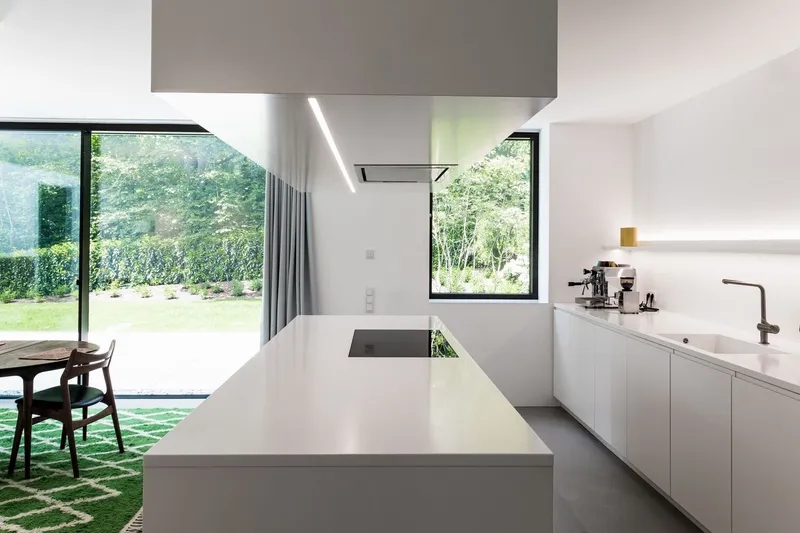
Despite its compact footprint, the house unfolds across three levels, offering approximately 200 square meters of interior living space. Accessed via an external stair running alongside an exposed concrete garage, the entrance sequence heightens the sense of transition from public street to private dwelling.
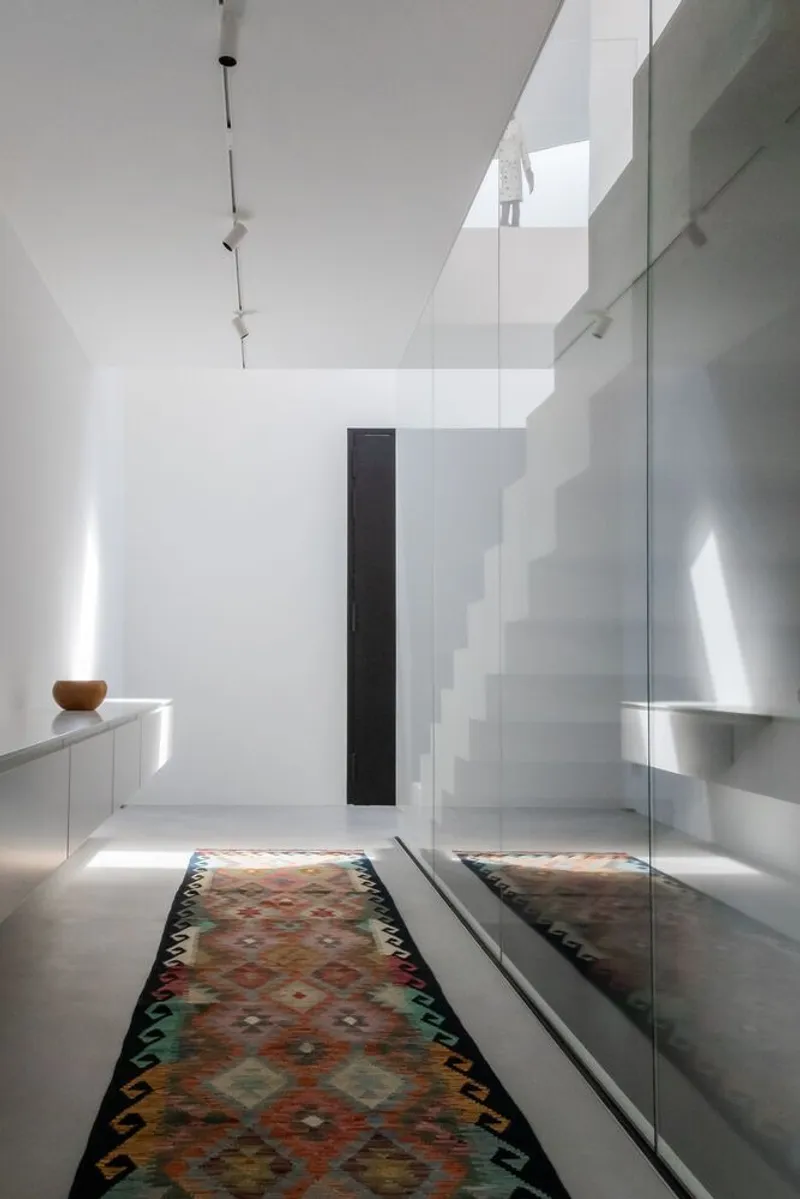
Inside, expansive windows are carefully oriented away from the street and toward the surrounding greenery, prioritizing privacy while reinforcing a strong visual connection to nature. Open spatial sequences allow long sightlines across floors, creating a sense of generosity and spatial continuity uncommon in houses of this scale.
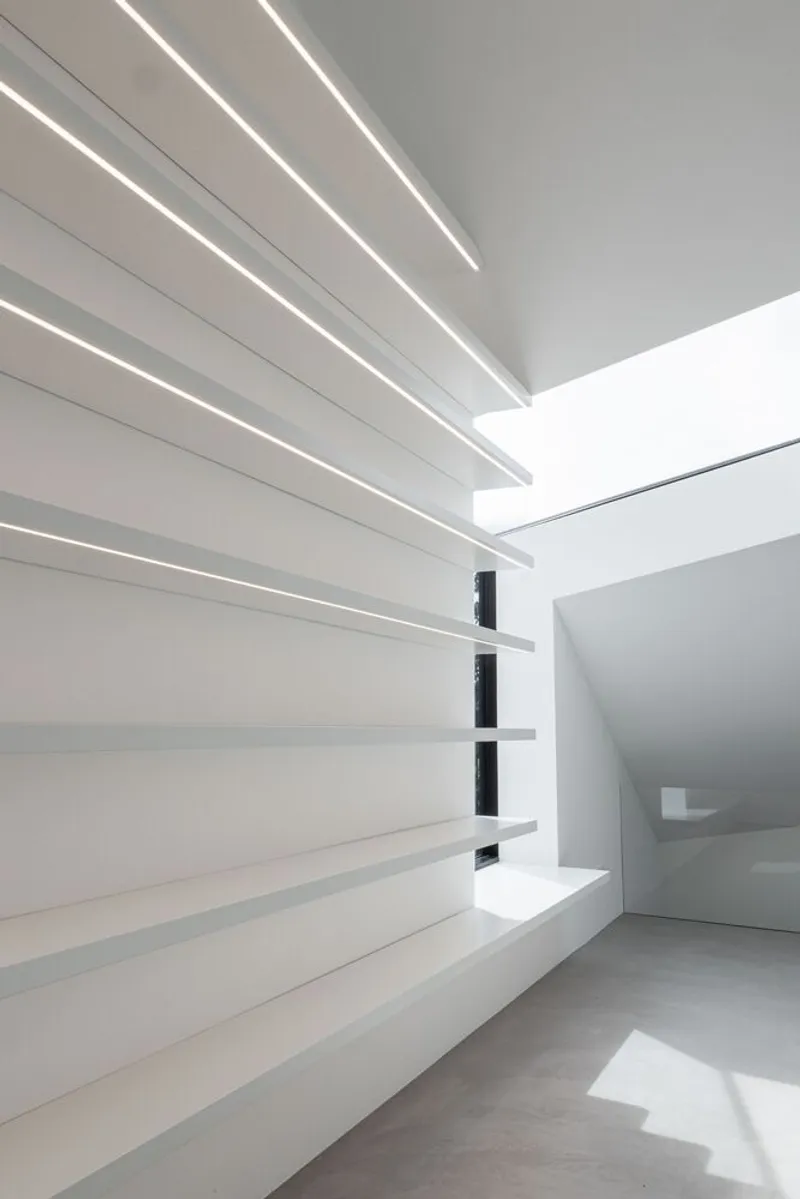
A defining interior feature is the twisted roof ridge, which results in subtly asymmetrical roof planes. This architectural gesture enhances the sculptural quality of the interior while shaping the way natural light penetrates the space. Strategically placed openings bring daylight deep into the house, animating surfaces and emphasizing the dynamic geometry of the structure.
Sustainable Construction and Energy Performance
House 10 x 10 was designed as a low-energy residential building, aligning architectural expression with environmental responsibility. The timber-frame construction supports a high degree of material efficiency, while the stainless-steel façade offers durability, longevity, and recyclability.
The house is equipped with a 14 kW air-source heat pump, contributing to its low operational energy demand. Overall, the project achieves an impressive recyclability rate of 83.7%, underscoring the architects’ commitment to sustainable building practices and circular construction principles.
Architecture as Living Sculpture
More than a conventional family home, House 10 x 10 exemplifies Titus Bernhard Architekten’s ongoing pursuit of architecture as sculptural object: precise in proportion, reduced in form, yet rich in spatial and material experience. By merging compact living, innovative material use, and environmental sensitivity, the project demonstrates how contemporary residential architecture can remain both iconic and deeply connected to its context.



Popular Articles
Popular articles from the community


Play: Fragments of Their World
Familiar architecture becomes modular playground design, creating safe spaces where displaced children can learn, connect, imagine and play.

Conexión: Biophilic Design Reimagines High-Rise Living in Hong Kong
Conexión reimagines high-rise living in Hong Kong through biophilic design, green facades, shared spaces, daylight, water and nature within.

Riyadh For All: Intergenerational Urban Design for Active Aging in Rabat
Riyadh For All reimagines urban design in Rabat with intergenerational co-living, adaptive courtyards, and Moroccan cultural exchange today.

Co-life: Sustainable Architecture for Age-Friendly Community Living
Co-life reimagines sustainable architecture for seniors through courtyards, rammed earth, shared gardens, and spaces designed for belonging.

Similar Reads
You might also enjoy these articles


Hodi-Mandai Geram
Project Function: Preservation and revitalization of the Intangible heritage and socio-spatial identity of the Hodi by Housing, Cultural Memory Center, Sacred Grove, landscape, local tourism economy


Olio Towers: A Mid-Rise for Performers That Fuses Housing, Rehearsal, and Stage
Located blocks from Houston's Theater District, this modular tower stacks living units around a central performance atrium.

Oasis: Modular Green Housing Carved into Dhaka's Urban Fabric
A shortlisted Plugin Housing entry reclaims unauthorized settlements in Dhaka with stepped concrete volumes, green roofs, and ventilation-driven design.

Black Hole: A Floating Megastructure for the Post-Physical Era
Emiliano Mazzarotto envisions a spherical, self-scaling arena where e-sports, digital hotels, and holographic stadiums replace traditional public space.


Explore Housing Competitions
Discover active competitions in this discipline



Challenge to reimagine the Iron Throne


Photograph architecture without architects


Illustrate the lost glory of Angkor Wat - Render Challenge


Design challenge to reuse E-waste
Comments (0)
Please login or sign up to add comments
No comments yet. Be the first to comment!