
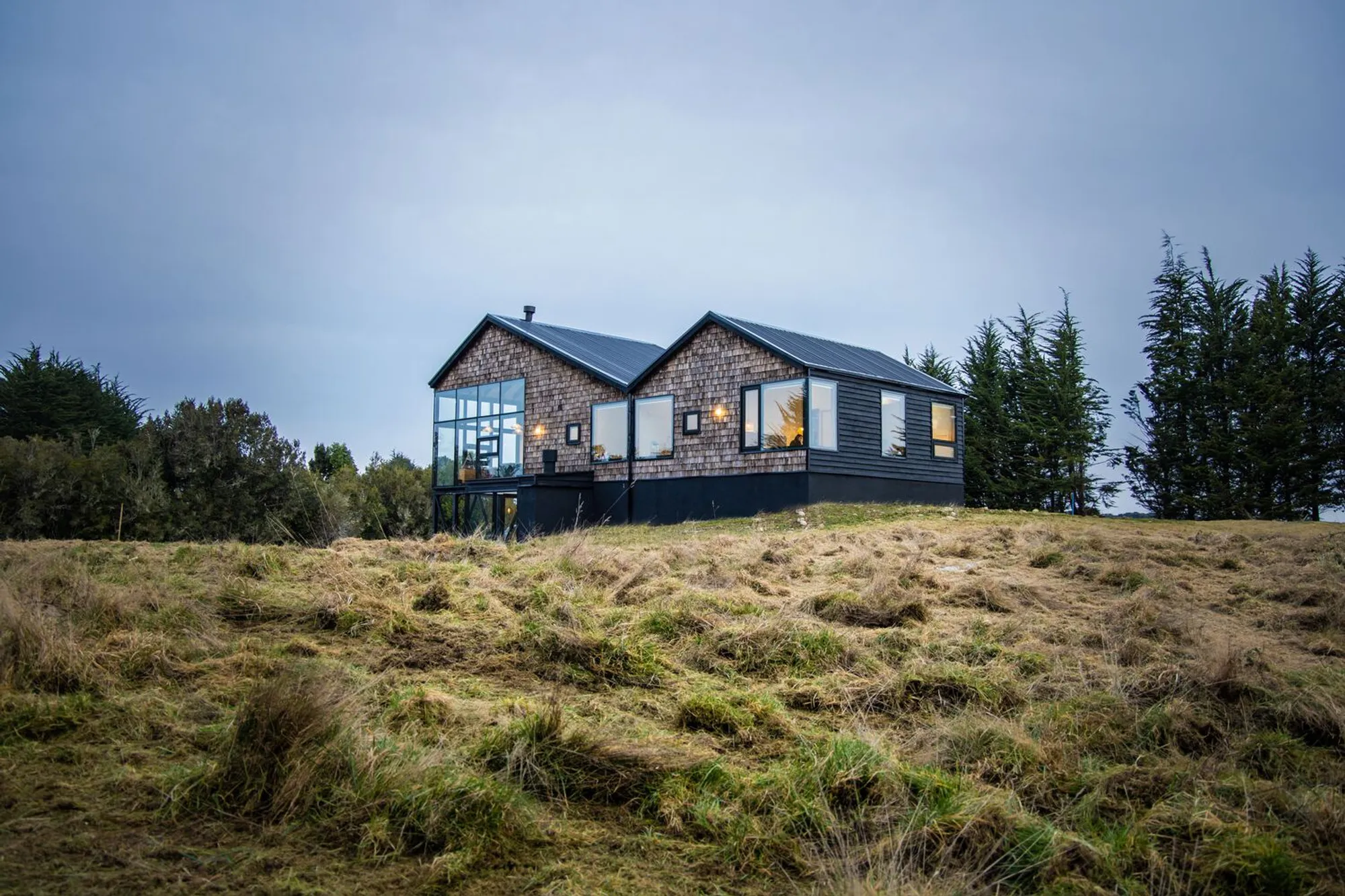
House 4 Aguas by Viento Norte: A Contemporary Hillside Residence Framing Lake Llanquihue and Calbuco Volcano
Contemporary hillside house in Puerto Varas integrates steel and timber, framing panoramic views of Lake Llanquihue and Calbuco Volcano.


House 4 Aguas, designed by the Chilean architectural studio Viento Norte, is a remarkable example of contemporary residential architecture thoughtfully integrated into the dramatic landscape of southern Chile. Located in the rural outskirts of Puerto Varas, this 265-square-meter single-family house embraces the region’s steep terrain while capturing extraordinary views of Lake Llanquihue and the majestic Calbuco Volcano.
Completed in 2022 and led by architects Dulce Elena Sánchez and Valeria Perramont, the project demonstrates a sensitive architectural response to topography, climate, and regional building traditions. Through a carefully layered spatial organization and a striking roof composition, the house creates a dynamic dialogue between modern construction techniques and the warm materiality of traditional timber architecture.
Responding to the Landscape and Terrain
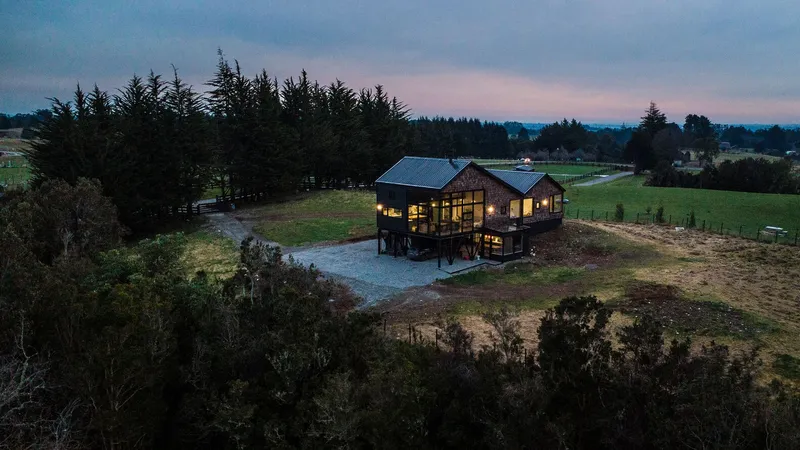
The site of House 4 Aguas features a pronounced hillside, rising to a point where sweeping panoramas of Lake Llanquihue and the surrounding volcanic landscape become visible. Rather than flattening or drastically altering the terrain, the architects chose to adapt the house to the natural slope. This strategy allowed the building to preserve the site’s natural character while enhancing its connection to the surrounding environment.
By stepping the program across multiple levels, the design takes advantage of the site’s elevation changes. The highest portion of the property becomes the focal point for living spaces, ensuring uninterrupted views of the lake and the distant Calbuco Volcano. This thoughtful positioning transforms the natural landscape into an ever-changing visual backdrop for daily life inside the house.
Ground Level: Access, Parking, and Social Gathering
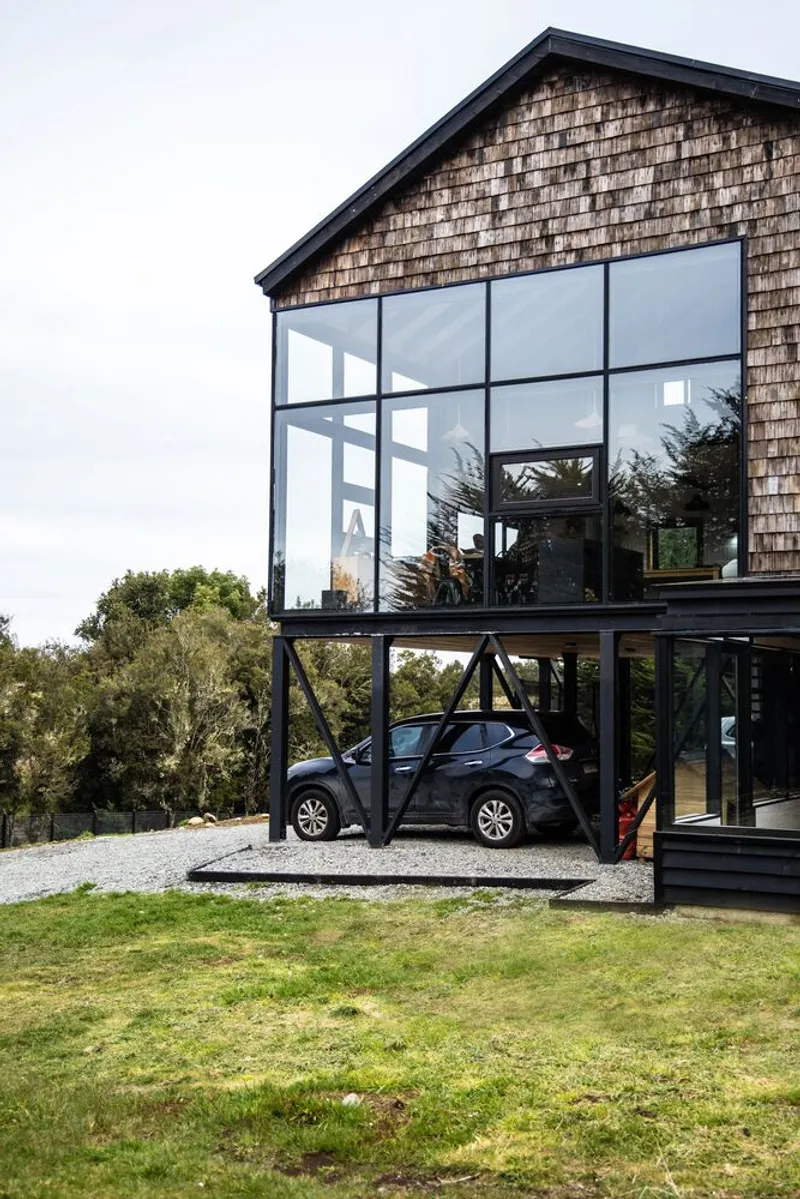
The first level of the house sits at the lower part of the property, where the architects placed the main access point and parking area. This level functions as a transitional zone between the exterior landscape and the elevated living spaces above.
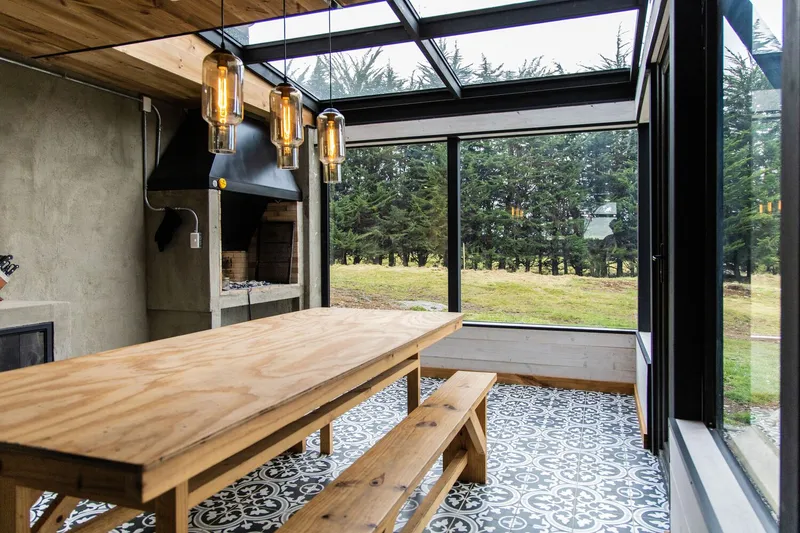
A covered parking structure provides protection from the region’s frequent rain, a crucial consideration in the climate of southern Chile. Adjacent to this area, the architects integrated a barbecue and outdoor gathering space that connects directly with the natural ground level of the site.
This arrangement creates flexible circulation for visitors while maintaining a comfortable and sheltered entrance experience. Guests can move seamlessly between the outdoor social area and the main access without disrupting the private zones of the house.
The Main Living Level and Panoramic Views
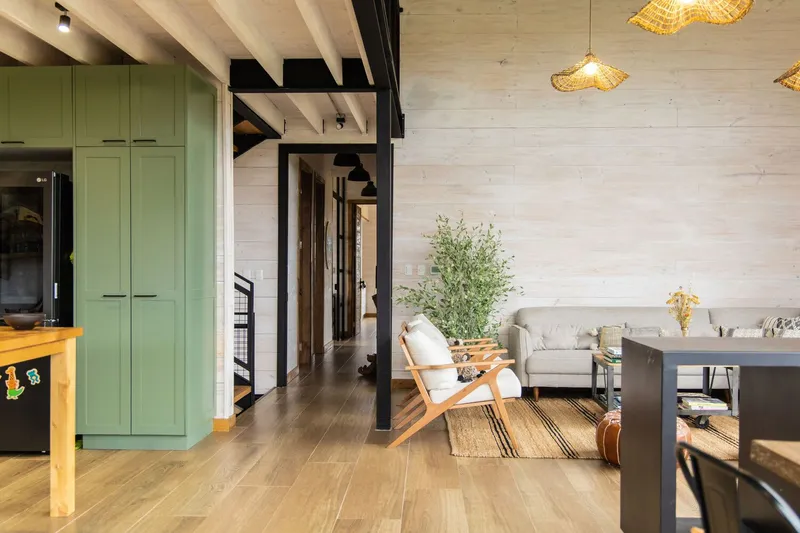
The primary living floor is located directly above the access level. Positioned at the highest point of the site, this elongated volume stretches across the hillside to maximize natural light and scenic views.
Part of this floor sits at the natural ground level of the hill, while another portion extends outward, forming a protective canopy above the entrance below. This architectural gesture not only defines the entry space but also reinforces the layered relationship between the different levels of the house.
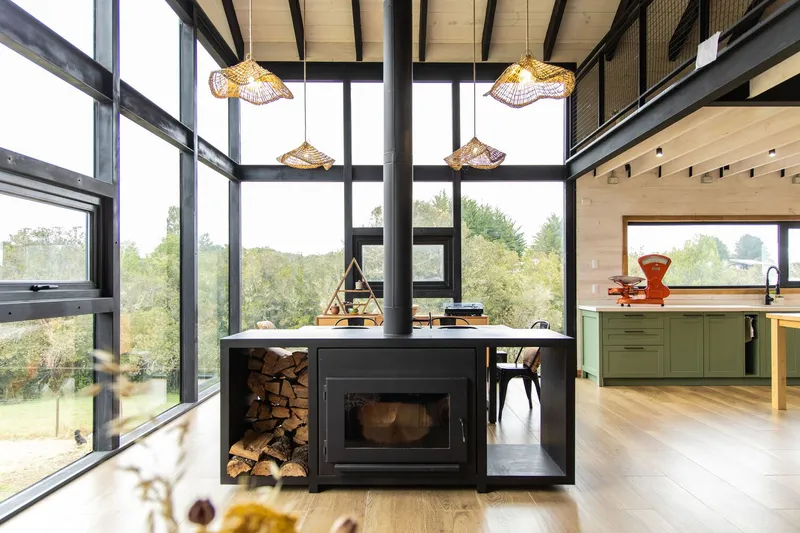
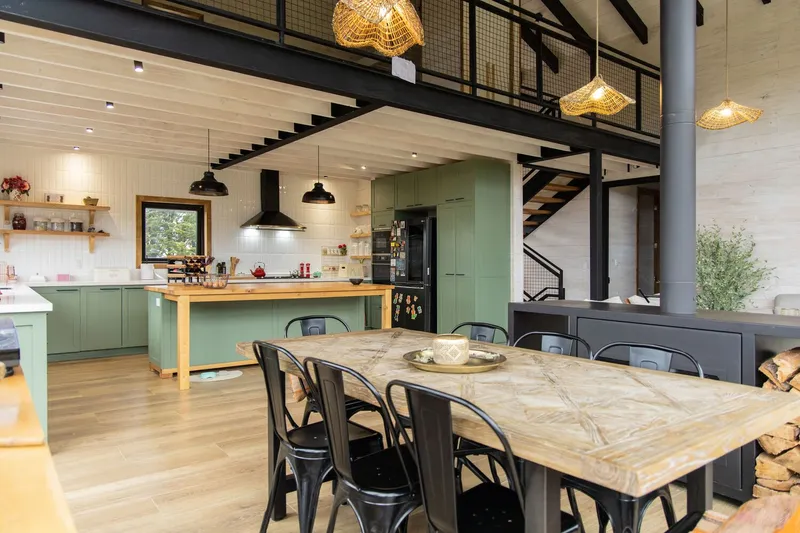
Within this main level, the architects organized the essential daily living functions of the residence. The kitchen, living room, dining area, bedrooms, bathrooms, and laundry room are all arranged along the elongated plan. This layout ensures that each space maintains a strong visual and spatial connection to the surrounding landscape.
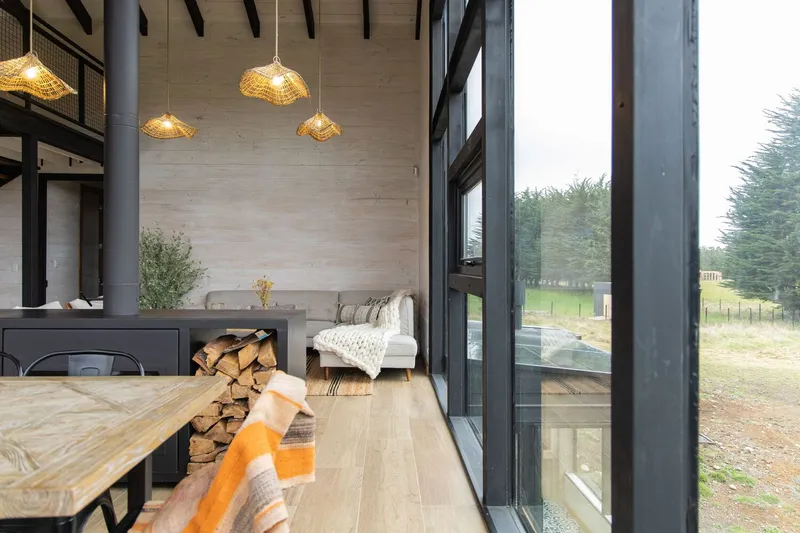
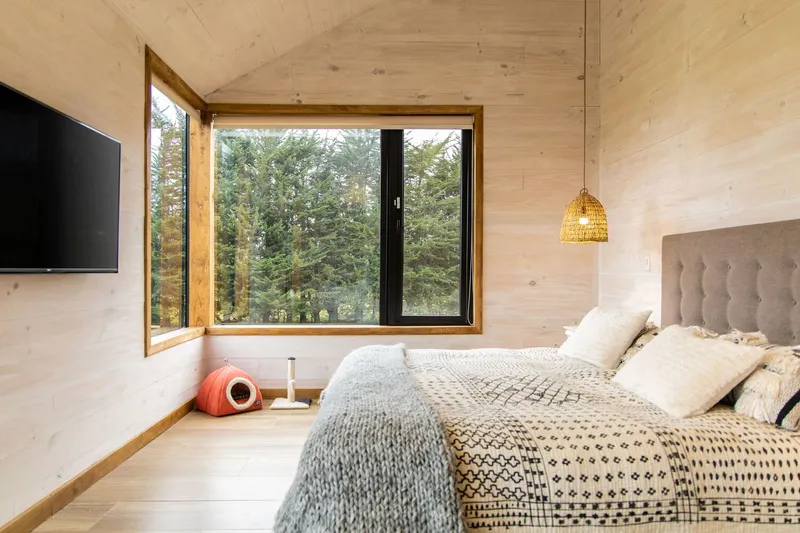
One of the most defining features of this floor is the expansive northeast-facing window that frames an exceptional view of the Calbuco Volcano. Positioned at the height of the surrounding treetops, the window allows residents to experience the dramatic scenery as if it were part of the interior environment.
Mezzanine Level for Guests and Flexible Use
Above the main living space, the architects introduced a third level in the form of an open mezzanine. This elevated platform overlooks the central living area below, creating a sense of spatial continuity and vertical connection within the home.
The mezzanine is designed primarily as a flexible guest area, allowing visitors to stay comfortably without occupying the more private bedroom zones on the main floor. At the same time, the open configuration maintains visual engagement with the social spaces below, reinforcing the house’s communal character.
This layered interior composition adds depth and variation to the spatial experience, transforming the interior into a sequence of interconnected volumes rather than isolated rooms.
Roof Geometry and Architectural Identity
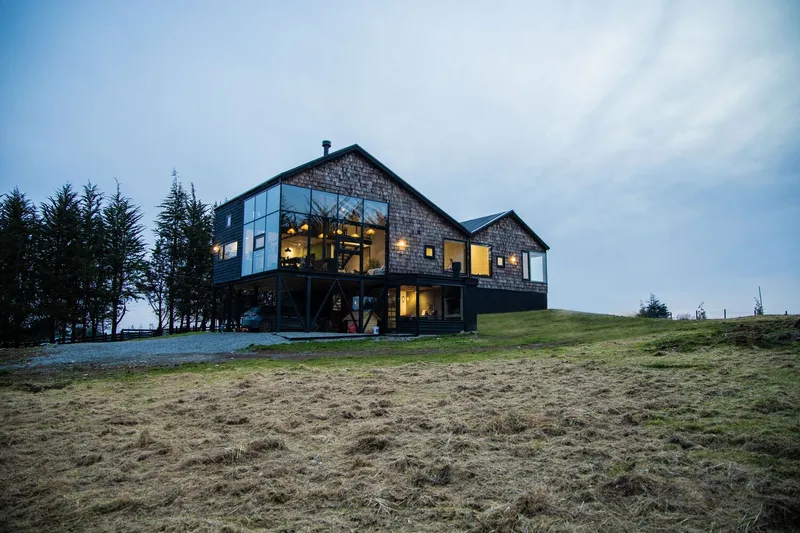
One of the most distinctive elements of House 4 Aguas is its expressive roof design. The house features two separate gabled roof structures, each responding to the functional needs of the spaces beneath them.
The smaller gabled roof covers the more intimate bedroom areas, creating a sense of enclosure and privacy. In contrast, the larger and taller roof spans the communal living spaces and the mezzanine above. This larger volume emphasizes openness and verticality, reinforcing the social importance of the shared areas.
This dual-roof composition also contributes to the architectural identity of the house, giving it a recognizable silhouette that resonates with the rural architectural language of southern Chile.
Material Strategy: Steel and Timber
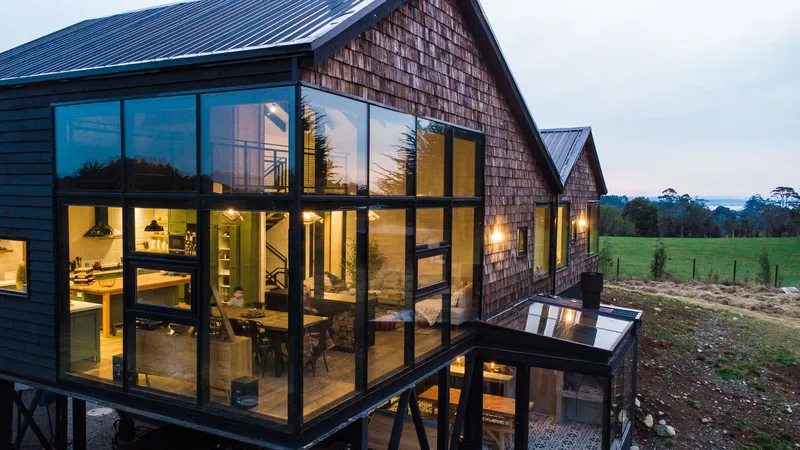
The material palette of House 4 Aguas balances contemporary engineering with traditional construction methods typical of the Puerto Varas region. The structural framework incorporates steel elements, which were essential to achieve the large cantilevered volume above the entrance and the covered parking area.
Steel provides the strength and flexibility necessary to support the elevated portions of the building while maintaining slender structural profiles.
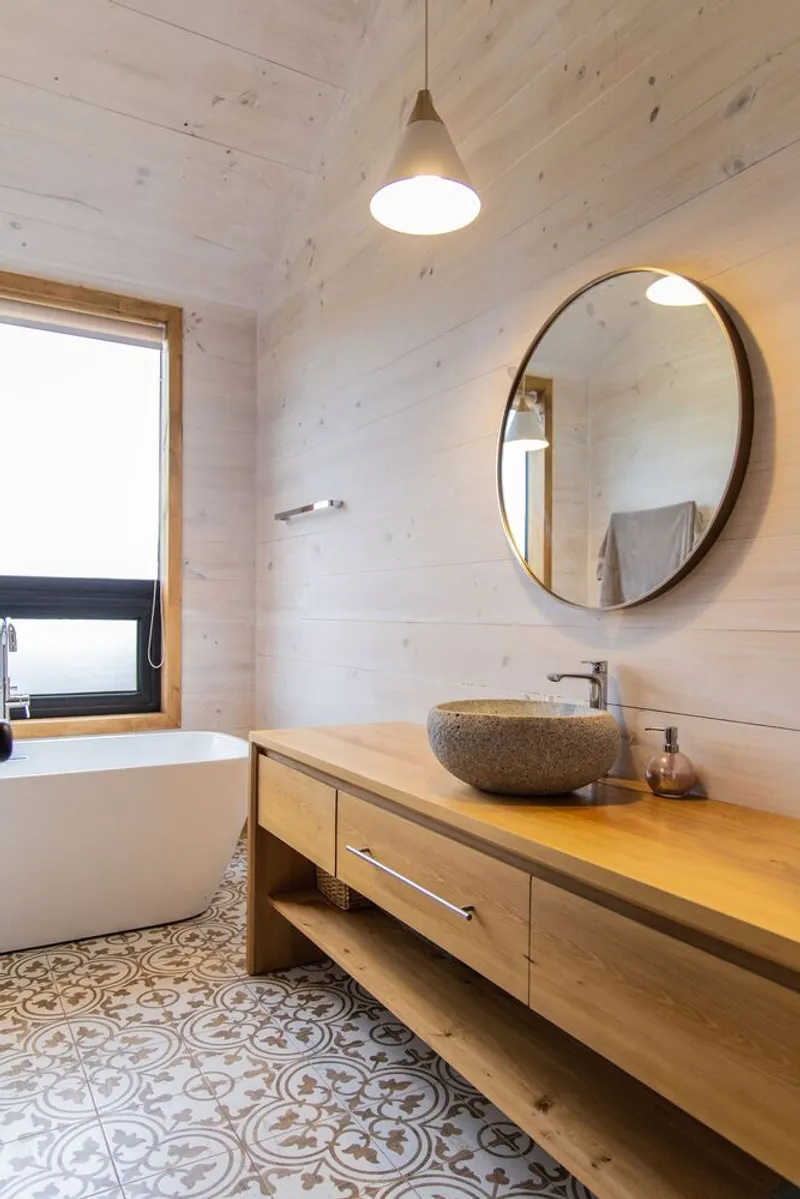
Complementing this modern structural system is the extensive use of wood, a material deeply rooted in the architectural heritage of southern Chile. Timber surfaces bring warmth and texture to both the interior and exterior of the house, reinforcing its connection to the surrounding forests and rural landscape.
This combination of steel and wood allows the project to bridge modern architectural expression with regional construction traditions.
Architecture Shaped by Climate and Place
Puerto Varas is known for its rainy climate, dramatic landscapes, and strong architectural identity influenced by German colonial heritage and timber construction. House 4 Aguas responds carefully to these contextual conditions.
Covered outdoor spaces, protective roof forms, and sheltered entrances address the region’s frequent precipitation. At the same time, large windows and elevated living spaces maximize natural light and scenic views despite the cloudy weather often present in southern Chile.
Through this combination of climatic responsiveness and landscape integration, the project creates a home that feels deeply rooted in its environment.
A Contemporary Home Integrated with Nature
House 4 Aguas stands as an elegant example of hillside architecture that respects both natural topography and cultural context. By adapting the building’s levels to the slope of the terrain, the architects preserved the character of the site while enhancing its scenic qualities.
The layered spatial organization, panoramic views, expressive roof geometry, and thoughtful material palette all contribute to a residence that balances modern design with regional identity.
More than simply a house, Casa 4 Aguas becomes a carefully framed vantage point from which its inhabitants can experience the powerful landscapes of southern Chile, from the tranquil waters of Lake Llanquihue to the imposing silhouette of Calbuco Volcano.
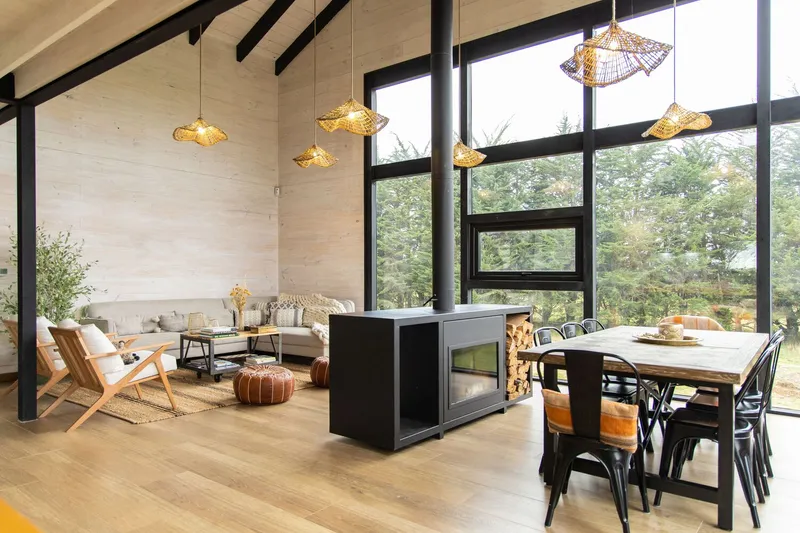
All photographs are works of
Matias Riveros




Popular Articles
Popular articles from the community


Co-Life: Senior Housing Design That Reconnects Older Adults With the City
Co-Life reimagines senior housing design through healing gardens, shared streets, workshops, and a sustainable community across generations.

Co-life: Sustainable Architecture for Age-Friendly Community Living
Co-life reimagines sustainable architecture for seniors through courtyards, rammed earth, shared gardens, and spaces designed for belonging.
EW PARK: Sustainable Architecture Reimagines the Future of Urban Parking
EW PARK reimagines city parking as a modular wooden tower combining automation, solar energy, electric mobility, and adaptable urban design.

Hill & Cross Opera: Sculptural Opera House Architecture Shaped by Tallinn’s Landscape and Identity
Hill & Cross Opera reimagines opera house architecture in Tallinn through its sculptural hill, civic plaza, glass wave and a luminous cross.


Similar Reads
You might also enjoy these articles

FAMM Arquitectura Organizes Ten Villas Around Courtyards and Jungle in Nosara, Costa Rica
El Molino pairs two elongated volumes with deep overhangs and timber louvers to build a compact coastal community five minutes from the beach.
Oscar Niemeyer's Ibirapuera Park Pavilions Define São Paulo's Cultural Identity in Concrete and Curve
A constellation of modernist volumes set within São Paulo's most important urban park, conceived for the city's 400th anniversary in 1954.
How Henri Picq's 1889 Paris Pavilion Traveled 11,000 Kilometers to Become Santiago's Artequín Museum
A prefabricated iron and glass pavilion built for the Paris Universal Exposition found a second life as a children's art museum in Chile.
Sanjay Puri Architects Wraps a Jaipur Office Tower in Capsule-Shaped Green Buffers
A nine-level climate-responsive workplace near Jaipur Airport uses stacked planter terraces and aluminium screens to fight 40°C heat.


Explore Architecture Competitions
Discover active competitions in this discipline



Challenge to reimagine the Iron Throne


Photograph architecture without architects


Illustrate the lost glory of Angkor Wat - Render Challenge


Design challenge to reuse E-waste
Comments (0)
Please login or sign up to add comments
No comments yet. Be the first to comment!