
House Calumbi by Amanda Neuberger: Sustainable Residential Architecture in Chapada Diamantina
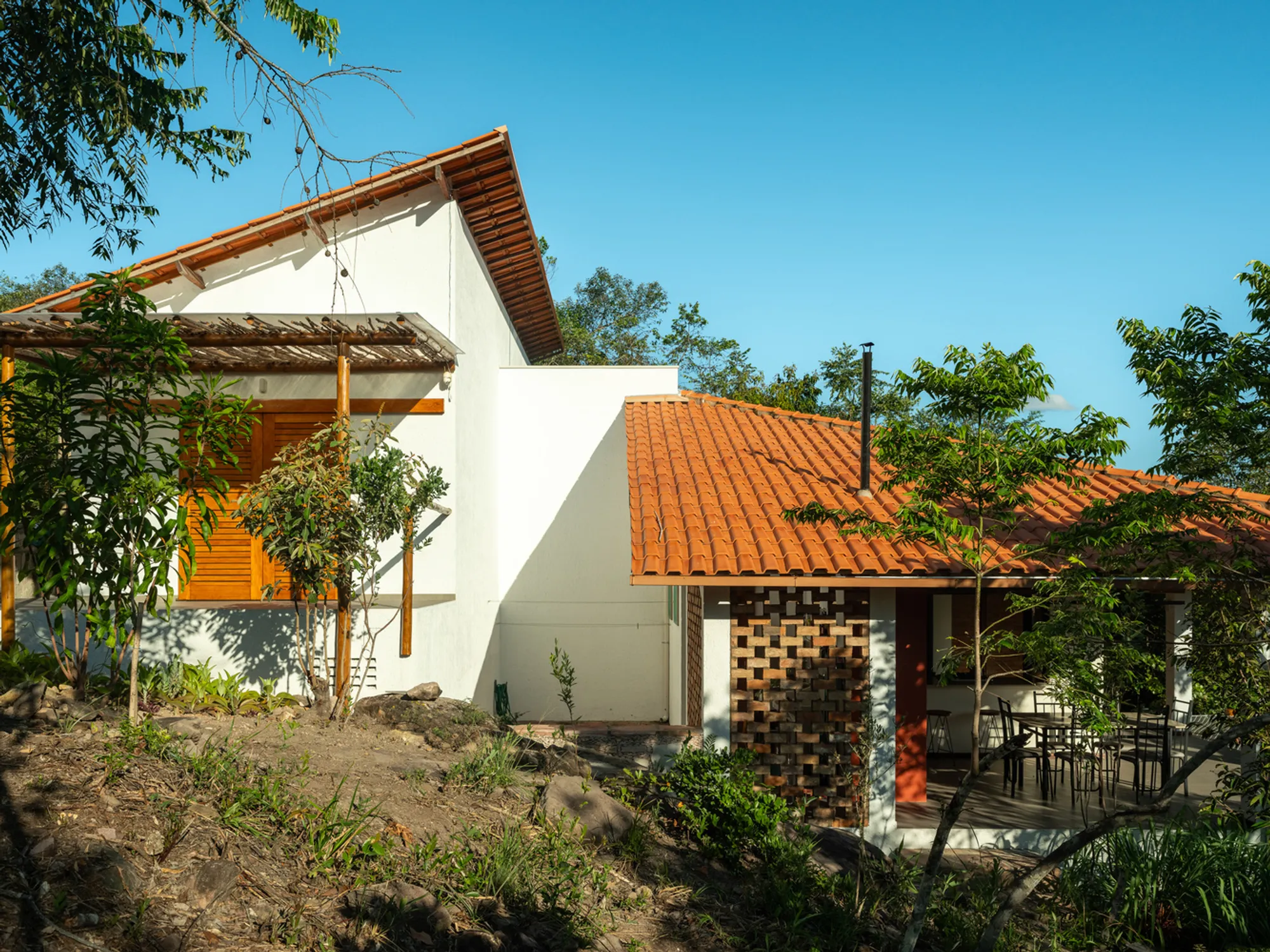
House Calumbi by Amanda Neuberger integrates sustainable systems, local materials, and passive design, harmoniously blending with Chapada Diamantina’s rugged landscape.


Nestled in the scenic rural landscape of Lençóis, Bahia, House Calumbi by Amanda Neuberger is a compelling example of sustainable residential architecture that harmoniously engages with the Chapada Diamantina environment. Situated in a transitional zone between the cerrado and caatinga ecosystems, the house responds to the unique climatic and topographical challenges of the region—steep hills, valleys, and a hot, dry climate punctuated by intense seasonal rains.
Site Integration and Architectural Concept
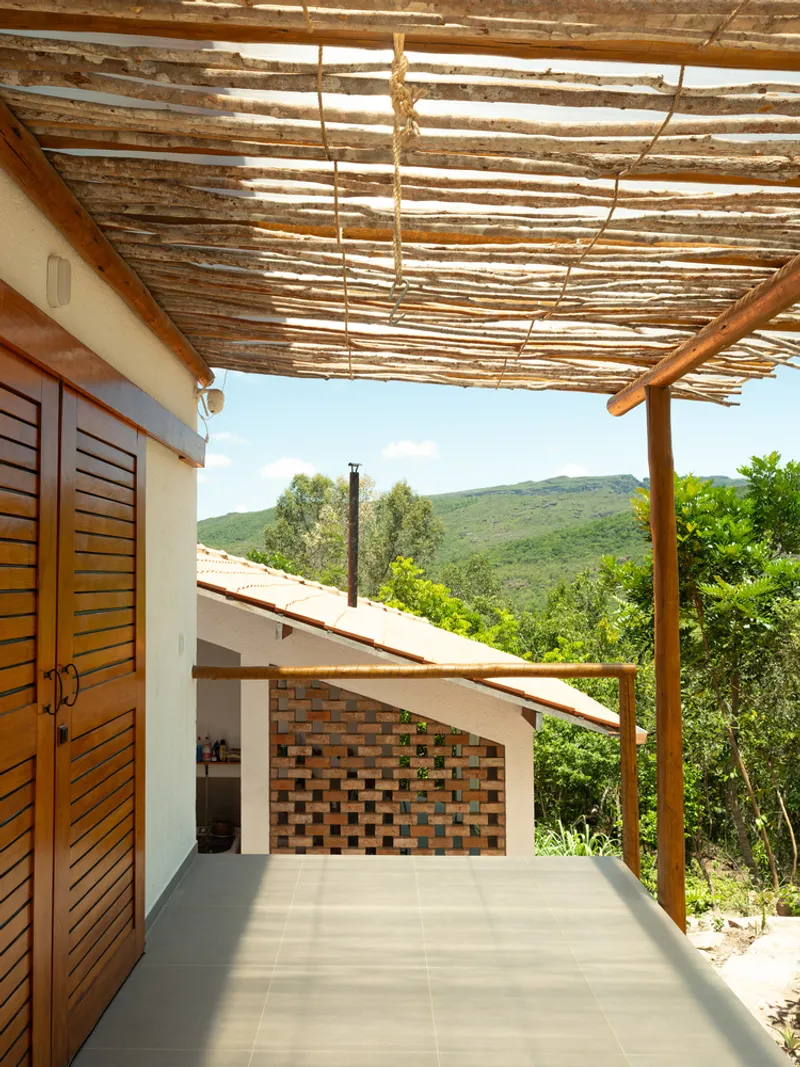
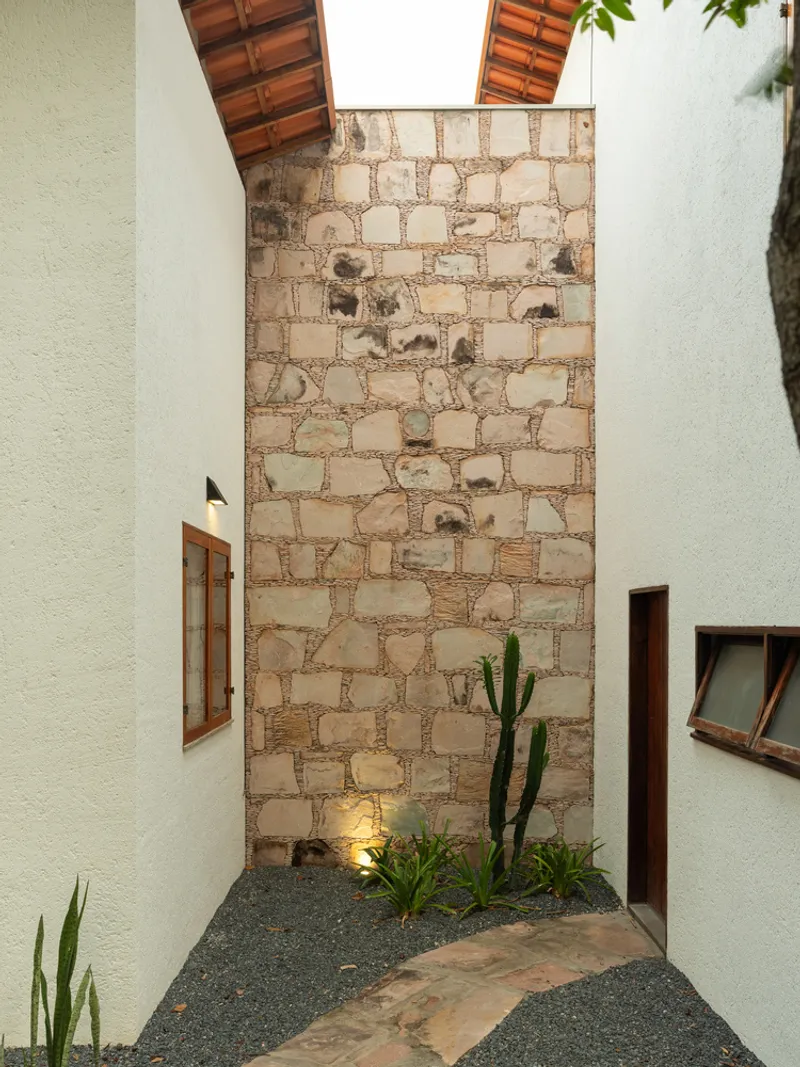
House Calumbi was designed to blend seamlessly with the natural terrain rather than altering it. By splitting the program into two distinct blocks—social and private areas—positioned at different levels, the design minimizes land movement and preserves the existing topography. A central staircase, organized around a vertical void illuminated by a translucent roof, serves as a spatial and visual connector, ensuring natural light penetrates throughout the day while enhancing circulation.
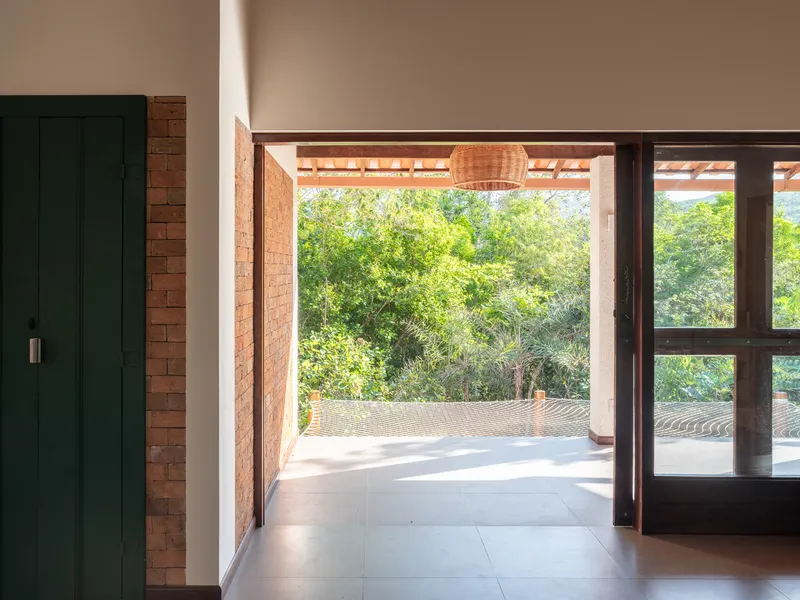
The building’s orientation and careful placement allow open views of the surrounding hills, making the natural environment an integral part of the experience. This approach exemplifies a design strategy that respects both the landscape and the local ecosystem.
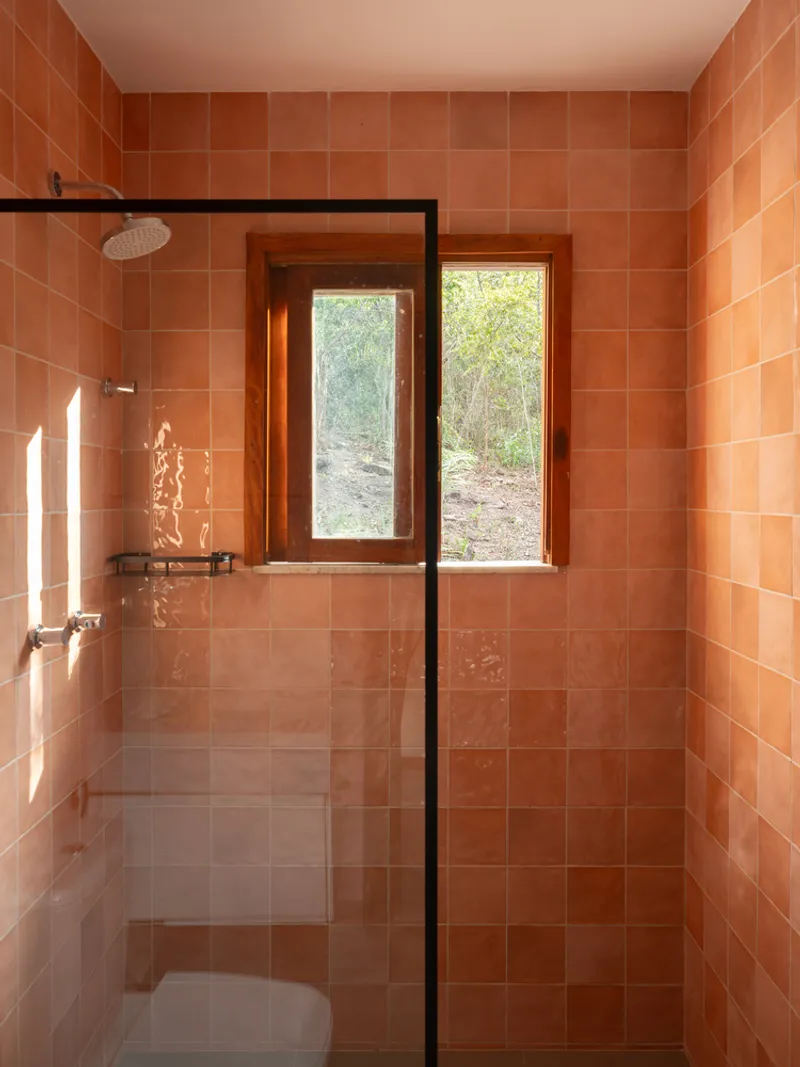
Materials and Construction
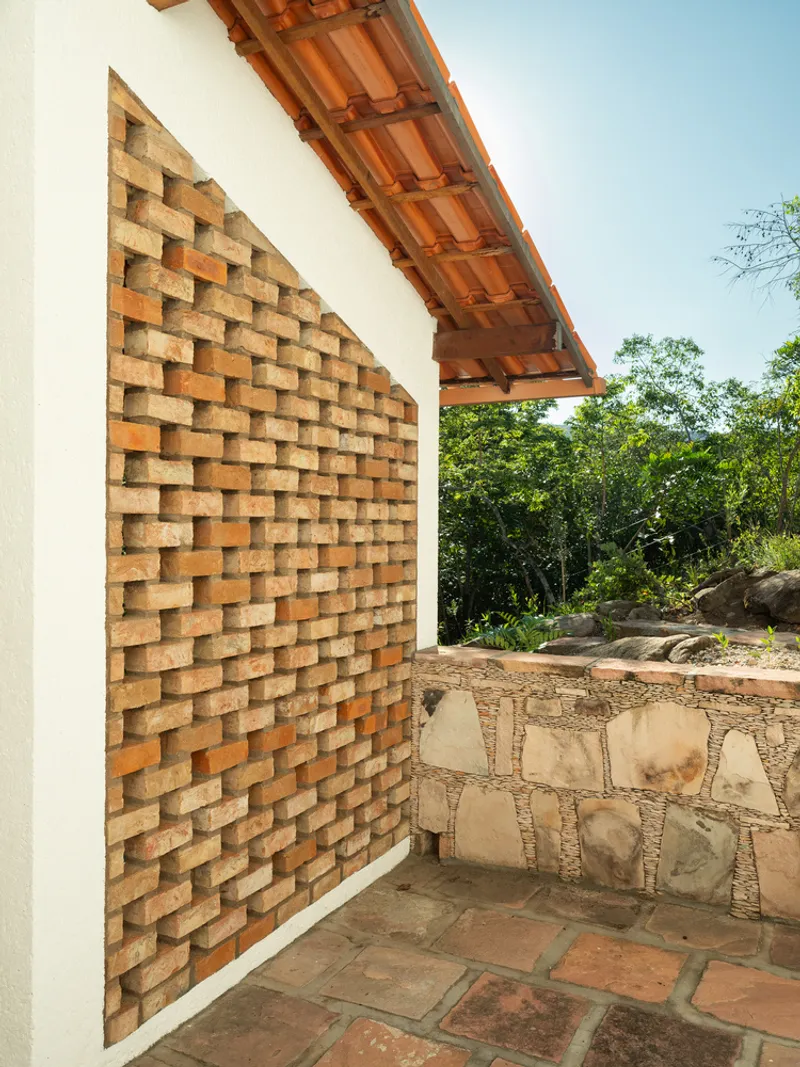
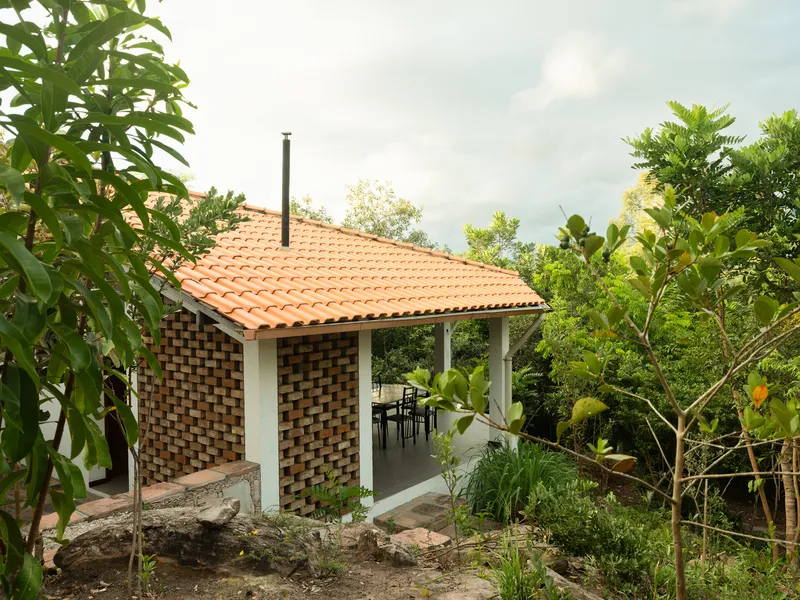
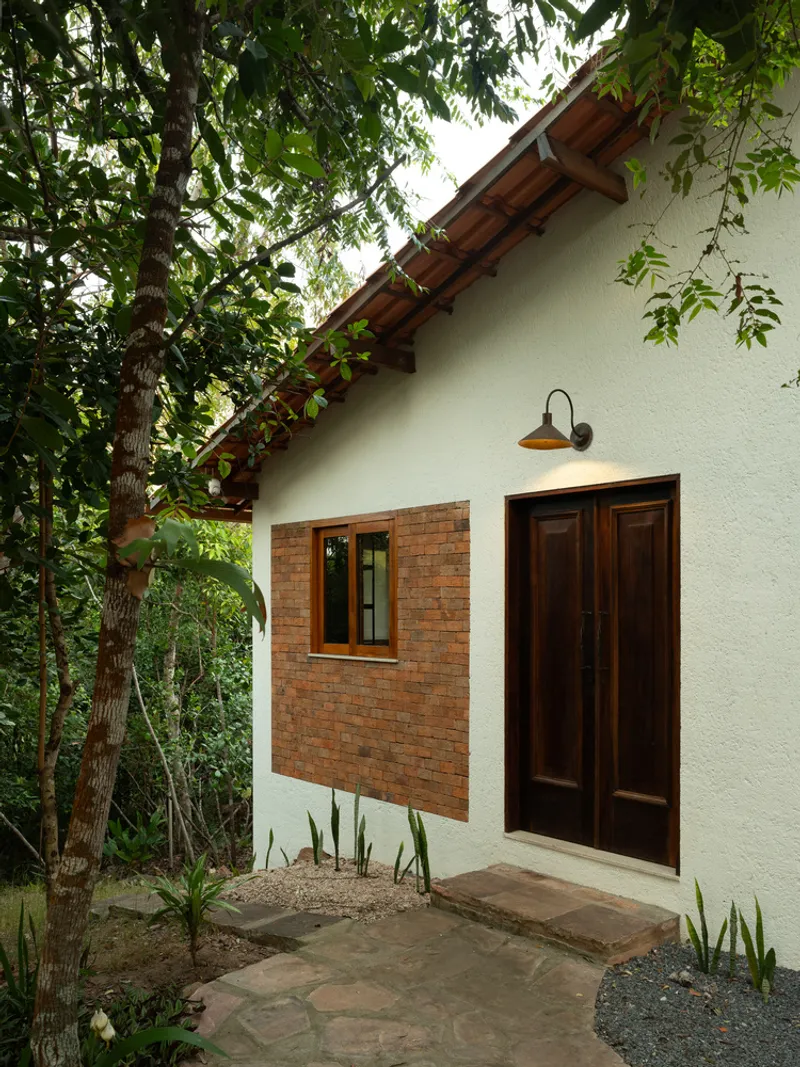
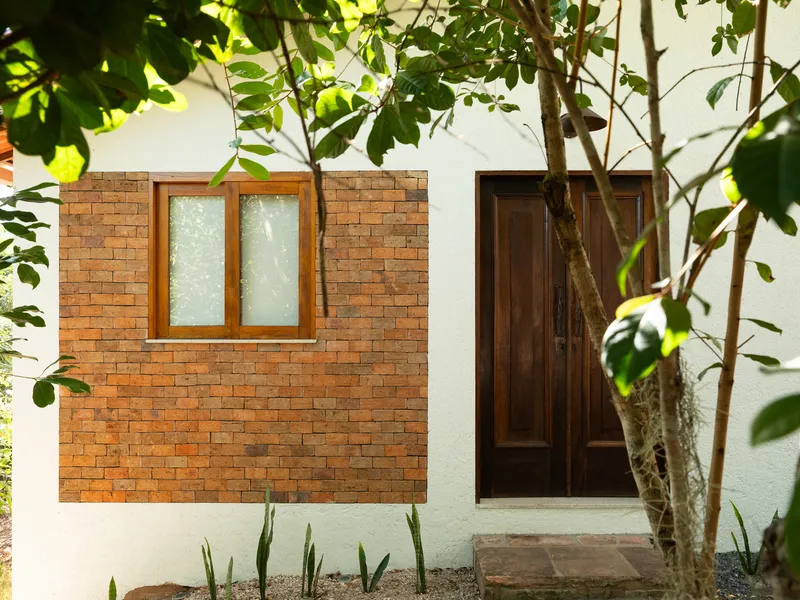
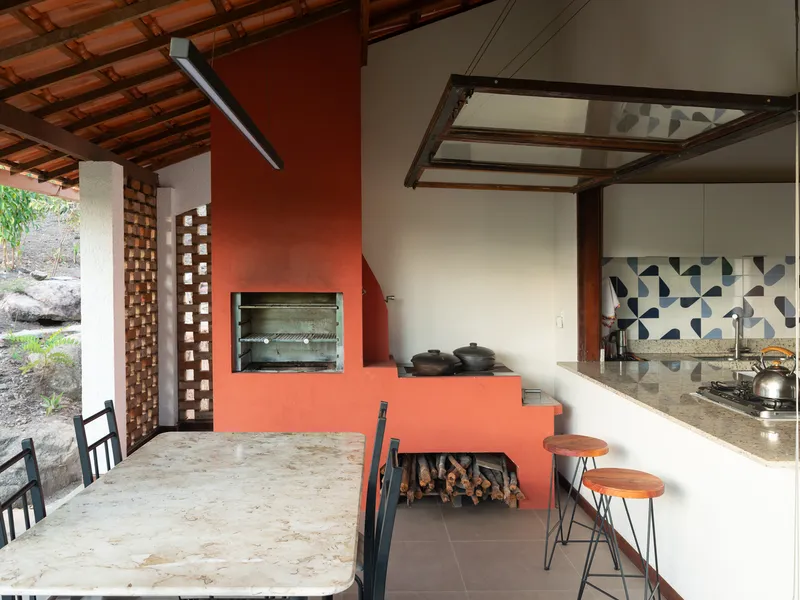
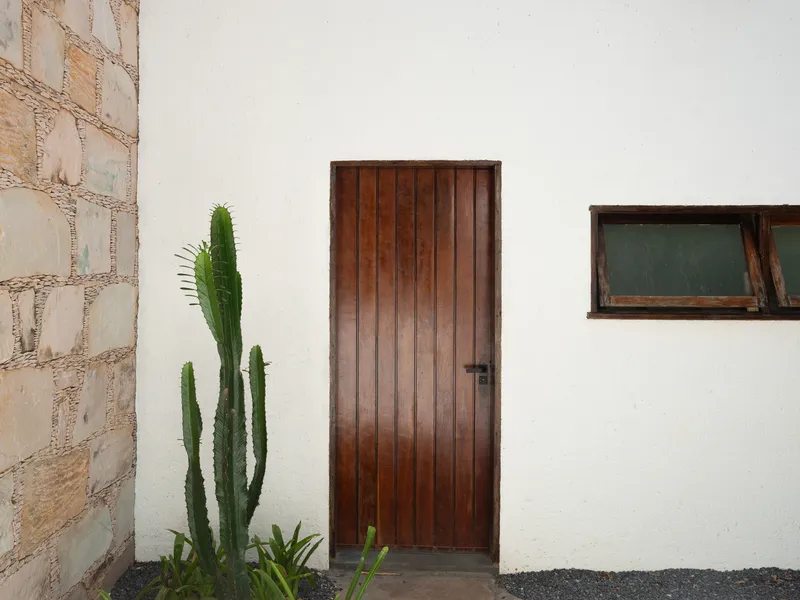
The house employs conventional construction methods with a reinforced concrete structure and ceramic block masonry, incorporating locally sourced materials in select areas. Stone and solid brick are used strategically, sometimes forming hollow elements reminiscent of cobogós, which allow natural ventilation and filtered light to permeate interiors.
Stone, in particular, pays homage to local craftsmanship and the region’s mining heritage, establishing a cultural and historical connection while structuring and defining the house’s volumes.
Reuse and Artisanal Materiality
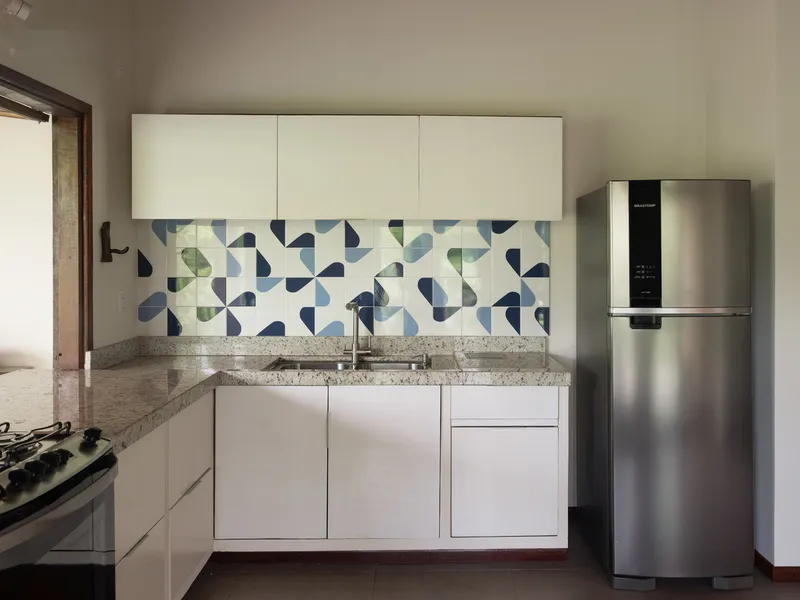
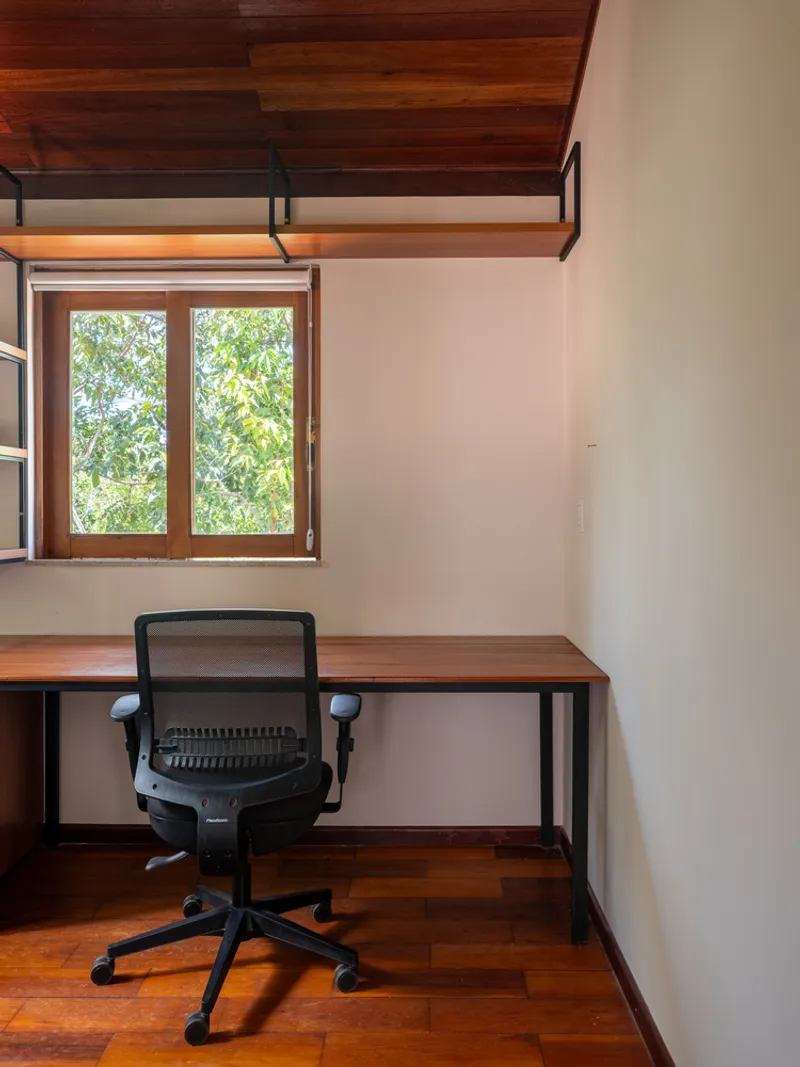
Sustainability extends beyond construction methods. In collaboration with Arquivo, salvaged materials such as frames, steps, ceilings, and floors from demolished buildings in Salvador were carefully curated and integrated into House Calumbi. This approach not only reduces construction waste but also imbues the interiors with unique artisanal character, enhancing the material authenticity of the spaces.
Sustainable Systems and Environmental Strategies
House Calumbi exemplifies a low-impact, autonomous home. Key sustainable features include:
- Rainwater harvesting and storage
- Local sewage treatment via a biodigester
- Photovoltaic energy generation
- Solar water heating
Passive design strategies complement these systems, using cross ventilation and zenithal lighting to reduce reliance on artificial climate control and enhance thermal comfort naturally.
A Home Rooted in the Territory
House Calumbi represents a holistic approach to residential architecture that values territorial identity, sustainable practices, and local craftsmanship. By integrating autonomous systems, reused materials, and culturally resonant techniques, Amanda Neuberger created a home that respects, inhabits, and celebrates the Chapada Diamantina landscape.
All photographs are works of Paula Mussi




Popular Articles
Popular articles from the community


The Musturak Paradise: Senior Living Architecture for a Connected Future in Temara, Morocco
The Musturak Paradise reimagines senior living architecture in Temara via private homes, social spaces, culture, community, and shared care.

Lunar Spiral: Space Architecture Shaped by the Mathematics of the Universe
Lunar Spiral reimagines space architecture through Fibonacci geometry, lunar regolith, levitating habitats, and self-sustaining Moon living.

Co-Life: Senior Housing Design That Reconnects Older Adults With the City
Co-Life reimagines senior housing design through healing gardens, shared streets, workshops, and a sustainable community across generations.

The Ocean Hive: Sustainable Architecture for a Self-Sufficient Civilization at Sea
The Ocean Hive imagines sustainable architecture at sea, where modular habitats, algae, wave power and ocean waste sustain a growing colony.


Similar Reads
You might also enjoy these articles


Hodi-Mandai Geram
Project Function: Preservation and revitalization of the Intangible heritage and socio-spatial identity of the Hodi by Housing, Cultural Memory Center, Sacred Grove, landscape, local tourism economy


Olio Towers: A Mid-Rise for Performers That Fuses Housing, Rehearsal, and Stage
Located blocks from Houston's Theater District, this modular tower stacks living units around a central performance atrium.

Oasis: Modular Green Housing Carved into Dhaka's Urban Fabric
A shortlisted Plugin Housing entry reclaims unauthorized settlements in Dhaka with stepped concrete volumes, green roofs, and ventilation-driven design.

Black Hole: A Floating Megastructure for the Post-Physical Era
Emiliano Mazzarotto envisions a spherical, self-scaling arena where e-sports, digital hotels, and holographic stadiums replace traditional public space.


Explore Residential Design Competitions
Discover active competitions in this discipline



Challenge to reimagine the Iron Throne


Photograph architecture without architects


Illustrate the lost glory of Angkor Wat - Render Challenge


Design challenge to reuse E-waste
Comments (0)
Please login or sign up to add comments
No comments yet. Be the first to comment!