

House in Daigo by Takehiko Suzuki: Harmonizing Family Life and Nature in Kyoto
House in Daigo by Takehiko Suzuki blends triangular living spaces and L-shaped volumes, connecting family life with panoramic Kyoto mountain views.


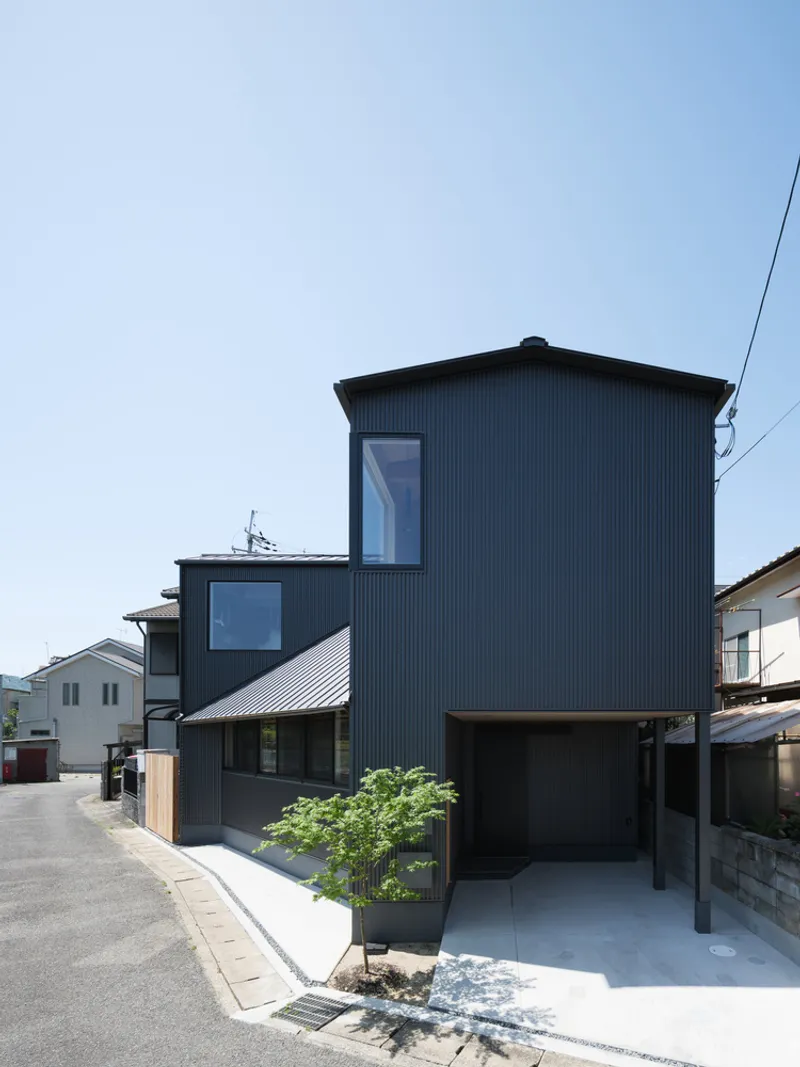
In the southwestern region of Kyoto, a serene panorama of the Daigo mountains suddenly emerges beyond a dense residential neighborhood filled with both traditional and contemporary houses. Here, a young family who had moved across Japan for work decided to settle, drawn by the interplay of expansive natural scenery and intimate, personal space. This unique relationship between the mountains and the family’s daily life became the guiding vision for the House in Daigo, designed by renowned architect Takehiko Suzuki.
Architectural Concept: Connecting Scales of Space
At the heart of the design is the idea of connecting two contrasting scales, the vastness of the mountains and the domestic intimacy of family life. This concept was realized through the form of the space itself.
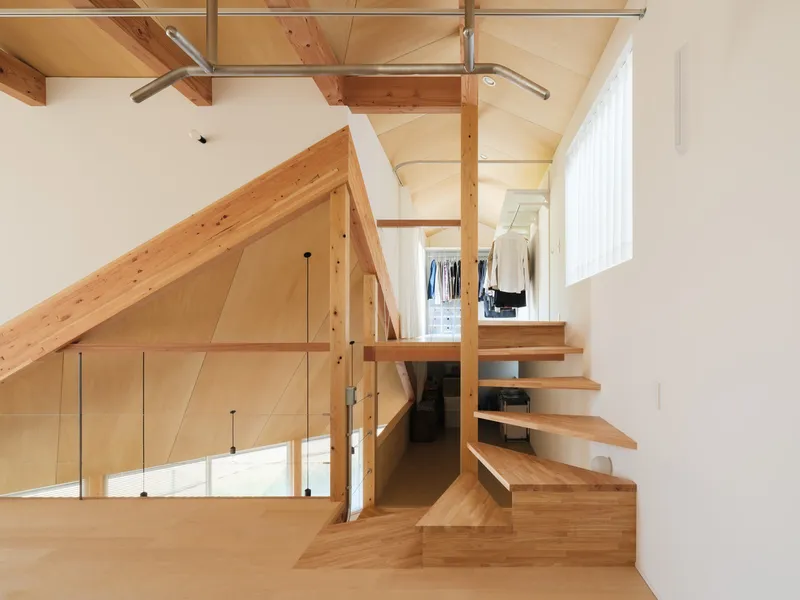
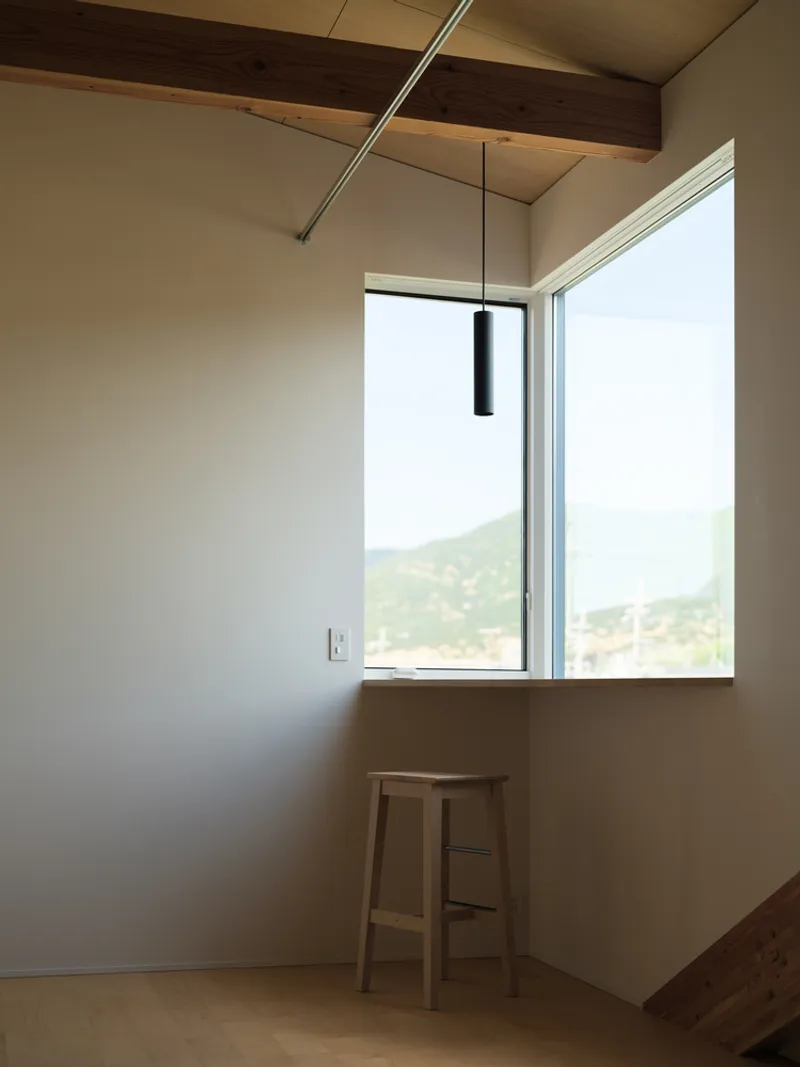
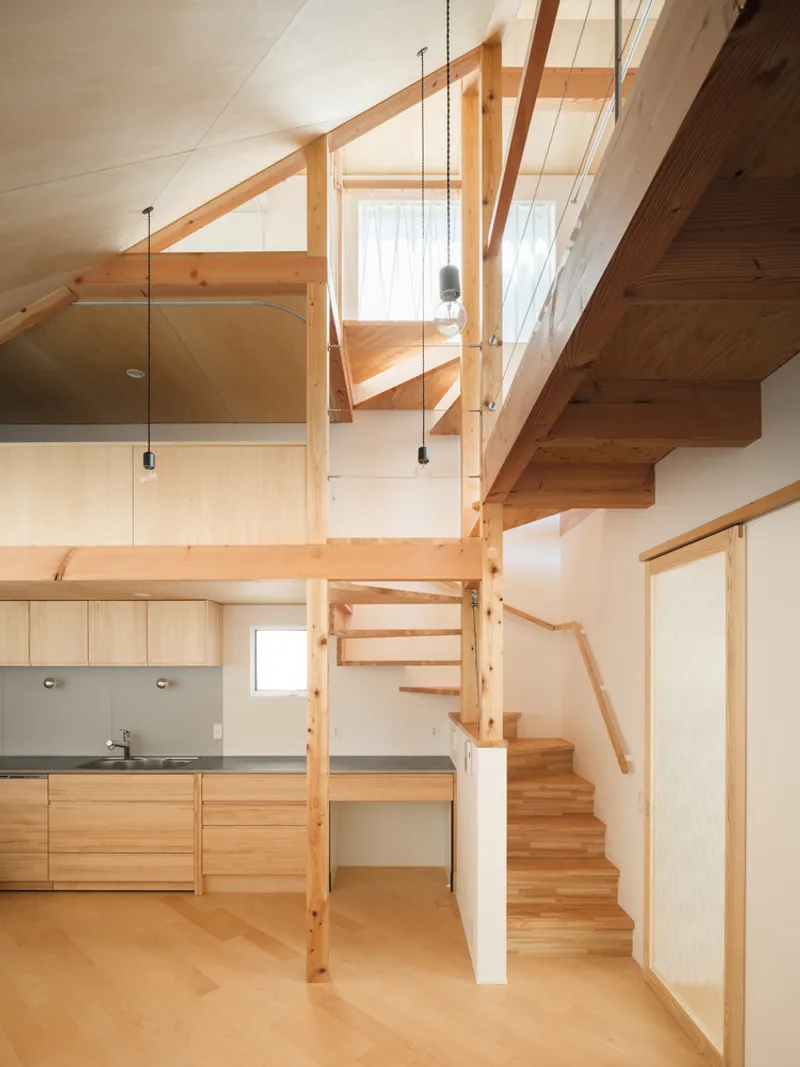
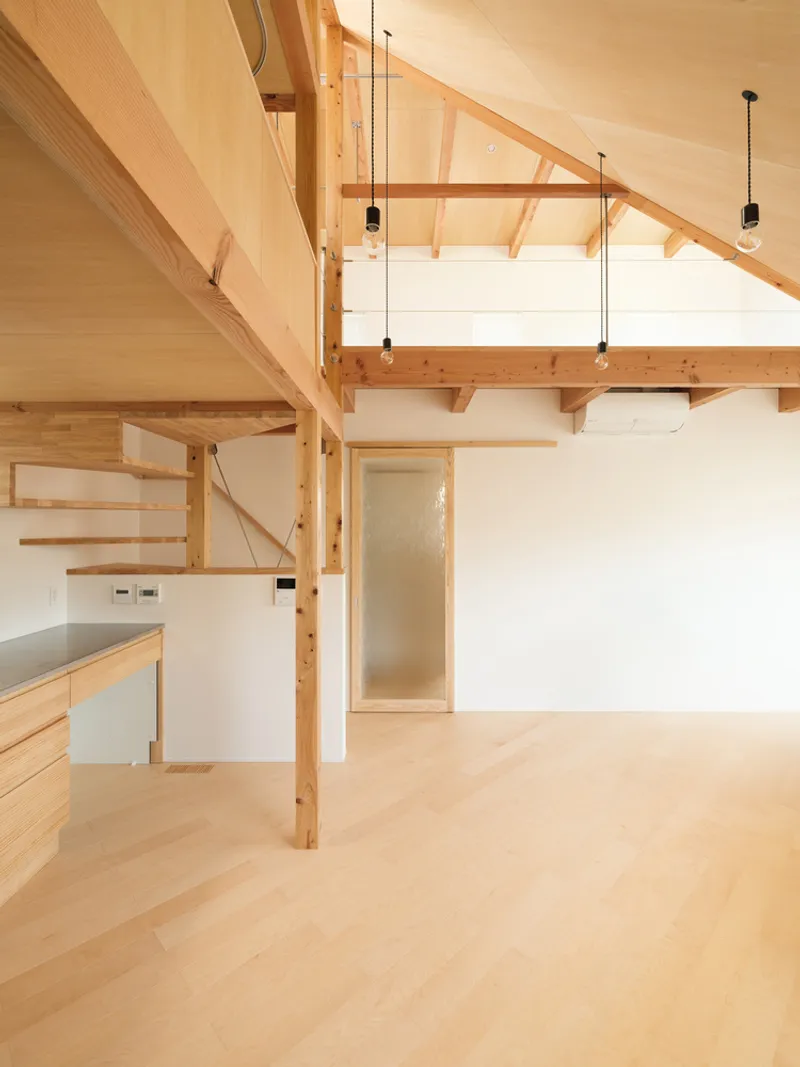
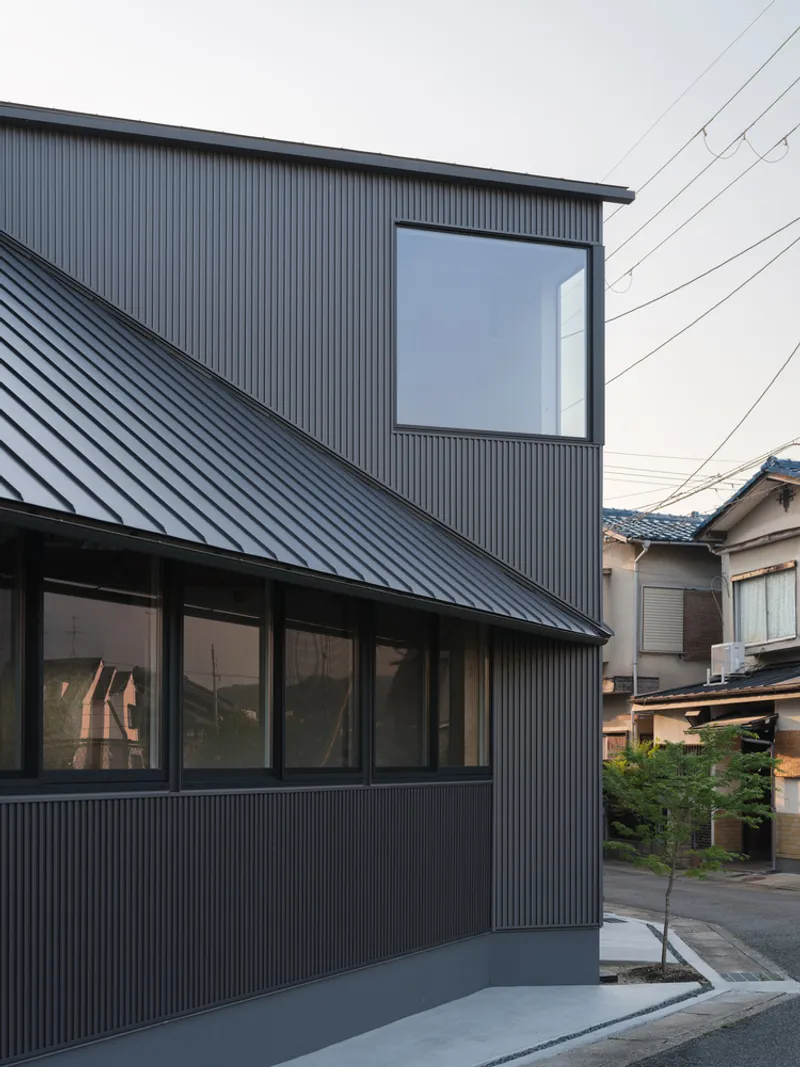
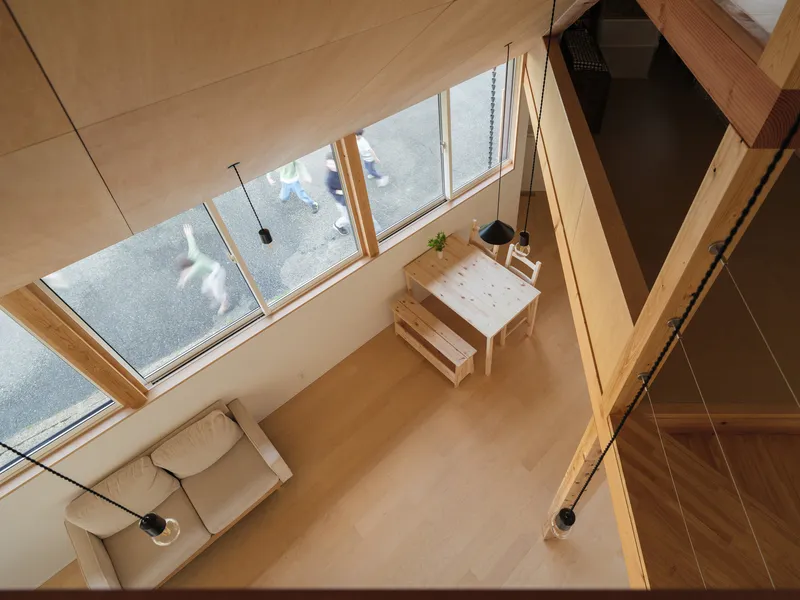
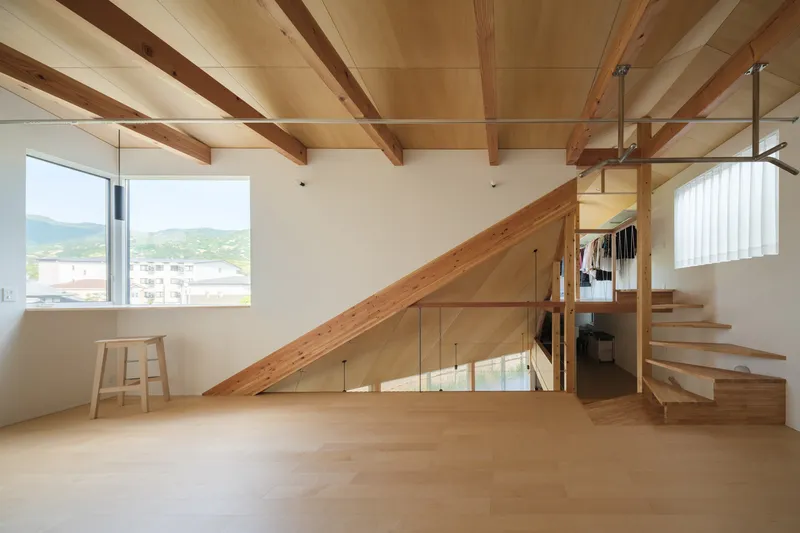
The living room, the central hub of the house, is conceived as a right-angled isosceles triangle. Above it, a triangular single-sided roof mirrors the plan’s geometry. The room opens toward the mountains, creating a visual and spatial dialogue between interior and exterior. Surrounding rooms: including bedrooms, bathrooms, and storage, are organized within an L-shaped two-story volume that frames the triangular living room. This design allows the living room to open inward toward the corner of the L-shape, creating a layered spatial experience.
Spatial Experience: Gradation and Connection
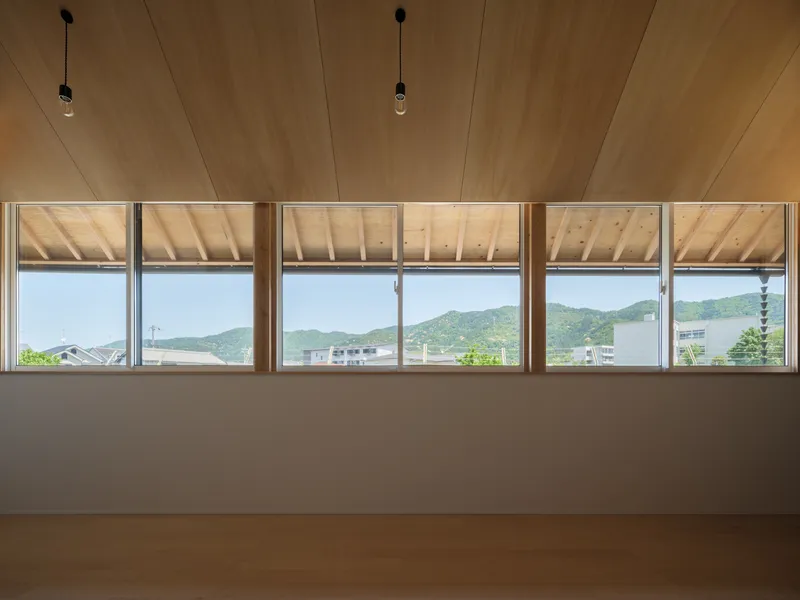
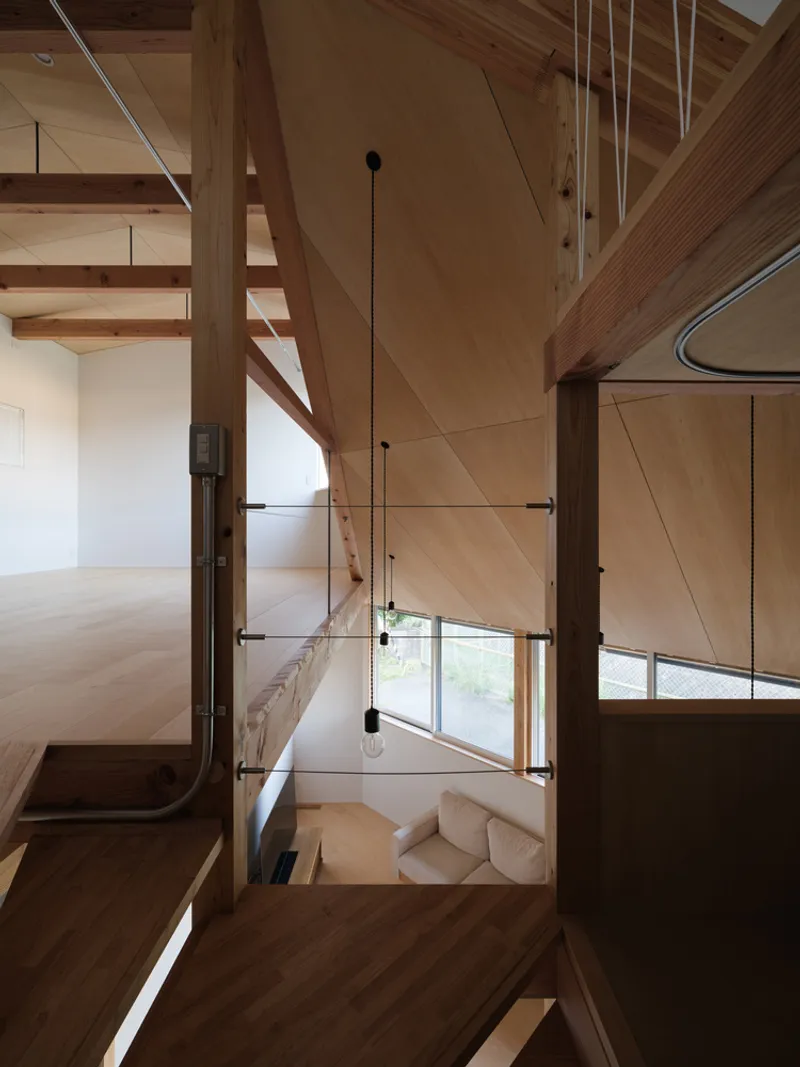
The architectural form shapes a gradational relationship between the mountains and the family. For instance, the dining table sits at the 45-degree corner of the triangular living room, facing a large window that brings the mountains into daily life. Mealtime becomes an immersive experience where the presence of nature feels tangible and intimate.
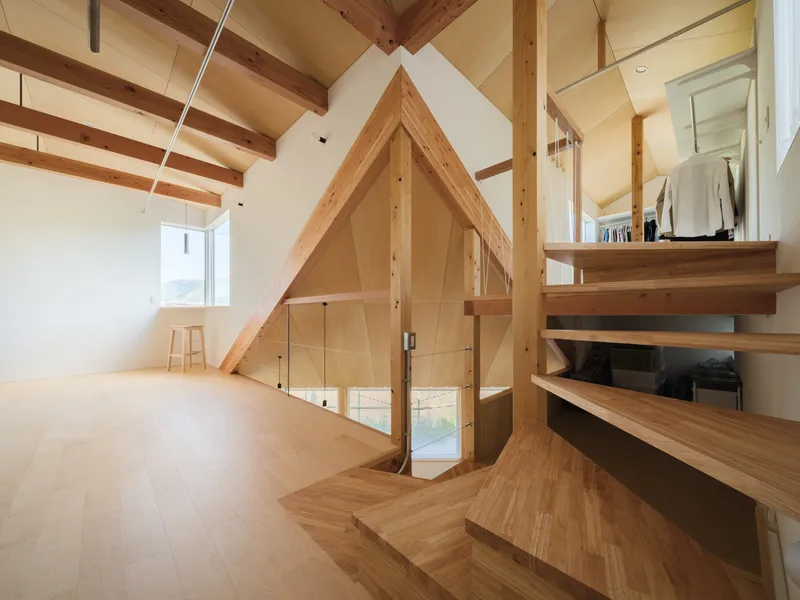
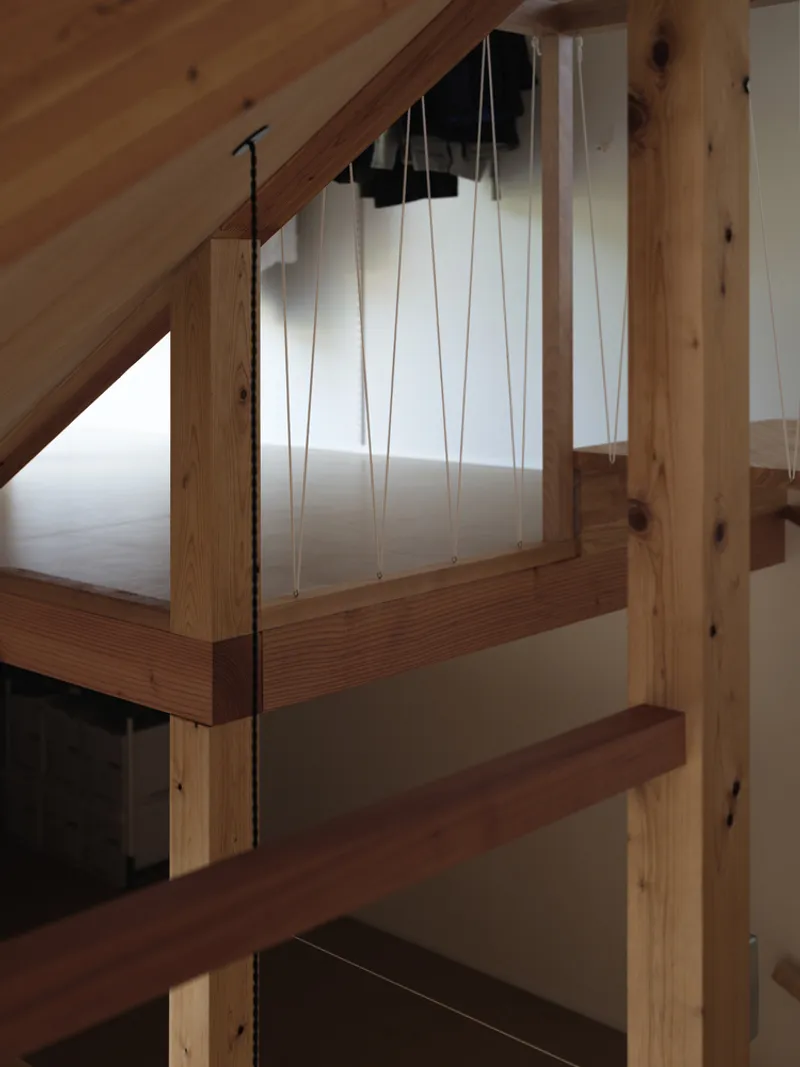
A spiral staircase located at the inside corner of the L-shaped volume provides a dramatic perspective: from the base, the mountain range stretches beyond a horizontal living-room window; ascending the staircase transforms the perception into a three-dimensional journey through the internal spaces of the house.
The triangular pyramidal void beneath the roof further enhances spatial connectivity. Rooms at the inside corner of the L-shaped volume feel interconnected, while spaces at the ends of the L-shape maintain privacy. Simultaneously, the mountains alternately fade and reappear in view, creating a dynamic sense of distance between family members and nature.
A Contemporary Living Space
The House in Daigo explores a modern approach to living, reflecting a contemporary reality where the perception of distance: between people, nature, and the city, is increasingly fluid. The design highlights moments when the mountains feel as near as family and instances when family feels as distant as the horizon, offering a nuanced, poetic interpretation of home life in a digital and pandemic-influenced era.


Popular Articles
Popular articles from the community


Faces of the Soviet Avant-Garde: Turning Moscow's Street Names into an Open-Air Museum
A network of sculptural installations across a Moscow residential district transforms forgotten architect names into spatial encounters with cultural memor
Temporary Home for Dogs: A Reversed Zoo Rethinks Animal Shelter Architecture
In Bucharest, a sinuous corridor and freed landscape flip the logic of containment, designing a shelter that works to make itself unnecessary.

Singing Woman: An Opera House That Performs Before the Curtain Rises
Ovidiu Cristian Pavel's conceptual opera house translates Estonia's choral identity into a sculpted waterfront landmark facing the Baltic Sea.
Extended Shell: Retrofitting Kolkata's Balconies as Living Urban Thresholds
A modular retrofit system recovers the social and environmental intelligence of Kolkata's historic verandas for contemporary Park Street residents.

Similar Reads
You might also enjoy these articles


Hodi-Mandai Geram
Project Function: Preservation and revitalization of the Intangible heritage and socio-spatial identity of the Hodi by Housing, Cultural Memory Center, Sacred Grove, landscape, local tourism economy


Olio Towers: A Mid-Rise for Performers That Fuses Housing, Rehearsal, and Stage
Located blocks from Houston's Theater District, this modular tower stacks living units around a central performance atrium.

Oasis: Modular Green Housing Carved into Dhaka's Urban Fabric
A shortlisted Plugin Housing entry reclaims unauthorized settlements in Dhaka with stepped concrete volumes, green roofs, and ventilation-driven design.

Black Hole: A Floating Megastructure for the Post-Physical Era
Emiliano Mazzarotto envisions a spherical, self-scaling arena where e-sports, digital hotels, and holographic stadiums replace traditional public space.

Explore Residential Design Competitions
Discover active competitions in this discipline

Challenge to reimagine the Iron Throne

Photograph architecture without architects

Illustrate the lost glory of Angkor Wat - Render Challenge

Design challenge to reuse E-waste
Comments (0)
Please login or sign up to add comments
No comments yet. Be the first to comment!