
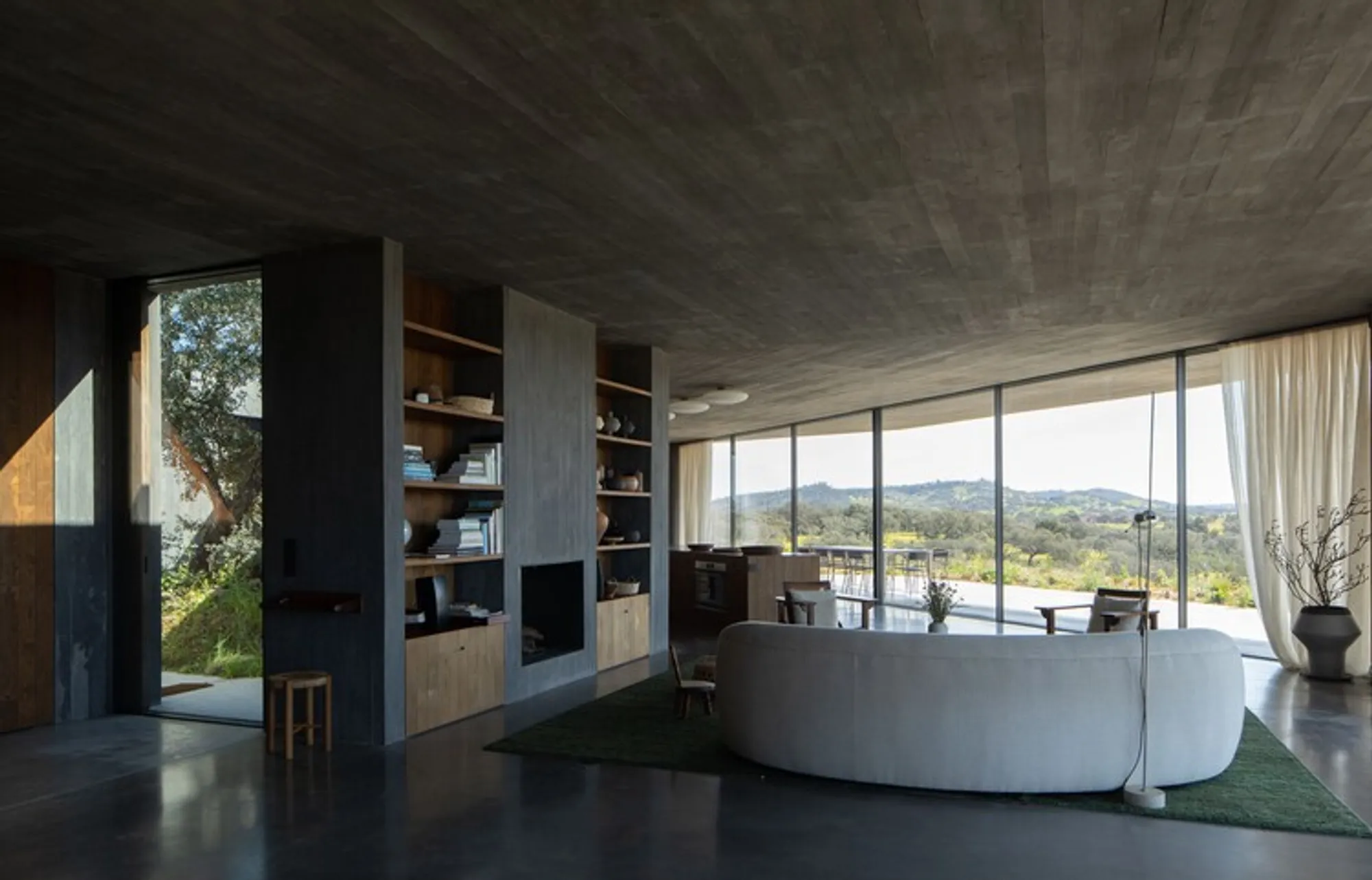
House in Fonte das Perdizes by gonçalobonniz arquitectos
A contemporary concrete and wood house in Alentejo, shaped by landscape, climate, and material restraint to merge architecture with nature.


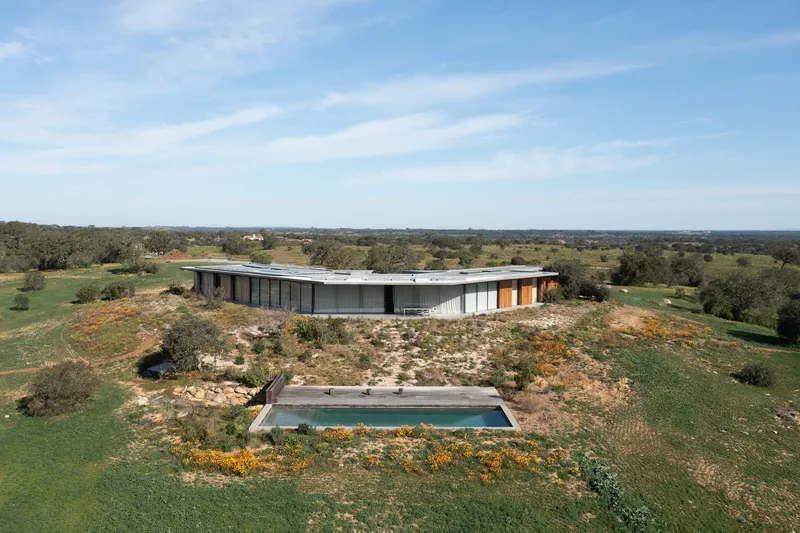
Set within the vast, rugged terrain of Grândola, in Portugal’s Alentejo region, the House in Fonte das Perdizes by gonçalobonniz arquitectos is a contemporary rural dwelling deeply shaped by its landscape. Completed in 2021, the 500 m² house balances modern architectural expression with an almost primal connection to land, climate, and material. Rather than imposing itself upon nature, the project is carefully carved by it: its form, orientation, and materiality responding directly to the site’s topography, vegetation, and harsh environmental conditions.
A Concrete and Wood Dwelling Sculpted by the Alentejo Landscape
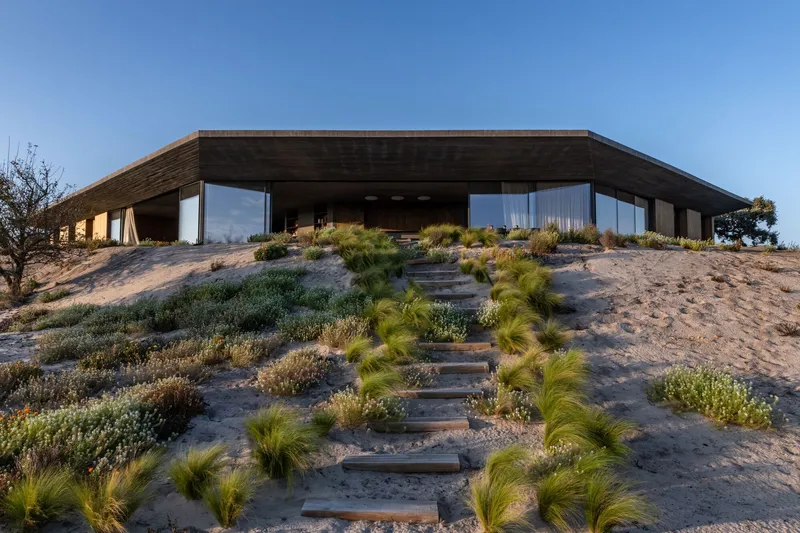
The design challenge was clear but complex: to create a contemporary, modern house that could dominate the landscape visually while remaining fully integrated within it. The solution lies in a precise orchestration of geometry, orientation, and restrained material choices that allow the house to appear simultaneously monumental and rooted.
Choosing the Site: Landscape as Generator
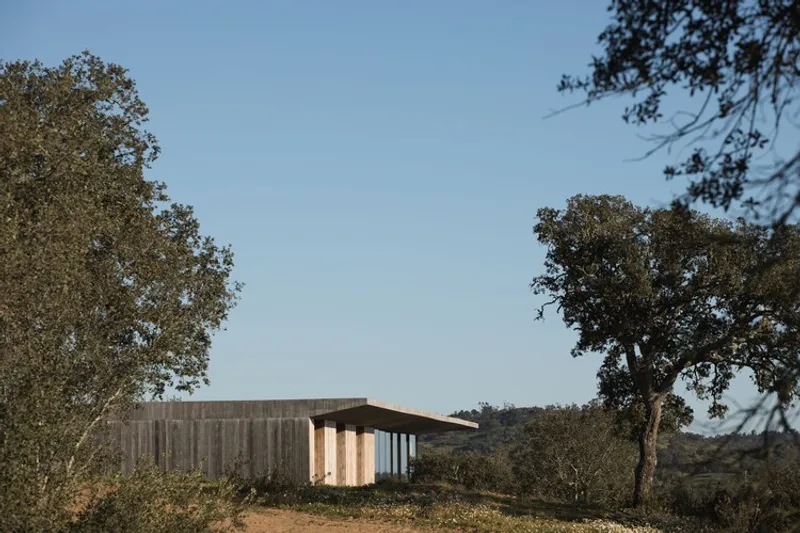
The placement of the house was not arbitrary. Within the expansive rural plot, a single location emerged as the natural choice: one that offered commanding views, optimal solar orientation, and minimal disturbance to the existing ecosystem. Crucially, the site allowed the preservation of mature holm-oak trees, a defining feature of the Alentejo landscape.
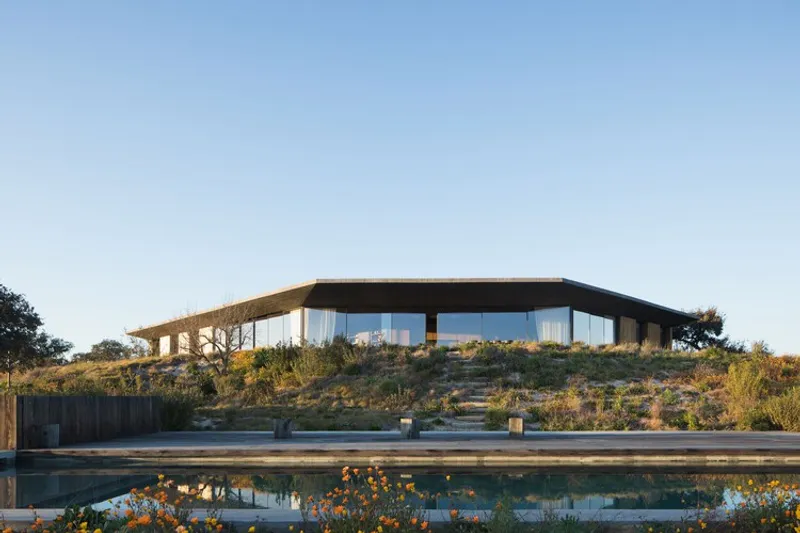
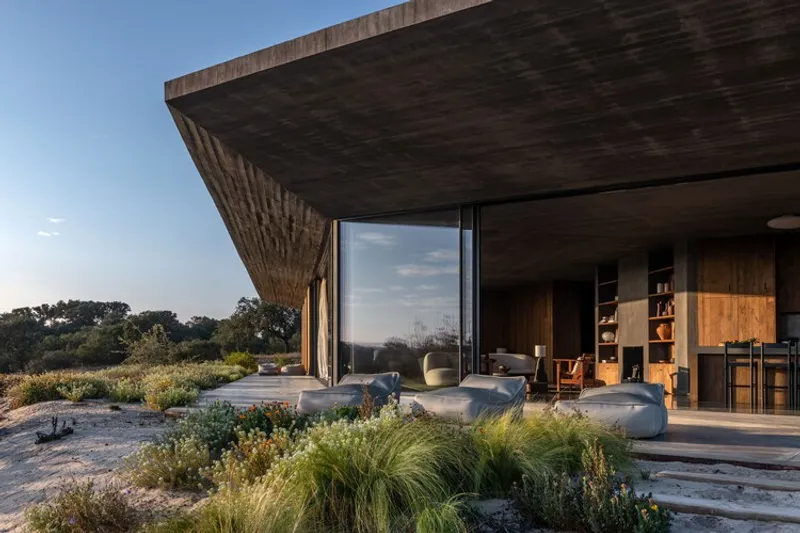
Rather than removing these trees, the architects allowed them to shape the project. Their presence influenced both the footprint and the articulation of the house, helping to carve its geometry and anchor it physically and symbolically to the land. The resulting architecture feels less placed and more grown from the terrain, reinforcing a sense of belonging.
A Chromatic Strategy Rooted in Nature
Material and color selection played a fundamental role in integrating the house into its surroundings. The Alentejo landscape is defined by earthy tones: greys, browns, and muted greens, intensified by strong sunlight and seasonal dryness. To blend naturally into this context, the architects adopted a strict and limited chromatic palette.
The discovery of a multicolored slate stone, rich in grey and brown pigments, became the chromatic reference for the entire project. These tones guided all subsequent material decisions, ensuring visual coherence and environmental harmony.
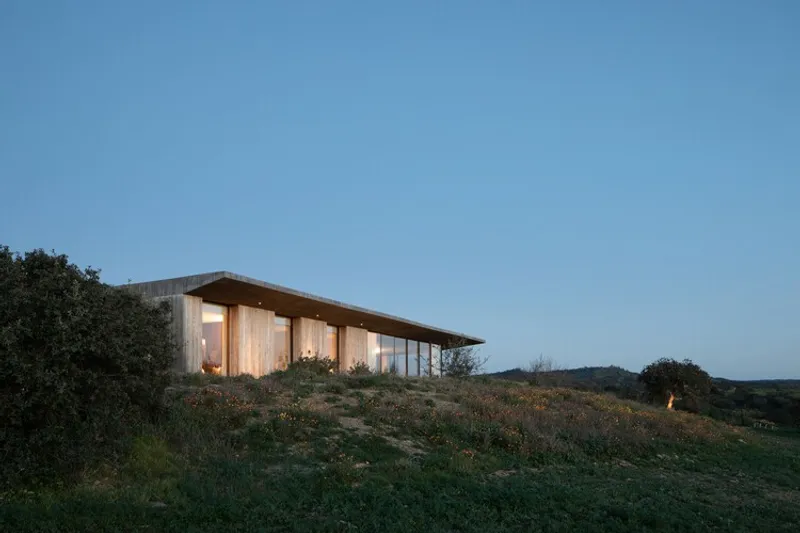
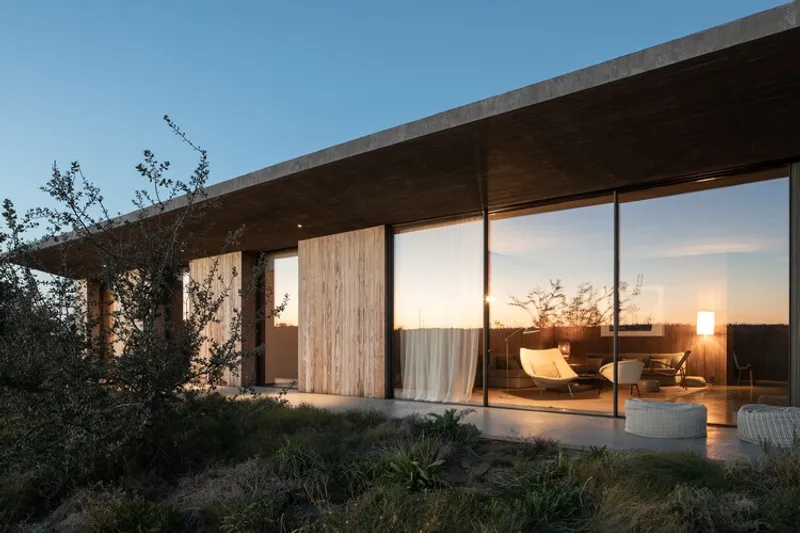
Concrete was chosen as a primary material for its durability and tectonic clarity, but its color was carefully adjusted to a dark grey, echoing the slate and the shadowed earth. To balance this cooler tone, a warmer material was needed, leading to the selection of pinewood, treated specifically to withstand both interior and exterior use. The dialogue between dark concrete and dark, silky wood defines the house’s tactile and visual identity.
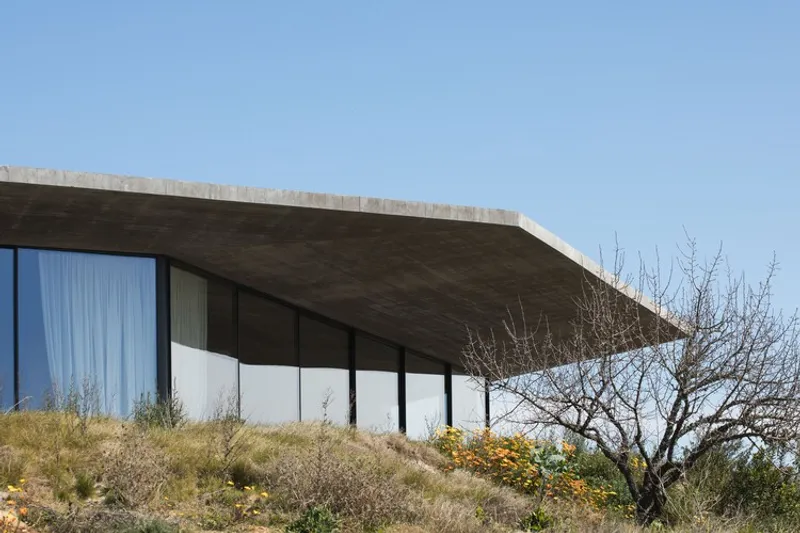
Geometry and Orientation: Three Wings in Balance
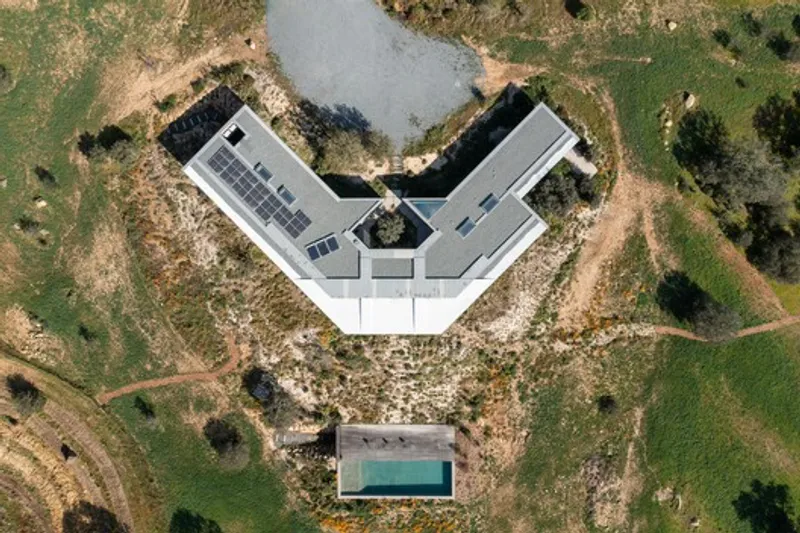
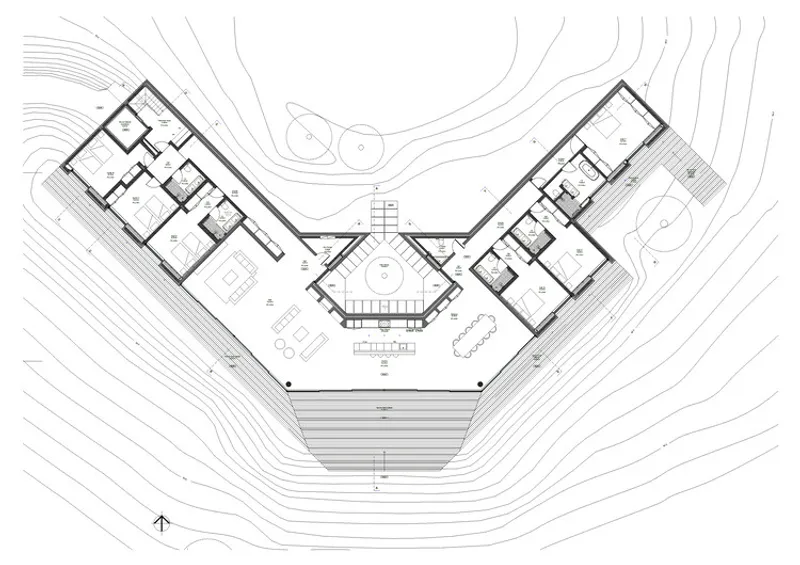
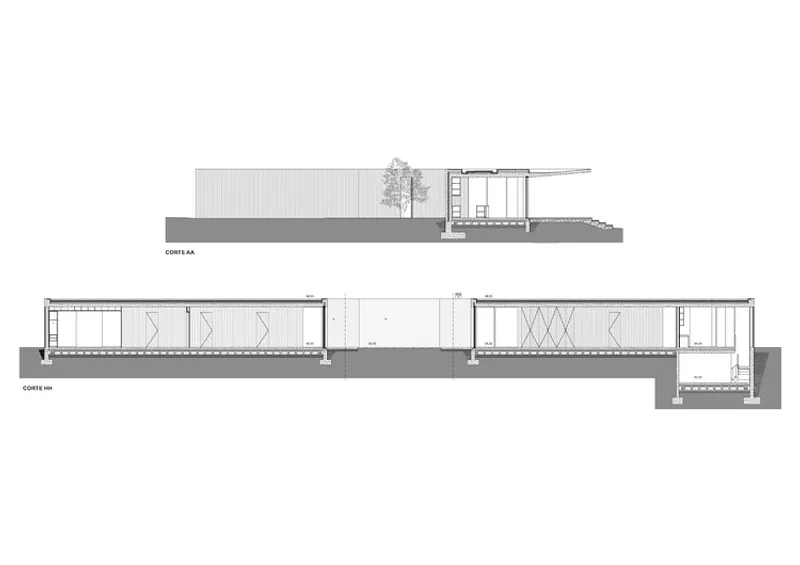
The house is composed of three wings, each rotated at 45 degrees, forming a sculptural plan that follows an east, west orientation. This geometry is not merely formal; it is environmental and strategic.
The composition establishes a radical separation between north and south. On the north side, the house presents itself as an almost defensive structure: a 47-meter-long blind concrete wall, standing 3.5 meters tall. This wall shields the interior from cold northern winds, limits unwanted exposure, and reinforces a sense of privacy and protection.
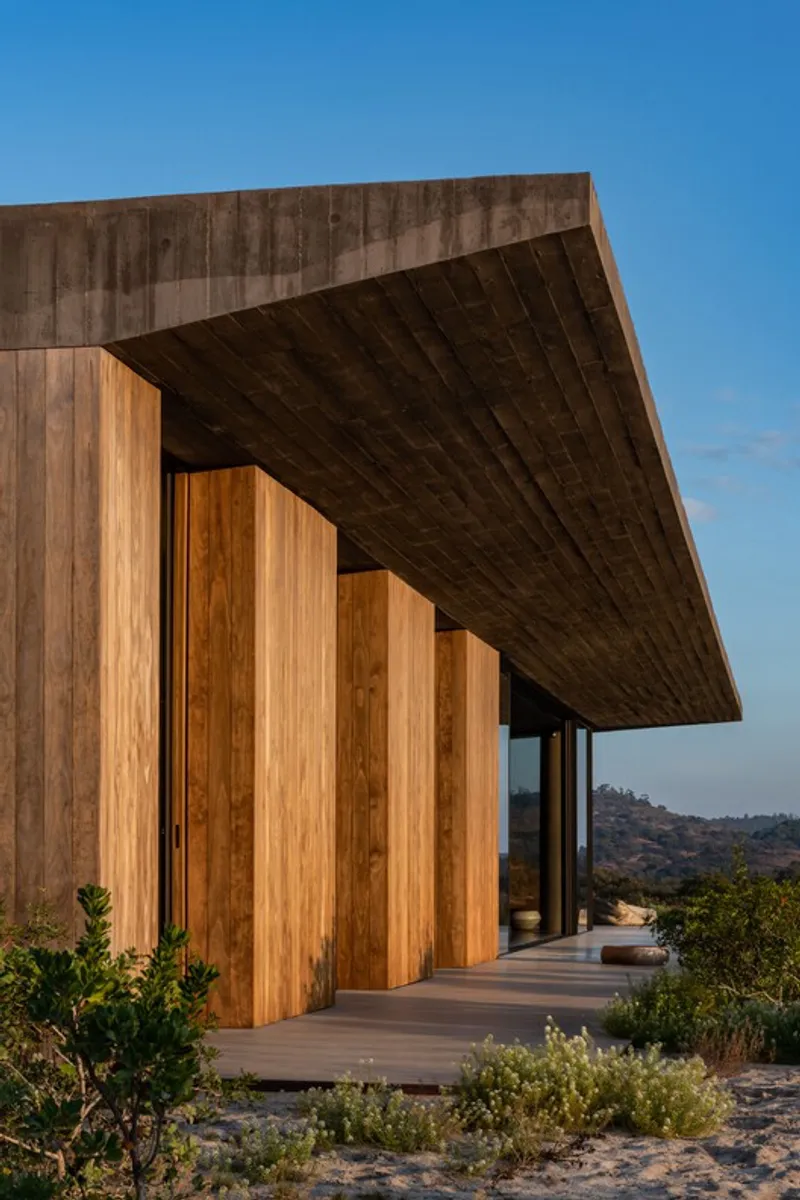
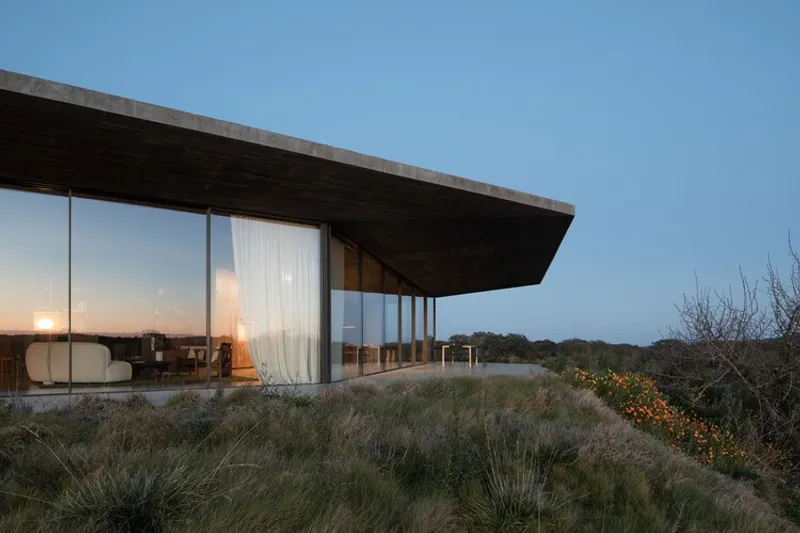
In contrast, the south side opens generously to the landscape. Once the threshold of the northern barrier is crossed, the house unfolds dramatically toward the horizon, embracing sunlight, views, and outdoor living.
Entrance as Threshold and Pivot
The main entrance is deliberately understated and indirect. Access is made through a small private patio, marked by an existing holm-oak tree. This outdoor room acts as a hinge and balance point for the entire project, both spatially and symbolically.
Passing through this sheltered courtyard is a moment of compression before release. It marks the transition from the rugged exterior world to the controlled openness of the interior, heightening the spatial experience and reinforcing the idea of the house as a carefully calibrated sequence, rather than a single gesture.
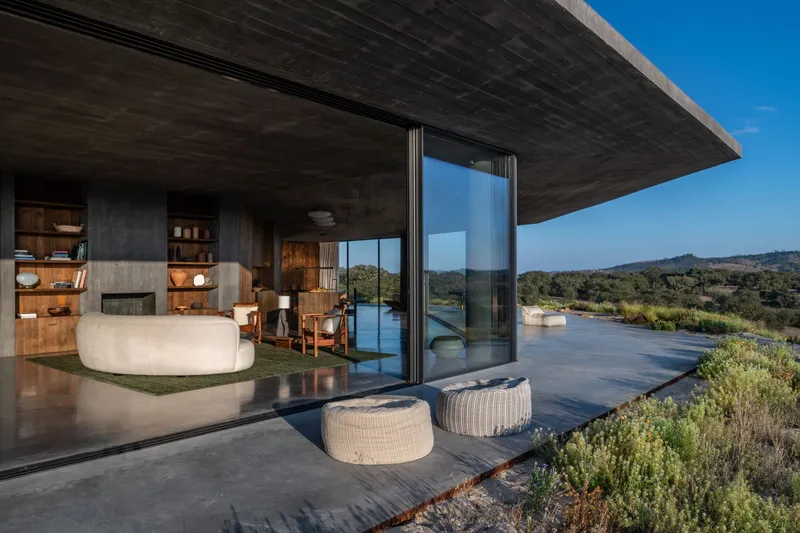
A Panoramic Interior Landscape
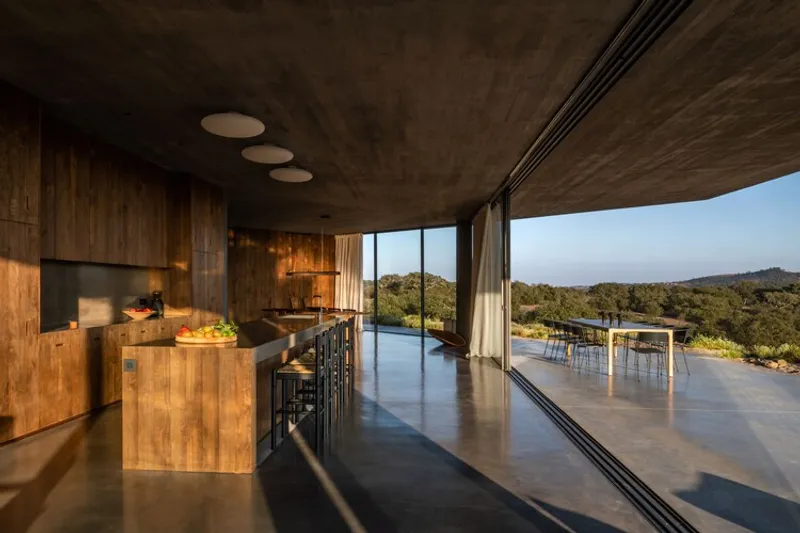
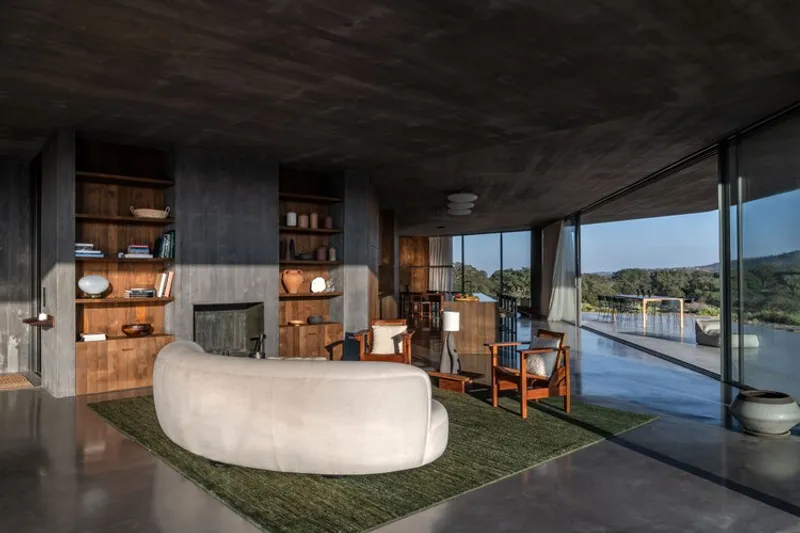
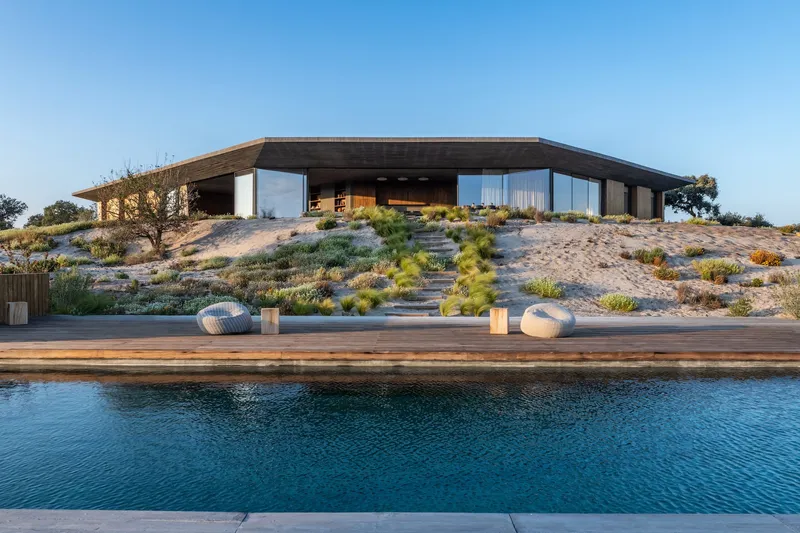
Beyond the northern wall, the house opens fully onto the Alentejo landscape. The 170 m² social area: encompassing living, dining, and kitchen spaces, becomes the heart of the home. This expansive zone is defined by a 35-meter-wide horizontal window, offering uninterrupted views across the land.
To mitigate the intense summer heat, the opening is protected by a 5-meter cantilevered concrete overhang. This architectural gesture functions as a climatic device, shading the interior while maintaining visual continuity with the outdoors. The result is a space that feels open yet controlled, expansive yet comfortable.
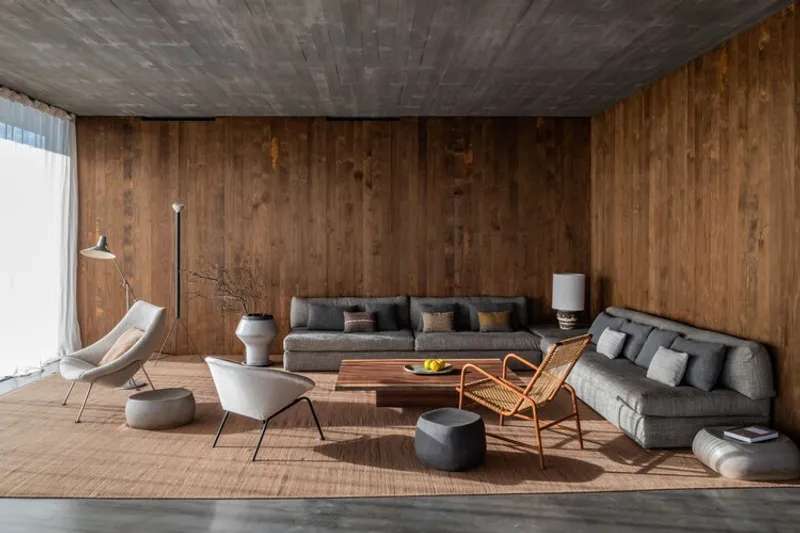
Programmatic Clarity and Domestic Order
The internal organization of the house follows a clear and legible logic. The kitchen, located in the central wing, acts as a functional and spatial hinge. It separates the dining area to the east from the living area to the west, while opening directly onto a wide terrace that extends daily life outdoors.
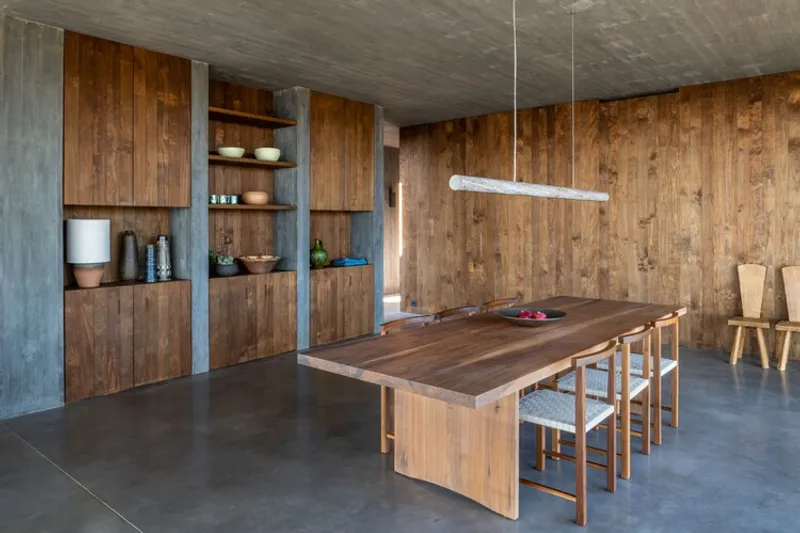
Private areas are located within the two side wings. Bedrooms are accessed via long, linear corridors illuminated by the house’s entrance doors. These circulation spaces are not treated as residual zones; instead, they reinforce the architectural rhythm of the house, emphasizing movement, perspective, and sequence.
This layout ensures a strong separation between social and private life while maintaining visual and material continuity throughout the house.
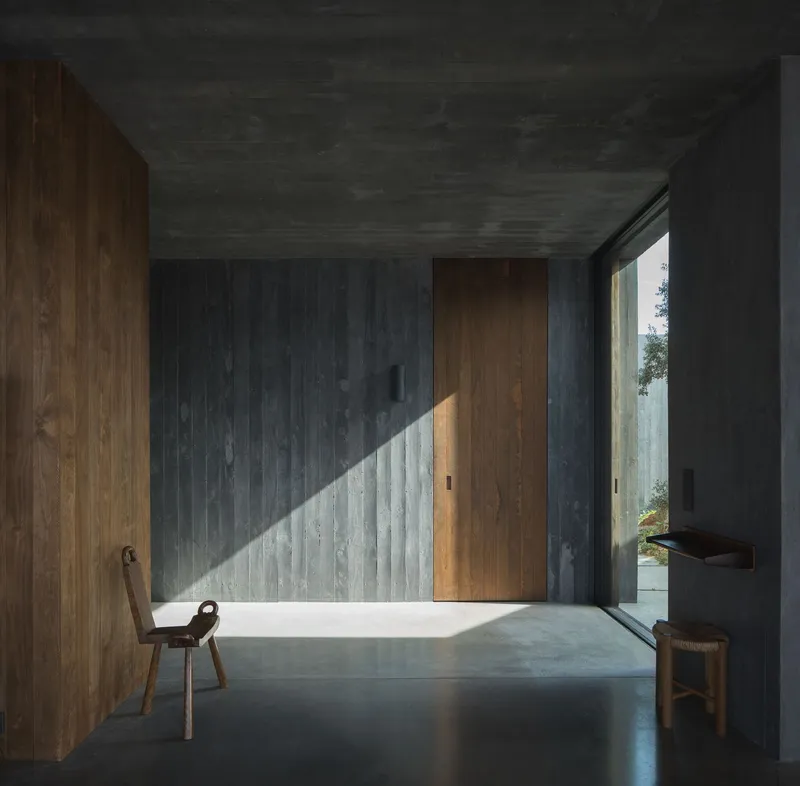
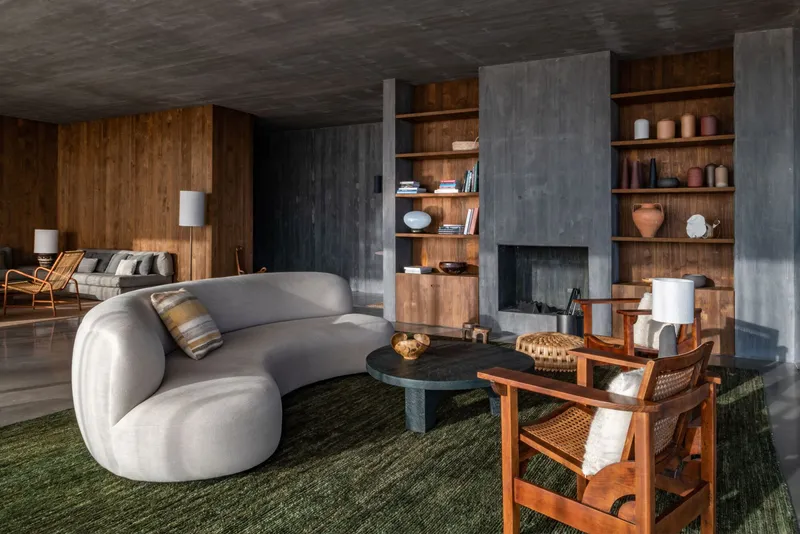
Material Consistency Inside and Out
One of the defining qualities of the project is its radical material consistency. The same materials used on the exterior are carried seamlessly into the interior, minimizing variation and reinforcing architectural clarity.
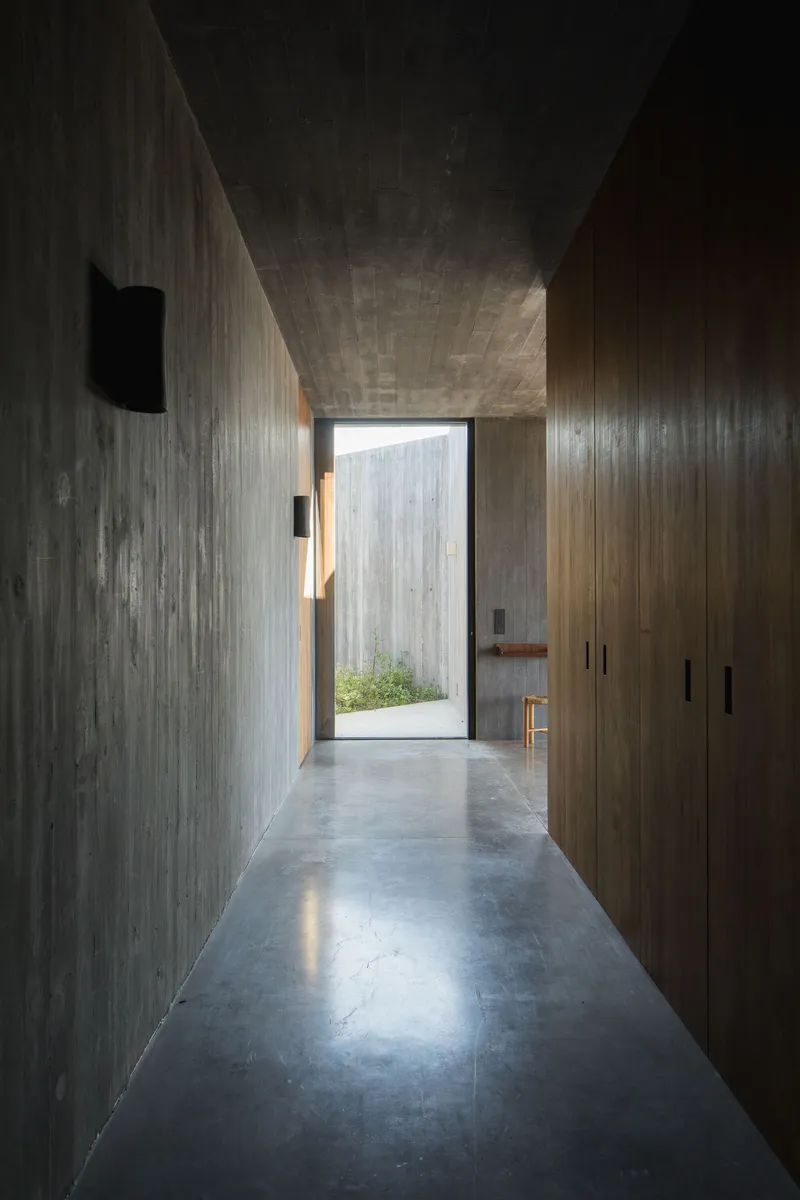
- Exposed dark grey concrete is used for walls, floors, and ceilings, creating a continuous spatial envelope.
- Pinewood millwork, treated for durability, appears throughout the house: wall claddings, interior doors, wardrobes, kitchen and bathroom cabinetry, shutters, and even 3-meter-tall pivoting doors.
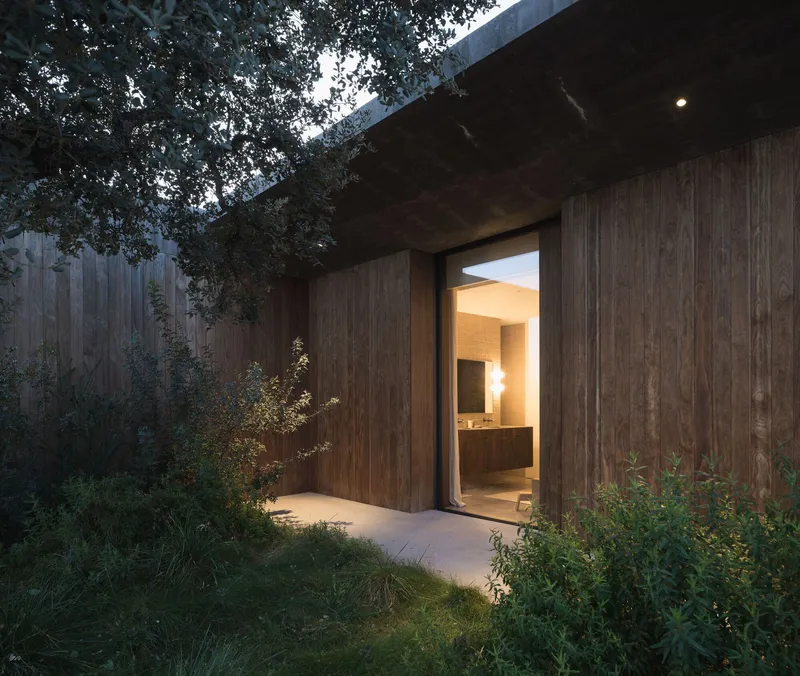
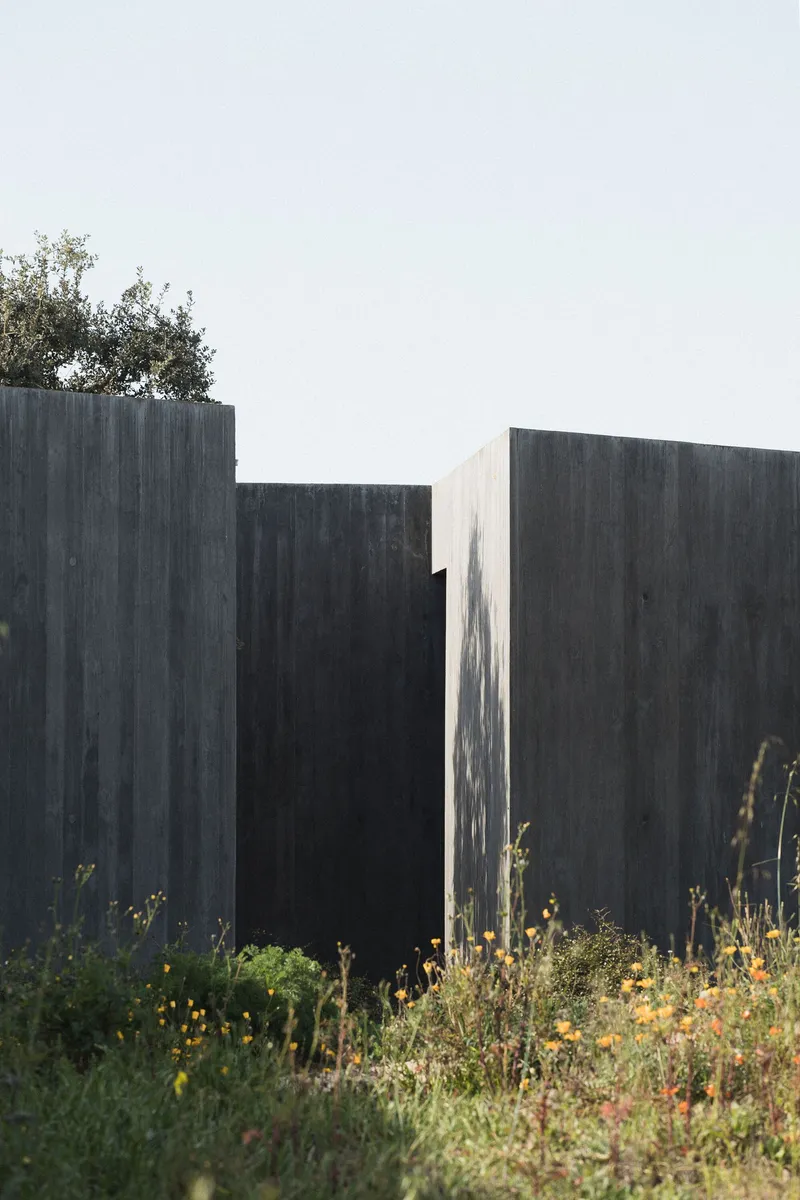
This disciplined approach eliminates unnecessary decoration and allows architecture, proportion, and light to take precedence. The house reads as a single, cohesive object, crafted rather than assembled.
Light, Shadow, and Climate
In the Alentejo, light is both a gift and a challenge. The design carefully modulates natural light through orientation, depth, and shading. Large openings frame views without exposing interiors to excessive heat, while solid walls provide thermal mass and stability.
The contrast between shaded concrete surfaces and sunlit wooden elements creates a dynamic play of light and shadow throughout the day. Interiors feel calm, grounded, and protected, qualities essential for living within such an exposed and powerful landscape.
A Contemporary Rural Monument
Despite its integration with nature, the House in Fonte das Perdizes is unmistakably contemporary. Its sharp geometry, exposed concrete, and minimalist detailing give it a monumental presence. Yet this monumentality is restrained, derived not from scale alone but from clarity of intent.
The house does not attempt to mimic vernacular architecture. Instead, it translates regional values, durability, adaptation to climate, material honesty, into a modern architectural language. In doing so, it demonstrates how contemporary architecture can coexist with, and even enhance, rural landscapes.
Architecture Shaped by Place
Ultimately, the House in Fonte das Perdizes is a project about listening to the land. Every decision, from siting and orientation to material selection and spatial organization, is rooted in the realities of place.
gonçalobonniz arquitectos have created a dwelling that is both assertive and respectful, monumental and intimate. It stands as an example of how modern architecture can achieve harmony with nature not through camouflage, but through precision, restraint, and deep contextual understanding.
All the Photographs are works of Geraldine Bruneel, José Campos




Popular Articles
Popular articles from the community


Co-Life: Senior Housing Design That Reconnects Older Adults With the City
Co-Life reimagines senior housing design through healing gardens, shared streets, workshops, and a sustainable community across generations.

Riyadh For All: Intergenerational Urban Design for Active Aging in Rabat
Riyadh For All reimagines urban design in Rabat with intergenerational co-living, adaptive courtyards, and Moroccan cultural exchange today.

Conexión: Biophilic Design Reimagines High-Rise Living in Hong Kong
Conexión reimagines high-rise living in Hong Kong through biophilic design, green facades, shared spaces, daylight, water and nature within.

Hill & Cross Opera: Sculptural Opera House Architecture Shaped by Tallinn’s Landscape and Identity
Hill & Cross Opera reimagines opera house architecture in Tallinn through its sculptural hill, civic plaza, glass wave and a luminous cross.

Similar Reads
You might also enjoy these articles


Hodi-Mandai Geram
Project Function: Preservation and revitalization of the Intangible heritage and socio-spatial identity of the Hodi by Housing, Cultural Memory Center, Sacred Grove, landscape, local tourism economy


Olio Towers: A Mid-Rise for Performers That Fuses Housing, Rehearsal, and Stage
Located blocks from Houston's Theater District, this modular tower stacks living units around a central performance atrium.

Oasis: Modular Green Housing Carved into Dhaka's Urban Fabric
A shortlisted Plugin Housing entry reclaims unauthorized settlements in Dhaka with stepped concrete volumes, green roofs, and ventilation-driven design.

Black Hole: A Floating Megastructure for the Post-Physical Era
Emiliano Mazzarotto envisions a spherical, self-scaling arena where e-sports, digital hotels, and holographic stadiums replace traditional public space.


Explore Architecture Competitions
Discover active competitions in this discipline



Challenge to reimagine the Iron Throne


Photograph architecture without architects


Illustrate the lost glory of Angkor Wat - Render Challenge


Design challenge to reuse E-waste
Comments (0)
Please login or sign up to add comments
No comments yet. Be the first to comment!