

House in Kosai by FujiwaraMuro Architects
Compact pitched-roof house in Kosai featuring stacked volumes, spatial misalignments, double-height living, and interconnected family spaces filled with shifting light.


Located in a quiet residential neighborhood in Kosai, Shizuoka Prefecture, House in Kosai is a 102-square-meter contemporary family home designed by FujiwaraMuro Architects. Conceived for a couple and their two children, this compact Japanese residence explores how small, interconnected spaces can create a dynamic and ever-evolving spatial experience.
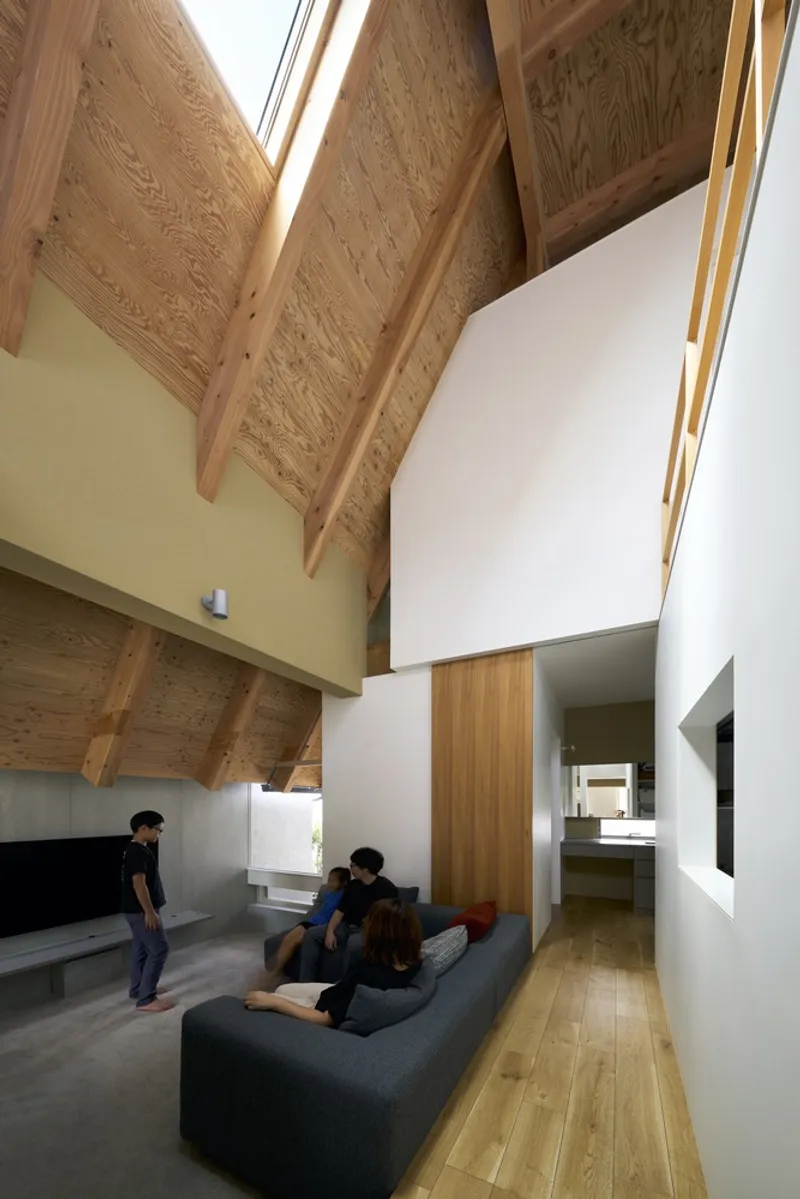
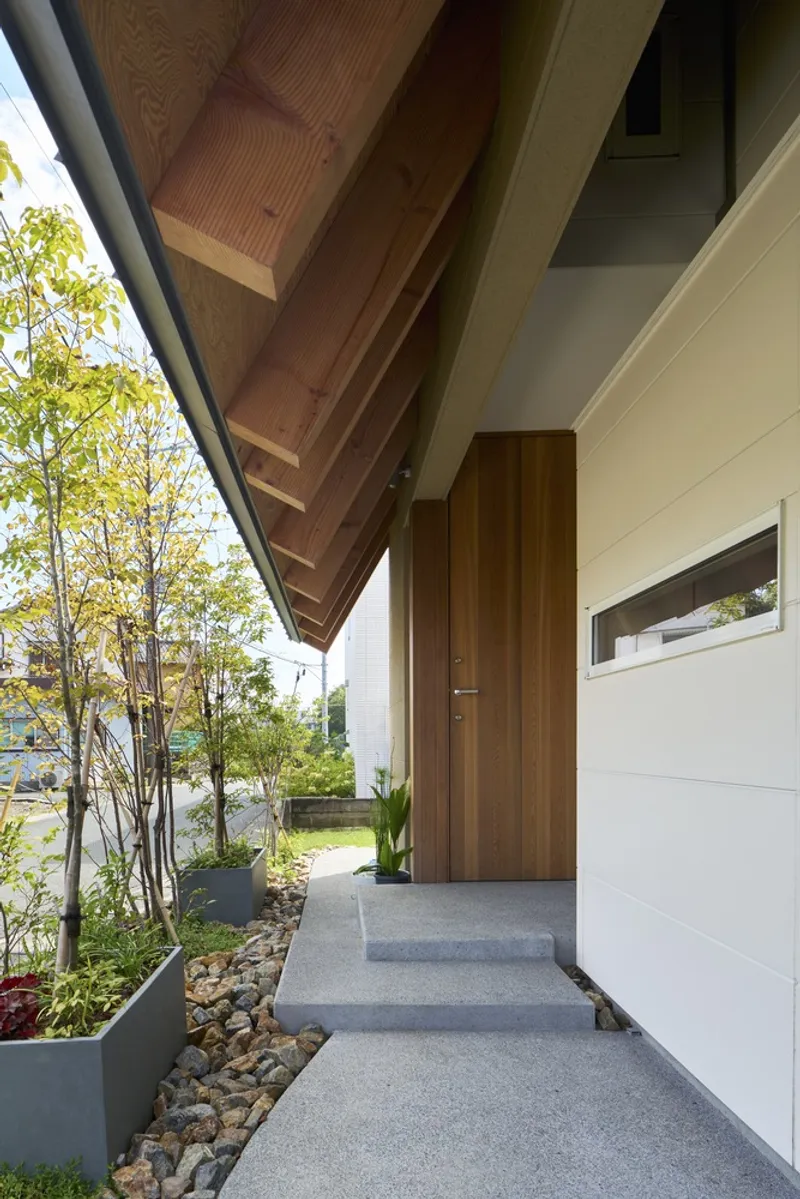
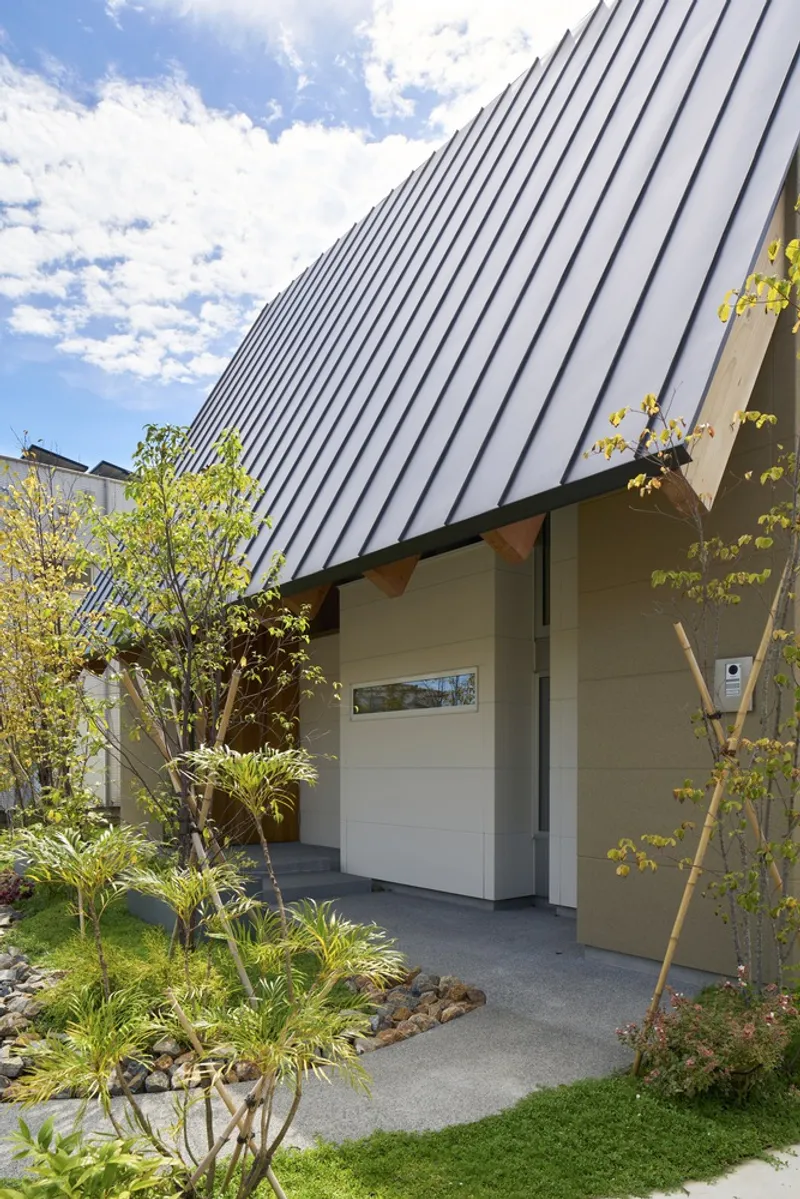
Rather than designing a conventional “box,” the clients requested a pitched roof house: a form that evokes familiarity, warmth, and domestic character. They envisioned a home open toward the street, with a centrally located yet enclosed kitchen, and a layout that allows full circulation around the house. The result is a carefully orchestrated architectural composition defined by stacked volumes, shifting geometries, and subtle spatial gaps.
Spatial Strategy: Stacked Volumes and Layered Gaps
The architectural concept is driven by misalignment. Instead of aligning floors and walls in a straightforward manner, the architects stacked and shifted volumes between the first and second floors. These intentional offsets create:
- Dimensional depth within a small footprint
- Visual connections between rooms
- Gaps between volumes that introduce light and shadow
- A subtle sense of movement and anticipation
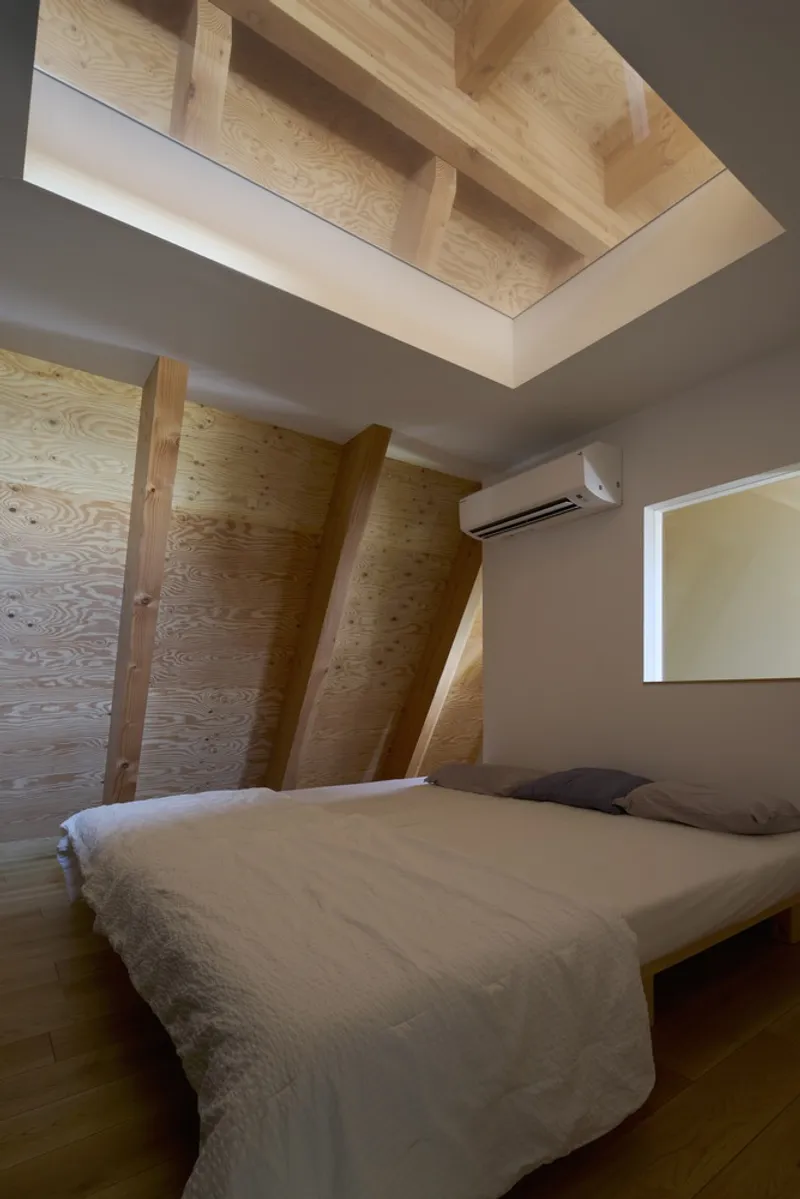
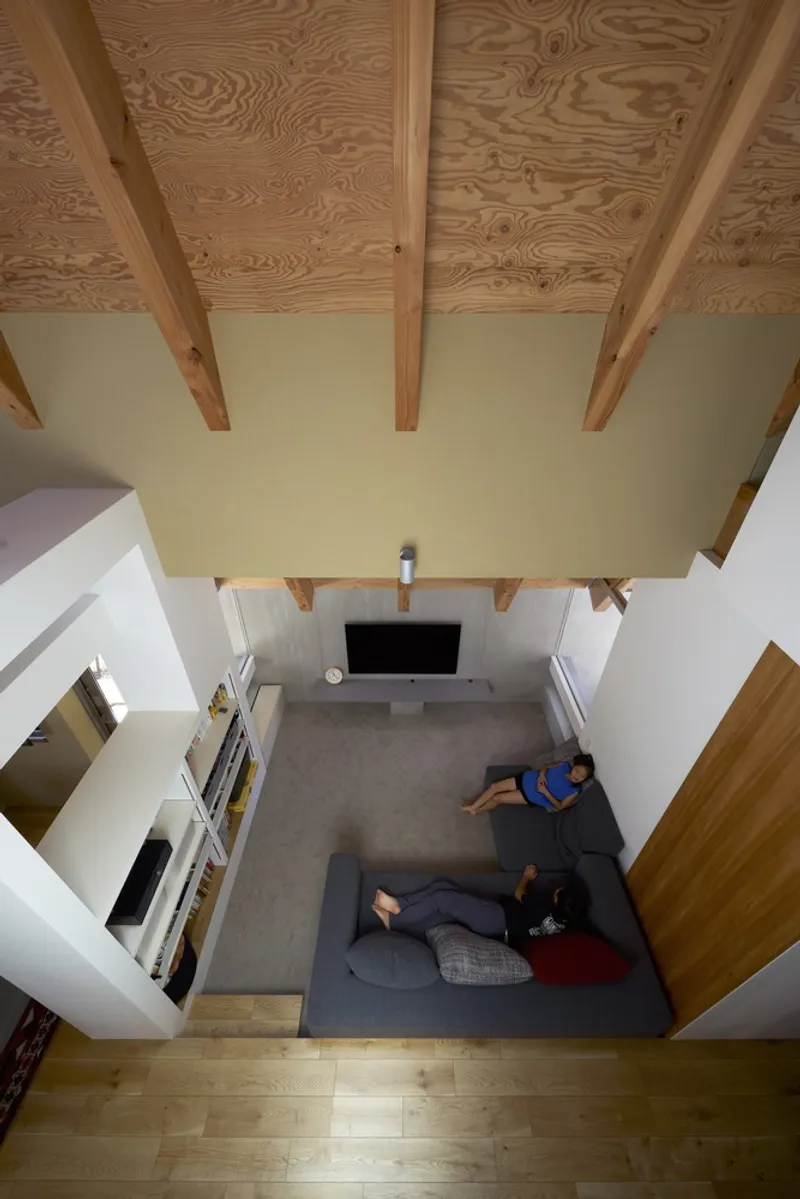
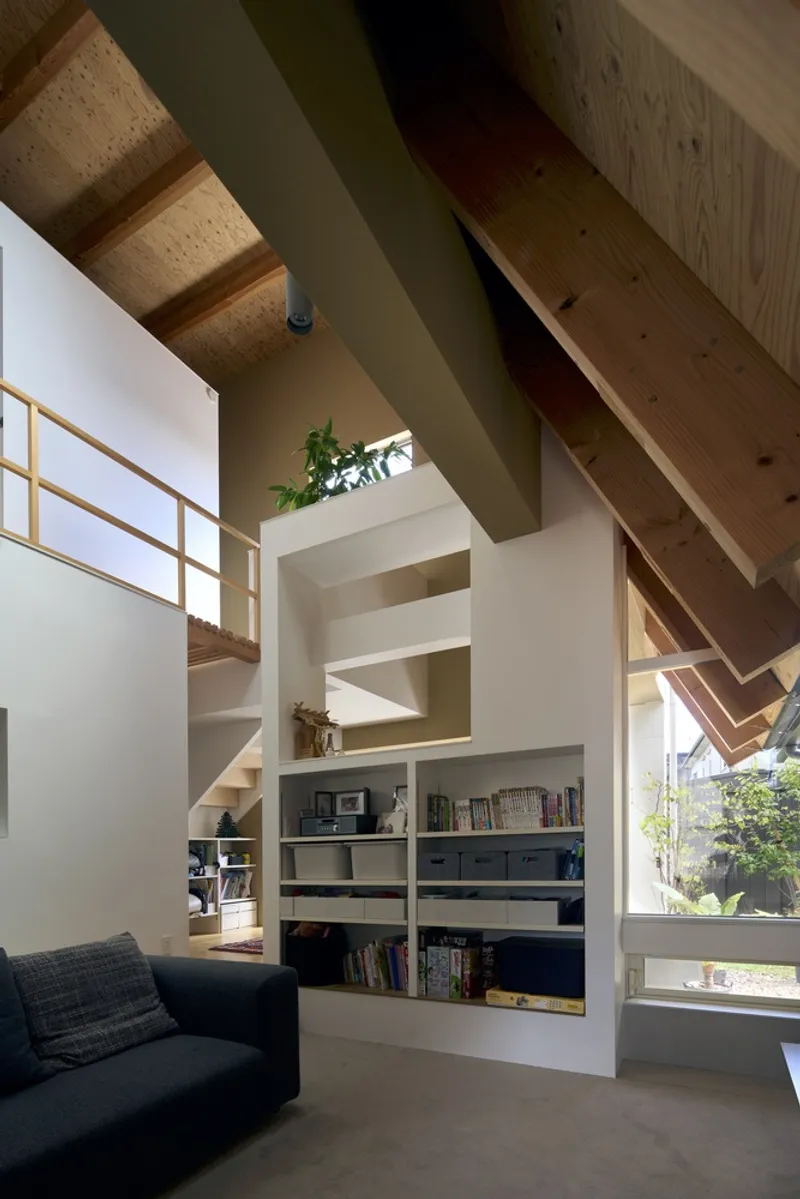
The dining room slightly protrudes from the main facade, reinforcing the idea of volumetric layering. Between the first and second floors, a deliberate gap enhances spatial tension and allows light to filter through transitional zones.
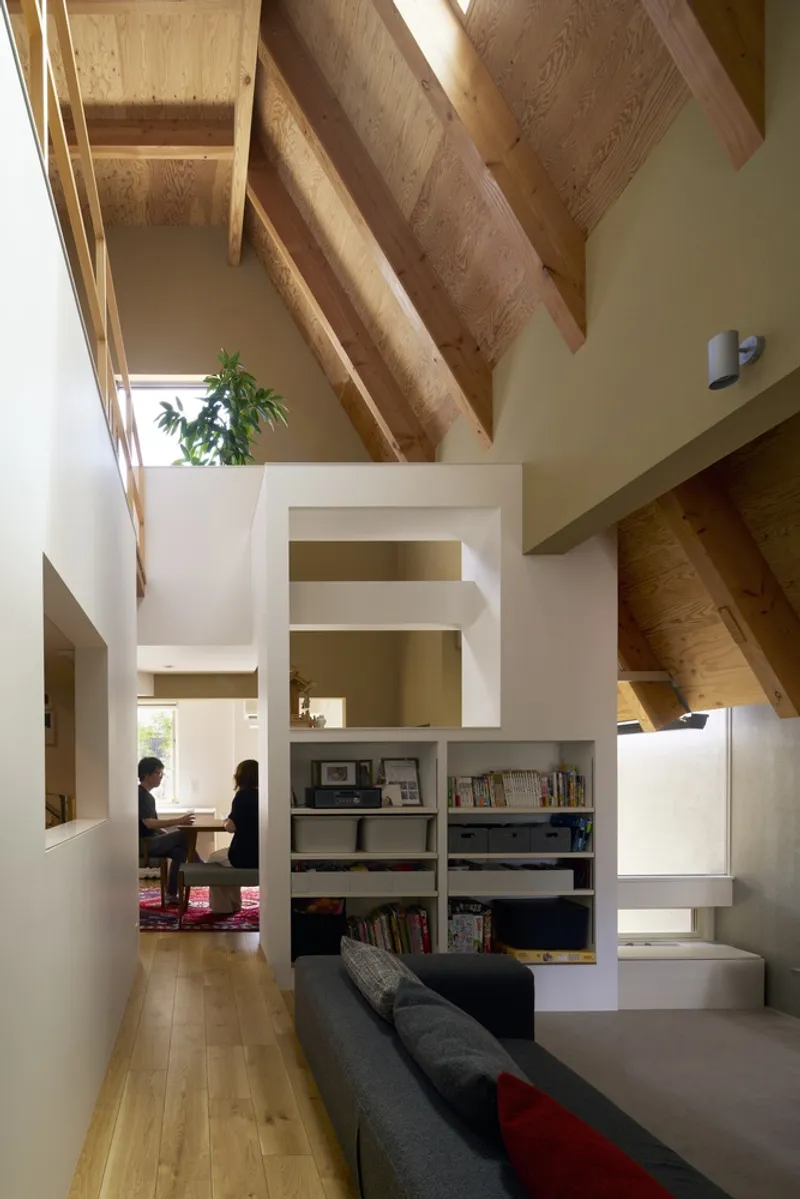
By wrapping these volumes with a unified roof and exterior skin, additional voids emerge, between rooms and roof, and between interior spaces and the facade. As residents move through the home, volumes appear and disappear, producing a flickering effect of visibility and concealment.
Light as a Dynamic Architectural Element
Natural light plays a crucial role in shaping the atmosphere of this Japanese house. The protruding walls and offset geometries catch daylight differently throughout the seasons and time of day. This creates:
- Changing shadow patterns
- Subtle gradations of brightness
- A sense of depth beyond physical dimensions
Even though each room is intentionally compact, carefully positioned apertures allow glimpses into adjacent spaces. The entire house can be perceived intuitively, even when it is not fully visible. This layered visibility strengthens family interaction while maintaining spatial individuality.
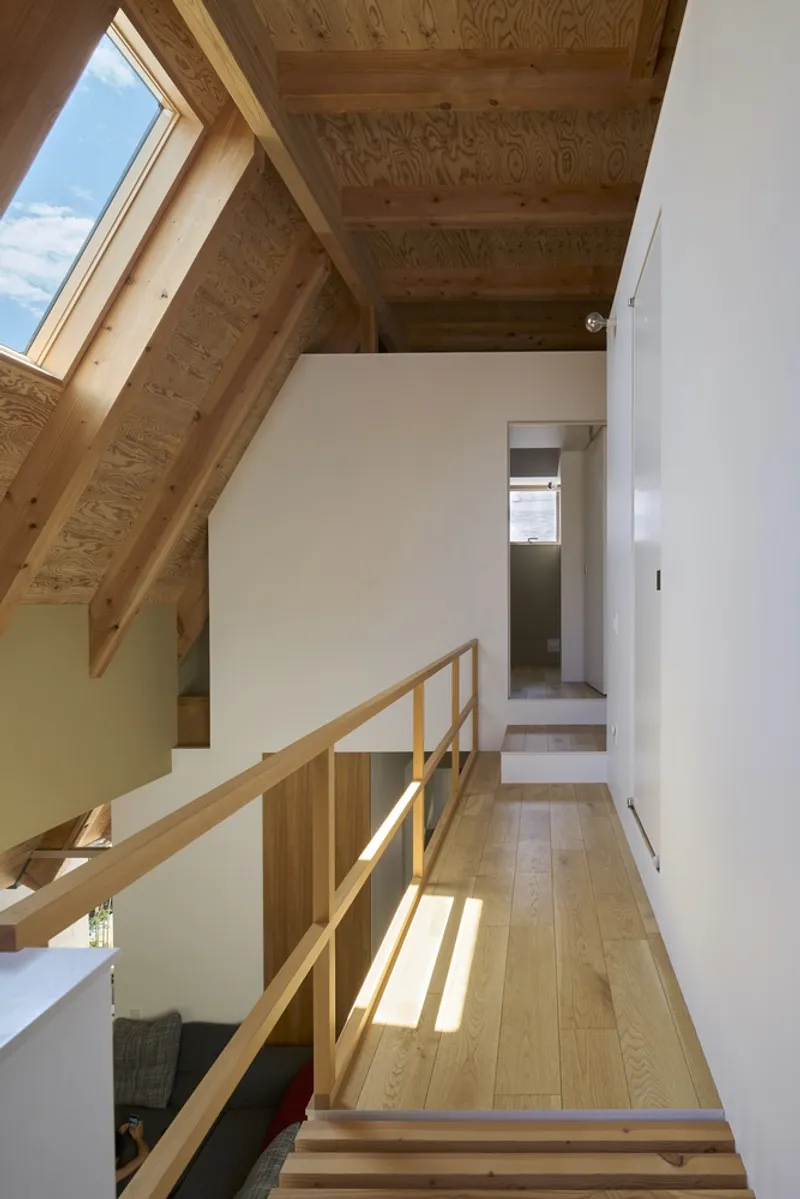
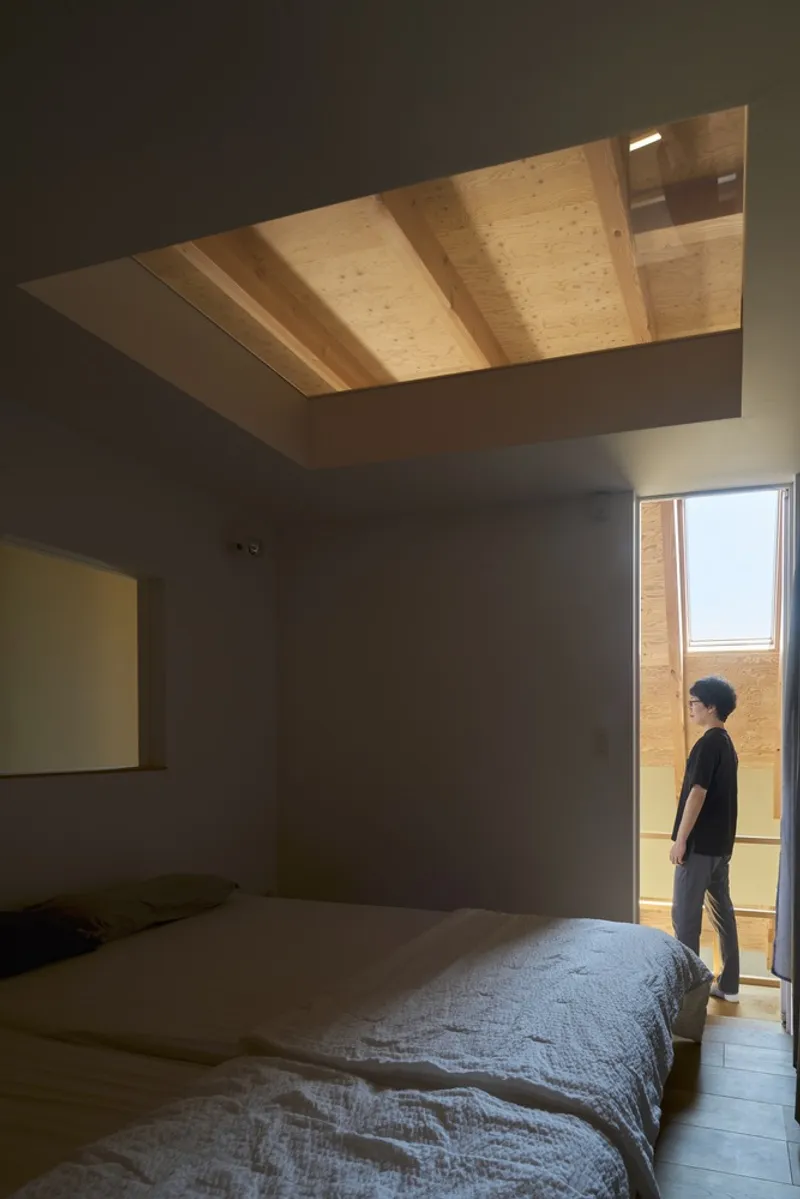
The underside of the pitched roof becomes an atmospheric surface. Light transitions across it throughout the day, creating a constantly evolving interior environment.
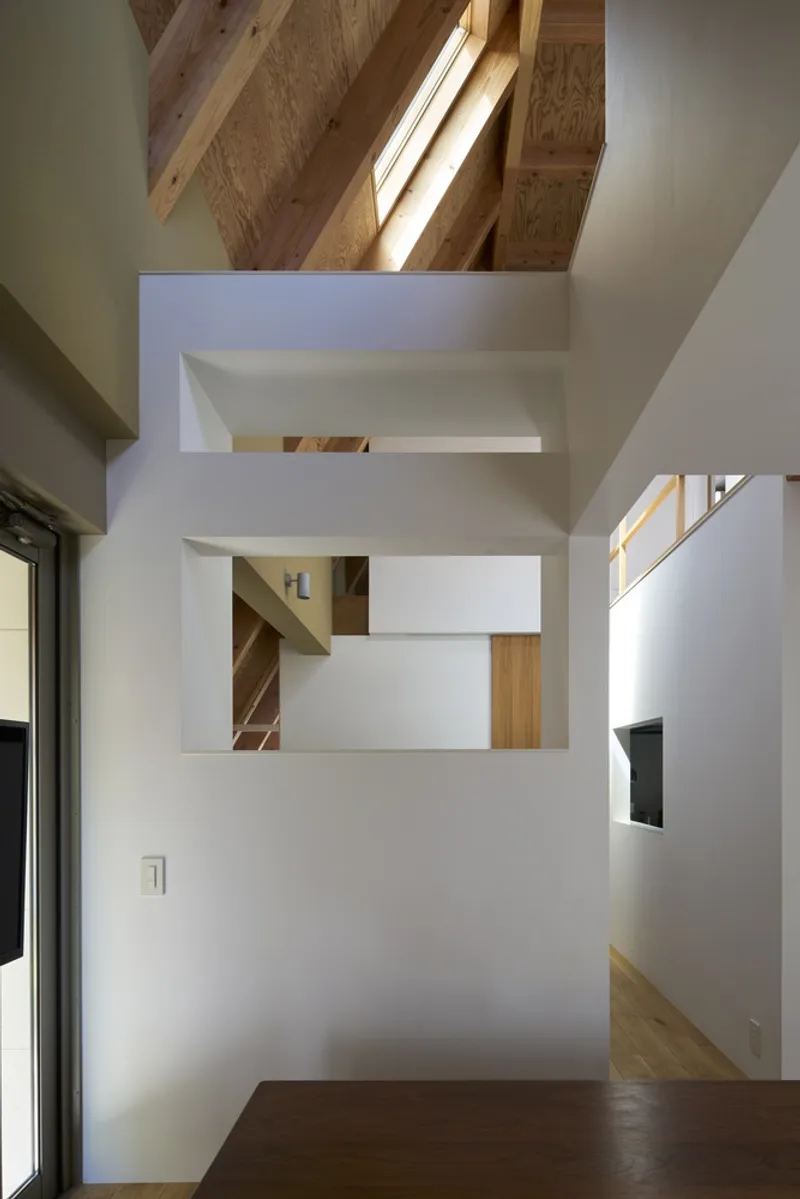

Functional Organization: Circulation and Family Connectivity
The layout prioritizes circulation and spatial continuity:
First Floor
- LDK (Living, Dining, Kitchen)
- Bathroom
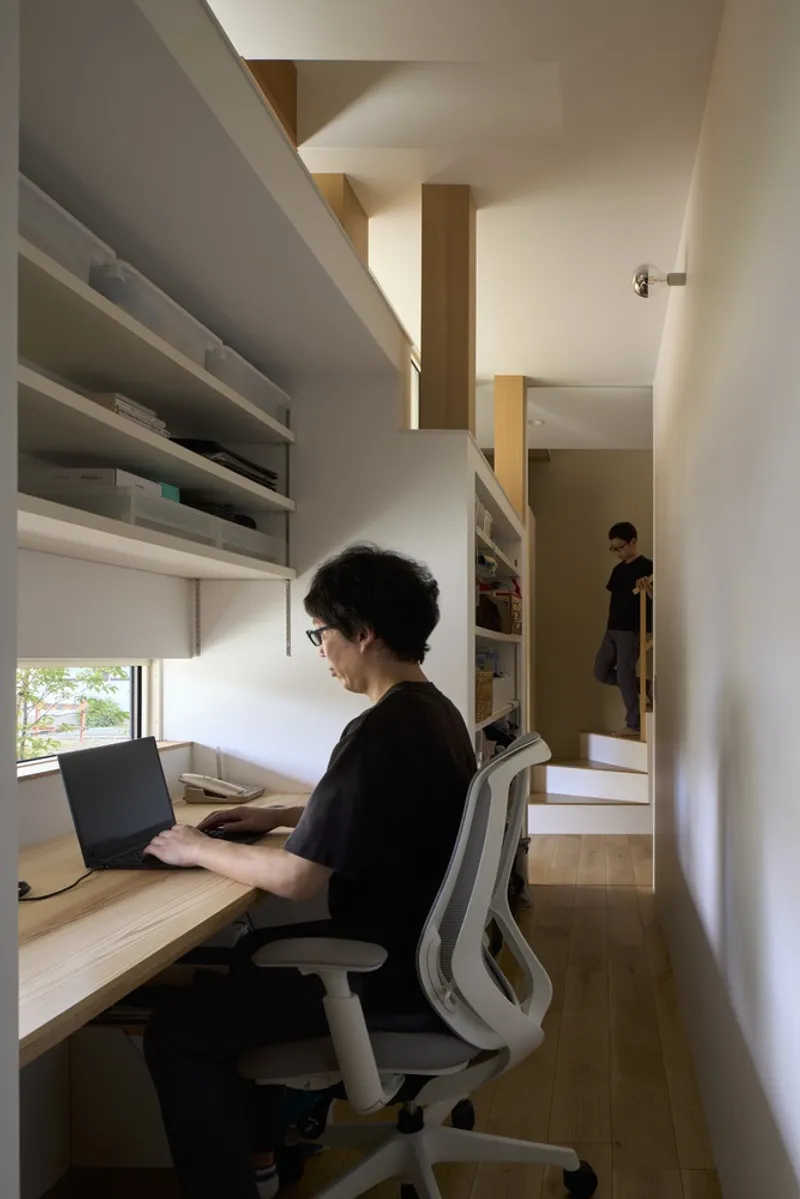
- Workspace
- Double-height dining and living area
Second Floor
- Master bedroom
- Two children’s rooms
The double-height living and dining space anchors the home vertically, visually linking both levels. From the first floor, one can perceive the second-floor volumes, reinforcing the idea of openness within compact living. Meanwhile, upstairs rooms sense the shifting light beneath the roof, connecting occupants to the overall architectural form.
The central yet enclosed kitchen allows the family’s presence to be felt throughout the home without fully exposing the workspace, balancing privacy and togetherness.

Contemporary Japanese Residential Architecture
House in Kosai reflects key themes in contemporary Japanese residential design:
- Compact living solutions
- Spatial layering within small footprints
- Pitched roof reinterpretation
- Light-driven interior architecture
- Interconnected family-oriented layouts
By transforming misalignment into a design tool, FujiwaraMuro Architects demonstrate how architectural complexity can emerge from simple domestic requirements. The house avoids monotony and instead offers an ever-changing spatial experience, where perception shifts depending on movement, light, and time.
This project exemplifies how thoughtful design can redefine compact urban housing in Japan, turning a modest 102 m² footprint into a rich, multidimensional family home.

All photographs are works of
Toshiyuki Yano


Popular Articles
Popular articles from the community


The Amber Palace Opera: A Geological Fiction Surfaces on Tallinn's Baltic Waterfront
Pierre Brillard reimagines a Baltic legend as a public landscape, opera house, and waterfront promenade rooted in Tallinn's coastal identity.
Faces of the Soviet Avant-Garde: Turning Moscow's Street Names into an Open-Air Museum
A network of sculptural installations across a Moscow residential district transforms forgotten architect names into spatial encounters with cultural memor

Singing Woman: An Opera House That Performs Before the Curtain Rises
Ovidiu Cristian Pavel's conceptual opera house translates Estonia's choral identity into a sculpted waterfront landmark facing the Baltic Sea.
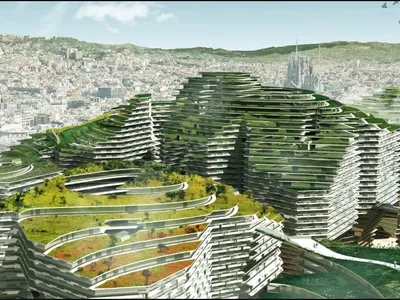
Manzana Morphosis: Stretching Barcelona's Grid into a Living Landscape for 2050
A radical reworking of the Eixample manzana turns density into a tool for generous public space, vertical ecology, and environmental performance.

Similar Reads
You might also enjoy these articles

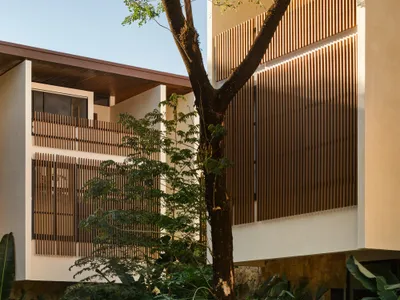
FAMM Arquitectura Organizes Ten Villas Around Courtyards and Jungle in Nosara, Costa Rica
El Molino pairs two elongated volumes with deep overhangs and timber louvers to build a compact coastal community five minutes from the beach.
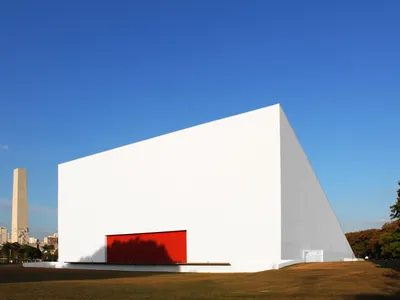
Oscar Niemeyer's Ibirapuera Park Pavilions Define São Paulo's Cultural Identity in Concrete and Curve
A constellation of modernist volumes set within São Paulo's most important urban park, conceived for the city's 400th anniversary in 1954.
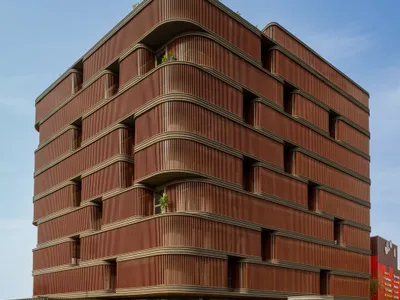
Sanjay Puri Architects Wraps a Jaipur Office Tower in Capsule-Shaped Green Buffers
A nine-level climate-responsive workplace near Jaipur Airport uses stacked planter terraces and aluminium screens to fight 40°C heat.
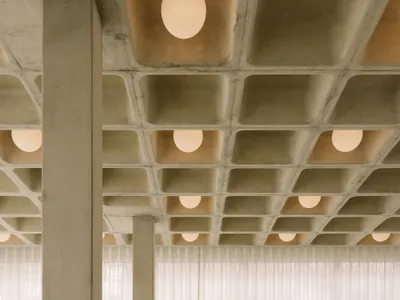
RHO Converts a Berlin Spree-Side Industrial Courtyard into Enkime's 1,000 m² Agency Headquarters
A social media agency's new home in Charlottenburg trades glossy branding for concrete waffle ceilings, glazed tile, and sheer curtains.

Explore Tetsuo Kobori Architects Competitions
Discover active competitions in this discipline

Challenge to reimagine the Iron Throne

Photograph architecture without architects

Illustrate the lost glory of Angkor Wat - Render Challenge

Design challenge to reuse E-waste
Comments (0)
Please login or sign up to add comments
No comments yet. Be the first to comment!