
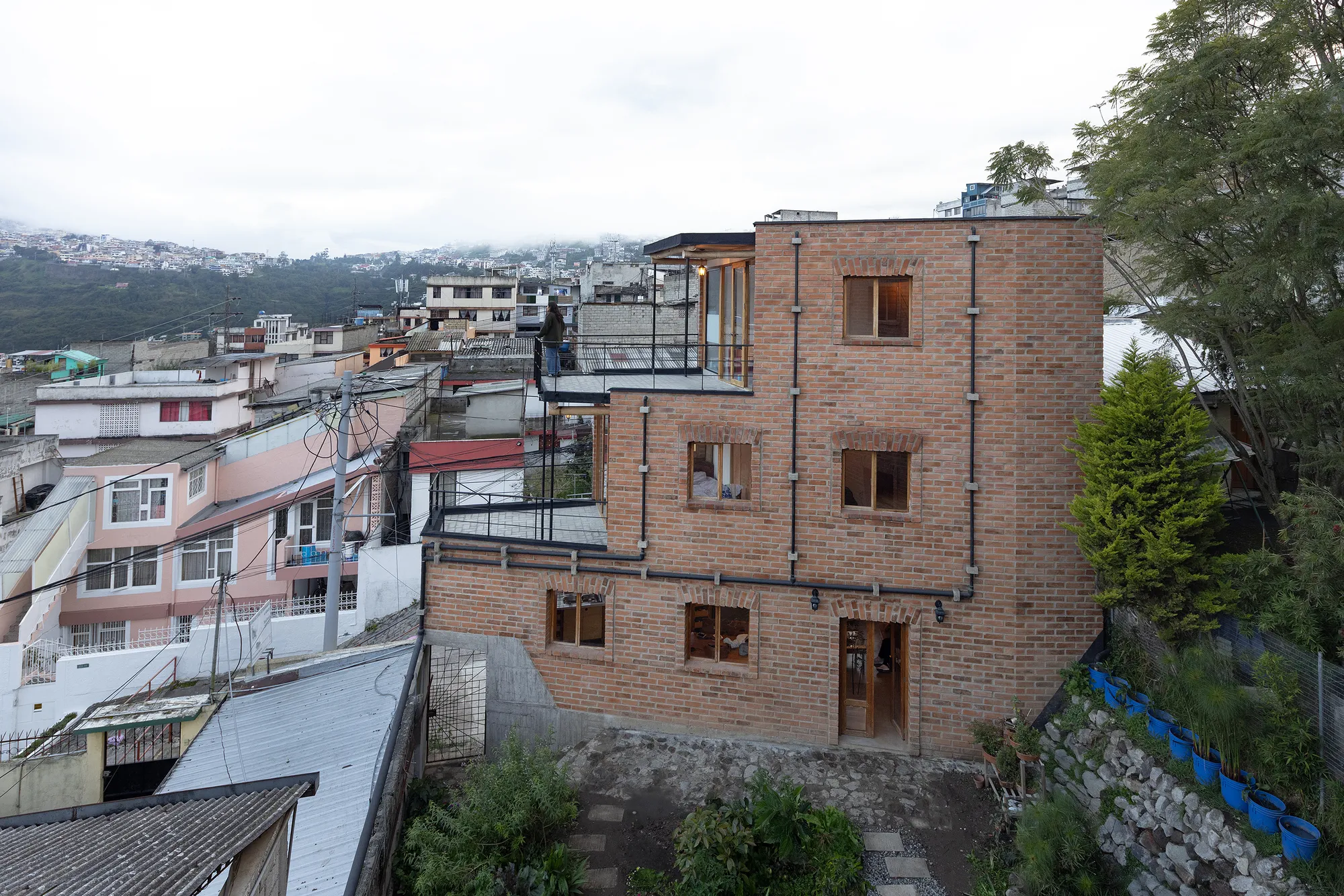
House in La Vicentina By Al Borde | Quito, Ecuador
House in La Vicentina by Al Borde features sustainable brick-and-wood design, passive comfort, net-zero energy, and community-focused urban integration in Quito.


The House in La Vicentina, designed by Ecuadorian architecture studio Al Borde, is a compelling example of sustainable residential architecture rooted in social, environmental, and urban responsibility. Completed in 2024 in the traditional middle-class neighborhood of La Vicentina, Quito, the project transforms site constraints into opportunities, proposing a replicable model for resilient housing in equatorial cities.
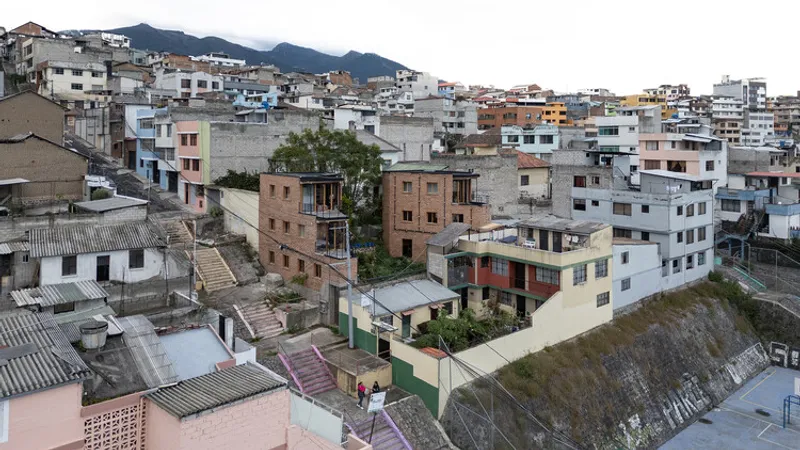
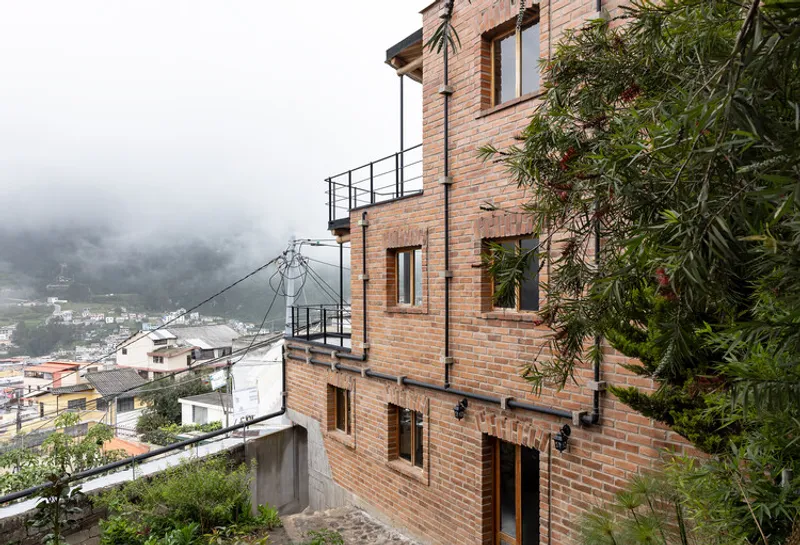
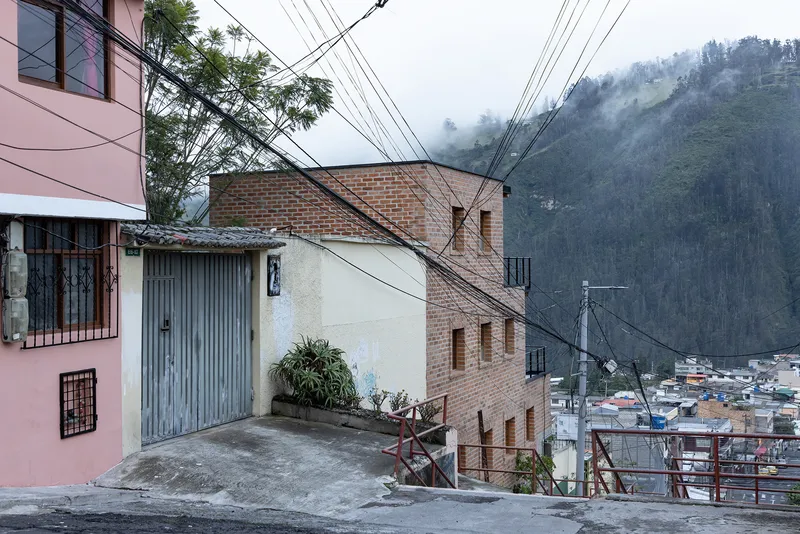
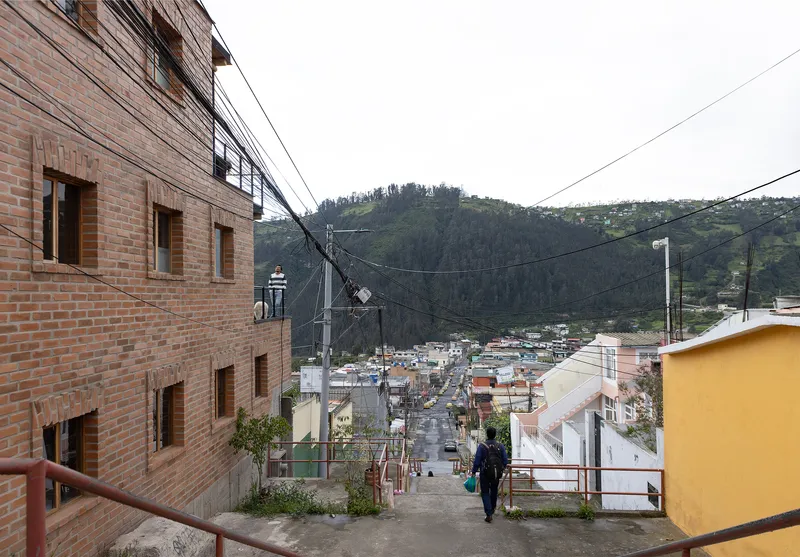
Located on a steep staircase-access lot, the site makes vehicular access impossible. Rather than viewing this as a limitation, the design aligns seamlessly with the lifestyle of the client, a frequent bicycle user, while encouraging a low-impact, pedestrian-oriented urban life. The hillside topography also opens long views toward Cerro Auqui, becoming a defining element of the architectural response.
A House Designed for Living, Research, and Community
The residence was conceived to accommodate multiple needs: a primary home for the owner, a compact dwelling for his daughter, and a flexible shared space that can function as a workshop, research area, or social gathering zone. The project is the personal home of Freddy Ordóñez, a mechanical engineer, university professor, and director of the SCINERGY research group at the National Polytechnic School.
Beyond being a residence, the house operates as a living laboratory. Integrated sensors continuously generate data used to analyze thermal comfort, energy efficiency, and environmental performance: bridging architecture, engineering, and academic research.
Vertical Living and Courtyard-Centered Design
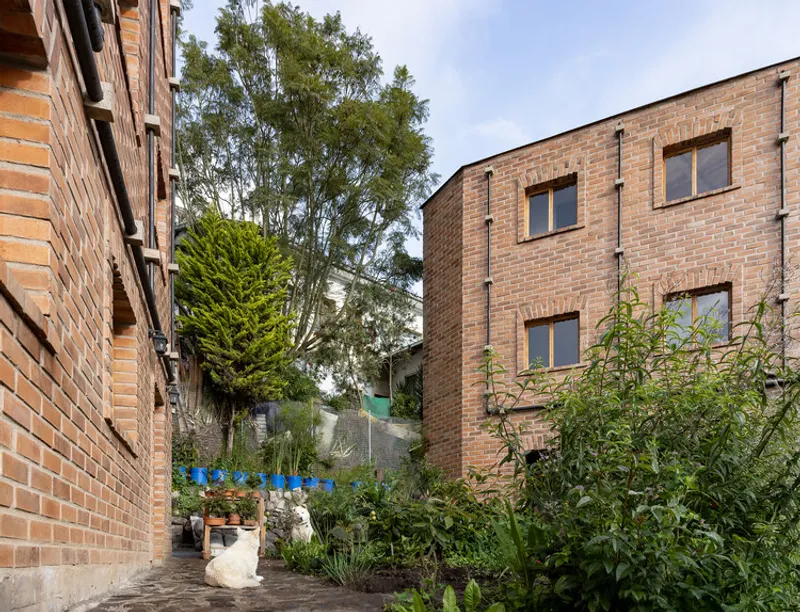
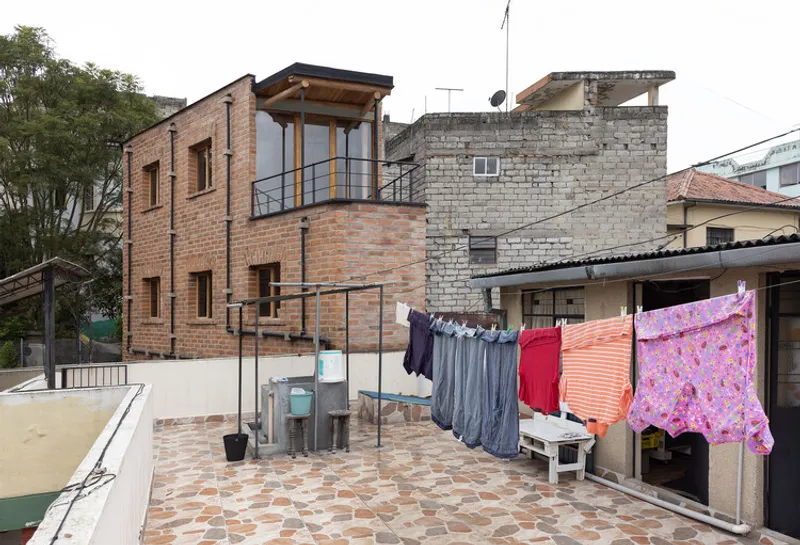
Given the compact footprint, the design prioritizes verticality to free up ground-level space. Two slender volumes are arranged to maximize the size and performance of a central courtyard, which visually and ecologically connects with a neighboring courtyard and an existing jacaranda tree.
The courtyard’s trapezoidal geometry is carefully calibrated: narrowed on the east and widened to the west to optimize solar gain, ventilation, and daylight. Each level of the house serves a distinct function: social spaces on the ground floor, a bedroom and study on the first level, and an additional bedroom above, allowing the architecture to respond precisely to spatial needs.
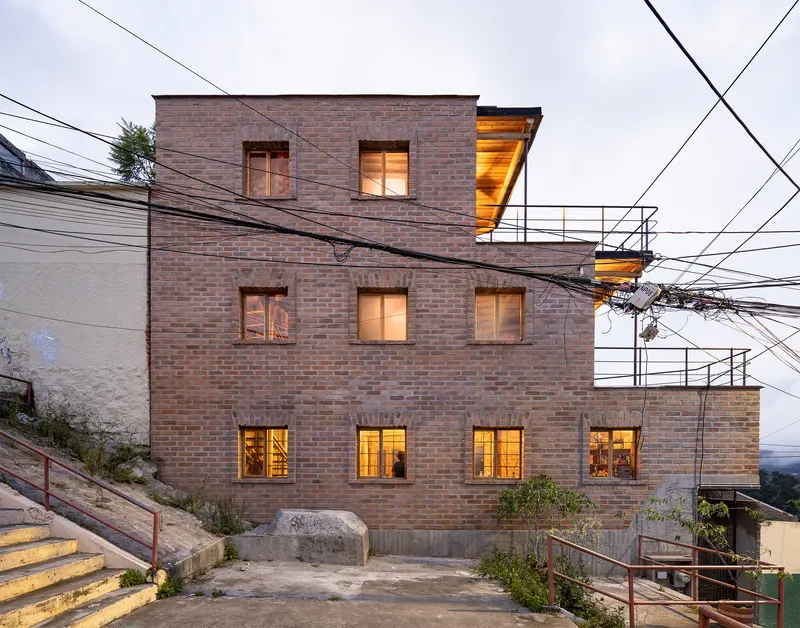
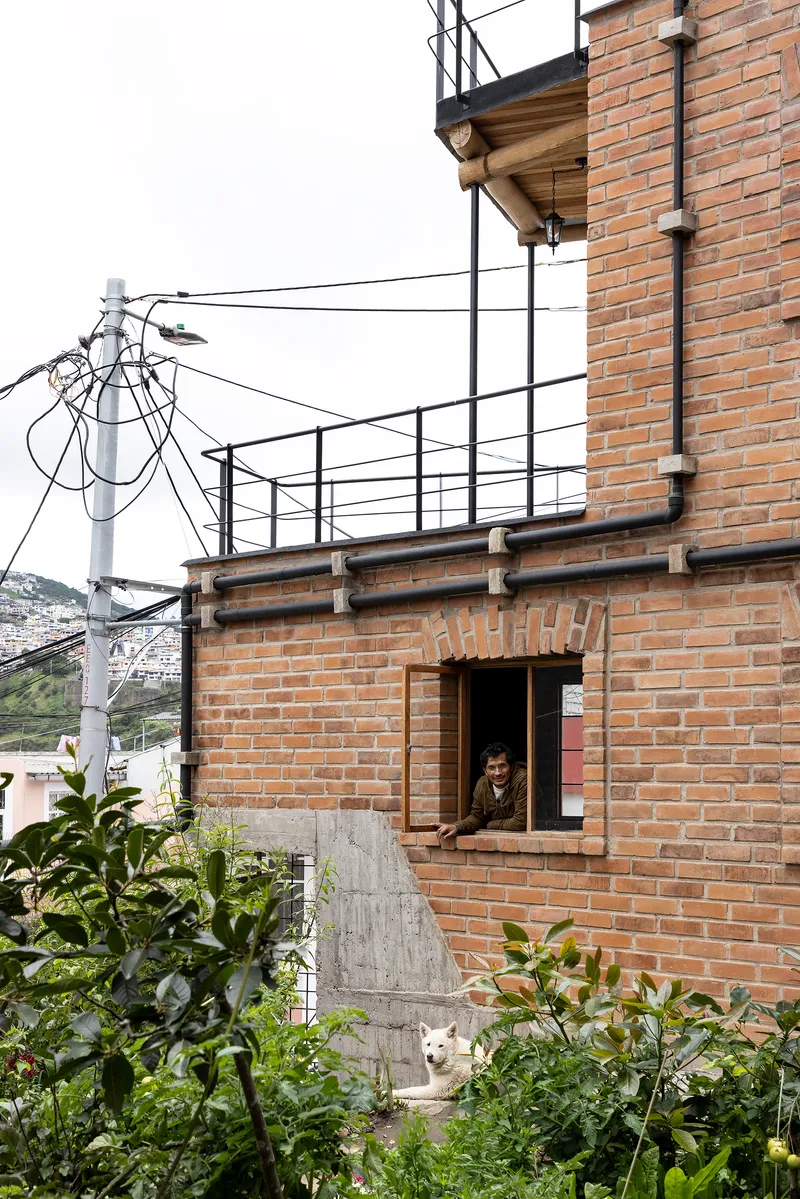
As the building rises, floor plates gradually reduce in size, creating east-facing terraces. These terraces capture morning sunlight, extend interior spaces outward, frame neighborhood views, and reinforce a strong relationship between the home and its urban context.
Architecture as a Tool for Community Building
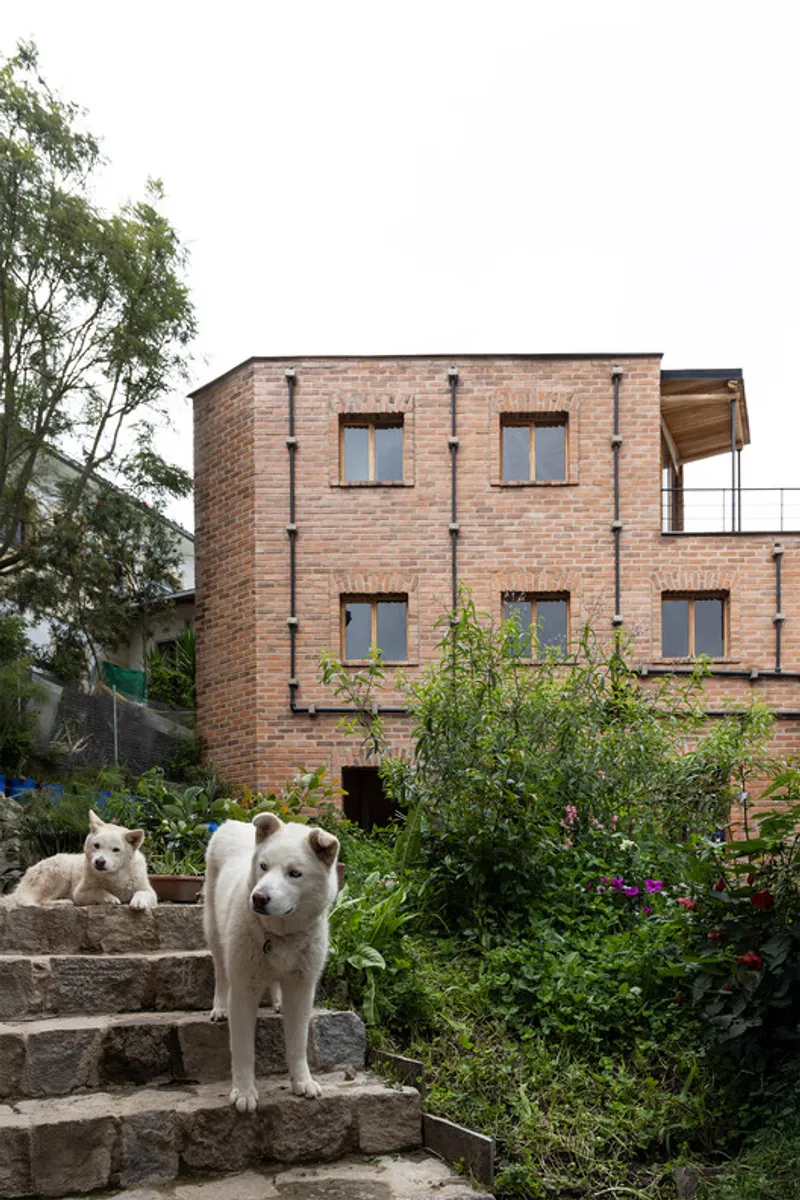
One of the project’s most powerful gestures is the absence of a perimeter wall between the house and the street. Combined with windows oriented toward public space, this decision promotes natural surveillance, discourages crime, and encourages informal social interaction.
Rather than isolating the dwelling, the architecture actively contributes to neighborhood cohesion, demonstrating how residential design can foster safety, trust, and collective identity without relying on defensive barriers.
Building with What the Environment Provides
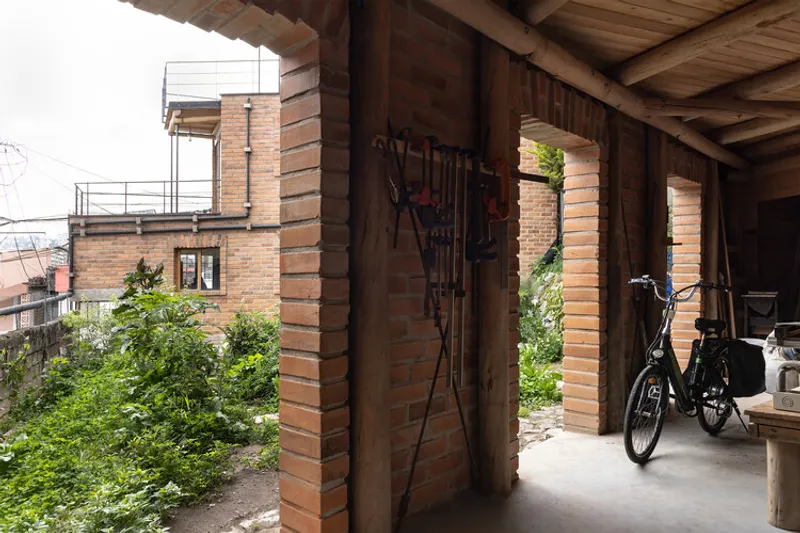
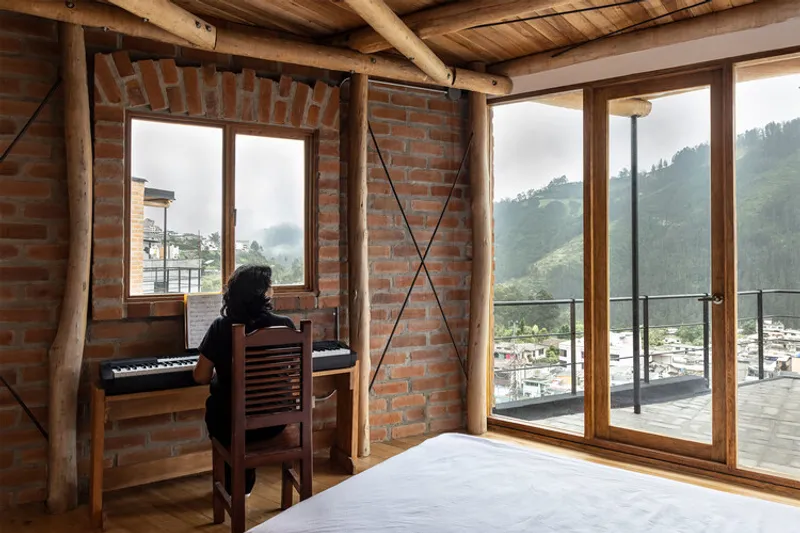
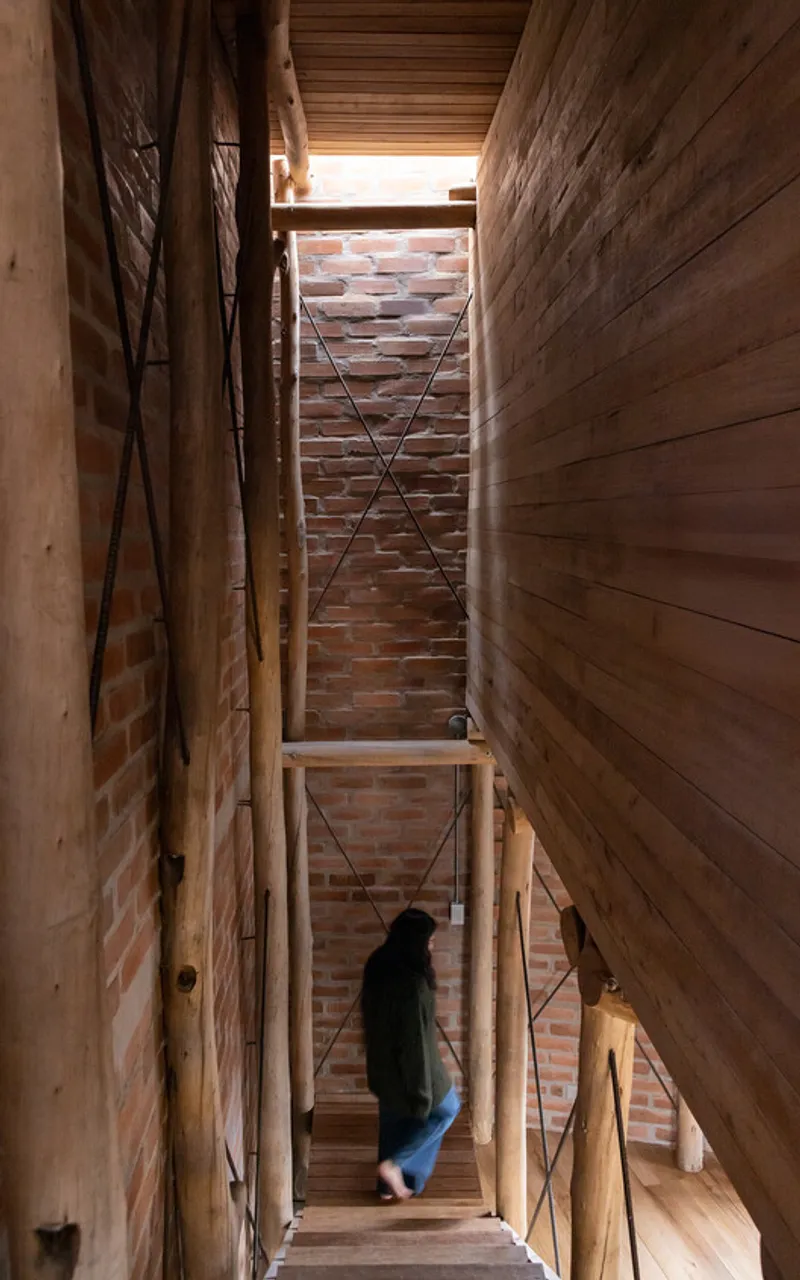
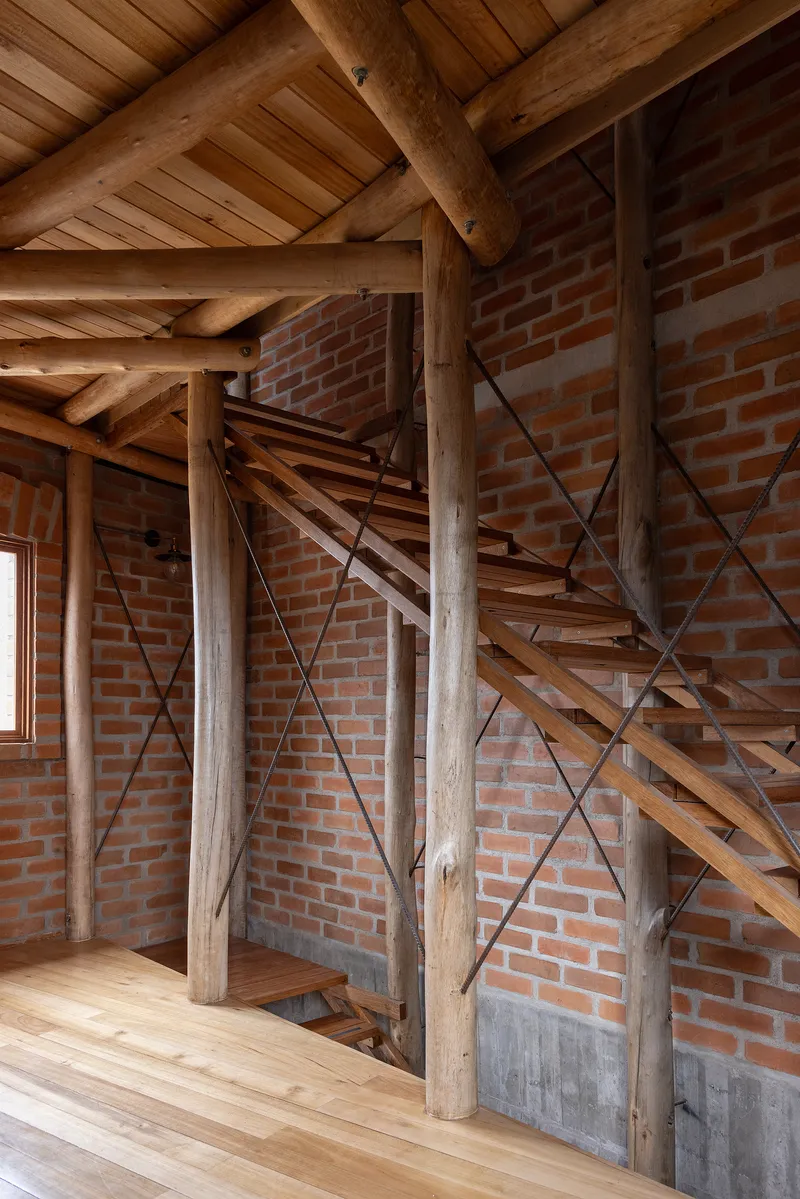
Material selection plays a central role in the project’s environmental philosophy. The structure is built using 9-meter-long eucalyptus logs (pingos) sourced from a nearby forest just 12.3 km from the site. Importantly, these logs come from a forest where eucalyptus trees are being replaced with native species, helping restore ecological balance in the Andean landscape.
Using logs in their natural state eliminates industrial processing, significantly reducing energy consumption, material waste, and embodied carbon. The choice reflects a broader commitment to low-tech, high-impact construction strategies suited to local contexts.
Brick and Wood in Seismic Harmony
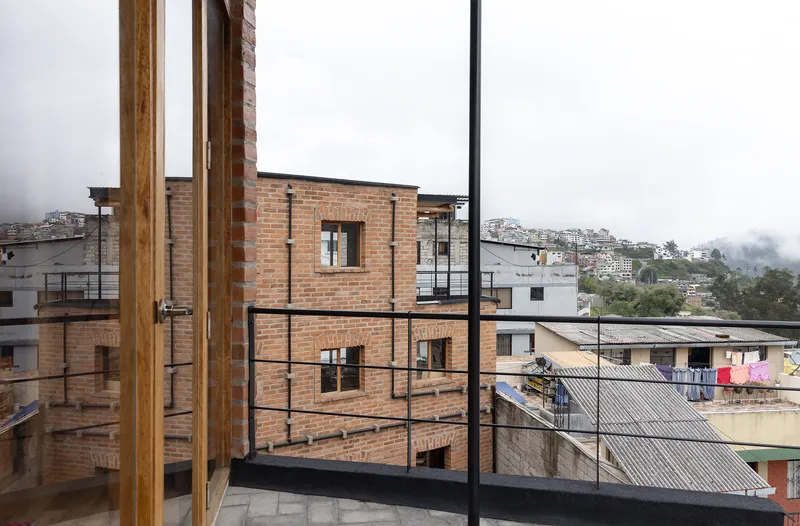
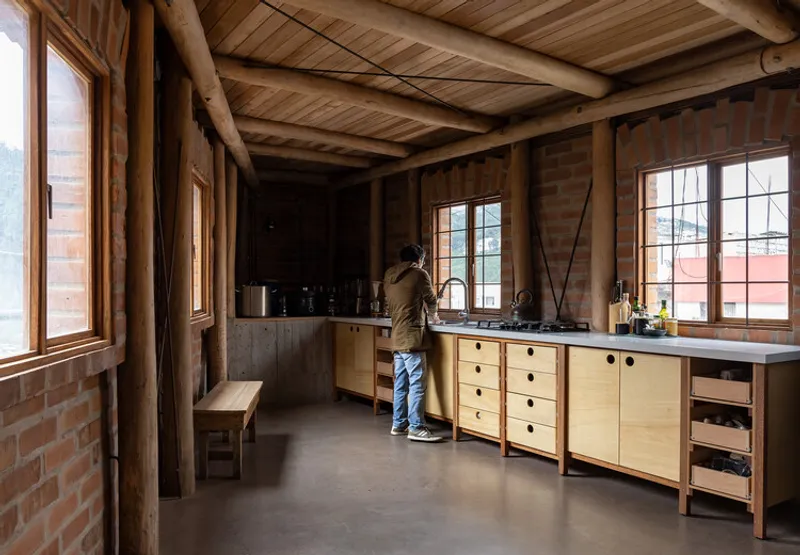
To protect the wood structure from weather exposure and enhance thermal performance, the house is wrapped in a brick façade. Brick was selected not only for durability but also for its thermal mass, capturing heat during the day and releasing it gradually to stabilize indoor temperatures.
In Quito’s seismic context, combining brick and wood required careful structural coordination. While a thin brick wall alone cannot support multiple floors, the solution lies in a hybrid system: eucalyptus logs form the structural skeleton, while brick masonry provides rigidity and enclosure.
The project uses handmade bricks produced by family-run local kilns, reinforcing the architects’ commitment to supporting local craftsmanship and economies rather than relying on industrialized materials.
Passive Comfort and Net-Zero Performance
Environmental performance is at the core of the design. Through passive strategies: solar orientation, cross ventilation, thermal mass, and insulation, the house achieves 72% indoor thermal comfort hours, far exceeding Quito’s typical residential average of 40%.
The residence also reaches net-zero electricity consumption through:
- A photovoltaic energy system
- A heat pump for domestic hot water
- Reduced overall electrical demand
Water use is reduced by 40% through rainwater harvesting and gray water treatment, while the central courtyard functions as an infiltration space, contributing to aquifer recharge and urban water resilience.
According to ongoing studies, the combined use of eucalyptus logs and handmade brick reduces embodied carbon by approximately 80% compared to conventional construction methods.
From the Individual to the Collective
House in La Vicentina demonstrates how small, replicable architectural actions can generate meaningful environmental and social impact. Rather than relying solely on large-scale infrastructure or government intervention, the project argues for the power of individual initiatives to influence broader urban and ecological systems.
By merging research, sustainability, community engagement, and thoughtful design, Al Borde delivers a house that is not only a home, but a prototype for future resilient urban living in Latin America and beyond.
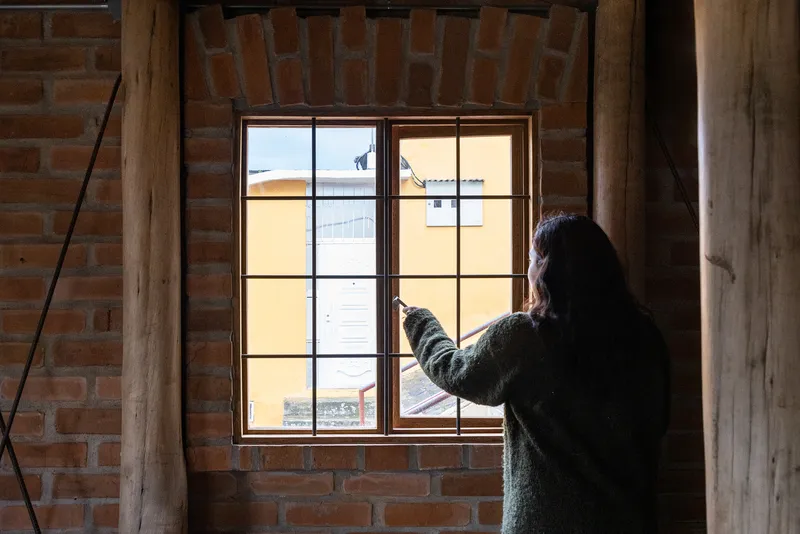
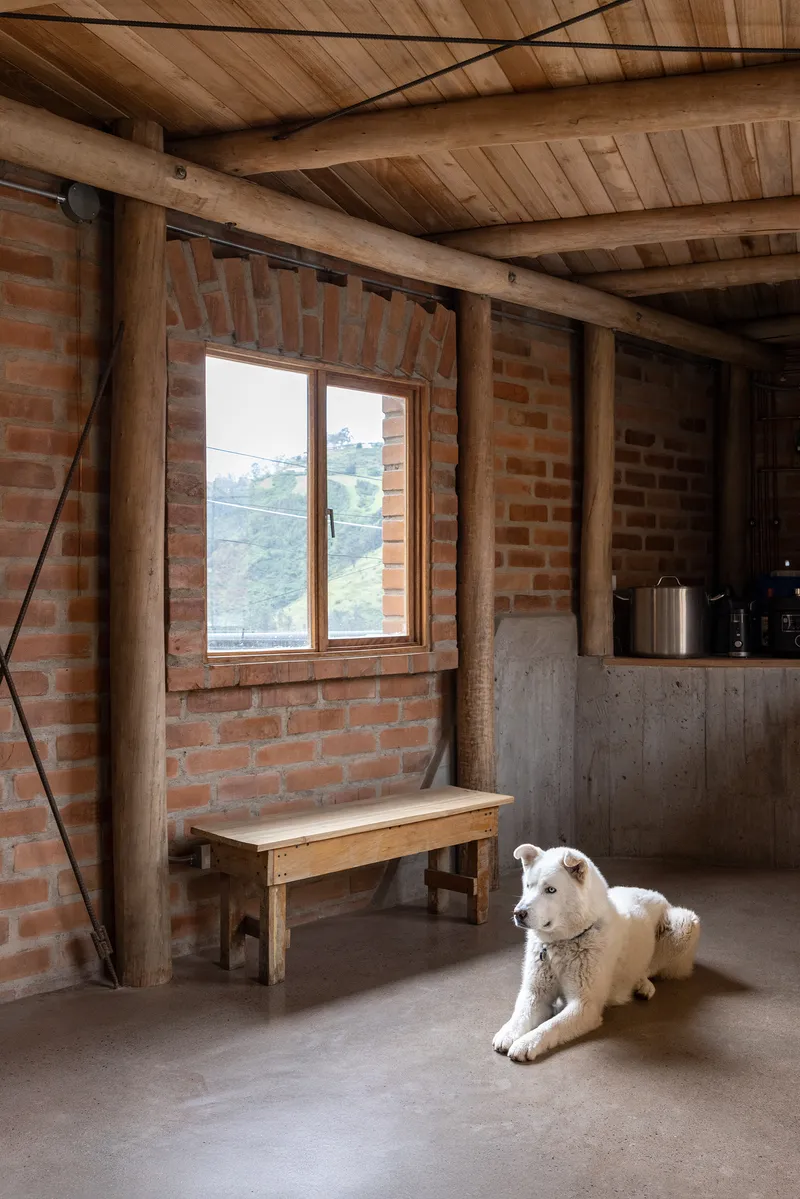
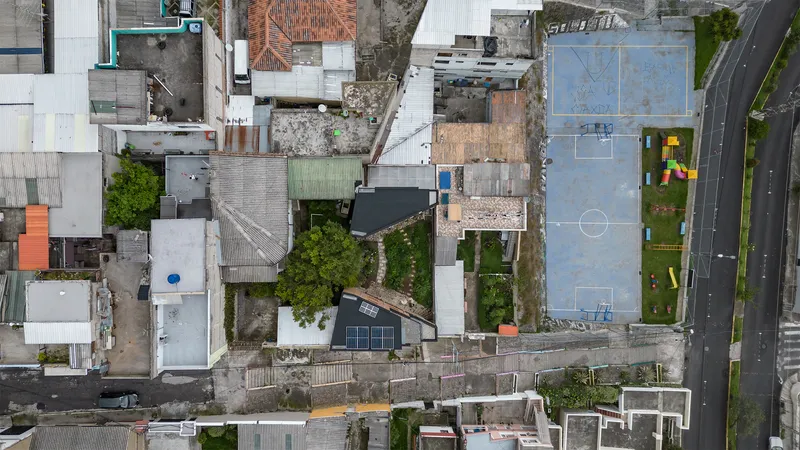
All the photographs are works of JAG Studio




Popular Articles
Popular articles from the community


The Ocean Hive: Sustainable Architecture for a Self-Sufficient Civilization at Sea
The Ocean Hive imagines sustainable architecture at sea, where modular habitats, algae, wave power and ocean waste sustain a growing colony.

Co-Life: Senior Housing Design That Reconnects Older Adults With the City
Co-Life reimagines senior housing design through healing gardens, shared streets, workshops, and a sustainable community across generations.

The Earth Pod: 3D Printed Homes for Resilient Refugee Communities
The Earth Pod reimagines refugee housing through 3D printed homes made from clay, combining resilience, self-sufficiency, and rapid shelter.

Riyadh For All: Intergenerational Urban Design for Active Aging in Rabat
Riyadh For All reimagines urban design in Rabat with intergenerational co-living, adaptive courtyards, and Moroccan cultural exchange today.

Similar Reads
You might also enjoy these articles


Hodi-Mandai Geram
Project Function: Preservation and revitalization of the Intangible heritage and socio-spatial identity of the Hodi by Housing, Cultural Memory Center, Sacred Grove, landscape, local tourism economy


Olio Towers: A Mid-Rise for Performers That Fuses Housing, Rehearsal, and Stage
Located blocks from Houston's Theater District, this modular tower stacks living units around a central performance atrium.

Oasis: Modular Green Housing Carved into Dhaka's Urban Fabric
A shortlisted Plugin Housing entry reclaims unauthorized settlements in Dhaka with stepped concrete volumes, green roofs, and ventilation-driven design.

Black Hole: A Floating Megastructure for the Post-Physical Era
Emiliano Mazzarotto envisions a spherical, self-scaling arena where e-sports, digital hotels, and holographic stadiums replace traditional public space.

Explore Latin American Houses Competitions
Discover active competitions in this discipline



Challenge to reimagine the Iron Throne


Photograph architecture without architects


Illustrate the lost glory of Angkor Wat - Render Challenge


Design challenge to reuse E-waste
Comments (0)
Please login or sign up to add comments
No comments yet. Be the first to comment!