
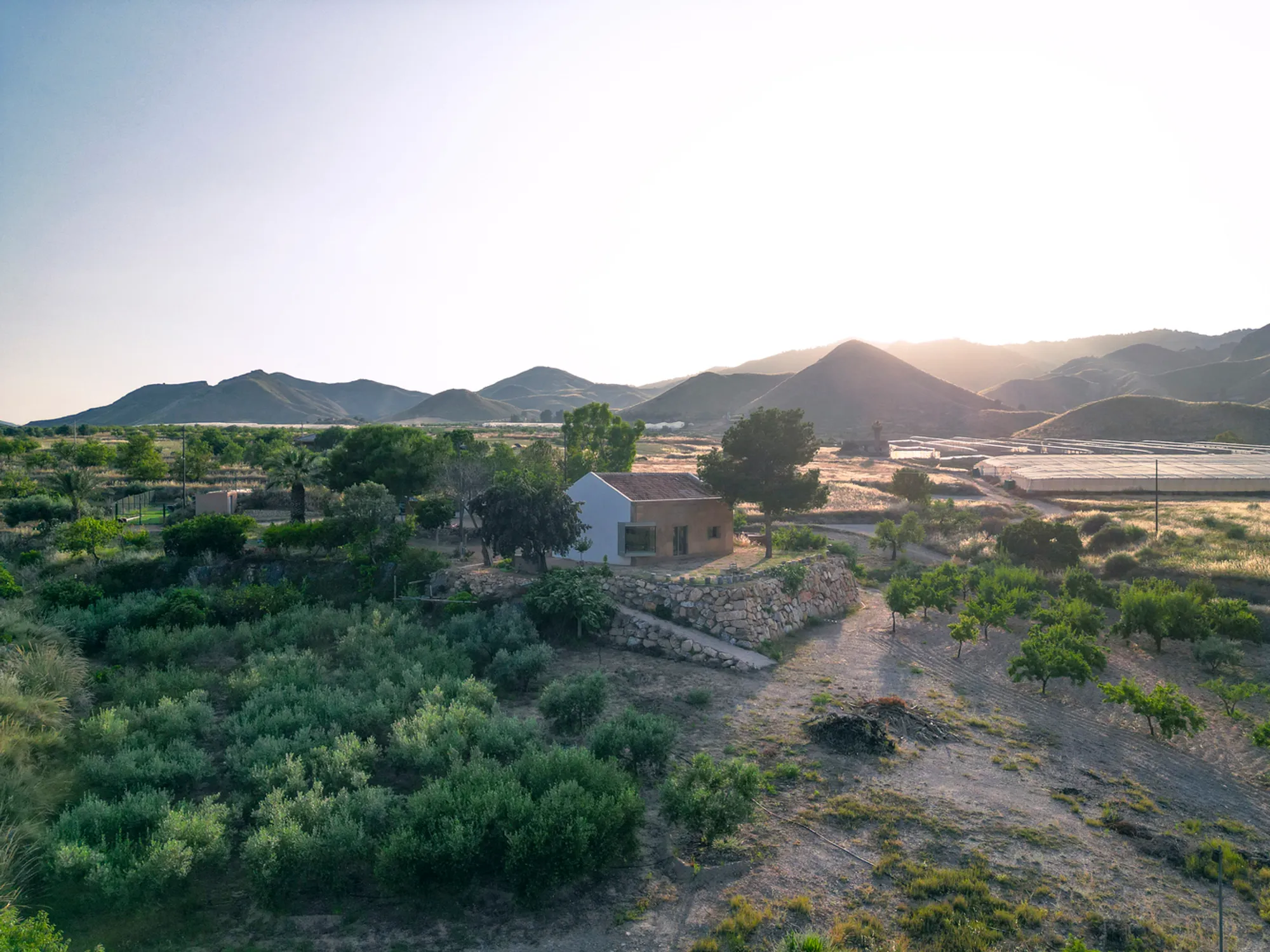
House in Los Llanos: A Heritage-Rooted Rural Restoration in Lorca, Spain
Rural childhood home restored with reclaimed materials, earthen walls, and open living spaces, blending heritage, sustainability, and contemporary comfort in Lorca, Spain.


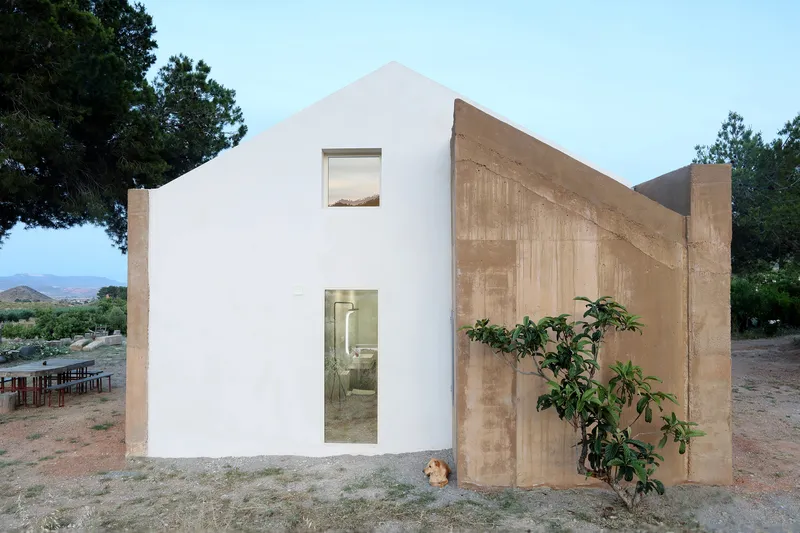
Located in the peaceful agricultural plains of Lorca, Spain, the House in Los Llanos by Pepa Diaz Arquitecta is a thoughtful restoration project that transforms an almost-ruined childhood home into a contemporary rural retreat. Completed in 2024, this 97 m² residence embodies an emotional return to origins—where memory, identity, and landscape come together to define a new way of living.
Rather than erasing the past, the architect embraces it. The intervention preserves the soul of the former farmhouse while introducing modern comfort and spatial freedom. Rooted in circular construction values and rural heritage, the project stands as a model for sustainable architecture, adaptive reuse, and cultural continuity in Southern Spain.
Rebuilding Memory Through Architecture
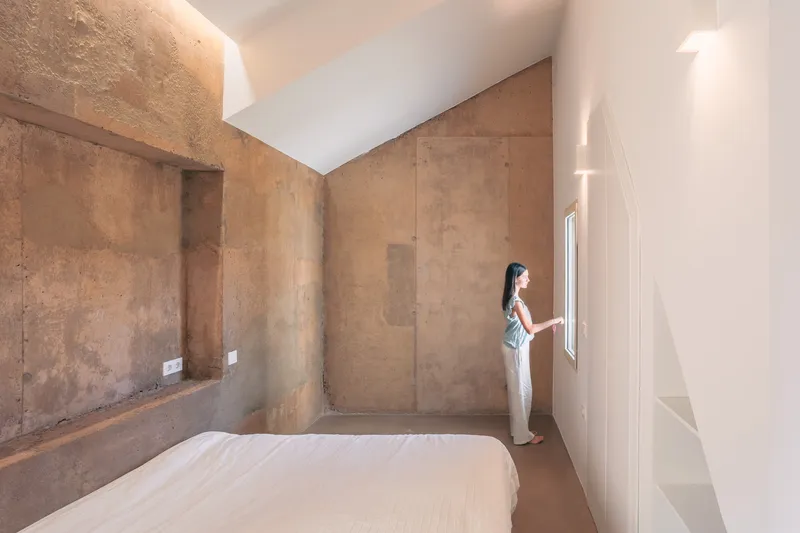
The home originally stood as a partial ruin, yet its emotional significance as the owner's childhood house guided the design approach. Instead of demolishing and rebuilding, the architect carried out a sensitive restoration, aligned with Spain’s Architecture Quality Law, prioritizing:
- Landscape integration
- Responsible material use
- Local resource management
- Reuse and recycling of salvaged elements
- Social and cultural sustainability
This process reflects a circular economy mindset, turning remnants of the past into meaningful architectural elements for the future.
The result is a home conceived not only as a structure, but as a vessel of family memory—where heritage becomes a living part of everyday life.
Craftsmanship & Earth-Based Materials
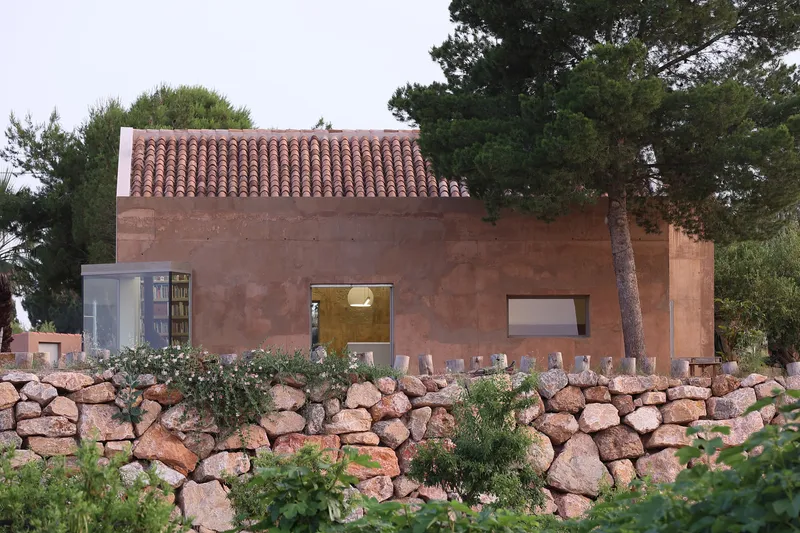
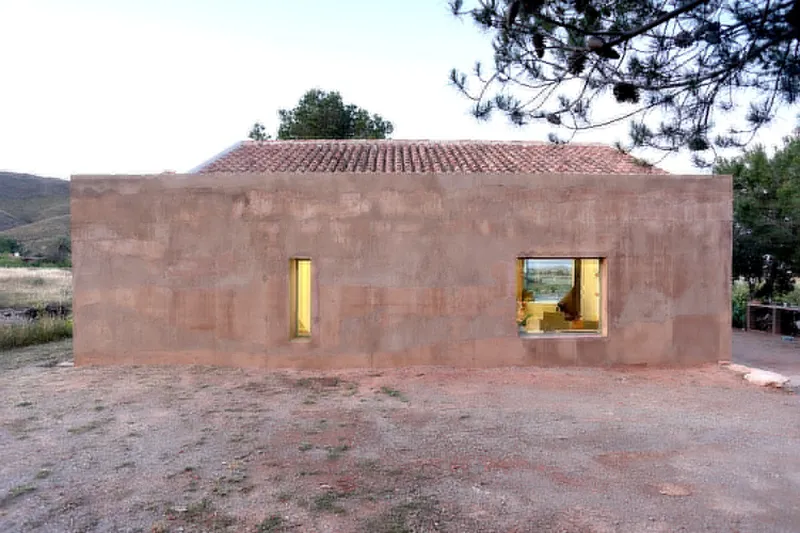
A significant part of the construction uses semi-earthen walls, allowing a direct engagement with local soil. This artisanal approach echoes the manual labor once performed on the surrounding farmland, creating a poetic resonance between land, labor, and architecture.
Historic elements were skillfully preserved and reimagined:
- Portions of the original roof reconstructed
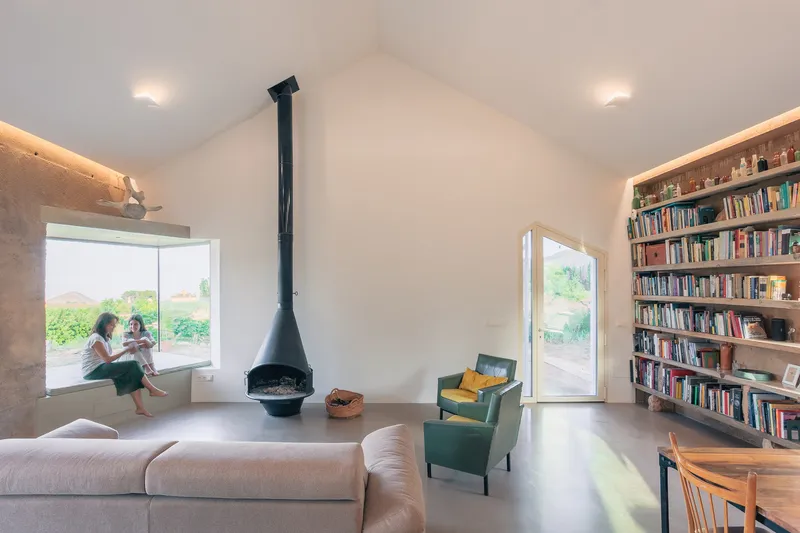
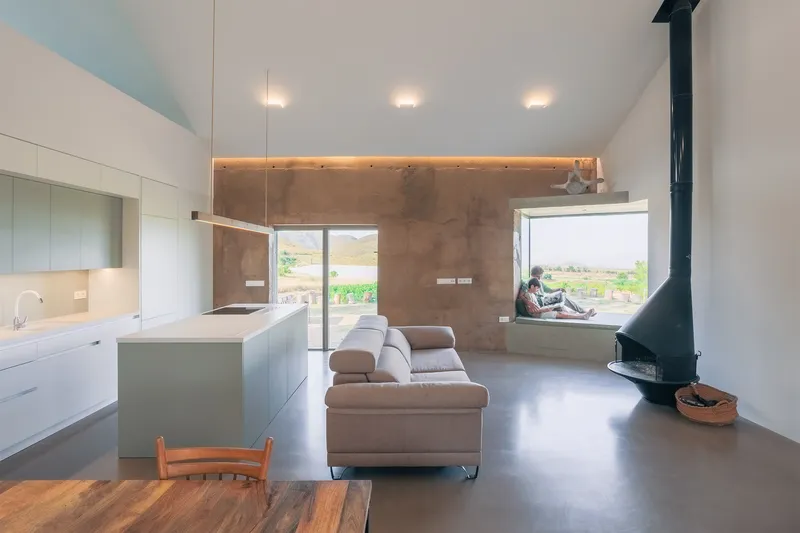
- Reclaimed timber repurposed into built-in shelving
- Original rustic textures celebrated rather than concealed
For example, planks from the old stable roof now form shelving in the new living space—an intimate reminder of the home’s agricultural past.
A Contemporary Rural Lifestyle
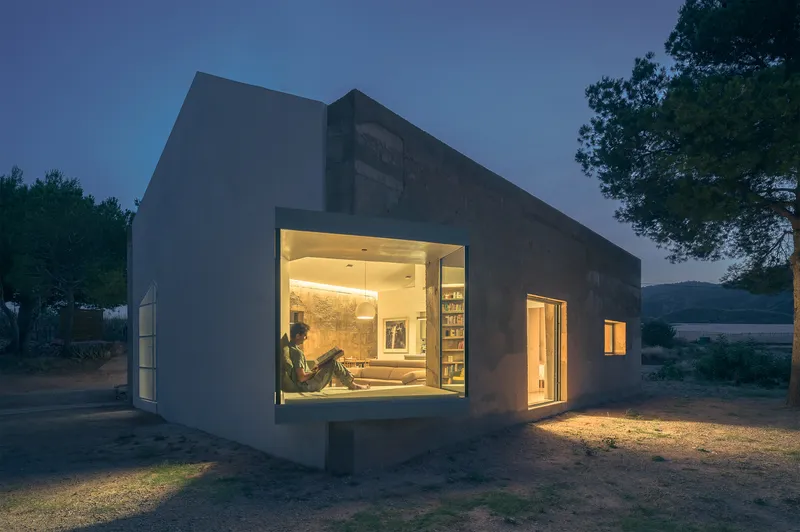
The intervention respects rural identity while adapting the home to modern living patterns. The original house consisted of small enclosed rooms typical of mid-20th-century rural homes. The renovation opens this layout, introducing:
- A double-height living area
- A lofted space
- Simplified private zones (bedrooms and bathrooms)
- Minimal false ceilings to preserve spatial volume
This shift supports modern family dynamics—prioritizing openness, social interaction, and connection to landscape light and air.
Protecting Rural Essence
The home sits beyond urban interference, fostering a space of reflection on nature, heritage, and the future of rural living. It embodies:
- Quiet resistance to urban sprawl
- Appreciation for vernacular architecture
- Renewed value for agricultural heritage
- A blueprint for preserving rural identity while modernizing comfort
The project reminds us that innovation in architecture is not only about new forms, but also about cultural sensitivity and memory preservation.
Key Takeaways
| Attribute | Detail |
|---|---|
| Location | Lorca, Spain |
| Architect | Pepa Diaz Arquitecta |
| Project Type | Rural Home Restoration / Adaptive Reuse |
| Area | 97 m² |
| Completion Year | 2024 |
| Themes | Sustainability, Circular Economy, Craftsmanship, Vernacular Architecture, Heritage |
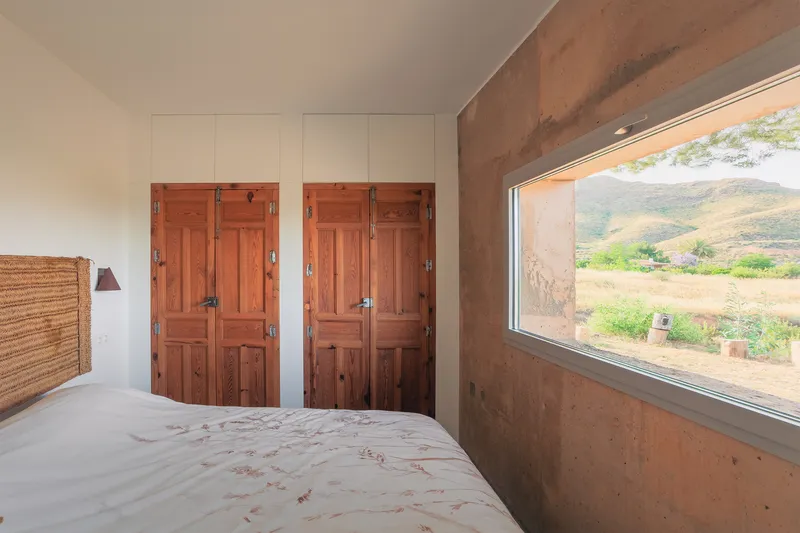
All photographs are works of Juan S. Calventus y Jerónimo José Montes Martínez



Popular Articles
Popular articles from the community


Conexión: Biophilic Design Reimagines High-Rise Living in Hong Kong
Conexión reimagines high-rise living in Hong Kong through biophilic design, green facades, shared spaces, daylight, water and nature within.

Lunar Spiral: Space Architecture Shaped by the Mathematics of the Universe
Lunar Spiral reimagines space architecture through Fibonacci geometry, lunar regolith, levitating habitats, and self-sustaining Moon living.

The Ocean Hive: Sustainable Architecture for a Self-Sufficient Civilization at Sea
The Ocean Hive imagines sustainable architecture at sea, where modular habitats, algae, wave power and ocean waste sustain a growing colony.

The Musturak Paradise: Senior Living Architecture for a Connected Future in Temara, Morocco
The Musturak Paradise reimagines senior living architecture in Temara via private homes, social spaces, culture, community, and shared care.
Similar Reads
You might also enjoy these articles


Hodi-Mandai Geram
Project Function: Preservation and revitalization of the Intangible heritage and socio-spatial identity of the Hodi by Housing, Cultural Memory Center, Sacred Grove, landscape, local tourism economy


Olio Towers: A Mid-Rise for Performers That Fuses Housing, Rehearsal, and Stage
Located blocks from Houston's Theater District, this modular tower stacks living units around a central performance atrium.

Oasis: Modular Green Housing Carved into Dhaka's Urban Fabric
A shortlisted Plugin Housing entry reclaims unauthorized settlements in Dhaka with stepped concrete volumes, green roofs, and ventilation-driven design.

Black Hole: A Floating Megastructure for the Post-Physical Era
Emiliano Mazzarotto envisions a spherical, self-scaling arena where e-sports, digital hotels, and holographic stadiums replace traditional public space.


Explore Housing Competitions
Discover active competitions in this discipline



Challenge to reimagine the Iron Throne


Photograph architecture without architects


Illustrate the lost glory of Angkor Wat - Render Challenge


Design challenge to reuse E-waste
Comments (0)
Please login or sign up to add comments
No comments yet. Be the first to comment!