

House in MITATE by Lenz Architects
A 50-year-old Japanese home transformed using the MITATE concept, blending tradition and modernity through flexible, reinterpreted design elements.


A Subtle Dialogue Between Tradition and Modernity
House in MITATE is a meticulous renovation project of a 50-year-old, two-story wooden home in Japan, thoughtfully redesigned by Lenz Architects. What was once a rigid, compartmentalized space defined by tatami flooring, fusuma sliding doors, and exposed timber posts, has been reinterpreted into a flexible, hybridized dwelling that celebrates wabi-sabi minimalism while accommodating modern living.
Rather than erasing the home’s original identity, the architects leaned into the traditional aesthetic and spatial organization, embracing the concept of “MITATE”—a Japanese design philosophy that transforms everyday objects by reimagining their purpose and context.
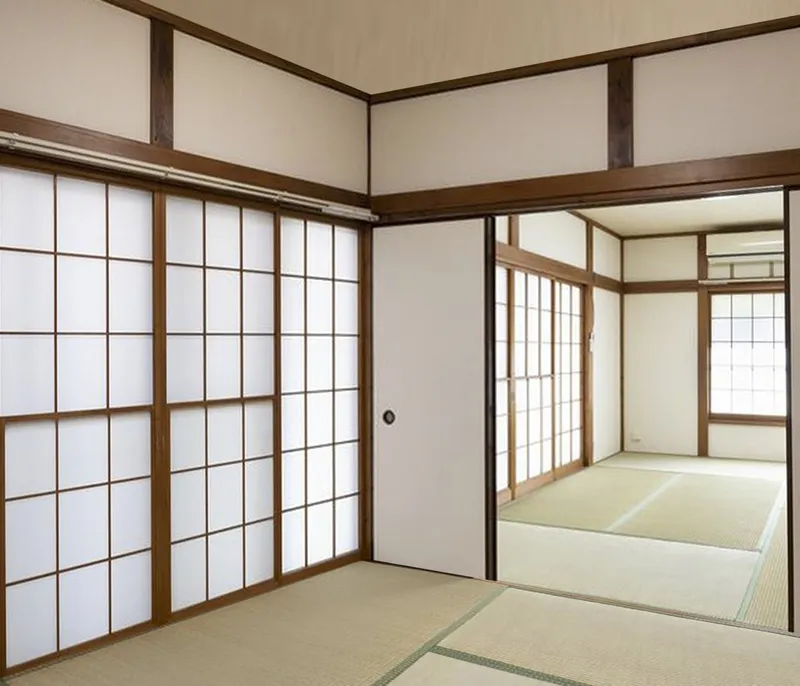


The Concept of MITATE as a Design Framework
MITATE (見立て) translates roughly to “seeing one thing as another.” In this house, MITATE becomes both a conceptual and practical strategy. The design team preserved key elements of the Japanese domestic vernacular—sliding screens, grid-patterned ceilings, and tatami floors—but subtly altered their form, color, and materials to reframe their function and aesthetic impact.
Instead of the typical igusa (rush grass) tatami in standard green tones and rectangular forms, the new tatami mats are square, darker in color, and used in unexpected configurations. Elements like the pink-hued veranda, repurposed bamboo, and reconfigured paper partitions act as poetic reinterpretations of age-old features, giving the interiors a soft contemporary edge.
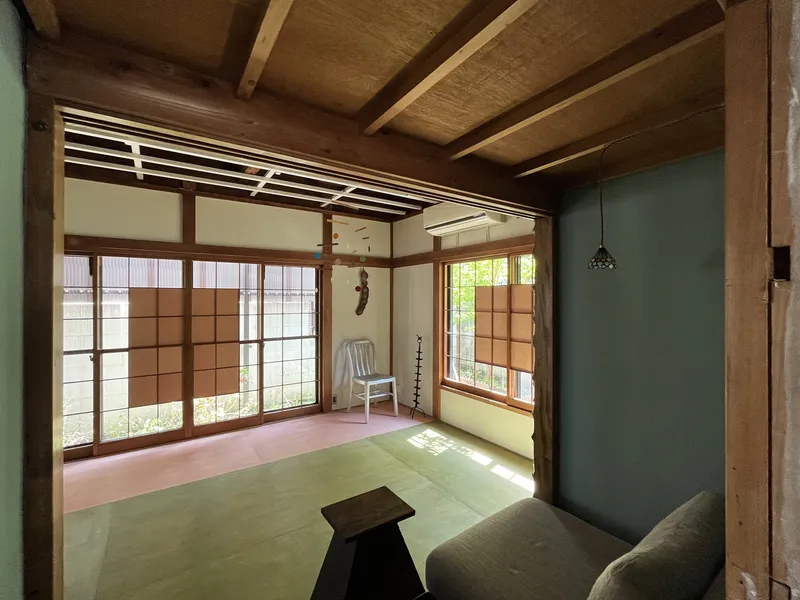
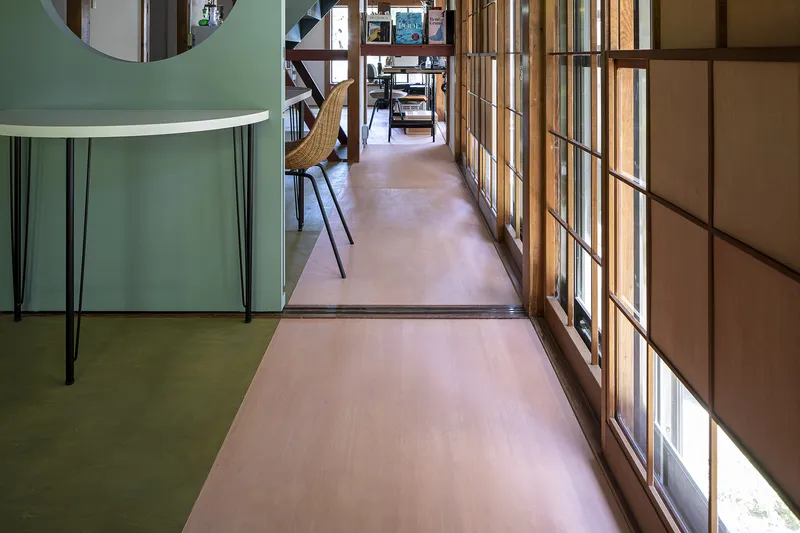

Flexible Living Within Cultural Continuity
Despite a tight renovation budget of just 2.5 million yen, the project achieves a layered complexity. Spaces flow more freely due to modifications in the interior segmentation, where traditional sliding doors are reshaped to allow for visual continuity and interconnectedness between rooms. This spatial fluidity offers a modern answer to contemporary domestic needs without sacrificing the soul of the original structure.
Every gesture in this home—from repurposed beams to custom-designed furniture—contributes to a refined, calm atmosphere that honors Japan’s architectural lineage while evolving its expression.
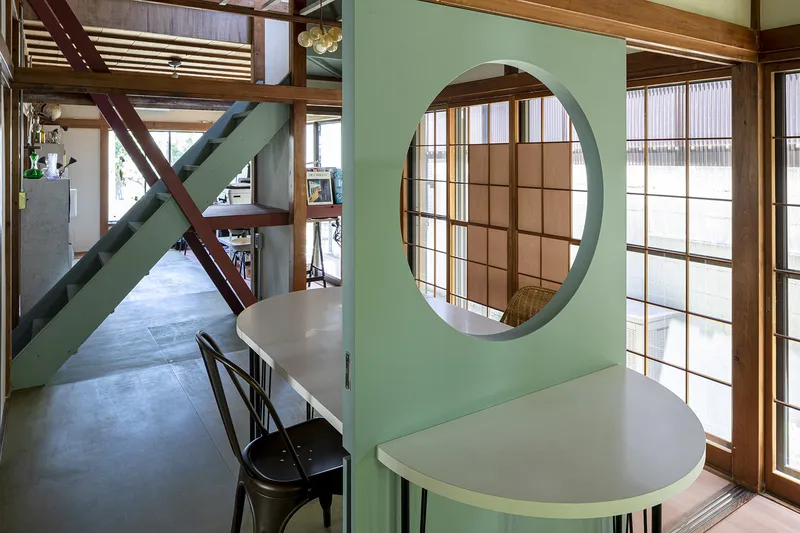

All Photographs are works of Daiki Morita


Popular Articles
Popular articles from the community


Cube Design Draws an Ecological Corridor Between Two Shenzhen Hills with the Nankai Building
Beside Shenzhen's container docks, the Nankai Building pairs stacked balconies with a climbing green screen to connect two hillsides across its height.


Singing Woman: An Opera House That Performs Before the Curtain Rises
Ovidiu Cristian Pavel's conceptual opera house translates Estonia's choral identity into a sculpted waterfront landmark facing the Baltic Sea.

FCC Arquitectura Expands a Portuguese Granite House with a Board-Marked Concrete Wing
In Portugal, JV House pairs a cleaned-up whitewashed and granite dwelling with a timber-shuttered concrete extension, courtyards and a garden pool.

ETEH Reworks the Shared Spaces of São Domingos School in Brazil Around Timber, Color and Hanging Plants
At São Domingos School in Brazil, 436 m² of hall, refectory and library are recast with timber joinery, a yellow and blue code and trailing greenery.

Similar Reads
You might also enjoy these articles


Hodi-Mandai Geram
Project Function: Preservation and revitalization of the Intangible heritage and socio-spatial identity of the Hodi by Housing, Cultural Memory Center, Sacred Grove, landscape, local tourism economy


Olio Towers: A Mid-Rise for Performers That Fuses Housing, Rehearsal, and Stage
Located blocks from Houston's Theater District, this modular tower stacks living units around a central performance atrium.

Oasis: Modular Green Housing Carved into Dhaka's Urban Fabric
A shortlisted Plugin Housing entry reclaims unauthorized settlements in Dhaka with stepped concrete volumes, green roofs, and ventilation-driven design.

Black Hole: A Floating Megastructure for the Post-Physical Era
Emiliano Mazzarotto envisions a spherical, self-scaling arena where e-sports, digital hotels, and holographic stadiums replace traditional public space.

Explore Architecture Competitions
Discover active competitions in this discipline

Challenge to reimagine the Iron Throne

Photograph architecture without architects

Illustrate the lost glory of Angkor Wat - Render Challenge

Design challenge to reuse E-waste
Comments (0)
Please login or sign up to add comments
No comments yet. Be the first to comment!