

House in Saidera by Akio Isshiki Architects, Osaka, Japan
A minimalist Japanese home reinterpreting tradition through exposed timber, flexible spaces, and simplicity, creating a calm, functional environment for modern living.


Located in Osaka, Japan, the House in Saidera by Akio Isshiki Architects is a thoughtful reinterpretation of traditional Japanese domestic architecture, carefully adapted to contemporary living conditions. Built on a flagpole-shaped site surrounded by a mix of vernacular homes and modern developments, the project seeks to reconnect with the essential qualities of Japanese housing while addressing present-day constraints such as rising construction costs and changing lifestyles.
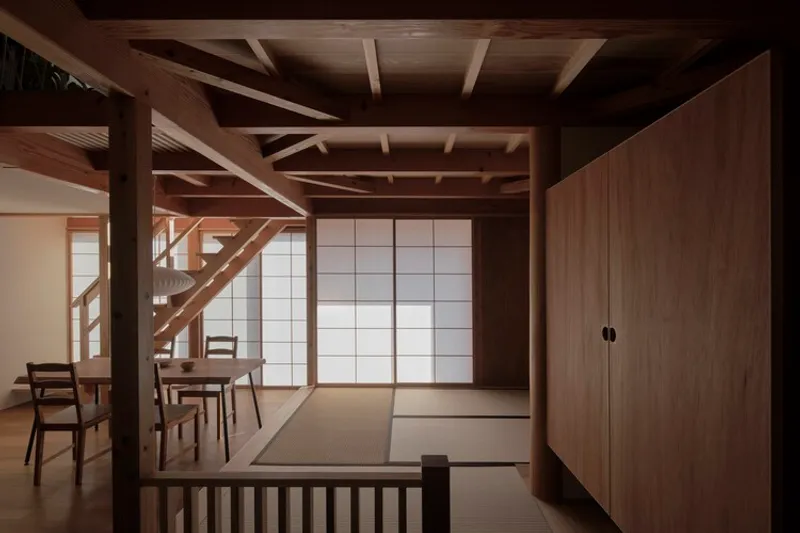
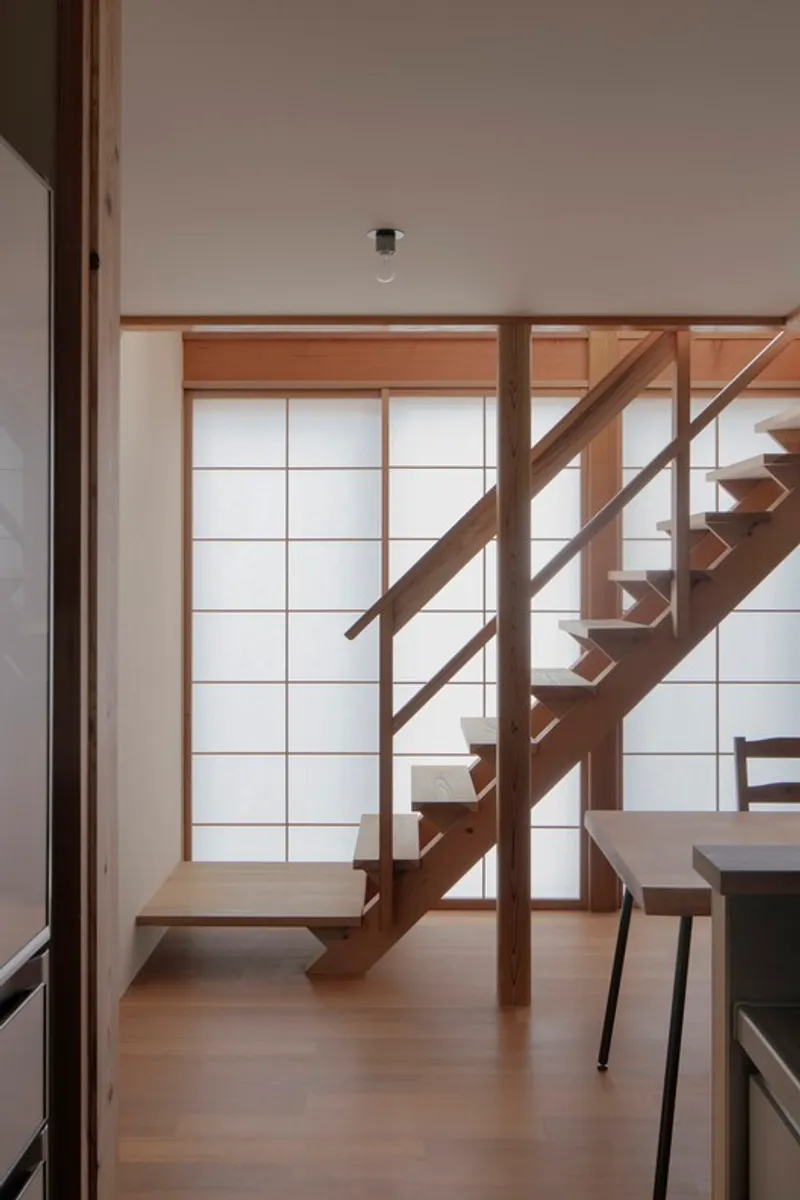
The design draws heavily from the principles of traditional Japanese architecture, particularly the concept of shinkabeconstruction, where structural elements such as columns and beams are intentionally exposed. This approach creates a clear, honest expression of the building’s framework, eliminating unnecessary finishes and resulting in a calm, stripped-down aesthetic.
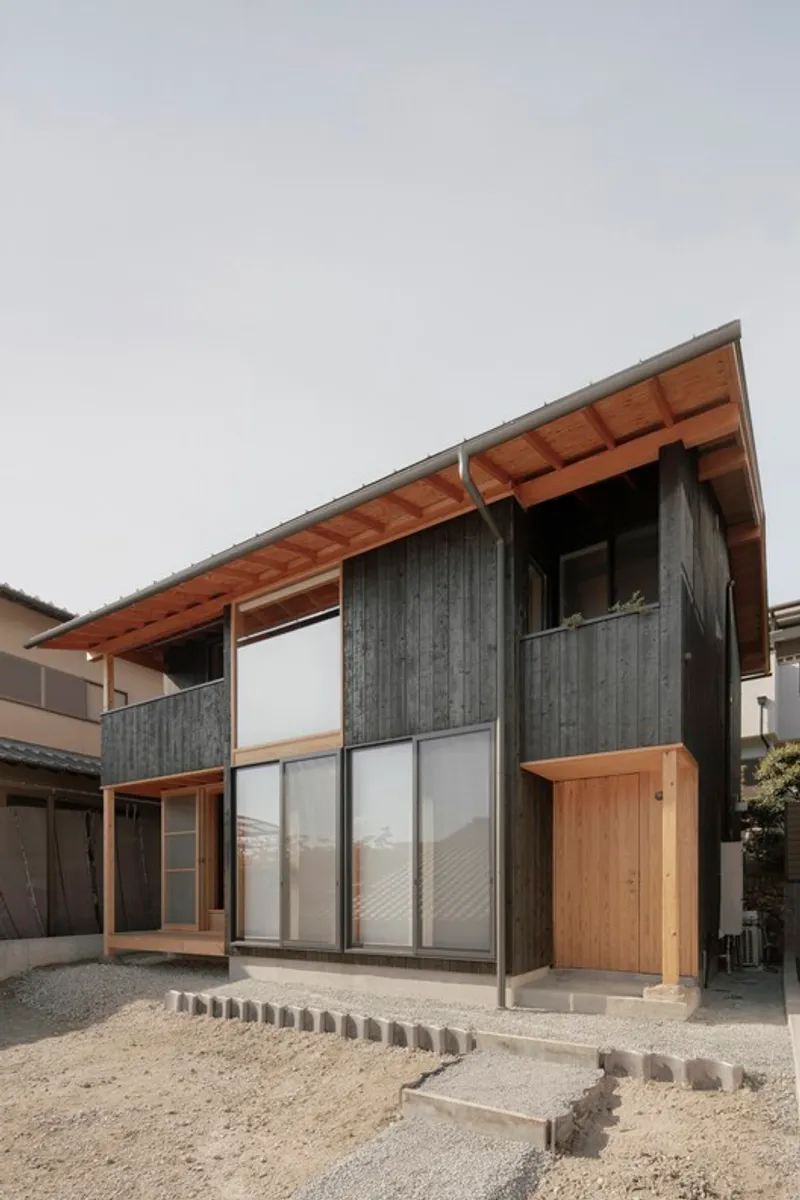
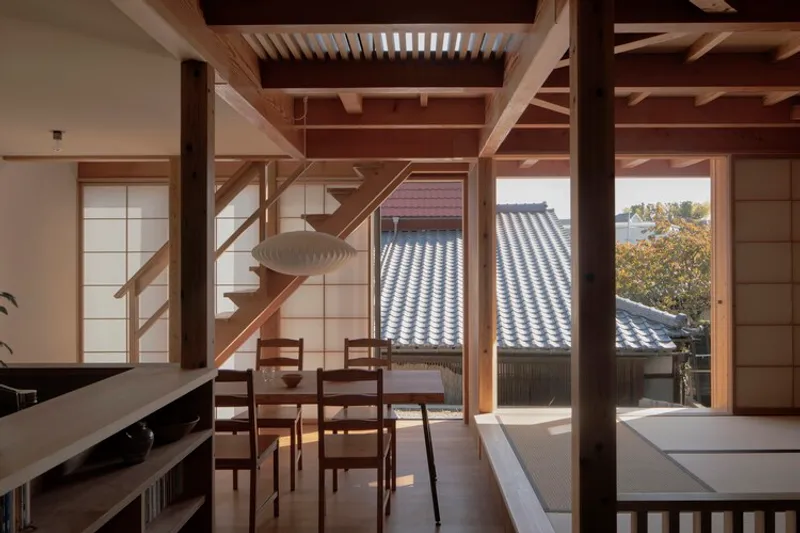
Externally, the house takes the form of a simple two-story gabled volume clad in charred cedar. This material not only references traditional Japanese techniques but also enhances durability while blending harmoniously with the surrounding neighborhood. The restrained form and material palette allow the house to quietly integrate into its context rather than dominate it.
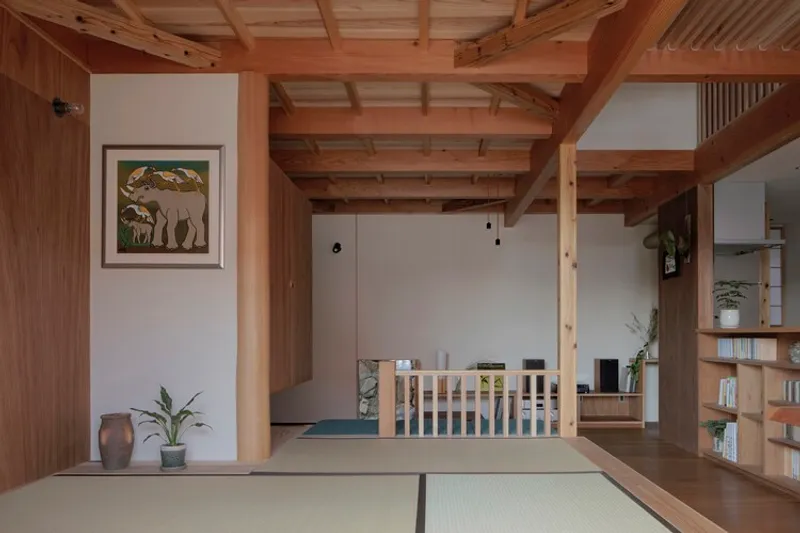
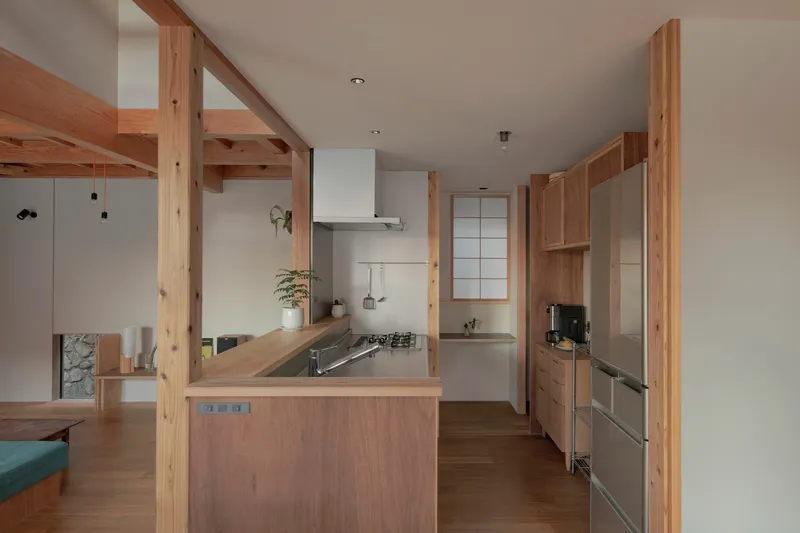
Inside, spatial efficiency and openness are achieved through careful planning and material economy. A single layer of cedar boards functions simultaneously as the ceiling of the first floor and the flooring of the second, reducing construction complexity while maintaining visual continuity. Despite relatively low floor heights, the exposed structure creates a sense of spaciousness and rhythm throughout the interior.
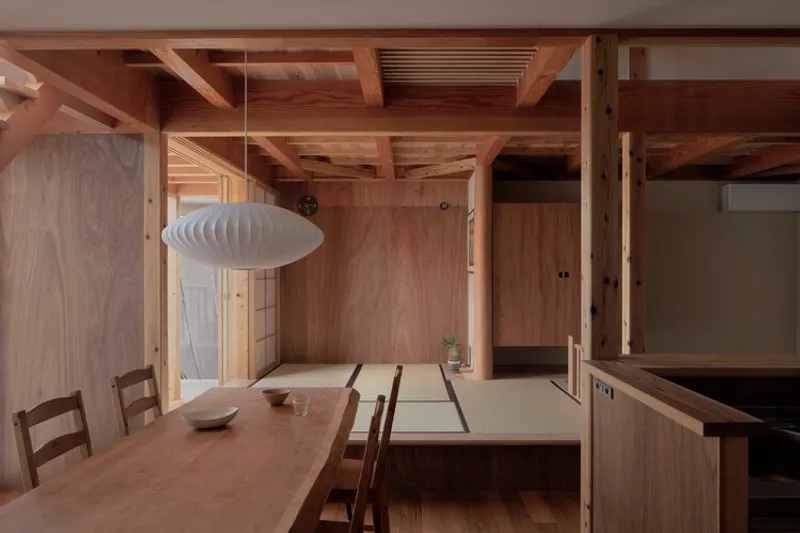
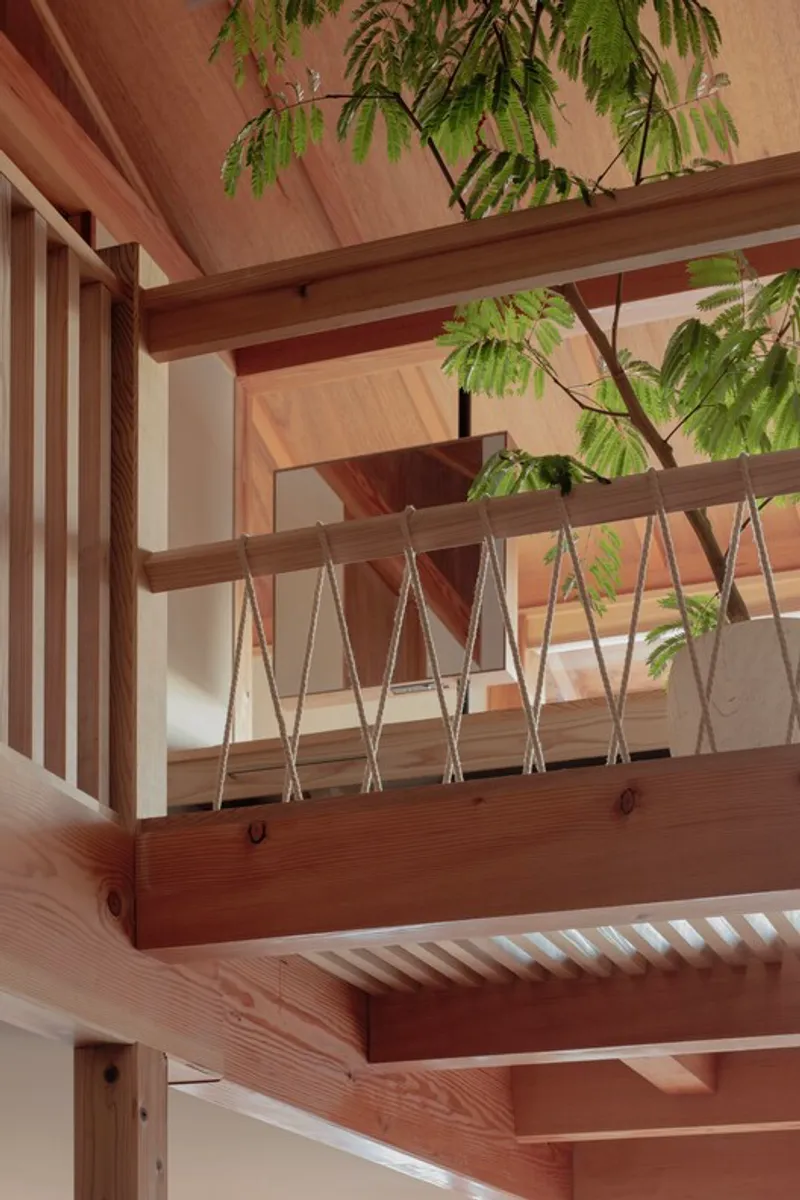
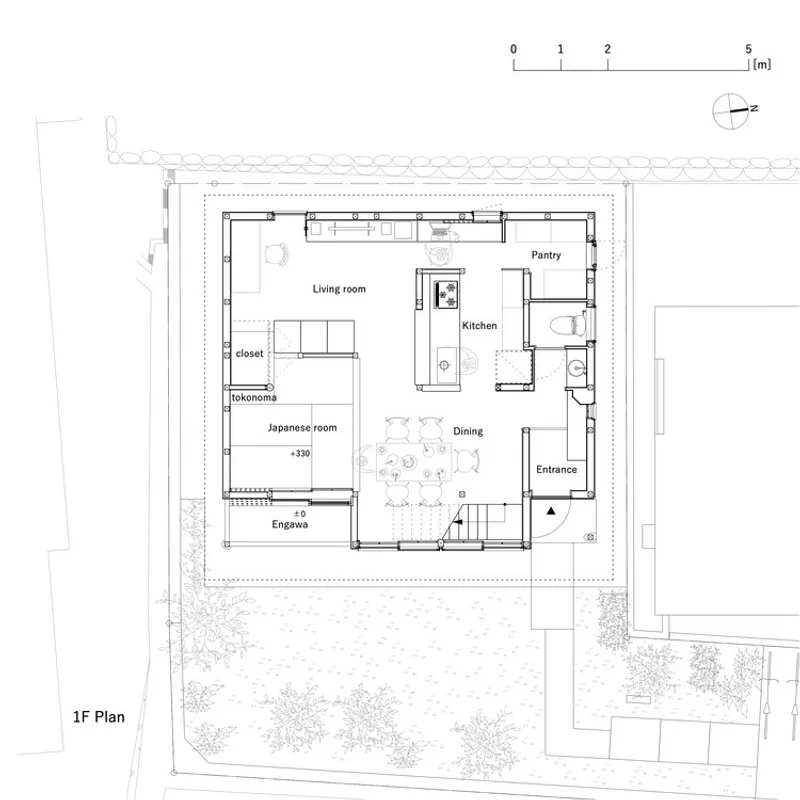
The heart of the home is the centrally located kitchen and dining area, reflecting the lifestyle of the family, who enjoy cooking and gathering. Around this core, other domestic functions are compactly arranged, ensuring efficient use of space without sacrificing comfort. Toward the east, where the site slopes downward, a large opening and an engawa veranda extend the living space outward, creating a seamless connection between interior and exterior.
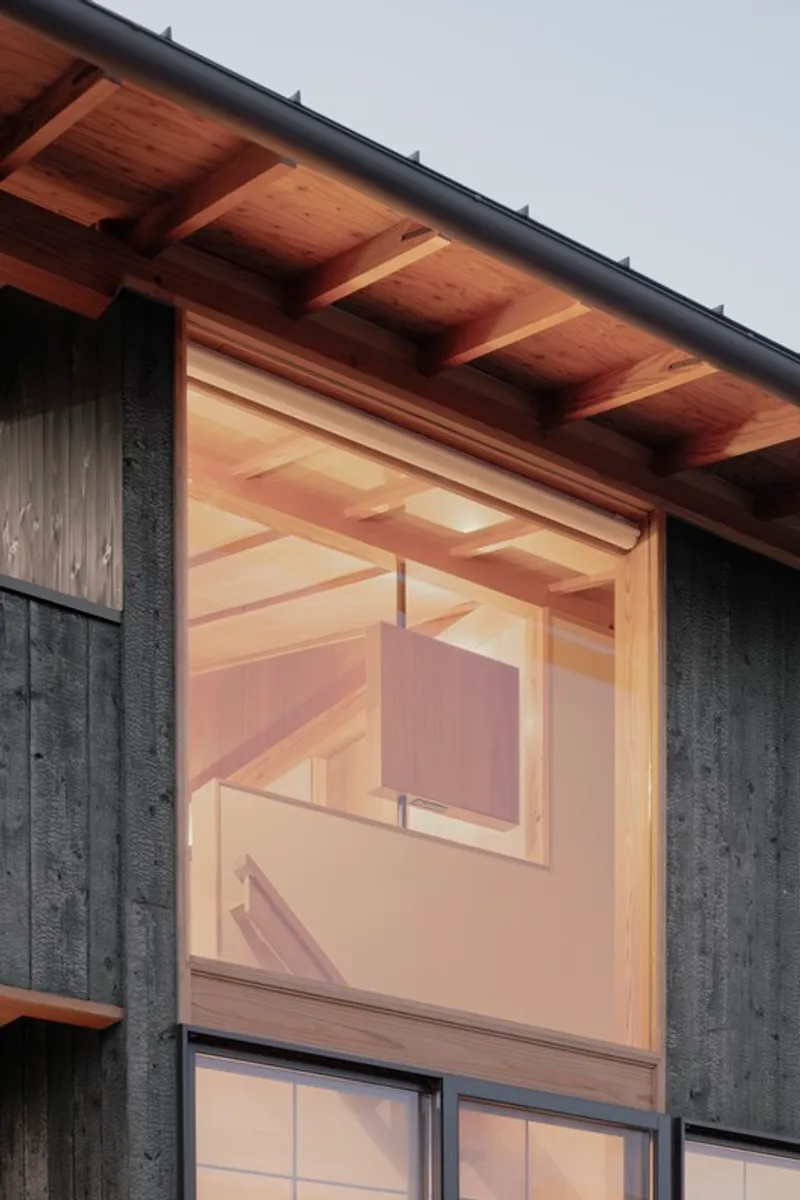
Flexibility and multifunctionality are key themes in the design. Inspired by traditional Japanese living, where spaces adapt to different uses throughout the day, the house incorporates elements that appear or disappear as needed. Sliding panels, integrated storage, and dual-purpose furniture contribute to a dynamic environment where space is continuously redefined.
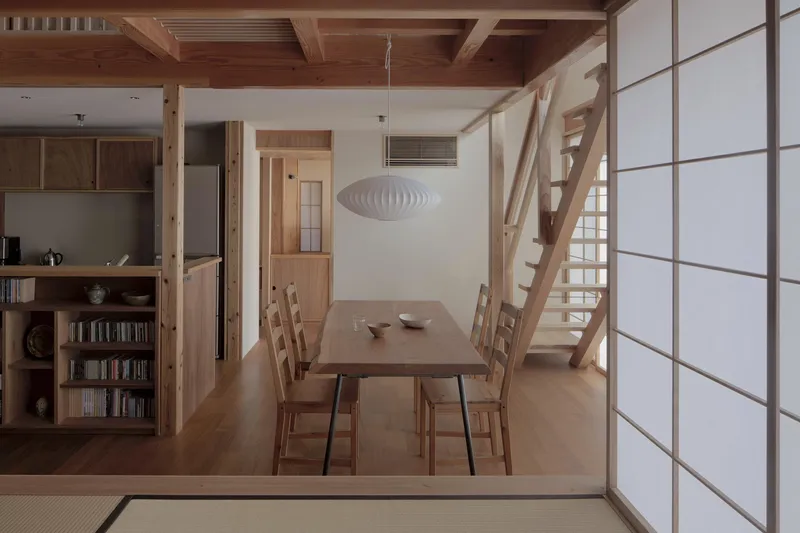
In the Japanese-style room, elements such as a tokonoma alcove and floating storage are subtly integrated with contemporary furnishings, blurring the boundaries between traditional and modern living. This fusion allows the house to maintain cultural continuity without becoming nostalgic or ornamental.
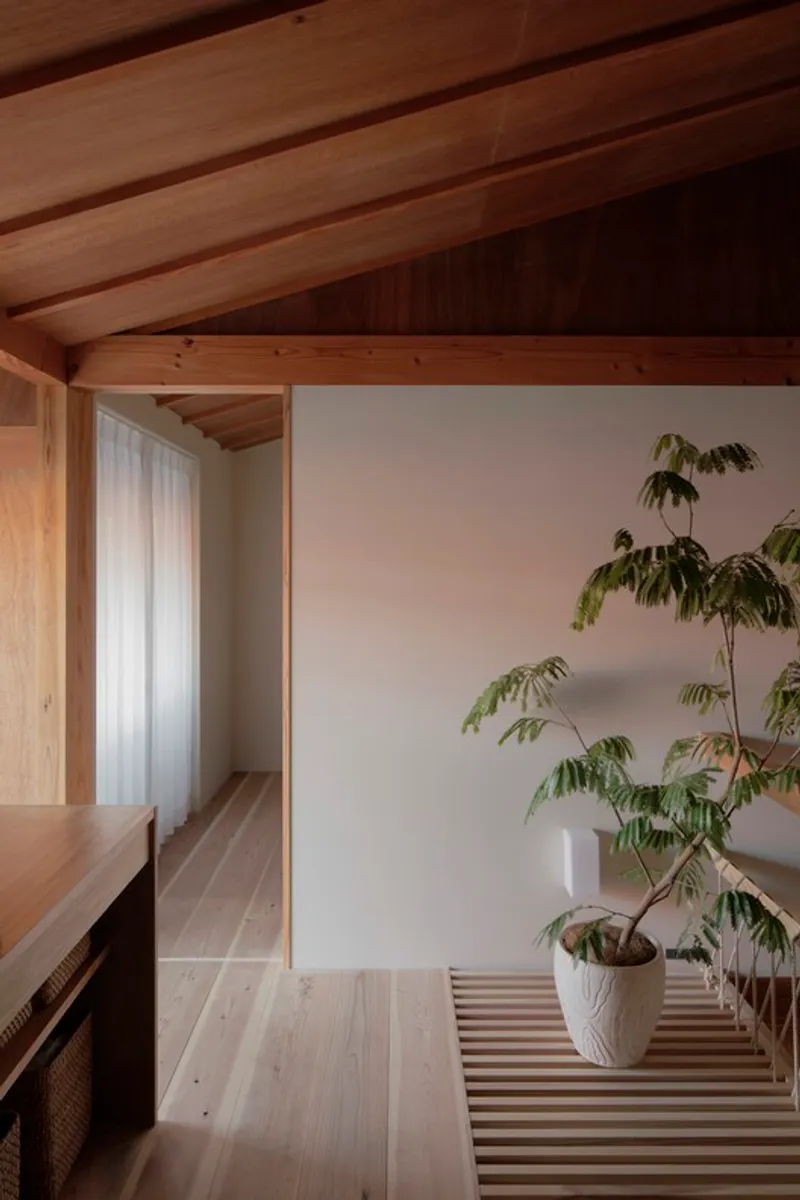
Light and atmosphere play an essential role in shaping the experience of the home. Soft, filtered daylight interacts with wooden surfaces, creating a serene environment reminiscent of traditional interiors. The careful modulation of light, combined with natural materials, fosters a sense of calm and connection to seasonal changes.
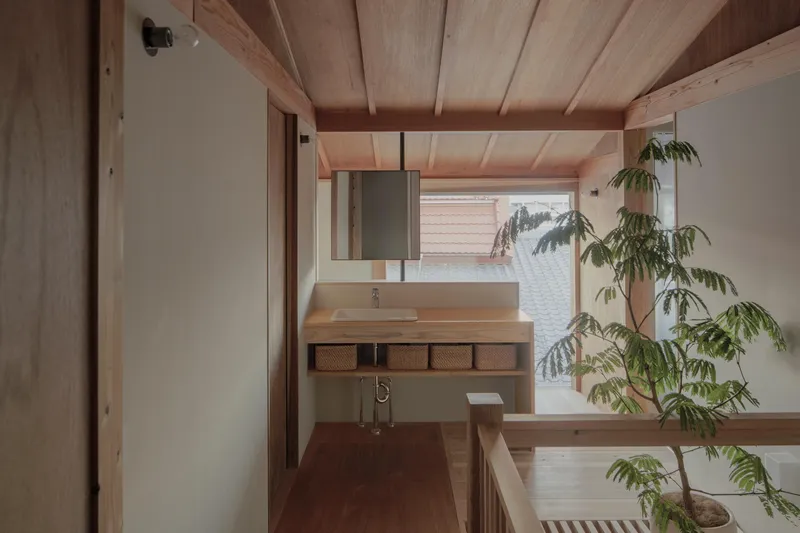
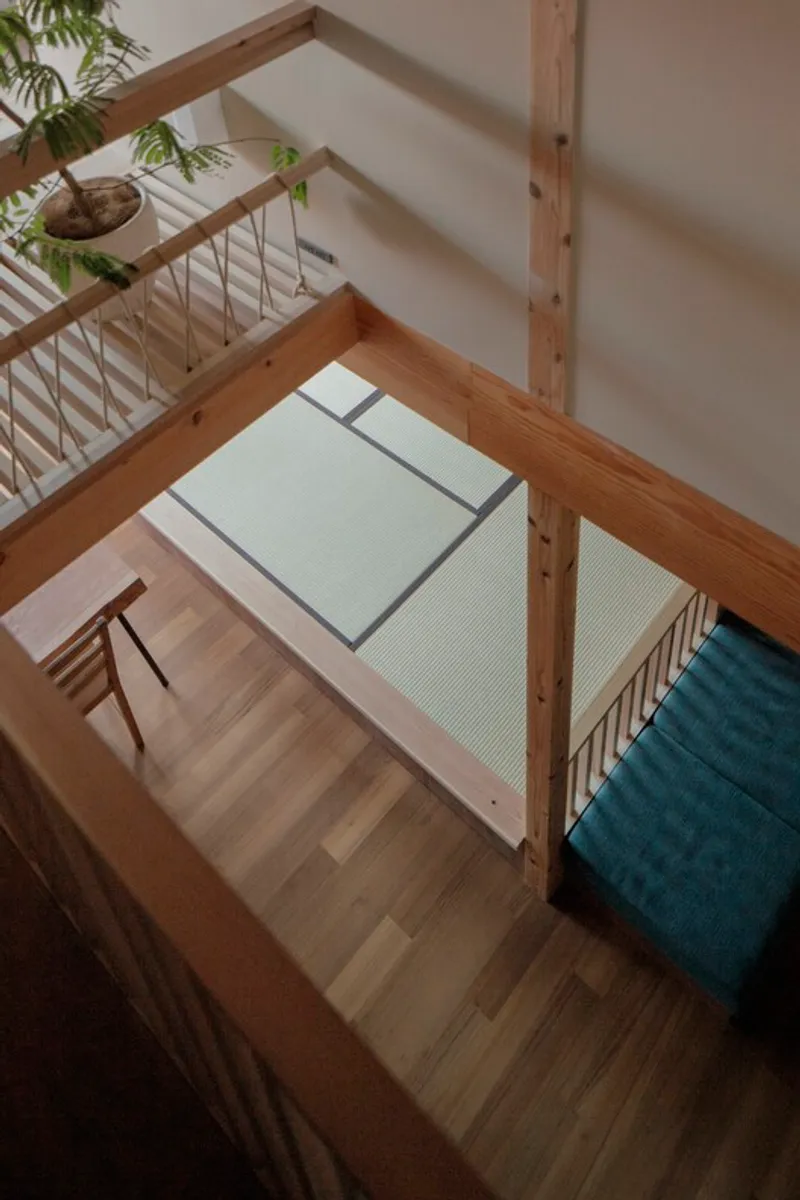
Ultimately, the House in Saidera is an exploration of how traditional wisdom can inform modern housing. It avoids excess and embraces simplicity, focusing on functionality, adaptability, and material honesty. Rather than replicating historical forms, the project distills their essence into a contemporary language, offering a new model for everyday living: one that is modest, efficient, and deeply rooted in cultural values.
All the Photographs are works of Benjamin Hosking


Popular Articles
Popular articles from the community


FCC Arquitectura Expands a Portuguese Granite House with a Board-Marked Concrete Wing
In Portugal, JV House pairs a cleaned-up whitewashed and granite dwelling with a timber-shuttered concrete extension, courtyards and a garden pool.


Singing Woman: An Opera House That Performs Before the Curtain Rises
Ovidiu Cristian Pavel's conceptual opera house translates Estonia's choral identity into a sculpted waterfront landmark facing the Baltic Sea.

The Amber Palace Opera: A Geological Fiction Surfaces on Tallinn's Baltic Waterfront
Pierre Brillard reimagines a Baltic legend as a public landscape, opera house, and waterfront promenade rooted in Tallinn's coastal identity.

graciastudio Turns a Viewless Tijuana Lot Inward Around a Courtyard of Concrete, Timber and Trees
In Tijuana, Jorge Gracia's GA2 House stacks a timber-clad private floor over exposed concrete and replaces a missing view with a planted interior patio.

Similar Reads
You might also enjoy these articles

Cube Design Draws an Ecological Corridor Between Two Shenzhen Hills with the Nankai Building
Beside Shenzhen's container docks, the Nankai Building pairs stacked balconies with a climbing green screen to connect two hillsides across its height.

Praksis A and Studio Sted Bend a Red Timber Cabin Across the Granite of Norway's Southern Coast
On the southern Norwegian coast, a 105 m² cabin follows the rock on slender posts, pairing red cladding outside with pine, brick and plywood within.

David Ortega Stacks a Two-Story Mexico City Penthouse Around a Steel Stair and a Pergola-Shaded Roof Terrace
In Colonia Roma, a 300 m² penthouse uses oak joinery, a planted steel stair and a slatted roof pergola to make a new-build apartment feel like a house.

PARALELA and LB2 Thread a Public Walkway Through the Base of a Las Condes Residential Tower
In Las Condes, Santiago, the Hamlet Building gives its fenceless ground floor to a 70-metre wooded passage linking two streets and the metro.

Explore Architecture Competitions
Discover active competitions in this discipline

Challenge to reimagine the Iron Throne

Photograph architecture without architects

Illustrate the lost glory of Angkor Wat - Render Challenge

Design challenge to reuse E-waste
Comments (0)
Please login or sign up to add comments
No comments yet. Be the first to comment!