
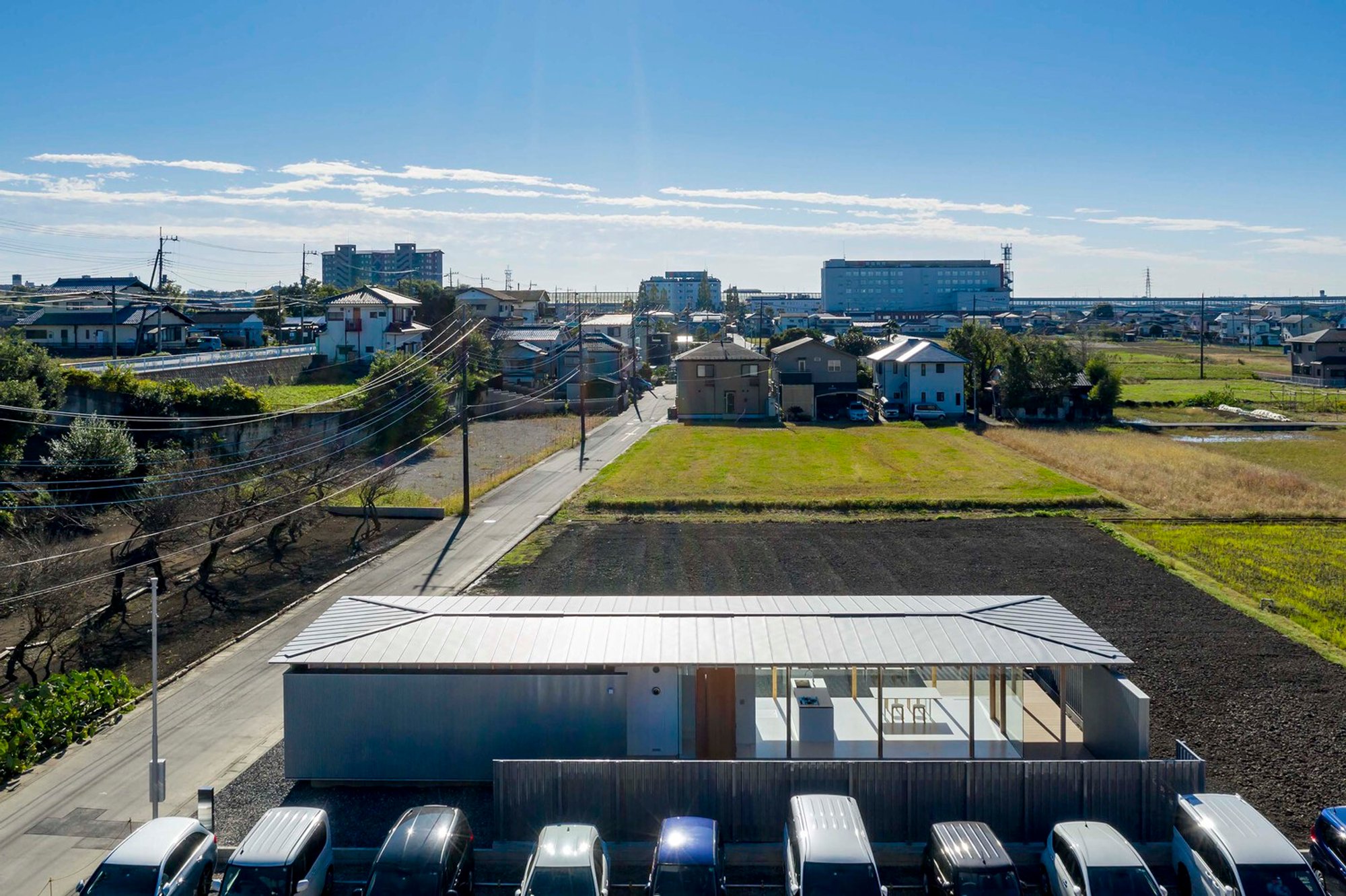
House in Sashiogi by Waro Kishi + K.ASSOCIATES/Architects
House in Sashiogi by Waro Kishi features a one-story open-plan design, double-skin façade, wooden structure, and seamless indoor-outdoor integration.

Nestled on the outskirts of Tokyo in Sashiogi, Saitama, this residence designed by Waro Kishi + K.ASSOCIATES/Architects embraces the fluid transition between countryside and urbanization. The 300 m² site, surrounded by agricultural fields and scattered buildings, offered an open canvas for rethinking Japanese residential architecture in a rapidly transforming environment.
Architectural Concept
The house explores the idea of a semi open-plan design, responding both to the rural present and the urbanized future of its surroundings.
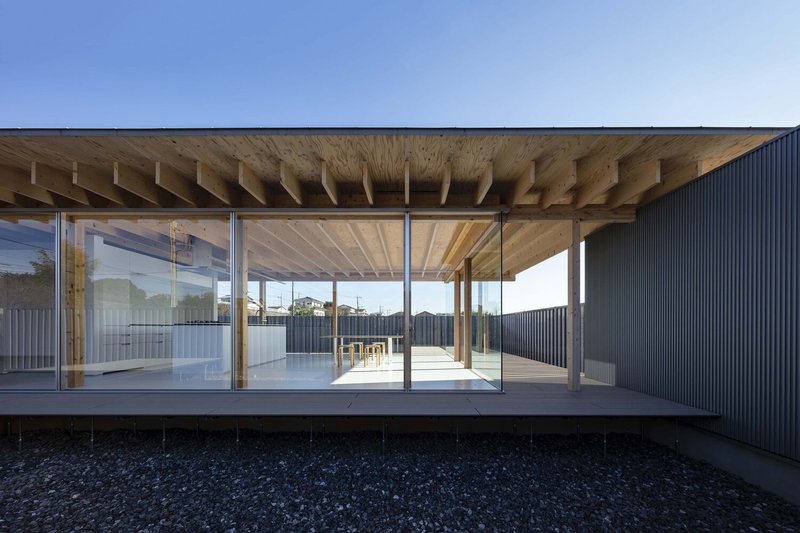
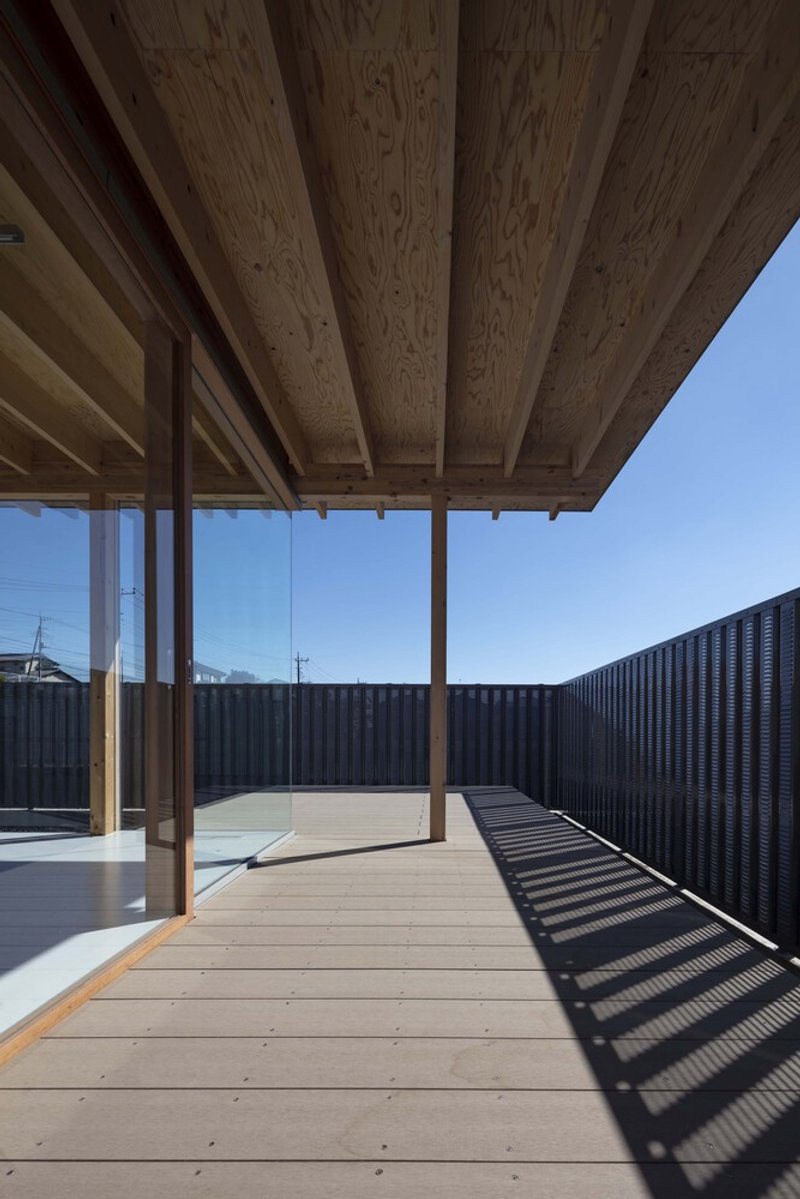
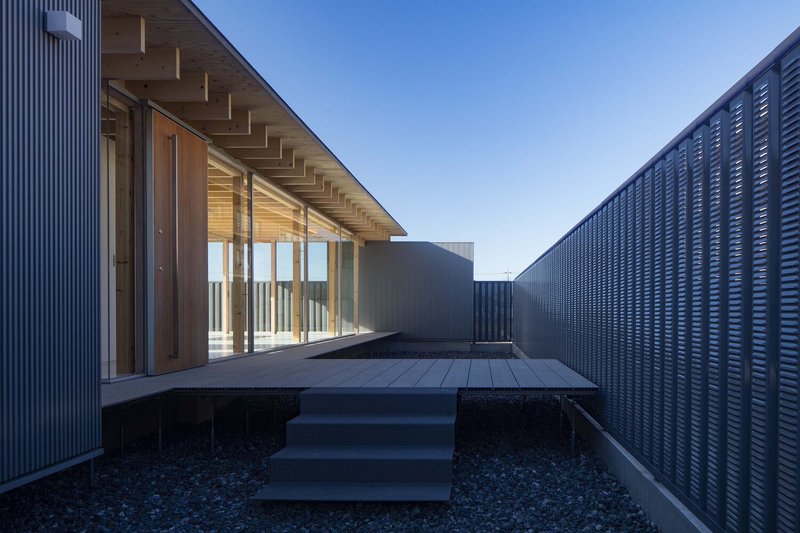
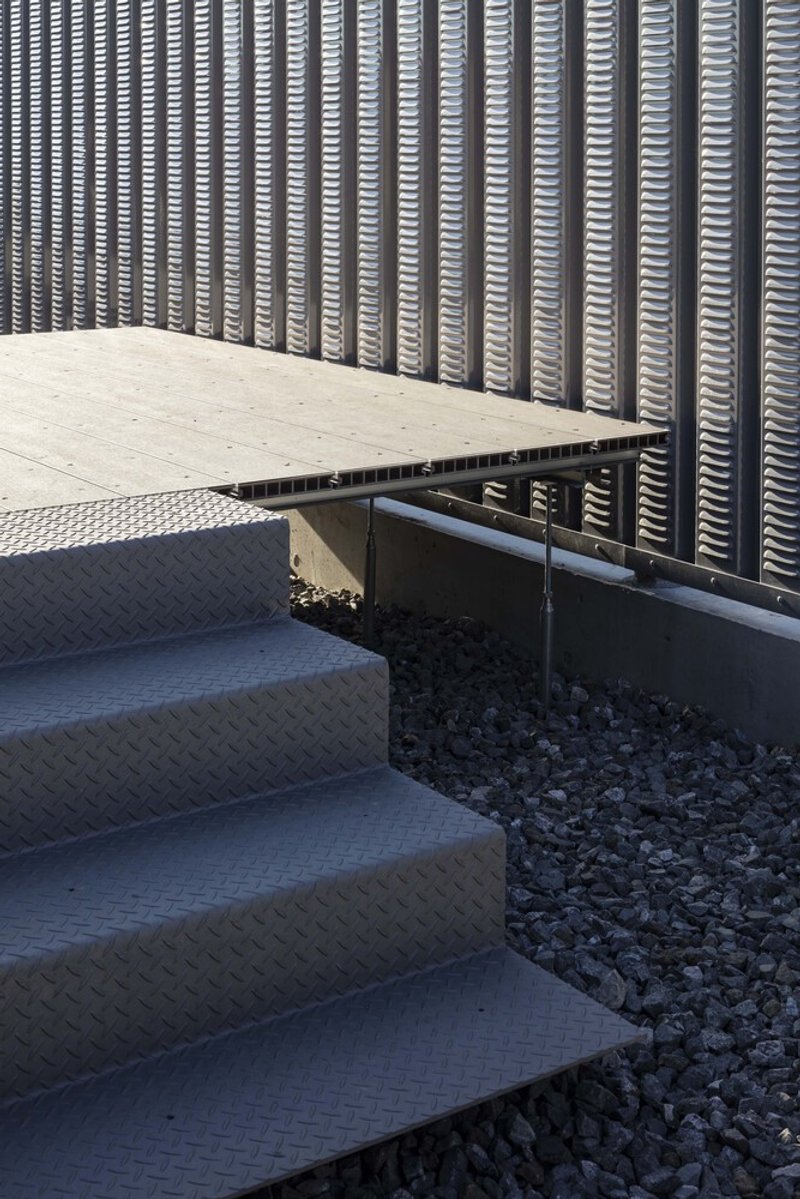
- Double-skin façade system: An outer semi-transparent metal wall partially shields the home from external views. Behind it, transparent glass walls create a “buffer zone,” blurring the boundaries between indoors and outdoors.
- Adaptability to urbanization: This layered approach creates a protective yet permeable envelope, ensuring the house evolves with its changing context while preserving privacy and openness.
Spatial Organization
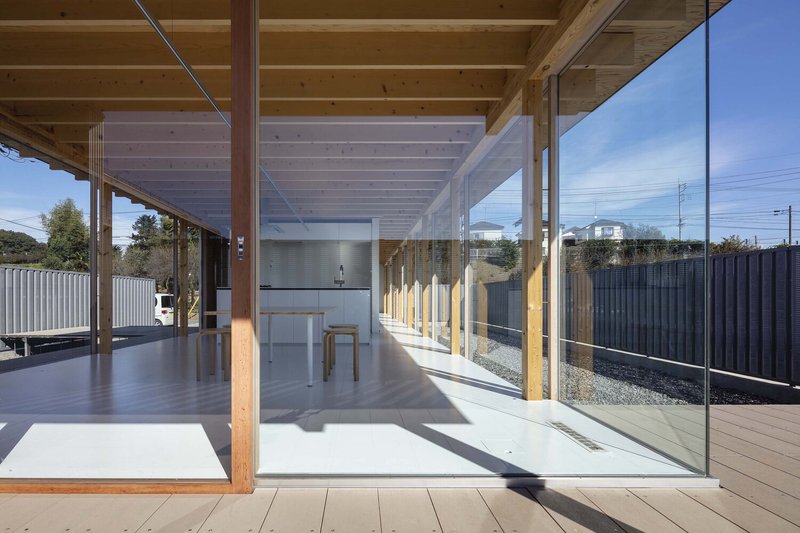
The residence is conceived as a one-story, open-plan house, emphasizing continuity and flexibility:
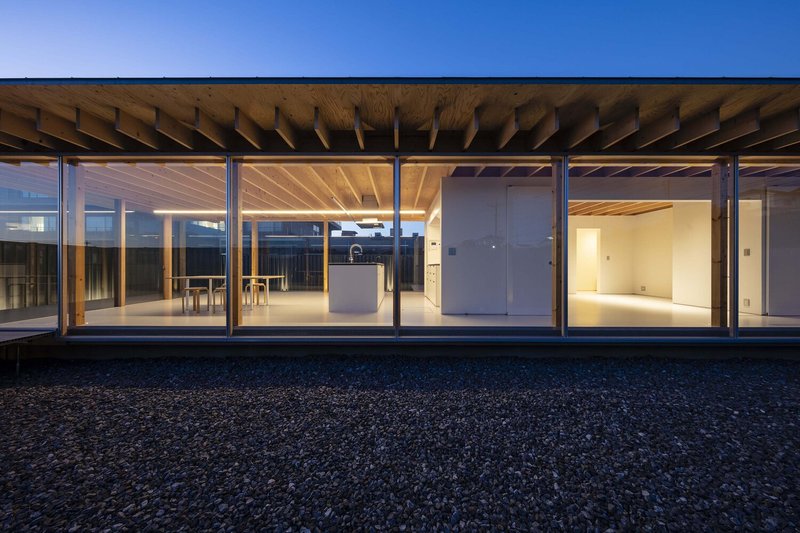
- Central living space: A wide, unobstructed layout fosters free circulation and interaction.
- Outdoor decks and in-between spaces: These act as transitional zones, reinforcing the connection with the landscape.
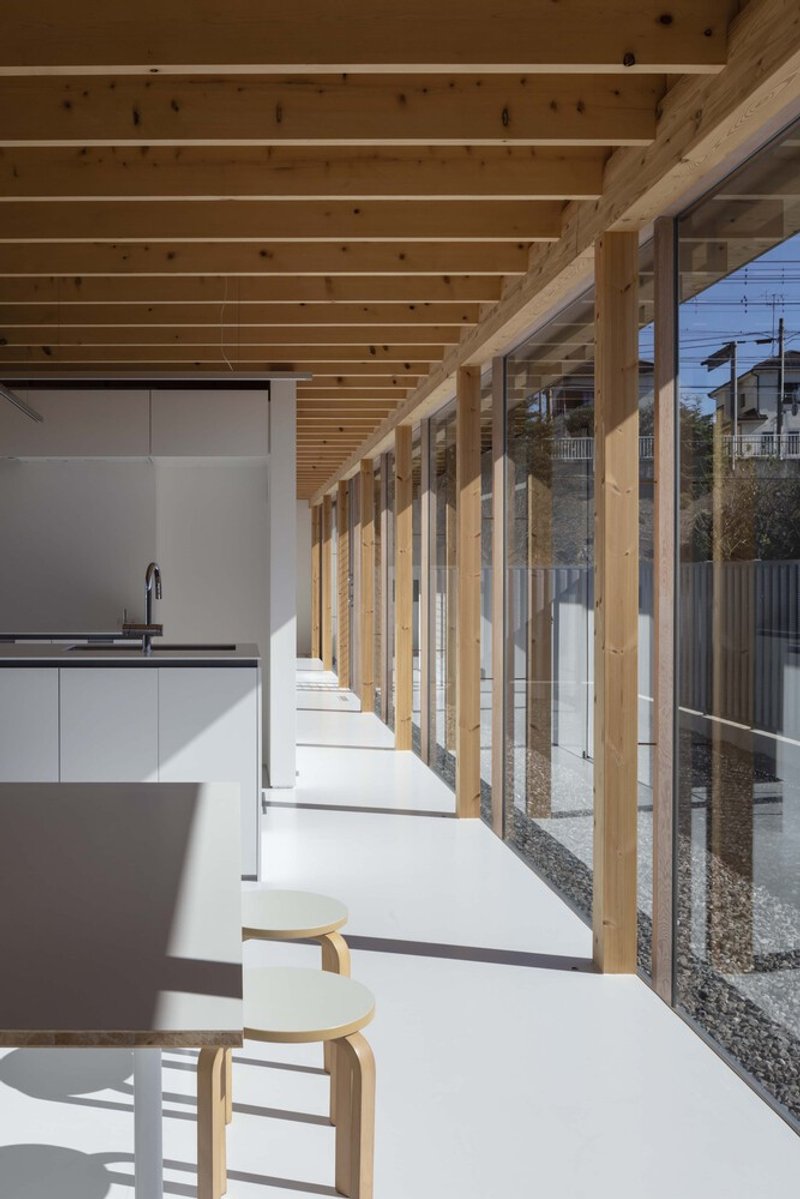
- Interior atmosphere: Contrasts emerge between warm natural wood and cool industrial materials, forming a balanced architectural composition.
Structural and Material Strategy
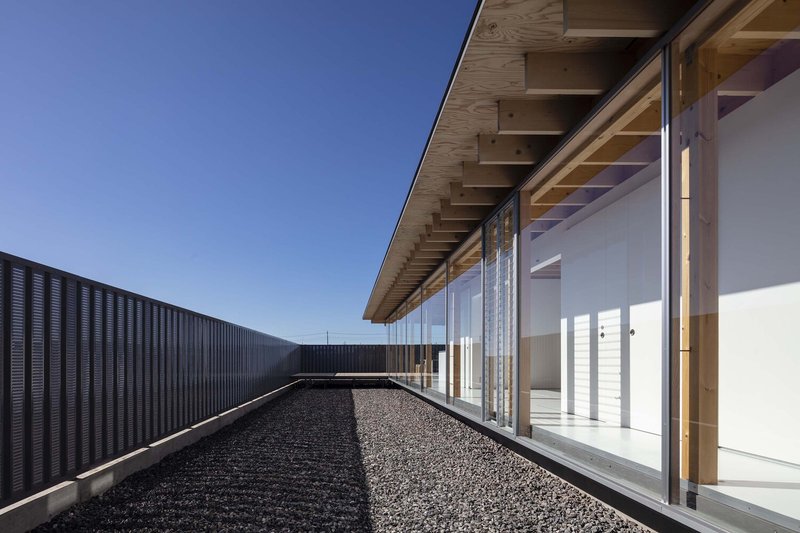
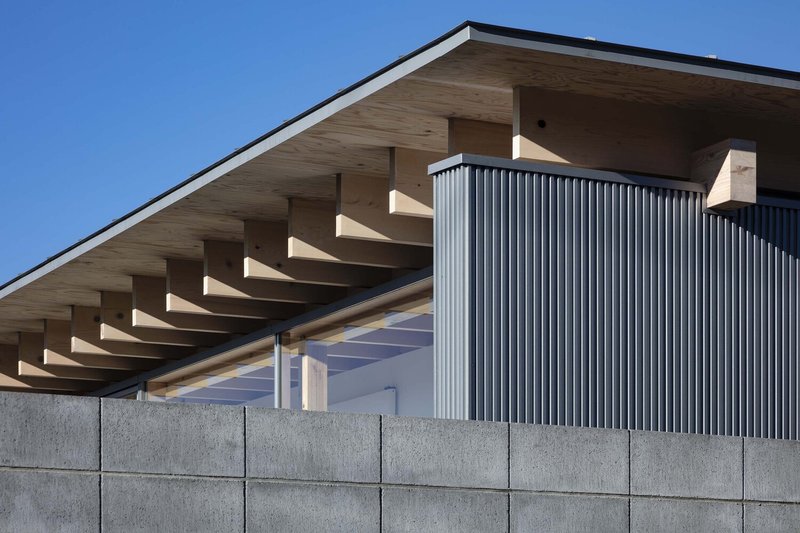
The house is primarily built using a wooden structural system with rafters as the main framework. Complementing this:
- Factory-made industrial materials provide durability and efficiency.
- Wooden elements bring warmth, intimacy, and connection to tradition.
- The result is a hybrid modern Japanese home where craftsmanship and industrial precision coexist harmoniously.
Architectural References
The design reflects inspiration from Richard Neutra’s Strathmore Apartment (1937) and the Case Study Houses of Los Angeles. Much like mid-century California, Tokyo’s suburban landscape is undergoing rapid transformation. The architect imagines this project as a 21st-century Case Study House for Tokyo, where openness, adaptability, and integration with changing environments define contemporary living.
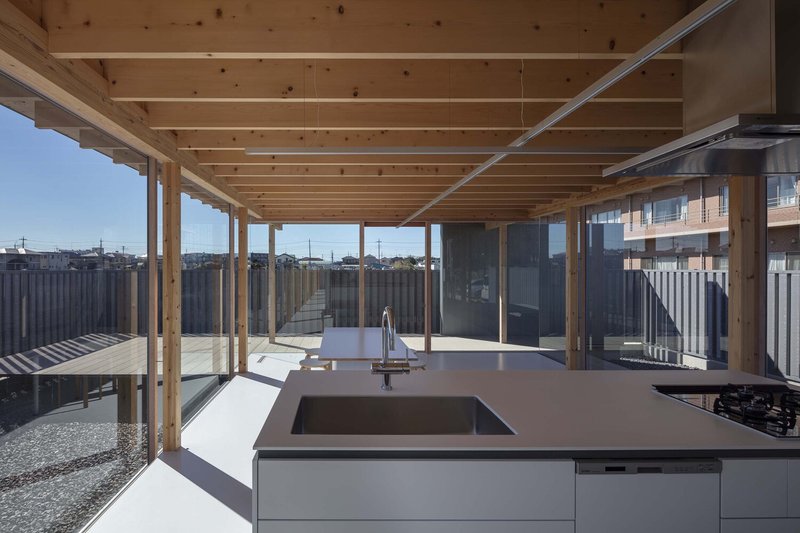
The House in Sashiogi is more than a residence—it is a prototype for future suburban Japanese homes. By combining open-plan living, double-skin façades, and a dialogue between wood and industrial materials, the project redefines what it means to live between tradition, landscape, and urban growth.
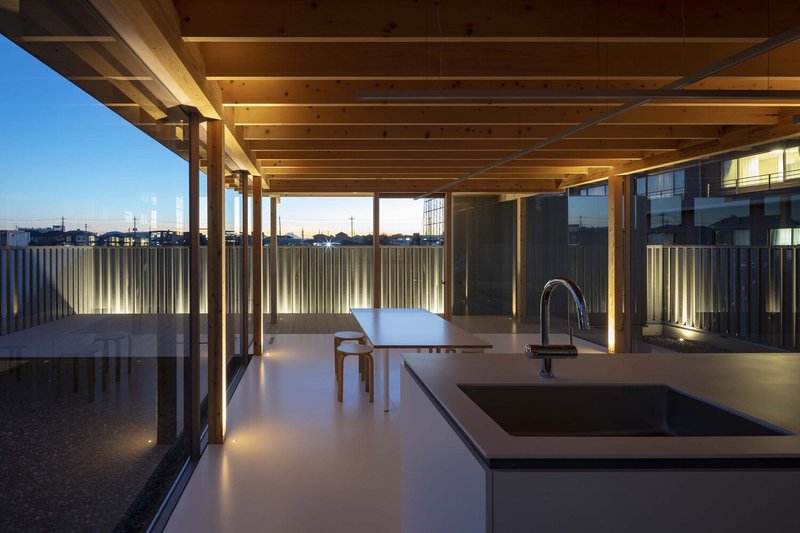
All Photographs are works of Shigeo Ogawa




Popular Articles
Popular articles from the community

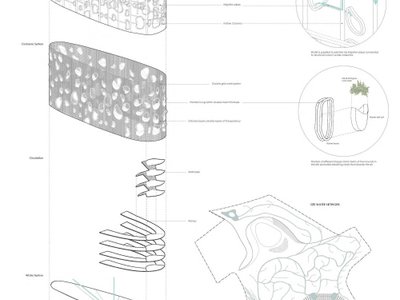
Biophilic Architecture and Regenerative Stadium Design: Biophilia Lagos by Rachel George
A regenerative stadium in Lagos transforms landfill into a living ecosystem through biophilic architecture, waste reuse, and environmental healing.

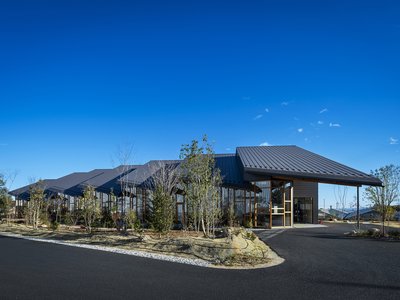
20 Most Popular Office Building Projects of 2025
From biophilic workspaces in India to net-positive energy offices in New Delhi, 20 office building projects that defined architecture in 2025.

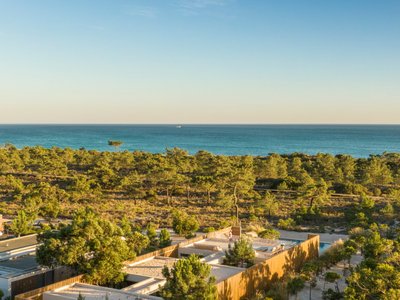
BICA Arquitectos Buries a Coastal Home in a Man-Made Dune on Portugal's Tróia Peninsula
A 300-square-meter house of timber, sand mortar, and travertine dissolves into the dune landscape it helped regenerate on the Alentejo coast.
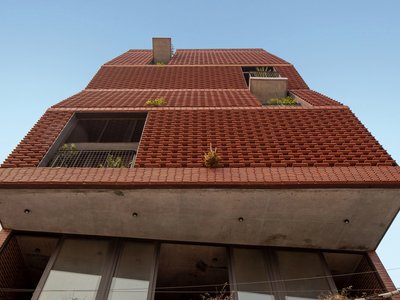
H&P Architects Stack a Vertical River of Brick and Greenery in Hanoi
A perforated terracotta tower in Dong Anh channels water, light, and air through eight staggered levels of domestic life.


Similar Reads
You might also enjoy these articles
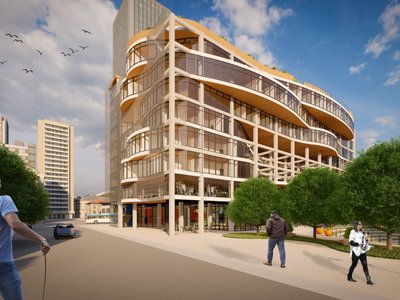
Olio Towers: A Mid-Rise for Performers That Fuses Housing, Rehearsal, and Stage
Located blocks from Houston's Theater District, this modular tower stacks living units around a central performance atrium.

Oasis: Modular Green Housing Carved into Dhaka's Urban Fabric
A shortlisted Plugin Housing entry reclaims unauthorized settlements in Dhaka with stepped concrete volumes, green roofs, and ventilation-driven design.

Black Hole: A Floating Megastructure for the Post-Physical Era
Emiliano Mazzarotto envisions a spherical, self-scaling arena where e-sports, digital hotels, and holographic stadiums replace traditional public space.
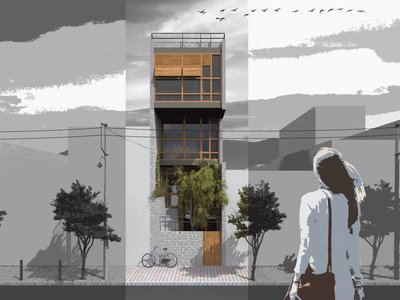
Compact & Sustainable Living in Piraeus: A Four-Level Family Home Built Around Light and Air
A narrow townhouse in one of Greece's densest port cities uses a central atrium and passive strategies to house three generations under one roof.


Explore Architecture Competitions
Discover active competitions in this discipline




The International Standard for Design Portfolios


The Global Benchmark for Architecture Dissertation Awards


The Global Benchmark for Graduation Excellence


Challenge to reimagine the Iron Throne
Comments (0)
Please login or sign up to add comments
No comments yet. Be the first to comment!