

House in the Dry by MRTN Architects: A Sustainable Rural Retreat in Tamworth
Sustainable rural home by MRTN Architects in Tamworth, featuring a courtyard design, native landscaping, and climate-responsive, drought-resilient architecture.


Location: Moore Creek, Tamworth, Australia Architects: MRTN Architects Completion Year: 2021 Photography: Anthony Basheer Landscape Design: SBLA
Nestled within the arid landscape of Moore Creek near Tamworth, House in the Dry by MRTN Architects reimagines rural Australian living through the lens of sustainability, climate resilience, and contemporary architecture. Built on a former grazing property prone to drought, the project transforms a parched and dusty terrain into an energy-efficient, modern home embedded in a revitalized native ecosystem.
Regenerating the Land with Architecture
When MRTN first visited the site, the land was suffering from the harsh effects of drought—dry, cracked earth, and sparse vegetation. This ecological challenge became the driving force behind the home’s design, which not only needed to withstand extreme weather but also contribute positively to the surrounding environment. Working in close collaboration with SBLA Landscape Architects, the team reshaped the land with subtle contouring and introduced native grasses, trees, and regenerative plantings to restore the ecological balance.
A Courtyard-Centric Rural Home
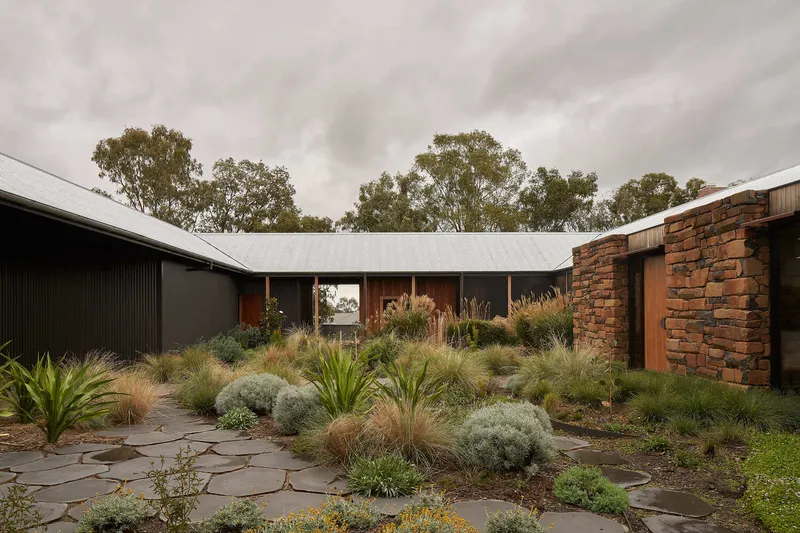
The architectural form of House in the Dry revolves around a central courtyard garden, enclosed on all four sides by the home’s living and utility spaces. This courtyard not only acts as a private oasis but also provides a microclimate that helps regulate internal temperatures and protects vegetation from harsh winds.
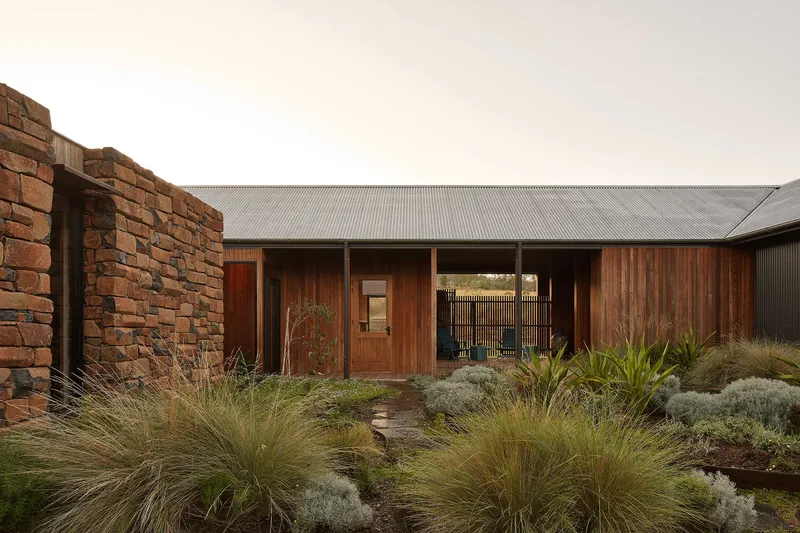
To the front, two utility sheds—linked by a shared roofline—anchor the home and extend into the residence on either side, framing the central courtyard in a square formation. The layout subtly references vernacular farm typologies while updating them with a contemporary, sustainable edge.
Materiality Reflecting Agricultural Context
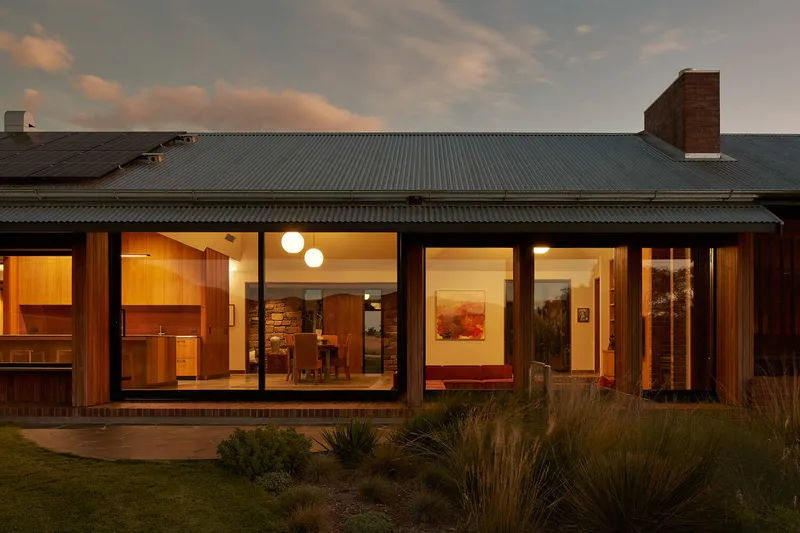
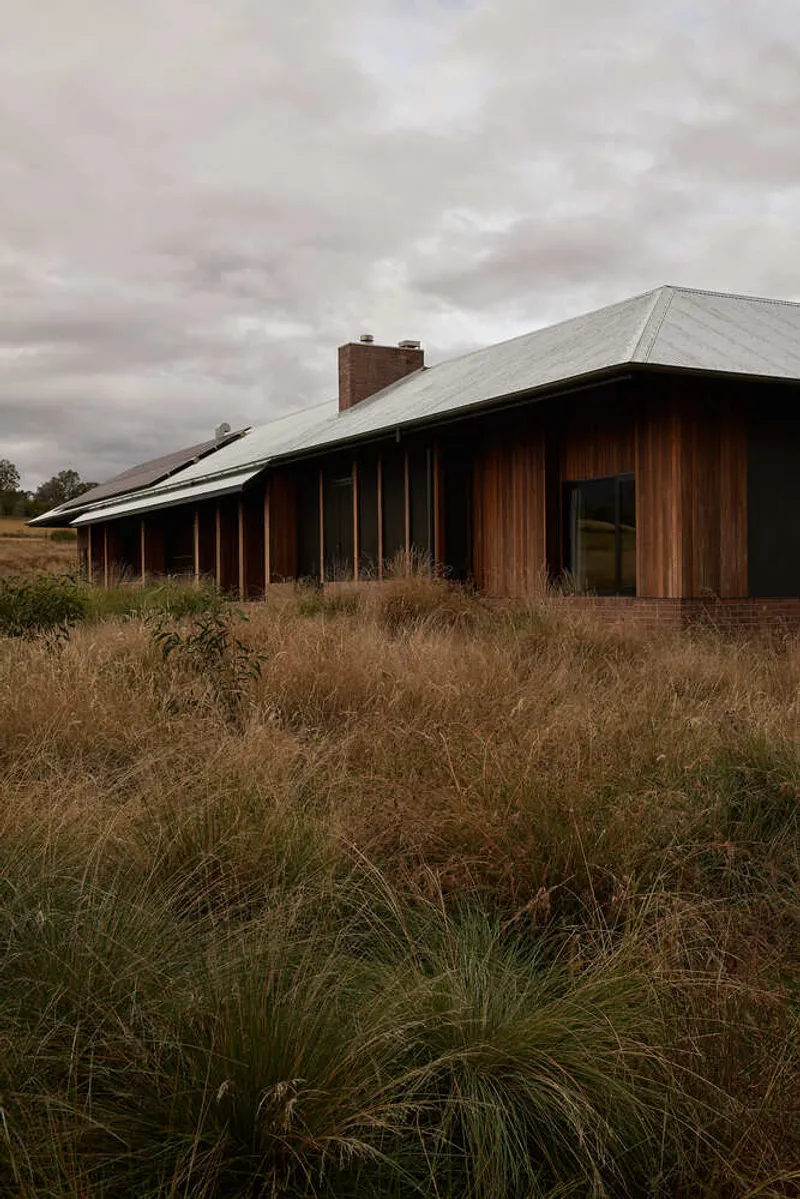
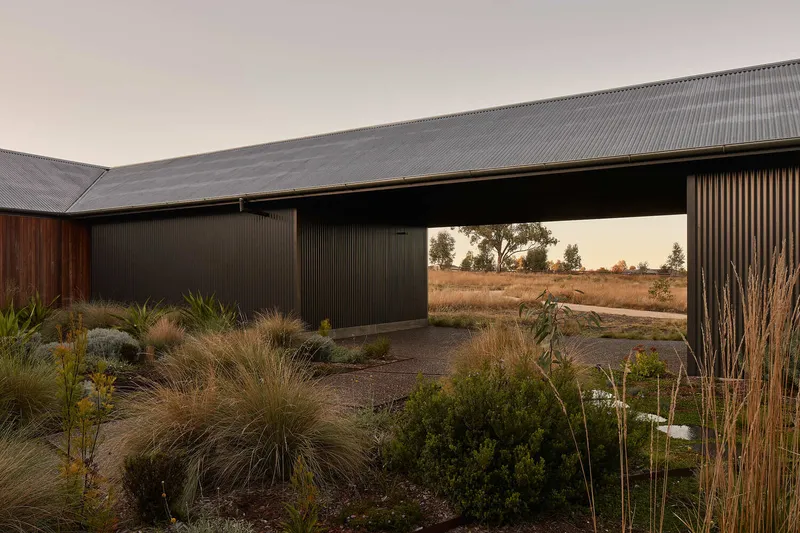
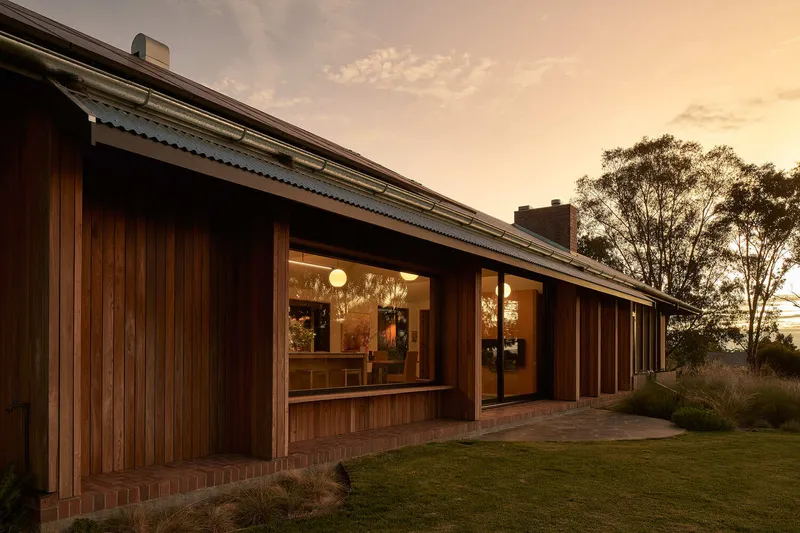
Rejecting the typical suburban brick-and-tile palette, MRTN Architects embraced a rugged agricultural aesthetic. The home features a muted material palette designed to blend with the surrounding bushland: a dull silver metal roof, blackened metal sheets, and rich ironbark timber cladding. The design’s goal was to be recessive—allowing the home to recede into the landscape rather than dominate it.
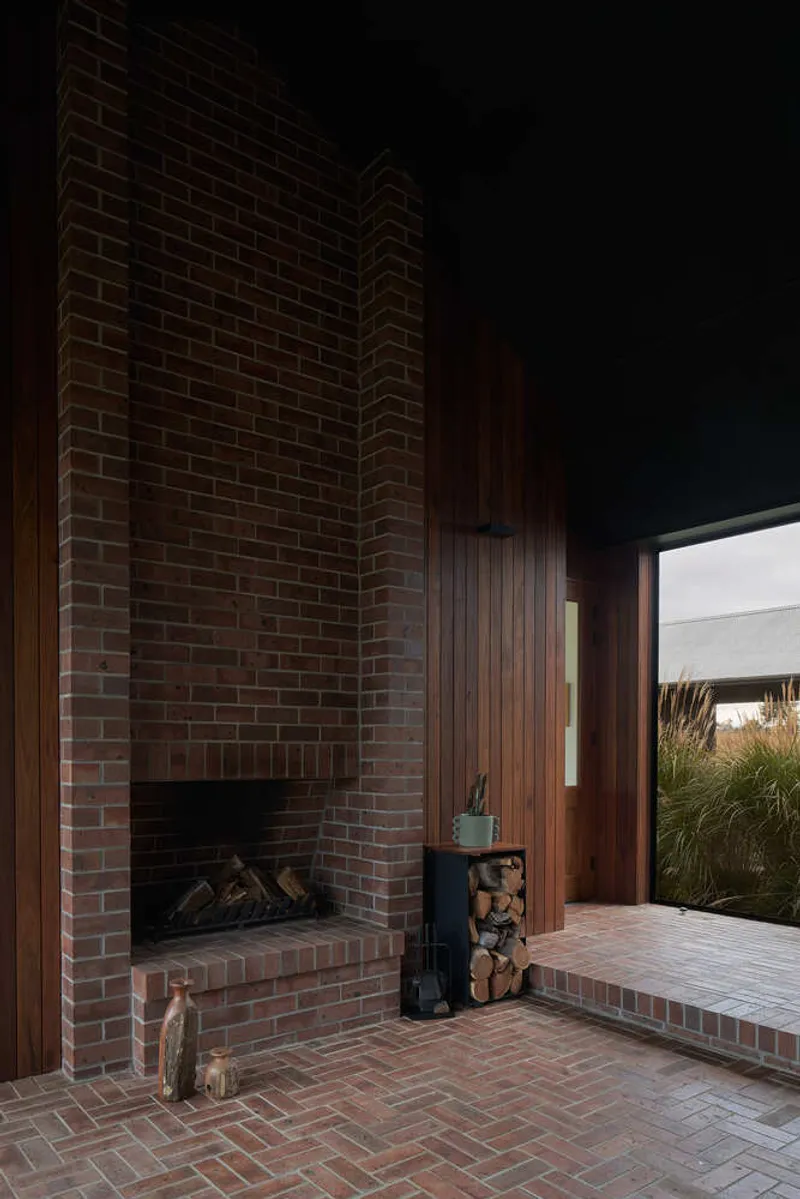
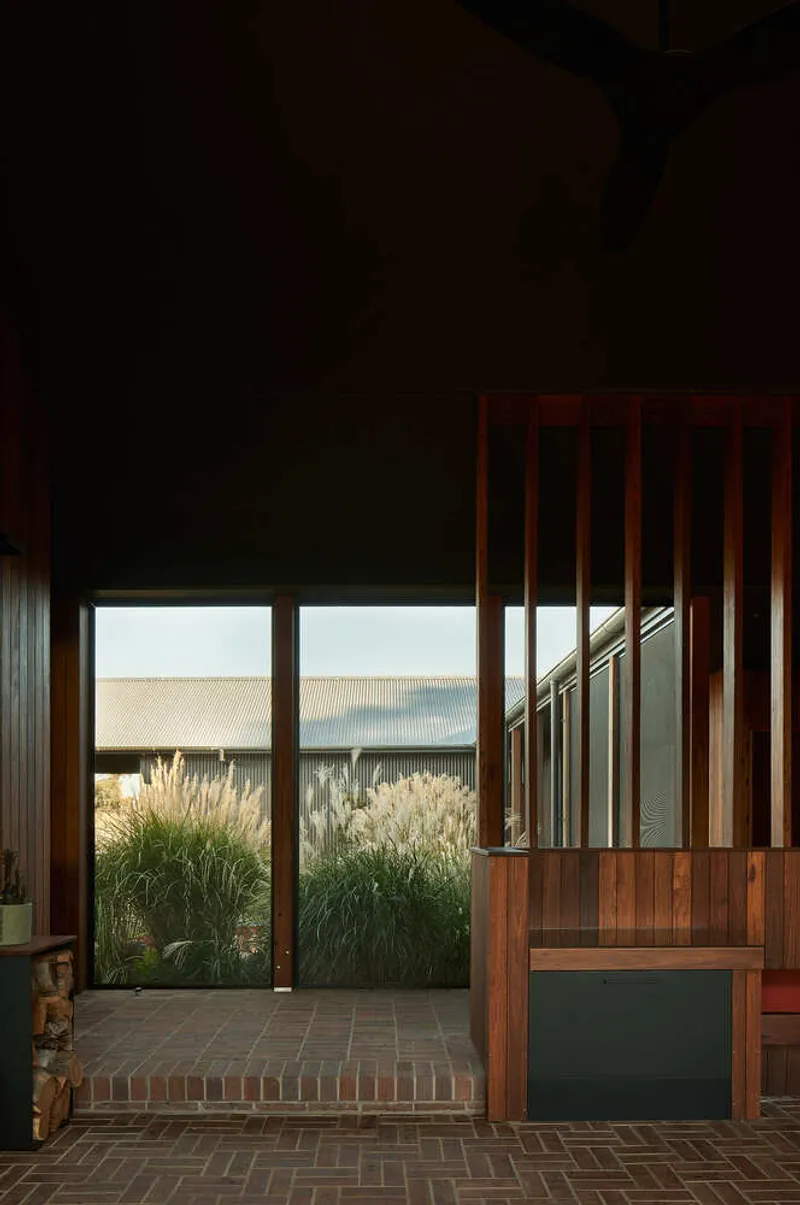
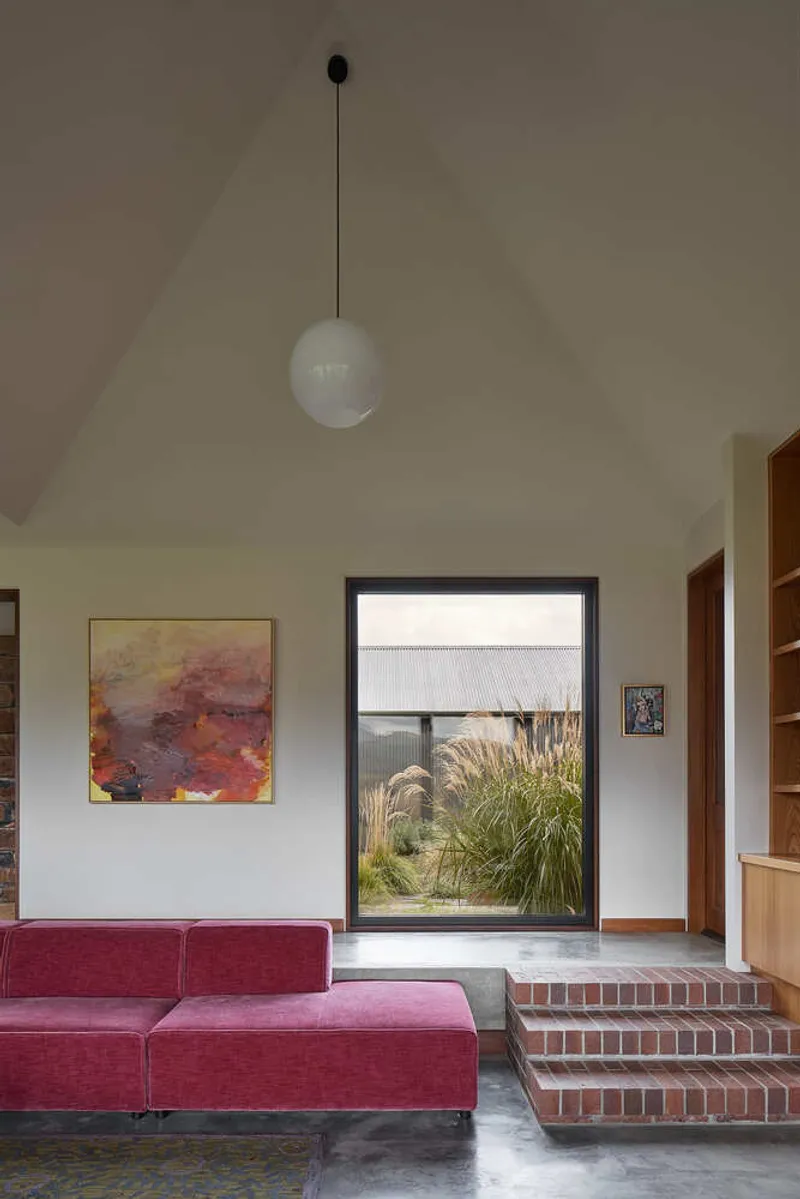
Interior finishes are differentiated by use and exposure: the indoor zones are refined with painted plasterboard, timber cabinetry in the kitchen, and tiled bathrooms, while semi-outdoor spaces feature brick, timber, and stone, reinforcing the connection to the surrounding natural environment.
Spatial Zoning for Comfort and Climate
The plan of House in the Dry divides functions into distinct zones connected by covered walkways—a climate-sensitive strategy echoing breezeways found in Middle Eastern and Mediterranean architecture. At the heart is the open-plan kitchen, living, and dining pavilion, which seamlessly connects to both guest and main bedroom wings.
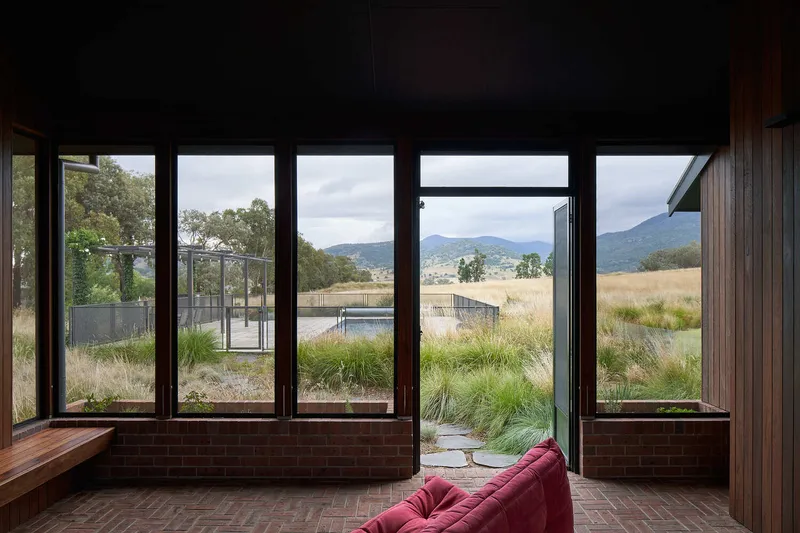
To the west, a guest zone with two bedrooms and a bathroom provides privacy and comfort. The eastern wing contains the main suite, including a bedroom, ensuite, and generous walk-in wardrobe. One of the most cherished areas is the outdoor room—an insect-screened, roofed lounge with a built-in fireplace, perfect for enjoying warm evenings while protected from the elements.
Climate Adaptation and Environmental Performance
Every element of the home was designed with climate adaptability in mind. The structure includes north-facing thermal mass, a solar panel array, and a comprehensive rainwater harvesting system. These sustainable systems allow the house to function efficiently through Tamworth’s hot, dry summers and cold winters, reducing dependency on external utilities.
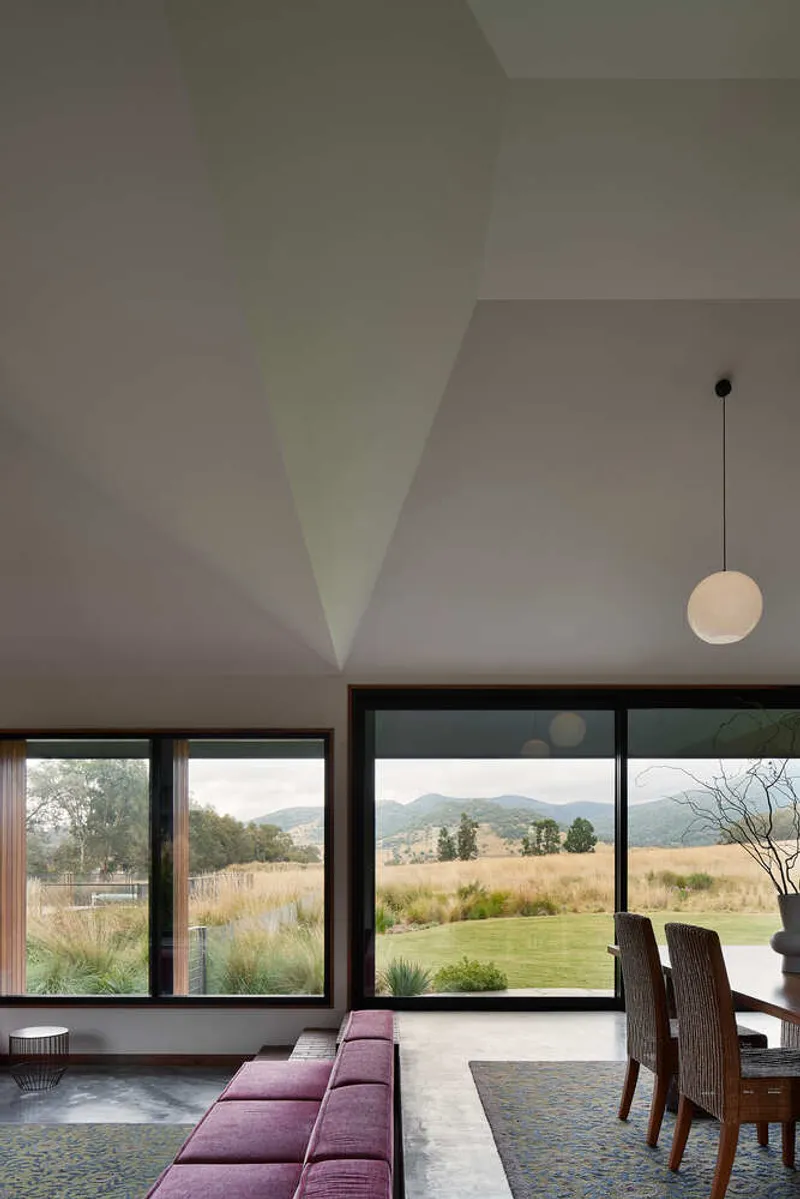
Covered walkways and deep eaves offer passive cooling, while the central courtyard aids in cross-ventilation, creating a breezy, shaded refuge in the center of the home. The elongated horizontal forms hug the land gently, maintaining a low profile that echoes the flatness of the surrounding plains and frames views toward distant foothills.
A Contemporary Vision for Rural Australian Living
House in the Dry is a compelling example of rural residential architecture that champions resilience, regeneration, and restraint. Rather than imposing itself on the land, the home works with it—reviving it, shading it, and offering shelter that’s deeply rooted in place.


Popular Articles
Popular articles from the community


GROUP A Strips a 1969 Rotterdam Harbor Headquarters to Its Frame and Wraps It in Timber Louvers
In Rotterdam's M4H harbor district, Ferro Offices reuses a 1969 frame, adds one timber storey and reaches BREEAM-NL Outstanding.

Juan García Correa, John González and Claudia Rueda Sink a Circular Amphitheater into a Manizales Engineering Building
On the La Nubia campus in Manizales, Colombia, the S1 Building folds labs and offices into a hillside of ramped lawns that double as a campus route.

David Ortega Stacks a Two-Story Mexico City Penthouse Around a Steel Stair and a Pergola-Shaded Roof Terrace
In Colonia Roma, a 300 m² penthouse uses oak joinery, a planted steel stair and a slatted roof pergola to make a new-build apartment feel like a house.

Architekt Andreas Gruber Scatters 23 Dark Timber Chalets Across a South Tyrolean Forest Edge
In Molini di Tures, Amonti Chalets breaks a resort into a hamlet of gabled timber houses, with parking, storage and services pushed into the slope.

Similar Reads
You might also enjoy these articles


Hodi-Mandai Geram
Project Function: Preservation and revitalization of the Intangible heritage and socio-spatial identity of the Hodi by Housing, Cultural Memory Center, Sacred Grove, landscape, local tourism economy


Olio Towers: A Mid-Rise for Performers That Fuses Housing, Rehearsal, and Stage
Located blocks from Houston's Theater District, this modular tower stacks living units around a central performance atrium.

Oasis: Modular Green Housing Carved into Dhaka's Urban Fabric
A shortlisted Plugin Housing entry reclaims unauthorized settlements in Dhaka with stepped concrete volumes, green roofs, and ventilation-driven design.

Black Hole: A Floating Megastructure for the Post-Physical Era
Emiliano Mazzarotto envisions a spherical, self-scaling arena where e-sports, digital hotels, and holographic stadiums replace traditional public space.

Explore Housing Competitions
Discover active competitions in this discipline

Challenge to reimagine the Iron Throne

Photograph architecture without architects

Illustrate the lost glory of Angkor Wat - Render Challenge

Design challenge to reuse E-waste
Comments (0)
Please login or sign up to add comments
No comments yet. Be the first to comment!