
House in the Trees by Ayako Arquitetura: An Elevated Home Immersed in the Brazilian Atlantic Forest
An elevated concrete-and-wood house floats among treetops, preserving the forest floor while framing immersive mountain and nature views.


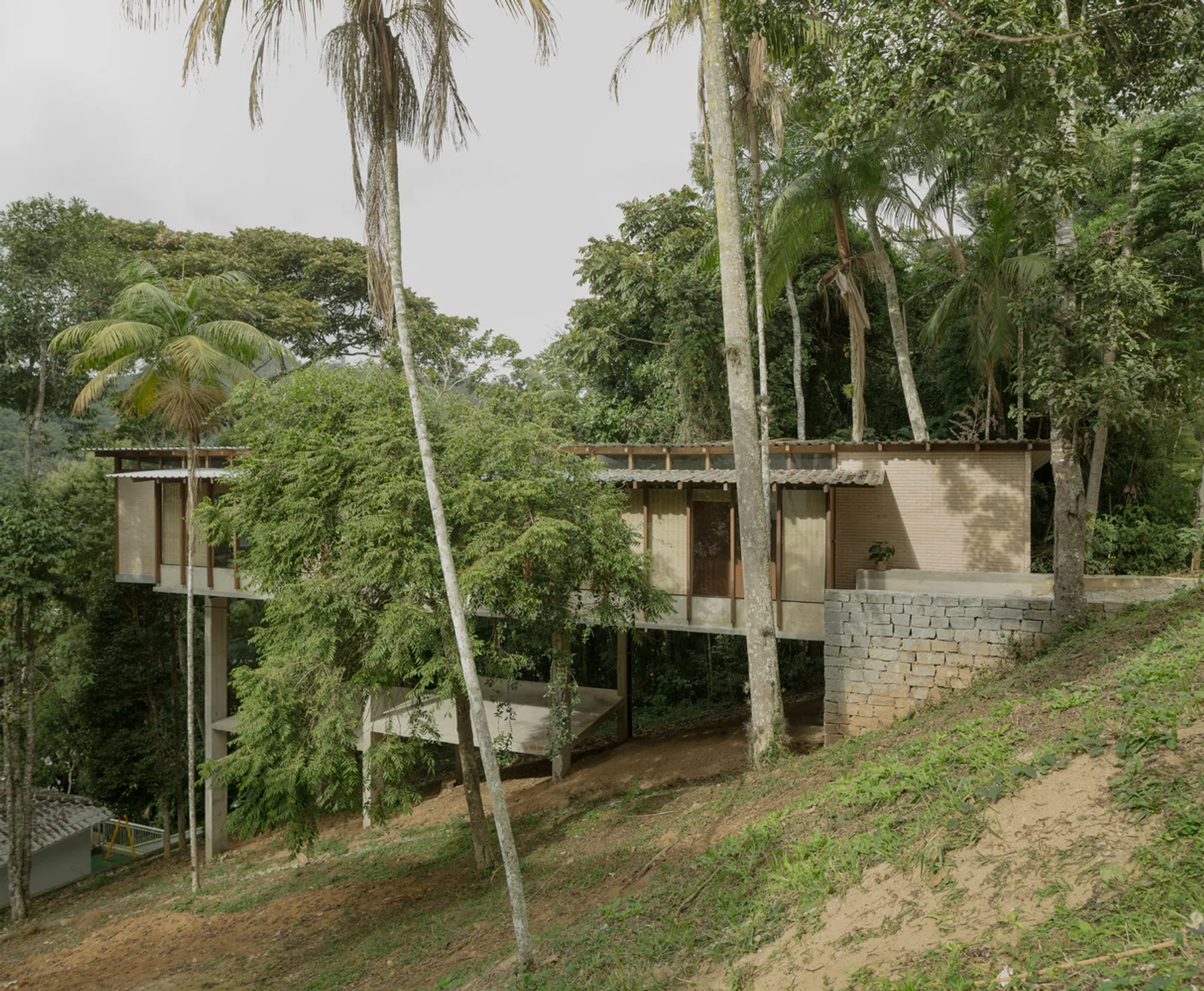
Located in Teresópolis, approximately 100 kilometers from Rio de Janeiro, House in the Trees by Ayako Arquitetura is a refined example of contemporary Brazilian residential architecture that responds sensitively to topography, climate, and surrounding nature. Designed on a narrow plot with a dramatic 10-meter elevation change, the 116-square-meter house reimagines domestic living as an elevated experience within the forest canopy.
The site is bordered by a protected natural reserve, where trees rise up to 30 meters tall, while expansive views open toward the mountainous landscape of the region. Rather than imposing itself on the terrain, the house adopts a light-touch architectural strategy, preserving the ground plane and allowing ecological systems to continue uninterrupted beneath it.
Elevated Architecture Inspired by a Pier
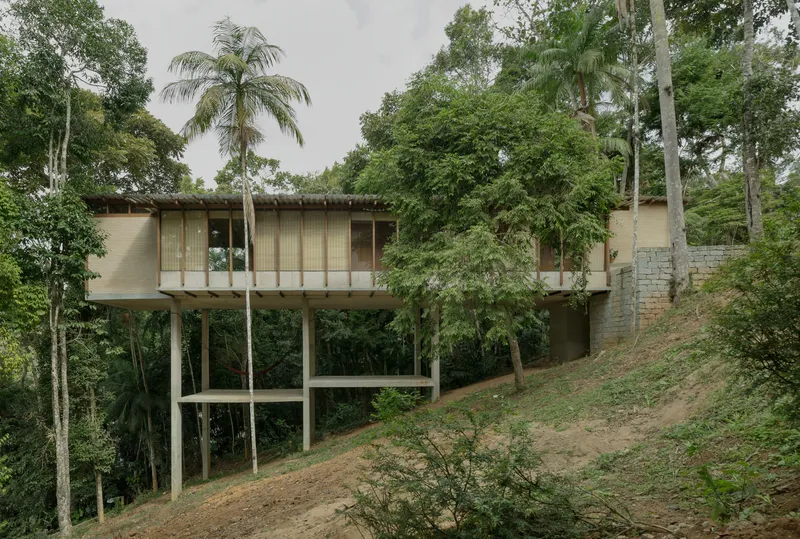
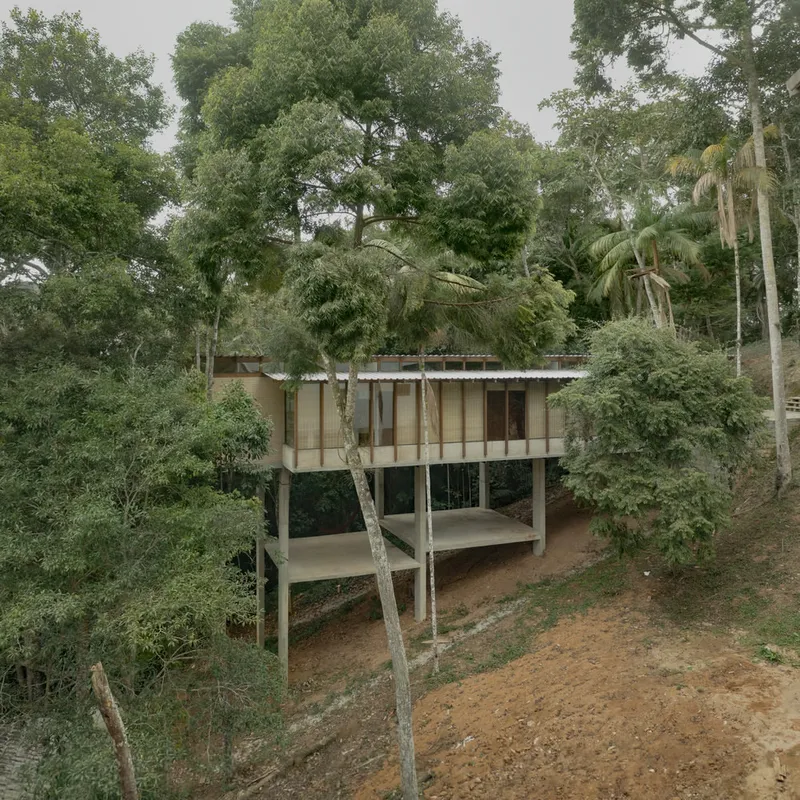
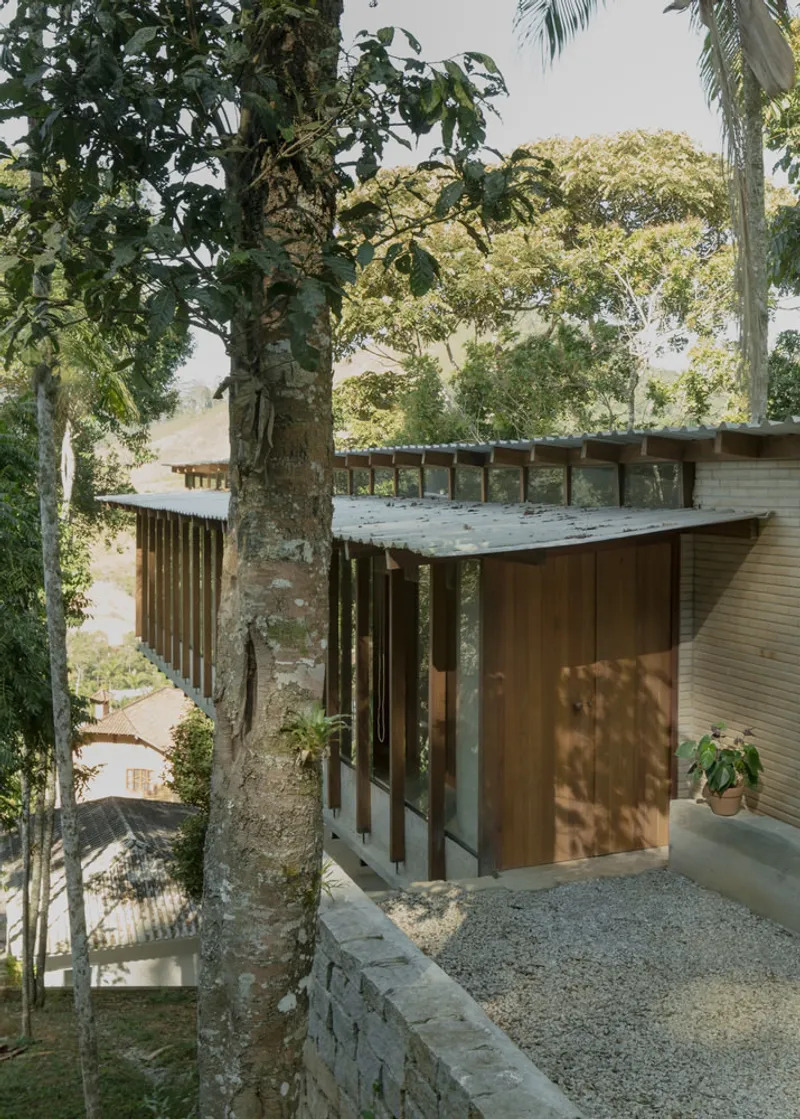
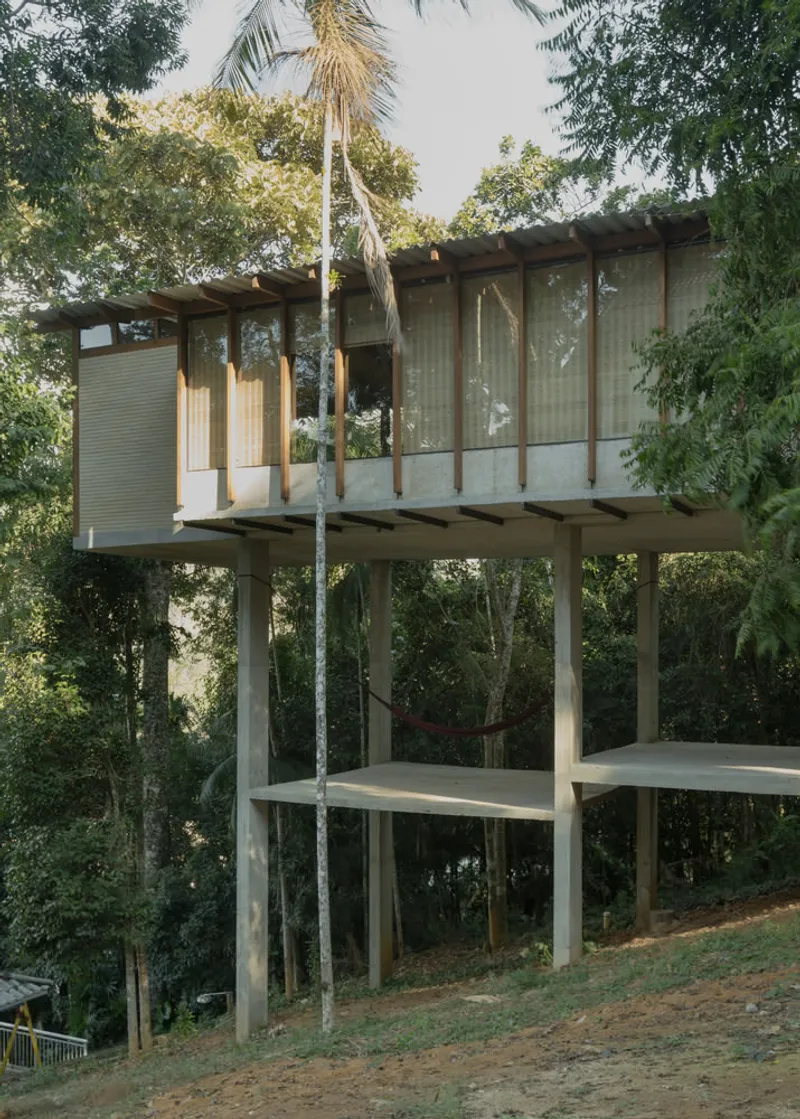
To minimize earth movement, reduce humidity exposure, and limit the need for stairs, the house is positioned one meter below the access level and lifted seven meters above the ground, forming a long, slender volume that recalls the logic of a pier. This elevated configuration allows sunlight, water flow, plants, and wildlife to pass freely beneath the structure, reinforcing the project’s environmental sensitivity.
In section, the house is organized into three distinct layers: – the free and permeable ground, – a series of intermediate aerial slabs with no fixed program, and – the main living volume, located at treetop height.
The strong horizontality of the architectural volume contrasts intentionally with the verticality of the surrounding vegetation. Slender concrete columns, measuring just 20 × 50 centimeters, support the structure and are stabilized by intermediate slabs, achieving both structural efficiency and visual lightness.
Spatial Continuity and Forest Views
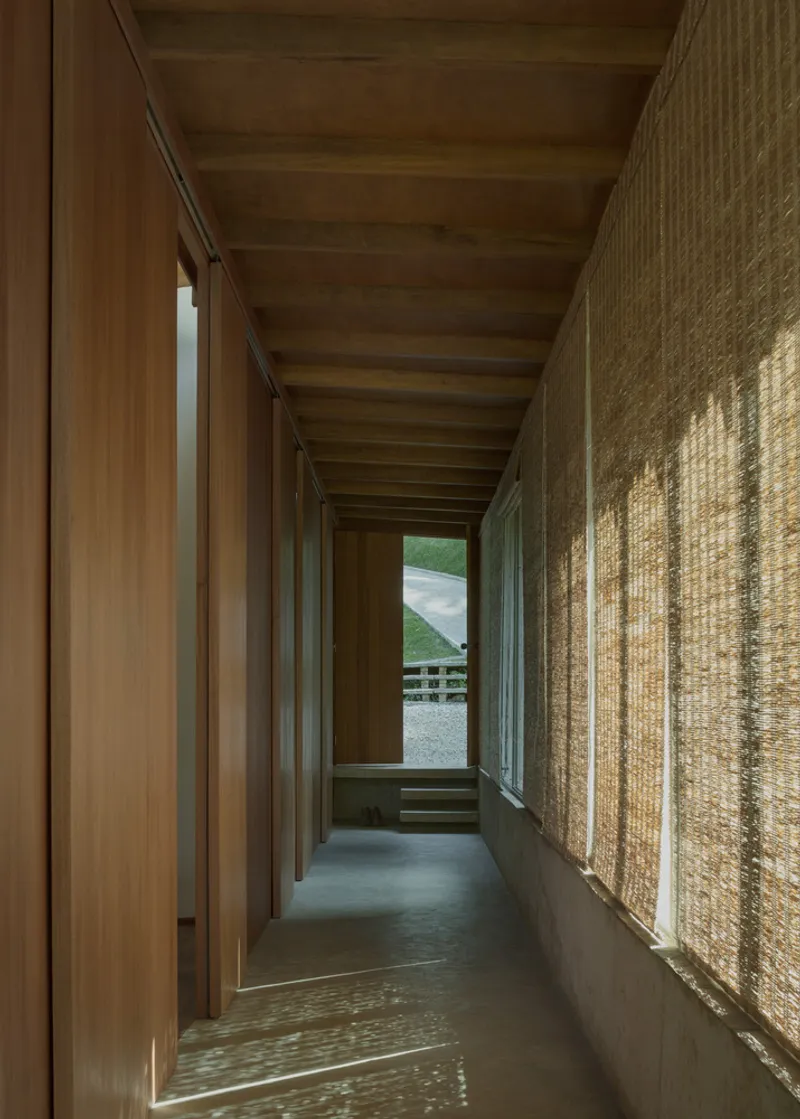
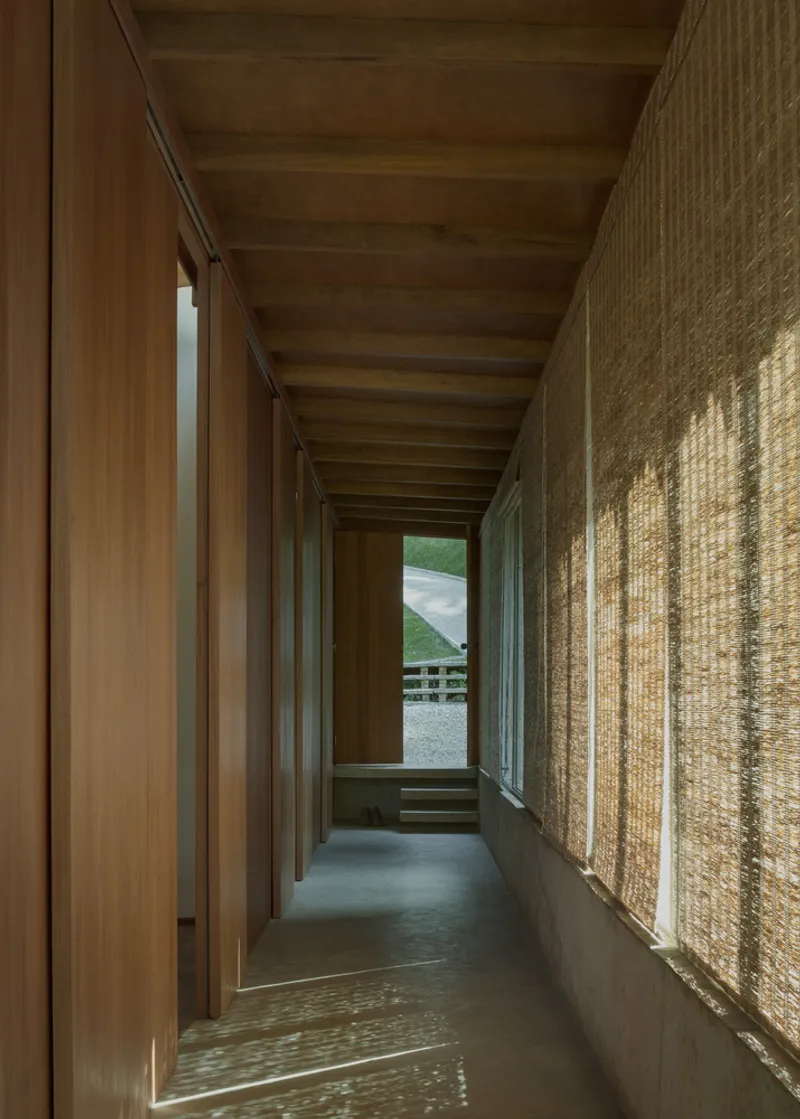
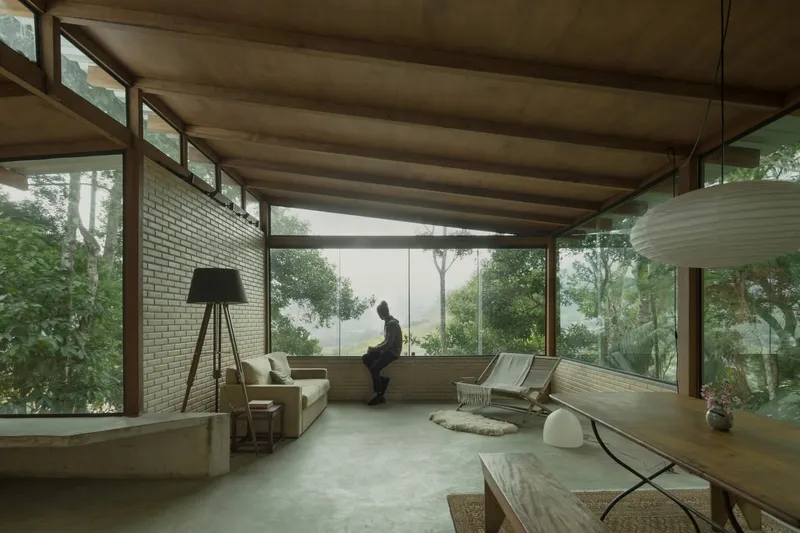
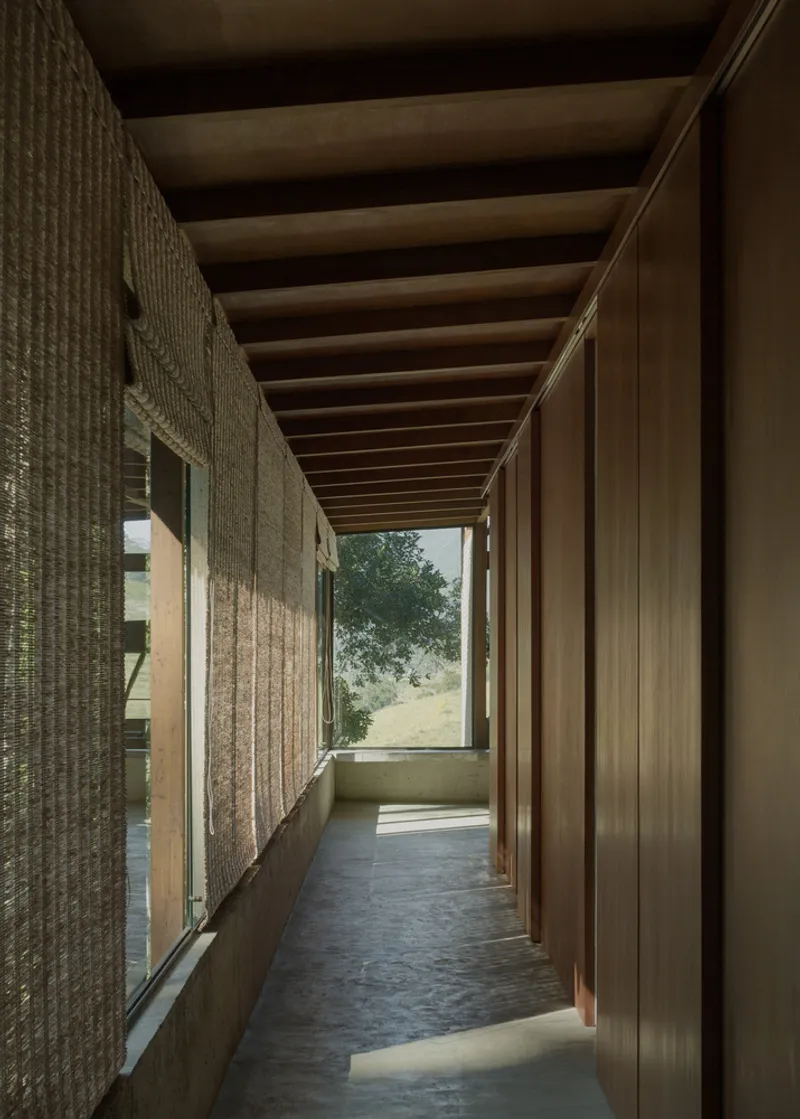
Inside, the house is structured around a linear gallery that acts as the primary circulation spine. This narrow access volume, only 1.5 meters wide, is defined by the rhythm of the wooden roof structure, composed of 19 modules at 80-centimeter intervals. Along one side, a fully glazed façade opens toward the forest, transforming circulation into an inhabitable balcony rather than a purely transitional space.
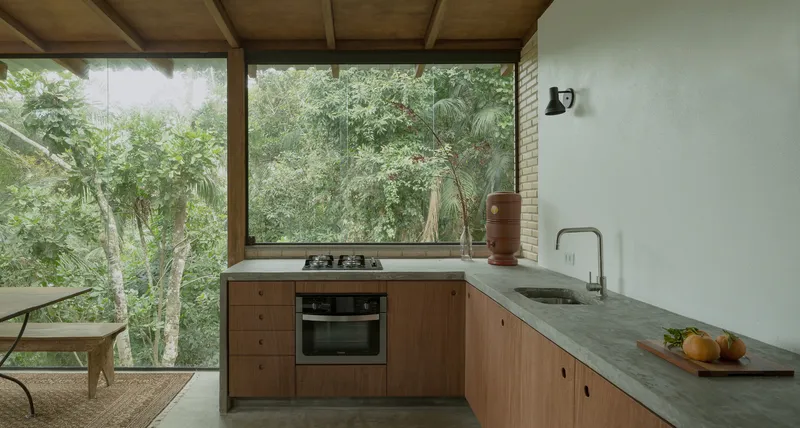
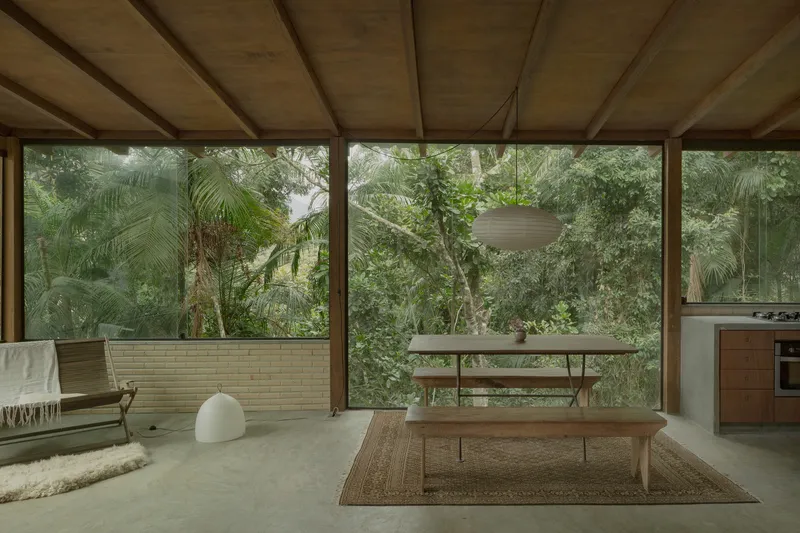
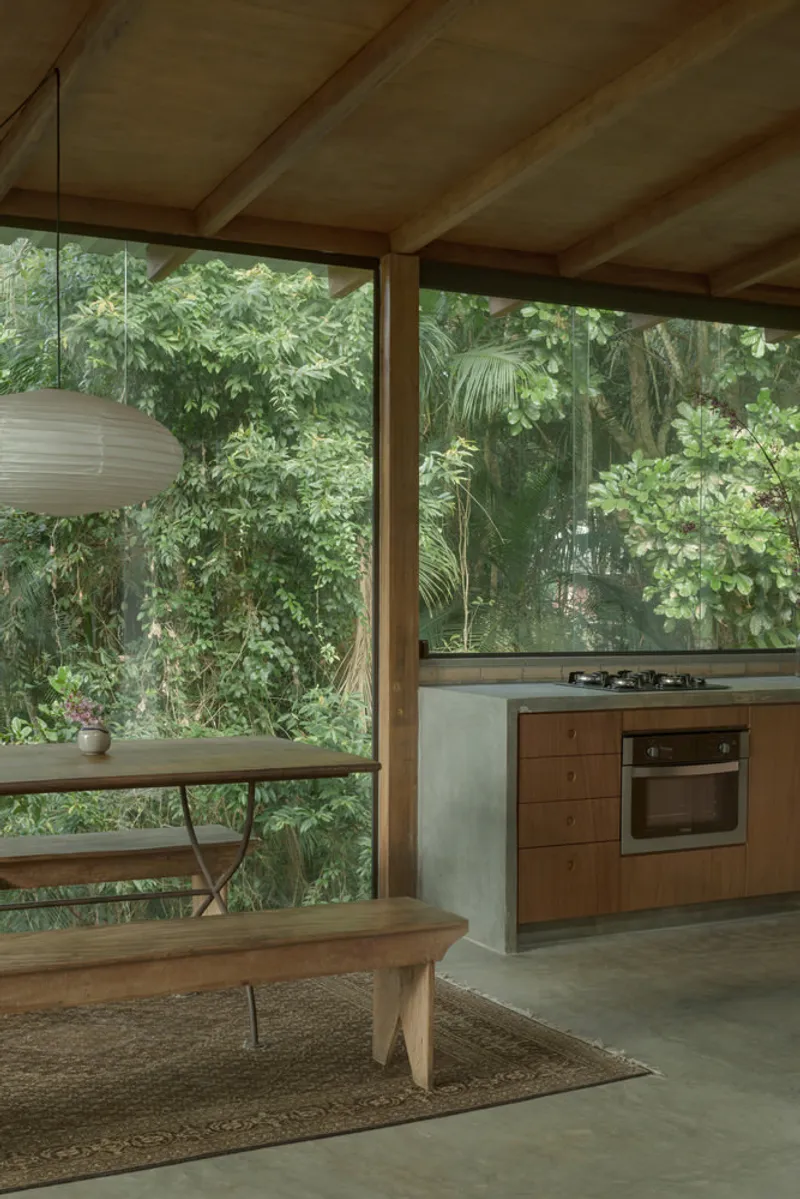
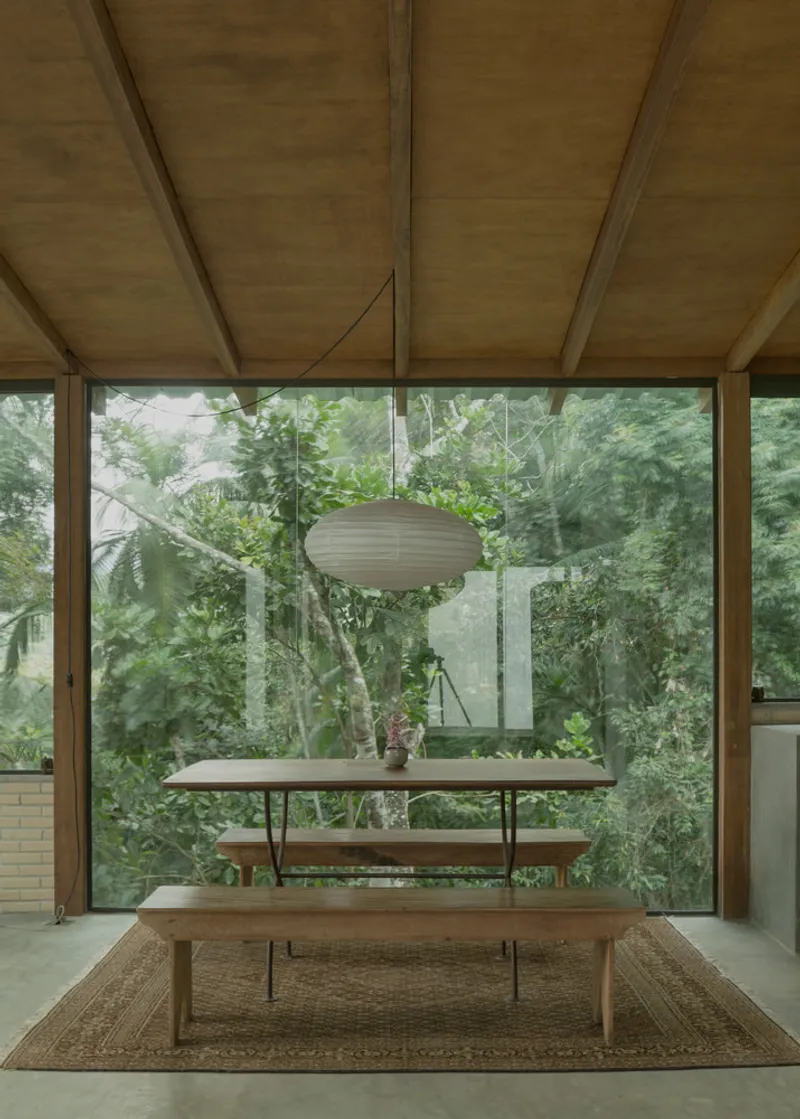
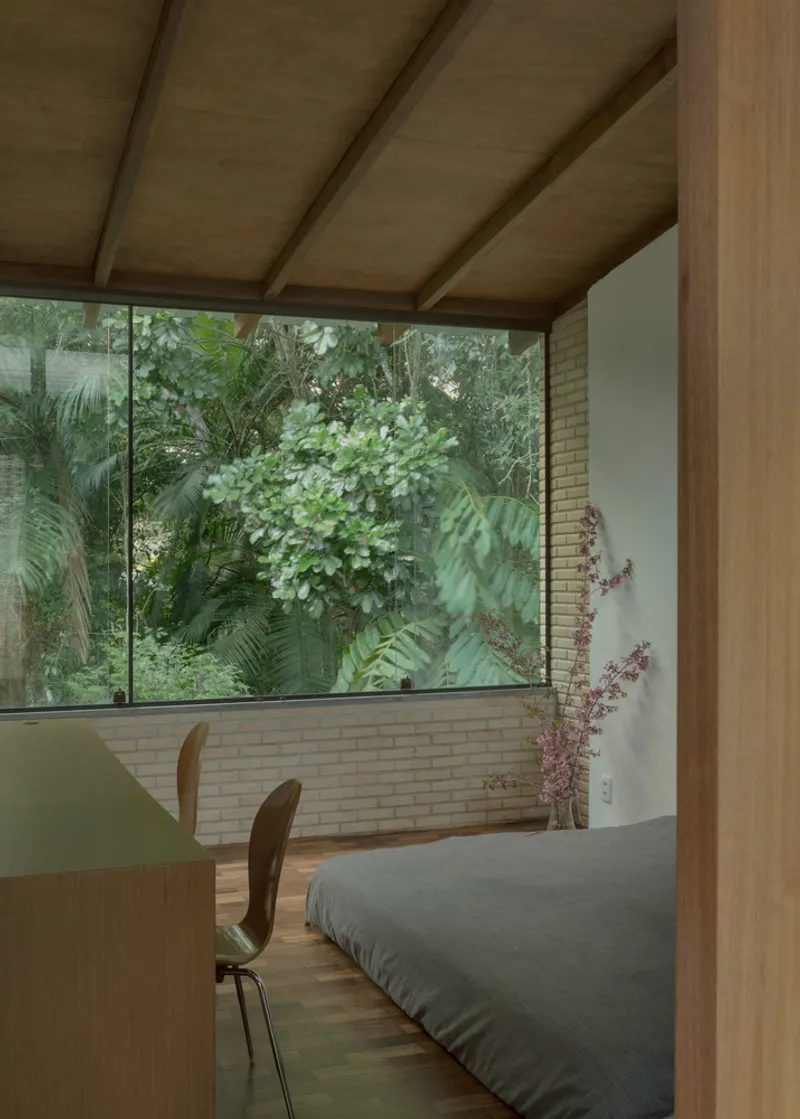
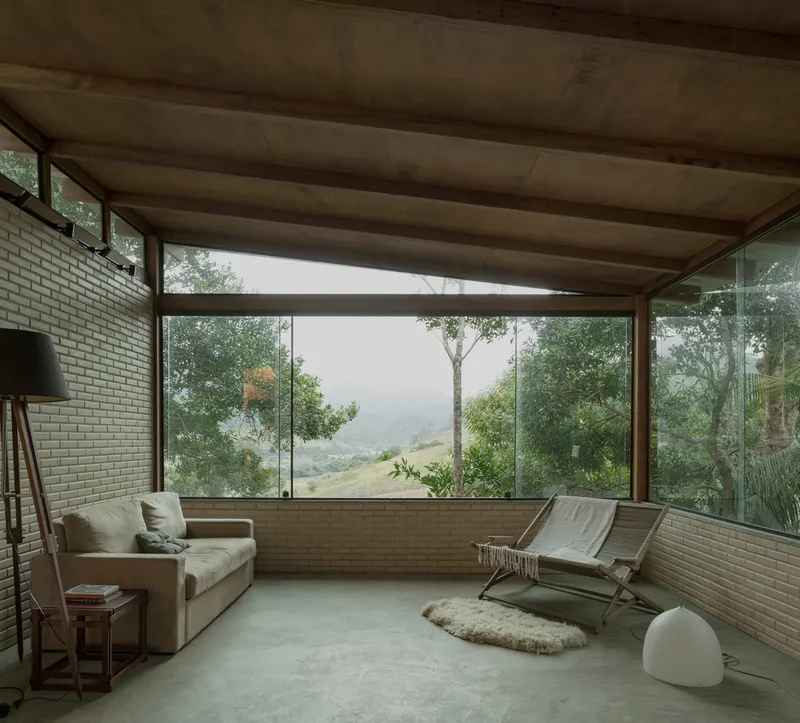
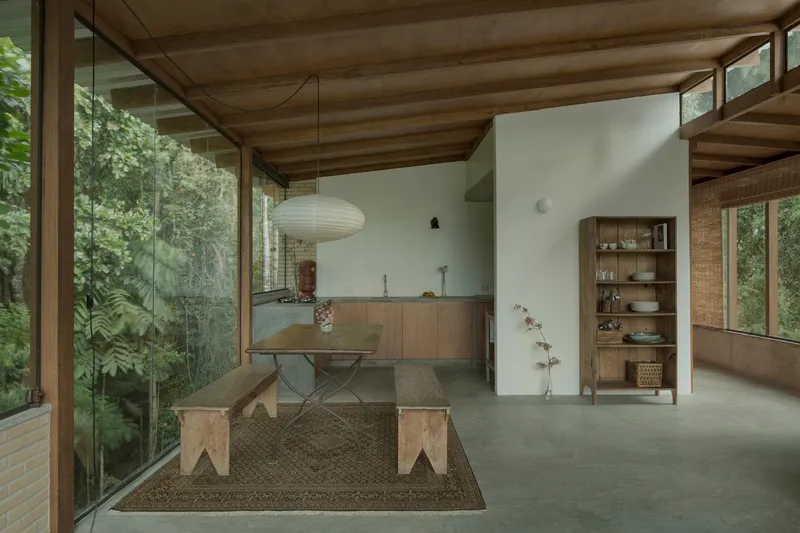
The living areas—including bedrooms, kitchen, living room, and bathrooms—are arranged transversely and enclosed by a plane of solid brickwork, which directs views toward the opposite boundary while providing privacy and thermal mass. Large windows frame the surrounding greenery at eye level, immersing daily life in the rhythms of the forest, where birds, woodpeckers, and squirrels are constant companions.
Light, Roof Design, and Material Expression
The roof connects the volumes transversely and is divided into two sloping planes, with a subtle 30-centimeter height difference between the circulation zone and the interior rooms. This sectional shift allows natural light to filter deep into the house while reinforcing spatial hierarchy. The width of each room follows the same modular logic as the gallery, creating a cohesive and disciplined architectural language.
From the interior, the boundaries between inside and outside dissolve through reflections of greenery and sky on the galvanized steel eaves, enhancing the sense of living among the treetops. The restrained palette of concrete, wood, brick, glass, and steel emphasizes durability, clarity, and a timeless connection to the landscape.
A Contemporary Forest Dwelling
House in the Trees is a compelling example of elevated residential architecture in Brazil, where structural ingenuity, environmental responsibility, and poetic spatial design converge. By freeing the ground, framing nature as the primary inhabitant, and elevating daily life into the forest canopy, Ayako Arquitetura creates a home that is both discreet and deeply connected to its context—an architecture that coexists rather than competes with nature.



Popular Articles
Popular articles from the community


The Earth Pod: 3D Printed Homes for Resilient Refugee Communities
The Earth Pod reimagines refugee housing through 3D printed homes made from clay, combining resilience, self-sufficiency, and rapid shelter.

Play: Fragments of Their World
Familiar architecture becomes modular playground design, creating safe spaces where displaced children can learn, connect, imagine and play.

Riyadh For All: Intergenerational Urban Design for Active Aging in Rabat
Riyadh For All reimagines urban design in Rabat with intergenerational co-living, adaptive courtyards, and Moroccan cultural exchange today.

The Ocean Hive: Sustainable Architecture for a Self-Sufficient Civilization at Sea
The Ocean Hive imagines sustainable architecture at sea, where modular habitats, algae, wave power and ocean waste sustain a growing colony.


Similar Reads
You might also enjoy these articles


Hodi-Mandai Geram
Project Function: Preservation and revitalization of the Intangible heritage and socio-spatial identity of the Hodi by Housing, Cultural Memory Center, Sacred Grove, landscape, local tourism economy


Olio Towers: A Mid-Rise for Performers That Fuses Housing, Rehearsal, and Stage
Located blocks from Houston's Theater District, this modular tower stacks living units around a central performance atrium.

Oasis: Modular Green Housing Carved into Dhaka's Urban Fabric
A shortlisted Plugin Housing entry reclaims unauthorized settlements in Dhaka with stepped concrete volumes, green roofs, and ventilation-driven design.

Black Hole: A Floating Megastructure for the Post-Physical Era
Emiliano Mazzarotto envisions a spherical, self-scaling arena where e-sports, digital hotels, and holographic stadiums replace traditional public space.

Explore Architecture Competitions
Discover active competitions in this discipline



Challenge to reimagine the Iron Throne


Photograph architecture without architects


Illustrate the lost glory of Angkor Wat - Render Challenge


Design challenge to reuse E-waste
Comments (0)
Please login or sign up to add comments
No comments yet. Be the first to comment!