
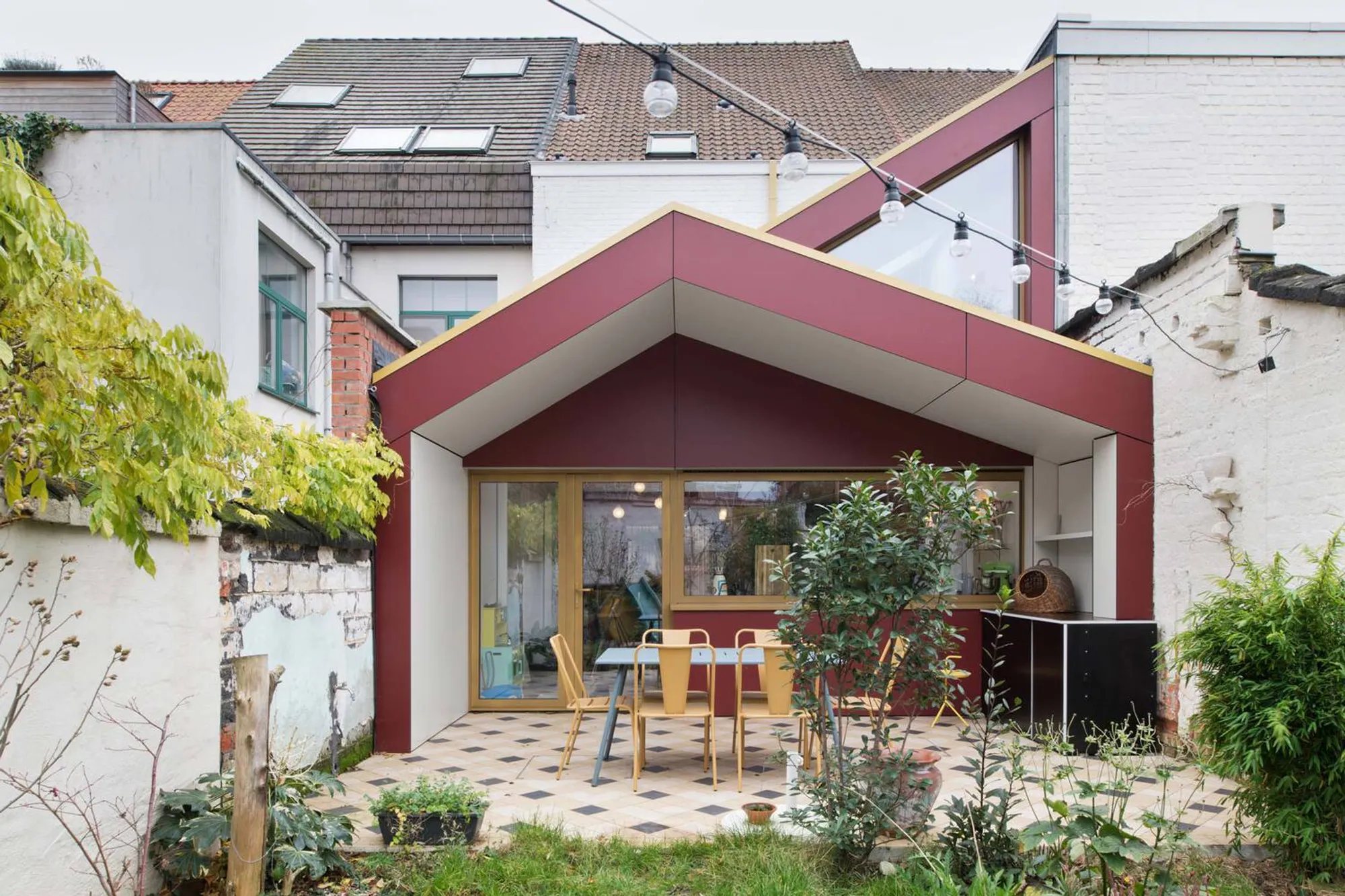
House JC Renovation in Ghent by Bakermat Atelier for Architectuur: A Colorful Graphic Extension for a Flemish Townhouse
Colorful Flemish townhouse renovation in Ghent featuring a graphic extension, open-plan living, mezzanine, skylights, and strong community interaction.


The renovation and extension ofBakermat atelier voor architectuur’s House JC in Ghent, Belgium demonstrates how contemporary architecture can transform a traditional Flemish townhouse renovation into a vibrant and dynamic living environment. Designed in 2019, this residential architecture project focuses on spatial optimization, artistic expression, and a strong relationship between interior living spaces and the surrounding urban neighborhood.
The homeowners: artists seeking a bold and expressive living environment: wanted a home extension that would reflect their personality through color, geometry, and graphic design. The result is a distinctive architectural intervention that blends modern residential design, adaptive reuse, and creative spatial planning while respecting the character of the original townhouse structure.
Reimagining a Traditional Flemish Townhouse
Before the renovation, the ground floor of the townhouse followed a conventional layout typical of many historic homes in Ghent. The entrance hall led to a garage, which was connected to a secondary room used as an artist’s studio. At the back of the house stood a narrow and deteriorated extension containing a kitchen, bathroom, and toilet.
Over time, this rear extension had become cramped, outdated, and structurally degraded. Instead of renovating the outdated structure, the architects proposed a complete demolition and replacement with a contemporary extension that could maximize spatial quality, daylight, and functionality.
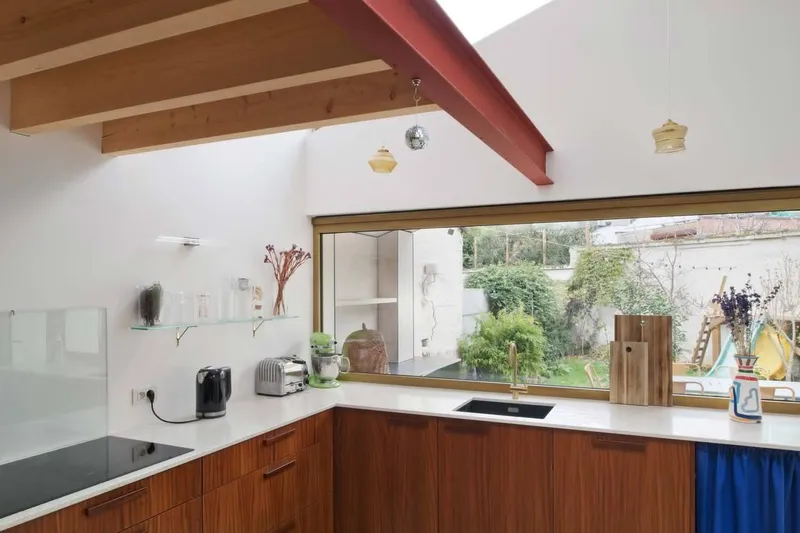
The new architectural strategy introduced a full-width extension across the rear of the building, creating a spacious open-plan kitchen and dining area. This transformation not only improved interior circulation but also created a stronger connection between the house and its garden.
Creating Community Interaction Through the Façade
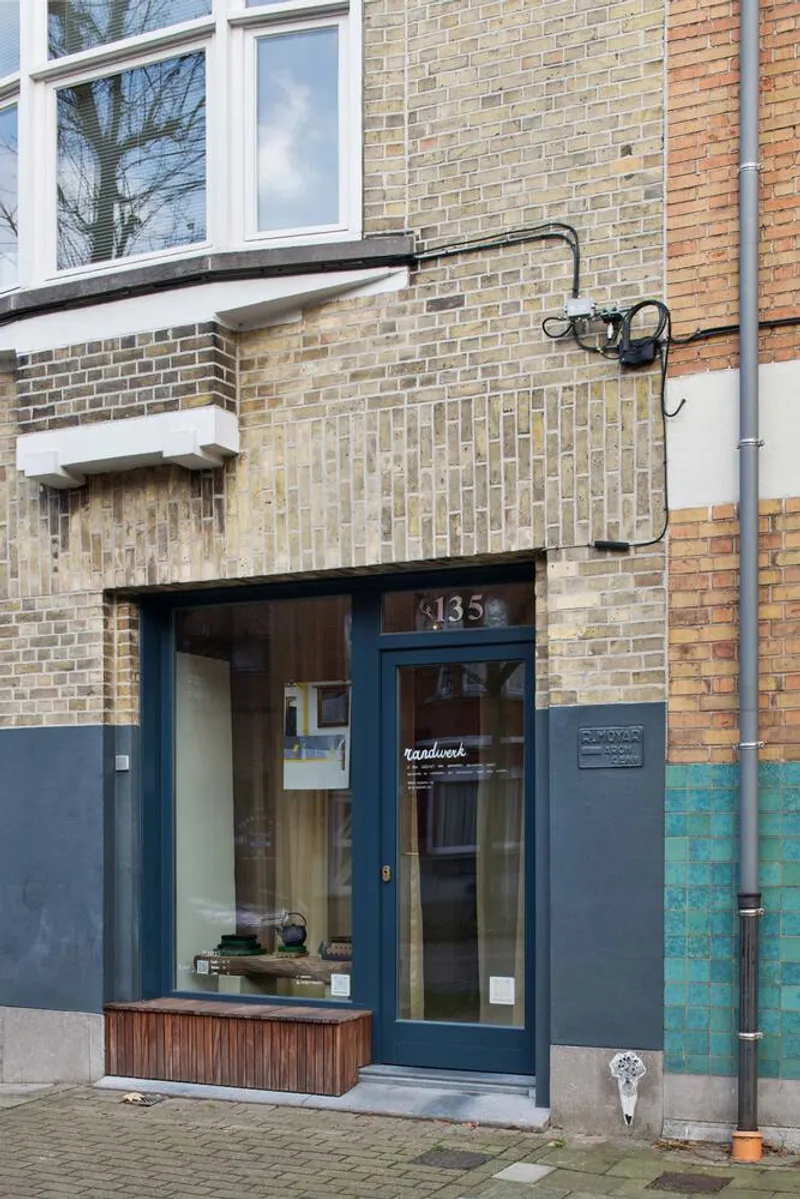
One of the most innovative architectural interventions occurs at the front façade. The original sectional garage door was removed and replaced with a large street-facing window accompanied by a built-in wooden bench.
This design move transformed what was once a closed, utilitarian element into an interactive urban feature. The window allows the homeowners to display artwork and connect visually with the neighborhood, reinforcing the residents’ desire to engage with their local community.
The integrated wooden bench has become an informal social space where neighbors and passersby can pause, sit, and interact. Through this simple yet thoughtful gesture, the renovation demonstrates how small architectural interventions can foster social connection in urban residential environments.
A Flexible Open-Plan Living Space
The newly designed extension dramatically improves the functionality of the ground floor. A carefully positioned opening in the rear façade of the main building connects the existing house to the new volume.
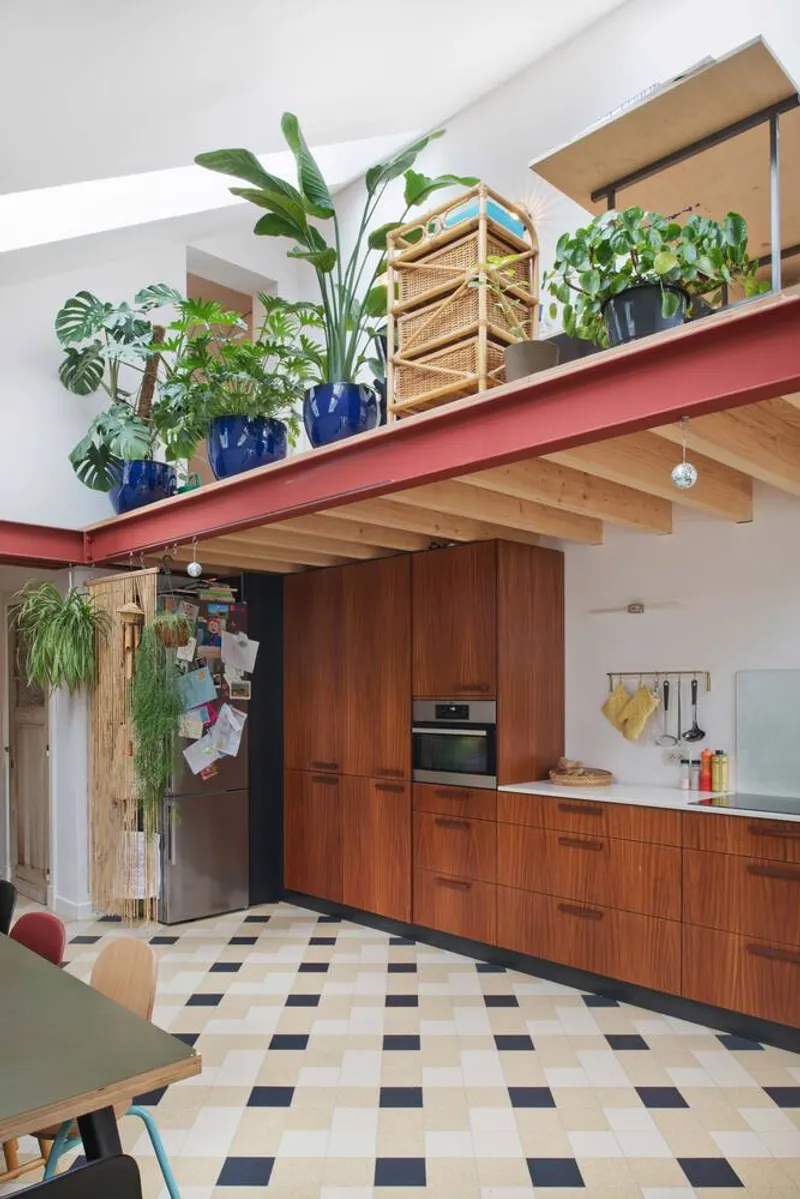
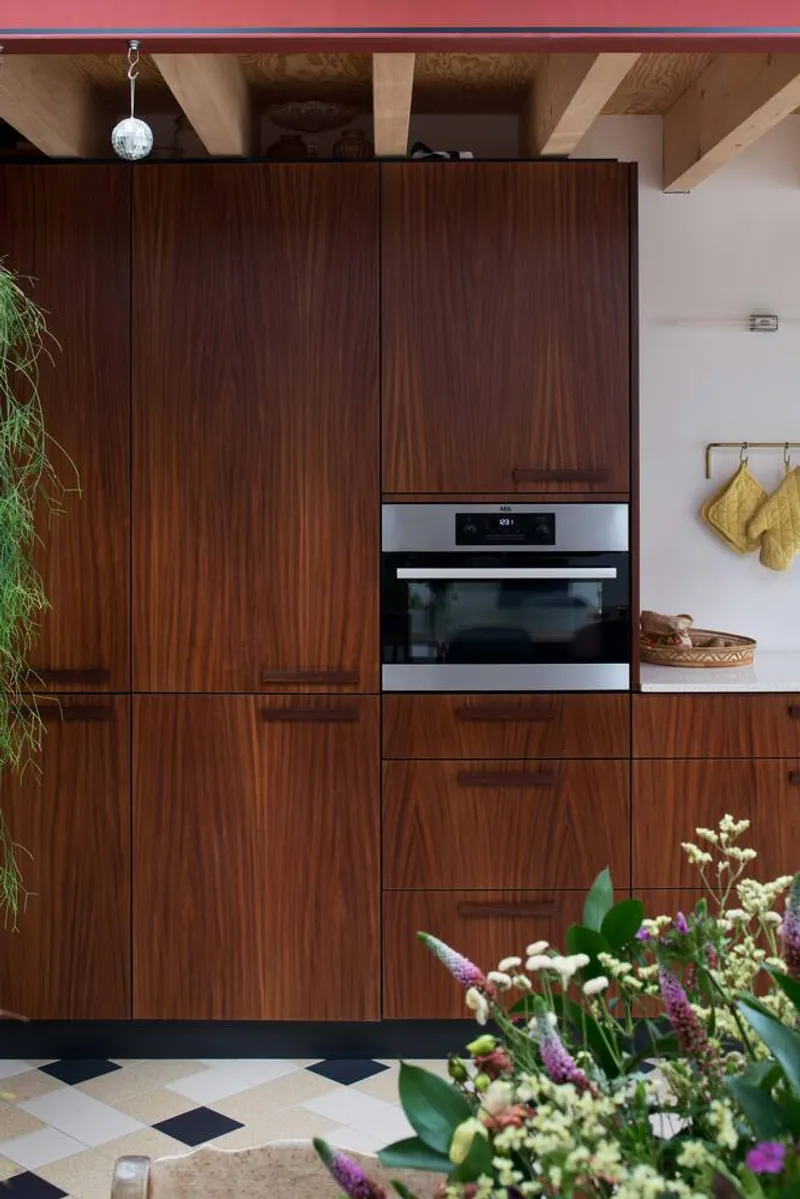
The former artist’s studio has been integrated into a spacious open-plan living environment, combining a seating area, kitchen, and dining space. This layout supports contemporary living patterns, encouraging social interaction and fluid movement between different areas of the home.
Additional improvements were made to the entrance hallway. The architects introduced a compact toilet and storage room, which also functions as the access point to the basement. This efficient spatial planning ensures that every part of the house contributes to practical daily living.
A Graphic and Colorful Architectural Identity
The clients requested a design that would visually express their artistic lifestyle. In response, the architects created an extension with a bold graphic façade composition.
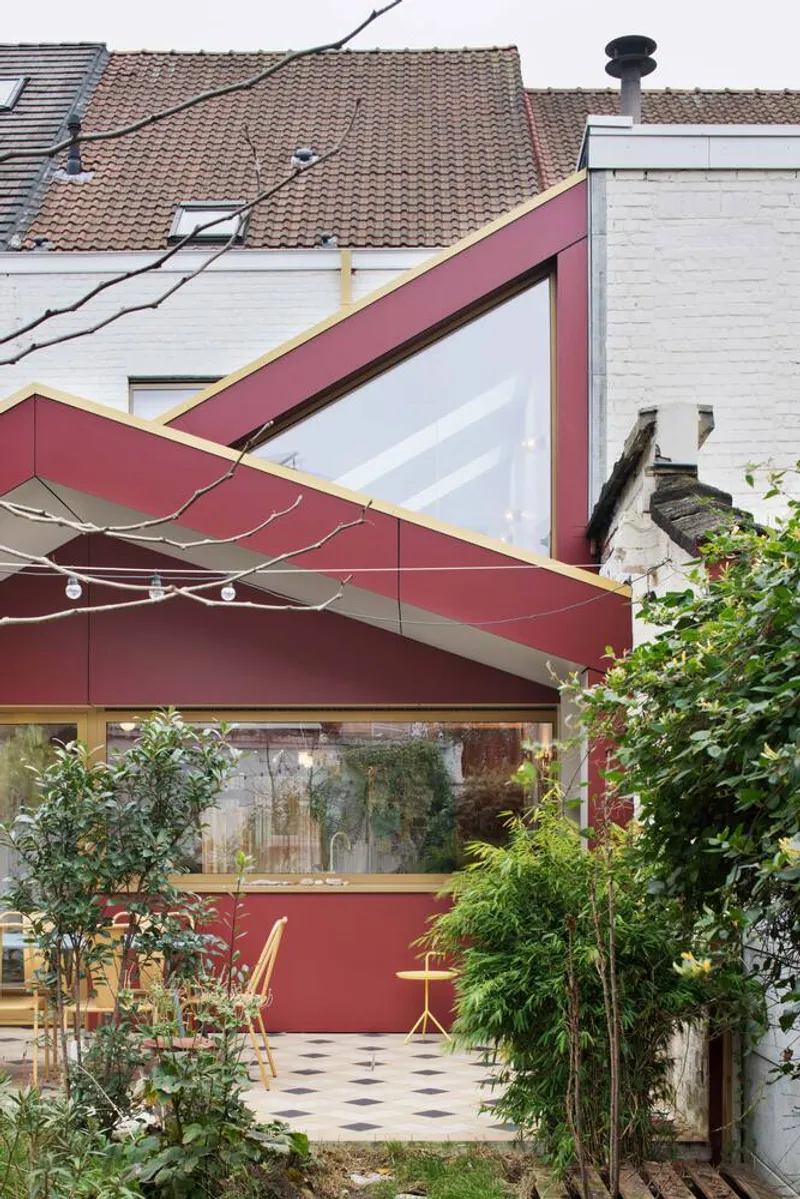
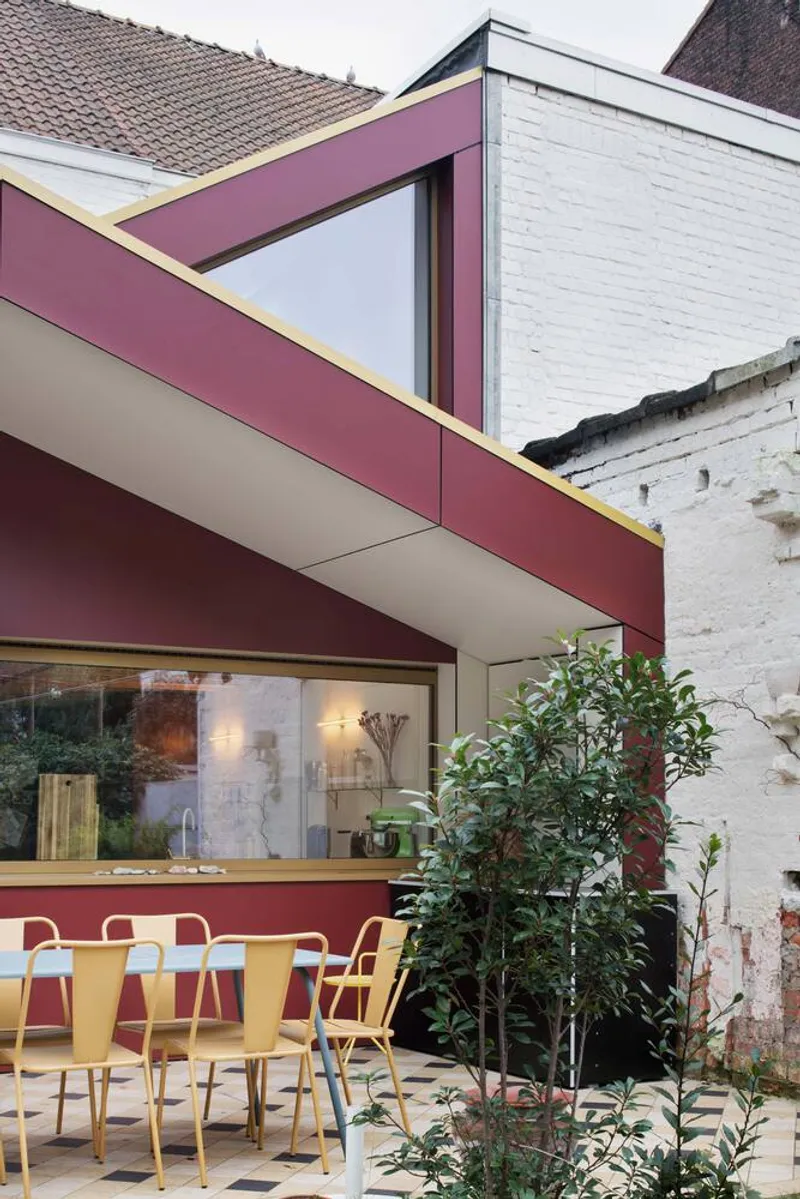
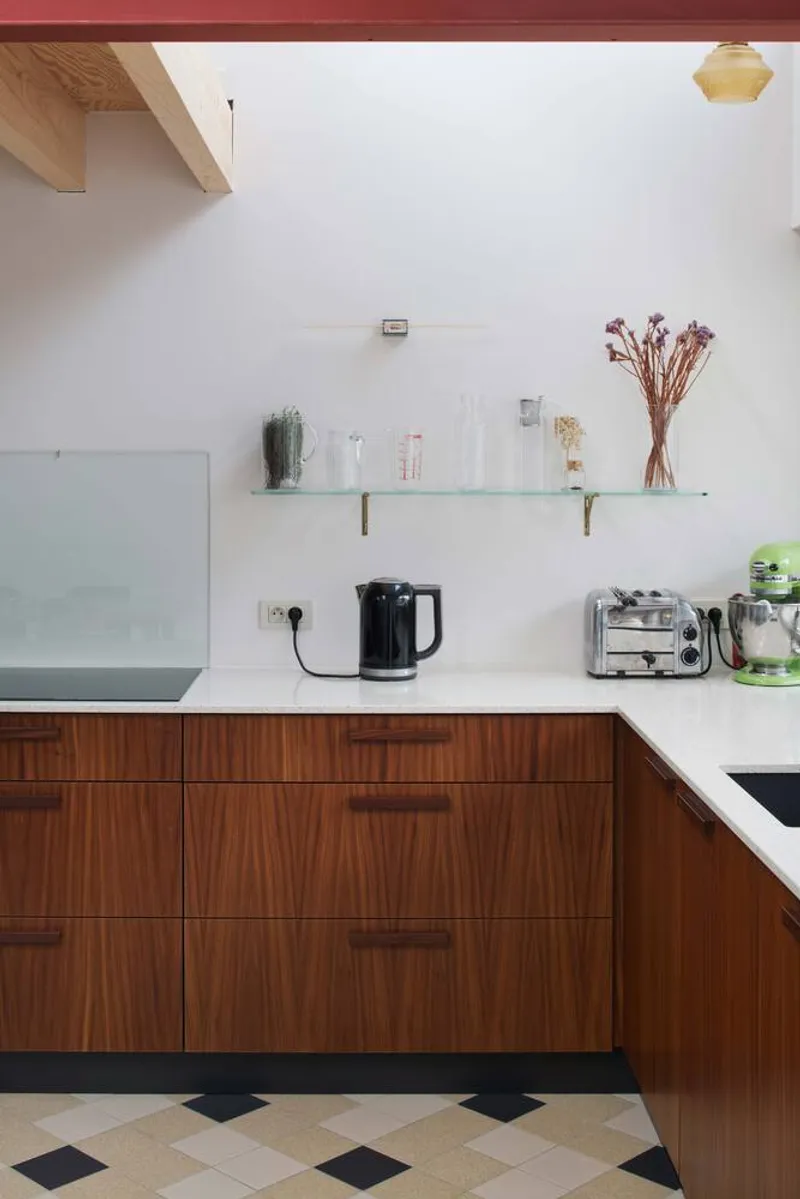
Large windows with gold metallic finishes contrast with façade panels arranged in an irregular pattern of off-white and burgundy-red tones. This composition produces a distinctive visual identity that stands out while still harmonizing with the surrounding urban context.
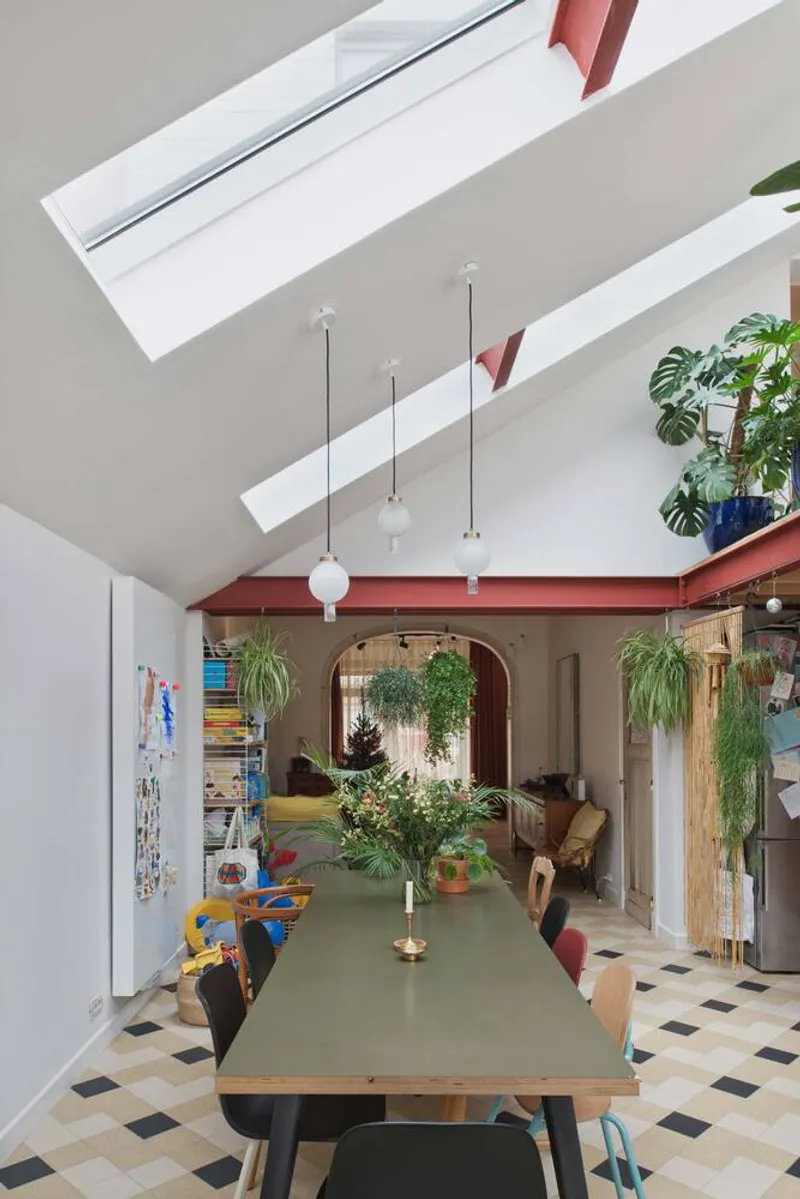
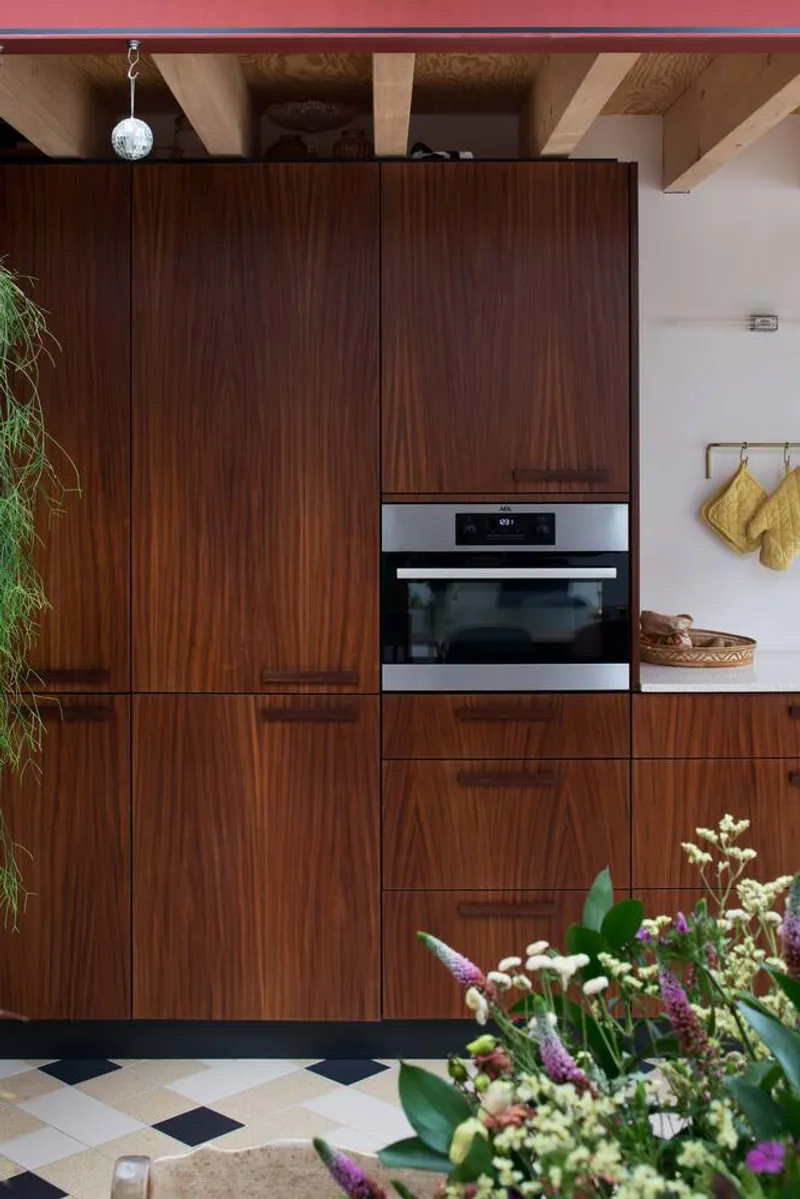
To reinforce the graphic concept, a continuous patterned tile design was applied across the ground floor interior. This detail strengthens the visual narrative, linking architecture, interior design, and artistic expression into a cohesive spatial experience.
Geometry and Structural Innovation
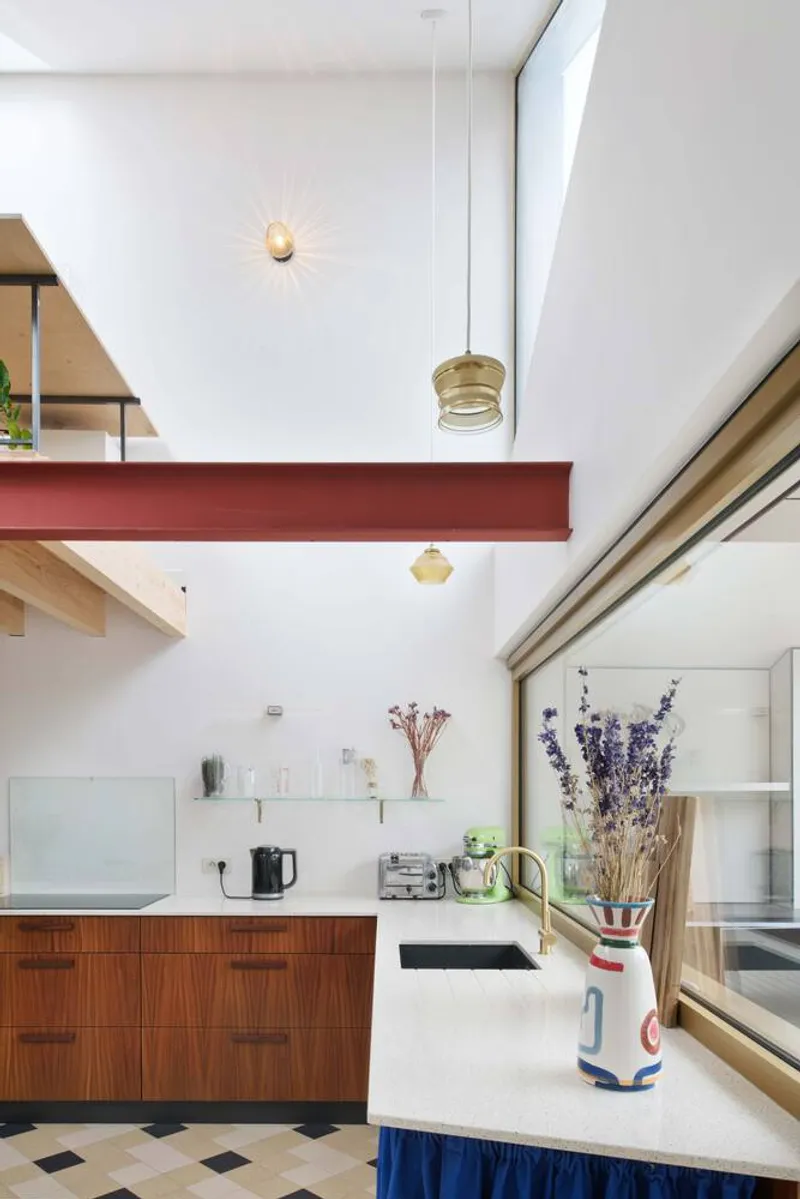
The extension’s architectural form incorporates triangular geometric elements, inspired by contextual conditions on the site. The design combines a steel structural frame with timber construction, allowing for flexibility in shaping the interior volume.
The geometry of the extension is defined by two important spatial conditions: a double-height volume on one side and a lower garden wall on the other. This variation in height creates opportunities for vertical spatial dynamics.
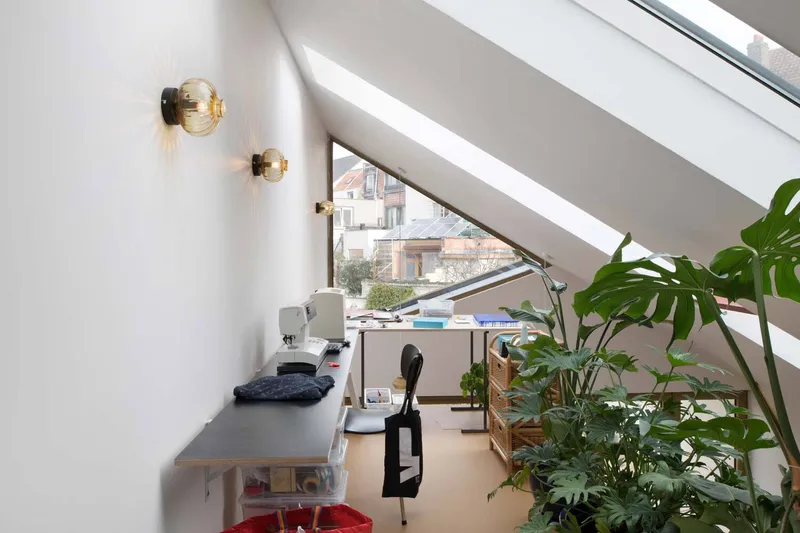
As a result, the architects introduced a mezzanine level accessible from the entrance hall. Although slightly elevated, the mezzanine maintains a strong visual connection with the kitchen and dining area below, enhancing the sense of openness and spatial continuity.
Maximizing Natural Light and Garden Connectivity
Natural light plays a crucial role in the architectural concept of House JC. The extension roof incorporates two large skylights, which bring abundant daylight deep into the interior spaces.
These skylights illuminate the kitchen, dining area, and mezzanine level, creating a bright and comfortable living environment throughout the day.
The roof also extends outward to form a protective canopy, which improves the relationship between the house and the garden. This canopy offers shade during sunny days while also providing shelter from rain, allowing residents to enjoy the outdoor space more comfortably.
Large windows further strengthen the connection between interior and exterior spaces, visually merging the garden with the house and creating a sense of expanded living space.
Contemporary Residential Architecture Rooted in Context
House JC demonstrates how thoughtful residential renovation architecture can breathe new life into traditional urban housing. By combining adaptive reuse, creative spatial design, and artistic expression, the project transforms a typical Flemish townhouse into a unique contemporary home.
The renovation balances bold graphic aesthetics with practical spatial improvements, ensuring that the house meets the functional needs of its residents while also reflecting their artistic identity.
Through its playful geometry, vibrant materials, and emphasis on daylight and community interaction, House JC stands as an inspiring example of how modern architecture can reinterpret historic residential typologies.
All photographs are works of
Michiel Vergauwe




Popular Articles
Popular articles from the community


Lunar Spiral: Space Architecture Shaped by the Mathematics of the Universe
Lunar Spiral reimagines space architecture through Fibonacci geometry, lunar regolith, levitating habitats, and self-sustaining Moon living.

The Musturak Paradise: Senior Living Architecture for a Connected Future in Temara, Morocco
The Musturak Paradise reimagines senior living architecture in Temara via private homes, social spaces, culture, community, and shared care.

The Earth Pod: 3D Printed Homes for Resilient Refugee Communities
The Earth Pod reimagines refugee housing through 3D printed homes made from clay, combining resilience, self-sufficiency, and rapid shelter.

Play: Fragments of Their World
Familiar architecture becomes modular playground design, creating safe spaces where displaced children can learn, connect, imagine and play.


Similar Reads
You might also enjoy these articles


FAMM Arquitectura Organizes Ten Villas Around Courtyards and Jungle in Nosara, Costa Rica
El Molino pairs two elongated volumes with deep overhangs and timber louvers to build a compact coastal community five minutes from the beach.

Oscar Niemeyer's Ibirapuera Park Pavilions Define São Paulo's Cultural Identity in Concrete and Curve
A constellation of modernist volumes set within São Paulo's most important urban park, conceived for the city's 400th anniversary in 1954.
How Henri Picq's 1889 Paris Pavilion Traveled 11,000 Kilometers to Become Santiago's Artequín Museum
A prefabricated iron and glass pavilion built for the Paris Universal Exposition found a second life as a children's art museum in Chile.

Sanjay Puri Architects Wraps a Jaipur Office Tower in Capsule-Shaped Green Buffers
A nine-level climate-responsive workplace near Jaipur Airport uses stacked planter terraces and aluminium screens to fight 40°C heat.


Explore Housing Competitions
Discover active competitions in this discipline



Challenge to reimagine the Iron Throne


Photograph architecture without architects


Illustrate the lost glory of Angkor Wat - Render Challenge


Design challenge to reuse E-waste
Comments (0)
Please login or sign up to add comments
No comments yet. Be the first to comment!