

House of 7 Courtyards: Sustainable Living in Harmony with Nature by Arquitectura Spinetta
The House of 7 Courtyards blends sustainable design, native vegetation, and bioclimatic strategies, creating intimate, light-filled spaces connecting interior and exterior.


Located in Funes, Argentina, the House of 7 Courtyards by Arquitectura Spinetta is a striking example of contemporary residential architecture that harmonizes with its environment. Completed in 2022 and covering an area of 440 m², the project was led by Melina Spinetta, emphasizing bioclimatic design, spatial fluidity, and a deep connection between interior spaces, courtyards, and the surrounding landscape.
Integrating Landscape and Context
Set on a sprawling plot facing the runway of Rosario Airport and nearby railway tracks, the house leverages the strong horizontality of its surroundings. This intentional connection with the landscape informed the linear layout of the residence, extending across the lot’s width. By embracing existing elements rather than hiding them, the design creates a visual dialogue between the built environment and its context.

The Concept of Seven Courtyards
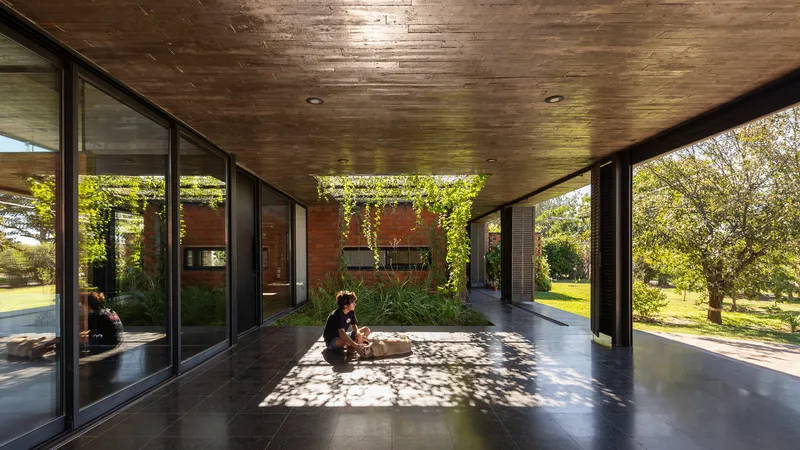
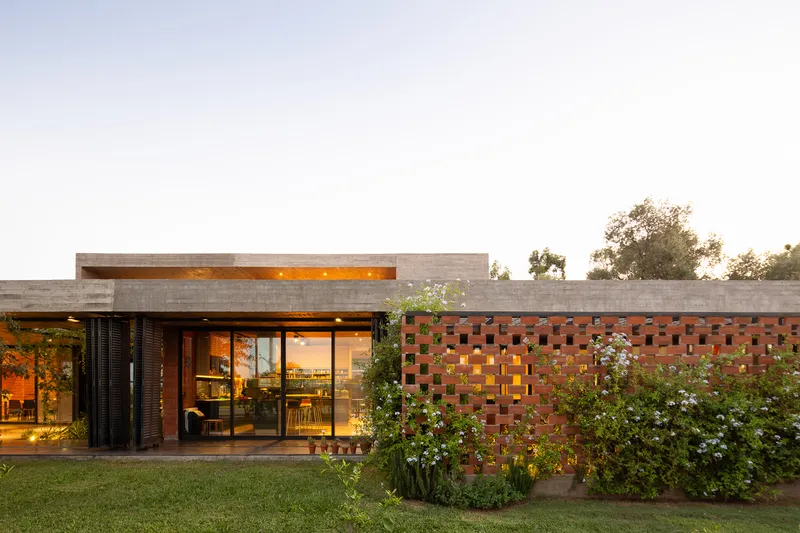
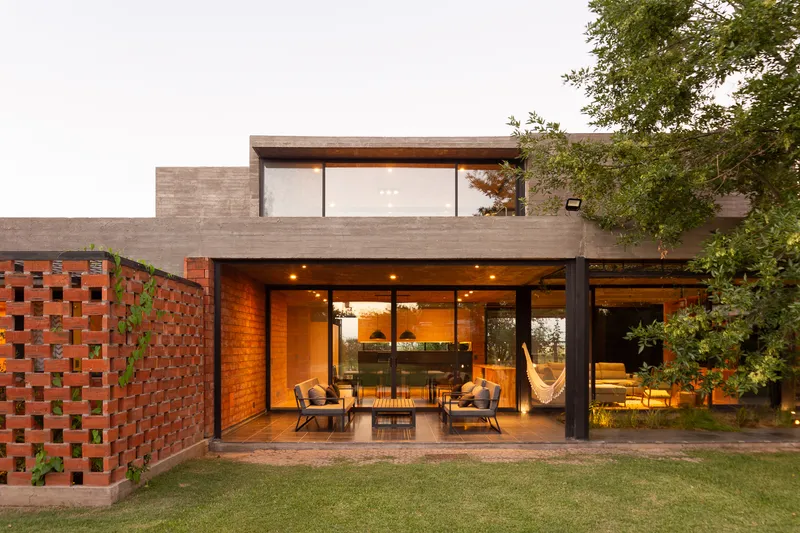
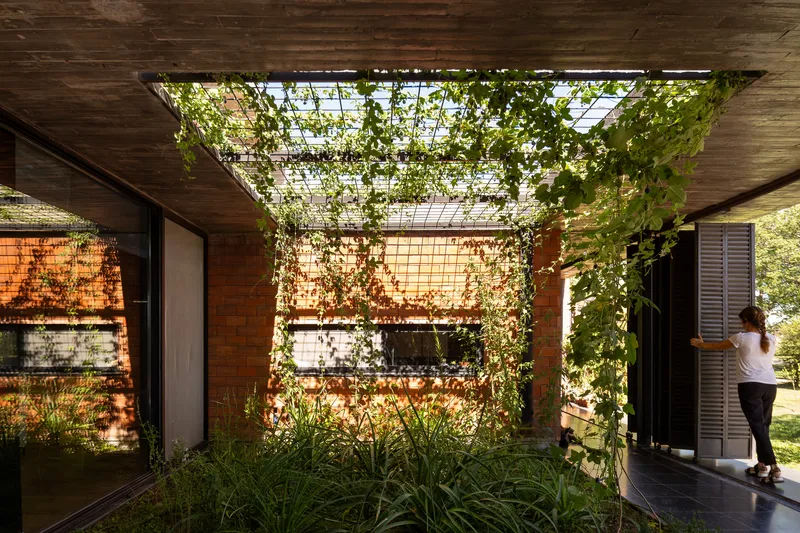
Central to the house is the integration of seven unique courtyards, which serve as green lungs for the residence. These courtyards intersperse with covered spaces, providing natural light, ventilation, and privacy. Private areas, enclosed in red brick volumes, coexist with social zones featuring expansive glass surfaces that open onto galleries. This design allows residents two complementary perspectives: a panoramic view of the landscape and an intimate, introspective connection to the interior courtyards.
Each courtyard has its own identity, shaped by native vegetation inspired by the pampas grasslands. Climbing vines and hanging plants extend the surrounding ecosystem into domestic gardens, fostering biological continuity. These green microcosms provide habitat and sustenance for insects, birds, and small animals, reinforcing the house’s commitment to ecological integration.


Sustainable and Bioclimatic Strategies
The House of 7 Courtyards exemplifies environmentally conscious design. Bioclimatic strategies implemented include:
- Cross ventilation through strategically oriented openings
- Protective eaves for shading
- Double walls and double-glazed windows for insulation
- Rainwater harvesting systems
- Solar water heaters
- Waste separation and composting for on-site sustainability
The use of metal mesh at the top of courtyards ensures security without obstructing sightlines, maintaining visual continuity while prioritizing safety.

Interior Experience and Spatial Dynamics
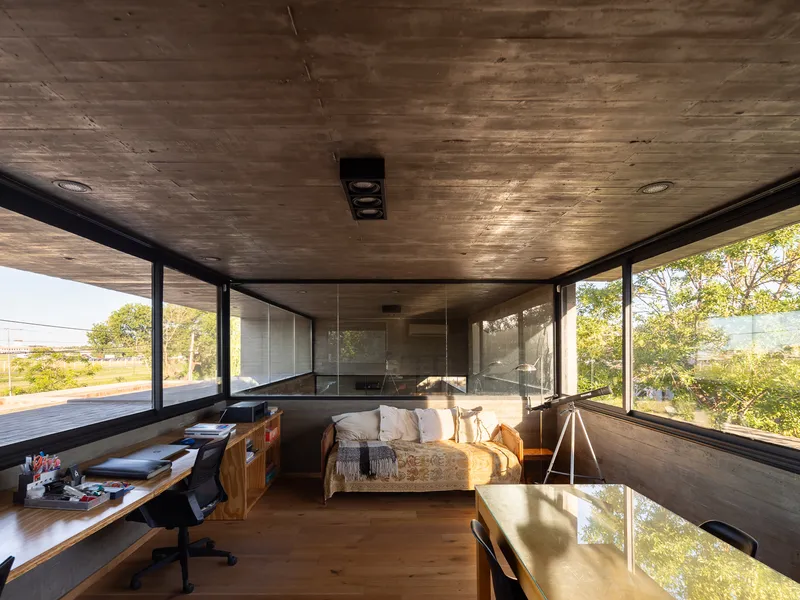
Inside, the residence is designed with generous spatial proportions. Openings at varying heights allow natural light to penetrate from multiple angles, highlighting exposed brick, concrete textures, and dynamic beams and slabs. Courtyards, eaves, galleries, shutters, and mobile curtains mediate the transition between interior and exterior, creating a sensory-rich environment that stimulates sight, touch, and sound.
The architectural experience is enriched by microcosms of light, color, and movement. Seasonal changes, the gentle rustle of vegetation, the presence of hummingbirds and butterflies, and subtle shifts in temperature provide a multisensory narrative throughout the house. Each movement within the residence becomes an immersive experience, blending nature, climate, and human activity seamlessly.

A Domestic Universe in Dialogue with Nature
Ultimately, the House of 7 Courtyards acts as a regulatory device where climate, nature, and daily life interact harmoniously. It invites its inhabitants to engage with the environment, promoting a lifestyle that respects both privacy and ecological responsibility. Through its courtyards, sustainable strategies, and carefully orchestrated interior-exterior transitions, the house becomes a model for residential architecture that is environmentally responsive, spatially dynamic, and emotionally engaging.

All photographs are works of
Ramiro Sosa



Popular Articles
Popular articles from the community


Co-Life: Senior Housing Design That Reconnects Older Adults With the City
Co-Life reimagines senior housing design through healing gardens, shared streets, workshops, and a sustainable community across generations.

Conexión: Biophilic Design Reimagines High-Rise Living in Hong Kong
Conexión reimagines high-rise living in Hong Kong through biophilic design, green facades, shared spaces, daylight, water and nature within.

AL-JANNAH: Sustainable Architecture and Permaculture for Afghan Widows
AL-JANNAH uses sustainable architecture and permaculture to create resilient oasis of housing, learning, work and renewal for Afghan widows.

The Musturak Paradise: Senior Living Architecture for a Connected Future in Temara, Morocco
The Musturak Paradise reimagines senior living architecture in Temara via private homes, social spaces, culture, community, and shared care.


Similar Reads
You might also enjoy these articles


FAMM Arquitectura Organizes Ten Villas Around Courtyards and Jungle in Nosara, Costa Rica
El Molino pairs two elongated volumes with deep overhangs and timber louvers to build a compact coastal community five minutes from the beach.

Oscar Niemeyer's Ibirapuera Park Pavilions Define São Paulo's Cultural Identity in Concrete and Curve
A constellation of modernist volumes set within São Paulo's most important urban park, conceived for the city's 400th anniversary in 1954.
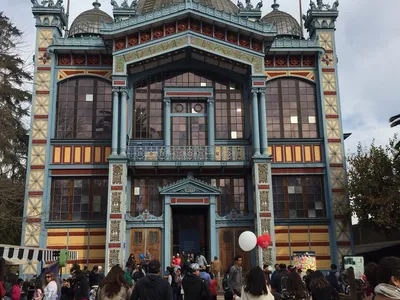
How Henri Picq's 1889 Paris Pavilion Traveled 11,000 Kilometers to Become Santiago's Artequín Museum
A prefabricated iron and glass pavilion built for the Paris Universal Exposition found a second life as a children's art museum in Chile.

Sanjay Puri Architects Wraps a Jaipur Office Tower in Capsule-Shaped Green Buffers
A nine-level climate-responsive workplace near Jaipur Airport uses stacked planter terraces and aluminium screens to fight 40°C heat.


Explore Sustainable Living Competitions
Discover active competitions in this discipline



Challenge to reimagine the Iron Throne


Photograph architecture without architects


Illustrate the lost glory of Angkor Wat - Render Challenge


Design challenge to reuse E-waste
Comments (0)
Please login or sign up to add comments
No comments yet. Be the first to comment!