
House of Circles by LAND Arquitectos: A Circular Dialogue Between Architecture, Landscape, and Family Living
Circular pavilions integrate with native landscape, creating a sustainable coastal retreat that balances family living, privacy, and immersive ocean views.


Nestled along the dramatic coastline of Huentelauquén, Chile, the House of Circles by LAND Arquitectos redefines coastal residential architecture through a powerful synthesis of geometry, ecology, and multigenerational living. Designed as a second home for grandparents to gather their extended family, this project is not just a house: it is a spatial system rooted in landscape preservation, environmental sensitivity, and experiential design.
A Coastal Site Defined by Ecology and Views
Located approximately 300 kilometers north of Santiago, the site marks a transitional zone where the Chilean desert begins to emerge. Characterized by a gently sloping rocky terrain, the land is populated with clusters of native vegetation, including creeping scrub and ecologically valuable cacti. These natural elements became the foundation of the architectural concept.
Rather than imposing a conventional structure onto the site, LAND Arquitectos adopted a strategy of mapping and respecting the existing vegetation patterns. Using high-resolution orthophotography, the architects identified and grouped plant densities into a series of circular formations, 25 in total, each representing ecological value and spatial potential.
Circular Geometry as a Design Generator
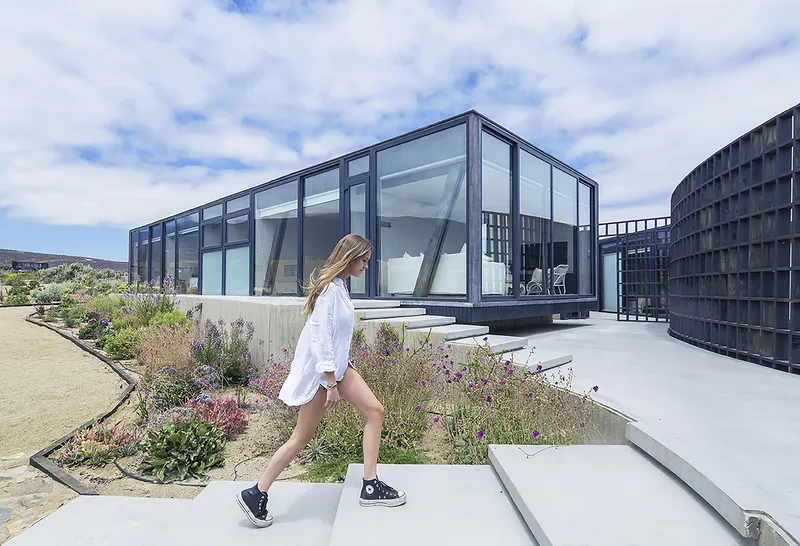
The defining concept of the House of Circles lies in its use of circular geometries to organize space. These circles are not arbitrary; they emerge directly from the distribution of native vegetation. By preserving these zones, the architects established a plinth or base layer that prioritizes the pre-existing landscape over built form.
This plinth becomes a unifying platform upon which six independent pavilions are carefully placed. Each pavilion responds to specific views, orientations, and programmatic needs, creating a decentralized yet cohesive architectural composition.
Pavilion Living: A New Approach to Family Space
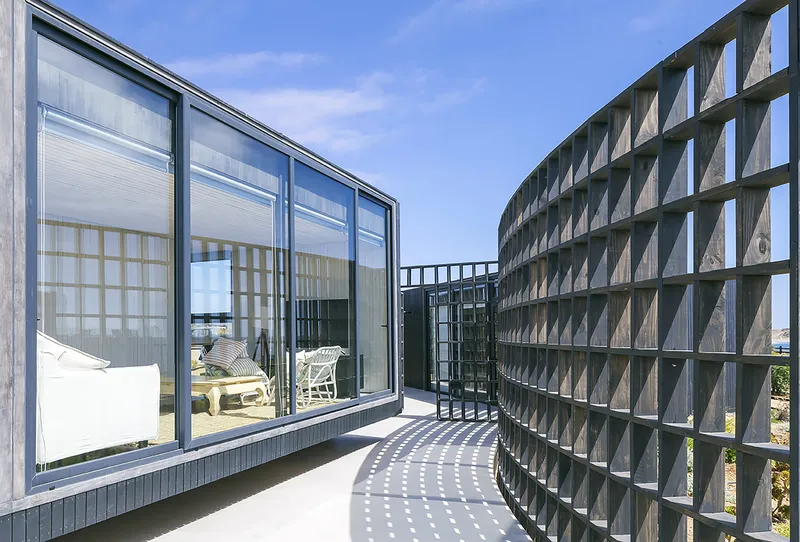
The house is composed of six distinct pavilions, each dedicated to different functions such as bedrooms, communal living areas, and services. This fragmentation allows for both privacy and connectivity, essential for accommodating large family gatherings across generations.
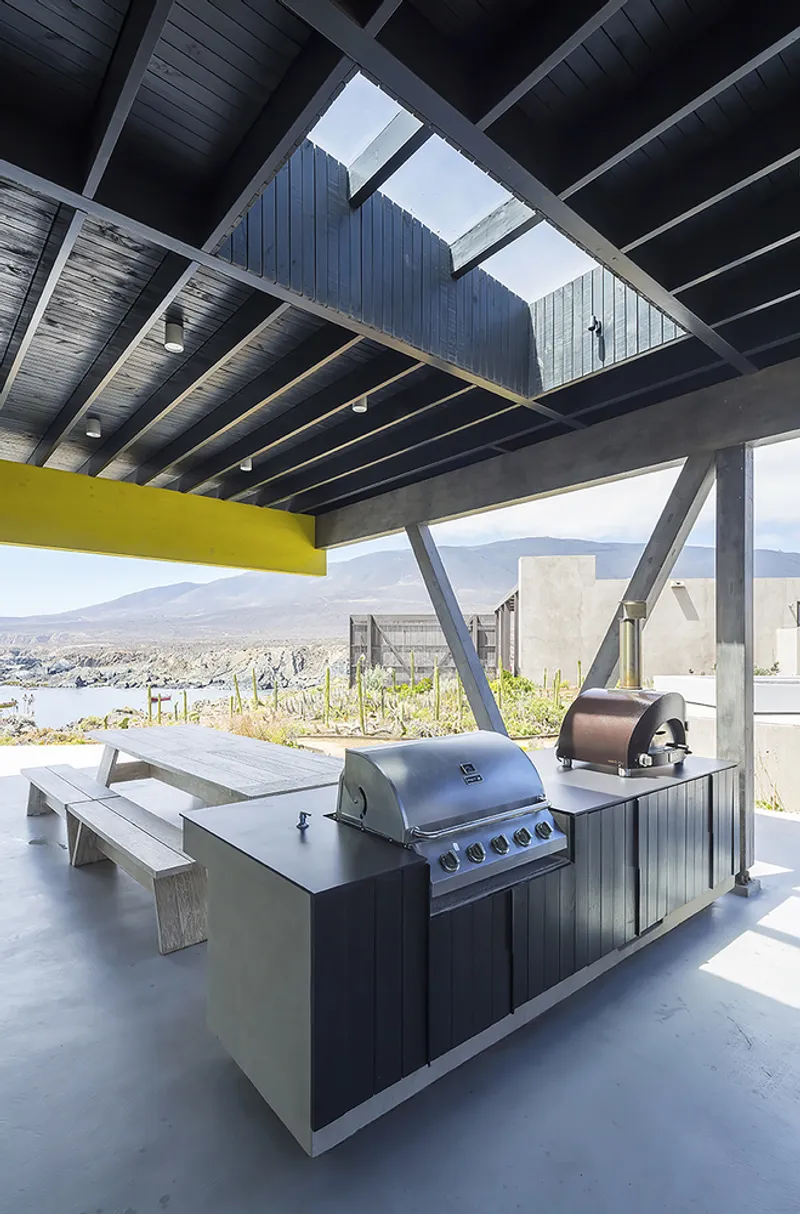
Movement between these pavilions is intentionally external. Residents transition through open-air pathways, engaging directly with the landscape as they move from private to shared spaces. This approach enhances the sensory experience of the environment: wind, light, and views become integral to daily life.
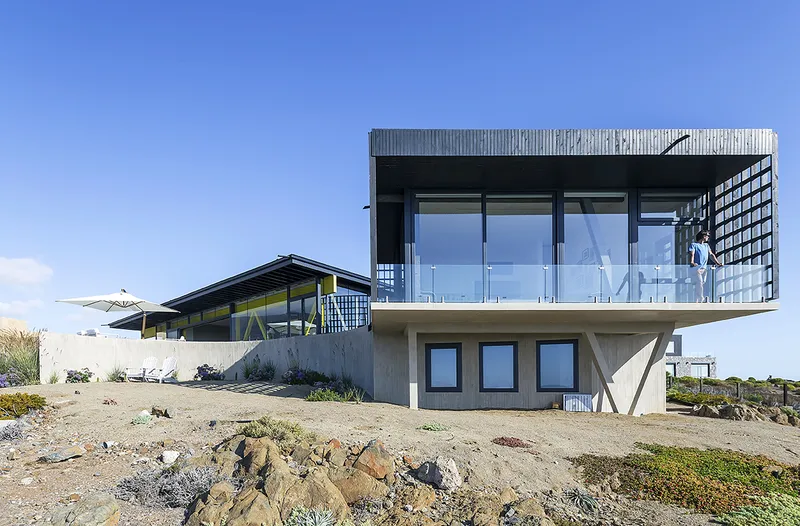
The Curved Wooden Envelope
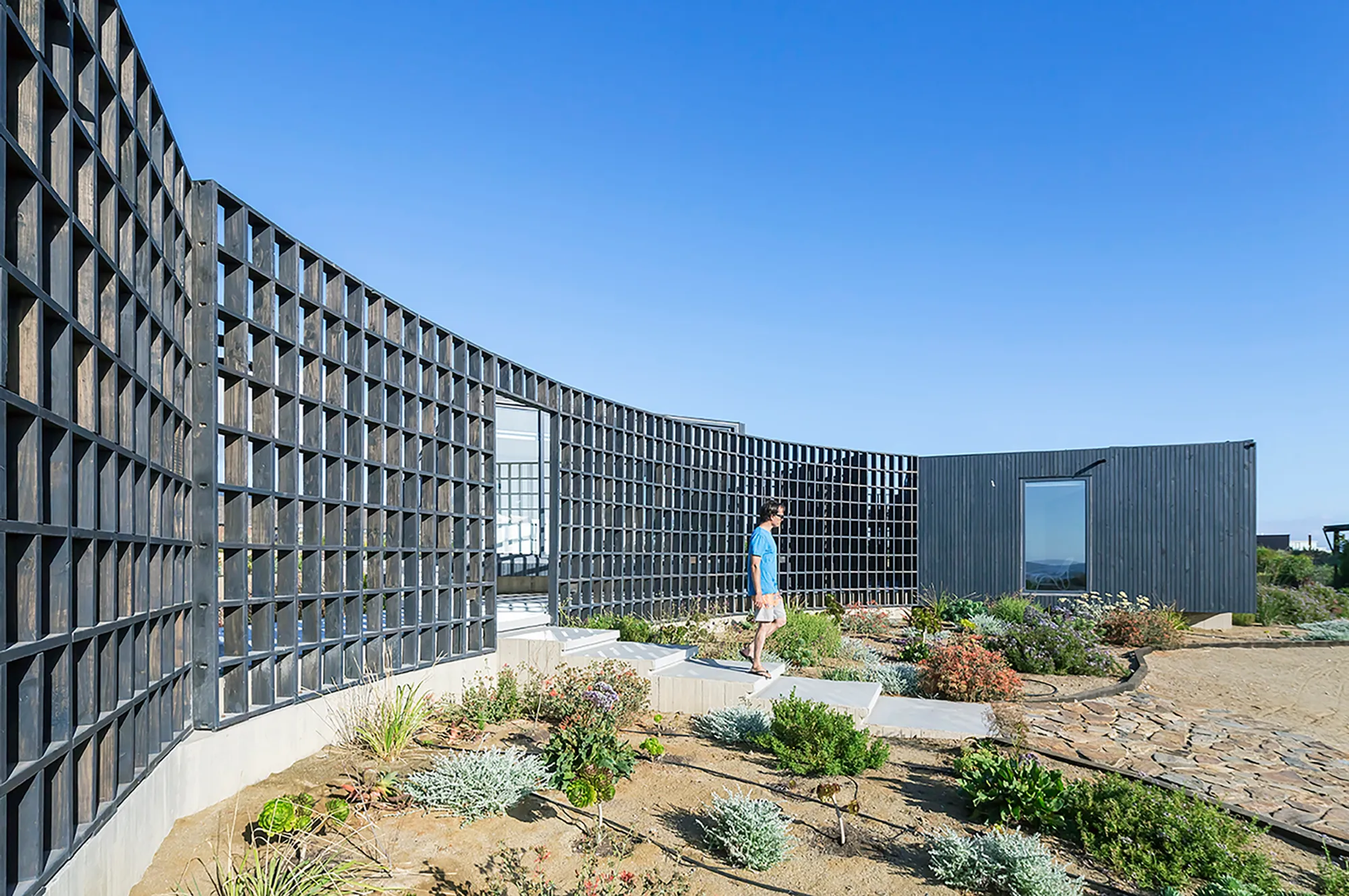
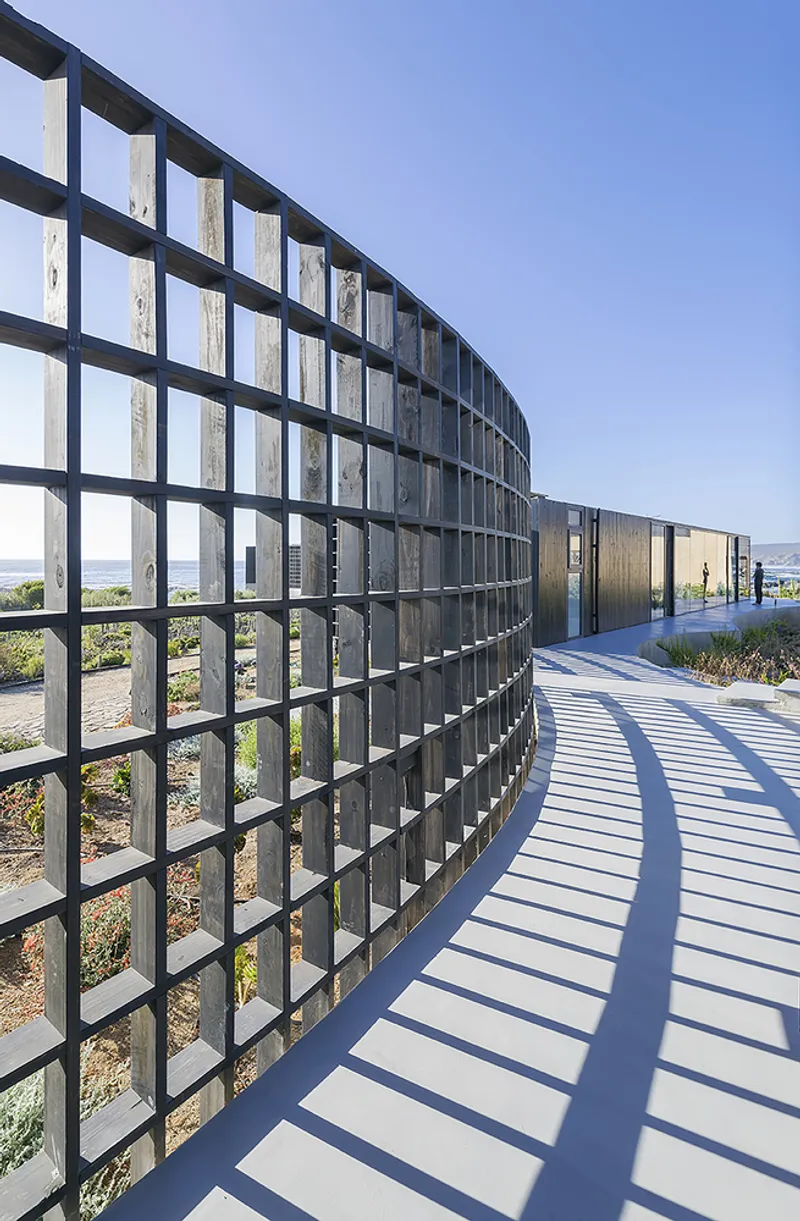
Encircling the pavilions is a curved wooden structure, acting as both a protective and connective element. This continuous form shields the house from the strong southern winds while simultaneously defining an intermediate space that is neither fully inside nor outside.
Constructed from CNC-machined laminated timber, this architectural gesture introduces warmth and fluidity, contrasting with the solidity of the concrete base. It serves as a circulatory spine, guiding movement and framing views across the site.
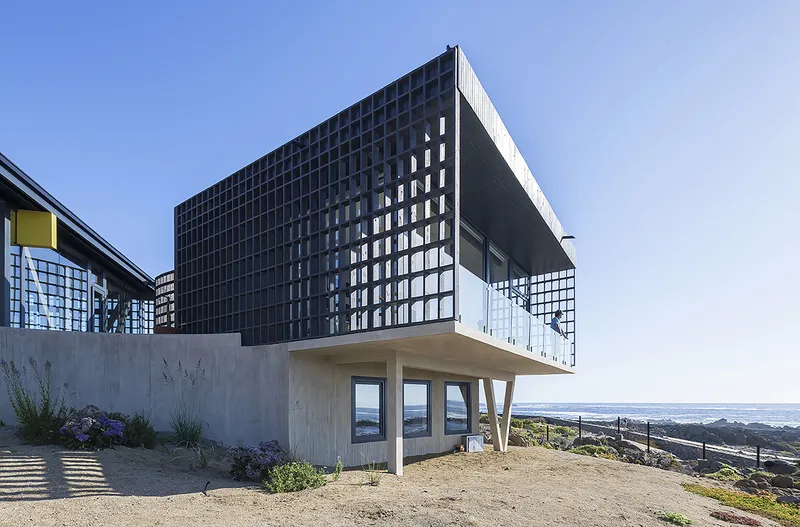
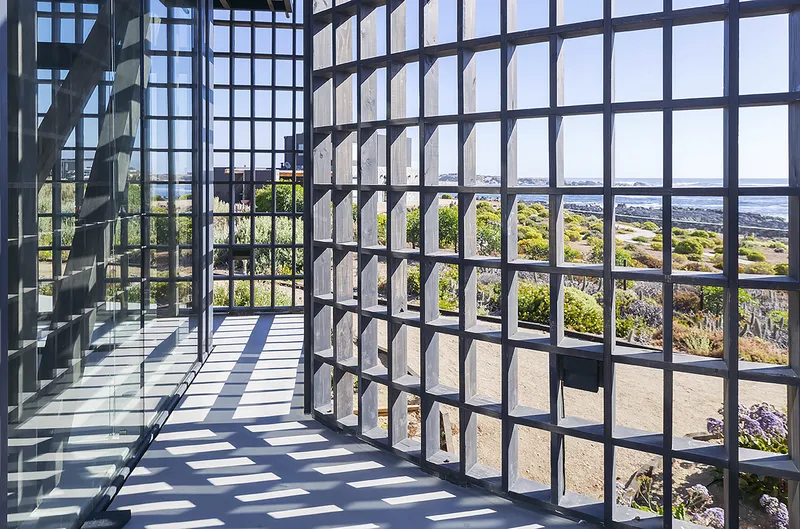
Material Strategy: Concrete and Timber in Balance
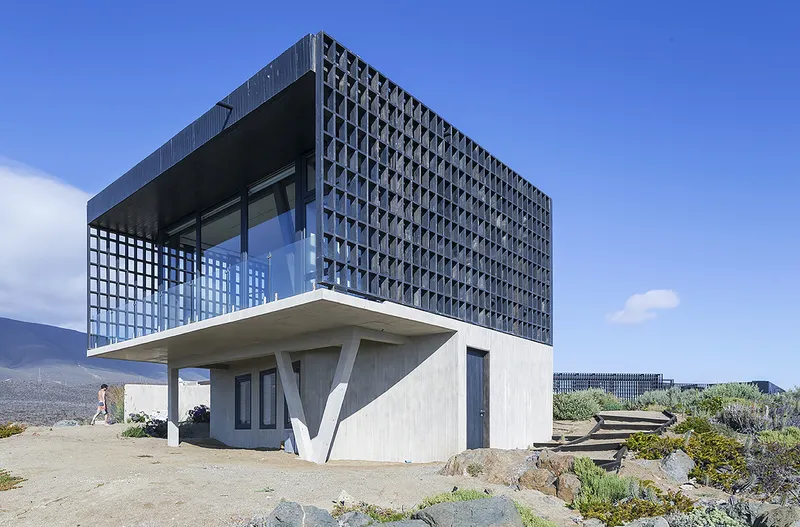
Materiality plays a crucial role in anchoring the project within its context. The plinth is constructed using exposed concrete with board-formed texture, grounding the architecture in the rugged coastal terrain. Above this, the pavilions are built with laminated wood structures, offering a lighter, more tactile contrast.
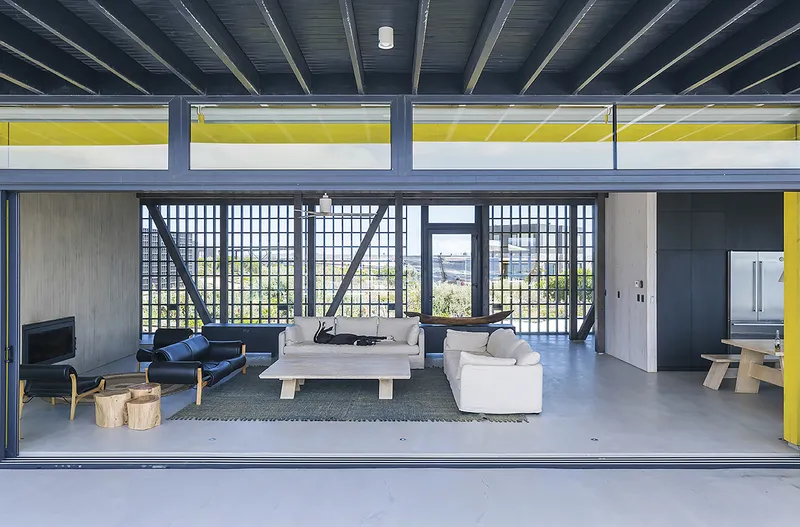
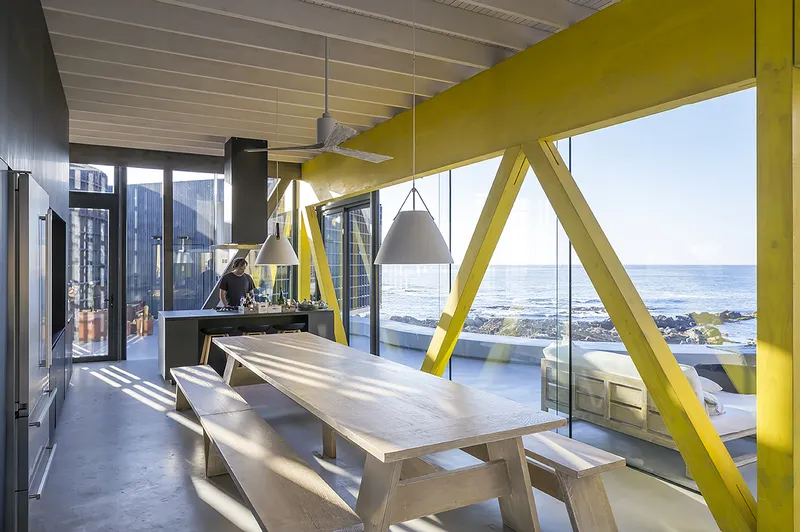
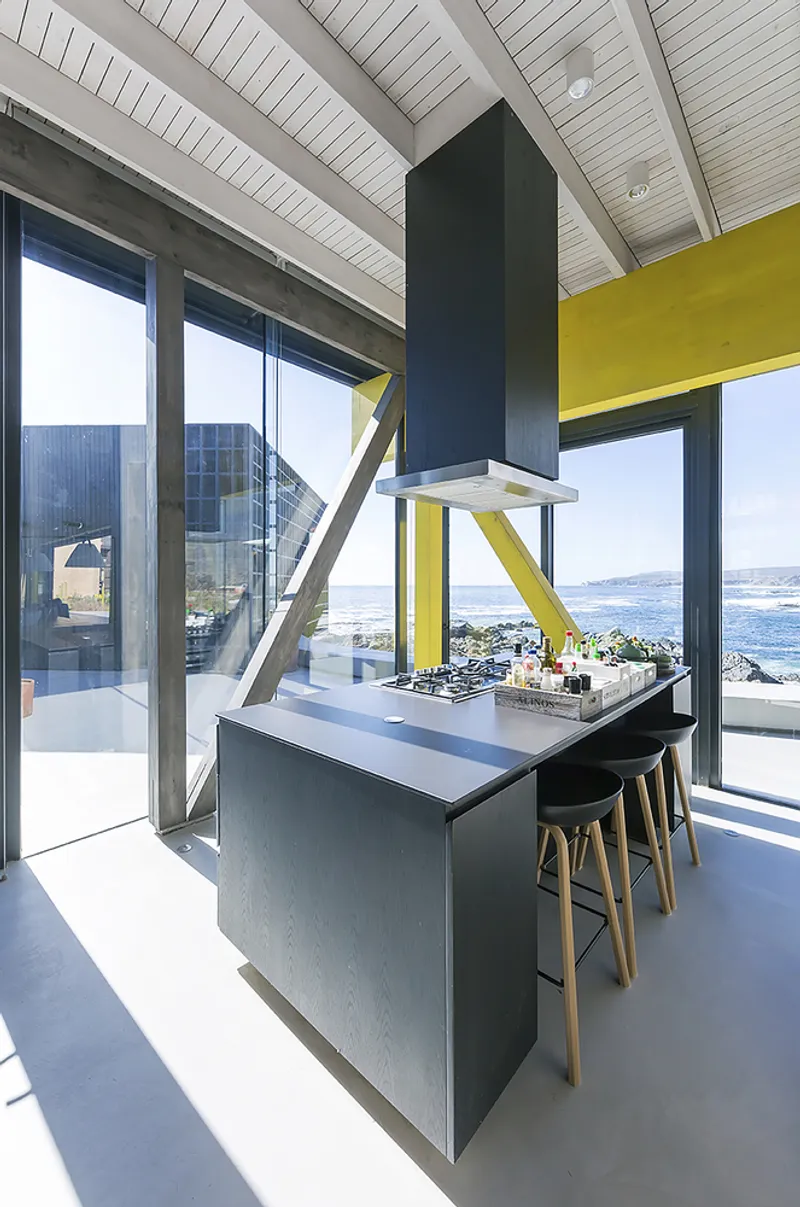
Inside the central pavilion, a striking 26-meter-long laminated timber beam, stained in yellow, becomes a focal point. This structural element not only spans the space but also adds a bold visual identity to the interior.
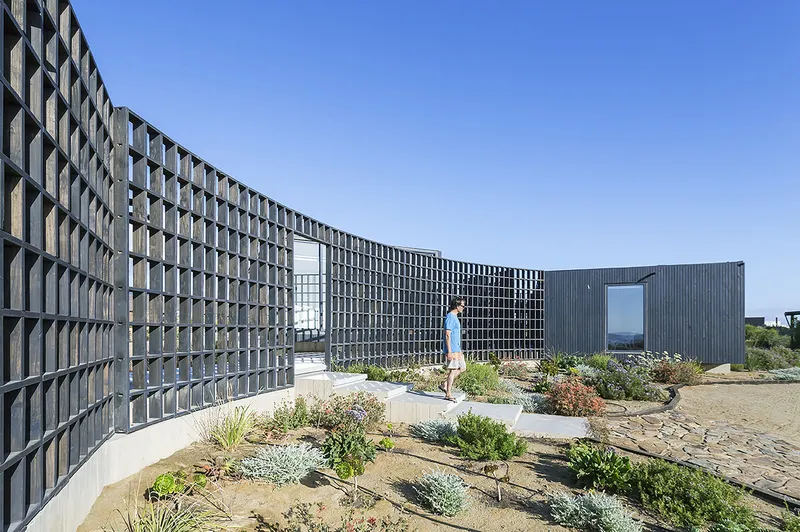
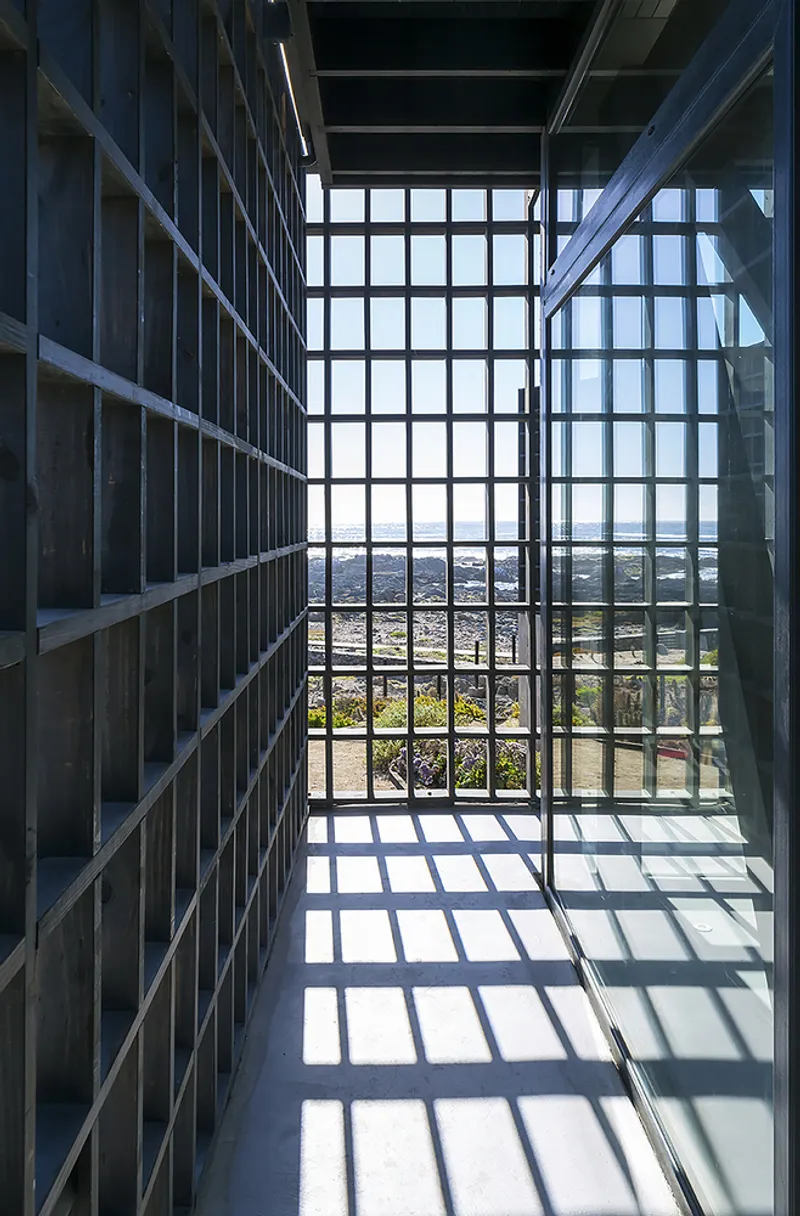
Interior vs Exterior: A Spatial Imbalance by Design
One of the most compelling aspects of the project is its intentional imbalance between interior and exterior spaces. While the enclosed built area measures approximately 500 square meters, the terraces and plinth extend beyond 600 square meters.
This disproportion reflects a deliberate architectural choice: to prioritize outdoor living and embrace the diversity of the site’s geographical conditions. The house becomes a platform for experiencing the landscape rather than enclosing it.
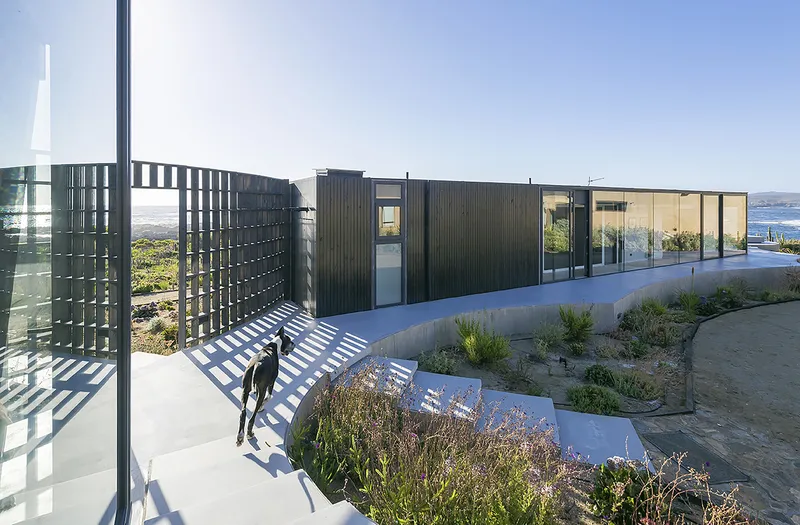
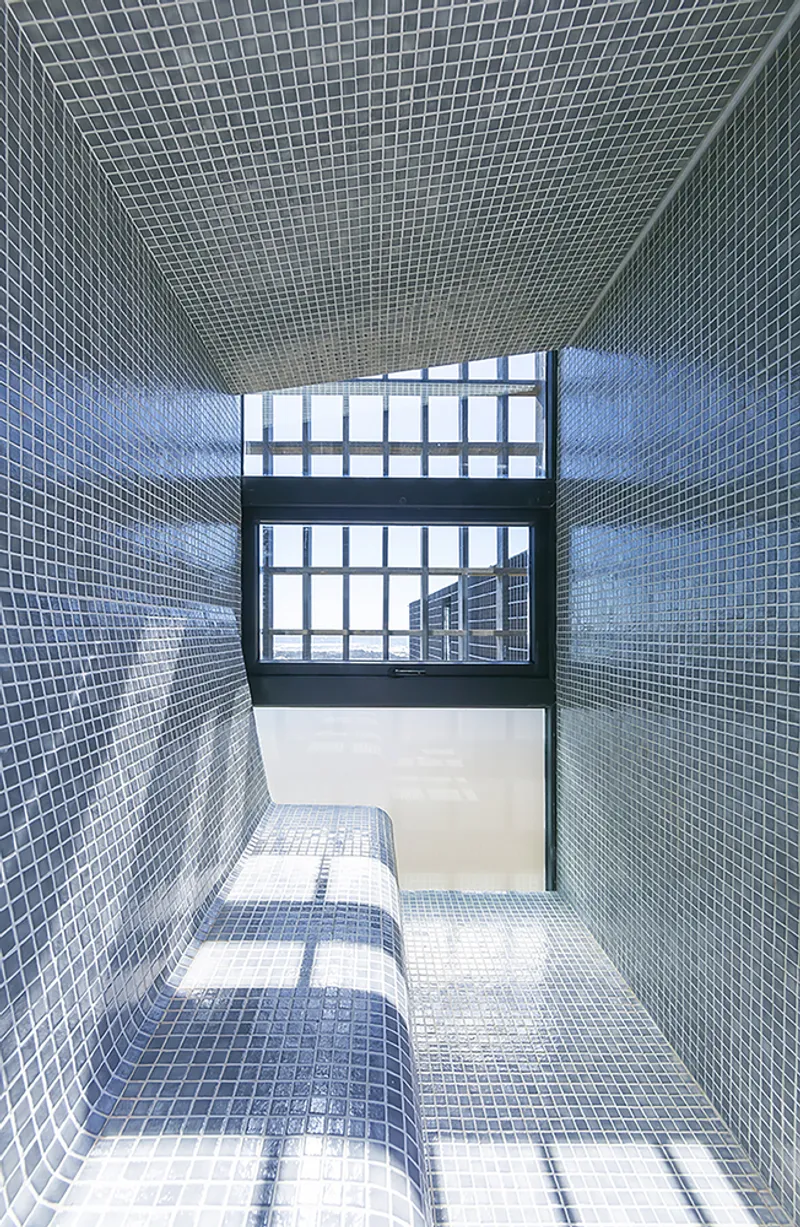
Framing Views and Enhancing Experience
The positioning of each pavilion is carefully calibrated to capture panoramic ocean views. The central living pavilion and main bedroom project outward, almost hovering above the sea, evoking the sensation of being on a ship.
In contrast, the remaining bedrooms are tucked into the vegetation, offering privacy while still maintaining visual connections to the horizon. This duality creates a dynamic spatial narrative, open versus enclosed, exposed versus sheltered.
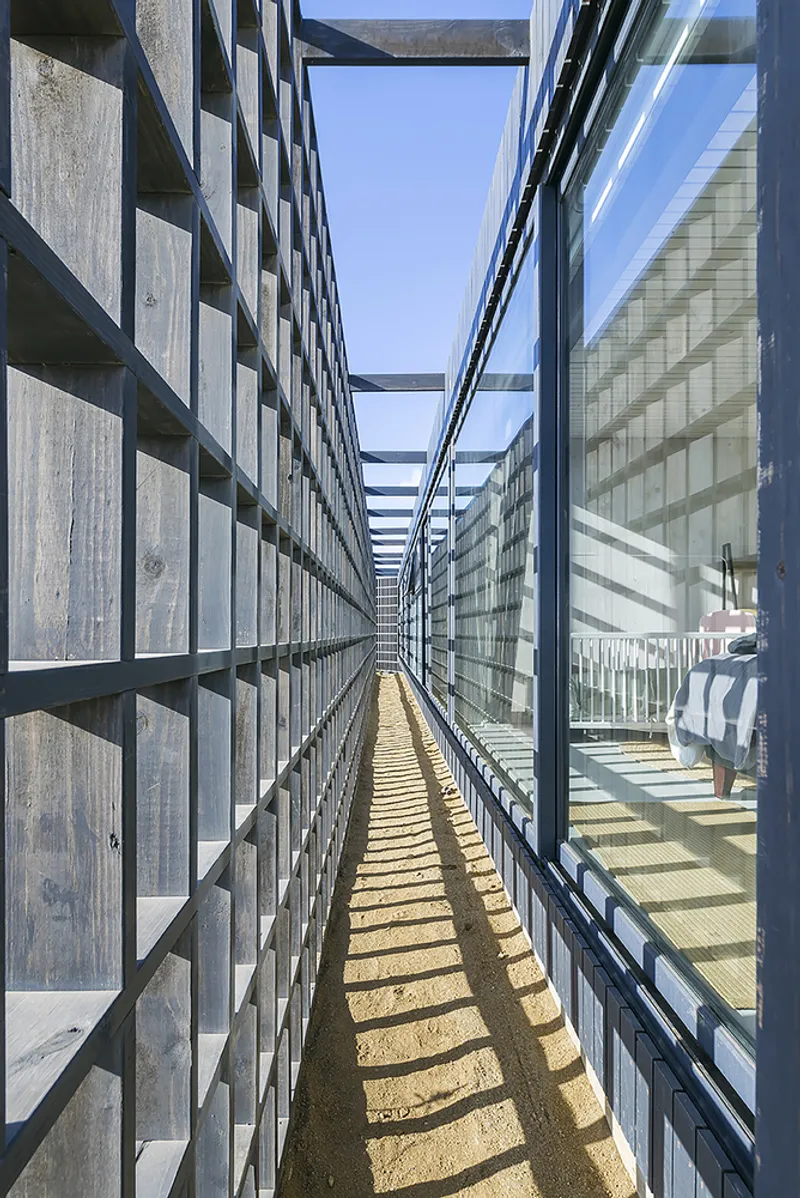
Subtle Integration of Leisure Elements
Even leisure features such as the pool and hot tub are designed with restraint. Instead of dominating the landscape, they are subtly embedded within the vegetation, often reflecting the sky and sea like natural mirrors. This approach reinforces the project's commitment to minimal visual impact and environmental harmony.
A Model for Sustainable Coastal Architecture
The House of Circles exemplifies a contemporary approach to sustainable residential design. By prioritizing ecological preservation, minimizing site disruption, and embracing passive environmental strategies, the project sets a benchmark for low-impact coastal architecture.
It demonstrates how architecture can coexist with nature, not as an imposition, but as a continuation of the landscape’s logic.
All photographs are works of
Sergio Pirrone




Popular Articles
Popular articles from the community


The Musturak Paradise: Senior Living Architecture for a Connected Future in Temara, Morocco
The Musturak Paradise reimagines senior living architecture in Temara via private homes, social spaces, culture, community, and shared care.

Hill & Cross Opera: Sculptural Opera House Architecture Shaped by Tallinn’s Landscape and Identity
Hill & Cross Opera reimagines opera house architecture in Tallinn through its sculptural hill, civic plaza, glass wave and a luminous cross.

Conexión: Biophilic Design Reimagines High-Rise Living in Hong Kong
Conexión reimagines high-rise living in Hong Kong through biophilic design, green facades, shared spaces, daylight, water and nature within.

Co-life: Sustainable Architecture for Age-Friendly Community Living
Co-life reimagines sustainable architecture for seniors through courtyards, rammed earth, shared gardens, and spaces designed for belonging.

Similar Reads
You might also enjoy these articles

Bamboo Housing Challenge 2026: Design Affordable, Sustainable Homes Using Bamboo
An international design competition by Bamboo U and IBUKU inviting architects and designers to reimagine affordable housing using bamboo — with the winning design built full-scale in Bali.

Computational Design & Education: Beegraphy Design Awards Introduces 7th Category (Featuring Jiyun's Innovative Approach)
Dive into Beegraphy’s 7th Design Awards category, where computational design meets education to create immersive, interactive learning tools, inspired by Jiyun’s work.
From Parametric Lighting to Urban Furniture: Join the 2nd Workshop in Beegraphy’s Computational Design Series
Dive into Cutting-Edge Design Techniques and Practical Applications with Industry Experts

Last Call: Unleash Your Architectural Genius in SHAK's Kindergarten Design Competition
Urgent call for architects to join SHAK's kindergarten design competition before the looming deadline


Explore Architecture Competitions
Discover active competitions in this discipline



Challenge to reimagine the Iron Throne


Photograph architecture without architects


Illustrate the lost glory of Angkor Wat - Render Challenge


Design challenge to reuse E-waste
Comments (0)
Please login or sign up to add comments
No comments yet. Be the first to comment!