
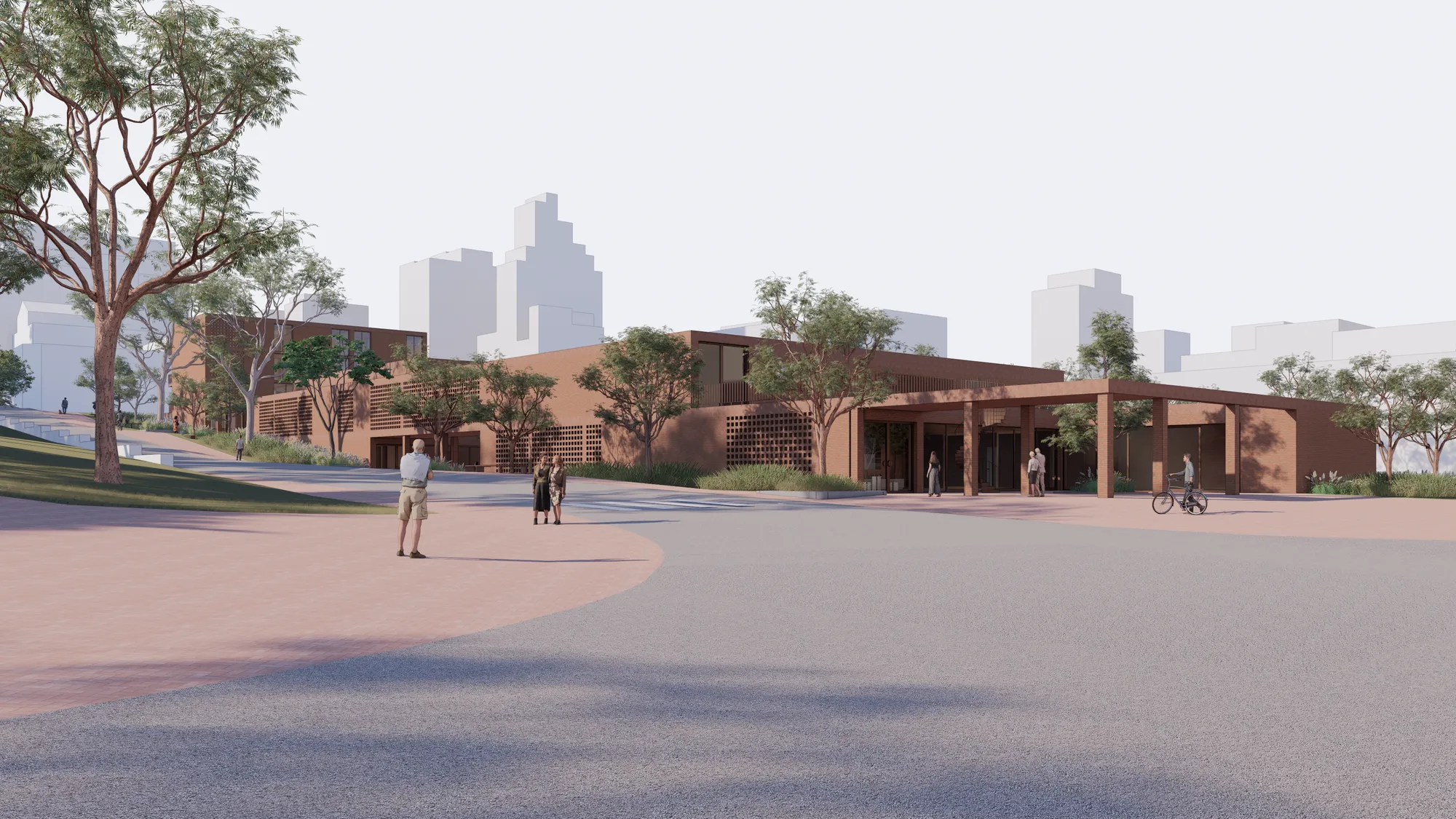
House of Dance
The aim of my project is to create a house that is as colourful as its context, that fits in into the historic district and serve to preserve the dance traditions, values and identity of the society.

In my design, I try to take as much inspiration as possible from the context of the surrounding area. First of all, I am inspired by the culture and especially the cultural dance of Buenos Aires, the tango. The society in Buenos Aires dance is a part of them, as well as other and especially the cultural dance of Buenos Aires. The society in Buenos Aires dance is a part of them, as well as other cultural expressions. Therefore, an important challenge is to preserve this tradition and create a platform to promote it for the preservation of identity. In the design of the house I try to interpret certain features of dance such as movement, rhythm, passion. Furthermore, in the design I was inspired by the urbanism of the city itself, built on a strict orthogonal grid of city blocks that are densely with houses, creating passages that serve the houses inside the block. I am also inspired by the architecture and colours of the city, in which is a mixture of history and the present. The brightly coloured plaster on the traditional houses is interesting, and many times in the city red is used, whether in the form of a brick on a house or on a pavement in a park, for example. Brick is particularly used in the context of the not only for its expression but mainly for its qualities and that is why I discuss it further in the thesis.
URBANISM
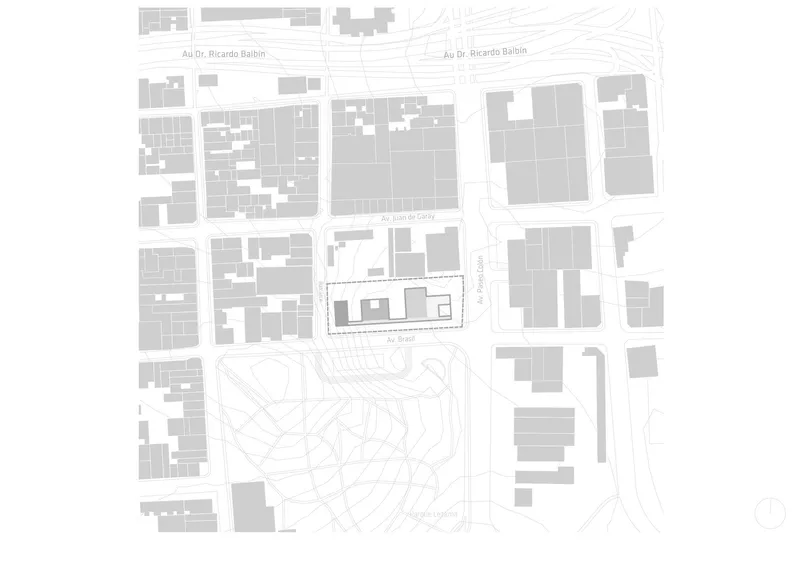
The city has a regular orthogonal street grid system that defines the shape of the city block. The arrangement of buildings is usually directly on the street line and in order to serve the objects also inside the city block, this block often contains passages. Passages can be part of the building or not, they are both exterior and interior. The proposed massing is inspired by the urban orthogonal grid and is set on a regular 3 metre grid. The mass is set back from the street line by almost 8 metres, from to create the necessary public foreground for a pleasant passage through the site, while the setback follows the to the newly constructed multi-storey buildings from the main street, which set back from the street line and form a public space. The main entrance to the building is from the east of the main street, where the mass opens slightly into the public space and creates a smaller entrance square. A further entrance is from the west by the lower traditional low-rise development where the mass continues the height of the historic buildings on the opposite side of the street. From the main street is the supply entrance, where disabled parking spaces are also located and bicycle racks. There are collector car parks within close proximity to the subject site and also public transport access. Public transport stops are on the main street opposite the entrance to the property.
CONCEPT OF THE MASS
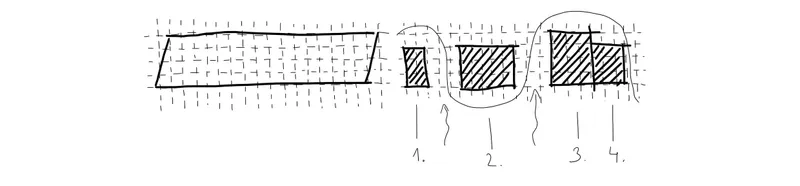
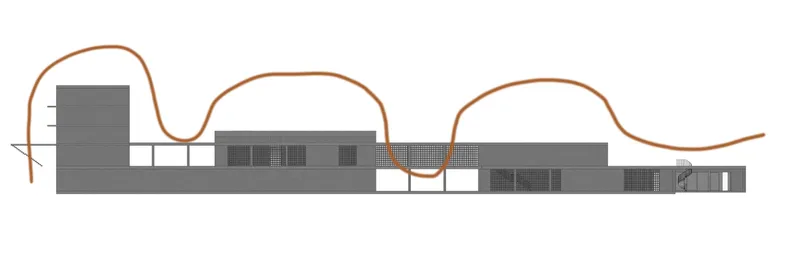
The house is spread over the entire length of the plot, it has a longitudinal shape that follows the longitudinal shape of the plot. It consists of four four separate blocks, which are connected by a covered corridor "passage". This passage is a kind of intermediate space between the exterior and the interior. It passes lengthwise through the whole plot and overcomes the height difference in the terrain, so that the house can be passed through wheelchair-accessible at the same height. Each block contains a different function but they all relate to each other and connect perpendicular to the passage. From the side the main entrance, the functions are more public and further west more intimate. The whole mass is set into the ground and the height drops the individual masses also descend in a bouncy manner, so that the mass looks danced on the terrain and at the same time the height limit is respected. V the mass there are discharges that draw the street and the park into themselves. Here, spaces are created with social, leisure and recreational activities that extend the space of the street while being slightly more intimate. The whole mass thus creates a curve in both section and plan, which presents movement and is an interpretation of dance. The aim was to make the mass appear dancing from every street view and to see the informal organic movement of the public spaces and greenery between the masses.
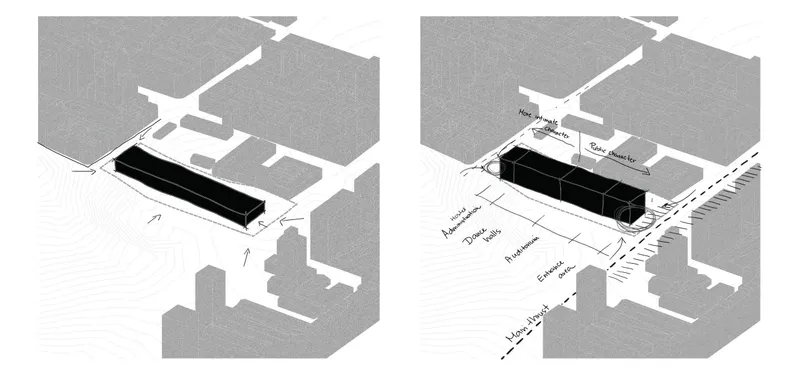
- THE LOT IS FILLED WITH MASS SO AS TO FORM ALONG THE STREET ON EACH SIDE A FRONTAGE AND ALSO A VISTA, AS IT IS CHARACTERISTIC OF LOCAL URBANISM. AT THE SAME TIME, THERE IS ALSO A SETBACK THAT ALLOWS FOR THE EMERGENCE OF A PUBLIC IN FRONT OF THE HOUSE.
- THE MASS IS FURTHER DIVIDED INTO FOUR SEPARATE BLOCKS, CREATING TWO PRIMARY ENTRANCES TO THE HOUSE. MAIN ENTRANCE FOR THE PUBLIC IS FROM THE MAIN STREET SIDE, WHERE THE PUBLIC SPACE ACROSS FROM THE SUBJECT PROPERTY BEGINS TO TAKE SHAPE. THEREFORE, AT THIS POINT, THE MAIN PUBLIC ENTRANCE SPACE IS CREATED IN RELATION TO THE AUDITORIUM. THE SECOND ENTRANCE IS FROM THE OTHER END OF THE HOUSE WHERE MORE INTIMATE FUNCTIONS SUCH AS THE HOSTEL AND ADIMINISTRATIVE ARE LOCATED. IT IS FOLLOWED BY A QUIETER STREET AND A DEVELOPMENT OF LOW-RISE, MORE HISTORIC HOUSES.
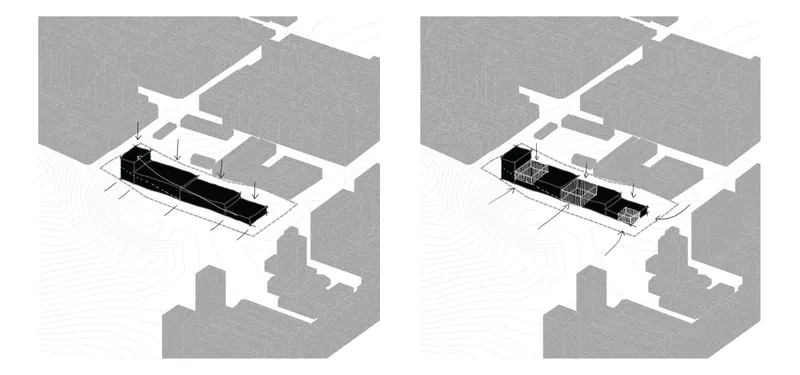
- THE MASS IS SET IN THE TERRAIN AND AS THE TERRAIN DESCENDS, THE HEIGHT OF THE INDIVIDUAL BLOCKS DECREASES, CULMINATING IN THE MASS WITH THE HOSTEL. THE LOWEST MASS IS AT THE MAIN STREET, WHERE THERE IS AN ENTRANCE FOYER WITH A CAFÉ, A SPECIALIST SHOP AND A ENTRANCE TO THE AUDITORIUM.
- THE HOUSE IS AERATED AND DIVIDED BY REMOVING PART OF THE BLOCKS. THIS HOLLOWING OUT OPENS UP THE MASS AND CREATES A PUBLIC THE MASSING OPENS UP THE SPACES BETWEEN IT. THE PUBLIC SPACE THUS OFFERS A SLIGHTLY SHELTERED SPACE FROM THE STREET AND AT THE SAME TIME AN EQUALLY OPEN SPACE, WHICH DRAWS THE STREET INTO ITSELF AND SERVES FOR CULTURAL ACTIVITIES AS WELL AS REST AND RECREATION.
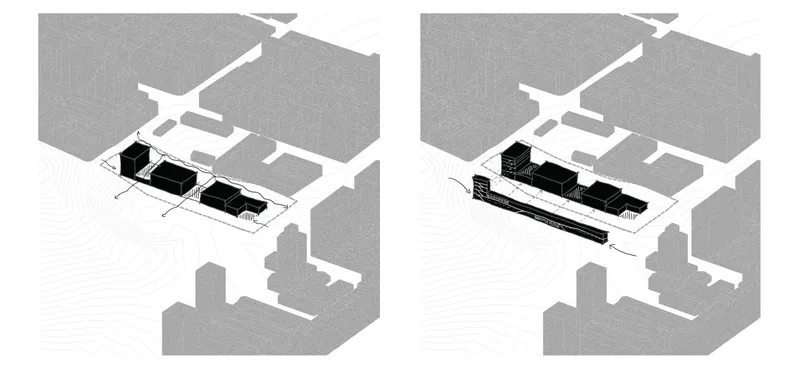
- THE DIVISION OF THE MASS ALLOWS THE ORGANIC FREE MOVEMENT OF THE PUBLIC BETWEEN THE OBJECTS AND THUS THE POSSIBILITY OF USING DIFFERENT SPACES, THAT THE HOUSE CREATES. AT THE SAME TIME, IT CONNECTS THE EXTENSIVE PAR LEZAMA WITH THE PUBLIC SPACES OF THE HOUSE, WHICH DRAWS IN THE GREENERY.
- ALL SEPARATE BLOCKS ARE CONNECTED BY A COVERED CORRIDOR, "ARCADE" SO THAT THERE IS A PASSAGE FROM THE MAIN STREET TO THE HIGHEST MASS IS BARRIER-FREE AND COVERED. THIS PASSAGEWAY IS INSPIRED BY THE PASSAGEWAYS IN THE CITY BLOCKS, WHICH ARE IN BUENOS AIRES ARE VERY COMMON AND ACTUALLY SERVE THE BUILDINGS INSIDE THE BLOCKS. THIS PASSAGEWAY IS AT THE SAME TIME IN SOME PARTS OF IN SOME PARTS AND SEMI-PERMEABLE IN OTHERS TO ALLOW AS MUCH CONTACT WITH THE STREET AS POSSIBLE.


Popular Articles
Popular articles from the community


Play: Fragments of Their World
Familiar architecture becomes modular playground design, creating safe spaces where displaced children can learn, connect, imagine and play.

The Earth Pod: 3D Printed Homes for Resilient Refugee Communities
The Earth Pod reimagines refugee housing through 3D printed homes made from clay, combining resilience, self-sufficiency, and rapid shelter.

Riyadh For All: Intergenerational Urban Design for Active Aging in Rabat
Riyadh For All reimagines urban design in Rabat with intergenerational co-living, adaptive courtyards, and Moroccan cultural exchange today.

Co-Life: Senior Housing Design That Reconnects Older Adults With the City
Co-Life reimagines senior housing design through healing gardens, shared streets, workshops, and a sustainable community across generations.

Similar Reads
You might also enjoy these articles
The Rhythm of Seasons
A Farmers' Market Connecting Nature and the City

More Than a Building-Designing a Living System
More Than a Building-Designing a Living System
Base Beyond
DESERT COMPOUND ARID: TOURISM OF ABSENCE AND ABUNDANCE

Explore Latin American Houses Competitions
Discover active competitions in this discipline




Challenge to reimagine the Iron Throne


Photograph architecture without architects


Illustrate the lost glory of Angkor Wat - Render Challenge

Bring back Drive In's
Comments (0)
Please login or sign up to add comments
No comments yet. Be the first to comment!