

House of Voids by Malik Architecture – Redefining Urban Living in New Delhi
House of Voids by Malik Architecture redefines Delhi housing through courtyards, voids, and light-filled spaces, balancing privacy, climate, and urban context.


Rethinking the Urban Fabric of Delhi
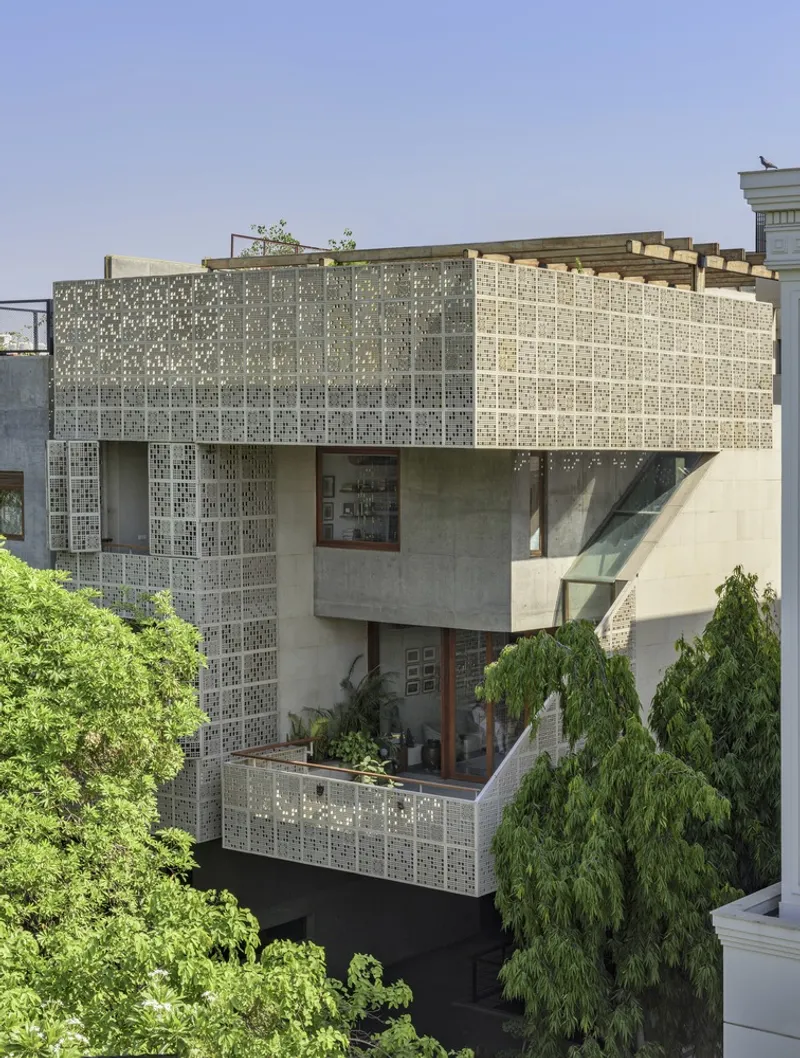
In the heart of New Delhi, House of Voids by Malik Architecture challenges the changing urban conditions of the city. Traditionally, neighborhoods were defined by two-story houses with front gardens set back from tree-lined streets. However, new planning regulations permitting taller structures with reduced setbacks have dramatically altered this balance. The result is a dense urban fabric where houses dominate the streetscape, while natural light, ventilation, and greenery have steadily disappeared.
House of Voids was conceived as a response to this urban shift. Instead of building a conventional multi-story structure, the architects redefined the typology to reintroduce courtyards, gardens, and voids as central spatial elements, reconnecting the home with the environment.
Concept: A House of Fragmented Voids
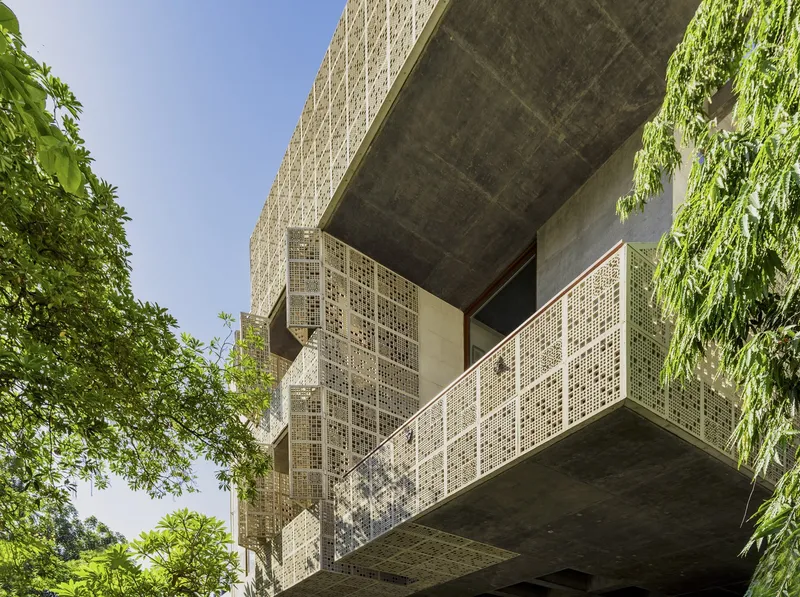
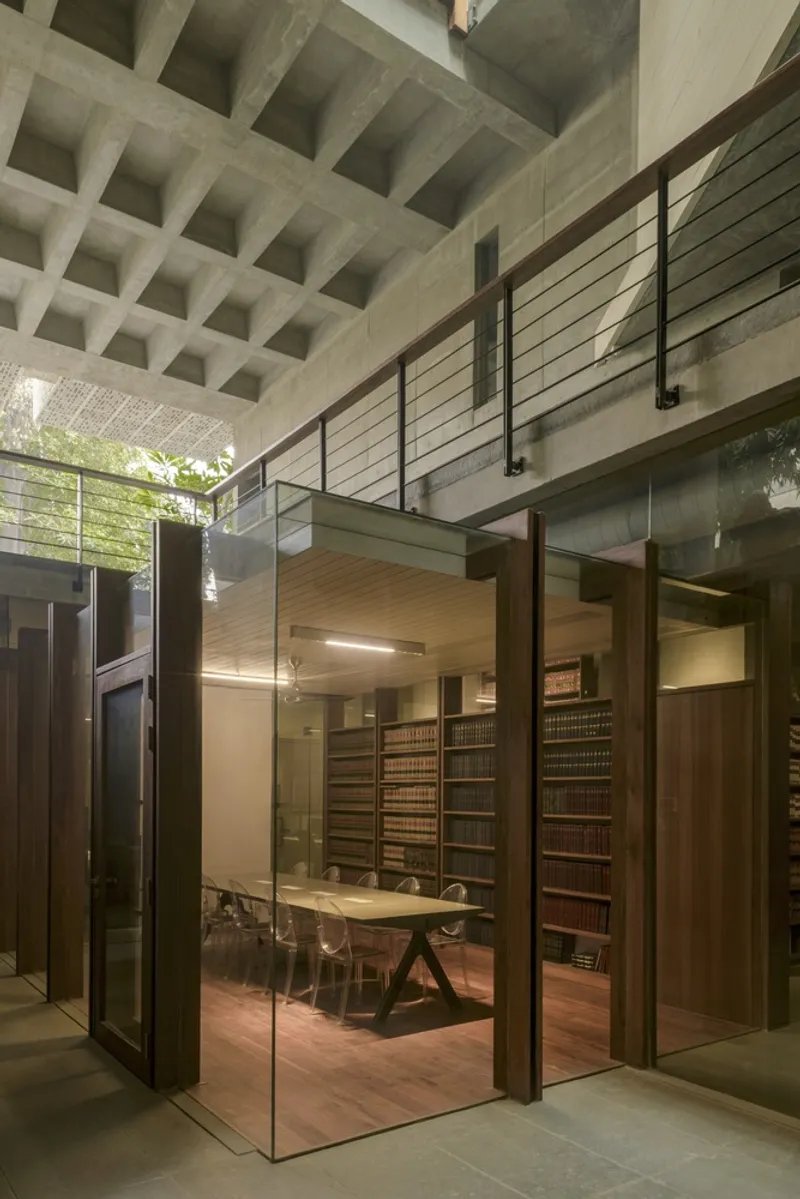
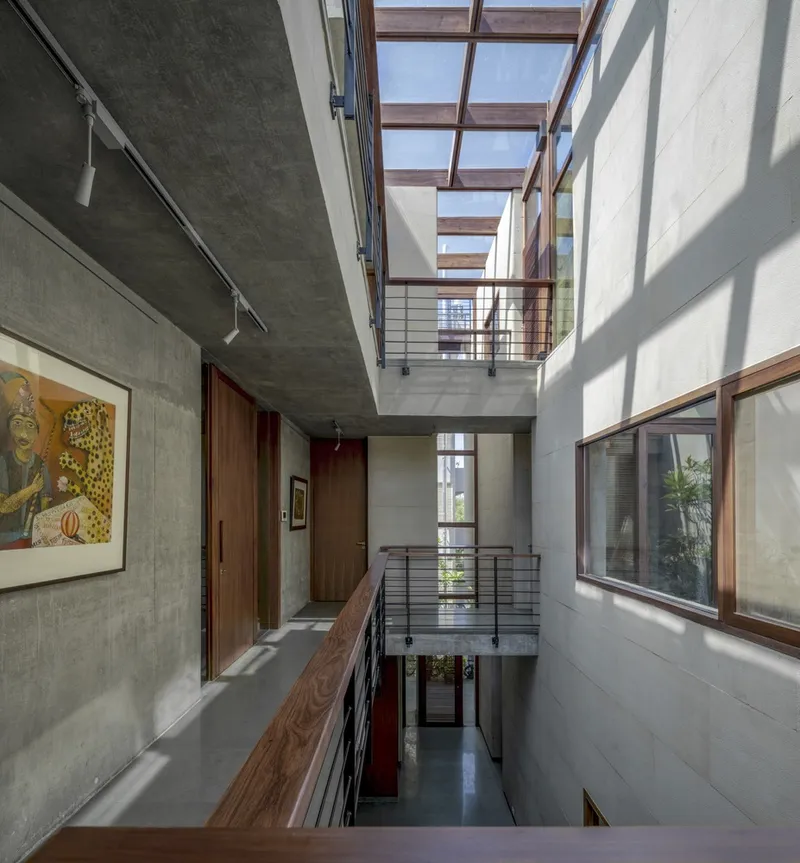
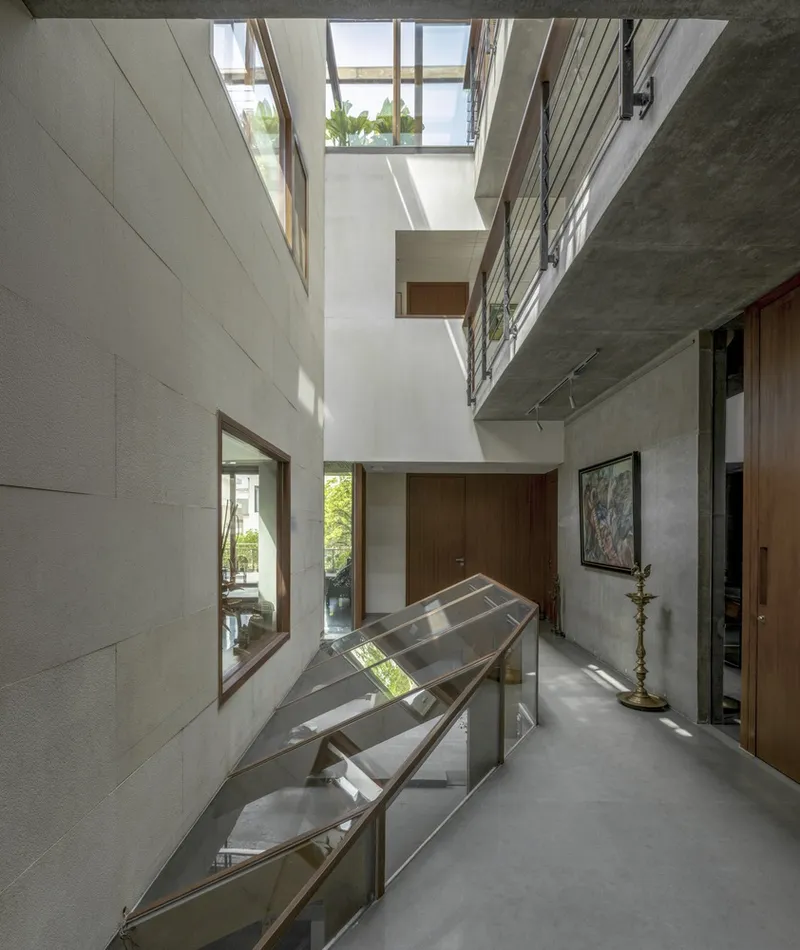
At the core of the design lies a labyrinth of voids—a series of interconnected courtyards, fissures, skylights, and gardens that carve through the building both laterally and vertically. These voids are not just aesthetic breaks but climatic devices that regulate temperature, allow light to filter deeply inside, and bring a sense of openness into the dense neighborhood.
A monumental structural pylon anchors the cantilevered superstructure, shading the ground and evoking the architectural language of Delhi’s historic institutions. This bold move simultaneously grounds the home and creates a dramatic balance between solid and void.
Light, Air, and Thermal Balance
The design adapts the western façade to filter sunlight through punctures, screens, and northern skylights, ensuring controlled daylight without sacrificing privacy—especially given the proximity of neighboring houses.
- North and northwest openings maximize natural illumination.
- A deep recessed fissure in the south channels filtered light into the interiors.
- Vertical courts act as thermal regulators, adaptable to both Delhi’s hot summers and cold winters.
By raising the main structure 18 feet above the ground, a north-facing garden is introduced, while cut-outs channel light into the basement, merging underground spaces with the vertical void system.


Living Spaces Rooted in Tradition and Modernity
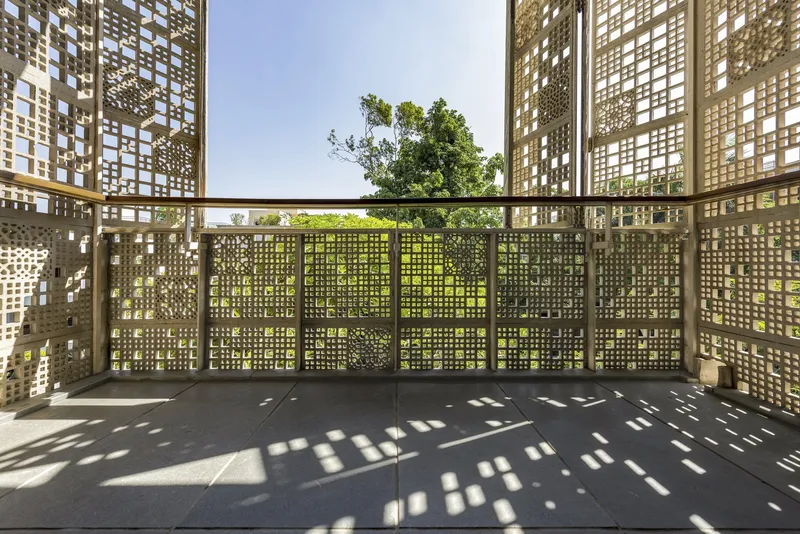
The living areas open onto terraces shaded by large overhanging volumes. Operable second skins and adapted jaali screens reinterpret the traditional Indian architectural element, blending privacy, shade, and ventilation.
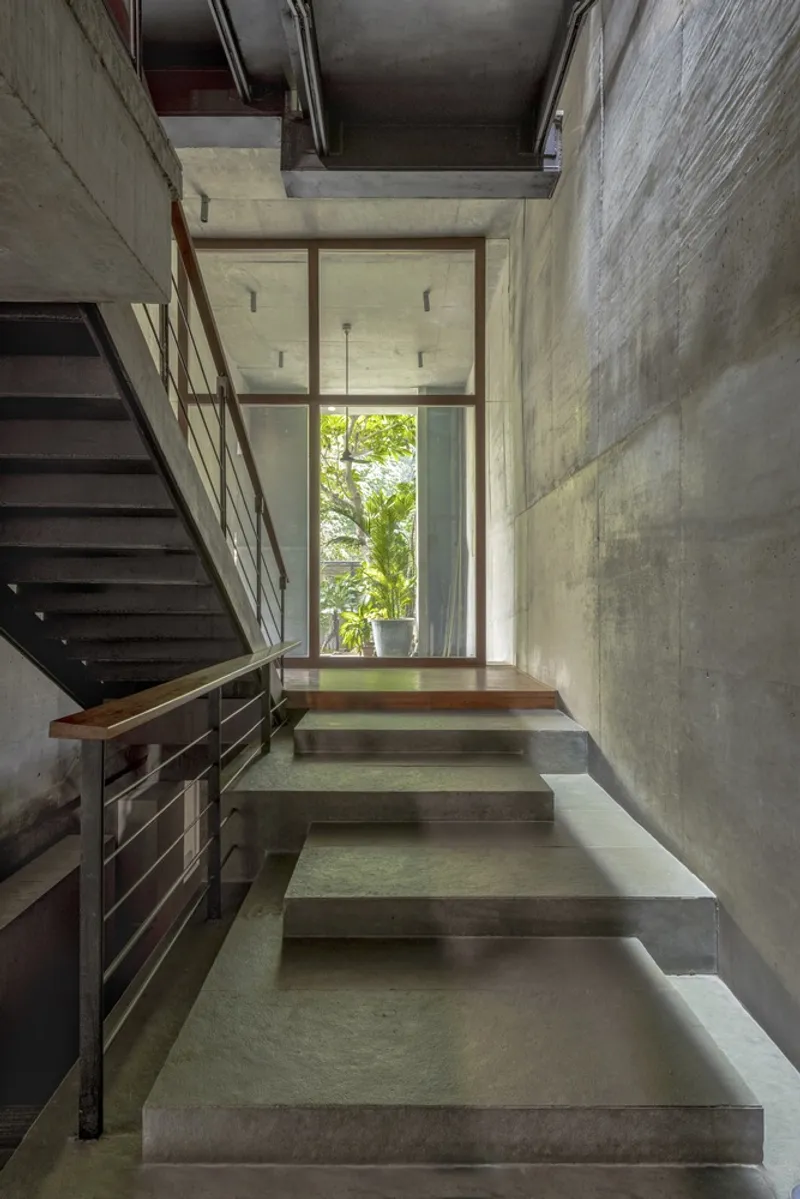
Inside, the elongated central circulation core (32ft x 80ft) creates a continuous spatial volume, enabling flexible use of space while maintaining a sense of unity.
An Urban Oasis in Delhi
House of Voids stands as an architectural manifesto—a sustainable reinterpretation of the Delhi home, where courtyards, gardens, and voids re-establish the lost relationship between private dwellings and the street. It is both a response to restrictive urban regulations and a celebration of light, openness, and thermal comfort.

All Photographs are works of Bharath Ramamrutham


Popular Articles
Popular articles from the community


Jaramillo Van Sluys Arquitectura and Urbanismo Turn a Demolished Registry Lot in Quito into an Orchard Plaza
In Quito's Centro Histórico, a 2,800 m² plaza exposes the San Agustín convent wall and redraws its lost Augustinian orchard in volcanic stone.

Cube Design Draws an Ecological Corridor Between Two Shenzhen Hills with the Nankai Building
Beside Shenzhen's container docks, the Nankai Building pairs stacked balconies with a climbing green screen to connect two hillsides across its height.

David Ortega Stacks a Two-Story Mexico City Penthouse Around a Steel Stair and a Pergola-Shaded Roof Terrace
In Colonia Roma, a 300 m² penthouse uses oak joinery, a planted steel stair and a slatted roof pergola to make a new-build apartment feel like a house.

GROUP A Strips a 1969 Rotterdam Harbor Headquarters to Its Frame and Wraps It in Timber Louvers
In Rotterdam's M4H harbor district, Ferro Offices reuses a 1969 frame, adds one timber storey and reaches BREEAM-NL Outstanding.

Similar Reads
You might also enjoy these articles


Hodi-Mandai Geram
Project Function: Preservation and revitalization of the Intangible heritage and socio-spatial identity of the Hodi by Housing, Cultural Memory Center, Sacred Grove, landscape, local tourism economy


Olio Towers: A Mid-Rise for Performers That Fuses Housing, Rehearsal, and Stage
Located blocks from Houston's Theater District, this modular tower stacks living units around a central performance atrium.

Oasis: Modular Green Housing Carved into Dhaka's Urban Fabric
A shortlisted Plugin Housing entry reclaims unauthorized settlements in Dhaka with stepped concrete volumes, green roofs, and ventilation-driven design.

Black Hole: A Floating Megastructure for the Post-Physical Era
Emiliano Mazzarotto envisions a spherical, self-scaling arena where e-sports, digital hotels, and holographic stadiums replace traditional public space.

Explore Housing Competitions
Discover active competitions in this discipline

Challenge to reimagine the Iron Throne

Photograph architecture without architects

Illustrate the lost glory of Angkor Wat - Render Challenge

Design challenge to reuse E-waste
Comments (0)
Please login or sign up to add comments
No comments yet. Be the first to comment!