
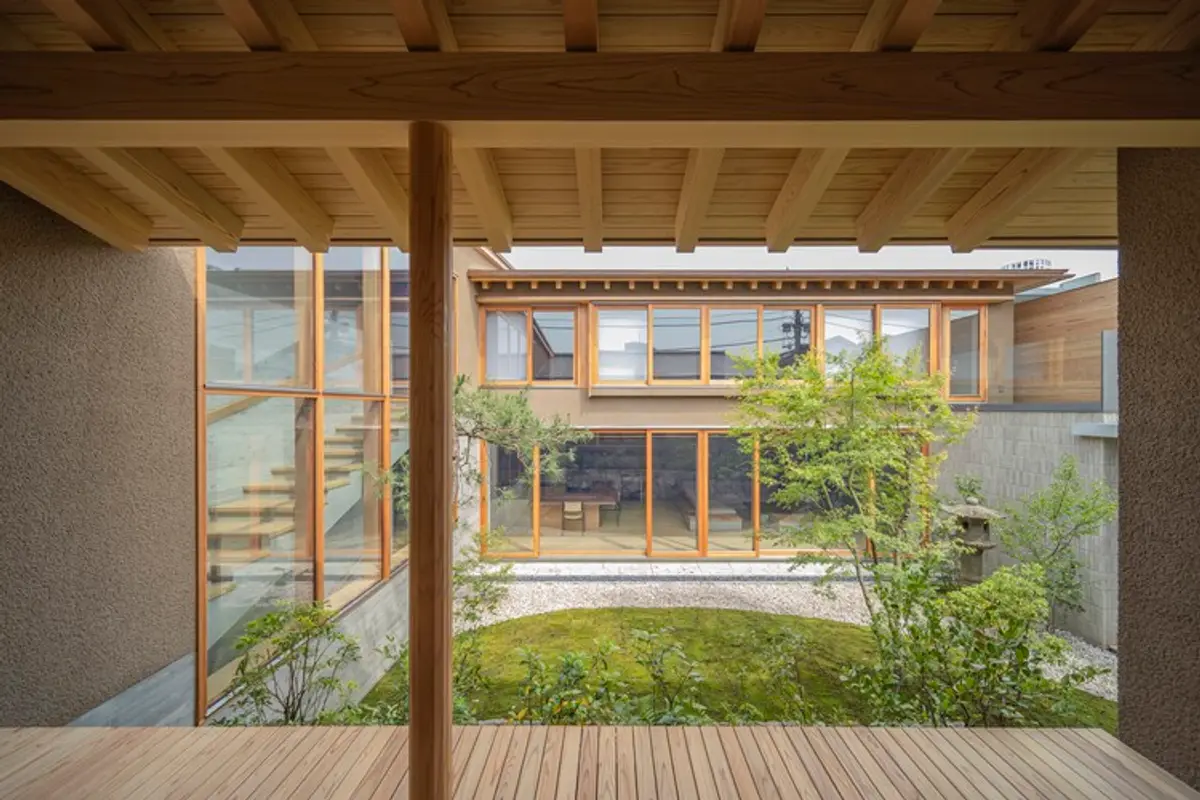
House on a Hill by New Material Research Laboratory: A Dialogue Between Craft, Landscape, and Structure
Courtyard house in Japan blending timber and concrete, crafted with traditional techniques, embracing topography, privacy, and seasonal garden views.


Located in a quiet residential neighborhood of Japan, House on a Hill by New Material Research Laboratory is a masterfully crafted courtyard residence that blends material authenticity, thoughtful topography, and structural poetry. Conceived on a sloped 330 m² site, the house embraces a split-level layout that organically follows the natural elevation of the hill—creating two distinct yet interconnected volumes to the north and south.
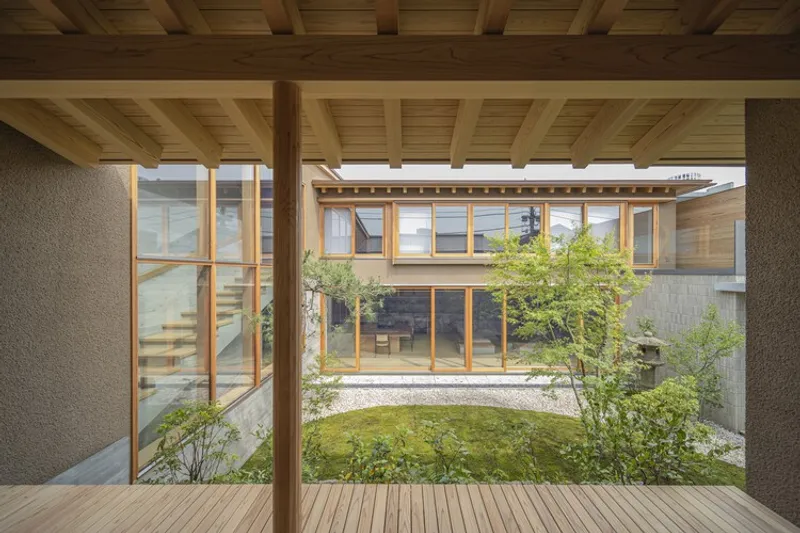
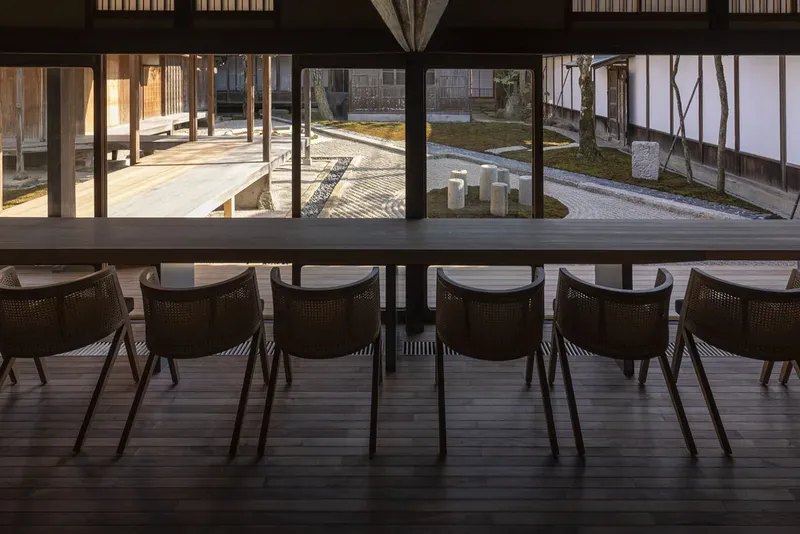
From the exterior, the house exudes privacy and quietude, with a solid south-facing façade devoid of windows. Clad in vertical tongue-and-groove solid wood siding punctuated by equally spaced battens, the façade communicates serenity and restraint while offering a refined architectural expression rooted in material tactility. The spatial strategy emphasizes inwardness, centering around a secluded courtyard garden visible from every room, allowing natural light and seasonal views to animate the interiors.
A Dual Structural Language: Concrete Meets Craft
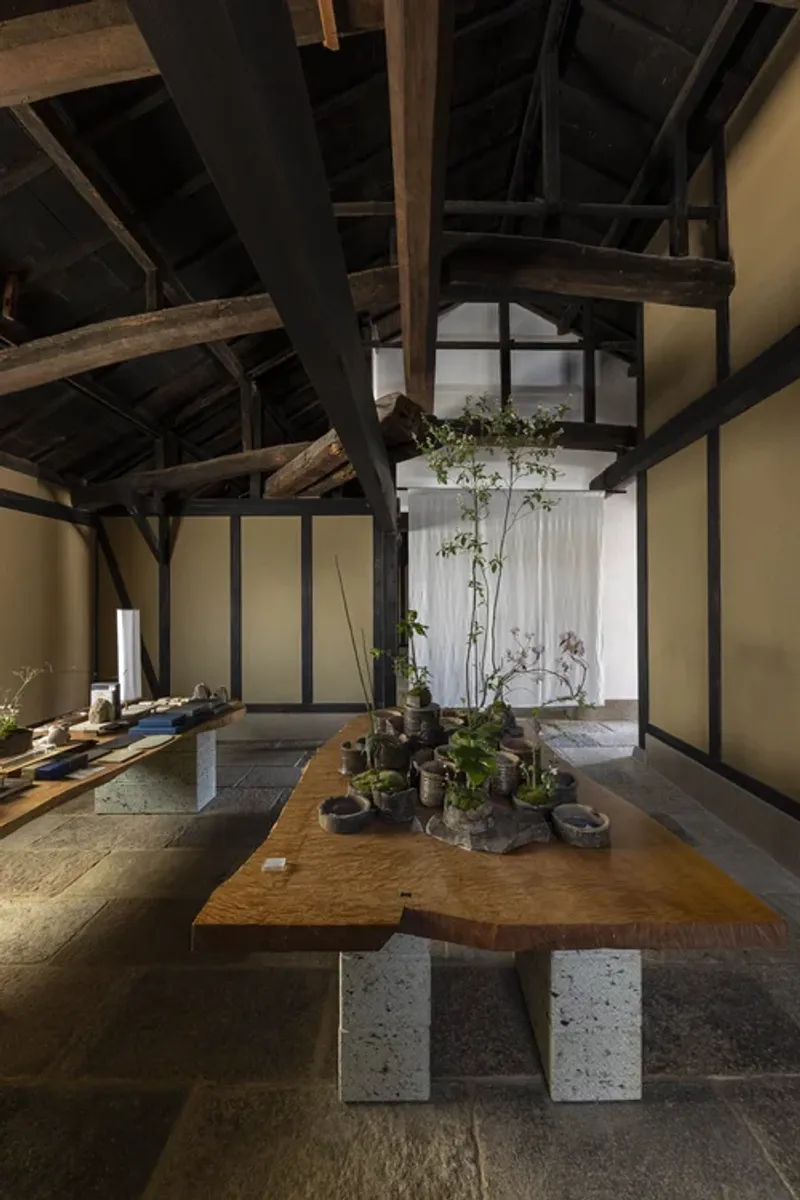
The house's hybrid construction—reinforced concrete on the ground floor and timber post-and-beam on the upper level—demonstrates the architects’ deep reverence for both modern engineering and traditional carpentry. The concrete base acts as a plinth, grounding the house into the terrain, while the wooden upper structure introduces warmth, rhythm, and human scale. At the heart of the space lies a 10-meter-long ridge beam made of Tohoku pine, finished with a traditional naguri adze technique, asserting itself as both a structural and aesthetic centerpiece.
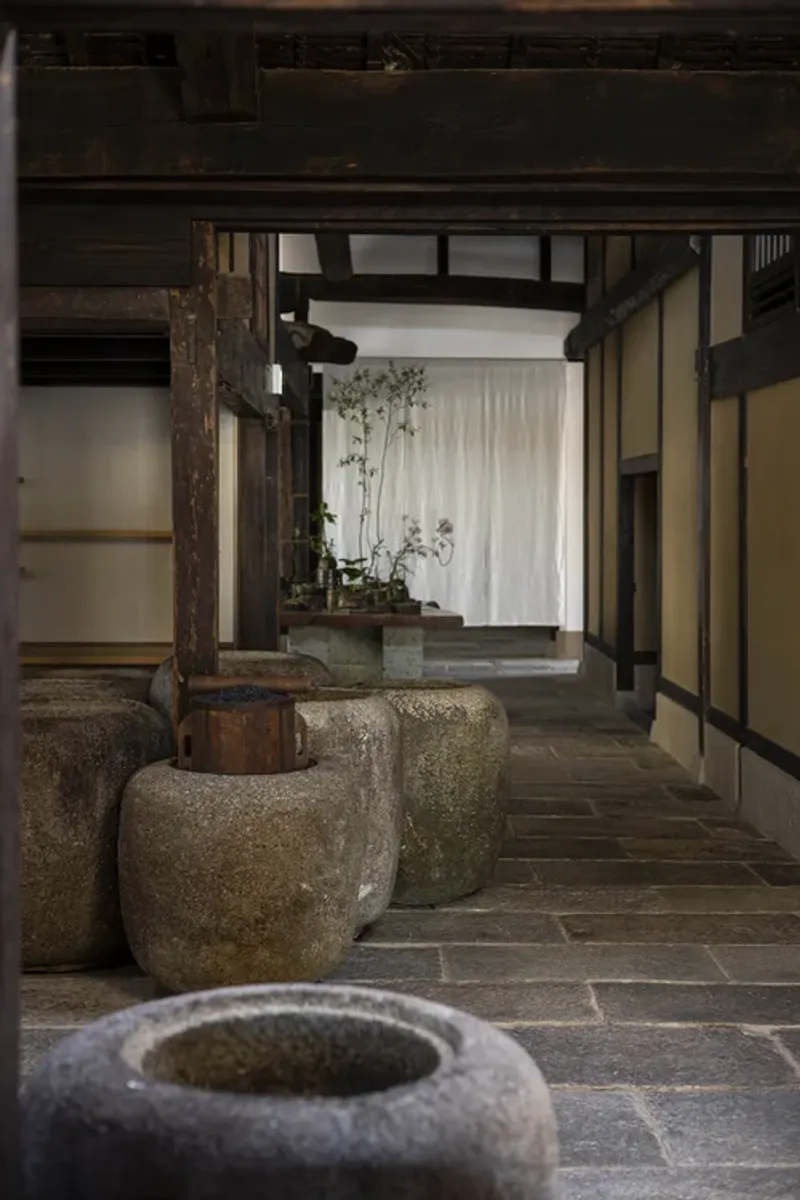
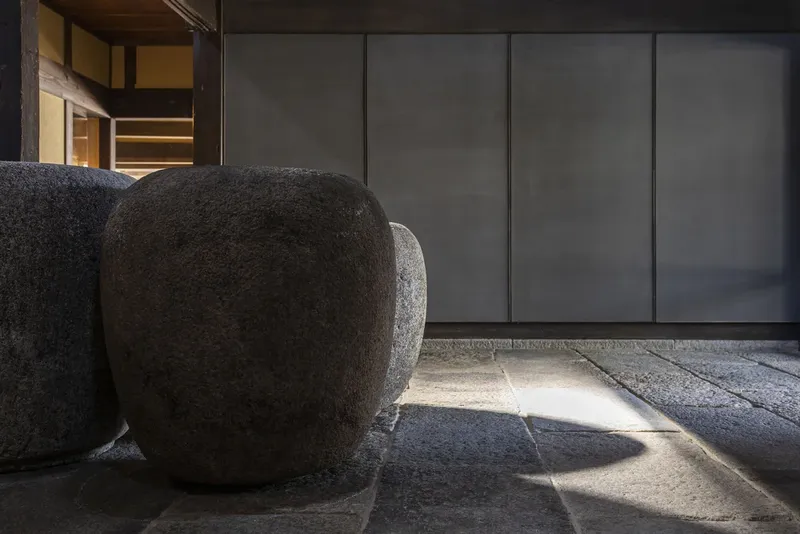
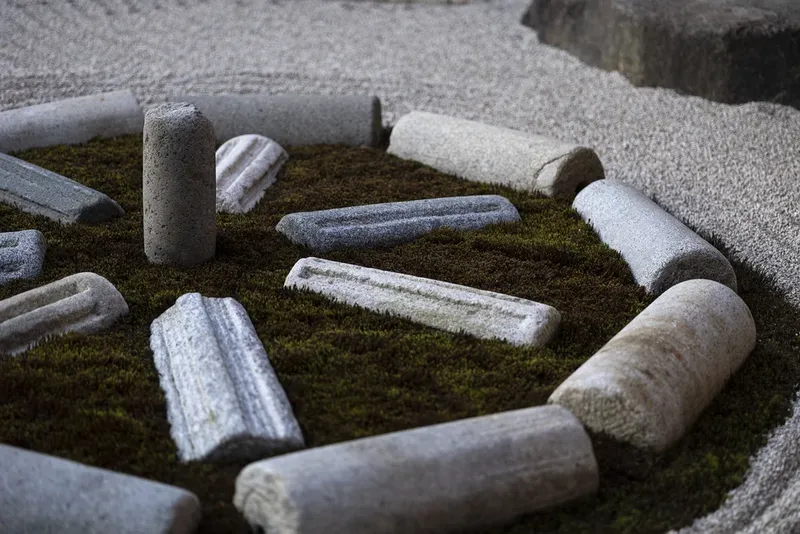
Each material was chosen not just for performance but for regional authenticity and textural dialogue. The windows are framed in Shinshu larch, whose reddish tone complements handcrafted stoneware tiles and textured plaster. Antique trambed stones lead visitors through the entry path, while Aiki stone and Japanese yew and pine trees border the garden—emphasizing the timeless relationship between architecture and landscape.
Crafted Roofscapes and Subtle Transitions
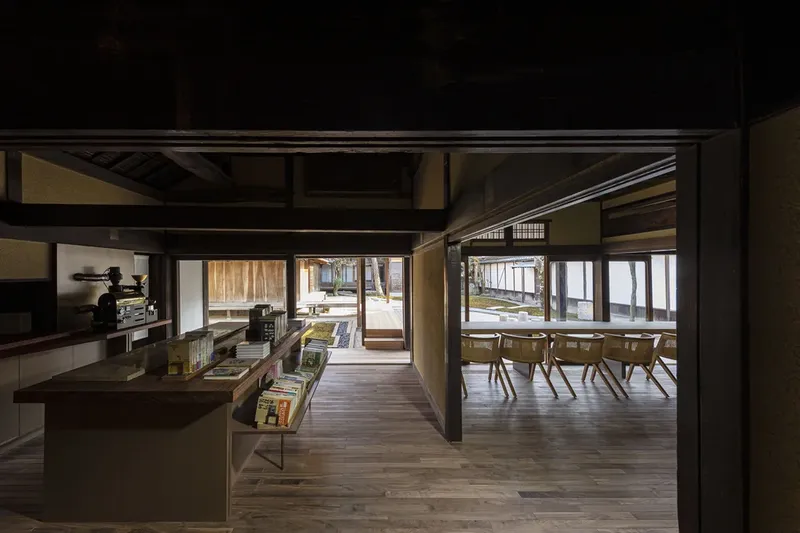
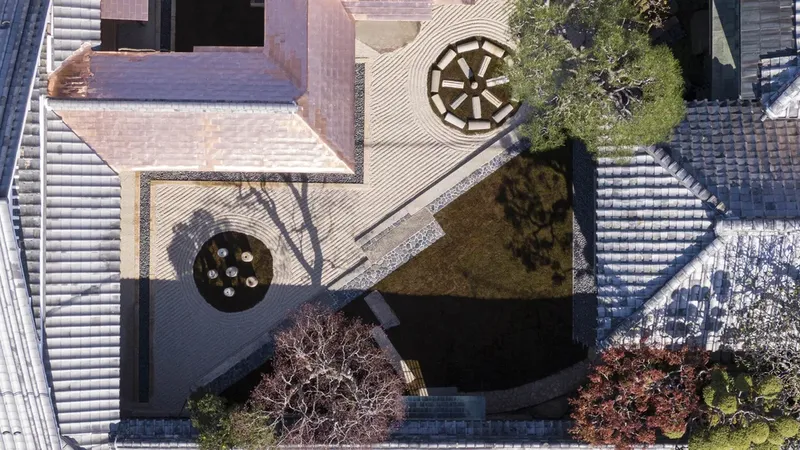
A low, hip-and-gable roof tops the south building, appearing single-story from within due to the level manipulation afforded by the split-level layout. Roof details include exposed rafters and copper tiles finished with two-tiered noshigawara ridge elements, underscoring the house’s meticulous attention to craftsmanship and regional tectonics. Interior partitions are intentionally kept low to maintain spatial continuity and showcase the exposed timber framework, while woods like Yoshino cedar, Yakusugi, and imported hardwoods such as Myanmar teak and Indian rosewood enrich the sensory depth of each room.
Stone elements—ranging from Oya tuff and Tatsuyama sandstone to Katsuren travertine—are placed with care, contributing not just to visual texture but to a sense of geological rootedness.
Designing for Sightlines, Seasons, and Slowness
One of the most subtle yet powerful architectural moves is the gentle staircase that connects the two building volumes. Designed with a low incline and deep treads, it facilitates an almost unnoticeable transition between levels while maintaining visual continuity with the courtyard garden. Every shift in elevation is orchestrated to preserve sightlines, making the house feel fluid, contemplative, and grounded.
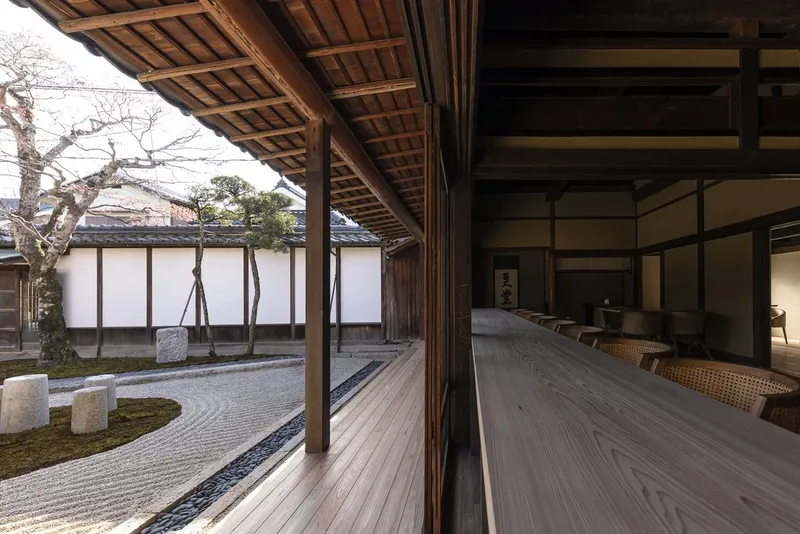
This attentiveness extends to the garden design, where deciduous trees change with the seasons, blurring the boundaries between built form and nature. The living-dining area is placed flush with the courtyard floor, reinforcing the experience of living amid the landscape.
Advocating for Wood in Urban Japan
The house is also a response to Japan’s stringent fire regulations, which often restrict wood construction in urban environments. Instead of relying on traditional fire-resistant structures, the architects cleverly used the site’s size to their advantage, allowing for a fire-preventive strategy that kept the structure low and spread-out—thus enabling the extensive use of wood without compromising compliance.
This solution underscores the firm’s broader mission: to preserve and re-elevate the role of skilled carpentry in contemporary Japanese architecture. As the profession grapples with prefabrication and efficiency-driven models, the house stands as a manifesto for craft, tradition, and material dignity in the face of mass standardization.
All Photographs are works of Masatomo Moriyama


Popular Articles
Popular articles from the community


Lunar Spiral: Space Architecture Shaped by the Mathematics of the Universe
Lunar Spiral reimagines space architecture through Fibonacci geometry, lunar regolith, levitating habitats, and self-sustaining Moon living.

Conexión: Biophilic Design Reimagines High-Rise Living in Hong Kong
Conexión reimagines high-rise living in Hong Kong through biophilic design, green facades, shared spaces, daylight, water and nature within.

The Ocean Hive: Sustainable Architecture for a Self-Sufficient Civilization at Sea
The Ocean Hive imagines sustainable architecture at sea, where modular habitats, algae, wave power and ocean waste sustain a growing colony.

The Musturak Paradise: Senior Living Architecture for a Connected Future in Temara, Morocco
The Musturak Paradise reimagines senior living architecture in Temara via private homes, social spaces, culture, community, and shared care.

Similar Reads
You might also enjoy these articles


Hodi-Mandai Geram
Project Function: Preservation and revitalization of the Intangible heritage and socio-spatial identity of the Hodi by Housing, Cultural Memory Center, Sacred Grove, landscape, local tourism economy


Olio Towers: A Mid-Rise for Performers That Fuses Housing, Rehearsal, and Stage
Located blocks from Houston's Theater District, this modular tower stacks living units around a central performance atrium.

Oasis: Modular Green Housing Carved into Dhaka's Urban Fabric
A shortlisted Plugin Housing entry reclaims unauthorized settlements in Dhaka with stepped concrete volumes, green roofs, and ventilation-driven design.

Black Hole: A Floating Megastructure for the Post-Physical Era
Emiliano Mazzarotto envisions a spherical, self-scaling arena where e-sports, digital hotels, and holographic stadiums replace traditional public space.

Explore Housing Competitions
Discover active competitions in this discipline

Challenge to reimagine the Iron Throne

Photograph architecture without architects

Illustrate the lost glory of Angkor Wat - Render Challenge

Design challenge to reuse E-waste
Comments (0)
Please login or sign up to add comments
No comments yet. Be the first to comment!