
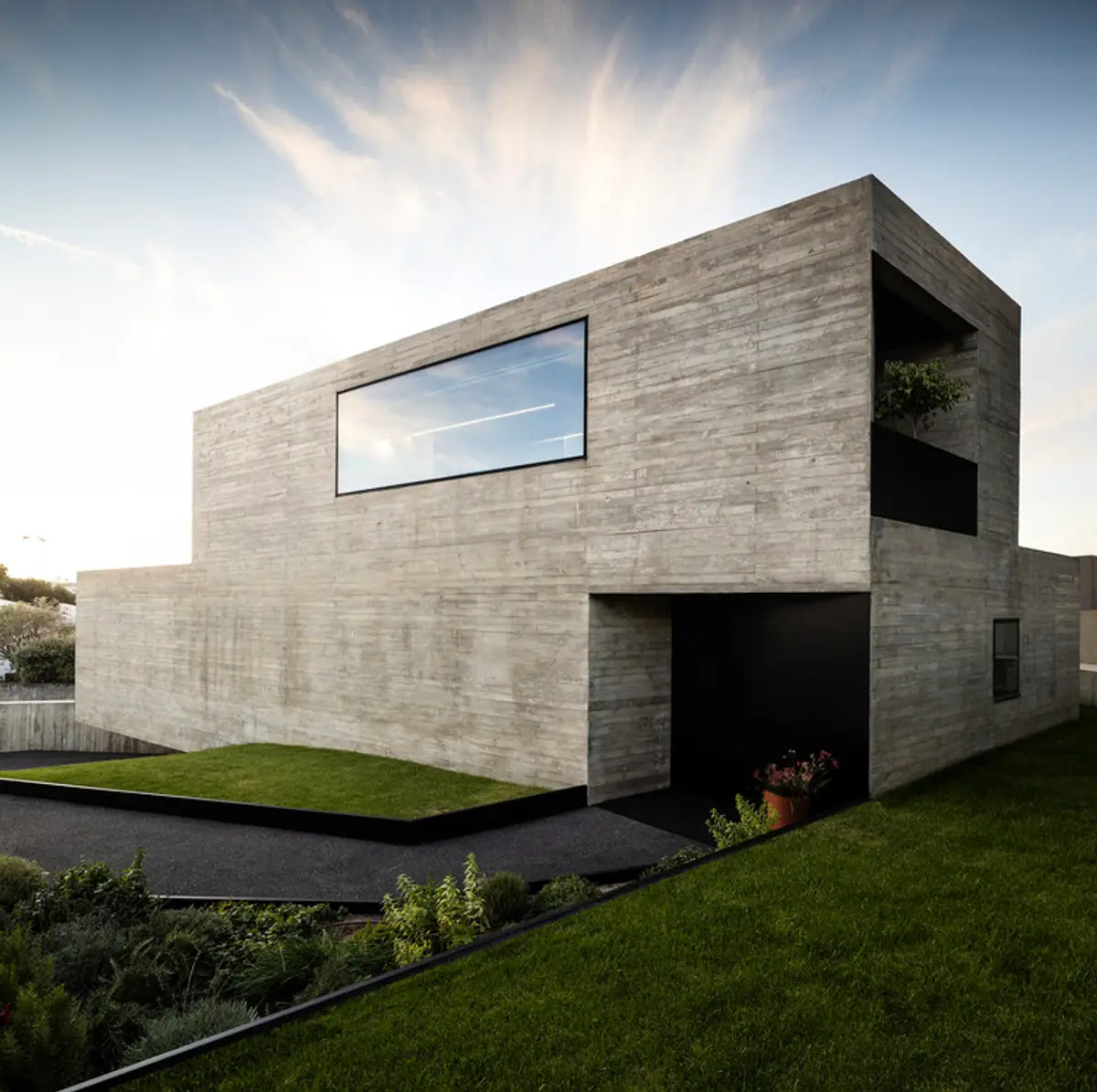
House_JA: A Concrete Horizon House Framing Landscape, Privacy, and Panoramic Living
Concrete house on sloped site, framing panoramic views with open terraces, while maintaining privacy through introverted street façade and layered spatial organization.


Located in Vila Nova de Gaia, Portugal, House_JA by éOp, arquitectura e design is a carefully composed residence that negotiates between openness to landscape and inward privacy. Positioned within a sloping terrain overlooking the Douro River, its estuary, and the Atlantic horizon, the house is designed as a spatial device that frames views while maintaining a controlled and introspective presence toward the street.
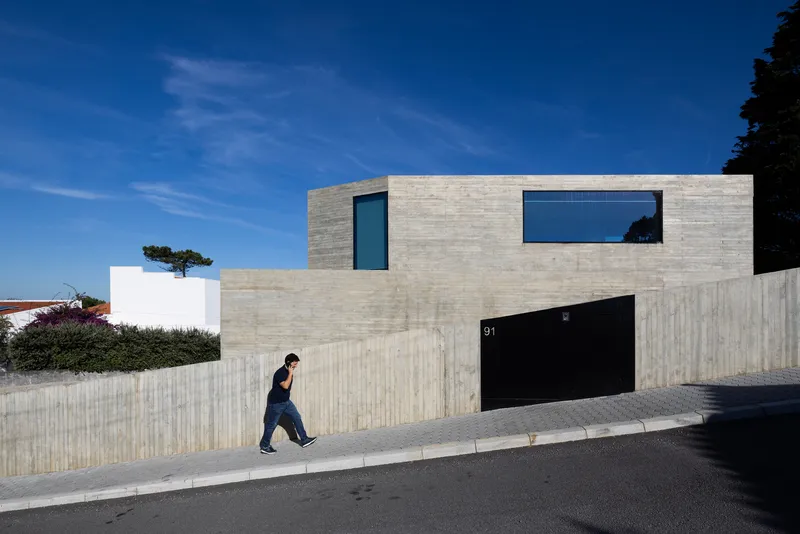
The project is organized across three levels, each responding directly to the site’s topography. Rather than imposing a uniform structure, the design uses the natural slope to distribute functions vertically, allowing each floor to benefit from distinct spatial qualities and visual relationships with the surrounding landscape.
At the entrance level, the house reveals a restrained and protective façade. Facing the street, the architecture adopts a closed and solid character, ensuring privacy and creating a calm transition into the interior. This contrast between enclosure and openness becomes a defining principle of the project.
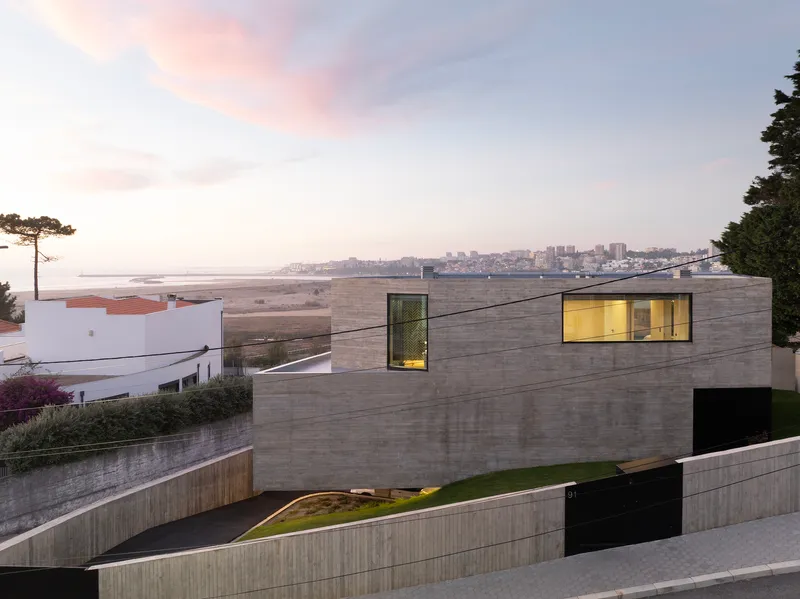
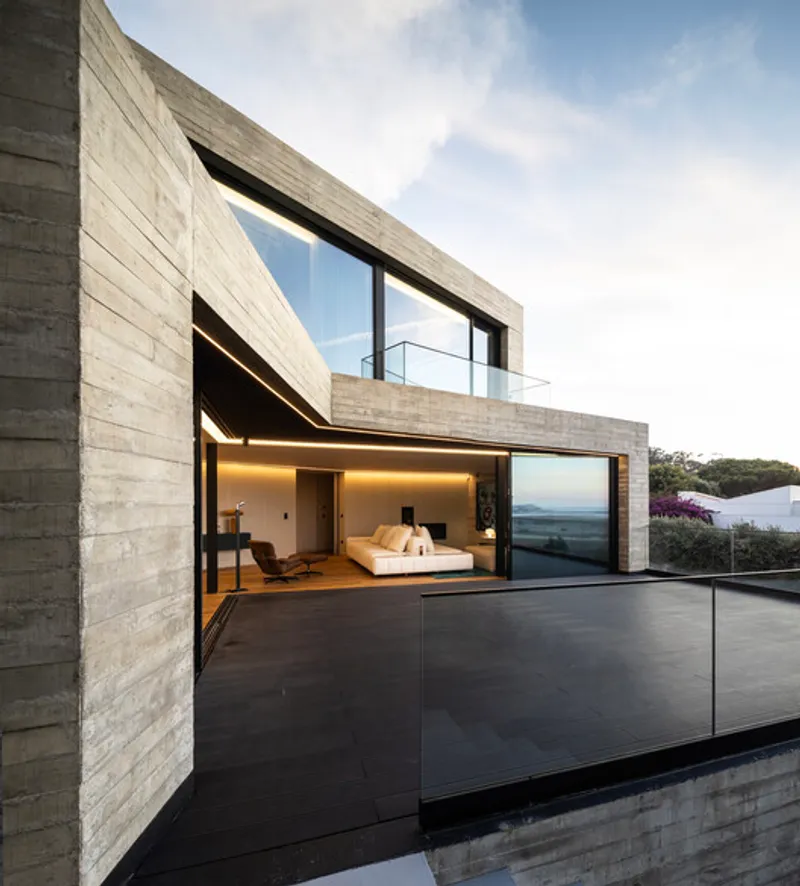
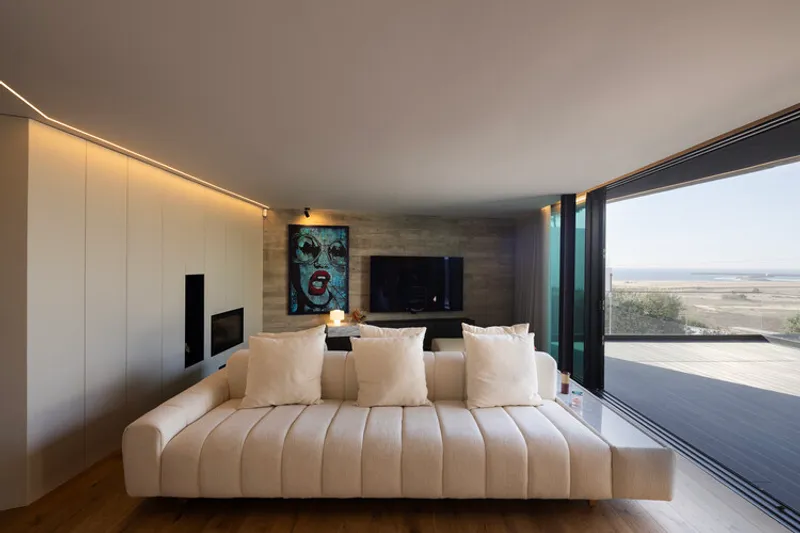
Once inside, the house gradually unfolds toward the landscape. The main social floor is designed as an open and continuous space, where living, dining, and kitchen areas are connected visually and spatially. Large sliding glass panels extend these spaces outward onto a terrace, dissolving the boundary between interior and exterior. This seamless connection enhances the perception of openness while allowing natural light to enter softly and evenly throughout the day.
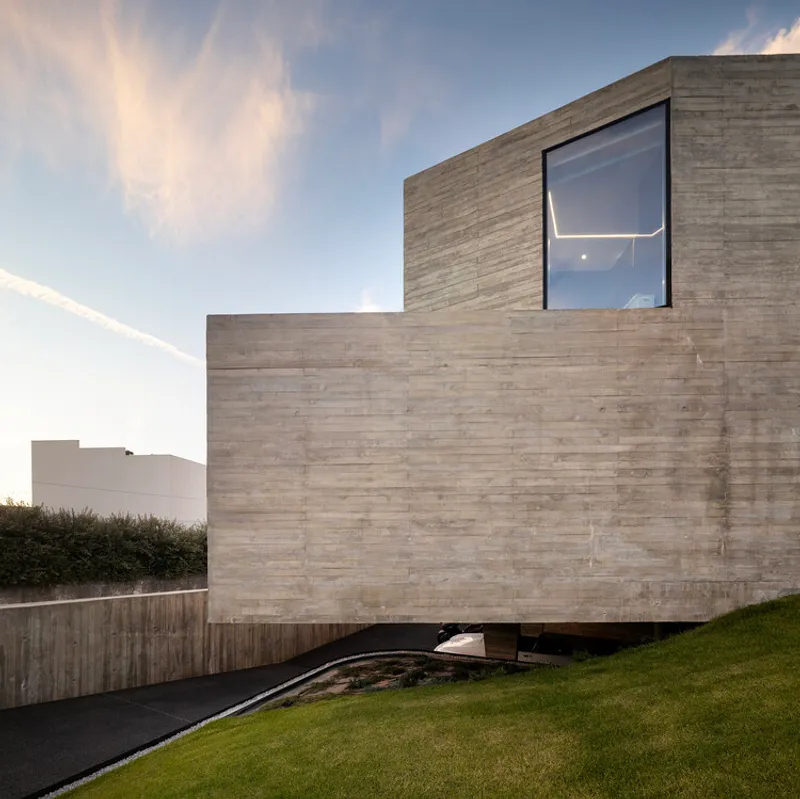
Above, the first floor accommodates the private areas of the house. Three bedrooms are oriented toward the panoramic views, offering framed perspectives of the sea, the Douro estuary, and the city of Porto. These spaces are conceived as quiet retreats, emphasizing contemplation and a strong visual connection to the horizon.
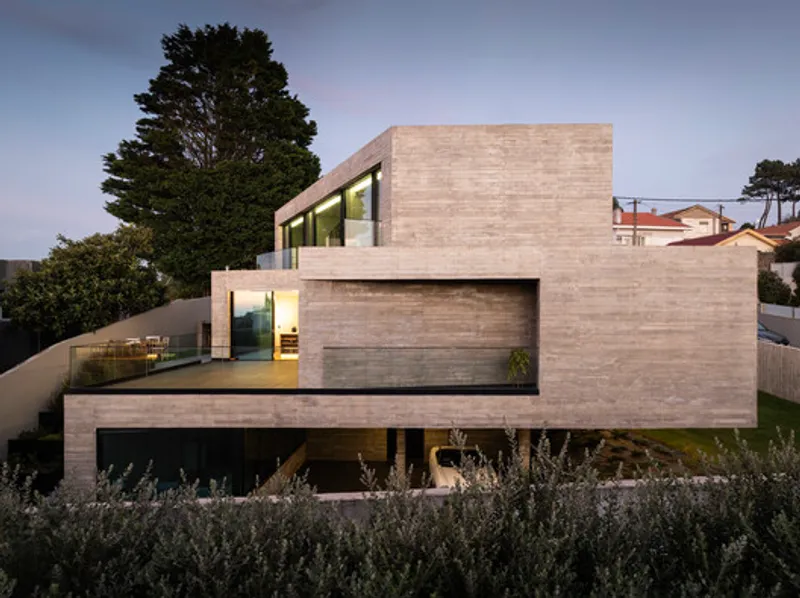
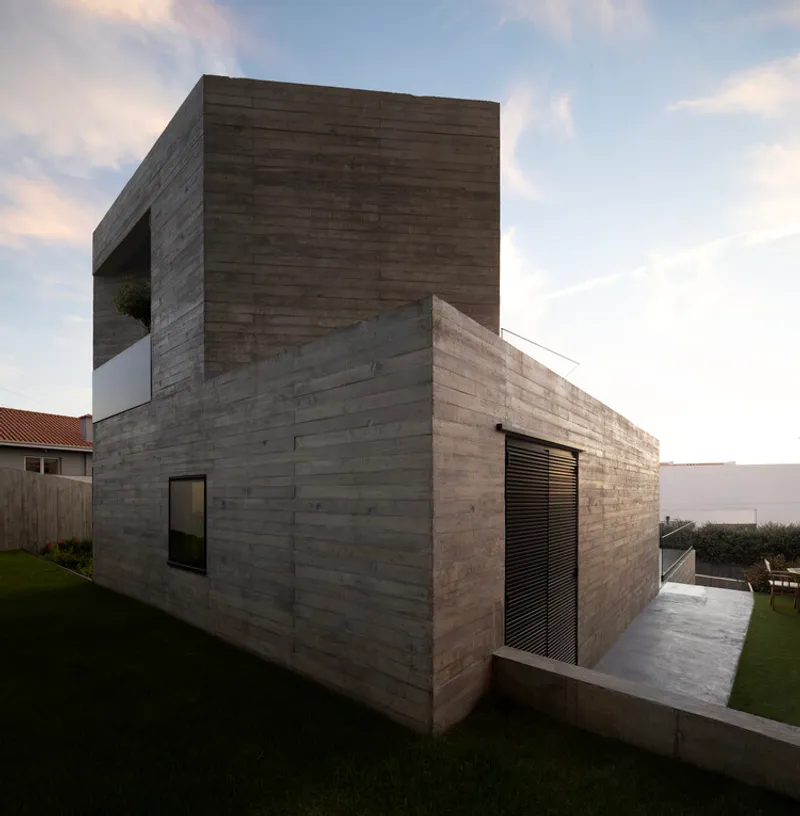
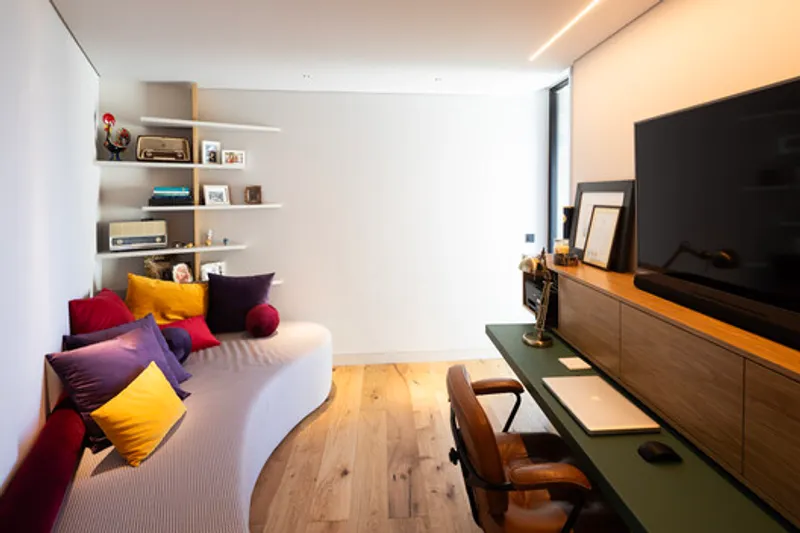
The lower level, partially embedded into the terrain, serves functional and leisure purposes. It includes covered parking, technical areas, and a cinema or recreational room. By placing these functions within the base of the house, the design preserves the upper levels for living spaces that engage more directly with the landscape.
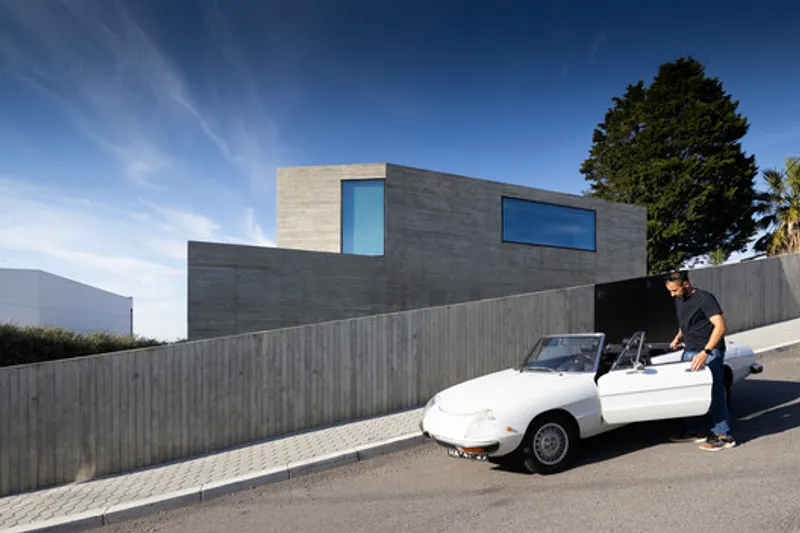
Materiality plays a crucial role in defining the architectural identity. Exposed concrete dominates the exterior, giving the house a strong and monolithic presence. This material choice not only reinforces the building’s contemporary character but also allows it to stand confidently within its environment without relying on decorative elements.
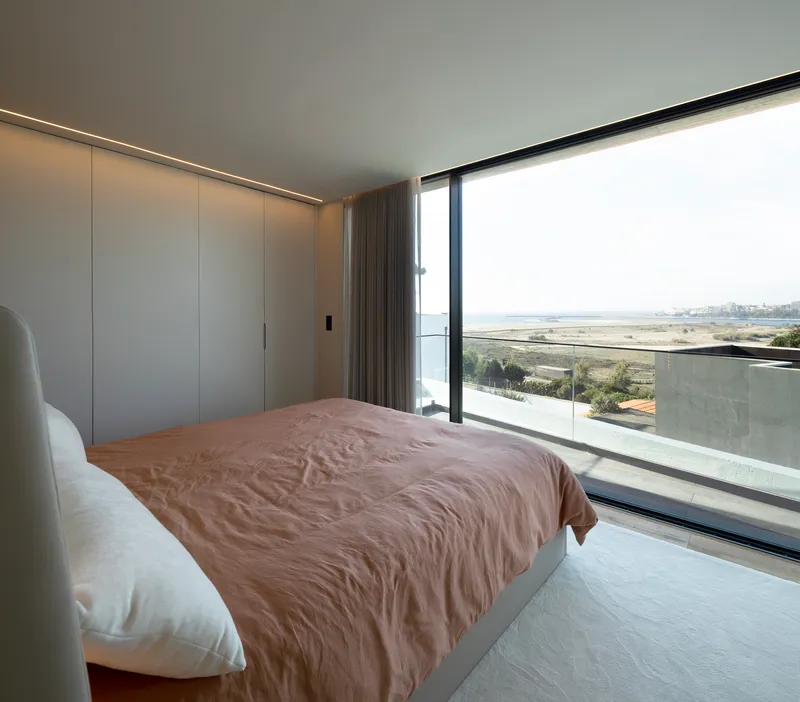
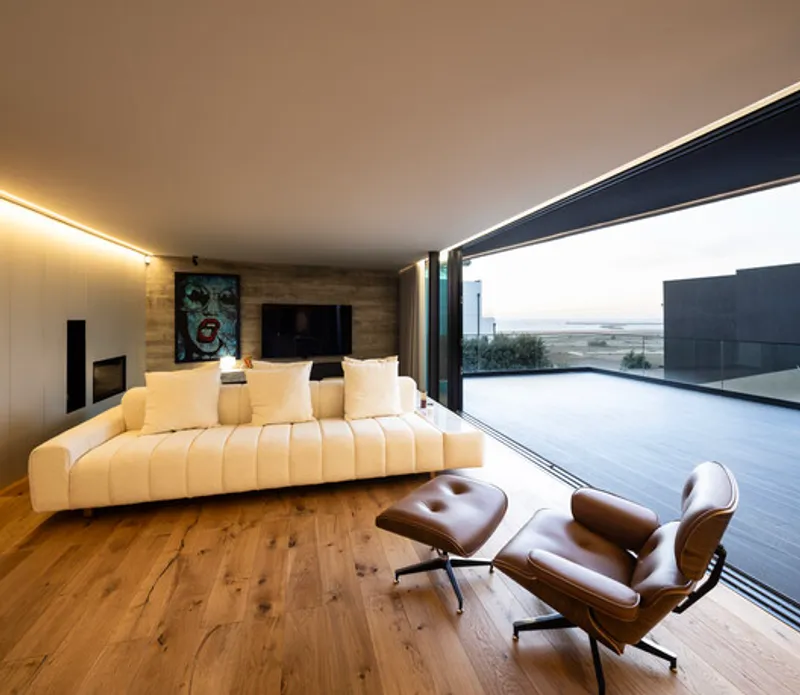
The geometry of the house further enhances this expression. Carefully articulated volumes and precise lines create a sculptural form that responds to both site and view. Rather than acting as a passive viewing platform, the house asserts itself as an active architectural presence: framing, directing, and intensifying the experience of the surrounding landscape.

Ultimately, House_JA is an architecture of duality. It balances openness with protection, lightness with solidity, and landscape immersion with spatial control. Through its integration with topography, strategic orientation, and material clarity, the project creates a living environment where views are not merely observed but carefully composed, transforming everyday life into a continuous dialogue with place.
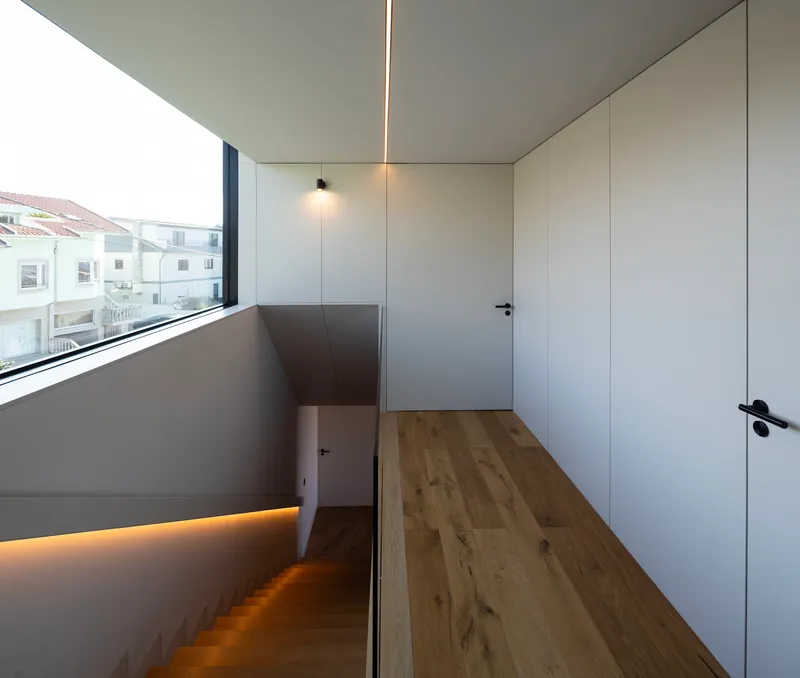
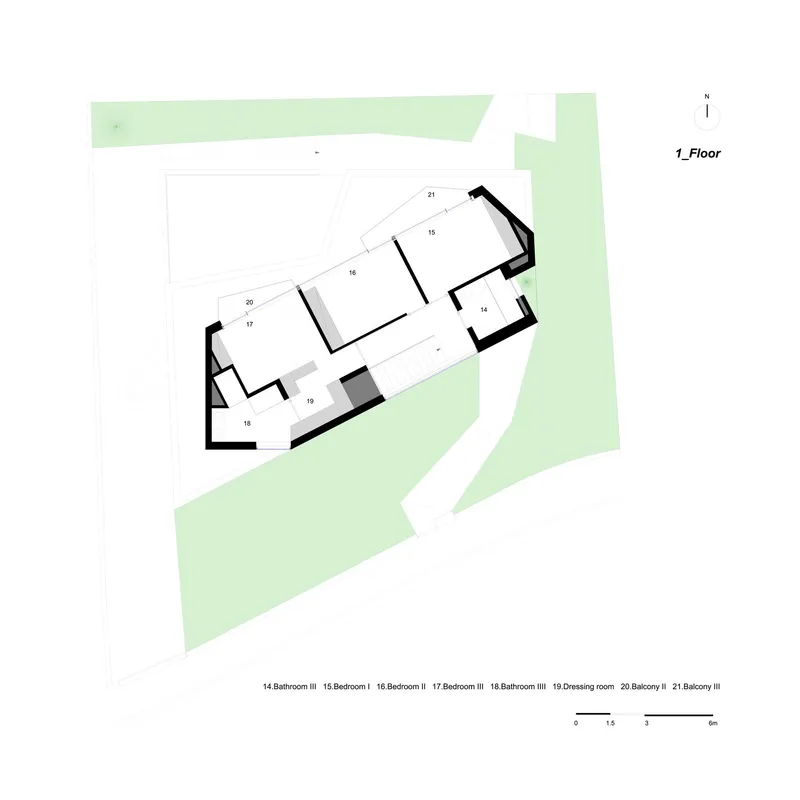
All the Photographs are works of Nelson Garrido - NG Photo


Popular Articles
Popular articles from the community


Opera on the Sea: Driftwood Logic Shapes a Timber Opera House on Estonia's Coast
Trevor Orgill's opera house translates the entangled drift of floating timber into a civic building where wood, water, and music converge.
Opera by the Sea Estonia: Three Shells Dissolving Architecture into Tallinn's Coastline
A winning opera house proposal replaces monumental form with interconnected shells that blur the boundary between building, park and Baltic Sea.
Extended Shell: Retrofitting Kolkata's Balconies as Living Urban Thresholds
A modular retrofit system recovers the social and environmental intelligence of Kolkata's historic verandas for contemporary Park Street residents.

Faces of the Soviet Avant-Garde: Turning Moscow's Street Names into an Open-Air Museum
A network of sculptural installations across a Moscow residential district transforms forgotten architect names into spatial encounters with cultural memor

Similar Reads
You might also enjoy these articles

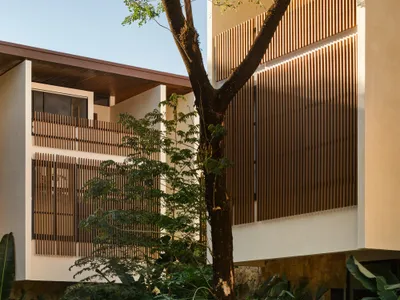
FAMM Arquitectura Organizes Ten Villas Around Courtyards and Jungle in Nosara, Costa Rica
El Molino pairs two elongated volumes with deep overhangs and timber louvers to build a compact coastal community five minutes from the beach.
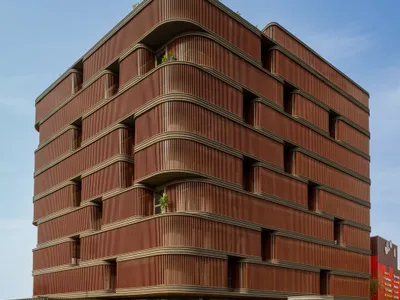
Sanjay Puri Architects Wraps a Jaipur Office Tower in Capsule-Shaped Green Buffers
A nine-level climate-responsive workplace near Jaipur Airport uses stacked planter terraces and aluminium screens to fight 40°C heat.
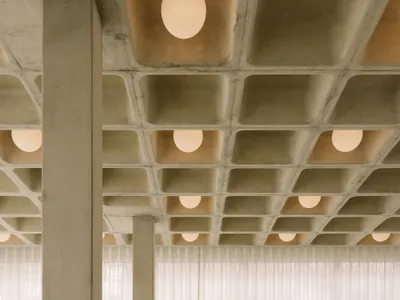
RHO Converts a Berlin Spree-Side Industrial Courtyard into Enkime's 1,000 m² Agency Headquarters
A social media agency's new home in Charlottenburg trades glossy branding for concrete waffle ceilings, glazed tile, and sheer curtains.
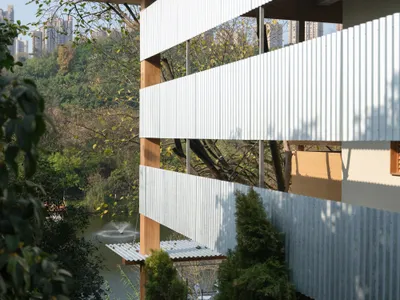
Vari Architects Wraps a Lakeside Pavilion in Timber and Corrugated Metal for an Italian Restaurant in Chongqing
A waterfront pavilion in Yihe Park becomes a family-oriented Italian kitchen where Cassia timber columns echo the surrounding cedars.
Explore Architecture Competitions
Discover active competitions in this discipline

Challenge to reimagine the Iron Throne

Photograph architecture without architects

Illustrate the lost glory of Angkor Wat - Render Challenge

Design challenge to reuse E-waste
Comments (0)
Please login or sign up to add comments
No comments yet. Be the first to comment!