
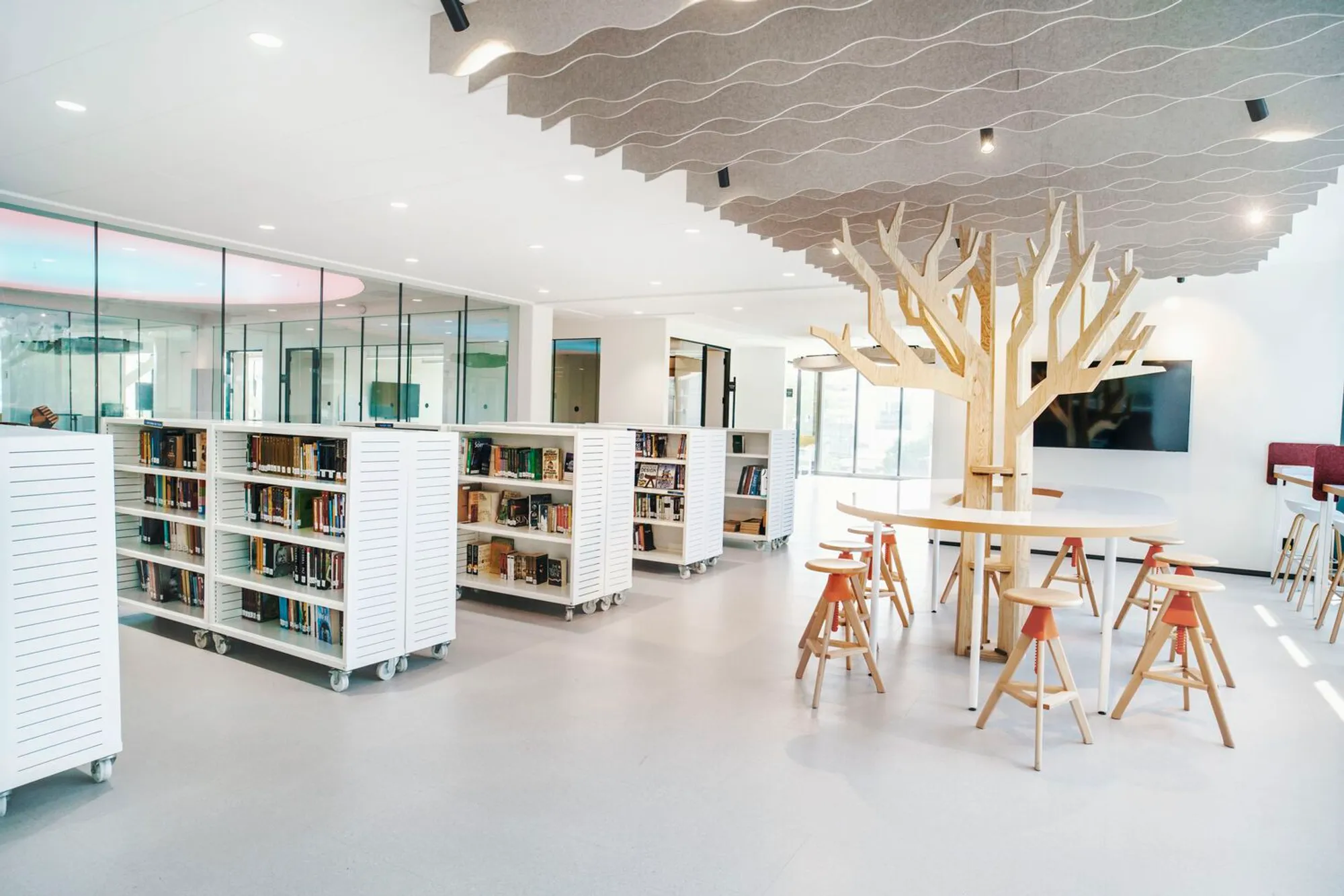
Humanitree School Hive and Flight by Rosan Bosch Studio
Learner-centered school transforms office floors into flexible ecosystems, blending play, collaboration, movement, and nature-inspired spaces for future-focused education.


Humanitree School Hive and Flight, designed by Rosan Bosch Studio, reimagines contemporary educational architecture by transforming 10,000 square meters of upper floors within an existing office building in Mexico City into a holistic, future-ready learning ecosystem. Completed in 2023, the middle and high school campus embodies a learner-centered philosophy, where spatial diversity, flexibility, and curiosity-driven design empower students to take ownership of how, where, and with whom they learn.
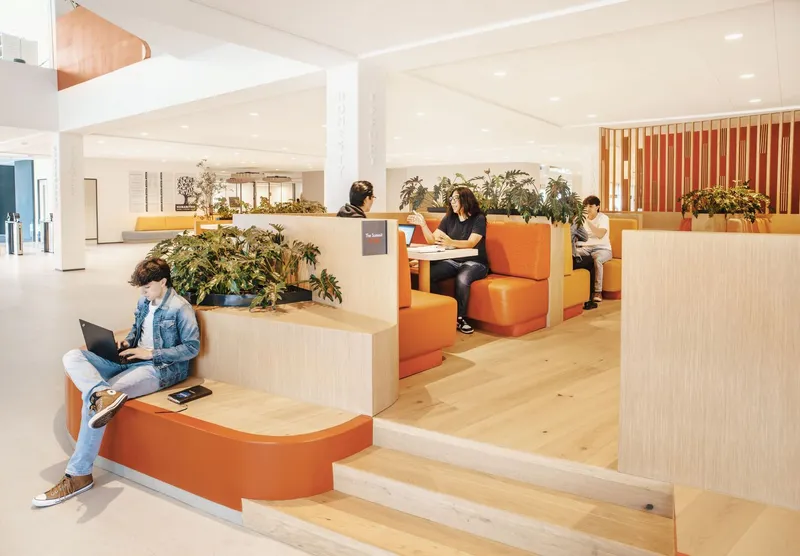
At the core of the project lies a fundamental belief: learning is not linear, and students thrive when environments reflect the diversity of learning styles. As founder and creative director Rosan Bosch explains, offering freedom of choice within a flexible spatial framework enables learners to develop self-awareness and motivation, key components of meaningful education in the 21st century.
Learning Ecosystems Inspired by Mexican Landscapes
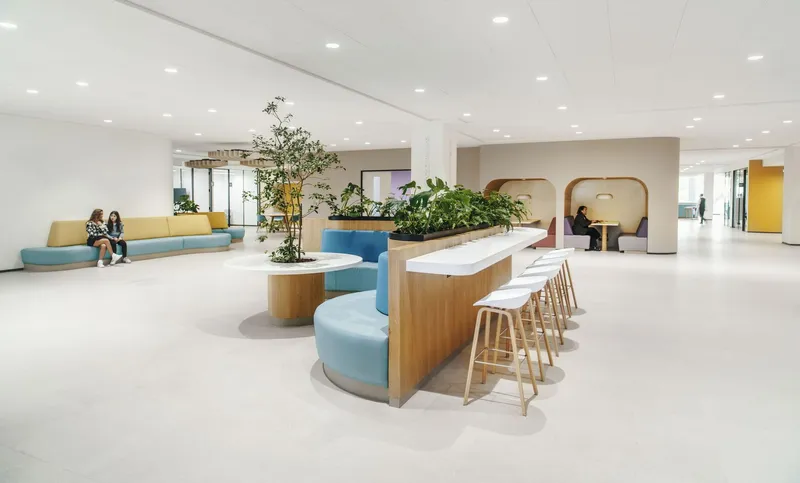
The architectural concept is structured around three distinct Learning Ecosystems: Mountain, Forest, and Coast, each inspired by Mexico’s diverse natural landscapes. These ecosystems organize academic disciplines while also acting as intuitive wayfinding tools, guiding students through the expansive interior. Carefully curated material palettes, textures, and colors support emotional well-being, spatial clarity, and a strong sense of identity within each zone.
This ecosystem-based approach dissolves the rigidity of conventional classrooms, replacing them with a fluid learning environment that supports exploration, reflection, and collaboration. The result is an educational interior that feels both structured and liberating, encouraging movement and choice rather than confinement.

Six Learning Situations for Project-Based Education
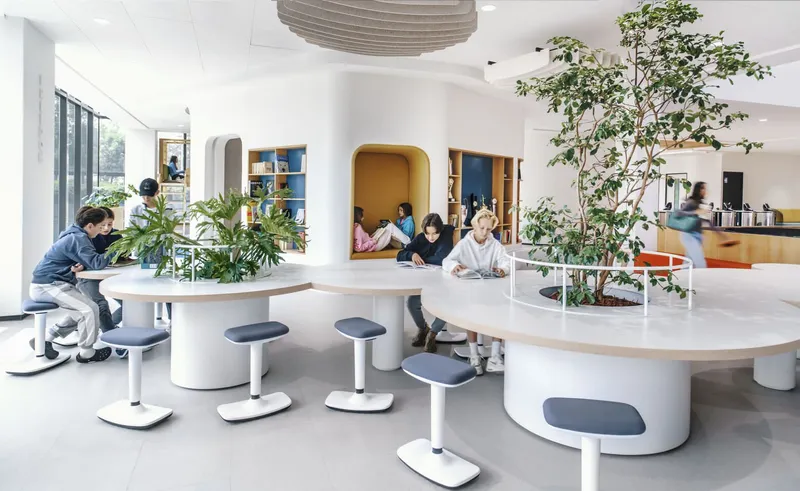
Embedded within the spatial framework are six key learning situations: Discovery, Focus, Collaboration, Creation, Movement, and Encounters. These scenarios respond to the pedagogical demands of project-based learning, offering students a wide spectrum of settings tailored to different activities and cognitive states. From quiet, focused zones to vibrant collaborative hubs, the architecture actively supports diverse learning rhythms throughout the school day.
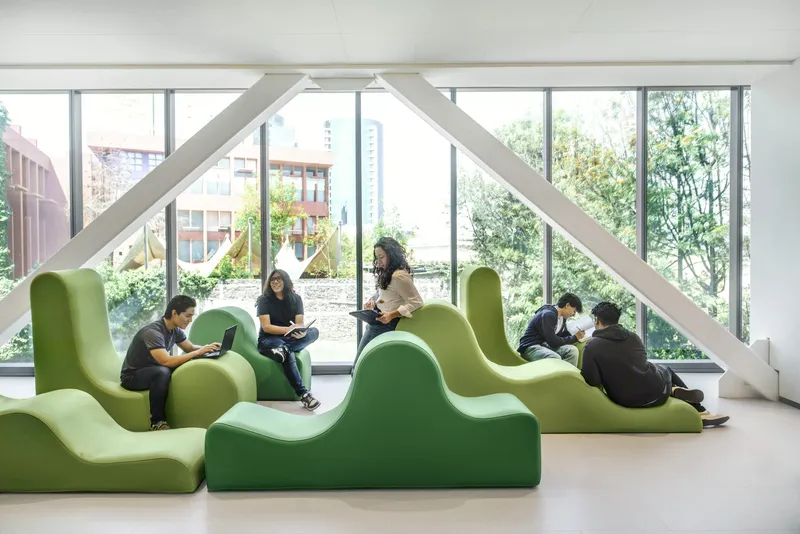
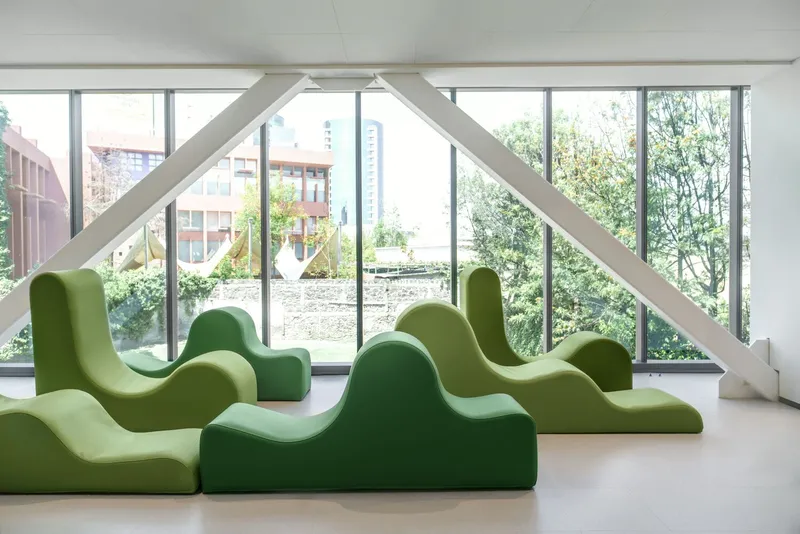
Furniture, stairs, platforms, and informal seating areas become learning tools in themselves, blurring the boundaries between circulation and occupation. This spatial versatility reinforces the idea that learning can happen anywhere, not only within traditional classrooms.
Landscape Design as an Extension of Learning
The landscape concept continues the ecosystem narrative, ensuring a seamless transition between indoor and outdoor learning environments. Each ecosystem extends beyond the building envelope, reinforcing experiential learning through physical engagement with nature. The Coast Ecosystem promotes movement and physical activity through a multi-sport court, while the Forest Ecosystem emphasizes hands-on learning with urban gardens. The Mountain Ecosystem, anchored by a central agora, supports social interaction, dialogue, and community building.
Interconnected pathways and integrated vegetation foster spatial continuity and cohesion, transforming the campus into a dynamic learning landscape that encourages exploration, social exchange, and well-being.
Bridging Secondary and Higher Education
Located within the same building as the innovative Universidad de la Libertad, Humanitree School Hive and Flight establishes a symbolic and physical bridge between secondary and higher education. This proximity offers students early exposure to academic life beyond school, inviting them to envision their future learning journeys within a broader context of lifelong education.
Rooted in the belief that curiosity is humanity’s most powerful learning driver, the project creates an environment where play, investigation, and interdisciplinary exchange are not supplementary but fundamental. Through architecture, Rosan Bosch Studio delivers a compelling vision of education: one that celebrates individuality, nurtures curiosity, and prepares students for an ever-evolving world.


All photographs are works of
Kim Wendt



Popular Articles
Popular articles from the community


The Ocean Hive: Sustainable Architecture for a Self-Sufficient Civilization at Sea
The Ocean Hive imagines sustainable architecture at sea, where modular habitats, algae, wave power and ocean waste sustain a growing colony.

AL-JANNAH: Sustainable Architecture and Permaculture for Afghan Widows
AL-JANNAH uses sustainable architecture and permaculture to create resilient oasis of housing, learning, work and renewal for Afghan widows.

Conexión: Biophilic Design Reimagines High-Rise Living in Hong Kong
Conexión reimagines high-rise living in Hong Kong through biophilic design, green facades, shared spaces, daylight, water and nature within.

The Earth Pod: 3D Printed Homes for Resilient Refugee Communities
The Earth Pod reimagines refugee housing through 3D printed homes made from clay, combining resilience, self-sufficiency, and rapid shelter.


Similar Reads
You might also enjoy these articles


Hodi-Mandai Geram
Project Function: Preservation and revitalization of the Intangible heritage and socio-spatial identity of the Hodi by Housing, Cultural Memory Center, Sacred Grove, landscape, local tourism economy


Olio Towers: A Mid-Rise for Performers That Fuses Housing, Rehearsal, and Stage
Located blocks from Houston's Theater District, this modular tower stacks living units around a central performance atrium.

Oasis: Modular Green Housing Carved into Dhaka's Urban Fabric
A shortlisted Plugin Housing entry reclaims unauthorized settlements in Dhaka with stepped concrete volumes, green roofs, and ventilation-driven design.

Black Hole: A Floating Megastructure for the Post-Physical Era
Emiliano Mazzarotto envisions a spherical, self-scaling arena where e-sports, digital hotels, and holographic stadiums replace traditional public space.


Explore Learning Spaces Competitions
Discover active competitions in this discipline



Challenge to design public laboratory


Challenge to reimagine the Iron Throne


Photograph architecture without architects


Illustrate the lost glory of Angkor Wat - Render Challenge
Comments (0)
Please login or sign up to add comments
No comments yet. Be the first to comment!